MR. NOBODY AGAINST PUTIN: the first casualty of war is truth

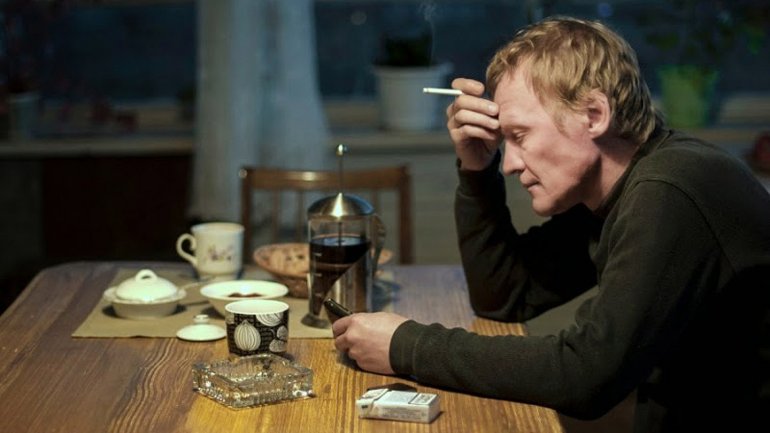
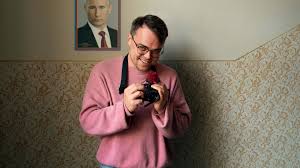
Photo caption: Pavel Talankan in MR. NOBODY AGAINST PUTIN. Courtesy of the SLO Film Fest.

Nothing has changed since Aeschylus observed that the first casualty of war is truth, as revealed in Mr. Nobody Against Putin, the blistering exposé of Putin’s outrageous domestic propaganda about his Ukraine War.

Pavel Talankan is an unassuming, goodhearted guy with a small-time job as the events coordinator at the school in a remote Russian industrial town. That also makes him the school videographer, so no no one notices that, as he films school assemblies, award ceremonies and performances, he is also capturing the blatant Big Lie propaganda. It’s a surreptitious documentary filmed in plain sight.

Pavel is an unlikely muckraker. He is a free-thinking nebbish who loves Russia and loves his hometown of Karabash in the Ural region, putrefied by a noxious copper plant and called “the most toxic place on earth”.

More than anything, Pavel cares about his students, and he is increasingly disgusted as Putin ramps up the propaganda. First, a cadaverous party hack, whose heroes are the most vile Commie hitmen in history, spreads empirically false information about Ukraine being the aggressor in the war. Then, horrifyingly, Wagner mercenaries are brought in as classroom guest speakers. Silently, Pavel continues to film, letting the propagandists defile themselves for history.

Pavel is a hero, albeit a non-violent one, who risked his life to gather this material. David Borenstein exquisitely formed Pavel’s footage into a searing exposé of Putin’s soul-crushing impact on Russia. The secret audio from the funeral of a former student killed in Ukraine is heart-rending. The film begins with video of Pavel’s midnight escape from Russia,

Mr. Nobody Against Putin has been Oscar-nominated as Best Documentary Feature. I saw it at the SLO Film Fest; it’s now available to stream from Amazon and AppleTV.
MR. NOBODY AGAINST PUTIN: the first casualty of war is truth

Photo caption: Pavel Talankan in MR. NOBODY AGAINST PUTIN. Courtesy of the SLO Film Fest.

Nothing has changed since Aeschylus observed that the first casualty of war is truth, as revealed in Mr. Nobody Against Putin, the blistering exposé of Putin’s outrageous domestic propaganda about his Ukraine War.

Pavel Talankan is an unassuming, goodhearted guy with a small-time job as the events coordinator at the school in a remote Russian industrial town. That also makes him the school videographer, so no no one notices that, as he films school assemblies, award ceremonies and performances, he is also capturing the blatant Big Lie propaganda. It’s a surreptitious documentary filmed in plain sight.

Pavel is an unlikely muckraker. He is a free-thinking nebbish who loves Russia and loves his hometown of Karabash in the Ural region, putrefied by a noxious copper plant and called “the most toxic place on earth”.

More than anything, Pavel cares about his students, and he is increasingly disgusted as Putin ramps up the propaganda. First, a cadaverous party hack, whose heroes are the most vile Commie hitmen in history, spreads empirically false information about Ukraine being the aggressor in the war. Then, horrifyingly, Wagner mercenaries are brought in as classroom guest speakers. Silently, Pavel continues to film, letting the propagandists defile themselves for history.

Pavel is a hero, albeit a non-violent one, who risked his life to gather this material. David Borenstein exquisitely formed Pavel’s footage into a searing exposé of Putin’s soul-crushing impact on Russia. The secret audio from the funeral of a former student killed in Ukraine is heart-rending. The film begins with video of Pavel’s midnight escape from Russia,

I saw Mr. Nobody Against Putin at the SLO Film Fest; it releases theatrically this weekend.

MR. NOBODY AGAINST PUTIN: the first casualty of war is truth

Pavel Talankan in MR. NOBODY AGAINST PUTIN. Courtesy of the SLO Film Fest.

Nothing has changed since Aeschylus observed that the first casualty of war is truth, as revealed in Mr. Nobody Against Putin, the blistering exposé of Putin’s outrageous domestic propaganda about his Ukraine War.

Pavel Talankan is an unassuming, goodhearted guy with a small-time job as the events coordinator at the school in a remote Russian industrial town. That also makes him the school videographer, so no no one notices that, as he films school assemblies, award ceremonies and performances, he is also capturing the blatant Big Lie propaganda. It’s a surreptitious documentary filmed in plain sight.

Pavel is an unlikely muckraker. He is a free-thinking nebbish who loves Russia and loves his hometown of Karabash in the Ural region, putrefied by a noxious copper plant and called “the most toxic place on earth”.

More than anything, Pavel cares about his students, and he is increasingly disgusted as Putin ramps up the propaganda. First, a cadaverous party hack, whose heroes are the most vile Commie hitmen in history, spreads empirically false information about Ukraine being the aggressor in the war. Then, horrifyingly, Wagner mercenaries are brought in as classroom guest speakers. Silently, Pavel continues to film, letting the propagandists defile themselves for history.

Pavel is a hero, albeit a non-violent one, who risked his life to gather this material. David Borenstein exquisitely formed Pavel’s footage into a searing exposé of Putin’s soul-crushing impact on Russia. The secret audio from the funeral of a former student killed in Ukraine is heart-rending. The film begins with video of Pavel’s midnight escape from Russia,

I saw Mr. Nobody Against Putin at the SLO Film Fest; I’ll let you know when it gets a theatrical or VOD release.

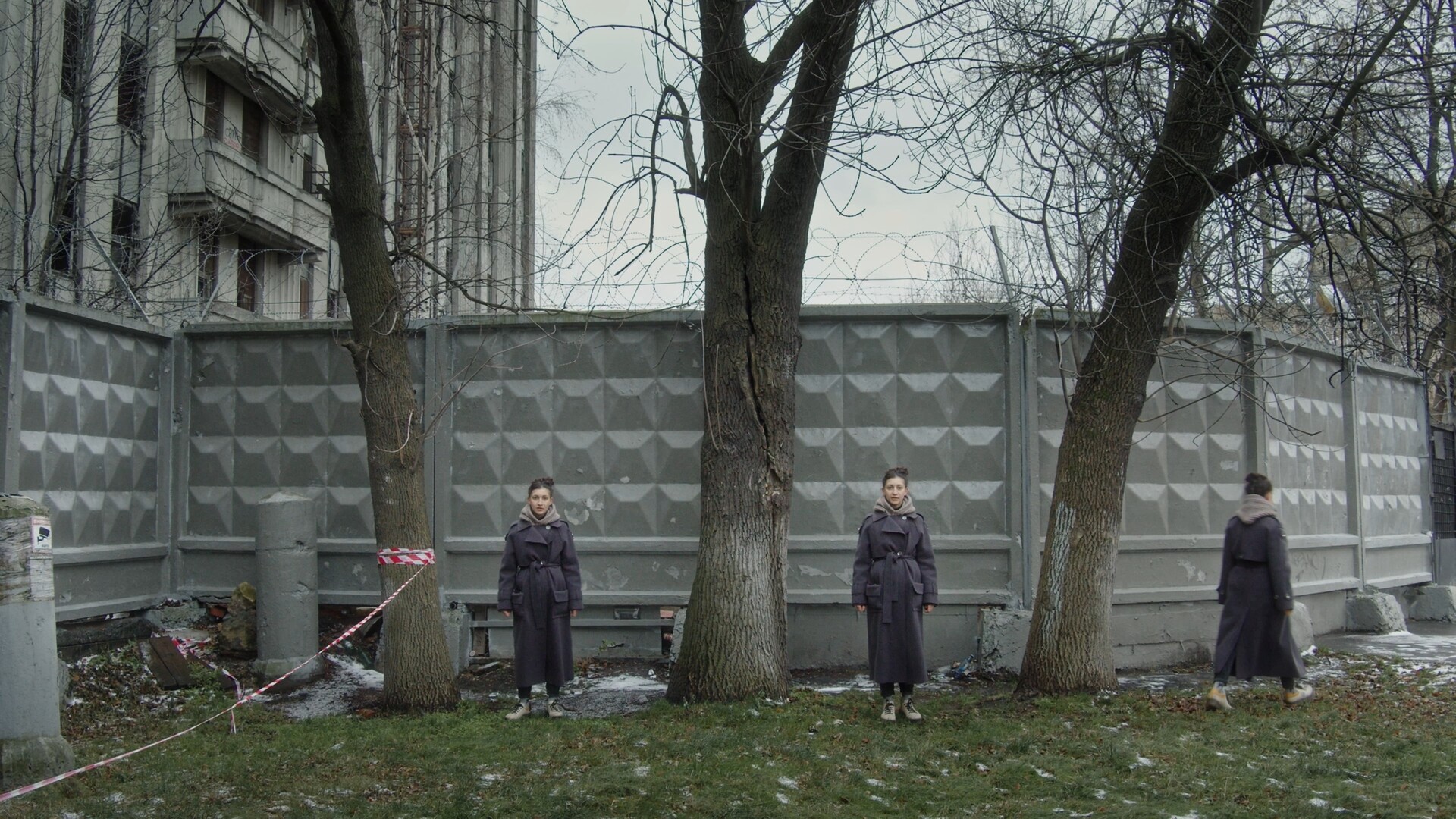
TWIN FENCES: where is she going? Aaaaah.

Yana Osman (right) in her TWIN FENCES. Courtesy of Slamdance.

In her quirky, and finally profound, documentary Twin Fences, writer-director Yana Osman starts us off with what seems like a a droll, absurdist film about a ridiculously obscure subject, a prefab concrete fence design replicated thru the USSR. Osman stands, hands down at her side, facing the camera, spouting random facts. It may be off-putting at first, but the approach grows to be intoxicating. When she finds talking heads who are actually experts on the fences, we wonder if we’re watching a parody of a talking head expert documentary. We even hear about a Soviet who returned from Chicago in the 1920s, inspired to improve public health with a proprietary sausage.

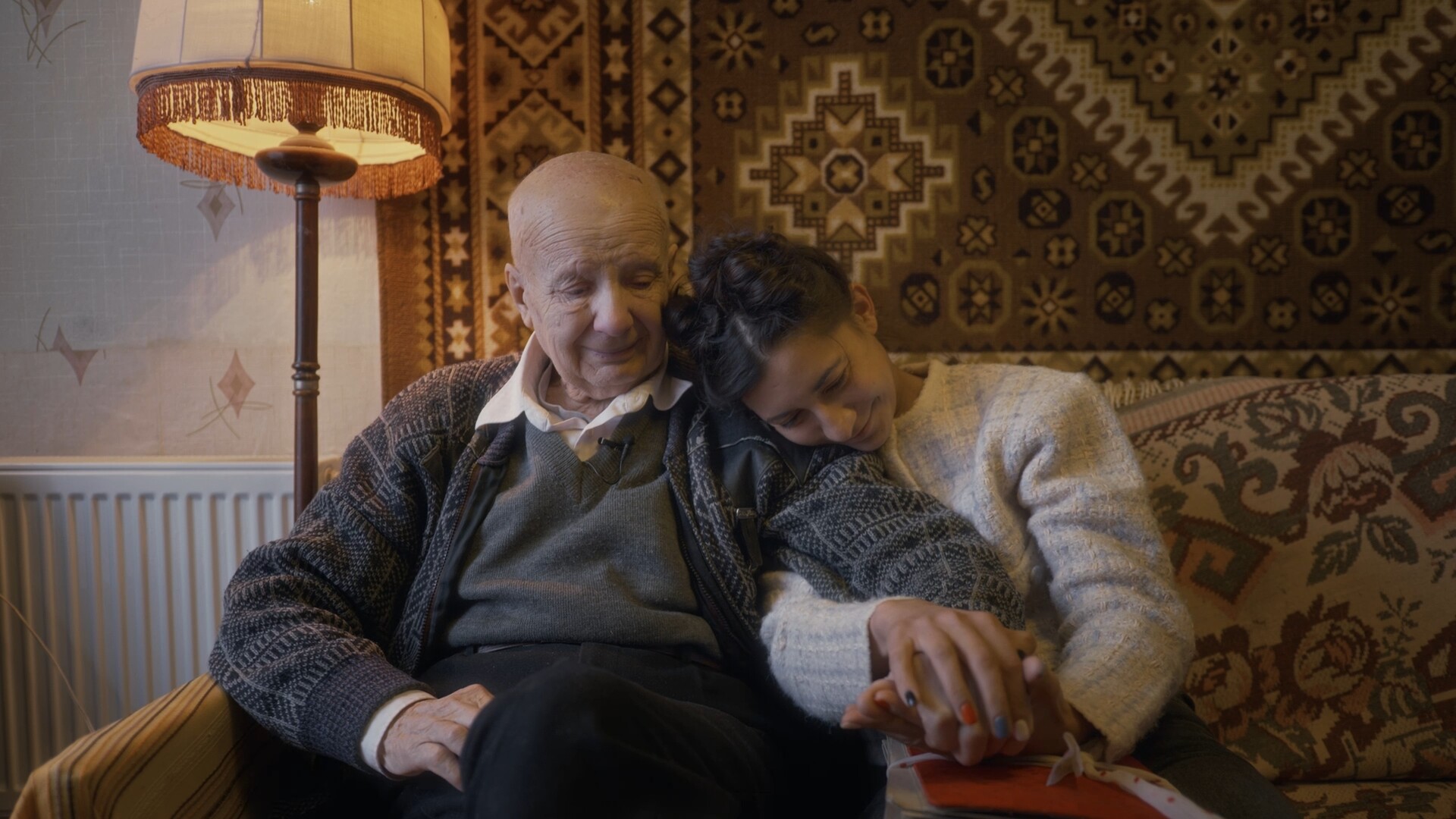
Osman’s story takes us through Russia, Afghanistan and Ukraine, until there’s a pivotal tragedy in her family. The ending, with her grandfather, is sweet and heartbreaking.  Only then do we  realize that we’ve just watched a clear-eyed comment on contemporary Russia. 

TWIN FENCES. Courtesy of Slamdance.

I’ve never seen a film that wanders across such disparate topics over 99 minutes, seemingly randomly, but which turns out to get somewhere unexpected and worth arriving at. This is Osman’s first feature; Twin Fences is very well-edited, and unsettling tones on the soundtrack help tell the story. Osman is an idiosyncratic, and, I think, pretty brilliant filmmaker.

Audiences who hang with Twin Fences will be rewarded. I screened Twin Fences for its North American premiere at Slamdance.

Through March 7, 2025, you can stream Twin Fences on the Slamdance Slamdance Channel. A 2025 Slamdance Film Festival Virtual Pass, which brings you Twin Fences and almost all of my Slamdance recommendations, only costs $50.

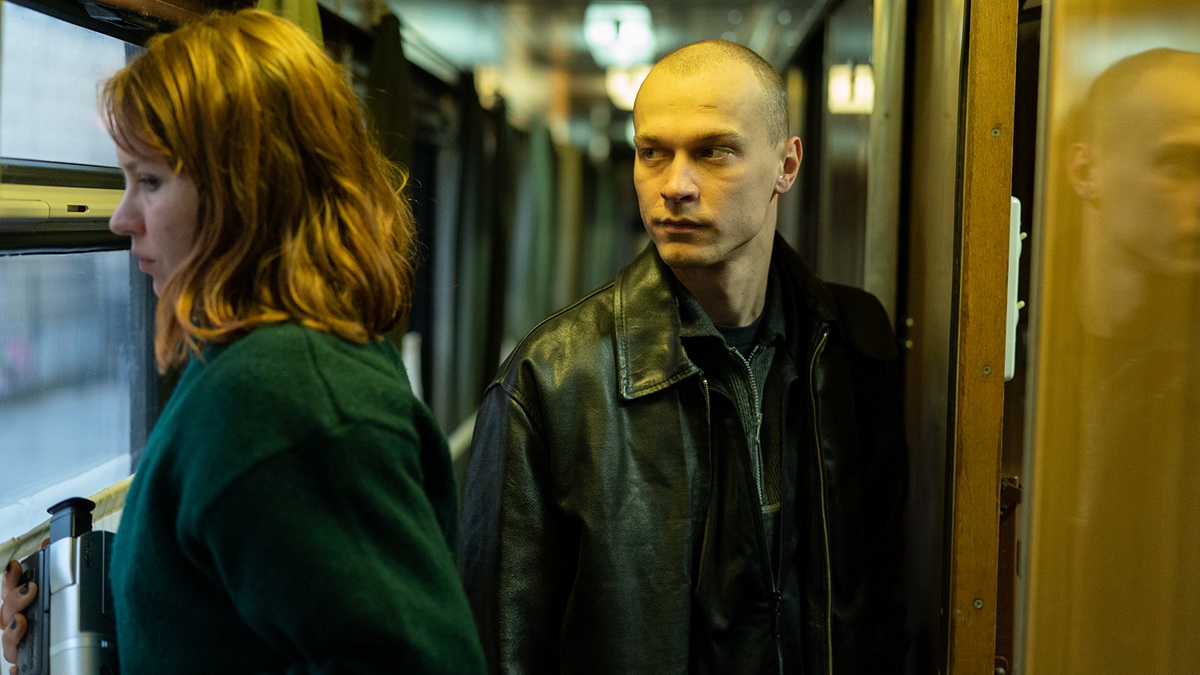
COMPARTMENT NO. 6: a surprising journey to connection

Photo caption: Seidi Haarla and Yuri Borisov in COMPARTMENT No. 6. Courtesy of Sony Pictures Classics.

In Compartment No. 6, an odd couple must share the same claustrophobic compartment in a dreadful train ride to Murmansk. She aims to see ancient petroglyphs, and he is heading to a job in a massive mining operation, but they’re really on a journey to human connection.

Compartment No. 6 won the Grand Prix, essentially the second place award, at Cannes; (in 2022, as in recent years, the Grand Prix winner is a much better movie than the winner of the more prestigious Palm d’Or).

Laura (Seidi Haarla) is a mousy Finnish college student in Russia, studying Russian language or archaeology – it’s not exactly clear. She is having a fling with a 40ish Russian professor, and Laura is more deeply invested in the relationship than is her new girlfriend. Laura is out of her depth with the girlfriend’s academic friends. The girlfriend cancels their planned trip at the last moment, and Laura, disappointed, still heads off to Murmansk on her own.

Given the discomfort of Russian train travel, this multi day trip is not for the faint-hearted anyway, but Laura is alarmed to find herself sharing a second-class compartment with a nightmare of a roommate. Ljoha (Yuri Borisov) is an obnoxious drunk, a slob leaving a trail of cigarette ashes and partially eaten sausage. This is a guy devoid of intellectual curiosity, who has never had an original thought. What he possesses in mass quantities is macho boorishness – his icebreaker is “are you traveling alone to sell your cunt?”

More restrained when he is sober, Ljoha is socially inept. As emotionally vulnerable as is Laura, so is Ljoha – he’s just trying very hard to hide it with bravado.

What is important to Laura – and to Ljoha? Fundamentally, each needs to find human connection. Compartment No. 6 takes us on their unpredictable journey. This is not a conventional hate-each-other-and-then-fall-for-each-other movie romance.

Compartment No. 6 is hardly an advert for Russian passenger trains. The train attendant is surly and officious, the running water doesn’t work, and the dining car menu is ever diminishing. The passengers are constantly smoking, and they have no ability to wash themselves. As the train winds northward, you can’t help but imagine the rancid odors.

Compartment No. 6 is the second feature for Finnish director and co-writer Juro Kuosmanen. Boy, I liked this movie.

Stream of the Week: ELENA – a vividly dark peek into contemporary Russia

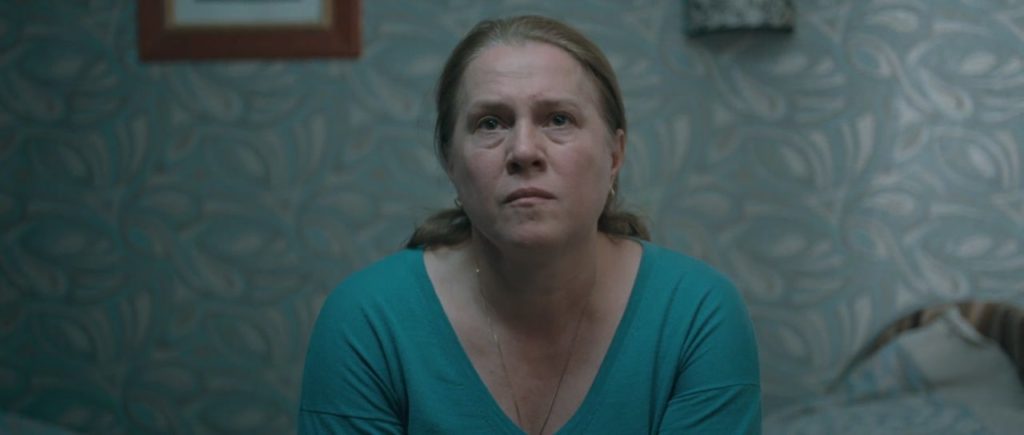
Nadezhda Markina in ELENA

Elena is a superbly crafted film that vividly peeks into a dark, very dark contemporary Russia. Directed and co-written by Andre Zvyagintsev (The Return, Leviathan and Loveless), Elena is the triumph of drama over melodrama. There is an absolute minimum of on-screen action and no histrionics at all, yet the story simmers throughout. It’s on my list of Best Movies of 2012.

Zvyagintsev builds the story upon his characters. It is set in a tony apartment in a quiet upscale Moscow neighborhood, home of Vladimir and Elena. Vladimir is pushing 70 and rich. I doubt that any softies got rich in post-Soviet Russia, and Vladimir is a hard man, devoid of sentimentality except for his estranged daughter. Late in life, he has married the working class Elena, his one-time nurse, now in her 50s. They have a comfortable, frank, affectionate and practical relationship.

Both have adult children from previous marriages. Vladimir’s daughter Katerina has no use for her father, but he subsidizes her lifestyle of perpetual partying. Vladimir and Katerina finally share a moment, bonding over their shared cynicism.

Elena’s nogoodnik son Sergey lives in a hard scrabble suburb and embraces his chronic unemployment with alarming indolence. His equally lazy and selfish teenage son, having an indifferent high school career, is now facing the dreaded Army unless someone can bribe his way into a college.

Elena is desperate to rescue her grandson from his self-inflicted predicament, but only Vladimir’s money can help, and Vladimir despises Elena’s trashy and shiftless family. The movie is built on this conflict, and it is Elena’s story. As Elena, the actress Nadezhda Markina reveals Elena’s affection, desperation and determination with her eyes, face and movements. Perfectly framing Markina’s outstanding performance by isolating it, Zvyagintsev delivers the film in a series of long shots, with terse dialogue and a spare soundtrack. There is no expository dialogue explaining the plot or swelling music manipulating our reaction.

Elena is a dark movie that asks its audience to invest patience, thought and energy – so it’s not for everybody. Elena is also one of the year’s best films, and an extraordinary example of a very pure breed of filmmaking.  Elena is available to be streamed from Amazon (free with Prime), iTunes and Google Play.

Cinequest: ORLEANS

ORLEANS
ORLEANS

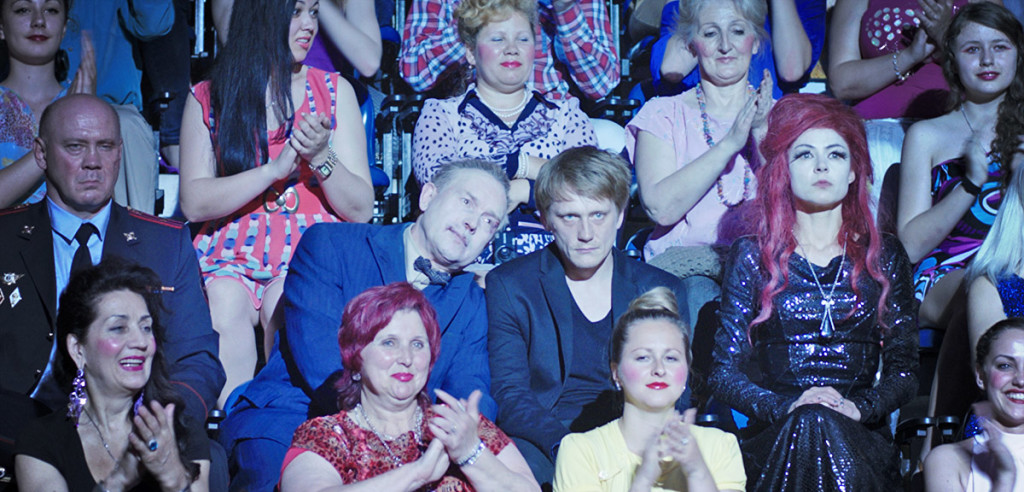
Contemporary Russian cinema has been pretty dark and cynical lately (Leviathan and Elena), for example), focusing on the profound and persistent corruption in that society.  Having said that, the comedy Orleans is dark by even Russian standards.

We meet a rogue doctor in a small town, a guy who relishes a matter-of-fact everyday depravity.  He and a local hairdresser are living in a world that is morally bleak enough, when magical realism intrudes in a very bad way – an invincible stranger with evil powers visits town.  They all even go to the circus – it’s kind of Fellini meets Tracy Letts meets Rob Zombie.  There’s even one of the most cringeworthy eye procedures since Un Chien Andalou.

Orleans is a trippy movie.  Settle in, but don’t think that you’ll remain comfortable for long.  North American Premiere at Cinequest on March 2, 3 and 4.

Stream of the Week: LEVIATHAN: the overwhelming crush of corruption

LEVIATHAN
LEVIATHAN

The extraordinary Russian drama Leviathan is a searing indictment of society in post-Soviet Russia – and it’s one of my Best Movies of 2015 – So Far. A Job-like Everyman struggles to protect his home from the clutches of the town’s corrupt mayor – and he has to battle the corruption that has permeated the political and justice systems. The very struggle takes its toll in his relationships, too, and the audience begins to wonder just how much he’s going to be left with at the end of the story.

Despite being deliberately paced and darkly themed, Leviathan is very watchable. The characters are superbly crafted and the story is filled with “what’s going to happen next?” moments. Writer-director Andrei Zvyagintsev and co-writer Oleg Negin are keen observers of human nature and season Leviathan with plenty of wry humor (e.g., the mayor runs his criminal Sopranos-like enterprise from a desk under a portrait of Putin). And there’s a surprise at the end.

Our Everyman is Kolya (Vladimir Vdovichenkov), who is hotheaded and drinks too much. He fixes cars out of his seafront home in a bleak village on the Barents Sea. His younger second wife Elena Lyadova is cipher. His teenage son (Sergey Pokhodaev) is a good kid, but troubled by the death of his mother. The performances are exceptional, along with that of Roman Madyanov as the corrupt-to-his-marrow mayor. The mayor wants to take Kolya’s property, and their battle plays out in the courts – and in extra-judicial arenas.

And then there’s the vodka abuse. The amount of vodka consumption by virtually every character is astounding. Expect (along with your fellow audience members) to gasp and giggle at the size of the pours.

The film’s only shortcoming is the heavy-handed symbolism employed to hammer home the hopelessness of the protagonist’s struggle, There’s a biblical quote (from Job, of course): “Can you draw out the Leviathan with a fishhook?”, and then shots of whales and of the skeleton of a long-dead beached whale. All this isn’t really necessary, especially with the courtroom scenes, which make the filmmakers’ point exceedingly well.

Andrei Zvyagintsev has solidified his place as one of the masters of world cinema. Leviathan is just his fourth feature, after Elena , which made my Top Ten list for 2012, and The Return, which made my Best Movies of 2004. Elena is available on DVD from Netflix and streaming on Vudu and Xbox Video. The Return is available on DVD from Netflix.

Leviathan was nominated for this year’s Best Foreign Language Picture Oscar, and has been critically acclaimed, currently scoring 92 on Metacritic.com. It’s available streaming on Amazon Instant Video, iTunes, Vudu, YouTube, Google Play and Flixster.

LEVIATHAN: the overwhelming crush of corruption

LEVIATHAN
LEVIATHAN

The extraordinary Russian drama Leviathan is a searing indictment of society in post-Soviet Russia – and it’s one of the best movies of the year.  A Job-like Everyman struggles to protect his home from the clutches  of the town’s corrupt mayor – and he has to battle the corruption that has permeated the political and justice systems.  The very struggle takes its toll in his relationships, too, and the audience begins to wonder just how much he’s going to be left with at the end of the story.

Despite being deliberately paced and darkly themed, Leviathan is very watchable.  The characters are superbly crafted and the story is filled with “what’s going to happen next?” moments.  Writer-director Andrei Zvyagintsev and co-writer Oleg Negin are keen observers of human nature and season Leviathan with plenty of wry humor (e.g., the mayor runs his criminal Sopranos-like enterprise from a desk under a portrait of Putin).  And there’s a surprise at the end.

Our Everyman is Kolya (Vladimir Vdovichenkov), who is hotheaded and drinks too much.  He fixes cars out of his seafront home in a bleak village on the Barents Sea.  His younger second wife Elena Lyadova is cipher.  His teenage son (Sergey Pokhodaev) is a good kid, but troubled by the death of his mother.   The performances are exceptional, along with that of Roman Madyanov as the corrupt-to-his-marrow mayor.  The mayor wants to take Kolya’s property, and their battle plays out in the courts – and in extra-judicial arenas.

And then there’s the vodka abuse.  The amount of vodka consumption by virtually every character is astounding. Expect (along with your fellow audience members) to gasp and giggle at the size of the pours.

The film’s only shortcoming is the heavy-handed symbolism employed to hammer home the hopelessness of the protagonist’s struggle,  There’s a biblical quote (from Job, of course): “Can you draw out the Leviathan with a fishhook?”, and then shots of whales and of the skeleton of a long-dead beached whale.  All this isn’t really necessary, especially with the courtroom scenes, which make the filmmakers’ point exceedingly well.

Andrei Zvyagintsev has solidified his place as one of the masters of world cinema.  Leviathan is just his fourth feature, after Elena , which made my Top Ten list for 2012, and The Return, which made my Best Movies of 2004.  Elena is available on DVD from Netflix and streaming on Vudu and Xbox Video. The Return is available on DVD from Netflix.

Leviathan was nominated for this year’s Best Foreign Language Picture Oscar, and has been critically acclaimed, currently scoring 92 on Metacritic.com. ,

DVD of the Week: Elena

Elena is a superbly crafted film that vividly peeks into a dark, very dark contemporary Russia.  Directed and co-written by Andre Zvyagintsev (The Return), Elena is the triumph of drama over melodrama.  There is an absolute minimum of on-screen action and no histrionics at all, yet the story simmers throughout. It’s on my list of Best Movies of 2012 – So Far.

Zvyagintsev builds the story upon his characters.  It is set in a toney apartment in a quiet upscale Moscow neighborhood, home of Vladimir and Elena.  Vladimir is pushing 70 and rich.  I doubt that any softies got rich in post-Soviet Russia, and Vladimir is a hard man, devoid of sentimentality except for his estranged daughter.   Late in life, he has married the working class Elena, his one-time nurse, now in her 50s.  They have a comfortable, frank, affectionate and practical relationship.

Both have adult children from previous marriages.  Vladimir’s daughter Katerina has no use for her father, but he subsidizes her lifestyle of perpetual partying.  Vladimir and Katerina finally share a moment, bonding over their shared cynicism.

Elena’s nogoodnik son Sergey lives in a hard scrabble suburb and embraces his chronic unemployment with alarming indolence.  His equally lazy and selfish teenage son, having an indifferent high school career, is now facing the dreaded Army unless someone can bribe his way into a college.

Elena is desperate to rescue her grandson from his self-inflicted predicament, but only Vladimir’s money can help, and Vladimir despises Elena’s trashy and shiftless family.  The movie is built on this conflict, and it is Elena’s story.   As Elena, the actress Nadezhda Markina reveals Elena’s affection, desperation and determination with her eyes, face and movements.  Perfectly framing Markina’s outstanding performance by isolating it, Zvyagintsev delivers the film in a series of long shots, with terse dialogue and a spare soundtrack. There is no expository dialogue explaining the plot or swelling music manipulating our reaction.

Elena is a dark movie that asks its audience to invest patience, thought and energy – so it’s not for everybody.  Elena is also one of the year’s best films, and an extraordinary example of a very pure breed of filmmaking.