Cinequest: CHUCK NORRIS VS. COMMUNISM

CHUCK NORRIS VS. COMMUNISM

During the Communist regime of the repugnant Nicolae Ceaușescu, Romanians could only experience two hours of television per day and all of that was boring Ceaușescu propaganda.  They were starving for culture, of any type and any quality, and a ring of smugglers responded to the demand with bootleg VHS tapes of American movies.  The rewarding documentary Chuck Norris Vs. Communism tells this story.

Now this isn’t about high cinema from America and the rest of the world inspiring the current crop of Romanian auteurs – although that did happen. This is about ordinary Romanians feasting on even the crappiest American movies, especially the never-ending cascade of action movies (Chuck Norris movies were among the favorites).

The authorities, usually obsessively repressive, turned a blind eye top the VHS smuggling because they totally missed the subversive impact the movies that were not overtly political.  But the ordinary Romanians saw abundantly stocked American supermarkets and measured that against their own deprivation.

One guy organized this VHS smuggling ring.  Amazingly, one woman narrated a Romanian voiceover for all these movies – hundreds of them.  It was a shady business for him and a moonlighting gig for her – but now they are cultural heroes in Romania.  We meet these two briefly in Chuck Norris Vs. Communism.  And we hear the testimony of Romanians touched by cinema – even trashy cinema.

What is banal in some cultures can have a significant impact on others.  Chuck Norris Vs. Communism makes that point engagingly, in a story you won’t see anywhere else.  Plays Cinequest on March 4, 6 and 12.

Stream/VOD of the Week: DRUNK STONED BRILLIANT DEAD: THE STORY OF THE NATIONAL LAMPOON

DRUNK STONED BRILLIANT DEAD

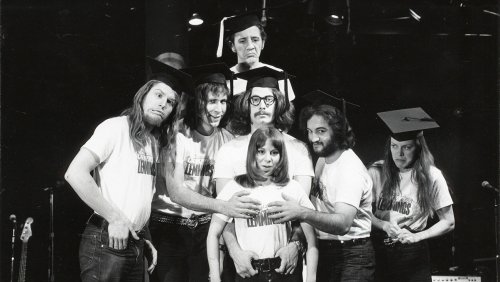
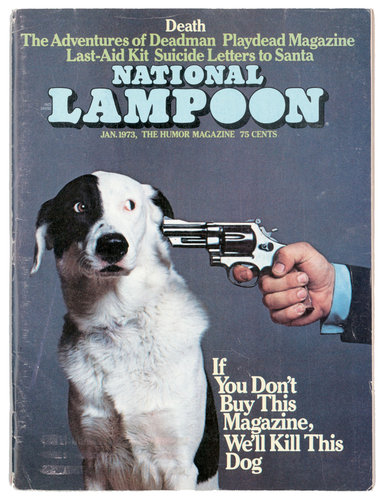
DRUNK STONED BRILLIANT DEAD: The Story of the National Lampoon takes us through an engaging and comprehensive history of the groundbreaking and seminal satirical magazine. For those of you who weren’t there, the National Lampoon – ever irreverent, raunchy and tasteless – was at the vanguard of the counter-culture in the early 1970s. Once reaching the rank of #2 news stand seller among all US magazines, it may be the most popularly accepted subversive art ever in the US (along with the wry Mad magazine during the Cold War).

In a few short years, the Lampoon rose from nowhere (well, actually from the Harvard Lampoon) to a humor empire with the magazine, records, a radio show and a traveling revue. And, yes, the title DRUNK STONED BRILLIANT DEAD does encapsulate the arc of the Lampoon’s story.

Documentarian Douglas Tirola tells the story so successfully because he persuaded almost all the surviving key participants to talk. We meet co-founder Henry Beard, publisher Matty Simmons, Art Director Michael Gross and other Lampoon staff including P.J. O’Rourke and Christopher Buckley. You’ll recognize the first editor, Tony Hendra, from his performance as the harried band manager in This Is Spinal Tap. We see clips of two Lampoon originals who haven’t survived, co-founder Doug Kenney and resident iconoclast Michael O’Donoghue.

The National Lampoon’s live performance revue featured John Belushi, Chevy Chase, Bill Murray, Brian Doyle Murray, Gilda Radner and Harold Ramis. When Lorne Michaels hired the whole crew for Saturday Night Live, the hit television show instantly surpassed the magazine in cultural penetration. “The Lampoon lost its exceptionalism”, says one observer.

But the Lampoon made its mark on the movies by launching the entire genre of raunchy comedies with Animal House and spawning the careers of filmmakers John Landis and Harold Ramis, as well as the SNL performers. We also see a clip of Christopher Guest in an early Lampoon performance. On the other hand, I hadn’t remembered a less successful Lampoon project from its later era, Disco Beaver from Outer Space.

This is all, of course, major nostalgia for Baby Boomers. Before seeing DRUNK STONED BRILLIANT DEAD, I thought, yeah, I’ll enjoy the Blast From The Past, but will younger audience viewers dismiss this humor as quaint? After all, the Lampoon’s success came from puncturing the boundaries of taste, and it’s hard to imagine anything today that would be shockingly raunchy. But, after watching DRUNK STONED BRILLIANT DEAD, I have to say that the humor stands up today as very sharp-edged. After all, an image of a baby in a blender with Satan’s finger poised to press the “puree” button is pretty transgressive no matter when it’s published. The sole exception is the Lampoon’s over-fixation on women’s breasts, which comes off today as pathetically sophomoric – or even adolescent.

DRUNK STONED BRILLIANT DEAD: The Story of the National Lampoon has also vaulted on to my list of Longest Movie Titles.

I saw DRUNK STONED BRILLIANT DEAD at the San Francisco International Film Festival. This is an important cultural story, well-told and it deserves a wide audience. You can stream it from iTunes or the Showtime VOD service (and you can catch it on the Showtime channel).

Drunk Stoned Brilliant Dead2

KEITH RICHARDS: UNDER THE INFLUENCE: jolly stories from a great raconteur

KEITH RICHARDS: UNDER THE INFLUENCE

Keith Richards: Under the Influence is a good enough excuse to spend time with the ever genial Keith Richards.  Keith is not just a rock icon and a medical marvel, he’s a great raconteur – ever genial, with an omnipresent cigarette-hacking chuckle.

Keith drops many a nugget while relating his own musical journey and much about American music of which he is a devotee:

  • About meeting Muddy Waters at Chess Records.
  • That he considers himself a better bass player than a guitar player.
  • How the intro licks to Street Fighting Man were recorded when only he and Charlie Watts came early to a recording session to mess around.
  • How his bass line with Charlie’s drumming sped up the pace to Sympathy with the Devil from a lament to really rockin’.
  • “I’m no longer a pop star and I don’t want to be one”.
  • A sharp observation that White “rock” can seem like a march, and “I prefer the ‘roll'”.
  • His period of not working with Mick Jagger in 1985-89 was “World War III”.
  • And there’s a VERY funny Johnny Cash-in-a-hotel-room story.

Here’s challenge – try to spell out Keith’s raspy chuckle. It’s something like “Huh-whey-whey-heh-heh”.

Keith Richards: Under the Influence has the feel of an infomercial for Richards’ book and newest solo album.  But, no matter, it’s time well spent.  Keith Richards: Under the Influence is available to stream from Netflix Instant.

A POEM IS A NAKED PERSON: Leon Russell in his prime

Leon Russell in A POEM IS A NAKED PERSON

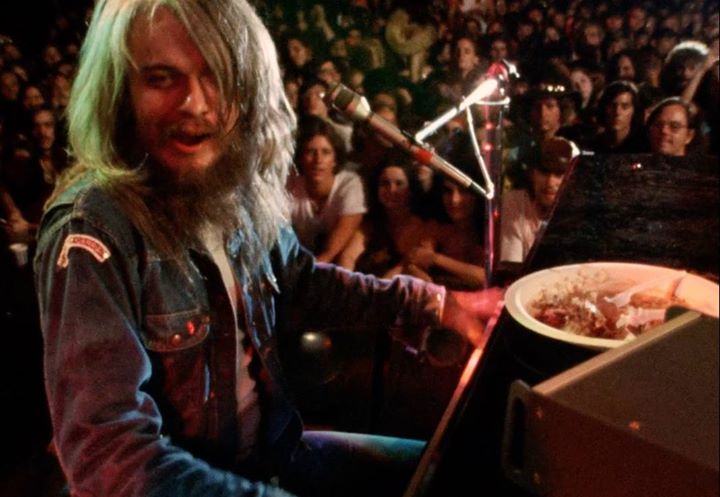
During the years 1972-4, documentarian Les Blank hung out and filmed around Leon Russell’s Oklahoma recording studio, and A Poem Is a Naked Person is the result.

This was the period when Russell produced two of my very favorite albums, Leon Live and Hank Wilson’s Back, so I especially enjoyed the music.  There’s also a nice snippet of Willie Nelson (pre-beard and pigtails) singing Good Hearted Woman.

In fact, all of the Leon Russell parts (both talking and performing) are great. The problem is that Blank filmed everybody and everything in the neighborhood, including a tractor pull, the demolition of a building and a seemingly deranged and snake-obsessed artist.  There’s also a lot of conversation between people who are very stoned.  Getting stoned is a lot more fun than listening to stoned people talk.

The documentary’s puzzling title originates from liner notes on a Bob Dylan album.

A Poem Is a Naked Person has been a bit of a Lost Film, until recently only shown at screening where Blank was present.  Now you can stream it on Amazon Instant, Vudu, YouTube and Google Play.

HITCHCOCK/TRUFFAUT: essential for serious movie fans

HITCHCOCK/TRUFFAUT
HITCHCOCK/TRUFFAUT

The documentary Hitchcock/Truffaut is a Must See for cinéastes.  In 1962, Francois Truffaut spent a week in Hollywood interviewing Alfred Hitchcock. These interviews formed the basis of Truffaut’s seminal 1966 book Hitchcock/Truffaut. At this moment, Truffaut was the hottest new thing in international cinema.  He was horrified that Hitchcock was viewed in the U.S. as only a genre director and pop celebrity, but not as the master of cinema that influenced Truffaut and the rest of the French New Wave. Vertigo, now rated by many as the greatest of films, had only broken even at the box office four years before.

Filmmaker Kent Jones took the audiotapes and stills from those 1962 interview sessions and adds what Truffaut could not – illustrative clips from the Hitchcock films themselves.  Because Truffaut is no longer with us, Jones also provides commentary from directors like martin Scorsese, David Fincher, Peter Bogdanovich and others. The result is an insightful celebration of Hitchcock’s body of work.

I had thought that I had a pretty fair grasp of Hitchcock, especially his love of surprise and the MacGuffin, his subversion of convention in Psycho and obsession with blonde actresses. But Hitchcock/Truffaut gave me a much richer understanding of Hitchcock’s visual sensibilities, his mastery of overhead shots, and his very limited expectations of his actors, as well as his compression and expansion of time.

Hitchcock/Truffaut will be interesting to any audience, but essential to serious movie fans.


VERY SEMI-SERIOUS: glimpsing inside The New Yorker cartoons

VERY SEMI-SERIOUS
VERY SEMI-SERIOUS

If you’re like me and you worship the cartoons in The New Yorker, then the documentary Very Semi-Serious is a Must See. Very Semi-Serious takes us inside The New Yorker for a glimpse inside the process of creating and selecting the cartoons, chiefly from the perspective of cartoonist and currently Cartoon Editor Bob Mankoff. You will know Mankoff from his cartoon with the caption, “How about never? Is never good for you?”.

We also meet rick star cartoonists that include Roz Chast and George Booth, along with The New Yorker Editor David Remnick and some aspiring cartoonist newcomers. We are boggled by the tens of cartoons each cartoonist pitches each week and the hundreds that Mankoff must review. Rejection is a major part of the cartoon life.

We also learn how Mankoff scientifically studies the eye movements of readers to see how/when/if we “get” the jokes. And we get to laugh again at HUNDREDS of cartoons.

I saw Very Semi-Serious in May at the San Francisco International Film Festival, and now you can see it beginning tonight on HBO. Set your DVRs.

THE SPYMASTERS — CIA IN THE CROSSHAIRS: Can we kill our way out of the War on Terror?

Leon Panetta in THE SPYMASTERS

In the thought-provoking documentary The Spymasters — CIA in the Crosshairs, we hear from all twelve directors of the CIA, from George H.W. Bush through current Director John Brennan.  They weigh in on the agency’s role in the War Against Terror, including harsh interrogation, drone warfare, the Kill List and “signature strikes”.  They disagree among themselves on torture, with Iraq War era directors George Tenet and Porter Goss, taking especially belligerent positions.  But there is a unified answer to this fundamental question about the War on Terror, “Can we kill our way out of it?”

The Spymasters — CIA in the Crosshairs showcases the decisions that a CIA Director must make, Leon Panetta poses one situation that he actually faced – do you take a rarely available missile shot at a terrorist who has just killed nine of your agents – when you know he is with his wife and kids? And several directors address the question, “What keeps you up at night?”

Besides the directors, we get to know a CIA operative with experience in Afghanistan, along with the agency’s chief of counter-terrorism. And we meet a most colorful character, the CIA’s former clandestine operations chief, Jose Rodriguez, who openly admits destroying the videos of CIA waterboarding.

The Spymasters echoes another talking head documentary The Gatekeepers, with the retired directors of the Shin Bet, Israel’s super-secret internal security force.  I recommend a double feature with these two companion films. The Gatekeepers is available to rent on DVD from Netflix and for streaming on Amazon Instant, iTunes, Vudu, YouTube, Google Play and Flixster.

The Spymasters — CIA in the Crosshairs is currently playing on Showtime.

DVD/Stream of the Week: AMY – emotionally affecting and thought-provoking

AMY
AMY

Amy, documentarian Asif Kapadia’s innovative biopic of singer-songwriter is one of the most heart-felt and engaging movies of the year.

In a brilliant directorial choice, Amy opens with a call phone video of a birthday party. It’s a typically rowdy bunch of 14 year-old girls, and, when they sing “Happy Birthday”, the song is taken over and finished spectacularly by one of the girls, who turns out to be the young Amy Winehouse. It shows us a regular girl in a moment of unaffected joy and friendship, but a girl with monstrous talent.

In fact ALL we see in Amy is footage of Amy. Her family and friends were devoted to home movies and cell phone video, resulting in a massive trove of candid video of Amy Winehouse and an especially rich palette for Kapadia.

We have a ringside seat for Amy’s artistic rise and her demise, fueled by bulimia and substance addiction. In a tragically startling sequence, her eyes signal the moment when her abuse of alcohol and pot gave way to crack and heroin.

We also see when she becomes the object of tabloid obsession. It’s hard enough for an addict to get clean, but it’s nigh impossible while being when harassed by the merciless paparazzi.

Amy makes us think about using a celebrity’s disease as a source of amusement – mocking the behaviorally unhealthy for our sport. Some people act like jerks because they are jerks – others because they are sick. Winehouse was cruelly painted as a brat, but she was really suffering through a spiral of despair.

The Amy Winehouse story is a tragic one, but Amy is very watchable because Amy herself was very funny and sharply witty. As maddening as it was for those who shared her journey, it was also fun, from all reports. Everyone who watches Amy will like Amy, making her fate all the more tragic.  It’s available to rent on DVD from Netflix and Redbox and streaming on Amazon Instant, iTunes, Vudu, YouTube and Google Play.

ONE DAY IN AUSCHWITZ: an individual, personal testimony

Kitty Hart-Moxon in ONE DAY IN AUSCHWITZ

Kitty Hart-Moxon is an elderly Holocaust survivor now living in the UK. In One Day in Auschwitz, she takes two seventeen-year-old girls – the same age that she entered the famed Nazi concentration camp – to Auschwitz. She guides them around the camp and narrates her experiences there.  We already know about the horrors, but her matter-of-fact testimony helps us appreciate the extra lengths that the Nazis took to dehumanize, in addition to murdering, their victims.  It’s a very personal account and a compelling one.

One Day in Auschwitz is now playing on Showtime.

LAMBERT & STAMP: a good story from the birth of hard rock

Chris Stamp, Pete Townsend and Kit Lambert in LAMBERT & STAMP

The documentary Lambert & Stamp is the story of the two guys, Chris Stamp and Kit Lambert, who managed The Who to rock immortality. It’s an interesting odd couple story: hardscrabble and posh, straight and gay. There’s also this improbable but actual premise – in a quest to become movie directors, Lambert and Stamp decided to find a rock group to manage, film themselves managing the group and then use the resulting film as their filmmaking calling card. Of course, because they stumbled on a struggling band named The High Numbers and turned them into The Who, they never got to make the movie.

Chris Stamp survives, along with The Who members Pete Townsend and Roger Daltrey, and we get to hear the story from their lips, and there’s plenty of film from the 60s and 70s, too. (The actor Terence Stamp is in the movie, too – he’s Chris Stamp’s big brother.)

However, rich source material can be too much of a good thing if you use more of it than you need. It’s interesting to see Lambert hold forth in German and French with European journalists, but not on and on and on. Lambert & Stamp is a little too long for me to recommend to a general audience, but to people interested in rock history or fans of The Who, it’s a Must See.

Lambert & Stamp is available streaming on Amazon Instant Video, Vudu, YouTube and Google Play.