
THE SPYMASTERS — CIA IN THE CROSSHAIRS: Can we kill our way out of the War on Terror?

Leon Panetta in THE SPYMASTERS

In the thought-provoking documentary The Spymasters — CIA in the Crosshairs, we hear from all twelve directors of the CIA, from George H.W. Bush through current Director John Brennan.  They weigh in on the agency’s role in the War Against Terror, including harsh interrogation, drone warfare, the Kill List and “signature strikes”.  They disagree among themselves on torture, with Iraq War era directors George Tenet and Porter Goss, taking especially belligerent positions.  But there is a unified answer to this fundamental question about the War on Terror, “Can we kill our way out of it?”

The Spymasters — CIA in the Crosshairs showcases the decisions that a CIA Director must make, Leon Panetta poses one situation that he actually faced – do you take a rarely available missile shot at a terrorist who has just killed nine of your agents – when you know he is with his wife and kids? And several directors address the question, “What keeps you up at night?”

Besides the directors, we get to know a CIA operative with experience in Afghanistan, along with the agency’s chief of counter-terrorism. And we meet a most colorful character, the CIA’s former clandestine operations chief, Jose Rodriguez, who openly admits destroying the videos of CIA waterboarding.

The Spymasters echoes another talking head documentary The Gatekeepers, with the retired directors of the Shin Bet, Israel’s super-secret internal security force.  I recommend a double feature with these two companion films. The Gatekeepers is available to rent on DVD from Netflix and for streaming on Amazon Instant, iTunes, Vudu, YouTube, Google Play and Flixster.

The Spymasters — CIA in the Crosshairs is currently playing on Showtime.

DVD/Stream of the Week: AMY – emotionally affecting and thought-provoking

AMY
AMY

Amy, documentarian Asif Kapadia’s innovative biopic of singer-songwriter is one of the most heart-felt and engaging movies of the year.

In a brilliant directorial choice, Amy opens with a call phone video of a birthday party. It’s a typically rowdy bunch of 14 year-old girls, and, when they sing “Happy Birthday”, the song is taken over and finished spectacularly by one of the girls, who turns out to be the young Amy Winehouse. It shows us a regular girl in a moment of unaffected joy and friendship, but a girl with monstrous talent.

In fact ALL we see in Amy is footage of Amy. Her family and friends were devoted to home movies and cell phone video, resulting in a massive trove of candid video of Amy Winehouse and an especially rich palette for Kapadia.

We have a ringside seat for Amy’s artistic rise and her demise, fueled by bulimia and substance addiction. In a tragically startling sequence, her eyes signal the moment when her abuse of alcohol and pot gave way to crack and heroin.

We also see when she becomes the object of tabloid obsession. It’s hard enough for an addict to get clean, but it’s nigh impossible while being when harassed by the merciless paparazzi.

Amy makes us think about using a celebrity’s disease as a source of amusement – mocking the behaviorally unhealthy for our sport. Some people act like jerks because they are jerks – others because they are sick. Winehouse was cruelly painted as a brat, but she was really suffering through a spiral of despair.

The Amy Winehouse story is a tragic one, but Amy is very watchable because Amy herself was very funny and sharply witty. As maddening as it was for those who shared her journey, it was also fun, from all reports. Everyone who watches Amy will like Amy, making her fate all the more tragic.  It’s available to rent on DVD from Netflix and Redbox and streaming on Amazon Instant, iTunes, Vudu, YouTube and Google Play.

ONE DAY IN AUSCHWITZ: an individual, personal testimony

Kitty Hart-Moxon in ONE DAY IN AUSCHWITZ

Kitty Hart-Moxon is an elderly Holocaust survivor now living in the UK. In One Day in Auschwitz, she takes two seventeen-year-old girls – the same age that she entered the famed Nazi concentration camp – to Auschwitz. She guides them around the camp and narrates her experiences there.  We already know about the horrors, but her matter-of-fact testimony helps us appreciate the extra lengths that the Nazis took to dehumanize, in addition to murdering, their victims.  It’s a very personal account and a compelling one.

One Day in Auschwitz is now playing on Showtime.

LAMBERT & STAMP: a good story from the birth of hard rock

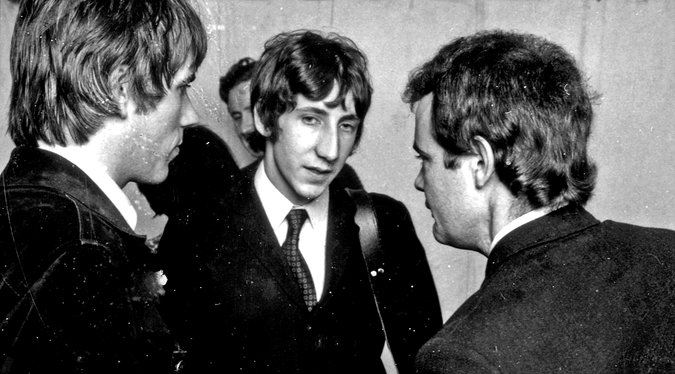
Chris Stamp, Pete Townsend and Kit Lambert in LAMBERT & STAMP

The documentary Lambert & Stamp is the story of the two guys, Chris Stamp and Kit Lambert, who managed The Who to rock immortality. It’s an interesting odd couple story: hardscrabble and posh, straight and gay. There’s also this improbable but actual premise – in a quest to become movie directors, Lambert and Stamp decided to find a rock group to manage, film themselves managing the group and then use the resulting film as their filmmaking calling card. Of course, because they stumbled on a struggling band named The High Numbers and turned them into The Who, they never got to make the movie.

Chris Stamp survives, along with The Who members Pete Townsend and Roger Daltrey, and we get to hear the story from their lips, and there’s plenty of film from the 60s and 70s, too. (The actor Terence Stamp is in the movie, too – he’s Chris Stamp’s big brother.)

However, rich source material can be too much of a good thing if you use more of it than you need. It’s interesting to see Lambert hold forth in German and French with European journalists, but not on and on and on. Lambert & Stamp is a little too long for me to recommend to a general audience, but to people interested in rock history or fans of The Who, it’s a Must See.

Lambert & Stamp is available streaming on Amazon Instant Video, Vudu, YouTube and Google Play.

3 STILL STANDING: the comics who spurned LA

the stars of 3 STILL STANDING: Larry "Bubbles" Brown, Johnny Steele, Will Durst
The stars of 3 STILL STANDING: Larry “Bubbles” Brown, Johnny Steele, Will Durst

The San Francisco comedy club scene of the 1980s was a Golden Age for the art form of stand-up comedy – and its practitioners do consider it an art form, not just an entertainment product.  That Bay Area scene launched major careers: Robin Williams, Dana Carvey, Paula Poundstone, Ellen DeGeneres, Bobby Slayton, Kevin Pollack, Whoopi Goldberg and Rob Schneider.  The documentary 3 Still Standing tells the story of three of their comedy peers who flourished in the 1980s but chose not to “go to LA” and how they’ve dealt with the “downsizing”, when cable TV killed the market for stand-up comedy in clubs.

The three comics – Will Durst, Larry “Bubbles” Brown and Johnny Steele – are what make 3 Still Standing so compelling.  Durst is a master of sharp political comedy in a society that is now more interested in vacuous celebrities.  Steele’s observations are too subversive for a mainstream that is less hip and a whole lot less smart.  Brown, whose appearances on Letterman were 21 years apart, is no longer young enough for the decision-makers who book comedy.  But they’re all experts in their craft, and their material is hilarious.

Larry “Bubbles” Brown is a revelation.  His comic persona is based on his half-empty world view and his self-deprecating view of his looks.

“It’s been a great day for me. Haven’t passed any blood.”

“I’m in the medical textbooks as one of the major causes of vaginal dryness”.

“Giving me Viagra is like giving a doorbell to a homeless guy.”

We’ve seen the global and technological economic changes that end once-promising career paths and force us to adapt or else.  Here, the catalysts are both techno-economic (the supplanting/absorption of the comedy market by cable television)  and cultural (the continued dumbing-down of our society).   But it’s rare that the aging victims among us are so damn fun to watch as these three artists.

Filmmakers Donna Locicero and Richard Campos started the project “as a Valentine to the era that we enjoyed so much”.  That would have been an entertaining movie.  But 3 Still Standing gained more depth and texture when it evolved into the character-driven story of these three guys and their plight.  In a post-screening Q & A, Campos also noted that “the San Francisco Bay Area is a character in the film”.

Robin Williams and Dana Carvey are prominent parts of 3 Still Standing. Locicero said that Williams had seen several versions of the film, including the final cut – all to ensure that his segments didn’t overshadow the story of the three principals.

3 Still Standing opens on November 12 at Camera 3 in San Jose. On November 11, the San Jose Improv will host a screening with outtakes from the movie and live appearances by Durst, Brown and Steele.

Durst, Brown and Steele are inventive originals and important artists.  They prove that you can be on the wrong side of the marketplace and still be on the right side of history. I saw 3 Still Standing at the Camera Cinema Club.


PROPHET’S PREY: perverting polygamy

PROPHET'S PREY
PROPHET’S PREY

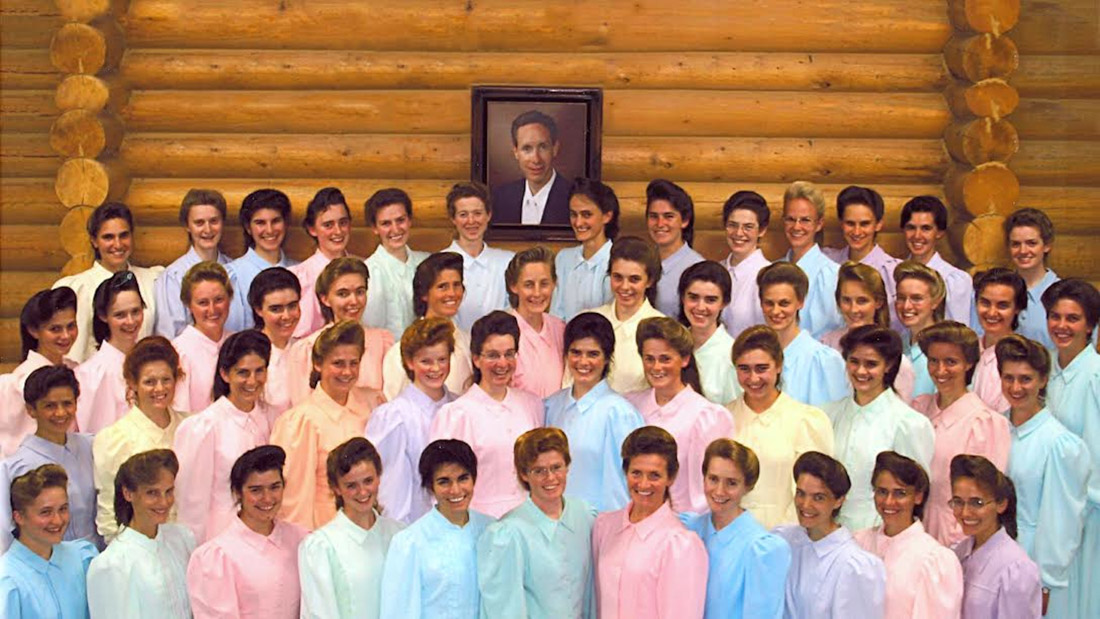
The Showtime documentary Prophet’s Prey takes us deep into the world of renegade Mormon polygamist leader Warren Jeffs, now behind bars for sexual assault on young girls. In 1986, Jeff’s father Rulon Jeffs became the patriarch of the Fundamentalist Church of Latter Day Saints (FLDS), a polygamous cult that straddles the barren borders of Utah and Arizona. When Rulon became in firm, Warren Jeffs took control and, upon Rulon’s death, became the Church’s leader, a position of unencumbered and accountable power within the Church.

Fundamentalist polygamy, as practiced by Rulon and others, often involves older men taking on underage girls as multiple wives, which is discomfiting enough. But Warren is a sociopath and a child sexual predator, who, when given total power as leader became a monster of unspeakable proportions. Reportedly, at least 24 of Warren Jeff’s “wives” were under 17 and as young as 12.

As in any effective documentary, the source material is top rate. Filmmaker Amy Berg directed Prophet’s Prey from the book of the same name by Sam Brower (who also appears in the film) the private eye who dogged Jeffs. We hear from Warren Jeff’s “wife” #63 Janet. We meet his brother Warren (once head of FLDS security) and his sister Elaine and his nephews Brent and Lyle. There’s even amazing surveillance camera footage of Jeffs in his cell.

Prophet’s Prey’s writer-director Amy Berg previously directed Deliver Us from Evil about pedophile Catholic priests in California’s Central Valley, which ranked in the top ten on my list of Best Movies of 2006. She’s well on her way to cornering the market on docs about sexually deviant religious leaders. Prophet’s Prey is narrated by the musician Nick Cave.

Prophet’s Prey is currently playing on Showtime and DirecTV PPV.

STEVE JOBS: THE MAN IN THE MACHINE – anything but reverential

The first two-thirds of Alex Gibney’s documentary Steve Jobs: The Man in the Machine provides us with remarkable insight into the personal life of Apple co-founder Steve Jobs.  We see plenty of evidence that Jobs was obsessively driven, a marketing genius, consumed by self-absorption and a nasty bully.

Gibney brings us an interview with the mother of Jobs’ first daughter (who he initially refused to acknowledge).  We also hear from their roommate (and presumably Apple’s #3 employee), who articulates the movie’s theme:

How much of an asshole do you need to be, to be successful?

There’s no question that Jobs qualifies as a jerk of singular proportions – grudgingly agreeing to $500/month in child support at the moment his wealth zoomed to $200 million.  And calculating the IPO stock awarded to his former roommate (“How about I give him zero?”).

We hear from the daughter herself (off-camera), with whom Jobs eventually kindled a relationship.  And we hear from the members of the executive team responsible for Apple’s resurgence, including the guys who brought us the iPod and iPhone.  We do not see Apple co-founder Steve Wozniak or the family from Jobs’ second marriage.

How did he get to be so driven?  There are insights in what molded him, especially his feelings about his adoption.  What made him a genius?  Not so much on that one.

In the final third of the film, Gibney piles on.  But it’s not a shock to hear about a Silicon Valley CEO enriching himself by back-dating stock options or exploiting Chinese workers. It ‘s more telling to find out Jobs reveled in parking in handicapped spaces.

There’s a major Hollywood biopic about Jobs coming out in just two weeks:  Danny Boyle’s Steve Jobs, starring Michael Fassbender in the titular role.

Alex Gibney is one our very, very best documentarians. He won an Oscar for Taxi to the Dark Side, and he made the superb Casino Jack: The United States of Money, Enron: The Smartest Guys in the Room, Client 9: The Rise and Fall of Elliot Spitzer, Mea Maxima Culpa: Silence in the House of God and Going Clear: The Prison of Belief.  Man in the Machine doesn’t rise to the level of those films, but it’s worthwhile to those already interested in its subject.

Steve Jobs: The Man in the Machine is in theaters and also available streaming from Amazon, Vudu, YouTube, Google Play, and, of course, iTunes.

MEET THE PATELS: a documentary funnier than most comedies

MEET THE PATELS
MEET THE PATELS

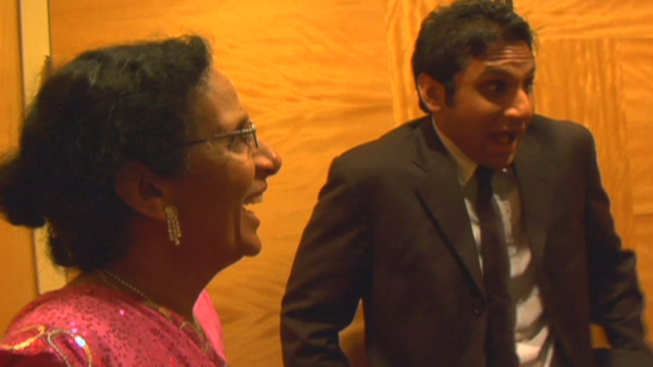
Meet the Patels is both a documentary and a comedy – and ultimately, a satisfying crowd-pleaser.  Over several years, filmmaker Geeta Patel filmed her own brother Ravi and their parents in their quest to find a wife for Ravi.  Ravi and Geeta’s parents were born in India, had a traditional arranged marriage which has resulted in decades of happiness.  Their American-born kids, of course, reject the very idea of an arranged marriage.  But Ravi finds the pull of his Indian heritage compelling enough to dump his redheaded girlfriend and try to find a nice Indian-American girl.  His parents try to help him with unbounded and unrelenting enthusiasm.

Meet the Patels is very funny – much funnier than most fictional comedies.  It’s always awkward when parents involve themselves in their child’s romantic aspirations.  That’s true here, and produces some side-splitting moments.  It helps that the Patel parents are very expressive, and downright hilarious.  The dad is so funny that I could watch him read a telephone book for 90 minutes, and the mom is herself a force of nature.

We learn that the Patels of Gujarat have adapted an entire menu of marriage opportunities to American society: a matchmaking profile system called “biodata”, matrimonial fairs, “the wedding season” and more.

Meet the Patels has its share of  cultural tourism and the clash of generations.  But is so damn appealing because it’s much more than that – it’s a completely authentic saga of family dynamics, dynamics that we’ve all experienced or at least observed.  The family members’ mutual love for each other drives family conflict and, finally, family unity.

I saw Meet the Patels at the Camera Cinema Club earlier this year, and it opens in the Bay Area tomorrow.  It’s hilarious and heart-warming.  Go see it.


GOING CLEAR: THE PRISON OF BELIEF: a devastating expose

GOING CLEAR: THE PRISON OF BELIEF

Going Clear: The Prison of Belief, documentarian Alex Gibney’s devastating expose of Scientology, originally shown on HBO in April, is opening theatrically tomorrow. The indictment of Scientology as dangerous cult is stunning. Gibney is sunshining an amazingly rich reservoir of source material: we hear from several former Scientologists, including the former chief spokesperson, the former top deputy to the Chairman of the Board, along with former believer director Paul Haggis and the John Travolta’s original Scientology handler.

Gibney begins by tracing the journey of Scientology’s founder, L. Ron Hubbard and reviewing the organization’s history. Now I knew about the science fiction writer Hubbard, his book Dianetics and even the E-meter. But I sure didn’t know about the Sea Org with its billion-year employment contracts, the Scientology Navy and the bizarro theology with invisible Thetans, volcanos and H-bombs. Nor had I seen the North Korea-style cult-of-personality spectacles featuring Chairman of the Board David McCavige. And I hadn’t heard about the church’s opposition to same-sex marriage.

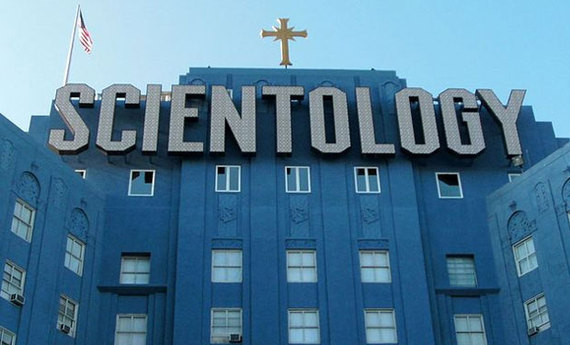
Then come the really scary stuff. We hear from former Scientology officials who testify that they have been incarcerated in the Rehabilitation Project Force – a concentration camp on a top floor of the Scientology’s Los Angeles HQ and in what is essentially a prison camp in Florida to “re-educate” suspected heretics and backsliders. And there is testimony about the prisoners being separated from their children, who are shunted off to Cadet Org. One official offers personal testimony of his assignment to break up Nicole Kidman’s marriage to Tom Cruise and to alienate her children from her. It’s horrifying stuff. And it’s a riveting viewing experience.

Alex Gibney is one our very, very best documentarians. He won an Oscar for Taxi to the Dark Side, and he made the superb Casino Jack: The United States of Money, Enron: The Smartest Guys in the Room, Client 9: The Rise and Fall of Elliot Spitzer and Mea Maxima Culpa: Silence in the House of God. (He can’t seem to pass up a really long movie title – but Going Clear etc., came from a book title.)

If you’re asking “How can smart, able people fall into this stuff?”, then I recommend finding a film that I reviewed at Cinequest 2015 – The Center. Upon its release, The Center should become the perfect narrative fiction companion to Going Clear.

Warren Oates: a gift for desperation

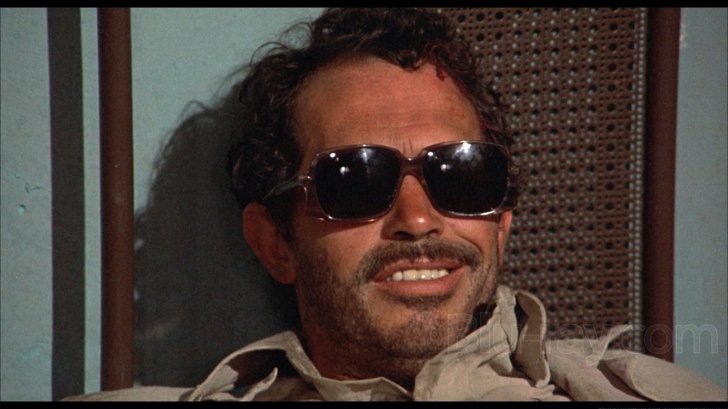
Warren Oates in BRING ME THE HEAD OF ALFREDO GARCIA

I love the character actor Warren Oates for his idiosyncratic performances in the period 1969-74 – and this is Warren Oates Week at The Movie Gourmet.  Friday, I’ll write about the upcoming Oatesathon on Monday night, when Turner Classic Movies will be presenting SEVEN Warren Oates movies.  And next week’s DVD.Stream of the Week will feature two Oates cult classics that TCM will be missing.

Oates was one of those actors whose performances always make an impression.  He could turn a stock Western Bad Guy into a memorable character by adding a touch of cowardice, dimwittedness or venality.  In Barquero, he was formidable enough to go gun barrel-to-gun barrel with Lee Van Cleef for 115 minutes.

Oates had a special gift for portraying desperation, so he triumphed in neo-noirs like Chandler, Cockfighter, The Brinks Job and his crowning achievement, Bring Me the Head of Alfredo Garcia.  By early 1970s,  the counter-culture was bringing lots of screenplay cynicism and anti-hero roles to the movies – both perfect for Oates.

Warren Oates died in 1982 at age 53.  He has 123 acting credits on IMDb, mostly Westerns.  He was a favorite of directors Sam Peckinpah and Monte Hellman.  Indeed, he is most well-known for playing one of the Gorch brothers in Peckinpah’s The Wild Bunch and Sissy Spacek’s father (blown away by teen punk Martin Sheen) in Terence Malick’s Badlands.

Some of Oates’ best work was in 1974 as the leads in Peckinpah’s Bring Me the Head of Alfredo Garcia and Hellman’s Cockfighter.   He was also unforgettable in the offbeat Barquero (1970), Hellman’s Two-lane Blacktop (1971) and Peter Fonda’s The Hired Hand (1971).

The 53-minute 1993 documentary Warren Oates Across the Border  includes clips of Oates’ work, along with commentary from his widow Teddy Oates, Hellman, and fellow actors Ned Beatty, Robert Culp, Ben Johnson, Peter Fonda, Stacy Keach and Millie Perkins.  Here it is.