Documentarian Kirsten Johnson and her dad face the end of his life in this funny, heartfelt and frequently bizarre film. Dick Johnson Is Dead is so highly original that I would place it in its own genre – docufantasy.
Kirsten’s father Dick Johnson is an 85-year-old psychiatrist whose increasing forgetfulness and frailty is forcing hm to leave his Seattle house and move onto Kirsten’s NYC apartment. As generally sunny as he is, his loss of vigor and independence is hard on him. His impending loss of memory (and of life itself is hard on them both.
Kirsten chronicles the familiar – the doctor’s appointments, the closing of her dad’s practice, the selling of his car and the downsizing of his possessions. And then she grapples with his mortality by staging a series of fictional demises – as he “dies” in a series of quirky accidents, like getting a large appliance dropped on him from a highrise. Other scenes imagine Dick in heaven, dancing with her mom, and dining with Frederick Douglass and Buster Keaton.
DICK JOHNSON IS DEAD
Dick Johnson is indulgent with his daughter and one helluva good sport. There’s even a Seattle “funeral” while Dick is still alive and able to watch from the wings.
Offbeat as it is, the core of Dick Johnson Is Dead is wistful and deeply personal. Dick Johnson Is Dead is streaming on Netflix.
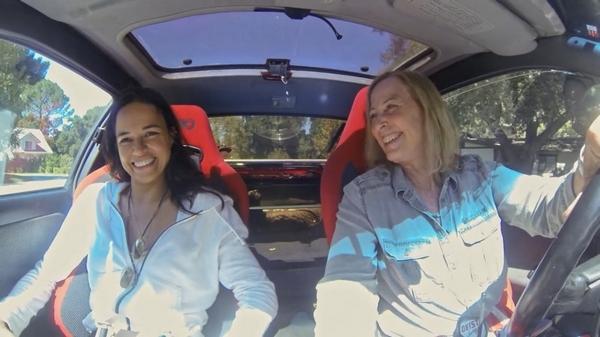
Michelle Rodriguez and Debbie Evans in StUNTWOMEN: THE UNTOLD HOLLYWOOD STORY. Photo Credit Shout! Factory
“Actresses play characters, but stuntwoman play actresses playing characters, while driving fast and kicking ass.”
That’s one of the professional movie stuntwomen summing up the business in the documentary Stuntwomen: The Untold Hollywood Story. Stunt performing and stunt coordinating are underappreciated by most of us – and certainly kept in the background by the industry (and the Oscars). It’s hard and dangerous enough to perform movie stunts, but females have also had to battle against persistent gender bias.
Stuntwomen: The Untold Hollywood Story takes us back to the first decade of silent films, when actresses did their own extreme stunts, until they became too valuable in box office terms to be expendable. At that point, women were frozen out of the stunt business for half a century. Michelle Rodriguez, who is currently our most kickass/badass actress, helps introduce us to today’s world of women who specialize in fighting, crashing cars, falling off great heights and getting set on fire.
We meet Jeannie Epper, who doubled Lynda Carter in Wonder Woman and Jadie David, who doubled Pam Grier in all those Blaxploitation action movies. (Epper fell backwards out of tall buildings, and then the film was reversed to create the effect of Wonder Woman zooming upwards.)
We also learn the meaning of “wigging a guy”. And we are reminded that stuntwomen often double actresses who are wearing high heels, and that skimpy outfits don’t allow for much protective padding.
This is solid women’s history and a great inside glimpse at the movie biz. Stuntwomen: The Untold Hollywood Story can be streamed from iTunes and Google Play.
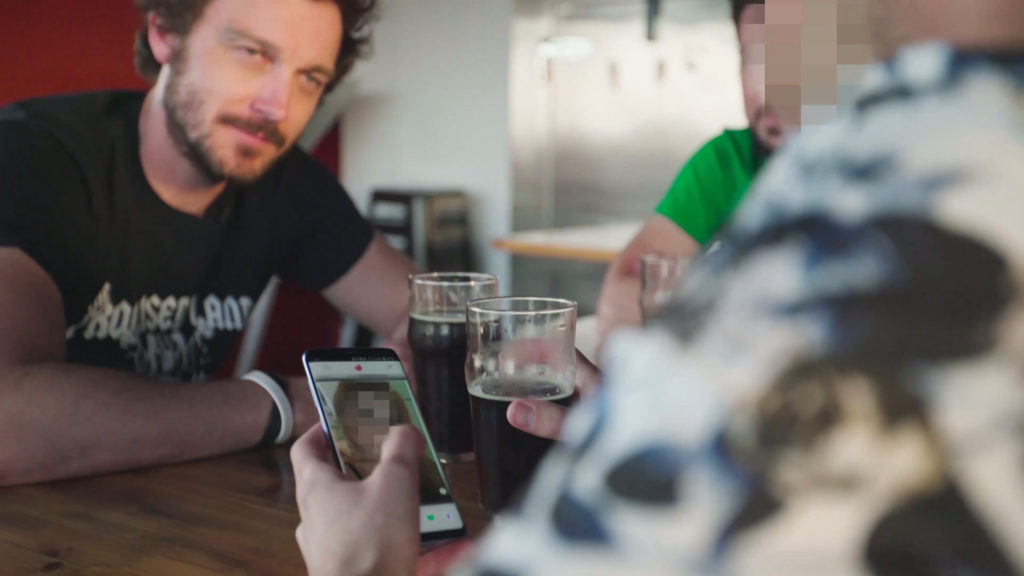
Documentarian Al Bailey and his subject “Christian” swiping though Tinder. Photo courtesy of DTF and Gravitas Ventures.
In all fairness, the wild and unpleasant DTF is not the documentary that filmmaker Al Bailey planned to make. Bailey wanted to explore the world of dating apps by following a heavy user of Tinder as he coursed through a series of casual hook-ups.
Bailey thought he had the perfect subject, his friend Christian, a widowed, globe-hopping airline pilot. Bailey expected to harvest lots of prurient fodder from the horny Christian’s meeting and dating lots of single ladies across the world. And Bailey, who had introduced Christian and his late wife of 14 years, justifiably thought he knew Christian.
But Christian had become an altogether different person, not just a party hound, but someone who had descended into a vortex of sex addiction, depression and substance dependency. And when Christian is drunk, we see a despicable torrent of misogyny and racism.
“Christian” is not the pilot’s real name – and his face and voice are obscured throughout the film. If identified, he would certainly lose his job because DTF documents alcohol and drug use that violates the restrictions for long haul airline pilots.
“Men behaving badly” has become a genre of its own in narrative cinema and even documentaries. DTF is not that. Christian’s behavior is not just hedonistic, but jaw-droppingly dangerous to others. He is not just a jerk, but a public menace.
Now Bailey is not blameless here. There are several cringe-heavy moments where Bailey reneges on promises to Christian and his dates to stop filming them. And Bailey tries a Michael Moore-style ambush of Tinder’s corporate HQ, a tactic that I despise even when Moore or 60 Minutes deploys it. And there are moments where Bailey and his colleagues debate the ethics of continuing when the film itself may be prompting Christian toward even more risky behavior.
Sometimes I’ll watch a movie and feel like I need to shower afterwards. After DTF, I felt like I needed to dive into a pool of disinfectant. DTF is available to stream from on Amazon, iTunes, Vudu and other platforms.
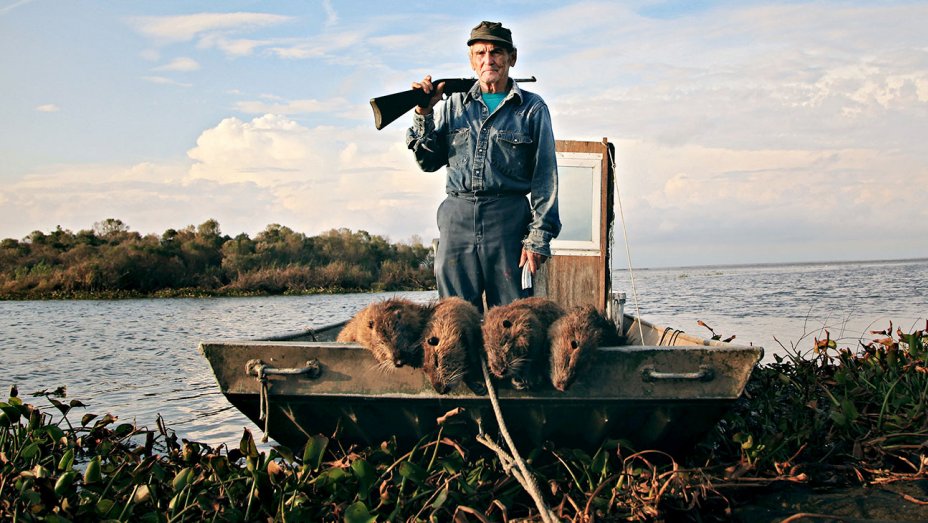
The offbeat documentary Rodents of Unusual Size, with its bizarre subject, is charmingly addictive. That subject is the nutria, a 20- to 30-pound Argentine rodent that threatens Louisiana’s wetlands and coastline. Yes, 30-pound swamp rats with orange teeth.
Although Rodents of Unusual Size is decidedly non-preachy, the nutria is serious business. Imported for the commercial potential of its fur by a Tabasco sauce heir, nutria escaped into the Louisiana wilds and propagated wildly. When the US fur market crashed in the 1990s, the locals stopped trapping them, and Louisiana’s nutria population exploded to 20 million.
The problem is that nutria eat the roots of the vegetation in the Louisiana wetlands, causing erosion that has converted at least 42 square miles of land into open water. Worse, those wetlands are the storm buffer for the rest of the state.
Louisiana offers hunters a $5 bounty for the tail of each dead nutria, which has reduced the nutria population to a more manageable 5 million. We even meet a guy whose official job title is Nutria Tail Assessor.
One of the reasons I love Louisiana is that folks just don’t take themselves too seriously there. Even when they are focused on the grave environmental impacts of the nutria invasion, they still appreciate the absurdity of a 30-pound, orange-toothed swamp rat. (And, fittingly, Rodents of Unusual Size is narrated by Louisiana native Wendell Pierce.)
Along the way, we are also introduced to nutria fur and the fur company Righteous Fur, nutria meat, nutria sports mascots and even nutria as pets.
But most compellingly, we meet Thomas Gonzalez, an 80-year-old bayou native, nutria hunter and bon vivant. Gonzalez is a force of nature, complete with strong-willed opinions and some impressive dance moves. Gonzalez serves as the voice of Louisiana and finishes the movie with a profound perspective on the nutria.
I saw Rodents of Unusual Size at Silicon Valley’s Cinema Club with filmmaker Chris Metzler available for Q&A. Metzler and his colleagues Jeff Springer and Quinn Costello filmed Rodents of Unusual Size over four years during Louisiana’s nutria season (November to April). The affable Metzler is a font of nutria knowledge, full of tidbits like albino nutria being prized by taxidermists. Because nutria are very difficult to spot and film in the wild, the filmmakers used Nooty the stunt nutria throughout the film. Nooty joined the filmmakers in creeping along the red carpet at various film festivals and has her own Facebook page.
Thomas Gonzalez alone is worth meeting on film, and, as told by Rodents of Unusual Size, the story of the nutria is quirkily fascinating. Rodents of Unusual Size can be streamed from Amazon and iTunes.
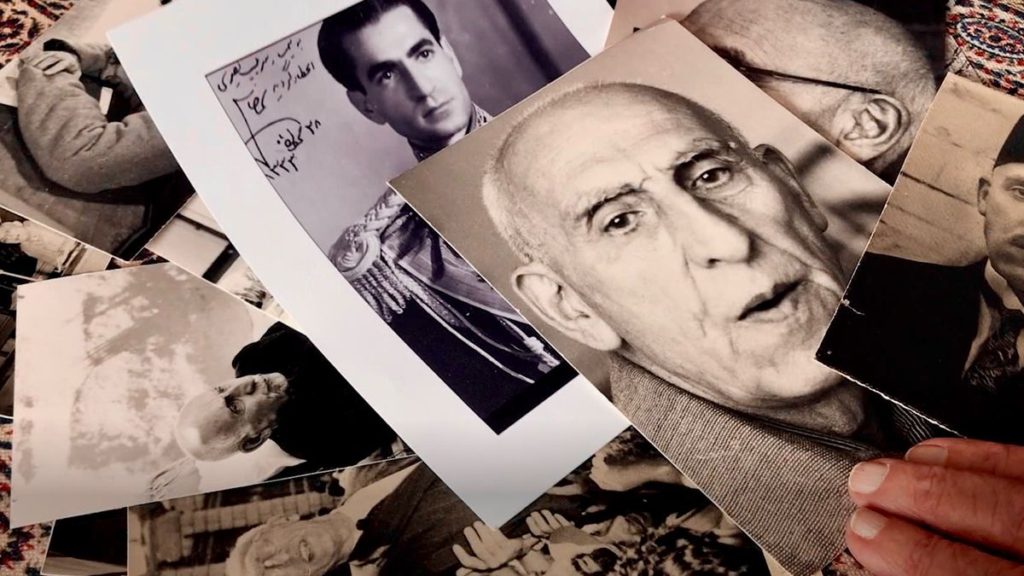
The Cold War espionage documentary Coup 53 brings astounding new source material to the history of the 1953 coup which replaced the democratically elected Premier of Iran, Mohammad Mosaddegh, with the Shah.
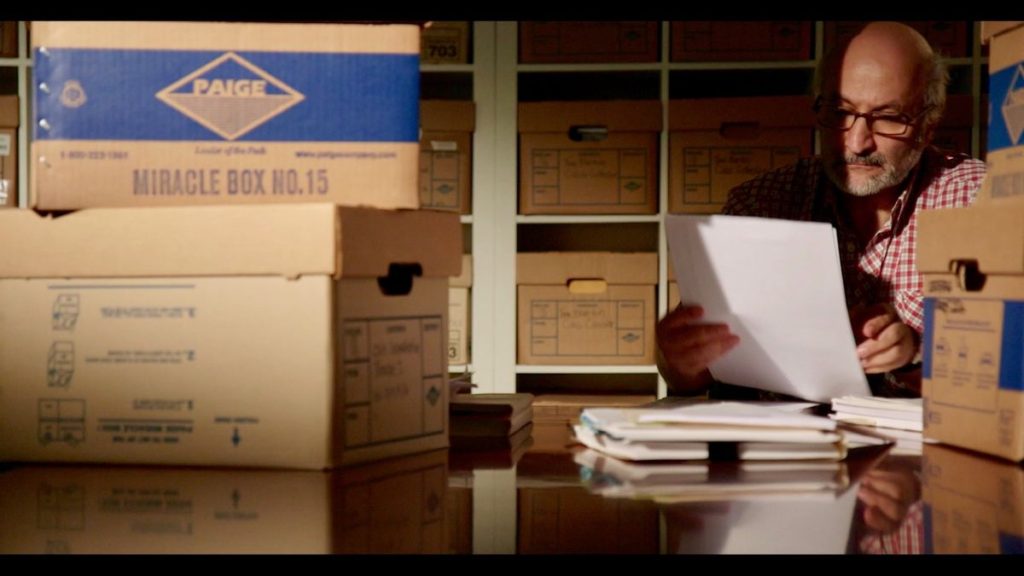
The key to the success of Coup 53 is that filmmaker Taghi Amirani uncovered troves of never-before seen source material. Amirani brings us oral histories of Iranian witnesses to the coup, including a play-by-play from Mosaddegh’s head of security. He adds a video interview with the last surviving Iranian coup plotter, an especially cadaverous and repugnant individual. There are also boxes of more recently-declassified CIA documents.
COUP 53. Courtesy of Coup 53
But, most essential are the tapes and transcripts of interviews for a 1970s BBC documentary. The testimony of Norman Darbyshire, the British spy who masterminded the coup, was cut from the BBC doc, but Amirani found an uncensored transcript. Ingeniously, Coup 53 reconstructs Darbyshire’s interview in the same room in London’s Savoy Hotel, with the same camera operator present (!) and actor Ralph Fiennes reciting Darbyshire’s actual words.
Why did Darbyshire spill the beans? He may have resented that CIA agent Kermit Roosevelt (TR’s grandson) exaggerated his role as a last minute bag man, when Darbyshire had laid the groundwork for years and was the real instigator.
Although the UK’s involvement has never been officially acknowledged by the UK government, everyone has known about it for decades. There’s even a clip in Coup 53 of Richard Nixon explaining it on TV in the 1970s or 1980s. But this is very personal to Taghi Amirani, and he puts great import on the smoking gun – an interview with the British spy who designed and directed the coup.
Although I think that Amirani oversells the proof of British involvement, there is is lot of exciting new stuff for the moderately informed rest of us. For example, we get a deeper-than-usual dive into Mohammad Mosaddegh himself, a man many of us have only seen as a victim of Western over-reaction to communism. We also learn that:
Harry Truman opposed the regime change, but newbie President Ike was persuaded by Wall Street’s Dulles brothers to green light the coup.
The CIA was walking away after an initial coup failure.
After the UK did the dirty work, the US got the most influence with the Shah, and, with Israel’s help, set up the Shah’s brutal and hated secret police, the Savak.
From Mosaddegh’s nephew, we learn about Mosaddegh’s final years under house arrest, his last secret joyride through Tehran and his unusual dining room burial.
There’s one stunning What If moment – revolutionary Iranian President Abolhassan Banisadr explains that after the first coup attempt failed, Mosaddegh had the list of all the coup plotters. Had he executed them all immediately, there would have been no coup in 1953, no revolution and Hostage Crisis in 1978 and today Iran would be a stable, 70-year-old Muslim democracy in the Middle East.
Coup 53 is directed by Taghi Amirani and its editor, Walter Murch. The Iran-born and UK-educated Amirani is the researcher and on-camera interviewer. Murch is probably our greatest living film editor and the person who invented the entire field of movie sound design in the 1970s.
Coup 53 is available to stream on Virtual Cinema; I watched it at the Roxie.
The powerful documentary Apocalypse ’45 takes never-before-seen footage of WWII action and blends it into an experience that brings new insights to familiar history.
Apocalypse ’45 takes on the war in the Pacific in 1944 and 1945; the Japanese military knew that its defeat was inevitable, and their strategy was to avoid unconditional surrender by making its price to the Americans too painful. What happened was horrible, and filmmaker Erik Nelson helps us appreciate that with his spare construction – Apocalypse ’45 is essentially three elements – the film itself, the voice over by survivors and starkly evocative titles.
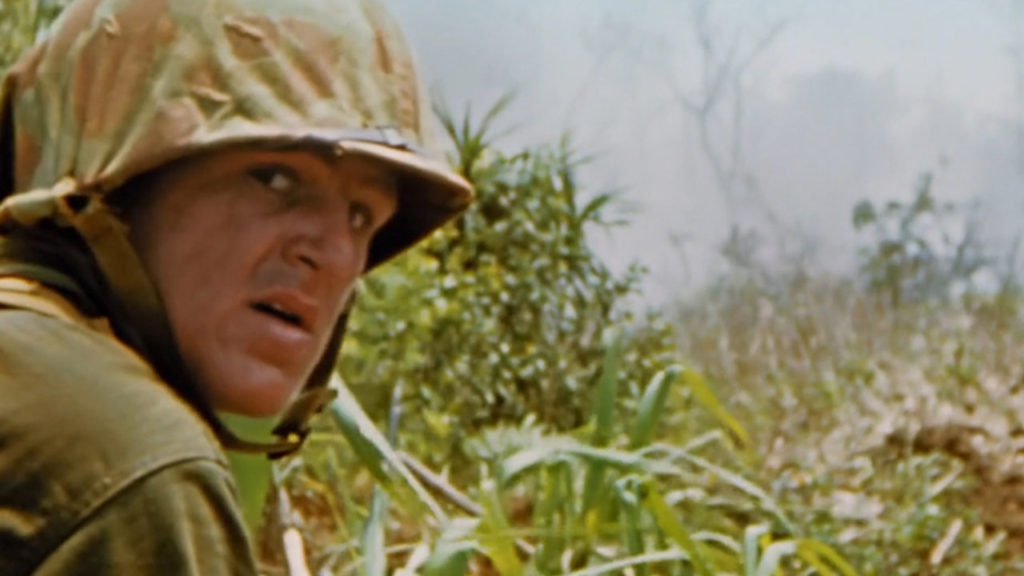
First, Nelson selected from 700 reels of archival film from the National Archive, digitally restored in 4K. It’s in color, and that makes a huge difference to those of us who have to be reminded that WWII was not fought in black and white.
The color and the 4K restoration makes these events look like we were living through them, too, and humanizes the people in the film, making them more relatable. The feeling for the audience is similar to what Peter Jackson’s They Shall Not Grow Old did for those who fought WWI. The somber fatalism of Marines in landing craft and the joyous relief of sailors and Marines in victory parades are palpable.
The shipboard footage of kamikaze attacks and the pilot’s eye views of strafing missions are breathtaking. The footage of a morass with a movie clapboard “Route 1 Okinawa Mud” helps us understand the challenges of moving an army through muck, even without enemy fire.
A few nonagenarians and centenarians have still survived WWII, and Nelson adds their memories in voice overs. Their reflections are unvarnished, and some of the Marines’ views of the Japanese adversaries are hard to hear. But the overall effect is an understanding of how awful this was:
About the planned invasion of Japan: “We didn’t think that the war would end before 1949.”
About the use of flamethrowers: “The smell was terrible…They could run (on fire) about 20 yards and that was it.”
“War is hell, but I never visualized hell being that bad.”
In the amazing account of a Hiroshima atomic bomb survivor: “That’s when everything blew up.”
Nelson ties together the footage and the testimonies with stark white-on-black titles, all the more chilling by their matter of factness. About the liberation of the Philippines): “100,000 civilians and the entire defending Japanese Army were killed” (and, indeed, 93% of the 350,000 Japanese soldiers and sailors died). About the fire bombing of Tokyo: 100,000 Japanese civilians were incinerated.
Nelson’s titles tell how the US manufactured enough Purple Heart medals for the invasion of Japan, based on American casualties in the conquest of Okinawa. After the surrender, those Purple Heart medals were warehoused – and the stockpile has been sufficient to supply every American conflict since 1945.
As Apocalypse ’45 begins, it may seem like a regular WW II documentary with some new imagery, but it becomes more and more powerful as the images, personal testimonies and narrative titles have their effect.
Apocalypse ’45 is now streaming on Virtual Cinema and eventive; I watched it at the Pruneyard Cinemas. It will premiere on the Discovery Channel on Labor Day weekend.
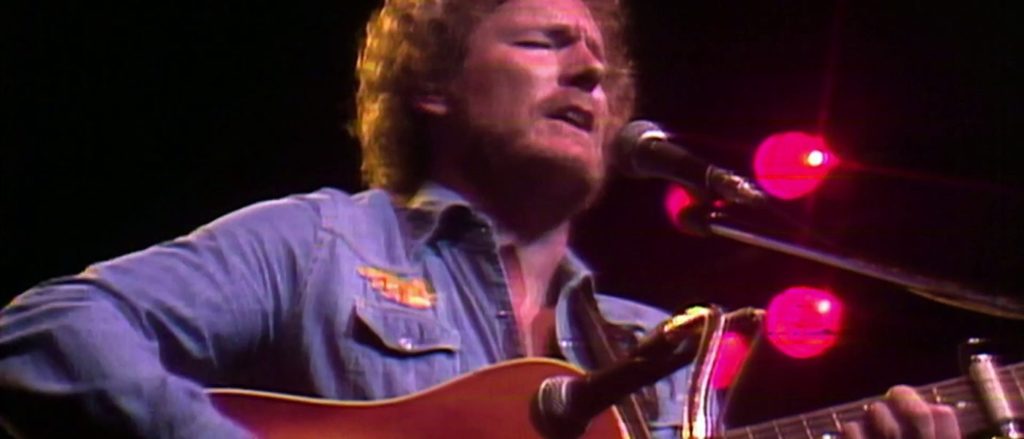
Gordon Lightfoot in GORDON LIGHTFOOT: IF YOU COULD READ MY MIND
Gordon Lightfoot: If You Could Read My Mindis a surprisingly interesting documentary about a now genial singer-songwriter that I hadn’t thought of for decades.
The biodoc emphasizes Lightfoot’s talent as a songwriter and his importance to Canadian music scene. Just when it starts getting too reverential, the more lively tidbits from his career and personal life start rolling out.
Notably, the inspiration for the lyrics of Sundown is revealed:
I can see her lyin’ back in her satin dress
In a room where ya do what ya don’t confess
Sundown you better take care
If I find you been creepin’ ’round my back stairs
Amazingly, The Wreck of the Edmund Fitzgerald was recorded not only on the first TAKE, but the on first time Lightfoot’s band had ever PLAYED the song.
Gordon Lightfoot in GORDON LIGHTFOOT: IF YOU COULD READ MY MIND
Physically unrecognizable from his hey day, the 81-year-old version of Lightfoot is pretty likeable. He is modest and irreverent about his own work (I hate that fuckin’ song). He is also grateful for his blessings, sober, open and regretful about the mistakes in his personal life.
Heck, I enjoyed spending an hour-and-a-half with the guy. Gordon Lightfoot: If You Could Read My Mind is available on Virtual Cinema; I watched it at the Laemmle.
The amiable documentary The Booksellers slips us into the obscure world of antiquarian book collectors and dealers. It’s a passion that few of us share, but, for the few, a passion it is indeed.
The subject here (old books) is LITERALLY dry. The sparks of interest come from the people who treasure and covet them. These folks are mostly, but not all, old white men. The introduction of a younger female dealer, fiery and committed, brings some welcome energy.
The conflict in this story is with the times – with the trajectory of books themselves driving the future of book collecting.
The Booksellers can be streamed from Amazon, Apple TV, YouTube and Google Play.
The infectious We Got the Beat by the Go-Go’s is fun itself, distilled into a song. The documentary The Go-Go’s tells the story of the all-female band.
There is a familiar arc to every documentary about a rock band. Scrappy and hungry musicians perform the music they love in obscurity, before being suddenly thrust into worldwide fame and more cash than they could have imagined. Then the bubble is burst by some combination of drug abuse, internal jealousy, creative differences, personality conflicts and fights over money. Usually the survivors look back with pride in the music, nostalgia about the good times and regrets that they didn’t handle it all with more maturity.
The Go-Go’s fits in that framework, to be sure, but it’s about women. The Go-Go’s have been the only all-female band to write their own music and play their own instruments ever to have a number one Billboard record. They achieved that in 1982, and it hasn’t been duplicated since.
All five Go-Go’s thankfully have survived and each shares her experiences in The Go-Go’s. They are an open, engaging and likeable lot.
There’s a tidbit about the gentlemanly class shown by The Police. And we learn why none of the Go-Go’s is proud of their appearance on Saturday Night Live.
This is a modest film about a singular moment in popular music. The Go-Go’s is available on Showtime.
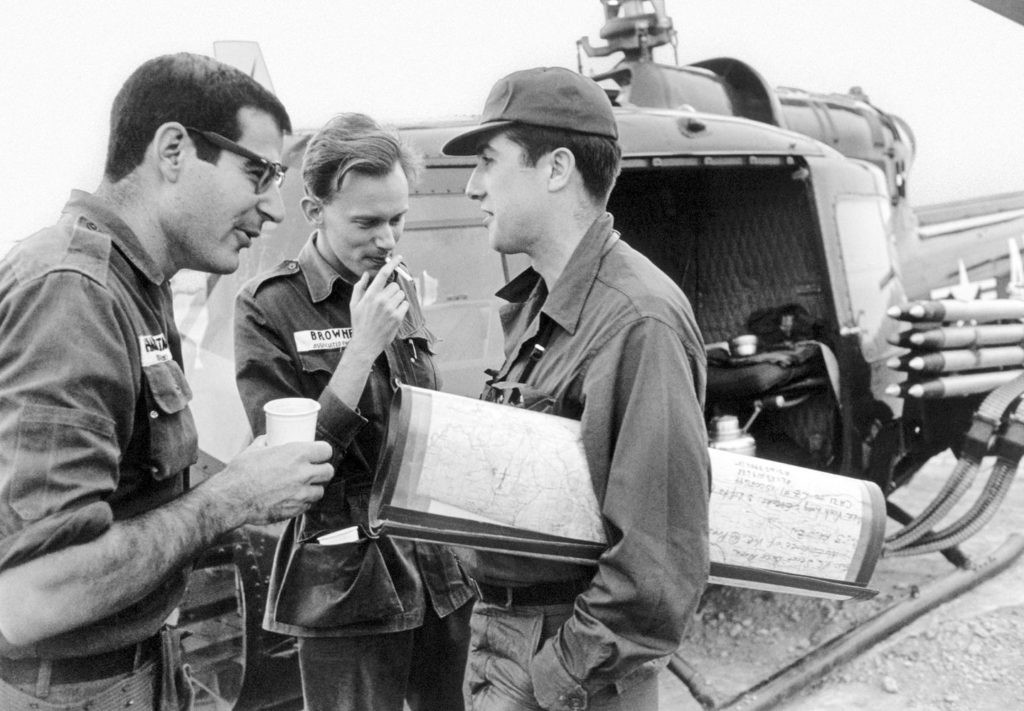
David Halberstam (left) and Malcolm Browne (center) in DATELINE-SAIGON
Dateline-Saigon documents the efforts of five journalists to cover the Vietnam War in the face of a US government which did not want the facts to be told. The five were Malcolm Browne, Neil Sheehan, Horst Faas, David Halberstam and Peter Arnett, who amassed a bucket of Pulitzers between them.
What they found in Vietnam was that American policy was not working, because (among many factors) the Diem regime was alienating most of its own population, the South Vietnamese Army was less motivated to fight than the Viet Cong, and that Americans were more directly involved in combat than had been acknowledged. And the US government didn’t want any of this reported.
As Dateline-Saigon says, “When these patriotic journalists arrive in Vietnam, they had no idea they would become the enemy“, meaning the truth-wielding enemy of the US government propaganda. The reporters describe the government efforts to obscure, mislead, spin, hide and controvert the facts as a “vast lying machine” and the “Truth Suppressors”.
Quang Lien and Malcolm Browne (center) in DATELINE-SAIGON (AP Photo)
All television news viewers (especially a ten-year-old The Movie Gourmet) were shocked by the 1963 Buddhist monk’s self-immolation to protest the Diem regime in 1963. No one was more shocked than Browne, who was covering the Buddhist march, and, to his surprise and horror, had this unfold a few steps in front of him.
Sheehan is famous for uncovering the Pentagon Papers. Beginning with The Best and the Brightest, Halberstam banged out bestseller after bestseller on 20th century American history. Arnett went to cover dozens of conflicts interview Osama Bin-Laden and was a major media face of the Iraq War.
This is a Must See for students of journalism and of the Vietnam War Era of American History. You can stream Dateline-Saigon on iTunes.