BELUSHI: more texture to the story that you already know

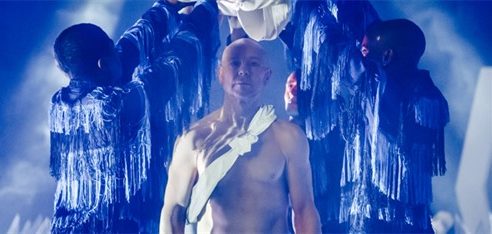
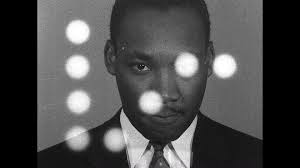
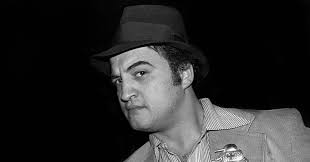
John Belushi in BELUSHI

We all know the story of John Belushi – a career soaring like Icarus, propelled by comic genius and then death by drug overdose at age 33. The new biodoc Belushi brings us more texture because of unprecedented access to Belushi’s friends and widow and to Belushi’s own letters, notes and journals.

There are many insights into Belushi’s family and his upbringing, the fodder for some of his unhappiness. We learn about a year of white-knuckle sobriety when he was protected by a bodyguard named Smokey. Friend and fellow addict Carrie Fisher weigh in regarding that unsupported year of sobriety.

And their are some new stories of Belushi’s zaniness, like when he wandered off a movie set to be found in a house across the street by Dan Aykroyd – Belushi had convinced the resident, a total stranger, to feed him a sandwich and milk and to let him stretch out for a nap.

Belushi is streaming on Showtime.

THE MYSTERY OF D.B. COOPER: the hijacking that keeps on giving

THE MYSTERY OF D.B. COOPER

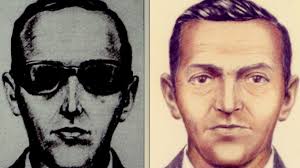
We are justifiably still intrigued by the only unsolved American air hijacking. The documentary The Mystery of D.B. Cooper takes us back and adds some detail to the story. Most importantly, it makes four suspects become almost tangible to us.

We get to meet the flight attendant forced to sit next to the hijacker, and the guy who sat across the aisle and the pilot. But, the highlights come from the folks that are today convinced that they knew D.B. Cooper. These stories range from odd to bizarre.

The Mystery of D.B. Cooper is streaming on HBO.

MY PSYCHEDELIC LOVE STORY: Errol Morris and the unreliable narrator

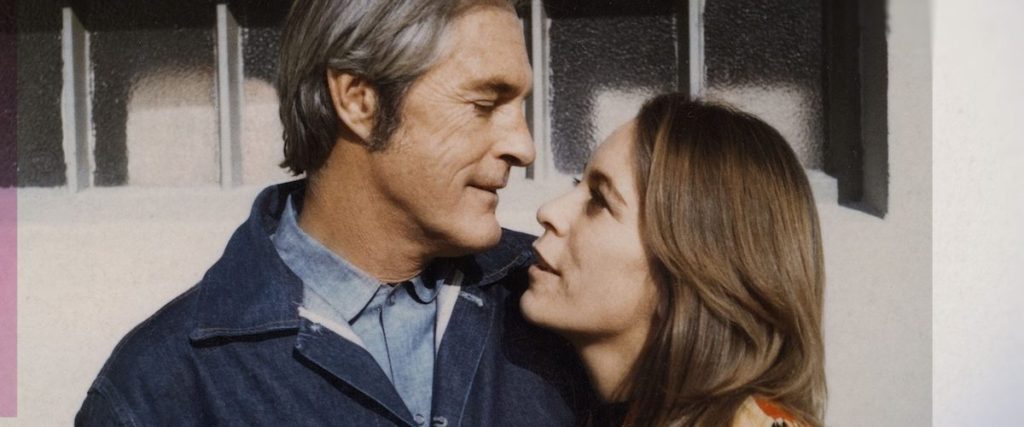
Timothy Leary and Joanna Harcourt-Smith in MY PSYCHEDELIC LOVE STORY

The documentarian Errol Morris has a remarkable gift for finding interview subjects with bizarre stories to tell. In My Psychedelic Love Story, Morris introduces us to Joanna Harcourt-Smith, who was swept off her feet in 1972 by bad boy celebrity Timothy Leary and spent a few years as his romantic partner. This was a period when Leary, hounded by US authorities for advocating psychedelic drug use, was on the lam in Europe and the Middle East, and finally imprisoned.

Joanna Harcourt-Smith in MY PSYCHEDELIC LOVE STORY

Morris extracts the tale from Harcourt-Smith herself. We learned that Harcourt-Smith came from a wealthy but difficult and unconventional upbringing. She plunged into a hippie version of what we would now call a Eurotrash lifestyle.

While much of her story is undeniably factual, we suspect that Harcourt-Smith is less than a reliable narrator. She drops bits like “I was happy we were stopping in Lebanon because the President was in love with my mother”. It’s either an astonishing fact or a an astonishingly brazen lie. Either way, she’s entertaining.

I’ve loved Morris since his first feature in 1978, Gates of Heaven, the story of a Bay Area pet cemetery and its quirky owners and customers (plus digging up all the dead pets and moving them from Cupertino to Napa). For bizarre personal stories, it’s tough to top Morris’ Tabloid, about a woman who kidnapped and sexually abused a Mormon missionary in England and retired in North Carolina to a pastime of tending dogs cloned in Korea,

My Psychedelic Love Story, which is minor Morris, is streaming on Showtime.

coming up on TV: WHAT SHE SAID: THE ART OF PAULINE KAEL – the drive for relevance

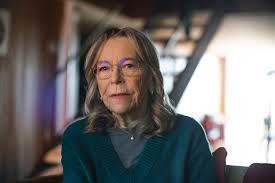
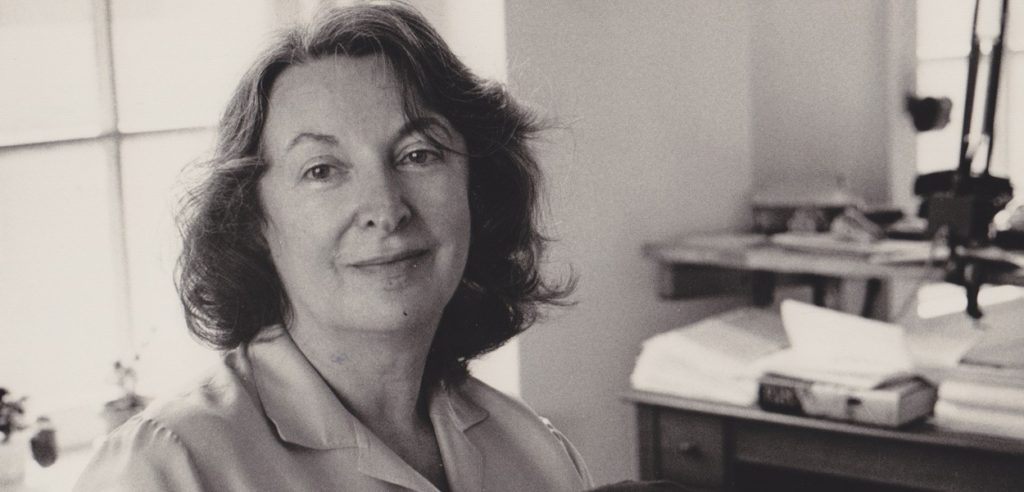
Pauline Kael in WHAT SHE SAID: THE ART OF PAULINE KAEL

What She Said: The Art of Pauline Kael is the remarkably thorough and insightful biodoc of the iconic film critic Pauline Kael and her drive for relevance. Set your DVRs for it on Turner Classic Movies on December 12.

Documentarian Rob Garver has sourced What She Said is well-sourced with the memories of Kael’s colleagues, rivals and intimates. Garver’s portrait of Kael helps us understand her refusal to conform to social norms as she basically invented the role of a female film critic and what today we might call a national influencer on cinema.

Of course, one of Kael’s defining characteristics was her all-consuming love of movies, a trait shared by many in this film’s target audience. Fittingly, Garver keeps things lively by illustrating Kael’s story with clips from the movies she loved and hated. Garver’s artistry in composing this mosaic of evocative movie moments sets What She Said apart from the standard talking head biodocs.

Kael was astonishingly confident in her taste (which was not as snooty as many film writers). For the record, I think Kael was right to love Mean Streets, Band of Outsiders, Bonnie and Clyde, and, of course, The Godfather. It meant something to American film culture that she championed those films. She was, however, wrong to love Last Tango in Paris. She was also right to hate Limelight, Hiroshima Mon Amour and The Sound of Music. But Kael was just being a contrarian and off-base to hate Lawrence of Arabia and Shoah.

Kael was by necessity an intrepid self-promoter and filled with shameless contradictions. She famously dismissed the auteur theory but sponsored the bodies of work of auteurs Scorsese, Peckinpah, Coppola and Altman. She loved – even lived – to discover and support new talent.

Most of the people we like and admire possess at least some bit of selfishness and empathy. Kael’s daughter Gina James says that Kael turned her lack of self awareness into triumph. This observation, of course, cuts both ways.

I screened What She Said: The Art of Pauline Kael while covering the 2019 San Francisco Jewish Film Festival. It’s coming up on Turner Classic Movies this Friday.

MY OCTOPUS TEACHER: an octopus and her human pet

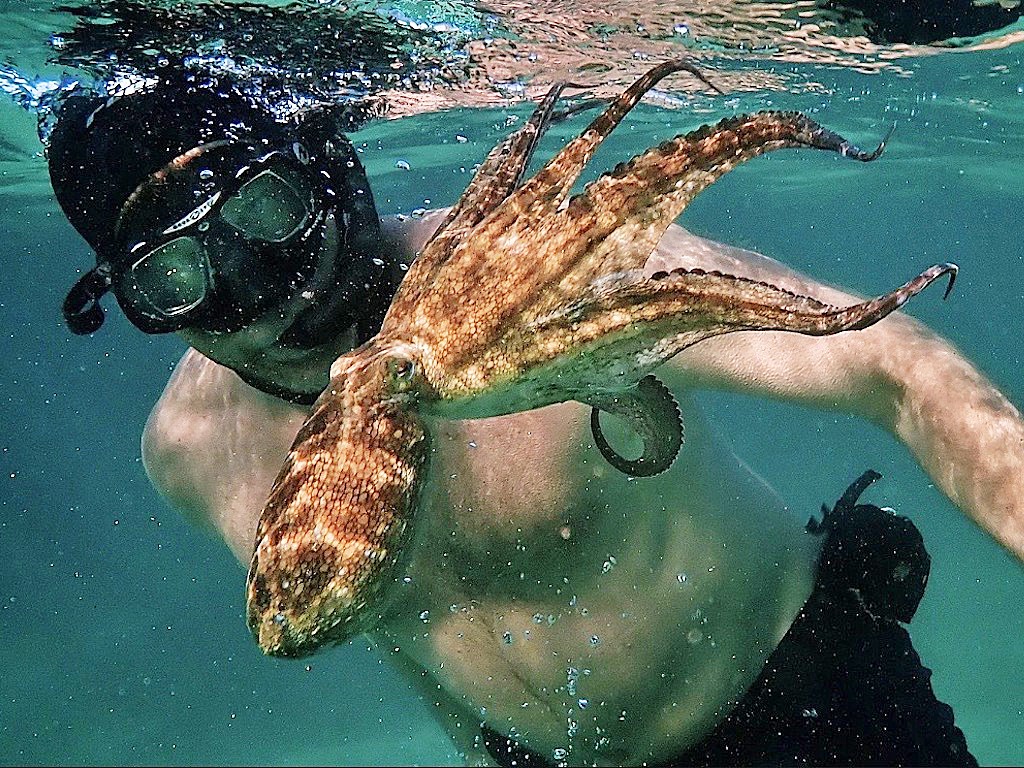
MY OCTOPUS TEACHER

As nature documentaries go, My Octopus Teacher, is pretty singular. Filmmaker Craig Foster, stewing in mid-life disillusionment, is diving in a South African kelp forest when he encounters an octopus and decides to shadow her over a year and document her life every day. The octopus takes to Foster and adopts him as kind of a pet. But My Octopus Teacher is mostly worthwhile for the amazing resourcefulness of the octopus and the harrowing shark attacks.

I knew that octopuses are wizards at camouflage and at squeezing through tight spaces. I didn’t appreciate how intelligent they are and that they commonly live for only one year.

There are some sequences in My Octopus Teacher that are just astonishing. The underwater photography, especially the scenes just below the surf in the first fifteen minutes are among the best I’ve ever seen. The cinematographer is underwater specialist Roger Horrocks.

Foster himself narrates the film. The Movie Gourmet doesn’t cotton to the simpering of grown men, so I wish I had turned off the sound for the first fifteen minutes of his personal angst and the final ten minutes when he forges a blissful father-and-son shared interest in the ocean.

I do admire Foster for two things. First, he generally didn’t interfere with the course of nature (i.e., rescue the octopus from shark attacks). And he didn’t give her a human name. Good for him.

Off South Africa, the octopus’ major predator is the pajama shark, so named because of the stripes that resemble old-fashioned vertically-striped pajamas. Pajama sharks are especially well-equipped to attack in the narrow and deep crevices where octopuses hide out.

I can’t really blame the sharks because octopus is one of my favorite foods, too. It takes some mastery (which I haven’t as yet attained) to cook them so they’re not rubbery. So, I order octopus every time I see it on the menu (usually at Greek, Spanish, Mexican or Portuguese restaurants).

My Octopus Teacher is streaming on Netflix.

DICK JOHNSON IS DEAD: funny, heartfelt and frequently bizarre

Dick Johnson in DICK JOHNSON IS DEAD

Documentarian Kirsten Johnson and her dad face the end of his life in this funny, heartfelt and frequently bizarre film. Dick Johnson Is Dead is so highly original that I would place it in its own genre – docufantasy.

Kirsten’s father Dick Johnson is an 85-year-old psychiatrist whose increasing forgetfulness and frailty is forcing hm to leave his Seattle house and move onto Kirsten’s NYC apartment. As generally sunny as he is, his loss of vigor and independence is hard on him. His impending loss of memory (and of life itself is hard on them both.

Kirsten chronicles the familiar – the doctor’s appointments, the closing of her dad’s practice, the selling of his car and the downsizing of his possessions. And then she grapples with his mortality by staging a series of fictional demises – as he “dies” in a series of quirky accidents, like getting a large appliance dropped on him from a highrise. Other scenes imagine Dick in heaven, dancing with her mom, and dining with Frederick Douglass and Buster Keaton.

DICK JOHNSON IS DEAD

Dick Johnson is indulgent with his daughter and one helluva good sport. There’s even a Seattle “funeral” while Dick is still alive and able to watch from the wings.

Offbeat as it is, the core of Dick Johnson Is Dead is wistful and deeply personal. Dick Johnson Is Dead is streaming on Netflix.

STUNTWOMEN: THE UNTOLD HOLLYWOOD STORY – don’t wig a guy

Michelle Rodriguez and Debbie Evans in StUNTWOMEN: THE UNTOLD HOLLYWOOD STORY. Photo Credit Shout! Factory

Actresses play characters, but stuntwoman play actresses playing characters, while driving fast and kicking ass.”

That’s one of the professional movie stuntwomen summing up the business in the documentary Stuntwomen: The Untold Hollywood Story. Stunt performing and stunt coordinating are underappreciated by most of us – and certainly kept in the background by the industry (and the Oscars). It’s hard and dangerous enough to perform movie stunts, but females have also had to battle against persistent gender bias.

Stuntwomen: The Untold Hollywood Story takes us back to the first decade of silent films, when actresses did their own extreme stunts, until they became too valuable in box office terms to be expendable. At that point, women were frozen out of the stunt business for half a century. Michelle Rodriguez, who is currently our most kickass/badass actress, helps introduce us to today’s world of women who specialize in fighting, crashing cars, falling off great heights and getting set on fire.

We meet Jeannie Epper, who doubled Lynda Carter in Wonder Woman and Jadie David, who doubled Pam Grier in all those Blaxploitation action movies. (Epper fell backwards out of tall buildings, and then the film was reversed to create the effect of Wonder Woman zooming upwards.)

We also learn the meaning of “wigging a guy”. And we are reminded that stuntwomen often double actresses who are wearing high heels, and that skimpy outfits don’t allow for much protective padding.

This is solid women’s history and a great inside glimpse at the movie biz. Stuntwomen: The Untold Hollywood Story can be streamed from iTunes and Google Play.

DTF: an unexpected descent from prurience into menace

Documentarian Al Bailey and his subject “Christian” swiping though Tinder. Photo courtesy of DTF and Gravitas Ventures.

In all fairness, the wild and unpleasant DTF is not the documentary that filmmaker Al Bailey planned to make. Bailey wanted to explore the world of dating apps by following a heavy user of Tinder as he coursed through a series of casual hook-ups.

Bailey thought he had the perfect subject, his friend Christian, a widowed, globe-hopping airline pilot. Bailey expected to harvest lots of prurient fodder from the horny Christian’s meeting and dating lots of single ladies across the world. And Bailey, who had introduced Christian and his late wife of 14 years, justifiably thought he knew Christian.

But Christian had become an altogether different person, not just a party hound, but someone who had descended into a vortex of sex addiction, depression and substance dependency. And when Christian is drunk, we see a despicable torrent of misogyny and racism.

“Christian” is not the pilot’s real name – and his face and voice are obscured throughout the film. If identified, he would certainly lose his job because DTF documents alcohol and drug use that violates the restrictions for long haul airline pilots.

“Men behaving badly” has become a genre of its own in narrative cinema and even documentaries. DTF is not that. Christian’s behavior is not just hedonistic, but jaw-droppingly dangerous to others. He is not just a jerk, but a public menace.

Now Bailey is not blameless here. There are several cringe-heavy moments where Bailey reneges on promises to Christian and his dates to stop filming them. And Bailey tries a Michael Moore-style ambush of Tinder’s corporate HQ, a tactic that I despise even when Moore or 60 Minutes deploys it. And there are moments where Bailey and his colleagues debate the ethics of continuing when the film itself may be prompting Christian toward even more risky behavior.

Sometimes I’ll watch a movie and feel like I need to shower afterwards. After DTF, I felt like I needed to dive into a pool of disinfectant. DTF is available to stream from on Amazon, iTunes, Vudu and other platforms.

RODENTS OF UNUSUAL SIZE: 5 million orange-toothed critters and a Cajun octogenarian

Thomas Gonzalez in RODENTS OF UNUSUAL SIZE

The offbeat documentary Rodents of Unusual Size, with its bizarre subject, is charmingly addictive. That subject is the nutria, a 20- to 30-pound Argentine rodent that threatens Louisiana’s wetlands and coastline.  Yes, 30-pound swamp rats with orange teeth.

Although Rodents of Unusual Size is decidedly non-preachy, the nutria is serious business. Imported for the commercial potential of its fur by a Tabasco sauce heir, nutria escaped into the Louisiana wilds and propagated wildly. When the US fur market crashed in the 1990s, the locals stopped trapping them, and Louisiana’s nutria population exploded to 20 million.

The problem is that nutria eat the roots of the vegetation in the Louisiana wetlands, causing erosion that has converted at least 42 square miles of land into open water. Worse, those wetlands are the storm buffer for the rest of the state.

Louisiana offers hunters a $5 bounty for the tail of each dead nutria, which has reduced the nutria population to a more manageable 5 million.  We even meet a guy whose official job title is Nutria Tail Assessor.

One of the reasons I love Louisiana is that folks just don’t take themselves too seriously there. Even when they are focused on the grave environmental impacts of the nutria invasion, they still appreciate the absurdity of a 30-pound, orange-toothed swamp rat.  (And, fittingly,  Rodents of Unusual Size is narrated by Louisiana native Wendell Pierce.)

Along the way, we are also introduced to nutria fur and the fur company Righteous Fur, nutria meat, nutria sports mascots and even nutria as pets.

But most compellingly, we meet Thomas Gonzalez, an 80-year-old bayou native, nutria hunter and bon vivant. Gonzalez is a force of nature, complete with strong-willed opinions and some impressive dance moves. Gonzalez serves as the voice of Louisiana and finishes the movie with a profound perspective on the nutria.

I saw Rodents of Unusual Size at Silicon Valley’s Cinema Club with filmmaker Chris Metzler available for Q&A. Metzler and his colleagues Jeff Springer and Quinn Costello filmed Rodents of Unusual Size over four years during Louisiana’s nutria season (November to April). The affable Metzler is a font of nutria knowledge, full of tidbits like albino nutria being prized by taxidermists. Because nutria are very difficult to spot and film in the wild, the filmmakers used Nooty the stunt nutria throughout the film. Nooty joined the filmmakers in creeping along the red carpet at various film festivals and has her own Facebook page.

Thomas Gonzalez alone is worth meeting on film, and, as told by Rodents of Unusual Size, the story of the nutria is quirkily fascinating. Rodents of Unusual Size can be streamed from Amazon and iTunes.

COUP 53: uncovering what we suspected

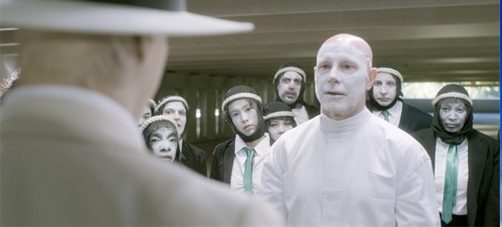
COUP 53. Courtesy of Coup 53.

The Cold War espionage documentary Coup 53 brings astounding new source material to the history of the 1953 coup which replaced the democratically elected Premier of Iran, Mohammad Mosaddegh, with the Shah.

The key to the success of Coup 53 is that filmmaker Taghi Amirani uncovered troves of never-before seen source material. Amirani brings us oral histories of Iranian witnesses to the coup, including a play-by-play from Mosaddegh’s head of security. He adds a video interview with the last surviving Iranian coup plotter, an especially cadaverous and repugnant individual. There are also boxes of more recently-declassified CIA documents.

COUP 53. Courtesy of Coup 53

But, most essential are the tapes and transcripts of interviews for a 1970s BBC documentary. The testimony of Norman Darbyshire, the British spy who masterminded the coup, was cut from the BBC doc, but Amirani found an uncensored transcript. Ingeniously, Coup 53 reconstructs Darbyshire’s interview in the same room in London’s Savoy Hotel, with the same camera operator present (!) and actor Ralph Fiennes reciting Darbyshire’s actual words.

Why did Darbyshire spill the beans? He may have resented that CIA agent Kermit Roosevelt (TR’s grandson) exaggerated his role as a last minute bag man, when Darbyshire had laid the groundwork for years and was the real instigator.

Although the UK’s involvement has never been officially acknowledged by the UK government, everyone has known about it for decades. There’s even a clip in Coup 53 of Richard Nixon explaining it on TV in the 1970s or 1980s. But this is very personal to Taghi Amirani, and he puts great import on the smoking gun – an interview with the British spy who designed and directed the coup.

Although I think that Amirani oversells the proof of British involvement, there is is lot of exciting new stuff for the moderately informed rest of us. For example, we get a deeper-than-usual dive into Mohammad Mosaddegh himself, a man many of us have only seen as a victim of Western over-reaction to communism. We also learn that:

  • Harry Truman opposed the regime change, but newbie President Ike was persuaded by Wall Street’s Dulles brothers to green light the coup.
  • The CIA was walking away after an initial coup failure.
  • After the UK did the dirty work, the US got the most influence with the Shah, and, with Israel’s help, set up the Shah’s brutal and hated secret police, the Savak.

From Mosaddegh’s nephew, we learn about Mosaddegh’s final years under house arrest, his last secret joyride through Tehran and his unusual dining room burial.

There’s one stunning What If moment – revolutionary Iranian President Abolhassan Banisadr explains that after the first coup attempt failed, Mosaddegh had the list of all the coup plotters. Had he executed them all immediately, there would have been no coup in 1953, no revolution and Hostage Crisis in 1978 and today Iran would be a stable, 70-year-old Muslim democracy in the Middle East.

Coup 53 is directed by Taghi Amirani and its editor, Walter Murch. The Iran-born and UK-educated Amirani is the researcher and on-camera interviewer. Murch is probably our greatest living film editor and the person who invented the entire field of movie sound design in the 1970s.

Coup 53 is available to stream on Virtual Cinema; I watched it at the Roxie.