THE SPARKS BROTHERS: must be seen to be believed

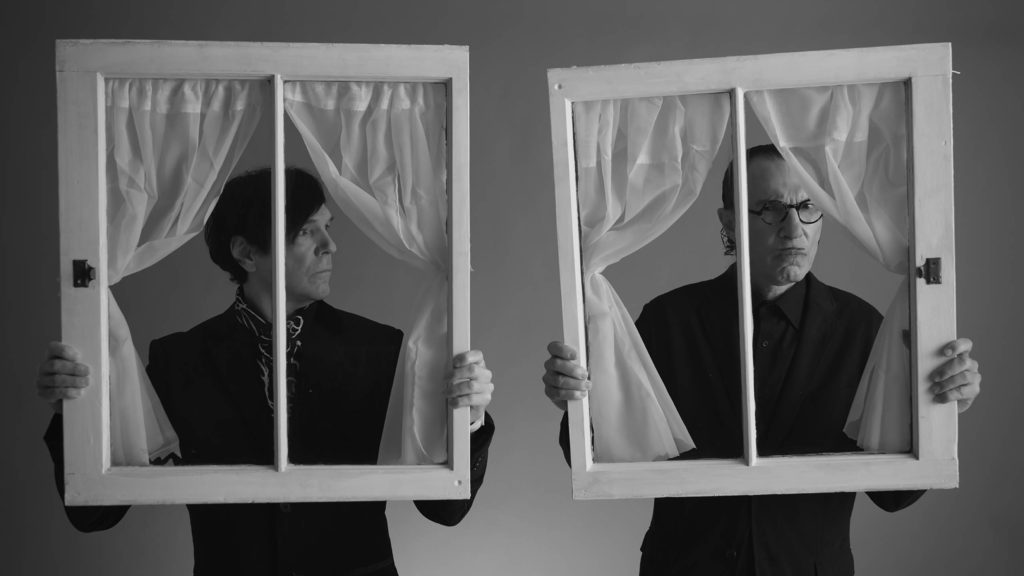
Photo caption: Russell Mael and Ron Mael in THE SPARKS BROTHERS. Photo by Jake Polonsky, courtesy of Sundance Institute.

The Sparks Brothers is Edgar Wright’s affectionate documentary on a pop band that has been active for 54 years (and that I had never heard of). The band is Sparks, comprised of brothers Ron and Russell Mael, and The Sparks Brothers is one fun movie.

Ron writes the songs and plays keyboards, and Russell is the singer and front man. In the film, Sparks is described as “the best British pop band to come out of America” and “a snaky lead singer for the ladies and then the Hitler mustache”. Sparks was first produced by Todd Rungren, of all people, in 1967. (Both Rungren and Russell Mael were dating Miss Christine of the GTOs.) Pop success eluded them until they surged in the UK in 1974-75.

Then Sparks pioneered electro dance a couple years too early, came to hard rock a little late, and have kept moving on to the next project and musical style that interests them. Of course, that approach doesn’t let their fans get comfortable.

A musician says, “they don’t care about money or fame – just art for art’s sake”, which isn’t EXACTLY true. The Maels really DO want their music to be heard, and they really DO want to be popular and famous. They just won’t compromise artistically to get there.

What they WILL do is work with remarkable stamina and discipline. This is the rock first rock documentary I’ve seen without somebody’s serious drug use being a point of deflection. These guys marry an intense work ethic with their often bizarre art.

Their stage presence is remarkable. With his pretty boy looks and charisma, Russell bounds about as the quintessential front man. Ron silently stands behind his keyboard, posing with his, well, Hitler mustache (which he has now replaced with a pencil mustache).

Above all, Sparks is ever playful, and The Sparks Brothers is very funny. They match their stage persona with lyrics like “dinner for 12 is now dinner for 10 because I’m under the table with her“. Ron and Russell Mael themselves kick off the movie with a hilariously deadpan questionnaire.

Their performances are fun and witty, and their music is peppy and catchy. The overt humor sometimes masks lyrics that are poignant and even despairing.

Growing up in LA, Ron and Russell cherished their boyhood weekend matinees with their dad, filled with Westerns and war movies. As artsy UCLA students, they admired Ingmar Bergman and French New Wave cinema as much as they did The Who and the Kinks, They had lined up a movie project themselves with the great auteur Jacques Tati that fell through because of Tati’s health. In the 1990s, they invested six years in trying to make the Japanese manga Mai, the Psychic Girl as a movie musical with director Tim Burton. When that movie also died, they were devastated.

Happily, they have written the screenplay for a movie which has actually been finished. Annette, directed by Leo Carax (Holy Motors) and starring Adam Driver and Marion Cotillard, is coming out later this summer,

I may not love their music or think that Spark is important, but I sure like these guys. The Spark Brothers is a delight, and it’s damn funny, too.
MY NAME IS BULGER: two brothers, two paths to power

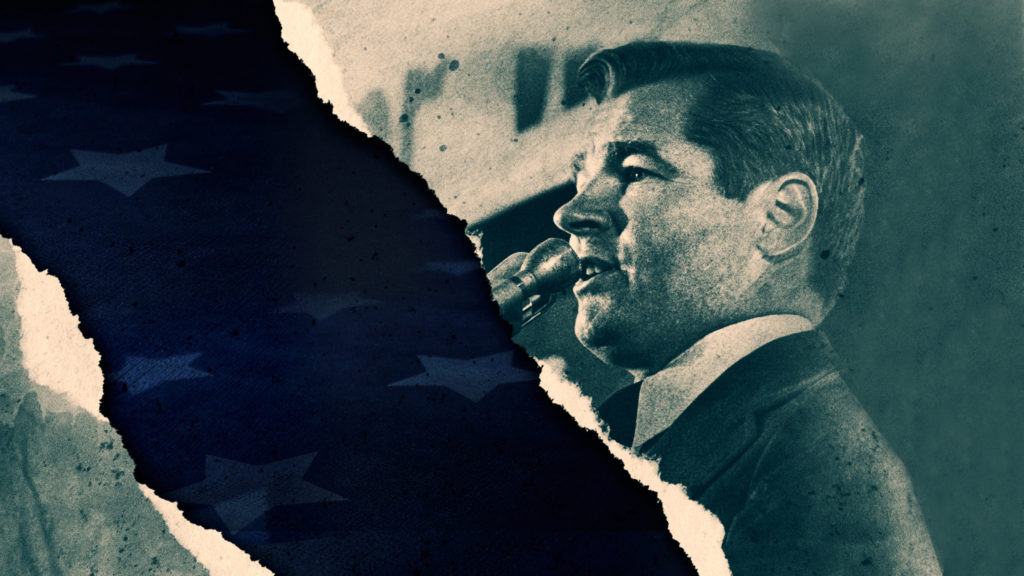
William Bulger in MY NAME IS BULGER. Photo courtesy of discovery+.

The documentary My Name Is Bulger traces the life of one fascinating man – made even more compelling by the life of a second man. Bill Bulger, one of nine kids raised in the projects, was a political wunderkind. First elected at age 26, his 35-year career in the Massachusetts State Legislature was topped by 18 years as President of the State Senate. No less than the squeaky clean former Governor Michael Dukakis credits Bill Bulger for cleaning up the previously corrupt institution.

Now, here’s the kicker – while Bill Bulger was dominating Massachusetts politics, his brother James “Whitey” Bulger was the state’s most fearsome crime lord.

Politics is public, and crime is private. Politics requires self-promotion, and crime requires secrecy. The brothers Bulger are parallel studies in power.

For decades, my day job has been in politics. It’s not unusual for politicians to deal with embarrassing, and even unsavory, relatives, but what do you do if your vocation is politics and your older sibling is a notorious criminal?

Very bright and armed with wit and charm, Bill Bulger was able to artfully, even miraculously, keep his career separate from Whitey’s. As Whitey became more infamous, Bill was able to delay being hurt by the association. It was widely known that Whitey had been in Alcatraz as early as 1959.

We meet Bill Bulger himself, now 85, and several of his adult children (who also remember their “Uncle Jim”). Dukakis appears, along with another former governor, William Weld. There’s also a former crime partner of Whitey’s. And we hear from the recently released Catherine Greig, Whitey’s longtime girlfriend and fellow fugitive, captured with Whitey in Santa Monica.

As sympathetic to Bill Bulger as is My Name Is Bulger, it doesn’t hide his opposition to busing in the 1970s, a political necessity that put him on the same side as South Boston’s ugliest racists. Nor does it shy away from the moment Whitey became a high-profile fugitive and Bill was cornered into taking the Fifth.

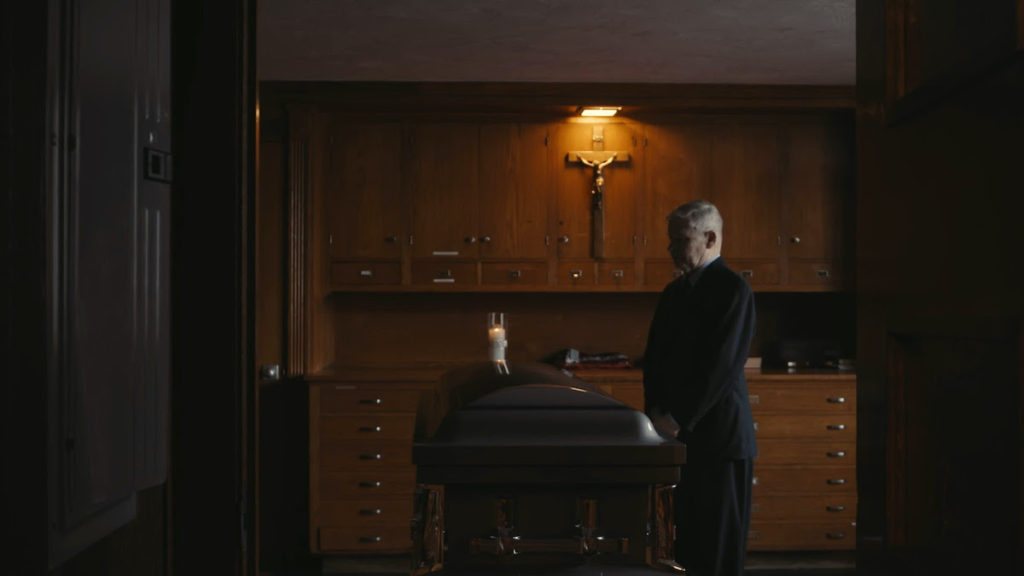
William Bulger in MY NAME IS BULGER. Photo courtesy of discovery+.

My Name Is Bulger is told from the point of view of Bill Bulger’s family. The Bulgers are understandably resentful of Bill’s political enemies in the press (and former Governor Mitt Romney). It’s more difficult to appreciate the family grudge against the government for harshness to Whitey, who, after all, was convicted of 19 murders.

For the story of how Whitey was able to use the FBI to eliminate his competition in the local Italian Mafia and the Irish mob, I also recommend another recent doc, Whitey: The United States vs. James J. Bulger.

My Name Is Bulger will stream on discovery+ beginning June 17.

BILLY GRAHAM: the need to pray with Presidents

Photo caption:BILLY GRAHAM. Photo courtesy of PBS American Experience.

The fine PBS documentary series American Experience brings us Billy Graham, an especially insightful look at back at the famed evangelist.

i hadn’t though much about Billy Graham lately. When I was growing up, Billy Graham was already a national institution and the most famous American religious leader – and the world’s most visible Protestant clergyman. Then, what happened?

Billy Graham traces Graham’s meteoric rise from Boy Wonder preacher to national stardom, taking evangelism from tent revivals in the rural Bible Belt to big city stadiums and television.

That story of Graham’s talent and ambition is interesting in itself, but Billy Graham examines both the strengths of his character and his vulnerability. Graham was rigorously disciplined in refusing to enrich himself and in his strict devotion to his marriage. Almost uniquely for TV preacher, Graham was never tainted by a financial or a sexual scandal and seemed impervious to hypocrisy.

But Billy Graham explores Graham’s yearning to become pastor to Presidents – both to promote his evangelism and as a manifestation of his own vanity. That paid off for Graham with his close relationship with Ike (and Ike and Billy’s impact on the nation’s public religiosity).

But then came Richard Nixon, who Graham was naive enough to think a soul mate. Being publicly anchored to Nixon made Graham’s position as an arbiter of national morality, well, untenable.

Graham’s career – through his consorting with politicians and his pioneering use of mass media – set the stage for the Moral Majority-type politicization of culturally conservative evangelicals. Notably, he intentionally took another path.

In his final act (which I had lost track of), Graham became an international peace campaigner. He mellowed into a more tolerant, less hell-fire theology and we glimpse him on a NYC stage at age 87. I was surprised to learn that Graham died in 2018 at age 99.

You can stream Billy Graham at American Experience.

WE STAND ALONE TOGETHER: THE MEN OF EASY COMPANY – what they endured

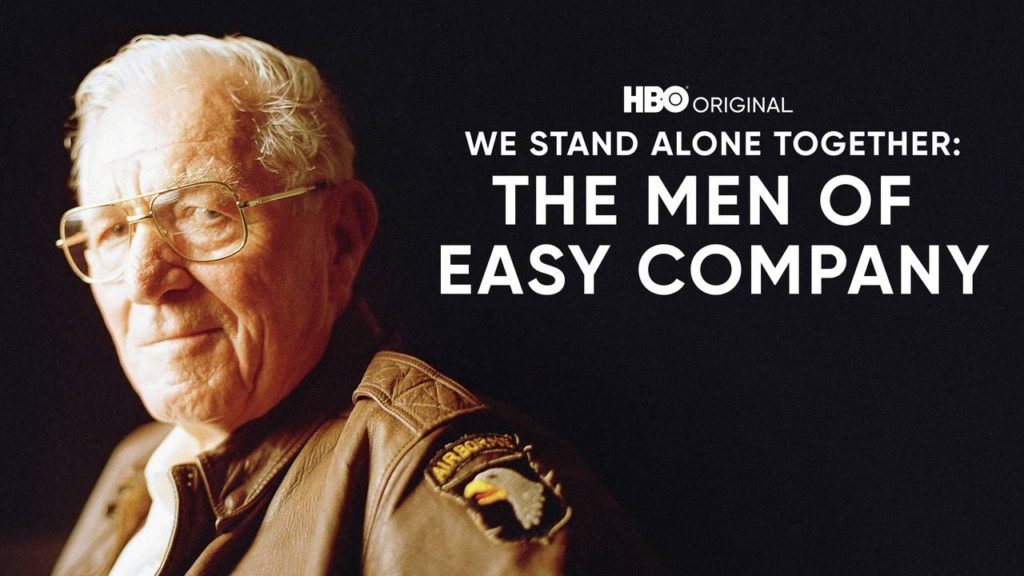
There’s no better movie choice for Memorial Day than the documentary We Stand Alone Together: The Men of Easy Company.  A companion to the fine 2001 miniseries Band of Brothers, this oral history gives voice to soldiers as they revisit what they endured.

The Easy Company of the title was part of the 101st Airborne, a storied WW II unit of regular guys who became elite paratroopers. We meet a bunch of those guys as they recount their journey of 55 years before – their basic training, their first combat – on D-Day. Easy Company went on to play a part in WW II’s most pivotal moments: the Normandy invasion, the liberation of the Netherlands, beating back Germany’s last offensive at the brutal Battle of the Bulge and conquering Hitler’s own private getaway, the Eagle’s Nest.

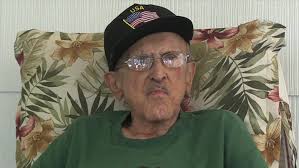
These are men of The Greatest Generation, a term coined four decades later by Tom Brokaw. For those most part, they didn’t share their war experiences with their families and friends. We are hearing many of them tell their stories for the first time.

I’m a Baby Boomer, and my Dad and all of my friends’ dads were WW II vets – basically every dad-aged adult male. We knew them as grocery clerks, science teachers, factory workers, insurance agents and mechanics like my Dad. All of us kids, growing up on a steady diet of WW II movies and TV, asked them, but they would never talk about the war. I now realize that I knew men who had served as infantry in Europe and Marines in the Pacific.

One family member did tell me about getting shot down over New Guinea and spending time with an indigenous tribe before his rescue. What he didn’t relate was in a journal that I found long after his death – that the repeated terror of over twenty bombing missions finally became more than he could bear.

Above all, We Stand Alone Together: The Men of Easy Company is the story of men who experienced one trauma after another. The unit suffered over 50% casualties on D-Day. Their eleven months of combat missions must have seemed endless. They deserve, finally, to be heard.

We Stand Alone Together: The Men of Easy Company can be streamed from HBO Max.

BREWMANCE: barley, hops, yeast and underdogs

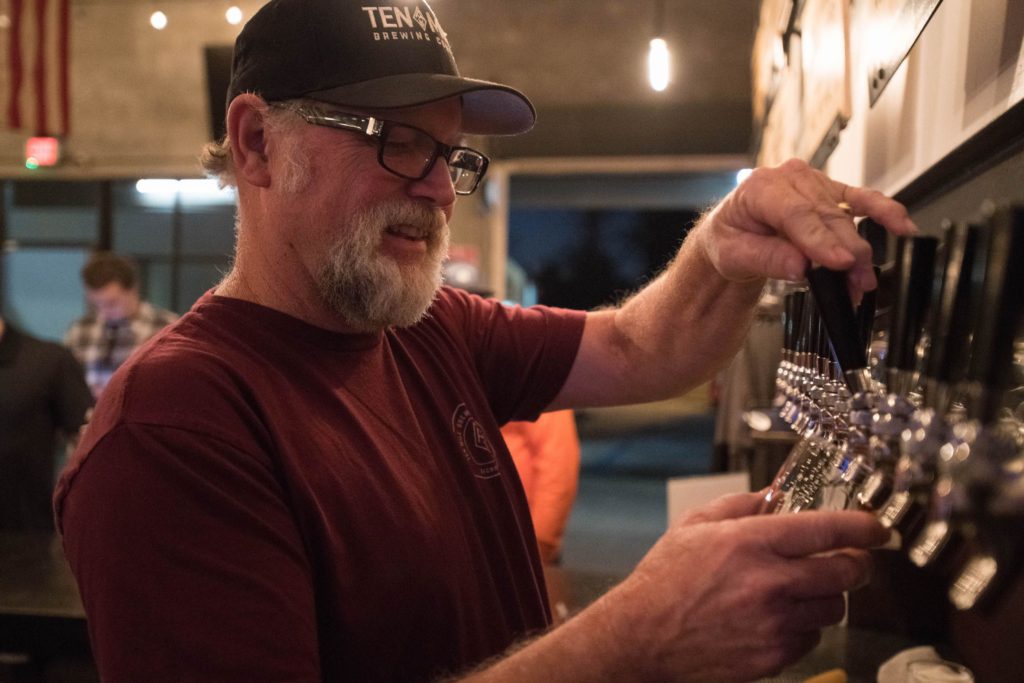
Photo caption: Dan Sundstrom (Ten Mile Brewing) in Christo Brock’s BREWMANCE. Photo Credit:BROCKLAMATION FILMS

The appealing documentary Brewmance traces the evolution of the American craft beer phenomenon – and it’s quite a story.

The United States may have been the richest and most powerful country in the world, but before bottled Anchor Steam came out in the early 1970s, you couldn’t find a good beer in America. The passions of individual home brewers morphed into the first tiny craft breweries. We meet the undisputed father of the movement, Fritz Maytag of Anchor Steam, along with the founders of once-microbrewers Sierra Nevada and Boston Beer Company (Samuel Adams).

It’s interesting that craft brewers initially had to teach people to drink good beer. A populace conditioned to bland lagers like Budweiser, Coors, Miller’s High Life, Pabst Blue Ribbon and Schlitz was slow to embrace beers with strong flavors and aromas (and more alcohol). But, eventually, just as the American market began to appreciate good bread, good cheese and good wine in the late 1970s and 1980s, an acceptance of good beer followed. Indeed, we’re not surprised to see that the craft brewers we meet in Brewmance are also foodies.

Because The Movie Gourmet’s own taste has settled in India Pale Ales, I particularly appreciated Brewmance’s chronicle of the explosion of IPAs once brewers were able to source more varieties of hops and to deploy them more imaginatively. (Here’s a tip from The Movie Gourmet – if you can find an IPA brewed with New Zealand’s Nelson Sauvin hops – buy it.) And, yes, I will think less of you if you order a Bud Light, a Coors Light, a PBR or a Corona.

Here’s why Brewmance is so watchable, given that a 5-10 minute explanation of how beer is made is kinda geeky and that the history of any movement is, well, history. Director Christo Brock seamlessly braids these topics together with the stories of two startup craft breweries.

Underdog stories are irresistible, and every craft brewery starts out as an underdog. Brewmance features two very different sets of home brewers as they launch their own commercial craft breweries in Southern California.

Brewmance is a Must See for beer lovers and foodies, and a 102 minute delight for anyone. Brewmance is streaming on AppleTV, Vudu, YouTube and Google Play and is coming to Amazon (included with Prime) on June 1.

THAT GUY DICK MILLER: putting the “character” in “character actor”

Photo caption: THAT GUY DICK MILLER

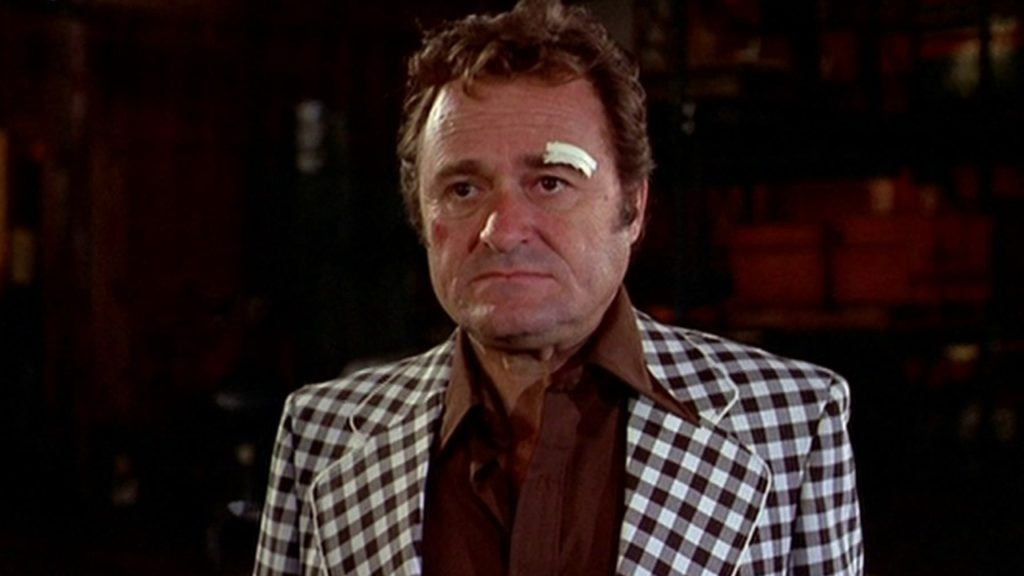
The entertaining documentary That Guy Dick Miller is about an actor whose name you may not place, but that you’ve seen. It’s a straight-ahead documentary about a delightfully offbeat guy.

Dick Miller amassed 184 screen credits as a protégé of legendary independent filmmaker and schlockmeister Roger Corman.  Along the way, he rubbed shoulders with indie film icons Jack Nicholson, Paul Bartel and Mary Woronov, John Sayles, Martin Scorsese and Quentin Tarantino.

Miller’s career started in 1955 as an Indian in the Roger Corman-directed Western Apache Woman and then Corman’s The Little Shop of Horrors, The Terror, The Wild Angels and The Trip. Continuing as the king of the low budget movies, Miller went on to work for a second generation of Corman acolyte directors and then plunged full throttle into horror films.  Miller was the unfortunate Murray Futterman in Gremlins and Uncle Willie in Tales from the Crypt: Demon Knight.

On the screen and off, Dick Miller was glib and Bronx-accented, the quintessential wiseacre. In That Guy Dick Miller, we get to meet Miller and his wife Lainey; it’s clear the the two of them were lots of fun to be around. Irresistibly a card, Miller is even bawdy when he recalls his appearance in Night Call Nurses, a 1972 sexploitation film (that I actually saw in a drive-in 1972). 

On screen, Miller always swung for the fences, no matter how small the part.  Lots of actors play the ticket-taker or the security guard, but it’s Dick Miller that you remember for those minuscule roles.

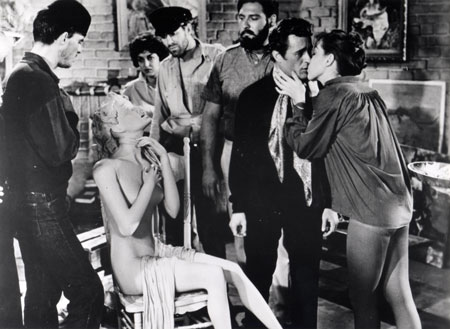
Dick Miller as Walter Paisley, getting smooched in A BUCKET OF BLOOD

Miller is most well known for the lead character, Walter Paisley, in the beatnik-flavored cult film A Bucket of Blood. Miller appeared over ten more times as different characters named with some version of Walter Paisley. In fact, his final role was as Rabbi Walter Paisley in Hannukah, which opened after his death in 2019.

That Guy Dick Miller was recommended to me by Sandy Wolf, who had screened it as a Cinequest submission. However, That Guy Dick Miller premiered at SXSW instead of at Cinequest.

That Guy Dick Miller can be streamed from Amazon (included with Prime).

STREET GANG: HOW WE GOT TO SESAME STREET: the origin story of an institution

Caption: A scene from Marilyn Agrelo’s film STREET GANG: HOW WE GOT TO SESAME STREET. Courtesy of SFFILM

There’s a lot to like about Street Gang: How We Got to Sesame Street, a documentary as charming as the beloved TV series. As groundbreaking as it was, Sesame Street is now a 51-year-old institution, and its origin saga has not been well-known. Most of the key players survive, allowing director Marilyn Agrelo to present the first-hand back story.

We take the concept for granted today, based on the recognition that kids voraciously learn from commercial television – they learn to consume commercially marketed products. Sesame Street’s founders aimed to find out what kids like to watch and what is good for them to watch and put the two together.

Refreshingly. the pioneering producer Joan Ganz Cooney, the visionary Lloyd Morrisette of the Carnegie Foundation and the inventive director/head writer Jon Stone, each gives the credit to the others. If you add Mister Rogers to these folks, you have the Mount Rushmore of children’s television.

Everything in Sesame Street was intentional – like the street setting itself. Noting that most kid shows had fantasy settings, the creators chose a gritty urban neighborhood street to be relatable to disadvantaged urban kids. The same is true for the integrated cast.

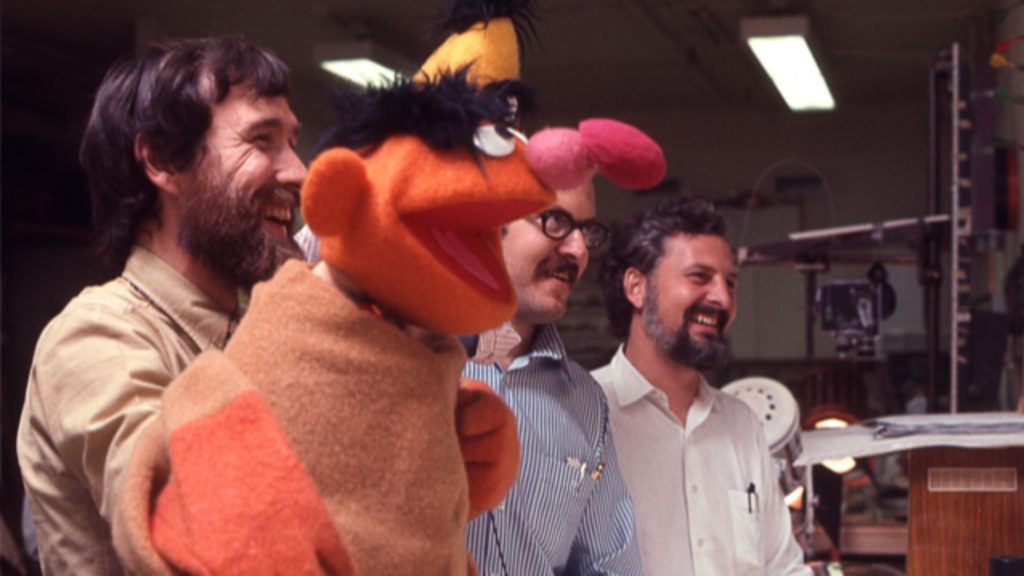
Of course, Street Gang highlights the role of the Muppets. At first, the Muppets had their own set, but the creators learned that kids were so entertained by the Muppets that they found the street boring. So, they pivoted and brought the Muppets on to the street.

Jim Henson founded the Muppets as a late night satirical act and brought that adult sensibility to Sesame Street. The jokes embedded for adults encouraged parents to watch Sesame Street with their kids (which the educators thought was important).

There is also the astounding story of Sesame Street in Mississippi, where state government-controlled public television refused to air a show with an integrated cast. Those stations had to reverse themselves when private Mississippi stations put the show on the air.

This had not occurred to me, but Sesame Street requires creation of original music for 100 episodes per year – an enormous body of work. Street Gang takes us into the songwriting craft, with witty gems like Letter B (from Let It Be).

I screened Street Gang: How We Got to Sesame Street at SFFILM in April. It is widely available to stream today.

THE BRAINWASHING OF MY DAD: some insight into our national madness

Filmmaker Jan Senko’s dad Frank in THE BRAINWASHING OF MY DAD

How the hell did we get here – a moment when millions of Americans believe stuff that demonstrably isn’t true – and have this misconceptions drive them into unrighteous rage? For insight, let’s look at the prescient 2016 documentary The Brainwashing of My Dad, which saw some of this nightmare coming.

In 2016, I wrote, “Ever notice how people who watch a lot of Fox News or listen to talk radio become bitter, angry and, most telling, fact-resistant?” Then I couldn’t imagine an assault on a the US Capitol by propaganda-intoxicated hillbilly barbarians. In The Brainwashing of My Dad, filmmaker Jan Senko explores how right-wing media impacts the mood and personality of its consumers as well as their political outlook. Senko uses her own father Frank as a case study.

We see Frank Senko become continually mad and, well, mean. And we hear testimony about many, many others with the identical experience. Experts explain the existence of a biological addiction to anger.

Senko traces the history of right-wing media from the mid-1960s, with the contributions of Lewis Powell, Richard Nixon, Rush Limbaugh, Roger Ailes and Rupert Murdoch. Senko even gets right-wing wordsmith Frank Luntz on camera to explain the power of buzz words. If you don’t know this story (Hillary was right about the “vast, right-wing conspiracy”) , Senko spins the tale very comprehensively. If you do know the material (and my day job is in politics), it is methodical.

This topic is usually explored for its impact on political opinion. Senko’s focus on mood and personality is original and The Brainwashing of My Dad contributes an important addition to the conversation. One last thing about the brainwashing of Senko’s dad – it may not be irreversible…

I first reviewed The Brainwashing of My Dad for its U.S. Premiere at Cinequest 2016. The Brainwashing of My Dad is available streaming on Amazon, AppleTV, Vudu, YouTube and Google Play.

STREET GANG: HOW WE GOT TO SESAME STREET: the origin story of an institution

Caption: A scene from Marilyn Agrelo’s film STREET GANG: HOW WE GOT TO SESAME STREET. Courtesy of SFFILM

There’s a lot to like about Street Gang: How We Got to Sesame Street, a documentary as charming as the beloved TV series. As groundbreaking as it was, Sesame Street is now a 51-year-old institution, and its origin saga has not been well-known. Most of the key players survive, allowing director Marilyn Agrelo to present the first-hand back story.

We take the concept for granted today, based on the recognition that kids voraciously learn from commercial television – they learn to consume commercially marketed products. Sesame Street’s founders aimed to find out what kids like to watch and what is good for them to watch and put the two together.

Refreshingly. the pioneering producer Joan Ganz Cooney, the visionary Lloyd Morrisette of the Carnegie Foundation and the inventive director/head writer Jon Stone, each gives the credit to the others. If you add Mister Rogers to these folks, you have the Mount Rushmore of children’s television.

Everything in Sesame Street was intentional – like the street setting itself. Noting that most kid shows had fantasy settings, the creators chose a gritty urban neighborhood street to be relatable to disadvantaged urban kids. The same is true for the integrated cast.

Of course, Street Gang highlights the role of the Muppets. At first, the Muppets had their own set, but the creators learned that kids were so entertained by the Muppets that they found the street boring. So, they pivoted and brought the Muppets on to the street.

Jim Henson founded the Muppets as a late night satirical act and brought that adult sensibility to Sesame Street. The jokes embedded for adults encouraged parents to watch Sesame Street with their kids (which the educators thought was important).

There is also the astounding story of Sesame Street in Mississippi, where state government-controlled public television refused to air a show with an integrated cast. Those stations had to reverse themselves when private Mississippi stations put the show on the air.

This had not occurred to me, but Sesame Street requires creation of original music for 100 episodes per year – an enormous body of work. Street Gang takes us into the songwriting craft, with witty gems like Letter B (from Let It Be).

I screened Street Gang: How We Got to Sesame Street at SFFILM. It opens today in select San Francisco theaters and will release on VOD on May 6.

THE BOYS IN RED HATS: Rorschach America

THE BOYS IN RED HATS. Photo courtesy of Shark Dog Films.

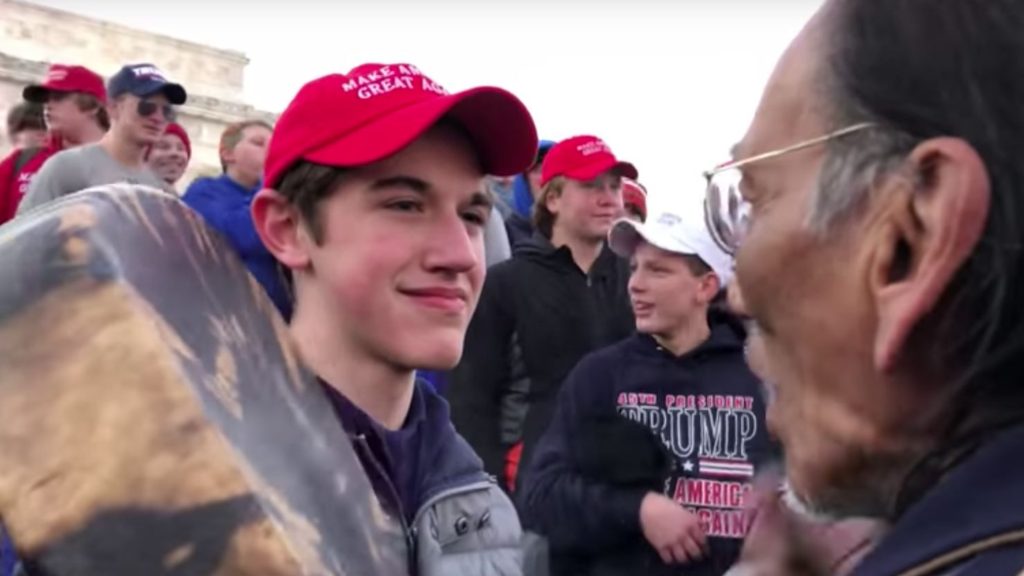
Remember the resulting frenzy when the Kentucky prep school boy at the Lincoln Memorial smirked at the indigenous tribal elder? Documentarian Jonathan Schroder is an alum of that very prep school – Covington Catholic or “CovCath”. In The Boys in Red Hats, his point of view shifts as he peels back the onion on what really happened. It comes down to insights into media, social media and, especially, White privilege.

Like most of us, Schroder was initially outraged at the boys; as more facts emerged, he became sympathetic to what seemed like mistreatment of the boys in social media. Don’t give up on this movie as a whitewash – as the story gets more complicated and Schroder becomes more reflective, his needle sways back and forth until the final payoff.

This was a Rorschach event at the Lincoln Memorial. One thing is for sure, these privileged kids and their chaperones, confronted by a crazy hate group (Black Hebrew Israelites), were unequipped to deal with a momentary convergence of disorder and diversity.

To put my own cards on the table, I am not disposed to sympathize with rich kids who were comfortable in being shipped to an anti-choice rally, wearing MAGA hats. In The Boys in Red Hats, the journalist Anne Branigan’s perspective most resonated with me.

Schroder gives plenty of rope to a professional conservative talking head, two CovCath dads and the school’s alumni director, none of whom display a modicum of sensitivity or empathy to those less rich, less white or less male than they.

Schroder sees the significance when one of his CovCath buddies says, “I like my bubble”. I screened The Boys in Red Hats for its world premiere at Cinequest, and it made my Best of Cinequest 2021.