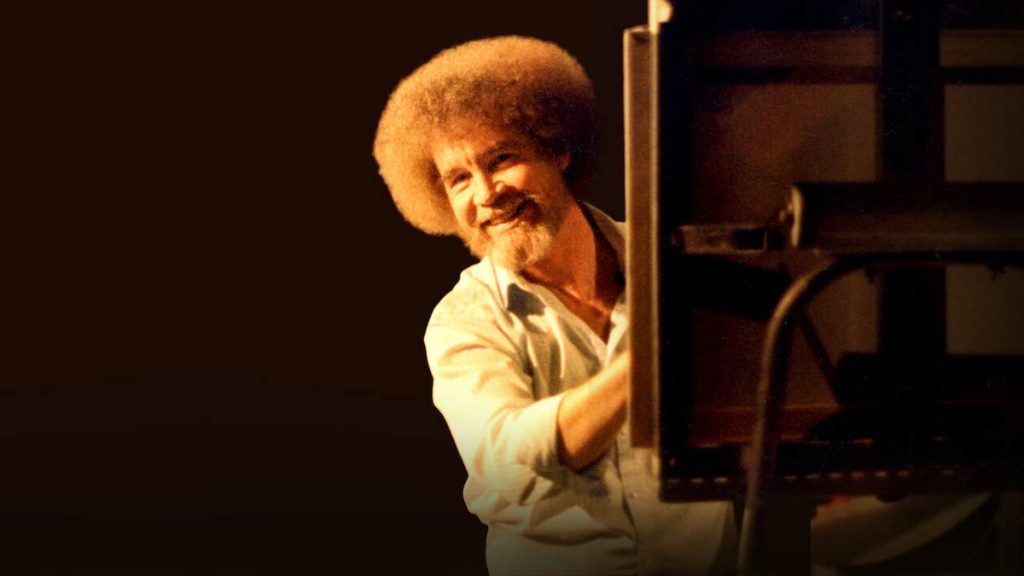
Photo caption: BOB ROSS: HAPPY ACCIDENTS, BETRAYAL & GREED. Photo courtesy of Netflix.
The documentary Bob Ross: Happy Accidents, Betrayal & Greed tells two improbable stories. The first is how Bob Ross, the soft-talking painting instructor on PBS, could become such a cultural phenomenon. It’s hard not to smile when thinking of the signature permanent adorning Ross, at once ridiculous and kind of innocent, and big enough to warrant its own zip code. [Come to think of it, can you imagine ANY personality who sounded like and looked like Ross, Julia Child or Fred Rogers starring on commercial TV?]
In any event, Bob Ross: Happy Accidents, Betrayal & Greed lets us glimpse the secret sauce that Ross used to make a mundane craft into something singular and indelible. By all accounts, Ross was a very sweet guy. The edgiest thing anyone says about him is that he could tell “ornery jokes”.
The Betrayal and Greed in the title relates to the bone-picking after his death to exploit his legacy. This is a sordid tale, in sharp juxtaposition to Ross’ own career and persona.
Bob Ross: Happy Accidents, Betrayal & Greed is streaming on Netflix.
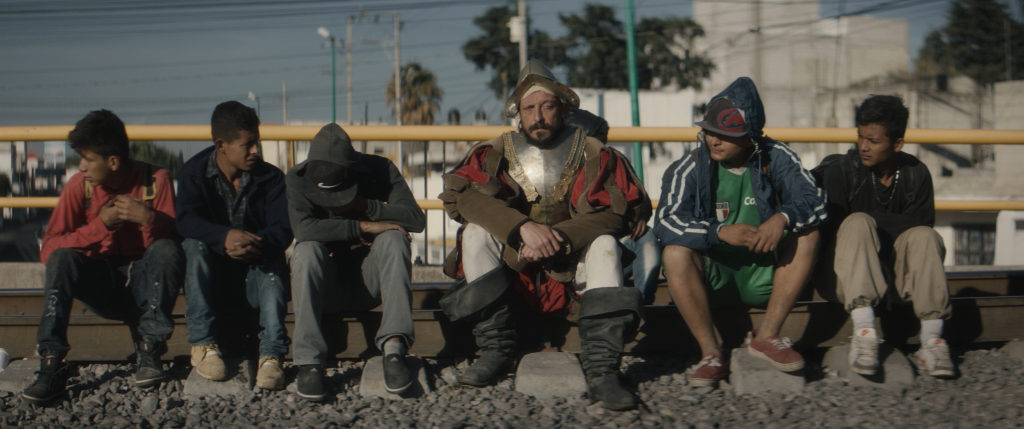
In director and co-writer Rodrigo Reyes’ highly original docu-fable 499, one of Hernán Cortés’ soldiers (Eduardo San Juan Breñais) is transported centuries into the future and plunged into contemporary Mexico. The movie’s title reflects a moment 499 years after Cortés’ conquest of the Aztecs in 1520; the conquistador and the audience discover that the dehumanization inherent in colonialism has persisted to plague modern Mexico.
I’m calling Reyes’ medium a “docu-fable” because it is all as real as real can be (the documentary), except for the fictional, 500-year-old conquistador (the fable).
Cast upon a Veracruz beach after a shipwreck (but 500 years later), the conquistador is terribly disoriented, and retraces Cortés’ march from Veracruz to Tenochtitlan/Mexico City. Seeing everything with a 500 year old lens, he is initially disgusted that the Indians that he conquered are now running things.
Soon he finds a Mexico reeling from narco terror. He meets Mexicans who have been victimized by the cruel outrages of the drug cartels, those risking their lives to hop a northbound train, and those in prison. In the emotional apex of 499, one mother’s account of a monstrous atrocity, clinical detail by clinical detail, is intentionally unbearable.
Reyes wants the audience to connect the dots from Mexico’s Original Sin – a colonialism that was premised on devaluing an entire people and their culture. Will the conquistador find his way to contrition?
499, with its camera sometimes static, sometimes slowly panning, is contemplative. Cinematographer: Alejandro Mejía’s work won Best Cinematography at the 2020 Tribeca Film Festival.
499 opens at San Francisco’s Roxie on September 3 with Rodrigo Reyes in attendance, and will play the Roxie for a week before its national rollout.
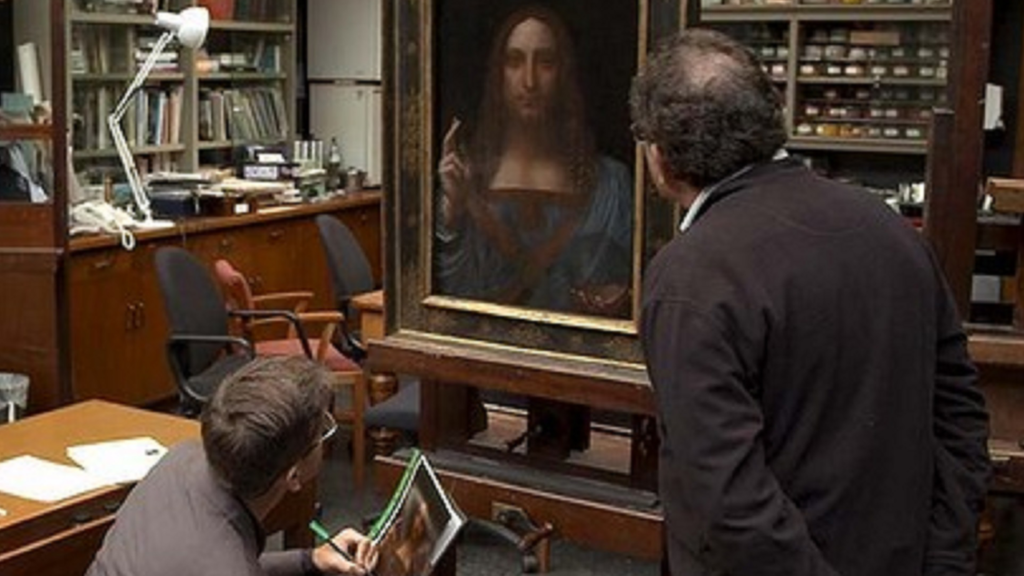
The insightful and thought-provoking documentary The Lost Leonardo starts out as a mystery. We learn that there are “sleeper hunters” in the art world, who seek unrecognized or mislabeled art and buy them on speculation. Our two sleeper hunters buy a beat up, old painting for $1100 to find out if is a long lost original Leonardo da Vinci painting, “the male Mona Lisa”. So, the initial question is, is this a real Leonardo painting, of which only 15 are known to exist?
Around 1500, Leonardo painted a Jesus portrait titled Salvator Mundi (The Savior of the World), of which many copies were made by others. The speculators send their painting to the world’s top restorer of Renaissance masterpieces to query whether this could be the original. Then they approach the National Gallery of Art, which has the painting scrutinized by three leading world experts in Leonardo’s work.
The initial findings are promising. The transition between the lip and the upper lip resembles only one other painting – the Mona Lisa. Removal of patchwork paint reveals that Jesus’ thumb has been repositioned, which was a common practice by Renaissance masters, but is never is seen in a copy.
But questions remain for some. Why would Leonardo, who was meticulous, choose a piece of wood with a knothole that would assuredly eventually cause a disfiguring crack? Worse, how could a 600-year-old Leonardo show up in New Orleans with no provenance?
Both the proponents of the painting’s authenticity and those who would discredit it agree that the restorer contributed up to 85% of the actual paint on the current painting. So, even if Leonardo painted it in 1500, is it now just a masterpiece by the restorer?
The story diverts to an amazing con job that is unrelated to the painting’s authenticity. A shrewd and audacious French businessman bilks a Russian billionaire out of $45 million by pretending to be negotiating the purchase of a painting that that he has already bought. And, as the Frenchman later notes ruefully, you don’t want to piss off a Russian oligarch.
At this point, The Lost Leonardo takes us into a record-breaking $450 MILLION art sale (in which the purchaser is revealed by the CIA – yes, the CIA) with implications for global politics. Implicitly, The Lost Leonardo poses a second question – does it matter whether the Salvator Mundi is real or not? It certainly doesn’t need to be proven to those who would benefit from it being a real Leonardo – the sellers, the National Gallery of Art, Christie’s auction house – or to those who are emotionally moved by it as a piece of art.
The Lost Leonardo peels back the onion on an ever surprising tale of discovery, scholarship, fraud, commerce and politics in the refined and pretentious art world. It’s a good watch.
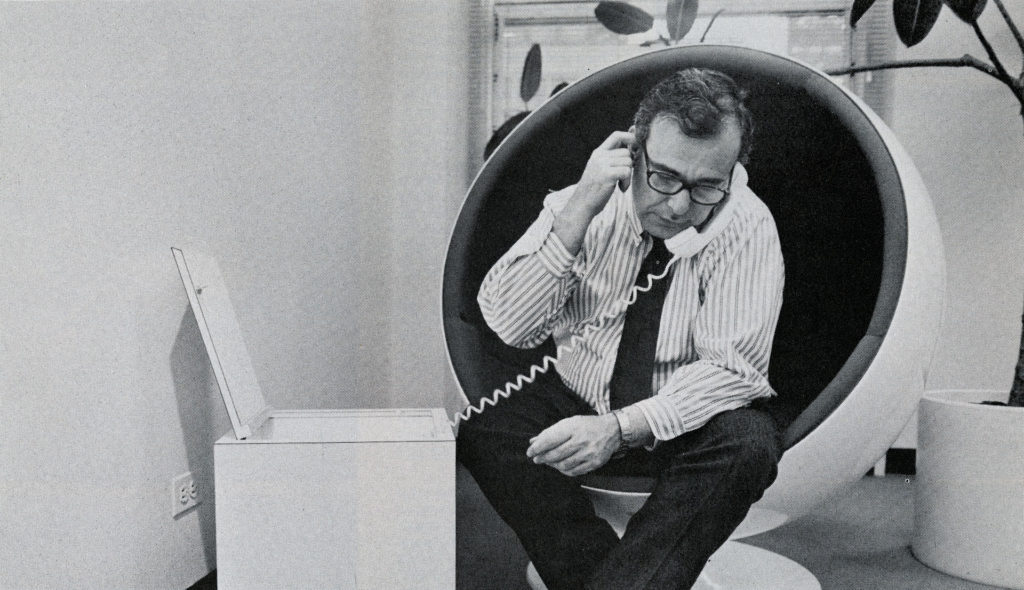
Photo caption: SEARCHING FOR MR. RUGOFF. Photo courtesy of Deutchman Company.
The documentary Searching for Mr. Rugoff is the story of a now-unknown giant in independent cinema. I was drawn to learn more about Donald Rugoff, whom I hadn’t heard of, because he was responsible for the US distribution of a slate of essential foreign and independent films that were the spine of American art house cinema:
Bruce Brown’s seminal surf movie Endless Summer (1965)
Milo Forman’s international breakthrough The Fireman’s Ball (1966)
Robert Downey, Sr.’s iconoclastic Putney Swope (1968)
Costa-Gavras’ double Oscar winning Z (1968) and State of Siege (1972)
The Mayles’ Rolling Stones-at-Altamont doc Gimme Shelter (1970)
De Sica’s The Garden of the Finzi-Continis (1970)
the great doc about a child faith healer grown up, Marjoe (1972)
one of the funniest movies I’ve ever seen, The Tall Blond Man with One Black Shoe (1972)
Bergman’s Scenes from a Marriage (1973)
Monty Python and the Holy Grail (1975)
Barbara Kopple’s Oscar winning Harlan County, USA (1976)
and more films by Ken Loach, Marcel Ophüls, Lina Wertmüller, Werner Herzog, Agnes Varda, François Truffaut and Satyajit Ray.
As we learn in Searching for Mr. Rugoff:
“From 1965 to 1978 [Rugoff’s company] Cinema 5 received 25 Oscar nominations and 6 Oscars. 16 nominations were for foreign language films, 6 were for documentaries.”
Ira Deutchman made this film when he heard that Rugoff, his first boss, had ended up buried in a pauper’s grave; (watch the movie to discover the truth on that).
However, Donald Rugoff was notoriously disheveled and unpleasant. He always had two secretaries posted outside his office because of the high probability that one would quit at any time. He was so volatile that many of his associates incorrectly believed that he had a steel plate in his head that affected his behavior. His own son describes him as a “toxic figure” in the home.
So, there we have it – the guy with the best possible movie taste and the most elevated artistic sensibilities was personally a barbarian.
He was, however, also a mad genius of PT Barnum-like promotion. Until times changed and he wasn’t. Rugoff’s life was a wild ride – and it was critical to an important moment in cinema.
Searching for Mr. Rugoff is opening in person at and streaming from the Roxie. I streamed it from Laemmle.
In director and co-writer Rodrigo Reyes’ highly original docu-fable 499, one of Hernán Cortés’ soldiers (Eduardo San Juan Breñais) is transported centuries into the future and plunged into contemporary Mexico. The movie’s title reflects a moment 499 years after Cortés’ conquest of the Aztecs in 1520; the conquistador and the audience discover that the dehumanization inherent in colonialism has persisted to plague modern Mexico.
I’m calling Reyes’ medium a “docu-fable” because it is all as real as real can be (the documentary), except for the fictional, 500-year-old conquistador (the fable).
Cast upon a Veracruz beach after a shipwreck (but 500 years later), he conquistador is terribly disoriented, and retraces Cortés’ march from Veracruz to Tenochtitlan/Mexico City. Seeing everything with a 500 year old lens, he is initially disgusted that the Indians that he conquered are now running things.
Soon he finds a Mexico reeling from narco terror. He meets Mexicans who have been victimized by the cruel outrages of the drug cartels, those risking their lives to hop a northbound train, and those in prison. In the emotional apex of 499, one mother’s account of a monstrous atrocity, clinical detail by clinical detail, is intentionally unbearable.
Reyes wants the audience to connect the dots from Mexico’s Original Sin – a colonialism that was premised on devaluing an entire people and their culture. Will the conquistador find his way to contrition?
499, with its camera sometimes static, sometimes slowly panning, is contemplative. Cinematographer: Alejandro Mejía’s work won Best Cinematography at the 2020 Tribeca Film Festival.
499 releases into theaters on August 20, and will play San Francisco’s Roxie in early September, before its national rollout.
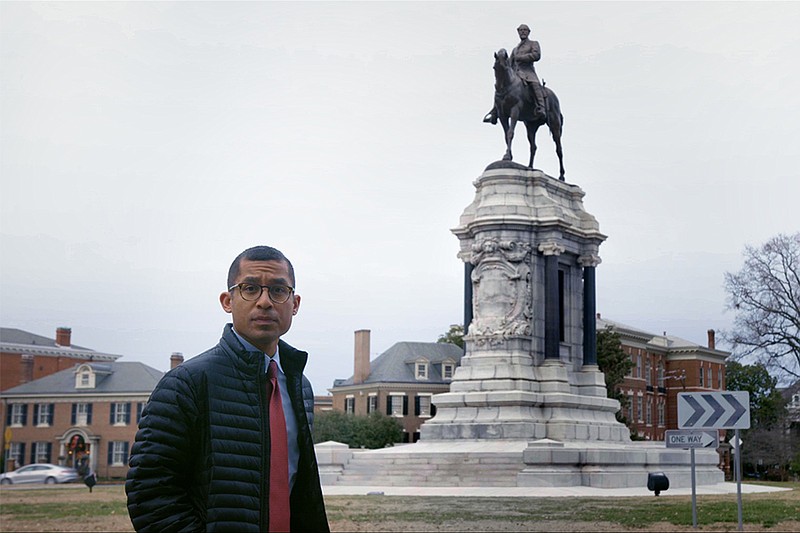
Photo caption: C.J. Hunt in NEUTRAL GROUND. Photo courtesy of PBS POV.
In the pointed documentary The Neutral Ground, C.J. Hunt explores the continuing legacy of Confederate monuments in America. Finding the backlash against removing New Orleans’ Confederate monuments so absurd, Hunt, a producer for The Daily Show, started out to make a snarky YouTube video. But he found himself drawn more deeply into the history of Confederate monuments, so intentionally braided with white supremacy.
In my view (and C.J. Hunt’s), it’s a no-brainer to remove monuments that should never have been erected in the first place. After all, these monuments celebrate men who led a traitorous insurrection against their own country, who sought to keep other human beings enslaved and who lost a disastrous war. Traitors. Slavers. Losers.
But Hunt is fascinated by the chorus of White Southerners advocating for the preservation of Confederate monuments to maintain pride in (White) Southern heritage. All of them claim that the Civil War was not about slavery. And none of them would say that they are White supremacists or that slavery was acceptable. Hunt notes a disconnect with historical fact:
“The founding documents of the Confederacy talk so obsessively about slavery, the real mystery is how so many people came to believe that Confederate symbols have nothing to do with it.”
Hunt is very funny. To a woman who wants to keep all the statues in their prominent places with plaques for context, he suggests this wording: “Hi, I’m Robert E. Lee. A long time ago, I turned on my country and led over 200,000 Southern sons to their graves, so we could keep our basic right to own human beings as property. #SorryI’mNotSorry“.
After meeting a round of genteel “as long as you stay in your place” racists, Hunt is unnerved by encounters with the “I want to kill you” variety of racists.
For me, the highlights of The Neutral Ground were Hunt’s sparring with his own African-American father. His dad, moving about his kitchen in an Aunt Jemima apron, critically recounts the evolution of C.J.’s own racial awareness and imparts his own unblinking view of institutional racism in America. This repartee sets the stage for The Neutral Ground to become even more personally-focused for C.J. Hunt.
I watched The Neutral Ground on PBS’ POV; it’s now streaming on PBS.
Benjamin Netanyahu in KINGS OF CAPITOL HILL. Photo courtesy of JFI.
The Israeli documentary Kings of Capitol Hill traces the history of an American political institution, the American Israel Public Affairs Committee (AIPAC). Founded as a lobby group to advocate for the interests of Israel, AIPAC has grown in power and has shifted (and narrowed) its mission.
AIPAC is controversial because the policies of the recent right-wing Israeli governments, supported by AIPAC, and those of most Jewish-Americans have diverged.
Kings of Capitol Hill highlights two pivotal moments. The first came in 1984 when Paul Simon unseated Charles Percy as US Senator from Illinois, and AIPAC was given the credit and the accompanying political fearsomeness. The second came a decade later, when AIPAC abruptly rejected bipartisanship to become a mouthpiece for the Israeli Right and the US Republican Party.
For 60 years, AIPAC leaders have refused to be interviewed about the organization. Israeli filmmaker Mor Loushy has secured the oral histories of many of AIPAC’s top leadership from its founding and fashioned them into a compelling story.
Note: The film was completed before both Donald Trump and Benjamin Netanyahu, two of Kings of Capitol Hill’s villains, were unseated in the past nine months.
I screened Kings of Capitol Hill for this year’s San Francisco Jewish Film Festival, which opens on Friday. You can peruse the festival’s program and schedule at SFJFF, and here’s my own SFJFF preview. Here’s where you can stream Kings of Capitol Hill.
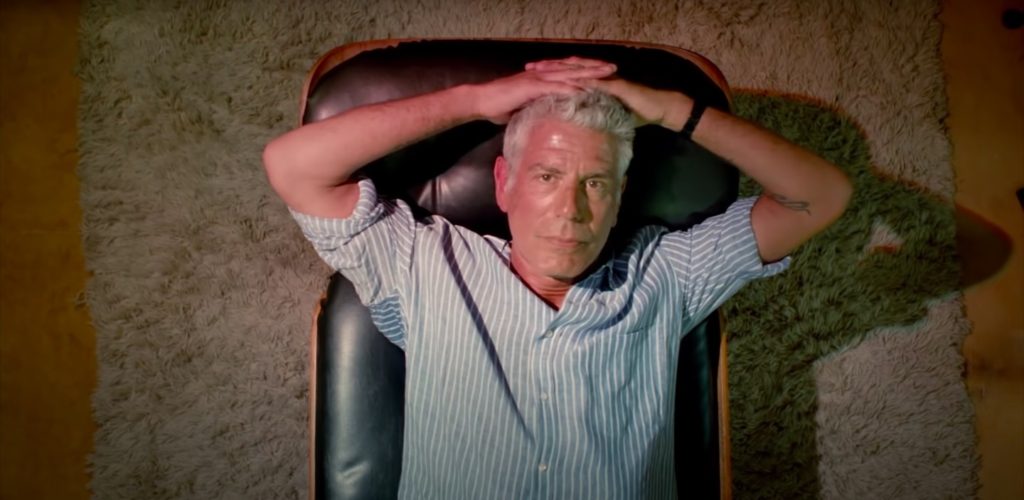
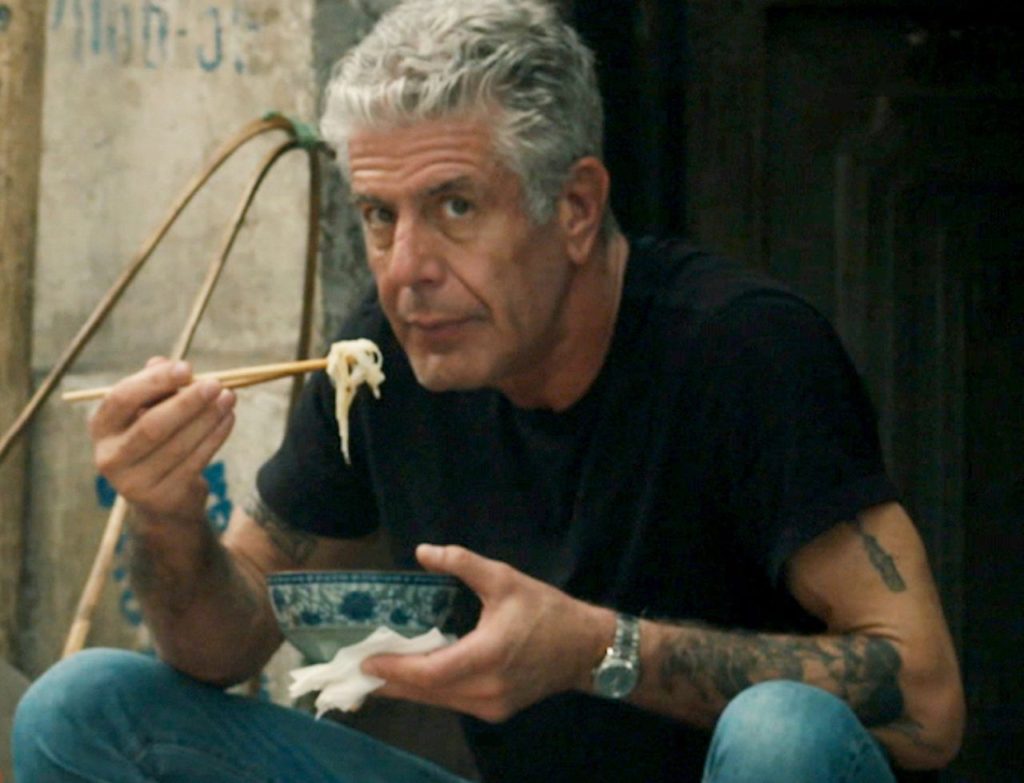
Photo caption: ROADRUNNER: A FILM ABOUT ANTHONY BOURDAIN
Roadrunner: A Film About Anthony Bourdain is an unusually profound, revealing and unsentimental biodoc. Rarely has a documentary revealed so much about such a complicated and ambiguous person. Roadrunner deliberately builds into a triumph for director Morgan Neville, Oscar-winner for 20 Feet from Stardom.
In Roadrunner, we hear from Bourdain’s brother, second wife and his close friends and associates. His friends were creatives – artists, musicians, writers, chefs. His work partners — agent, publisher, producers, TV crew – had all stayed with him for many years.
Bourdain attained overnight celebrity as the Bad Boy chef with his ribald and iconoclastic memoir Kitchen Confidential. That platform propelled him into his television career as a traveling professional foodie – and then as a professional traveler.
I didn’t know that, before his TV shows, Bourdain had not traveled outside the US except for boyhood visits to family in France. One friend observes that, “his travels were in his head“. Tony himself was allured by the chance to “have adventures while antisocial“. Bourdain’s brother said that Tony was “reborn” through travel.
ROADRUNNER: A FILM ABOUT ANTHONY BOURDAIN
Bourdain was so fun to watch because he was a kind of adult Holden Caulfield, perpetually aggrieved by phoniness in any form. The dark humor in his caustic observations was unfiltered. Yet, Bourdain was an unexpectedly shy man for such a bad ass. Often, when someone (including Bourdain himself) made an incisive statement, Tony would furtively glance directly into the camera – was this his “tell”?
His friends saw Bourdain, despite his overt cynicism, as a romantic . Romantics are always disappointed in – and sometimes betrayed by – reality.
Roadrunner: A Film About Anthony Bourdain does reveal what upset him on the night that he, cold sober, chose to kill himself. But it doesn’t label that disappointment as the simplistic reason for his suicide. Instead, Roadrunner thoughtfully documents his life as a “runner”, focusing his addictive personality on everything from heroin to jujitsu to evade his demons.
Ultimately, Roadrunner is about the people who loved Tony and his difficulty in accepting their love. The saddest scene in Roadrunner recounts when Tony dramatically summoned his producers and proclaimed that he needed to quit; he never anticipated that, far from pushing back, that they would be wholly supportive.
Bourdain was beloved by his fans (including me). If you need a dose of the sentimentality that Roadrunner eschews (and there’s nothing wrong with that), CNN-produced retrospectives are available in episodes 93 and 95 of Parts Unknown, which can be streamed from HBO Max.
[Note: Roadrunner has provoked some contretemps in the chattering class. A computer-simulated voice reads one of Bourdain’s emails as if it were Bourdain himself, and Neville chose not to invite Asia Argento, Bourdain’s last girlfriend, to participate as a talking head (although we see and hear plenty of her on film). In both cases, Neville was seeking the fundamental truth about Bourdain and made the absolutely best choices as a filmmaker. Ignore the hoohaw.]
One more thing – Neville went with the perfect ending for Roadrunner: A Film About Anthony Bourdain, so perfect that, now that I’ve seen it, I can’t imagine any better one. This is one of the Best Movies of 2021.
THE BOYS IN RED HATS. Photo courtesy of Shark Dog Films.
Remember the resulting frenzy when the Kentucky prep school boy at the Lincoln Memorial smirked at the indigenous tribal elder? Documentarian Jonathan Schroder is an alum of that very prep school – Covington Catholic or “CovCath”. In The Boys in Red Hats, his point of view shifts as he peels back the onion on what really happened. It comes down to insights into media, social media and, especially, White privilege.
Like most of us, Schroder was initially outraged at the boys; as more facts emerged, he became sympathetic to what seemed like mistreatment of the boys in social media. Don’t give up on this movie as a whitewash – as the story gets more complicated and Schroder becomes more reflective, his needle sways back and forth until the final payoff.
This was a Rorschach event at the Lincoln Memorial. One thing is for sure, these privileged kids and their chaperones, confronted by a crazy hate group (Black Hebrew Israelites), were unequipped to deal with a momentary convergence of disorder and diversity.
To put my own cards on the table, I am not disposed to sympathize with rich kids who were comfortable in being shipped to an anti-choice rally, wearing MAGA hats. In The Boys in Red Hats, the journalist Anne Branigan’s perspective most resonated with me.
Schroder gives plenty of rope to a professional conservative talking head, two CovCath dads and the school’s alumni director, none of whom display a modicum of sensitivity or empathy to those less rich, less white or less male than they.
Schroder sees the significance when one of his CovCath buddies says, “I like my bubble”.
I screened The Boys in Red Hats for its world premiere at Cinequest, and it made my Best of Cinequest 2021. The Boys in Red Hats releases in theaters and streaming on Virtual Cinema on July 16.
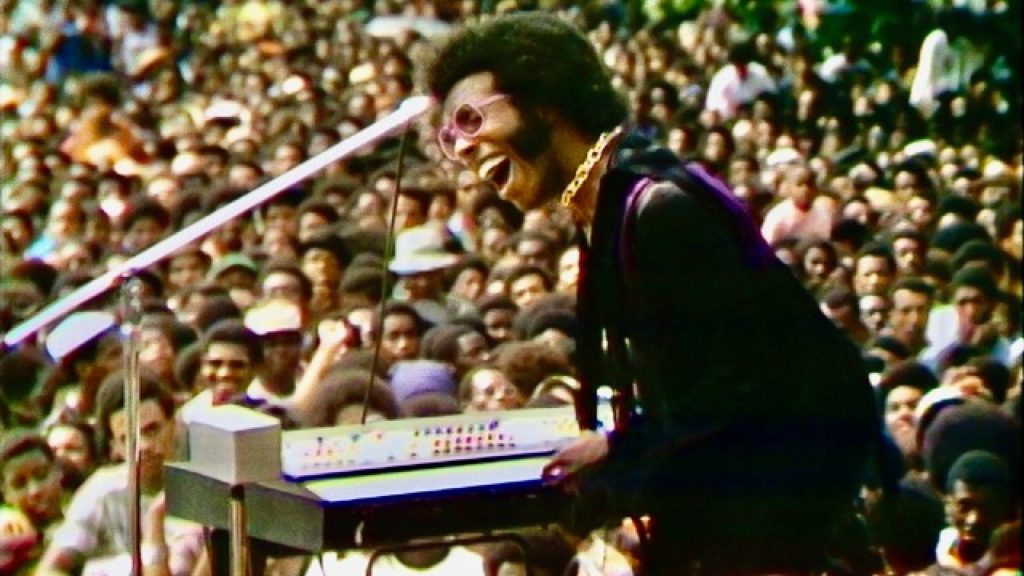
Sly Stone in SUMMER OF SOUL (…OR, WHEN THE REVOLUTION COULD NOT BE TELEVISED)
In Summer of Soul (…Or, When the Revolution Could Not Be Televised), Questlove recovers the never-before-seen film of the Harlem Cultural Festival over six weekends in 1969. The promoters had tried to market the footage as “the Black Woodstock”, but had no takers at the time (for the obvious reason).
This is a superb concert film, but that’s not all it is. 1969 was an important historical and cultural moment – especially for American Blacks, and Questlove supplies the context. A 2021 audience cannot miss the parallels between 1969’s Black Is Beautiful and Black Power and today’s Black Lives/Black Voices.
Ahmir “Questlove” Thompson is widely-known as drummer of The Roots and bandleader for The Tonight Show with Jimmy Fallon. Creative and versatile, he is Emmy-nominated and Grammy-winning, he is going to win an Oscar for this, his directorial debut for a feature film. Summer of Soul proves that Questlove is such a gifted storyteller that I hope he takes on narrative fictional filmmaking, too.
The music in Summer of Soul is fantastic:
Sly and the Family Stone shattered expectations with their garb, racially integrated band and female musicians on trumpet and keyboards. Their psychedelic funk and super-charged ebullience blew away the audience. (BTW Vallejo native Sly Stone is now age 78.)
Stevie Wonder was only 19, 3 years before Superstition, and already taking his remarkable creativity and musicianship down new roads.
Gladys Knight and the Pips – watch the Pips and appreciate how those guys really worked it.
BB King at the height of his popular breakthrough, singing Why I Sing the Blues.
The Fifth Dimension were best sellers among the white mainstream – and here they were finally accepted by a Black audience. Billy Davis Jr. and Miriam McCoo get to relive the experience on camera in one of Summer of Soul’s most touching moments.
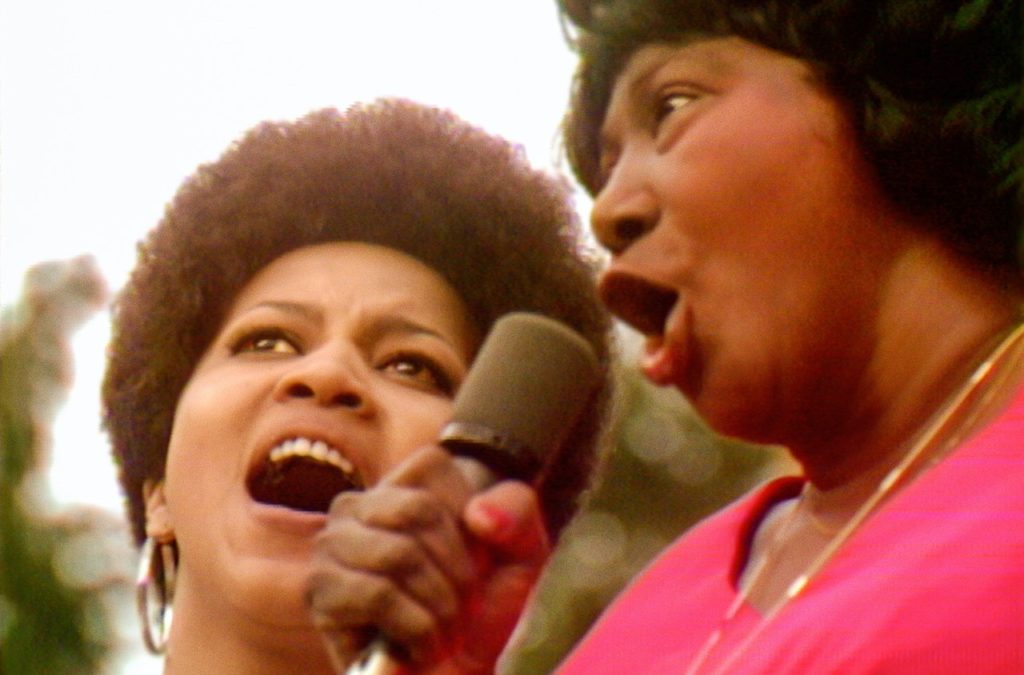
The musical high point is a rendition of Precious Lord, Take My Hand by Mahalia Jackson and Mavis Staples. Mahalia was then 58 and a legend, and this was her signature song. Mavis was already a showbiz veteran at 30 and at the top of her game. The Reverend Jesse Jackson introduces the song with a heartbreaking account of Martin Luther King asking for this, his favorite hymn, seconds before his murder. Mahalia was not feeling well, and asked Mavis to kick off the song. Mavis’ first verse is volcanic, then Mahalia takes over and the two finish together in an explosion of emotions. Epic.
Mavis Staples and Mahalia Jackson in SUMMER OF SOUL (…OR, WHEN THE REVOLUTION COULD NOT BE TELEVISED)
Something else happened that summer – the manifestation of JFK’s pledge to land a man on the Moon and return him safely to Earth. Questlove uses file footage of person-on-the-street interviews to contrast the reactions of Blacks and Whites. It’s a Rorschach test of privilege and alienation.
Gladys Knight recounts “it wasn’t just about the music”. BB King performed here just weeks after the release of The Thrill Is Gone, and he must have included Thrill in his set, but I’m sure that Questlove instead chose Why I’m Singing the Blues to focus on that song’s larger subtext for Black Americans.
And the need to show the militant commitment to self-determination must be why Questlove features so much of Nina Simone at her rawest. If she had ever worried about being too harsh, Simone was well past that point in 1969.
On a lighter note, ironic sombrero-wearing must have been a thing in Harlem that summer – check out the crowd shots (and drink a shot for every sombrero.)
Summer of Soul etc. etc. has also earned the #13 ranking on my list of Longest Movie Titles.
How good is Summer of Soul, which swept the Grand Jury Prize and the Audience Award at Sundance? It’s hard to imagine it not winning the Oscar for Best Documentary Feature, and I’m guessing it will be that rare doc nominated for Best Picture. FWIW I’m putting it on my list of Best Movies of 2021 – So Far.
Summer of Soul (…Or, When the Revolution Could Not Be Televised) is in theaters and streaming on Hulu. It’s worth watching for the music and worth it for the history, too; for the combination, it’s a Must See.