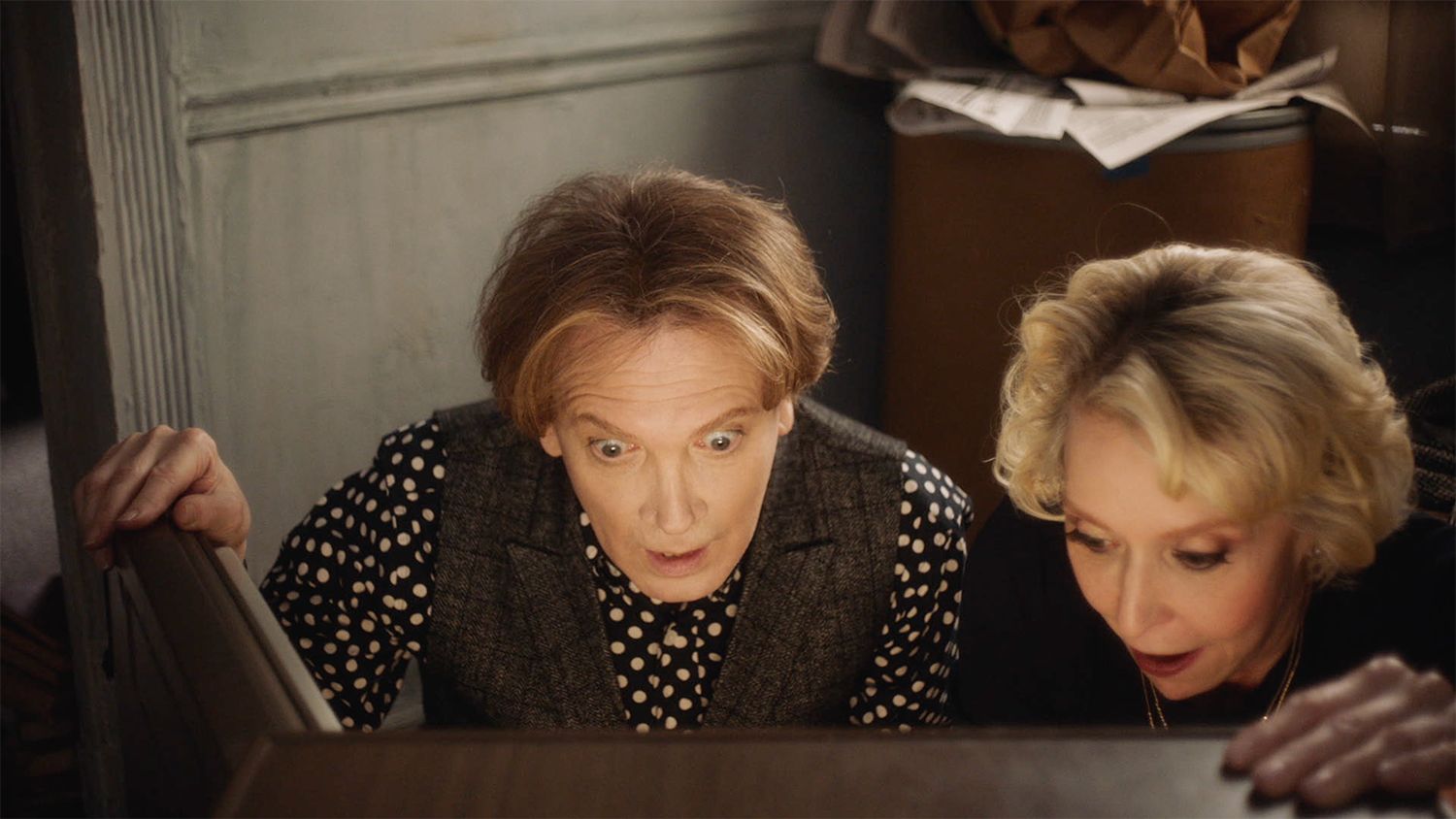
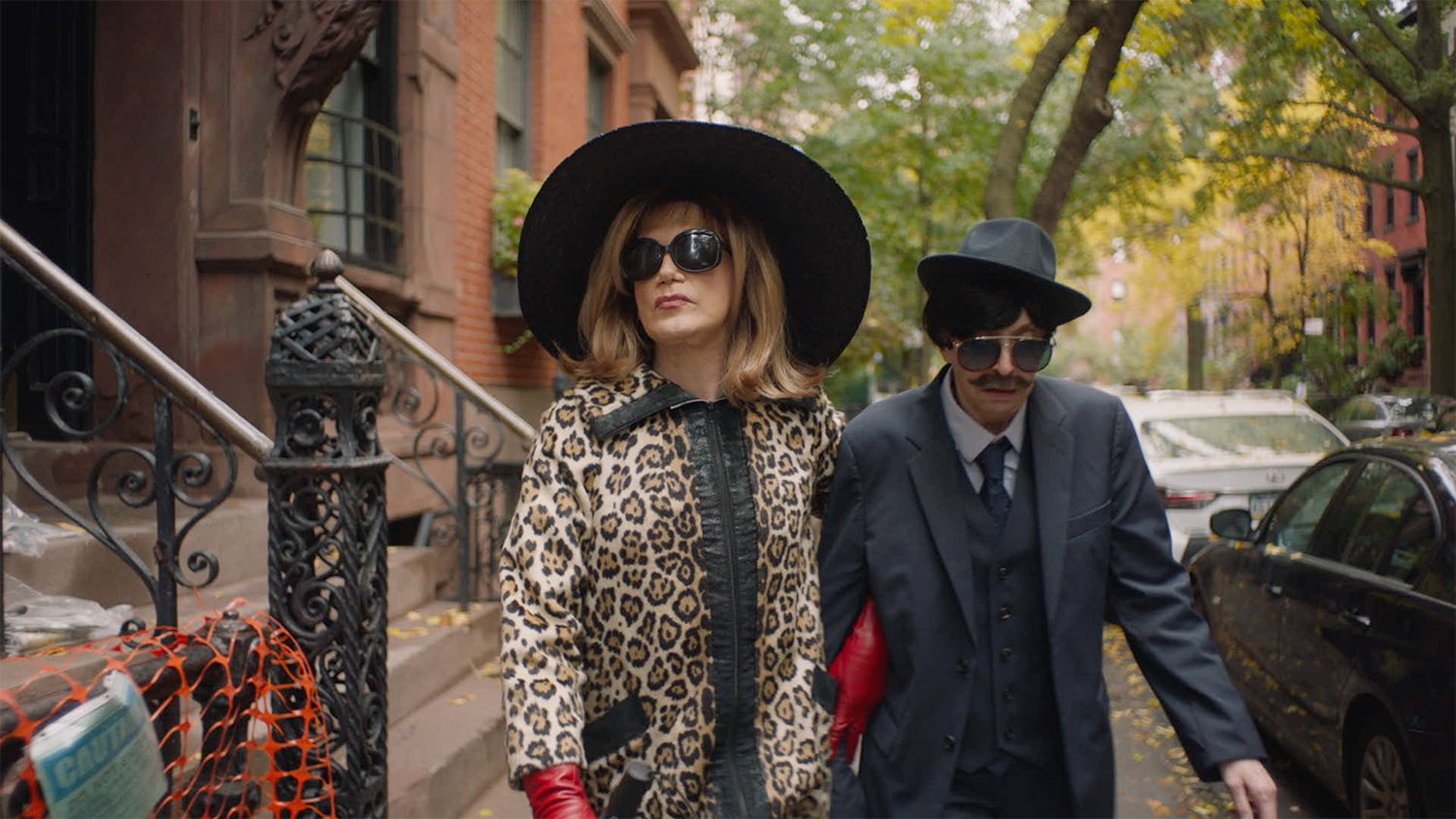
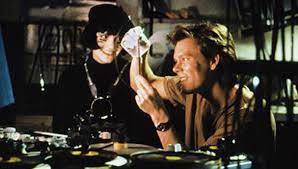
Photo caption: Charles Busch and Julie Halston in THE SIXTH REEL. Courtesy of Frameline.
The endearing madcap comedy The Sixth Reel is set in the insular world of classic movie geeks. I’m not talking about the average Turner Classic Movies devotees; these are folks who would sell their souls for the right lobby card and say things like, “William Powell is sexier with Kay Francis than he is with Myrna Loy.”
Jimmy (Charles Busch) is a down-on-his-luck collector and dealer of movie memorabilia. Jimmy has a history of becoming the companion of aging filmmakers and emerging with their memorabilia collections after their demise. Despite this unsavory business model, Jimmy is broke when stumbles upon a lead – the final reel of an iconic “lost film” is extant after all.
Jimmy and his peers, each shadier than the last, plunge ahead, competing with each other for their Holy Grail. Wackiness ensues.
Charles Busch and Julie Halston in THE SIXTH REEL. Courtesy of Frameline.
Busch co-wrote and co-directed The Sixth Reel with Carl Andress. This is my first Charles Busch film, but I understand that his movies, dappled with drag performances, constitute their own comedy sub-genre.
Busch’s committed performance is excellent. The rest of the cast, which includes Tim Daly and Margaret Cho, is fine, too, especially Julie Halston as an assertive widow and Patrick Page as an imperious mogul.
There should always be a place for well-crafted farce like this. The Sixth Reel screens at Frameline on June 25, and can be streamed from Frameline after June 24.
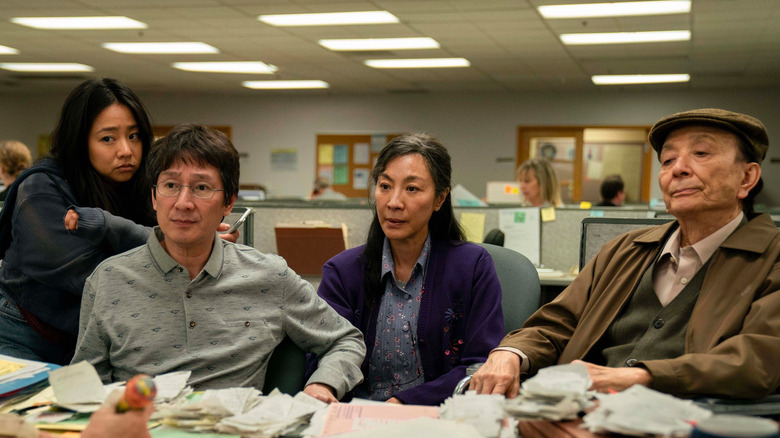
Photo caption: Stephanie Hsu, Ke Huy Quan, Michelle Yeoh and James Hong in EVERYTHING EVERYWHERE ALL AT ONCE. Courtesy of A24.
The mind-bender Everything Everywhere All At Once is often indecipherable and mostly dazzling. It’s as if a martial arts version of It’s a Wonderful Life were written by Terry Gilliam on LSD and Red Bull
Michelle Yeoh shines as Evelyn, the burned-out owner of the coin laundromat that she lives above. Evelyn is simultaneously tying to run the business, survive a crippling IRS audit, organize a birthday party for her cranky father and avoid facing her daughter Joy’s (Stephanie Hsu) having a girlfriend. Stressed out to the max, Evelyn is so emotionally neglectful of her husband Waymond (Ke Huy Quan) that she doesn’t grok that he’s trying to divorce her (for emotional neglect).
Suddenly, Evelyn is plunged into a multiverse where a master villain named Jobu Topaki is wreaking carnage and sometimes inhabiting Joy’s body. And, just as suddenly, we are plunged into a mile-a-minute adventure like being inside a pinball machine. Every so often, Waymond is possessed by a multiverse good guy and blurts out a stream of exposition, but it’s best not to try to follow it.
An “everything bagel” appears – both literally and metaphorically. There’s a heartfelt message embedded that is much simpler than all the sci fi hoopla.
It takes a movie star like Yeoh (the martial arts star of Crouching Tiger, Hidden Dragon, the Bond Girl in Tomorrow Never Dies, and the steely mom in Crazy Rich Asians).tio hold the center of this wacky extravaganza.
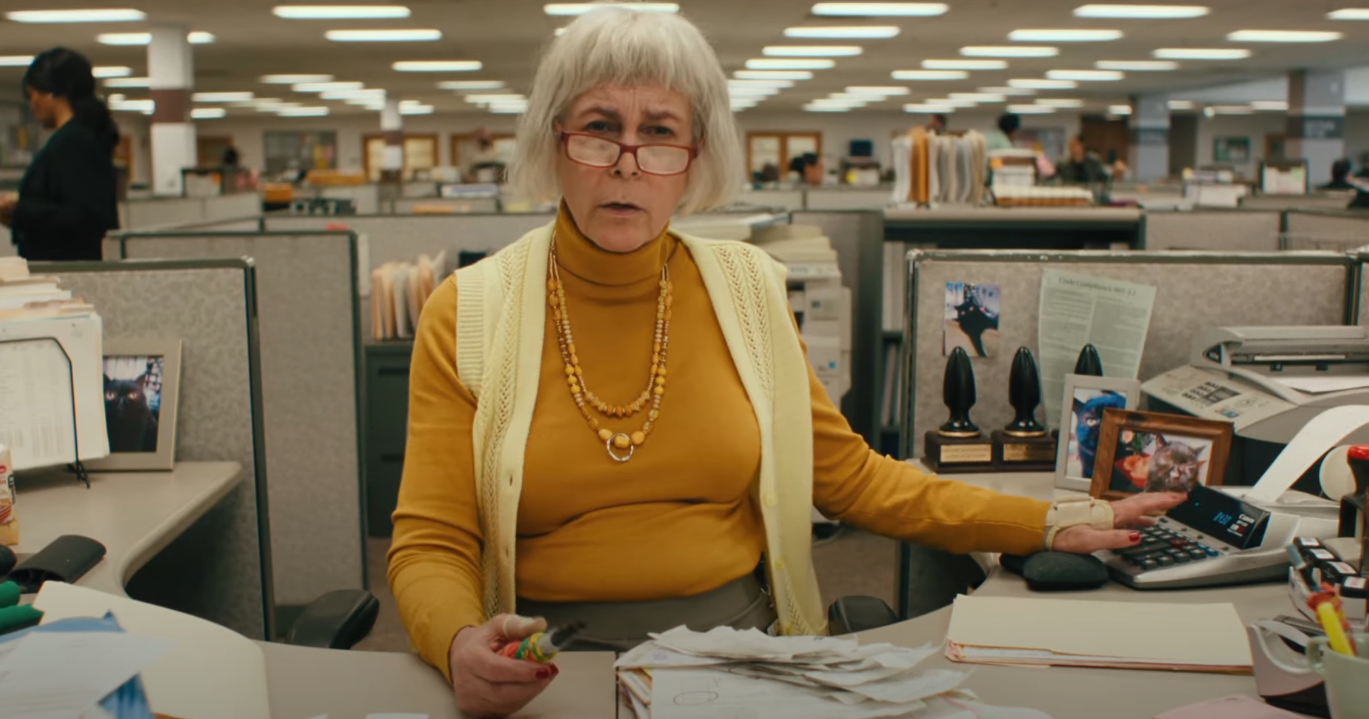
Jamie Lee Curtis in EVERYTHING EVERYWHERE ALL AT ONCE. Courtesy of A24.
The rest of the cast is excellent, too. Ke Huy Quan, who, as a child, played Short Round in Indiana Jones and the Temple of Doom captures Waymond’s gentle cluelessness and domestic frustration. I especially loved 93-year-old James Hong (recognizable from his 450 screen credits) as Evelyn’s dad. The funniest performance is by a hilariously glammed-down Jamie Lee Curtis as the IRS agent.
Everything Everywhere All At Once is co-written and co-directed by the Daniels – Dan Kwan and Daniel Scheinert. The pair is best known for getting $3 million to make the utterly transgressive Swiss Army Man, starring Daniel Radcliffe (Harry Potter) as a flatulent corpse.
Everything Everywhere All At Once is a succession of zany action and eye candy with an avalanche of googly eyes at the climax. The best bits are:
a brilliant martial arts set piece with a fannypack as a weapon.
a fantasy of what Evelyn’s life would be if she hadn’t married Waymond, which turns out to be the real movie star life of Michelle Yeoh.
the moment in evolutionary history when hot dog fingers overcame real human fingers in natural selection.
a live action homage to the movie Ratatouille with a CGI racoon.
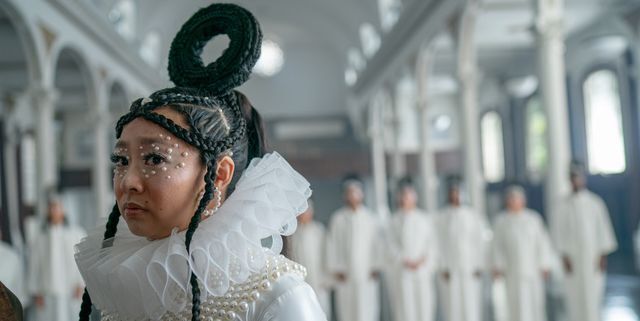
Stephanie Hsu in EVERYTHING EVERYWHERE ALL AT ONCE. Courtesy of A24.
One more note: the costume design (Shirley Kurata) and makeup (Michelle Chung) for Joy when she’s possessed by the villain is inspired.
I’ve rarely seen so much imagination thrown up on the screen, mostly for the better. Everything Everywhere All At Once is kinda draining to watch and often frustrating, but its best moments are very, very good.
Photo caption: Lexie Mountain in ADVENTURES IN SUCCESS. Photo courtesy of Nashville Film Festival.
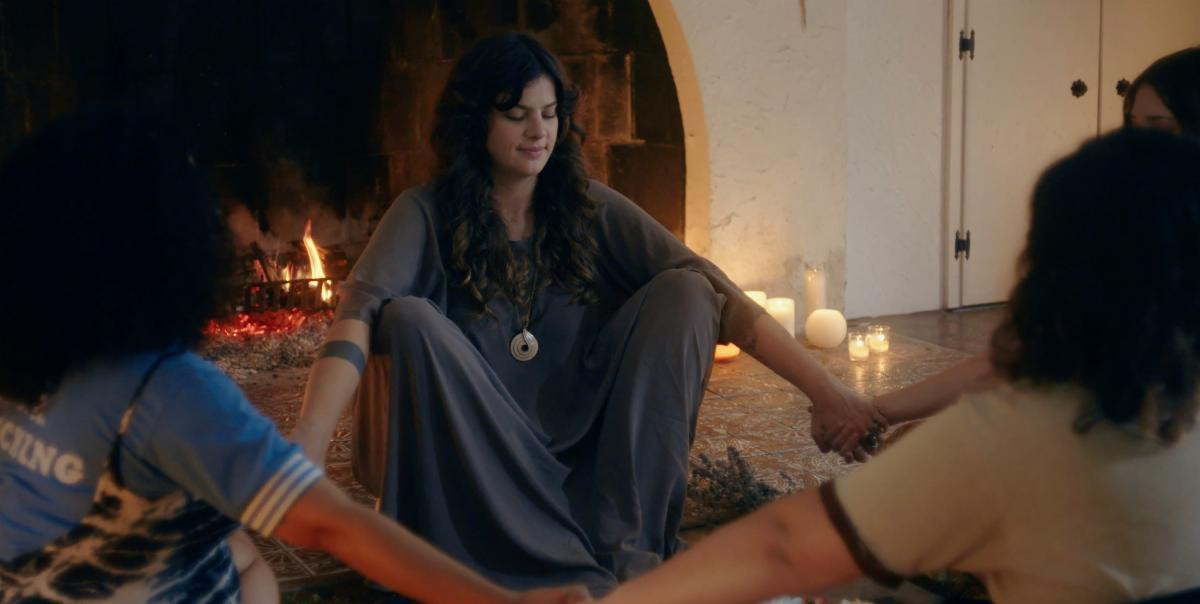
The broadly comic Adventures in Success traces the misadventures of a self-help retreat center led by Peggy (Lexie Mountain), a self-described energy transformationist. Peggy claims to have experienced a 12-hour orgasm. Her movement is centered on the female orgasm, the mantra is Jilling Off, and the sessions are essentially orgies where men are not allowed to ejaculate.
Of course, Adventures in Success sends up self-help movements, New Age affectations, and, especially, would-be cult leaders. As Peggy, Lexie Mountain projects a demented self-assurance.
The comic tone is set early – the opening shot is an impressive 28-second performance of urination art.
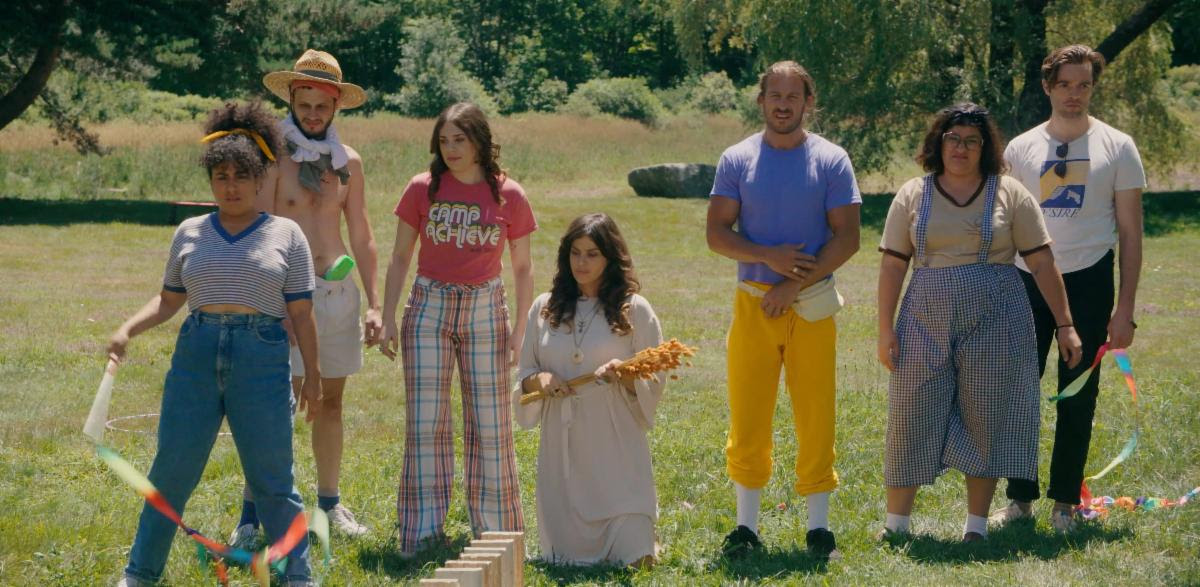
ADVENTURES IN SUCCESS. Photo courtesy of Nashville Film Festival.
There some inspired LOL moments, but Adventures in Success is not a laugh-a-minute. It runs out of energy when the group takes a final, doomed bus trip to Vegas.
Cinequest hosted the world premiere of Adventures in Success; I screened it for the Nashville Film Festival. Adventures in Success is streaming from Amazon and AppleTV.
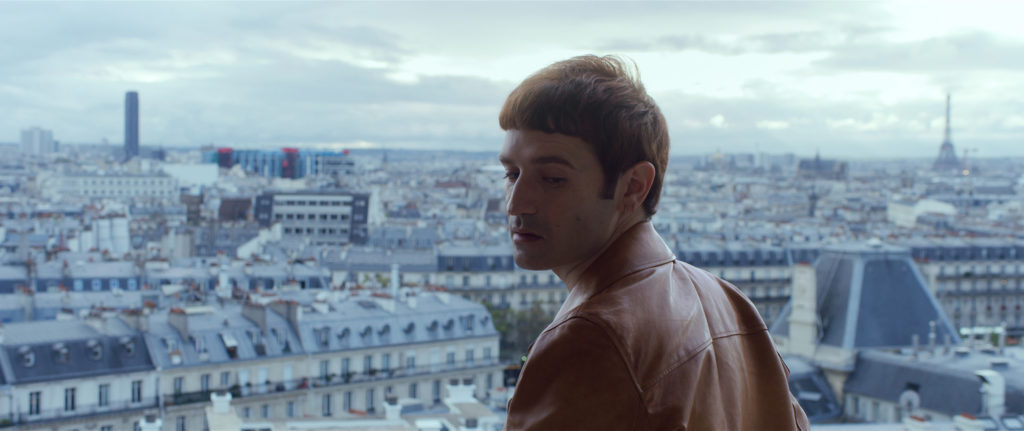
Photo caption: Nicolas Maury in MY BEST PART. Courtesy of Altered Innocence.
In the French coming of age dramedy My Best Part, the young actor Jérémie (Nicolas Maury) is teetering on the verge of a breakdown. Not that Jérémie is generally a stable person – he is so needy and dramatic that he attends Jealous Anonymous. But he loses a gig that he was counting on, his credit card is declined, and worst of all, Jérémie’s smothering jealousy sabotages his relationship with his veterinarian boyfriend (Arnaud Valois), Jérémie’s neurotic fit having disrupted ferret surgery.
With his tail between his legs, Jérémie Paris retreats to hos boyhood home in rural Limousin (the area around Limoges) and the arms of his mother (Nathalie Baye). Jérémie is open to infantilization, but the matter-of-fact Mom is anything but neurotic. With prodding from his mom, will he start behaving like a sane, stable grownup and get his life back on the rails?
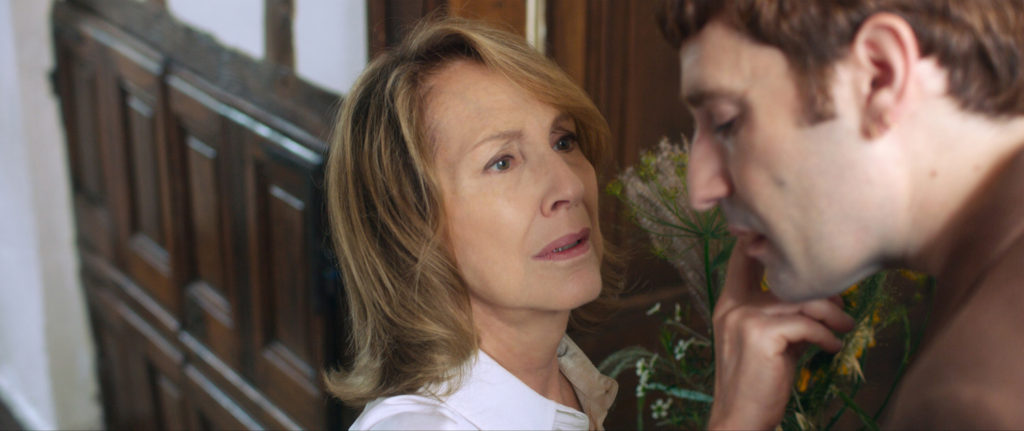
Nathalie Baye and Nicolas Maury in MY BEST PART. Courtesy of Altered Innocence.
I’ll watch ten-time César Award nominee Nathalie Baye in anything. Here, in an unchallenging role, she brightens every scene with the sniveling son.
One of the world’s funniest actors, Laure Calamy gets to play a hilarious meltdown in a brief turn as a narcissistic film director.
My Best Part is the feature directing debut for Maury, who also co-wrote the screenplay. My Best Part was nominated for the César for Best First Film.
Parts of My Best Part drag, especially a slooooooow nighttime poolside scene. The final scene, in which Jérémie sings lyrics that explicitly detail his character’s growth, is off-putting and self-indulgent.
My Best Part opens Feb 25 on VOD and at the Glendale Laemmle.
Photo caption: Katia Pascariu in BAD LUCK BANGING OR LOONY PORN. Courtesy of Magnolia Pictures.
The Romanian absurdist comedy Bad Luck Banging or Loony Porn is unlike anything feature film you’ve ever seen. For one thing, it begins with a three-and-a-half minute amateur sex video. The couple is having sex that is playful, enthusiastic and highly verbal. The sex is not simulated.
The couple turns out to be married. The wife is Emi (Katia Pascariu), a teacher of Romanian history at an upscale private school in Bucharest. Unfortunately, her husband takes their laptop to a tech shop for service and the sex video appears on the Internet – and goes viral within her school’s community.
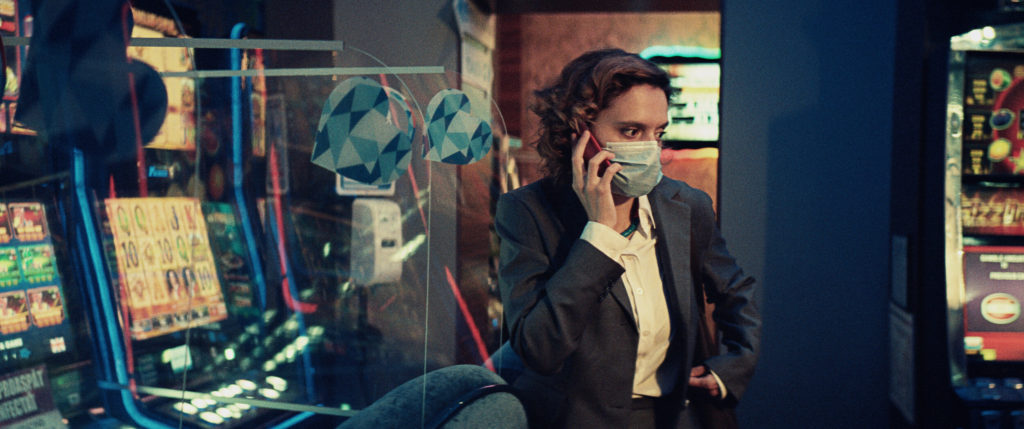
Bad Luck Banging or Loony Porn is divided into three chapters, each approximately 30 minutes. In the first, Emi leaves their crowded apartment and walks, COVID-masked, through Bucharest to her boss’ apartment and then to school, stopping to receive a series of phone calls with ever worsening news about the video.
Beginning with the chaos of daily family life crammed in tight quarters, and spilling out through the city, this is deadpan comedy at its best. Writer-dirctor Radu Jude’s camera wryly points out the mixed martial arts studio Super Kombat Romania next door to a more aspirational Caffe Le Strada.
Jude depicts Bucharest street life as boisterous and earthy, with everyone unleashing torrents of foul invective at the slightest annoyance. I’m an aficionado of vulgarities, and the best in this film comes from the driver of a vehicle whom Emi points out is illegally parked.
Part 2 takes a break from Emi’s story – it’s a series of brief vignettes highlighting the most ridiculous and outrageous excesses of Romanian history, including Nazi collaboration and the Ceaușescu communist dictatorship. Most of the vignettes are funny, and most are wickedly pointed. Some are just refreshingly silly, like a socially-distanced folk dance and the funniest elevator doors I’ve ever seen.
In part 3, the school hosts a meeting of the parents to discuss the sex video – and whether Emi should keep her job. Of course, this is mortifying for Emi.
[MILD SPOILER IN THIS PARAGRAPH] The parents insist on playing the sex video at the meeting, so Emi is subjected to watching them watch her have sex – with a running commentary from the audience. Of course, if the video is offensive, then the parents are offending new viewers or re-offending those who have already seen it. But this is not about reason – it is about slut shaming.
Context completely escapes the parents. Emi’s consensual sex in her home with her husband is entirely her right; she didn’t publish the video, and she is the victim of its publication. Nevertheless, the parents plunge ahead into a witch trial that would have made colonial Salem proud, worsened by a dose of jawdropping antisemitism. That everyone is masked for the pandemic adds another layer of ridiculousness.
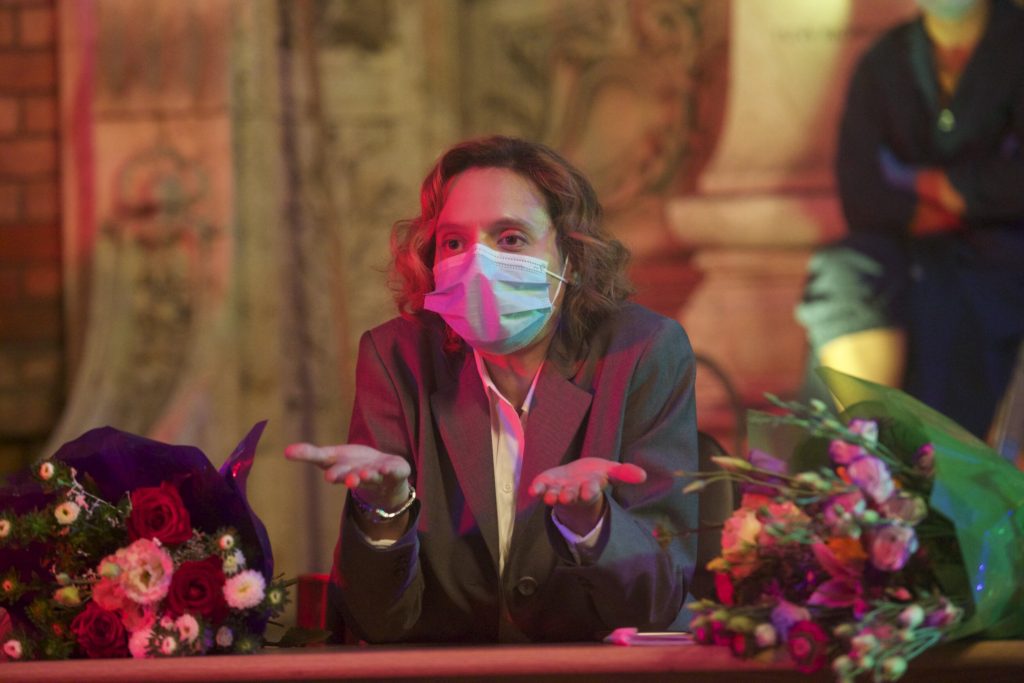
Katia Pascariu in BAD LUCK BANGING OR LOONY PORN. Courtesy of Magnolia Pictures.
Through it all, Emi steadfastly tries to salvage her dignity and impose some measure of intellectual consistency on others. She is the last stand of rationality. As Emi, Katia Pascariu is on camera in every scene of the first and third segments of Bad Luck Banging or Loony Porn, and her performance is superb. Pascariu’s Emi is a strong and confident woman thrust into a most humiliating and desperate situation, who keeps her poise…until even she cannot any longer.
What does it all amount to? Writer-director Radu Jude is zeroing in on human foibles, some specific to Romanian society and some universal. Jude has an unsparing, clear-eyed view of human nature, and Bad Luck Banging or Loony Porn nails sexism and misogyny in particular.
Jude’s previous features were the much acclaimed Aferim! (which I didn’t like) and I Do Not Care If We Go Down in HIstory as Barbarians. He was the assistant director of Cristi Pulu’s high brow art house hit The Death of Mr. Lazarescu.
Beyond its title, Bad Luck Banging or Loony Porn is unusual for its hardcore prologue and the mid-movie diversion from the plot. Those aspects may not be enjoyed by everyone; I also recognize that not everybody dials into deadpan absurdism as I do. Nevertheless, Bad Luck Banging or Loony Porn is continuously engaging and very funny.
Bad Luck Banging or Loony Porn is Romania’s submission for the Best Intentional Picture Oscar, and I believe that it will be nominated. It appears on at least 20 critic’s top ten lists, including #1 on J. Hoberman’s and #2 on A.O. Scott’s. I streamed Bad Luck Banging or Loony Porn on Drafthouse On Demand; it is also streaming on AppleTV.
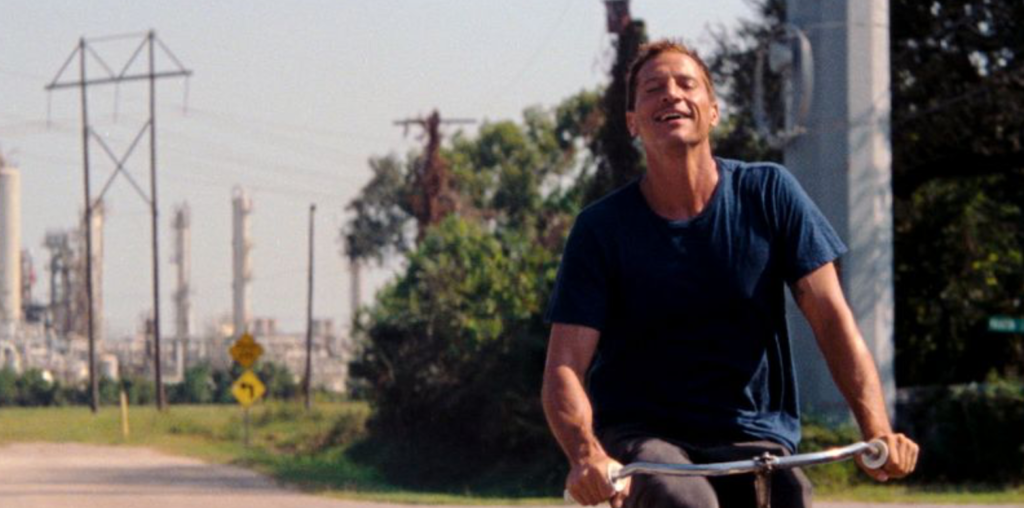
Photo caption: Simon Rex in RED ROCKET. Courtesy of A24.
The dark comedy Red Rocket is Sean Baker’s portrait of a human trainwreck named Mikey. Mikey is introduced when he steps off a bus, with no luggage and bearing the wounds of a fistfight he has lost, returning to his hometown of Texas City, Texas, after 17 years in Los Angeles. When he re-introduces himself to the locals, he is invariably met with an unhappy “What are you doing here?“. He is there because he is no longer viable as a porn star, and he has burned every available bridge in Southern California.
A fast talker with a gift for gab and flexibility with facts, Mikey begs for shelter from his estranged wife Lexy and her mom Lil; they greet Mikey with well-earned wariness. Mikey is one of those people who churn through life leaving a trail of relationship carnage. He’s always on the lookout for some opportunity for someone else to get him something he wants, regardless of the cost to the other person.
Mikey basically has the worldview of a pimp, and the plot in Red Rocket is basically whether he hurl himself into well-deserved self-destruction before he can damage folks who don’t deserve it, including Lexy, Lil, his dim-witted neighbor Lonnie and the underage target of his affections, Strawberry.
Mikey is a scumbag, and Red Rocket only works as entertainment because Simon Rex (who has worked in porn himself) is very good as the loquacious and pathetically self-absorbed Mikey.
Sean Baker’s trademark is making excellent movies (Tangerine, The Florida Project) with non-actors. Here, Bree Elrod (Lexy) and Suzanna Son (Strawberry) have some professional experience. Shih-Ching Tsou (Miss Phan the doughnut shop proprietor) is a longtime Sean Baker collaborator who has been a producer of his previous films and has bit parts in them.
The rest of the cast are first-timers. Brenda Deiss is perfect as Lil, and she doesn’t look or behave like any professional from Hollywood. Brittney Rodriguez is very funny as the tough-as-nails enforcer of a family dope ring, and she is compelling enough on screen to find a pace in other movies.
Baker makes Texas City into a character in his story. In virtually every exterior shot, the smokestacks of petrochemical plants are visible. (And it helps to know that Texas City is about a 35 to 40 hour $200 bus ride to and from LA.) Pickup trucks are very popular, but Mike has to make do with a bicycle.
Sean Baker is the writer, director and producer of Red Rocket and, unfortunately, its editor – it’s 20 minutes too long. Red Rocket is not nearly as good as Baker’s best – Tangerine and The Florida Project, but it’s pretty good.
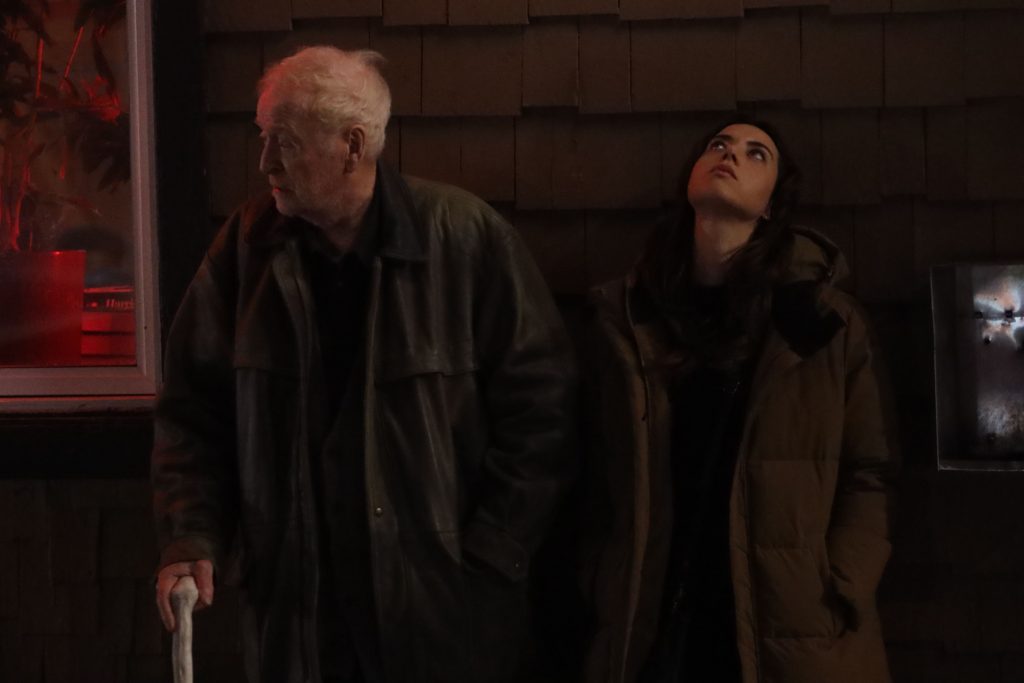
Sir Michael Caine and Aubrey Plaza in BEST SELLERS. Photo courtesy of Screen Media Films.
Michael Caine and Aubrey Plaza star in the breezy comedy Best Sellers. Plaza plays Lucy Stanbridge, who has inherited a publishing company on the verge of insolvency. She discovers one remaining possible lifeline – the company is still owed one book by a famous author in its stable. Unfortunately, that author is Harris Shaw (Caine), an anti-social, elderly alcoholic.
Harris Shaw’s anti-sociability is anything but passive, which challenges Lucy as she drags a manuscript out of him and takes him, brimming with hostility, on a book tour.
Just when the audience is settled in for a madcap, odd-couple-on-the-road comedy, Best Sellers adds a topical layer. Harris Shaw’s bad public behavior is so extreme that, instead of sabotaging the book’s marketing campaign, it makes him a viral sensation on social media. In an even more wickedly funny turn, Shaw’s sudden popularity is with consumers who do not buy books; “you should be selling t-shirts”, mutters one fan.
Both Sir Michael Caine and Aubrey Plaza (Parks and Recreation) are funny here, in roles that do not challenge them. In particular, the character of Lucy isn’t written to take advantage of Plaza’s capacity to be simultaneously funny and dangerous (Black Bear).
Best Sellers is the first feature for director Lina Roessler. Although Lucy and Harris develop a friendship and face Harris’ end of life, Roessler manages to keep Best Sellers from becoming pretentious or maudlin.
Best Sellers opens September 17 in theaters and on VOD.
Photo caption: THE UNKNOWN SAINT. Photo courtesy of The Match Factory.
Here’s the premise of the crime comedy The Unknown Saint: a thief is being hunted down in the vast Moroccan desert. Just before capture, he buries his loot on a sandy hilltop and disguises it to look like a grave. After serving time in prison, he returns to dig up his loot. But he finds that some people, believing the “grave” to be that of a saint, have built a mausoleum over the grave. Even worse, an entire village has sprung up to support pilgrimage commerce, and the shrine is guarded around the clock.
The thief (Younes Bouab) starts plotting to sneak in and dig up the loot, but he’s got to overcome, among other obstacles, the night watchman’s canine corps. It doesn’t help when he brings in an accomplice so stupid that he doesn’t get that his prison nickname of “Ahmed the Brain” is ironic. And he is surprised when he is not the only nighttime tomb raider.
The thief has to wait in a village filled with eccentrics and small timers on the hustle. The dispensary has a bored young doctor, an aged nurse with a wicked sense of humor, and a waiting room full of “patients” putting on a charade of medical need.
Younes Bouab in THE UNKNOWN SAINT. Photo courtesy of The Match Factory.
The Unknown Saint is relentlessly deadpan, as all the characters plunge ahead with profound cynicism or earnest absurdity, with at least one critic likening it to Fargo. It’s all very, very funny, especially an unexpected triumph of dog dentistry involving the town barber.
The Unknown Saint is the first feature for writer-director Alaa Eddine Aljem, and it is an auspicious debut. Aljem knows how to use the vastness of the desert to express human futility and how to wring laughs out of human foibles.
The Unknown Saint is Morocco’s submission for this year’s Best International Feature Oscar. The Unknown Saint is streaming from Netflix.
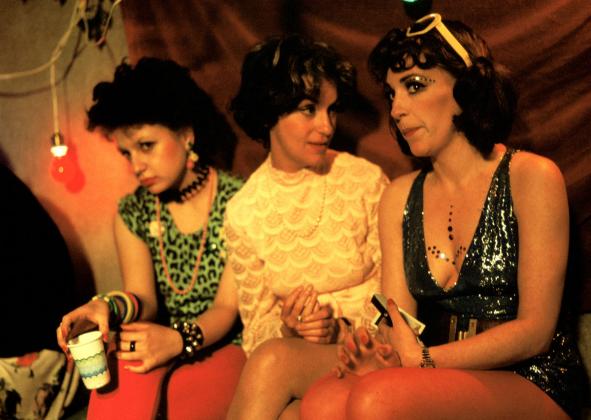
A very young Pedro Almodóvar’s 1980 Pepi, Luci, Bom and Other Girls Like Mom. This is early Almodovar – zany and ribald, even transgressive. The filmmaking craft is very rough (and very low budget), but Almodóvar’s signature energy and vibrant colors are already there. Fun rock music sets the tone from the get go in the title credits.
The humor is outrageous, embracing that of the very first American gross-out comedies (The Groove Tube and The Kentucky Fried Movie) and taking a step (or a few) farther:
A penis-measuring contest as a party game;
The question of whether a cop’s wife can become a punk band’s groupie;
Panties that turn farts into perfume;
Cops baited into a narc raid on a plastic marijuana plant;
Perhaps the dirtiest pop pseudopunk song ever: I love you because you’re dirty; Filthy slutty and servile.
The protagonist starts out as the party girl Pepi, but the story evolves to center around Luci, the wife of a brutish cop. As Luci is debased by more and more characters, becoming a human piñata, it is revealed that she is a masochist who actually is attracted to and pleasured by the meanest behavior. [SPOILER: There’s even a Golden Shower early in this story thread.]
Viewing through today’s lens, the movie violence against women no longer works as comedy, even though the character who is debased is a masochist and the rape that spurs the revenge theme is clearly intended to be broadly comic.
This is Almodóvar having fun being naughty. His most profound work was still two decades in the future: Talk to Her, Bad Education, Broken Embraces.
I watched Pepi, Luci, Bom and Other Girls Like Mom on TCM, and you can stream it from Amazon, AppleTV, Vudu and YouTube.
Pre-mockumentary, Christopher Guest’s first feature as a director was The Big Picture (1989), a pointed satire of modern Hollywood. It’s not as vicious as Robert Altman’s The Player, and not as funny as Guest’s own brilliant mockumentaries, but you can glimpse Guest’s path to realizing his comic genius.
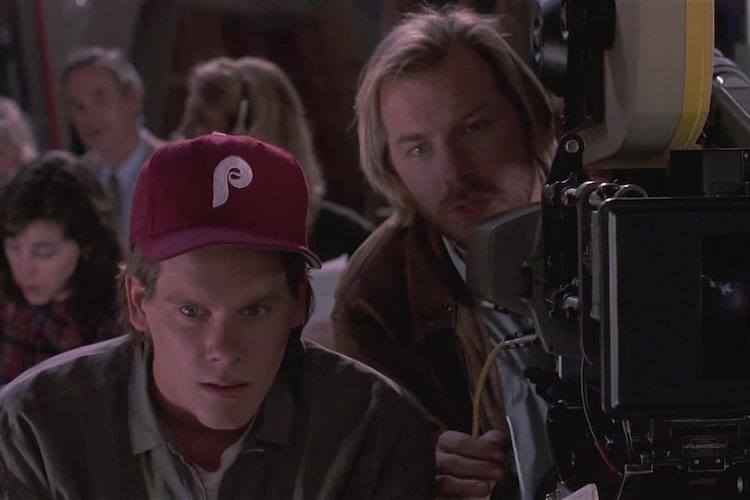
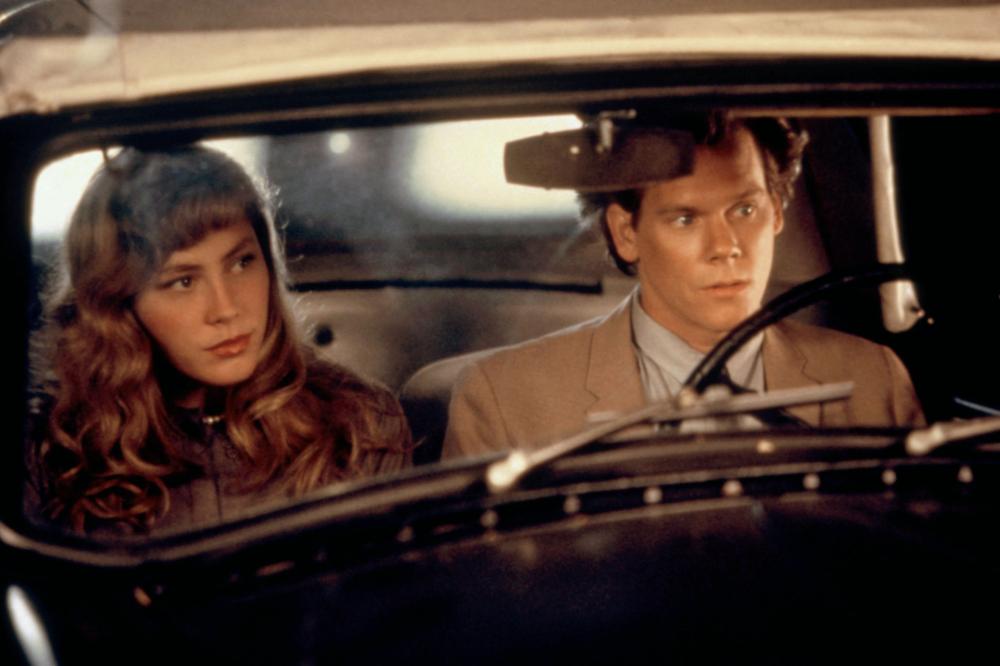
In this cautionary comedy, Nick (Kevin Bacon), a young director, wins a prestigious student film competition and suddenly finds himself Hollywood’s new Bright and Shiny Thing. Movie studios and agents clamor over him, and Nick moves to LA with his architect girlfriend (Emily Longstreth) and cinematographer and best friend (Michael McKean) for his first big movie; all three newcomers are very naive. Nick is soon dazzled by promises of fame and money (and Teri Hatcher’s body), loses his way and betrays his girlfriend and his best friend.
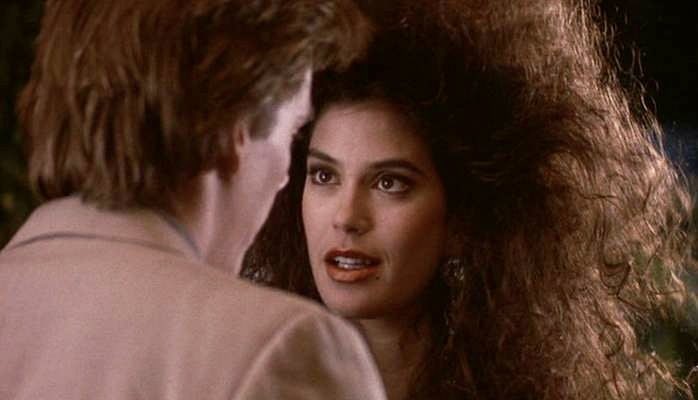
Kevin Bacon and Teri Hatcher in THE BIG PICTURE
Along the way, Nick hires a wacky agent (Martin Short) and encounters a range of Hollywood Suits, and there are lots of funny moments. My favorites are pitches for a beach party sexploitation movie and an Abe and Babe buddy picture (about Abe Lincoln and Babe Ruth).
The cast also includes the always welcome J.T. Walsh and Jennifer Jason Leigh at her most comically kooky (joyously manic but hinting at emotional damage underneath). Watch for John Cleese as the bartender Frankie. And then there’s Teri Hatcher, ravishing even in an unfortunate 1980s hairstyle.
Jennifer Jason Leigh and Kevin Bacon in THE BIG PICTURE
The Big Picture follows Rob Reiner’s 1984 This Is Spinal Tap, which Guest co-wrote and in which he starred in as the dim guitarist Nigel Tufnel, who sets his amp to eleven. In 1996, Guest followed The Big Picture with Waiting for Guffman, which launched his string of mockumentaries – Best in Show (his masterpiece), A Mighty Wind, For Your Consideration and Mascots.
I watched The Big Picture on on Turner Classic Movies, and it streams from Amazon, Vudu and YouTube.
Emily Longstreth and Kevin Bacon in THE BIG PICTURE