MIRRORS NO. 3: two enigmas explained

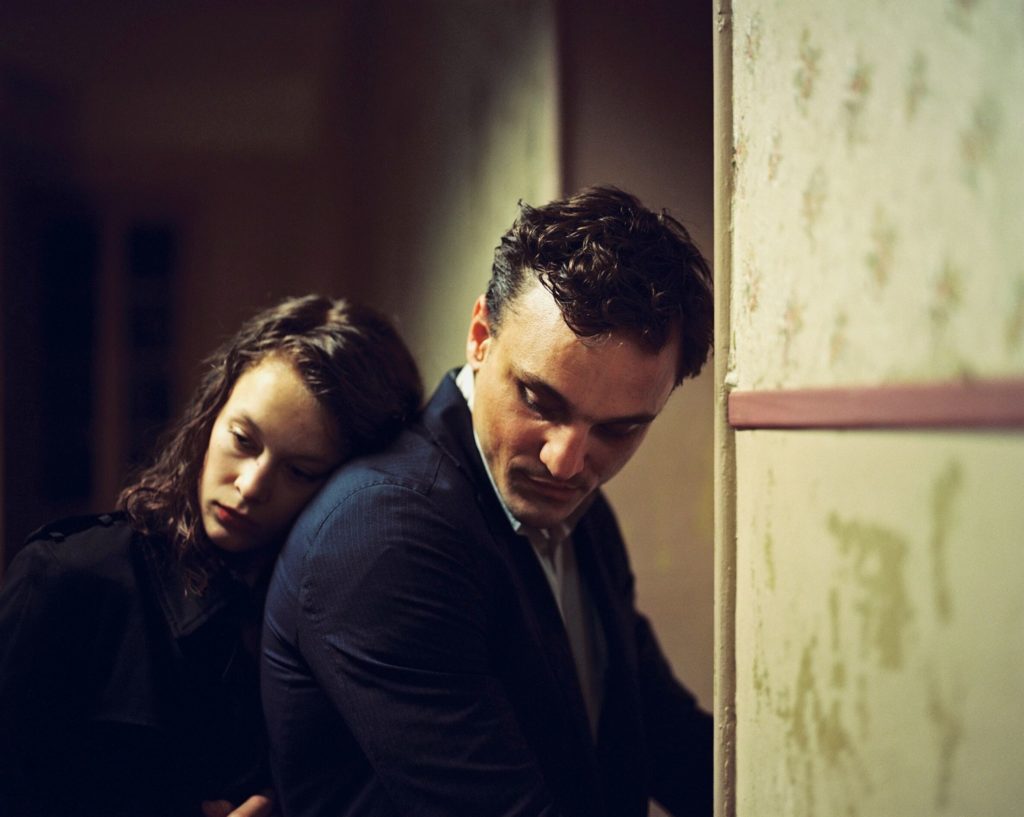
Photo caption: Paula Beer and Barbara Auer in MIRRORS NO. 3. Courtesy of 1-2 Special.

As Christian Petzold’s intimate psychodrama Mirrors No. 3, opens, we see Laura (Paula Beer) on a river overpass, and she looks so despondent that we wonder if she will jump to her death. But Laura, who is studying piano at university in Berlin, wanders off lethargically to meet her boyfriend for a couples day trip she would rather skip. Scattered and periodically catatonic, she is clearly suffering from clinical depression, but the boyfriend is too self absorbed to notice. When she cuts the trip short, he drives off the road; he is killed, but Laura suffers very minor injuries.

The accident happens near a house isolated in the countryside, and the middle-aged resident Batty (Barbara Auer) helps Laura to her house for medical treatment. Laura asks if she can stay instead of going to the hospital, and Betty kindly agrees, and makes her comfortable in an upstairs bedroom.

Betty goes out of her way to dote on Laura as she recuperates. The two quickly bond, and neither is in a hurry for Laura to move on. Betty seems to adopt Laura a little too eagerly than decency and generosity would require, which is an indication that something odd may be going on. When Betty has Laura cook dinner for Betty’s brusque husband Richard (Matthias Brandt) and her lumbering, uncommunicative son Max (Enno Trebs), increasing weirdness is evident.

Betty’s husband and son don’t live with her. Passersby occasionally stop and gawk at the house. Betty sometimes calls Laura by another name. Laura doesn’t show any interest in returning to her Berlin apartment and resuming her studies.

Barbara Auer and Paula Beer in MIRRORS NO. 3. Courtesy of 1-2 Special.

The audience is wondering what is going on with Betty’s family, but Laura isn’t – she’s found an emotional refuge. As the clues accumulate, we can guess the family’s back-story, but Laura doesn’t seek out the truth until it is blurted out, in a scene that becomes explosive.

Among cinema’s current auteurs, Petzold is unsurpassed in ending a movie and this one is perfect.

Along with his genius in observing human behavior and constructing psychodramas, Petzold is a master of movie sound. This is as far from a movie epic as you can get, but all his gifts are on display here.

Barbara Auer in MIRRORS NO. 3. Courtesy of 1-2 Special.

This is a screenplay that works because of the exquisitely authentic and nuanced performances odf Paula Beer and Barbara Auer. All four actors have worked with Petzold before, and Beer is his current muse. In his previous film, Afire, three of them play starkly different roles: Trebs as a self-loathing intellectual brat, Brandt as his gregarious but very frank publisher and Beer is the playful sexpot who has been double-booked at his vacation rental.

The movie shares its European title, Miroires No. 3, with a Ravel piece for piano that is played in the film.

Mirrors No. 3 may not reach the heights of Petzold’s Phoenix or Afire, but it’s one of the best films of 2026 so far. Mirrors No. 3 is streaming on Amazon, AppleTV, YouTube and Fandango.

UNDINE: a slow burn, barely flickering

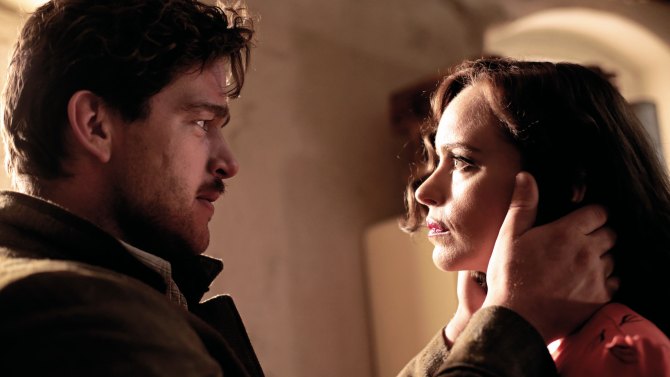
Paula Beer in UNDINE. Courtesy of MVFF.

In Christian Petzold’s German tragic romance Undine, Paula Beer plays the title character, a young woman of passion and unproven emotional stability. One morning, she experiences a heartbreaking breakup and rebounds into a profound love story. The course of that love affair becomes operatic and supernatural, and very tragic.

In mythology, Undine was a water nymph, and Petzold maintains the story framework of the original legend, but sets it in contemporary times.  Undine meets Christoph (Franz Rogowski). I often roll my eyes at a “meet cute”, and I sure didn’t expect one from Euro art film director Petzold, but this one really works.  Christoph is capitated by Undine and persists in courting her.  He becomes obsessed, she less so, and a tragic romance ensues.

Undine strives for the operatic but is too much of a slow burn (as in barely flickering at times).

I was thrilled by Petzold’s Barbara and then his Phoenix.  I was much less satisfied by his Transit (also with Rogowski and Beer). I’m becoming less of a Petzold enthusiast after these last two disappointments.

Beer, as she was in Transit, is exceptionally expressive and captivating. Rogowski (whose supporting character in Victoria was the most memorable turn in that film) excels when he plays a haunted man – as he does here and in Transit.

I saw Undine at the Mill Valley Film Festival in October, and it opens in Bay Area theaters this weekend.

Stream of the Week: PHOENIX – riveting psychodrama, wowzer ending

Ronald Zehfeld and nina Hoss in PHOENIX
Ronald Zehfeld and Nina Hoss in PHOENIX

In the German psychological drama Phoenix, Nina Hoss plays Nelly, an Auschwitz survivor whose face has been destroyed by a Nazi gunshot; her sister has arranged for plastic surgery to reconstruct her face. When Nelly gets her new face, we accompany her on an intense quest.

Writer-director Christian Petzold is an economical story-teller, respectful of the audience’s intelligence. Watching a border guard’s reaction to her disfigurement and hearing snippets from the sister and the plastic surgeon, we gradually piece together her back story. The doctor asks what seems like a very good question – Why would a Jewish woman successfully rooted in London return to Germany in 1938? The answer to that question involves a Woman Loving Too Much.

The sister plans to re-settle both of them in Israel, but Nelly is obsessed with finding her husband. She does find her husband, who firmly believes that Nelly is dead. But he notes that the post-surgery Nelly resembles his pre-war wife, and he has a reason to have her impersonate the real Nelly. So he has the real Nelly (who he doesn’t think IS the real Nelly) pretending to be herself. It’s kind of a reverse version of The Return of Martin Guerre.

It’s the ultimate masquerade. How would you feel while listening to your spouse describe you in detail to a stranger?

Nina Hoss is an uncommonly gifted actress. Here she acts with her face fully bandaged for the first third of the film. We ache for her Nelly’s obsessive need for her husband – and when she finally finds him, she still doesn’t really have him.

As the husband, Ronald Zehfeld shows us the magnetism that attracts Nina, along with the brusque purposefulness that he thinks he needs to survive and flourish in the post-war Germany.

Christian Petzold and Nina Hoss collaborated on the recent film Barbara (he won the Berlin Film Festival’s Silver Bear for his work). About Barbara, I wrote

“Given that’s it difficult to imagine how anyone else could have improved Barbara, I’ll be looking for Petzold’s next movie.”

Well, here it is, and it’s gripping.

The ending of the film is both surprising and satisfying. Several people in my audience let out an audible “Wow!” at the same time.

Phoenix was one of my Best Movies of 2015. It is available to stream from Netflix Instant, Amazon Video, YouTube and Google Play.

TRANSIT: the thrill was gone

.
Paula Beer and Franz Rogowski in TRANSIT. Courtesy of Music Box Films

In Christian Petzold’s puzzling thriller Transit, George (Franz Rogowski) flees Paris for his life, just ahead of the invading Nazis.  He assumes the identity of a dead author, which comes with a ticket from Marseilles to the safety of the Western Hemisphere.  Trouble is, the ship won’t leave for weeks, so he must wait it out in Marseilles as the Nazis get closer and closer.  He finds himself in a community of other refugees – all forlornly hoping for a ticket, a visa, a letter of transit so they can get out, too. Completely at the disposal of impenetrable bureaucracies, their situation is Kafkaesque.  It’s a puddle of human desperation, and the clock is ticking.

Georg glimpses a mysterious beauty, Marie (Paula Beer). She turns out to be the widow of the man that Georg is impersonating, but she doesn’t know that her husband is dead.  What Georg knows is that he also has papers for her to join him on the escape ship.  While waiting for her husband to appear in Marseilles, she has taken up with the altruistic doctor Richard (Godehard Giese).

So, we have European refugees holed up, trying to get letters of transit to escape the Nazis. Our protagonist is in love with a woman, who is with a selfless idealist. Yes, this story does have its similarities to Casablanca – there’s even a dramatic sacrifice at the end.  But the impeccably plotted Casablanca is easy to follow, and Transit has its surreal aspects. Casablanca is of its time – when individuals subsumed their interests to a great, global cause: “I’m no good at being noble, but it doesn’t take much to see that the problems of three little people don’t amount to a hill of beans in this crazy world.”  Set in the same wartime period, Transit is of our time – focused on the micro-plight of individuals.

I’m trying to think how to explain this – it’s a period story shot in modern times. So, the characters wear 1940s clothes and use 1940s typewriters. But the environs are modern Paris and Marseilles, so the storm troopers are modern French SWAT teams and the police vehicles are modern French cop cars with their Euro sirens. It may sound weird, but it worked for me. I just became absorbed in figuring out what was going on.

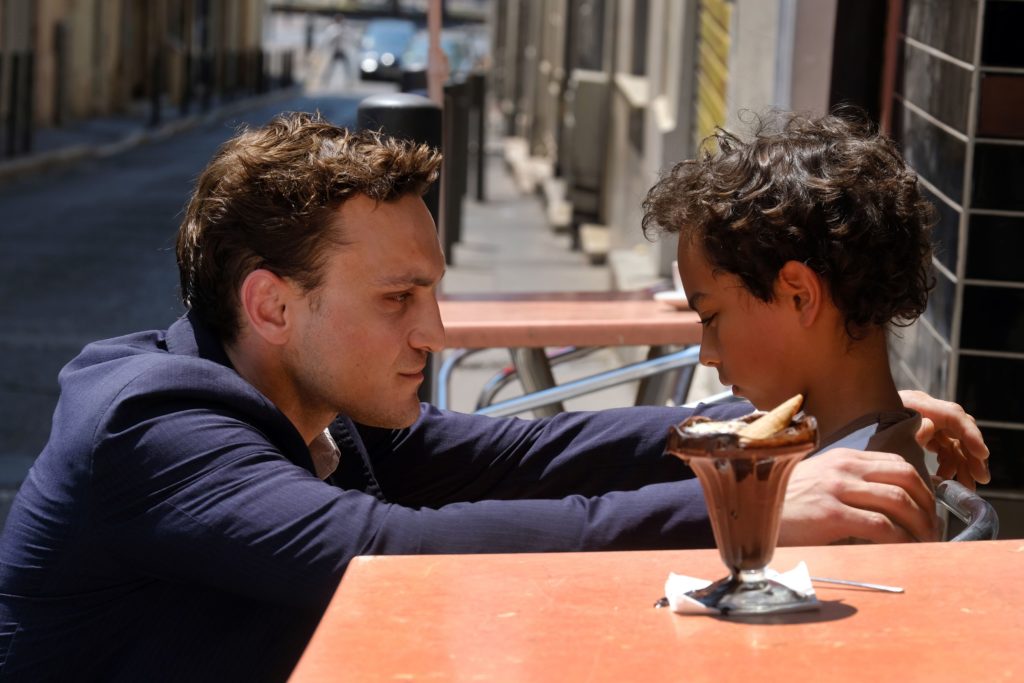
Franz Rogowski and Lilien Batman in TRANSIT. Courtesy of Music Box Films

There is a sweet and effective subplot involving Georg and a boy with a disability.  Their relationship is the most relatable part of Transit.

Franz Rogowski (so good as Boxer in Victoria) has an intensity that pays off in his portrayal of  Georg, who is either escaping or, when he has a moment, seeking.  Beer captures Marie’s  unreliability and fragility; she makes us understand why Georg’s would be so attracted to Marie – and why that might not work out for him.

At some point in Marseilles, Transit lost me.  I still was engaged in the intellectual execise of figuring out the puzzles, but I stopped caring about Georg and Marie.  Christian Petzold’s previous films Barbara and Phoenix prove that he is an exceptional filmmaker. Transit, for all its originality just isn’t Petzold’s best.

Barbara: Just because you’re paranoid doesn’t mean they aren’t after you

As Joseph Heller wrote in Catch-22, “Just because you’re paranoid doesn’t mean they aren’t after you”.   Barbara’s suspenseful story is set in Cold War East Germany, so everyone is indeed being watched by the Stasi and informed on by their closest associates.  Barbara is a doctor who has applied for an exit visa and has therefore been exiled to the hinterlands from a top Berlin hospital.   Harassed by the Stasi, she is ever aware of everyone’s motives.  She is played by Nina Hoss in a performance that is extraordinarily controlled, alert and suspicious.

Barbara herself is driven by two imperatives – to escape from East Germany and to provide expert and compassionate medical care.  The story is a series of moments, some seemingly random, which tie together as the story builds to the climax, when the doctor must bet her life on a decision.

Barbara was co-written and directed by Christian Petzold (he won the Berlin Film Festival’s Silver Bear for his work).  Given that’s it difficult to imagine how anyone else could have improved Barbara, I’ll be looking for Petzold’s next movie.