MIRRORS NO. 3: two enigmas explained

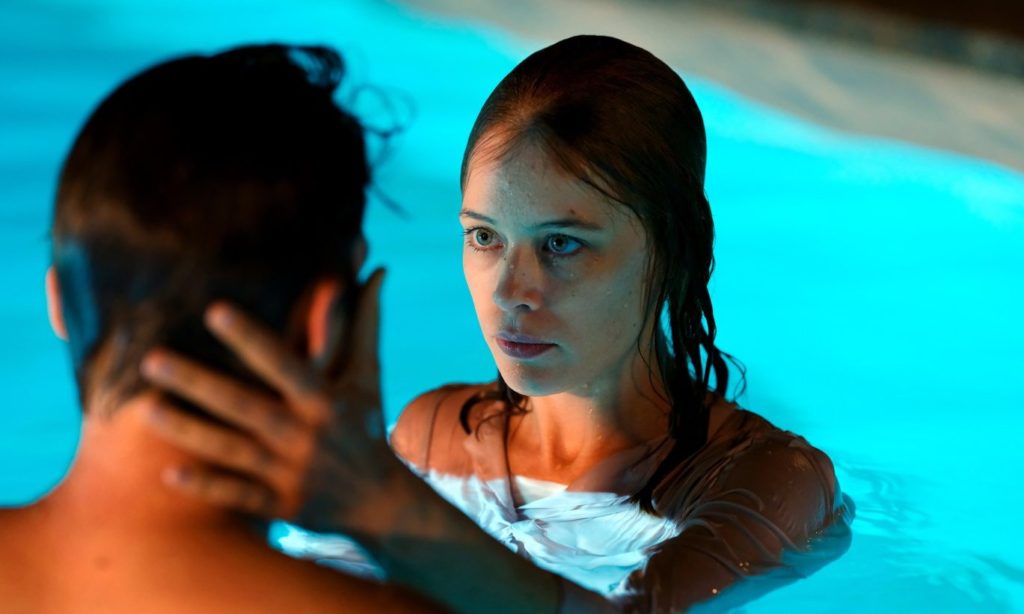
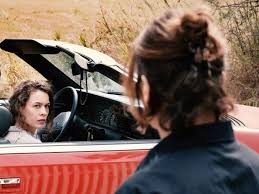
Photo caption: Paula Beer and Barbara Auer in MIRRORS NO. 3. Courtesy of 1-2 Special.

As Christian Petzold’s intimate psychodrama Mirrors No. 3, opens, we see Laura (Paula Beer) on a river overpass, and she looks so despondent that we wonder if she will jump to her death. But Laura, who is studying piano at university in Berlin, wanders off lethargically to meet her boyfriend for a couples day trip she would rather skip. Scattered and periodically catatonic, she is clearly suffering from clinical depression, but the boyfriend is too self absorbed to notice. When she cuts the trip short, he drives off the road; he is killed, but Laura suffers very minor injuries.

The accident happens near a house isolated in the countryside, and the middle-aged resident Batty (Barbara Auer) helps Laura to her house for medical treatment. Laura asks if she can stay instead of going to the hospital, and Betty kindly agrees, and makes her comfortable in an upstairs bedroom.

Betty goes out of her way to dote on Laura as she recuperates. The two quickly bond, and neither is in a hurry for Laura to move on. Betty seems to adopt Laura a little too eagerly than decency and generosity would require, which is an indication that something odd may be going on. When Betty has Laura cook dinner for Betty’s brusque husband Richard (Matthias Brandt) and her lumbering, uncommunicative son Max (Enno Trebs), increasing weirdness is evident.

Betty’s husband and son don’t live with her. Passersby occasionally stop and gawk at the house. Betty sometimes calls Laura by another name. Laura doesn’t show any interest in returning to her Berlin apartment and resuming her studies.

Barbara Auer and Paula Beer in MIRRORS NO. 3. Courtesy of 1-2 Special.

The audience is wondering what is going on with Betty’s family, but Laura isn’t – she’s found an emotional refuge. As the clues accumulate, we can guess the family’s back-story, but Laura doesn’t seek out the truth until it is blurted out, in a scene that becomes explosive.

Among cinema’s current auteurs, Petzold is unsurpassed in ending a movie and this one is perfect.

Along with his genius in observing human behavior and constructing psychodramas, Petzold is a master of movie sound. This is as far from a movie epic as you can get, but all his gifts are on display here.

Barbara Auer in MIRRORS NO. 3. Courtesy of 1-2 Special.

This is a screenplay that works because of the exquisitely authentic and nuanced performances odf Paula Beer and Barbara Auer. All four actors have worked with Petzold before, and Beer is his current muse. In his previous film, Afire, three of them play starkly different roles: Trebs as a self-loathing intellectual brat, Brandt as his gregarious but very frank publisher and Beer is the playful sexpot who has been double-booked at his vacation rental.

The movie shares its European title, Miroires No. 3, with a Ravel piece for piano that is played in the film.

Mirrors No. 3 may not reach the heights of Petzold’s Phoenix or Afire, but it’s one of the best films of 2026 so far. Mirrors No. 3 is streaming on Amazon, AppleTV, YouTube and Fandango.
AFIRE: the summer of his discontent

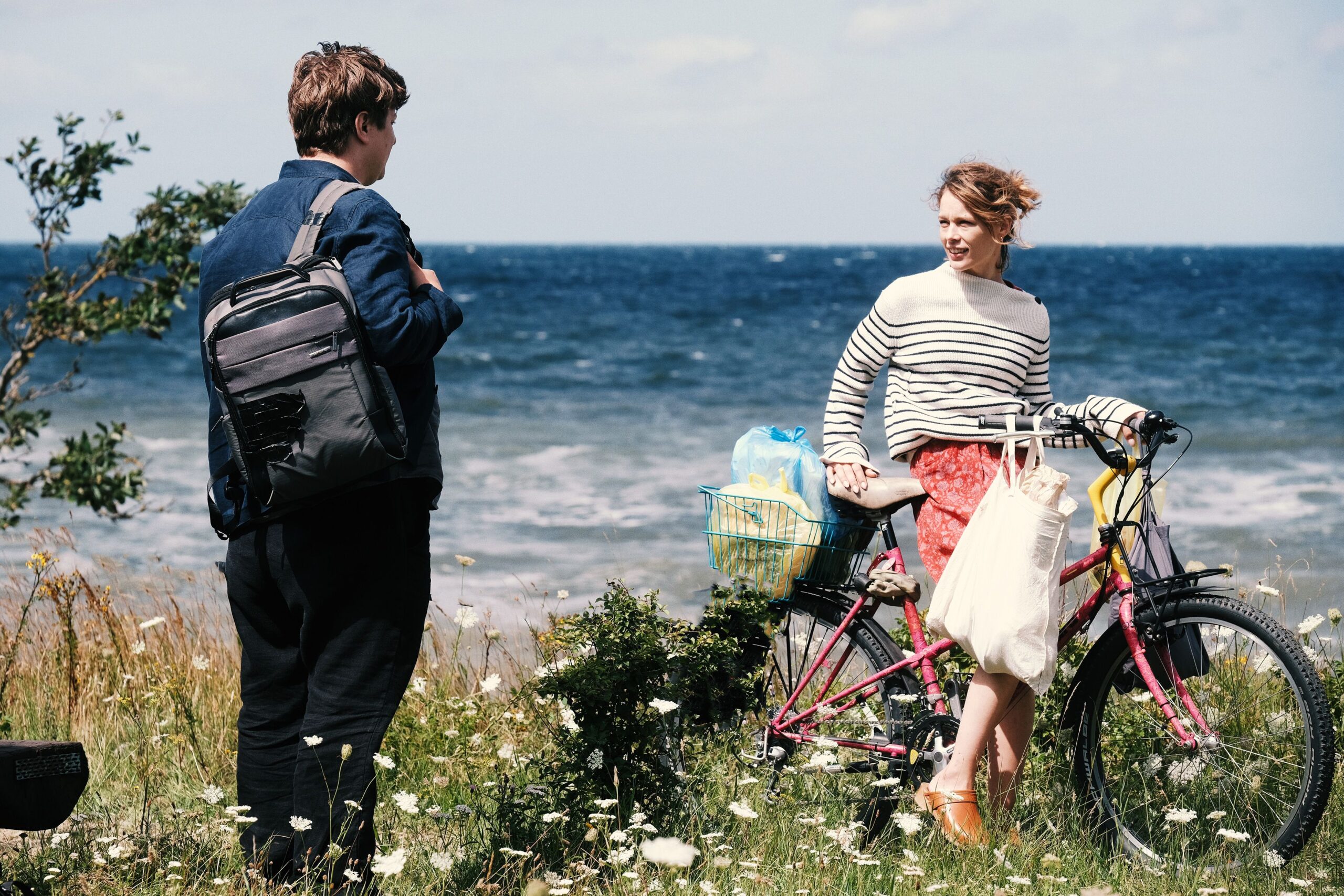
Thomas Schubert and Paula Beer in AFIRE. Courtesy of Janus Films.

Christian Petzold’s Afire is an agreeable slow burn that builds to a revelatory conclusion. The lumpy, dour Leon (Thomas Schubert) needs to polish off his second novel. He and his friend Felix (Langston Uibel) head off for a week at the woodsy vacation cottage owned by Felix’s family, a short walk to the beach on the Baltic Sea. They are seeking artistic inspiration, Leon for his novel and Felix for his photography portfolio. But they’re not even there yet when things start going off the rails.

Felix’s car breaks down and they have to hoof it through the forest. Upon arrival, they learn that Felix’s mother has also invited another guest, Nadja, and the guys will need to share the remaining room. They go to bed without meeting Nadja, but she returns late with company, and the guys are kept awake by the boisterous lovemaking in her room next door.

Focused on their own situation, Felix and Leon are vaguely aware that wildfires are raging inland, but they’re a few meters from the sea and the ocean winds are blowing across them toward the fire, As people at the nearby seaside resort town go about their holidays, faraway sirens and the fire-fighting aircraft overhead are ominous.

Felix rolls with the punches, but each setback makes the grumpy Leon more aggrieved. Each annoyance makes Leon harrumph, roll his eyes and stalk off complaining about the distraction to his work. Leon is creatively blocked, but is it from the distractions?

He’s really afraid that his manuscript is shitty, and his day of reckoning, a meeting with his kind publisher (Matthias Brandt), is this week. Self-absorbed in the best of times, Leon’s insecurities are making him beat himself up and mask it all with offended self-importance.

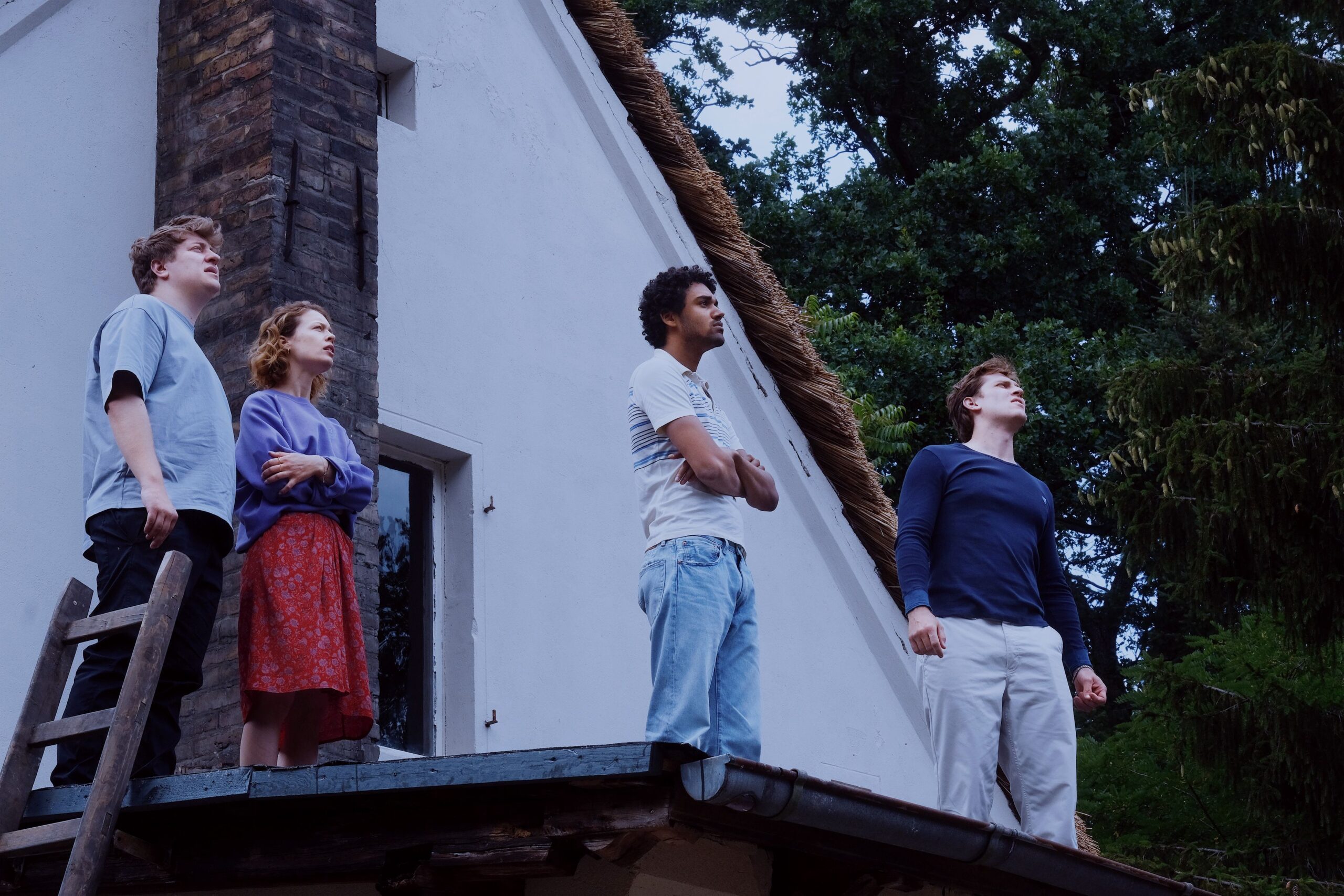
Leon and Felix meet Nadja (Paul Beer), who turns out to be charming. Felix befriends the handsome lifeguard Devid (Enno Trebs), who has been Nadja’s nocturnal playmate, and soon the four are hanging out together – Leon grudgingly.

Thomas Schubert, Paula Beer, Langston Uibel and Enno Trebs in AFIRE. Courtesy of Janus Films.

As we watch Leon stumble around in his behavioral misfires, it seems that we are watching a comedy of manners. But Afire evolves into a study of creative self-sabotage until a heartbreaking tragedy, a moment of redemption, and a final hopeful glimmer of personal fulfillment. It’s the best final fifteen minutes of any film this year, unpredictable but grounded in reality and humanity, and emotionally powerful.

Afire works because the protagonist doesn’t alienate the audience, even though he is irritable and irritating. Petzold’s writing and Schubert’s performance is such that we don’t give up on this unlovable loser. As much as his thoughtlessness vexes the others, his behavior is really only mean-spirited once. Clearly, he must be talented because his first novel was good enough to get him an advance on his second, and he seems to be a decent person underneath all his fussiness. He just needs to learn how to get out of his own way.

Petzold has also written some segments of novels-within-the-movie, one that is extraordinarily moving and one that is just awful, awful, awful.

Beer, the star of Petzold’s Transit and Undine, is irresistible here as Nadja. Her Nadja teaches Leon that a woman can be sunny and fun-loving without being a ditz.

Petzold is one of cinema’s most significant contemporary auteurs. I loved and admired his simmering paranoid thriller Barbara and his Phoenix, a riveting psychodrama with a wowzer ending. He followed those with the more aspirational but, IMO, less successful Transit and Undine. Afire is his most intimate and funniest film, and I think, his most subtle and his best. Afire won the Silver Bear Grand Jury Prize at the 2023 Berlinale.

Afire opens this weekend in theaters, including the Roxie in San Francisco. It’s one of the Best Movies of 2023 – So Far.

UNDINE: a slow burn, barely flickering

Paula Beer in UNDINE. Courtesy of MVFF.

In Christian Petzold’s German tragic romance Undine, Paula Beer plays the title character, a young woman of passion and unproven emotional stability. One morning, she experiences a heartbreaking breakup and rebounds into a profound love story. The course of that love affair becomes operatic and supernatural, and very tragic.

In mythology, Undine was a water nymph, and Petzold maintains the story framework of the original legend, but sets it in contemporary times.  Undine meets Christoph (Franz Rogowski). I often roll my eyes at a “meet cute”, and I sure didn’t expect one from Euro art film director Petzold, but this one really works.  Christoph is capitated by Undine and persists in courting her.  He becomes obsessed, she less so, and a tragic romance ensues.

Undine strives for the operatic but is too much of a slow burn (as in barely flickering at times).

I was thrilled by Petzold’s Barbara and then his Phoenix.  I was much less satisfied by his Transit (also with Rogowski and Beer). I’m becoming less of a Petzold enthusiast after these last two disappointments.

Beer, as she was in Transit, is exceptionally expressive and captivating. Rogowski (whose supporting character in Victoria was the most memorable turn in that film) excels when he plays a haunted man – as he does here and in Transit.

I saw Undine at the Mill Valley Film Festival in October, and it opens in Bay Area theaters this weekend.