Visit my Best Movies of 2013 for my list of the year’s best films, complete with images, trailers and my comments on each movies. My top ten for 2013 is:
Blue Is the Warmest Color
The Hunt
Before Midnight
Stories We Tell
The Spectacular Now
Mud
Short Term 12
Fruitvale Station
The Act of Killing
Captain Phillips.
The other best films of the year are: The Great Beauty, Nebraska, American Hustle, Ain’t Them Bodies Saints, Rendez-vous in Kiruna, The Gatekeepers, At Any Price, Undefeated, In a World…and Me And You.
I’m saving space for these promising films that I haven’t seen yet: Her, The Wolf of Wall Street andThe Past (Passe).
Note: Undefeated is on this year’s list, even though it won an Oscar a year ago, because it only became available for most of us to see in 2013.
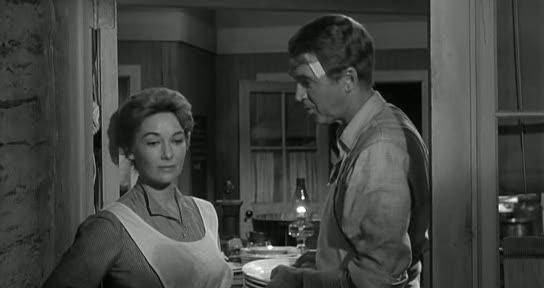
Vera Miles in THE MAN WHO SHOT LIBERTY VALANCE - the second best wife ever
Happy Anniversary to The Wife, also known as Lisa The Love of My Life!
This year, I got to tease her about her streak of picking dreadful Friday night date movies. And she rolled her eyes at the string of sucky rom coms that I was watching on VOD.
I cherished her company at Stories We Tell, The Spectacular Now, Prisoners and Captain Phillips. I especially loved introducing her to Before Sunrise and Before Sunset before we watched Before Midnight.
Some of our favorite viewing experiences this year were miniseries – Downton Abbey, House of Cards, Homeland, Broadchurch, Top of the Lake, and Orange Is the New Black.
She tolerated my spending huge chunks of time at Cinequest, the San Francisco International Film Festival, Rendezvous with French Cinema and French Cinema Now. Fortunately, having now discovered Bad Girl Night at the Noir City fest, from now on she’s going to accompany me to this delicious noir double feature.
She’s the biggest fan and supporter of this blog, and I appreciate her and love her. Happy Anniversary, Honey!
I don’t have a Worst Ten Movie list because, unlike professional critics, I don’t have to see every movie. I did see over 190 first-run movies this year, but I try REALLY, REALLY HARD to avoid the bad movies. So my worst movie going experience is usually either 1) on an airline flight when I see a movie that I normally wouldn’t; 2) a hyped art film that disastrously falls on its face and/or really pisses me off (The White Ribbon); or 3) something I find on cable TV while channel surfing (Paul Blart: Mall Cop). But usually, the culprit finds its way aboard a long airline flight. Not this year.
In the purely disappointing category, I was underwhelmed by the Coen Brothers’ Inside Llewyn Davis, Pedro Almodovar’s I’m So Excitedand The World’s End with Simon Pegg and Nick Frost. I was expecting much more from those filmmakers.
Of course, Only God Forgives (from the director and star of Drive, which I really liked) was a red-hot mess – but I had caught wind of the buzz before I saw it, so I really wasn’t surprised. Same with The Great Gatsby, which I could tell was a stinker from the trailer. And I did walk out of the French film Rich Is the Wolf; it’s about a wife who watches hours of video of her husband to figure how and why he went missing – but after 40 minutes, I realized that I didn’t care what happened to him or whether she would find out.
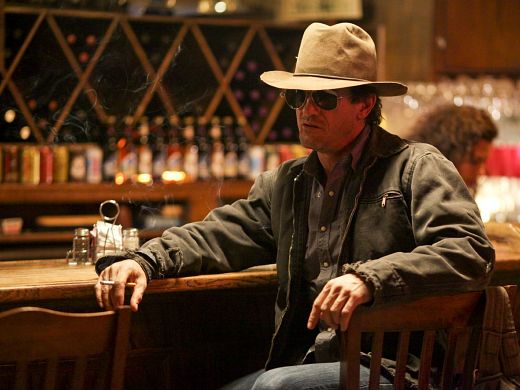
Notwithstanding all of the above, the clearly worst film that I saw in 2013 – and I’m talking epically, horrifically terrible – was Calvin Lee Reeder’s The Rambler. It’s a disjointed collection of shock pieces that turns from a tribute to David Lynch to an homage to Rob Zombie (if David Lynch and Rob Zombie were bad filmmakers). In the low (I must say LOWEST) point, the Dermot Mulroney character dreams that he is strapped to a bed when a dummy dressed like an old hag plunges through the window above his head and vomits what looks like yellow paint on to his face and into his mouth. It is an extended vomit scene – 58 seconds (I timed it).
Finally, I re-watched the 1980 epic Heaven’s Gate, which had been the subject of much critical re-assessment this year – and it’s still epically bad.
Evangelizing for wonderful movies that are overlooked is the primary mission of The Movie Gourmet. These four movies made my Best Movies of 2013. They are brilliant and everyone should see them.
Also on my list of the year’s best, it’s easy to say that Me and You is overlooked because it hasn’t even gotten a US release in theaters , DVD or VOD.
Look for The Movie Gourmet’s list of this year’s top movies this Tuesday. Until then, here is my guide to the Holiday movies.
Recommended:
American Hustle is the most gloriously entertaining movie of the year – with Christian Bale, Amy Adams, Bradley Cooper, Jennifer Lawrence and Jeremy Renner at their best.
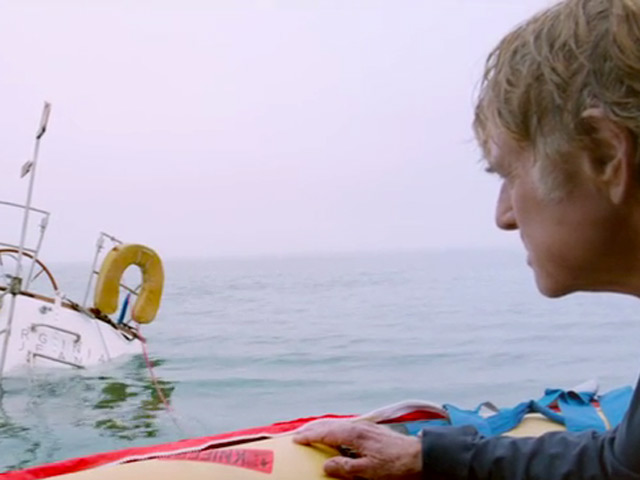
J.C. Chandor’s All Is Lost begins with Robert Redford reading a farewell letter to an unidentified someone. Then it flashes back to a boating mishap eight days earlier. For the rest of the film there is only one character and there are only three more lines. Redford plays a solo yachtsman, adrift in the middle of the vast Indian Ocean, who must deal with a disabled (and then shipwrecked) boat, storms and other calamities. All alone. With his survival at stake.
The protagonist is unusually resourceful but his resilience is tested by each catastrophe and the increasing hopelessness of his situation. The entire time, we’re watching only Redford, and gauging his thoughts and feelings from his expression and his actions. It’s a powerful experience.
Chandor showed a lot of promise with last year’s Wall Street thriller Margin Call, and he has another winner with All Is Lost.
“Autumn is my stripper name. My real name is Fantasia.”
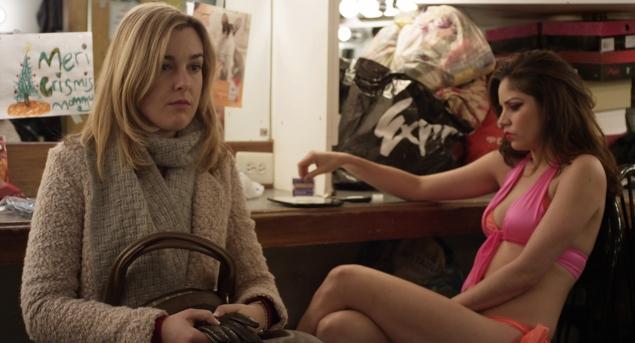
I think that’s pretty funny. If you think so, too, you should watch White Reindeer on VOD. In this dark and subversive comedy, we meet a comfortable suburbanite who enjoys going overboard at Christmastime; suddenly, her husband is killed and she plunges into shock, grief and various manifestations of depression. Believe it or not, this is a comedy, and what makes it so funny is her deadpan reaction to each of the secondary indignities she undergoes. As she tries to cope with her loss, she learns some unexpected things about her late husband and winds up partying with strippers, dabbling in shoplifting and visiting a neighbors’ creepy swingers mixer. It’s all subversively funny.
White Reindeer is available streaming on Amazon, iTunes, Sundance Now, GooglePlay and XBOX.
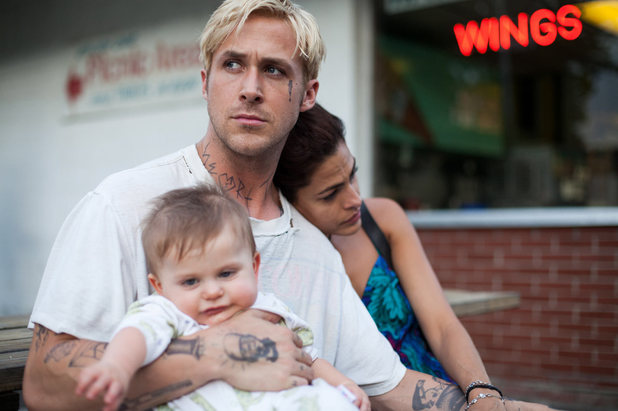
Ryan Gosling and Eva Mendes in THE PLACE BEYOND THE PINES
2013 gave us an uncommonly thoughtful crop of movies that explored the relationship of fathers and sons. The most widely recognized was Nebraska, with Bruce Dern as the alcoholic and addled geezer whose bitterness is rooted in the frustration of his modest aspirations by both circumstance and by his own shortcomings. His son (Will Forte from Saturday Night Live) longs for a relationship with his father that he had never thought possible before. The son makes a valiant effort, but the father is long past any sentimentality. Dern has stated that he called upon his own experience with unsupportive parents to play the film’s most searing scene.
The Place Beyond the Pines reflects on the Old Testament passage “the iniquity of the fathers shall be visited upon the sons”. Indeed, the successes and flaws of fathers, and the choices they make, impact their sons. And sons are often driven to be like or unlike their fathers, to match them or to surpass them. At first, the story follows a familiar path for a crime drama – a motorcycle trick rider (Ryan Gosling) turns to bank robbery and has an encounter with a cop on patrol (Bradley Cooper). But the screenplay embeds nuggets about how both men feel about their fathers and how those feelings drive their actions. Both men have infant sons, and the father-son theme becomes more apparent as the story resumes fifteen years later with a focus on their own sons as teenagers.
The corporate farmer at the center of At Any Price is Henry Whipple (Dennis Quaid). Henry is a driven man, consumed by a need to have the biggest farm and to sell the most genetically modified corn seeds in southern Iowa. Henry is also stupendously selfish, utterly tone-deaf to the needs of anyone else. Despite Henry’s dream to hand the business to one of his two sons, they despise him. The older son has avoided conflict by escaping to a vagabond life in international mountain climbing. The younger son, Dean (Zac Efron), plans his escape as a NASCAR driver and seems well on his path. Stuck on the farm for now, he can barely tolerate his father’s incessant grasping. We are left with two men who finally must appreciate who they really are, whether we like them or whether they like themselves.
In You Will Be My Son, Niels Arestrup (A Prophet, War Horse) stars as the owner of French wine estate who places impossible expectations on his son, with lethal results. The poor son has gotten a degree in winemaking, has worked his ass off on his father’s estate for years and has even married well – but it’s just not enough for his old man. The father’s interactions with the son range from dismissive to deeply cruel. The father’s best friend is his longtime estate manager, whose health is faltering. The son is the natural choice for a successor, but the owner openly prefers the son’s boyhood friend, the son of the manager. The first half of You Will Be My Son focuses on the estate owner’s nastiness toward his son, which smolders throughout the film. But then the relationship between the sons turns from old buddies to that of the usurper and the usurped. And, finally, things come down to the decades-long relationship between the two old men. Deep into the movie, we learn something about the father that colors his view of his son. And then, there’s a startling development that makes for a thrilling and operatic ending.
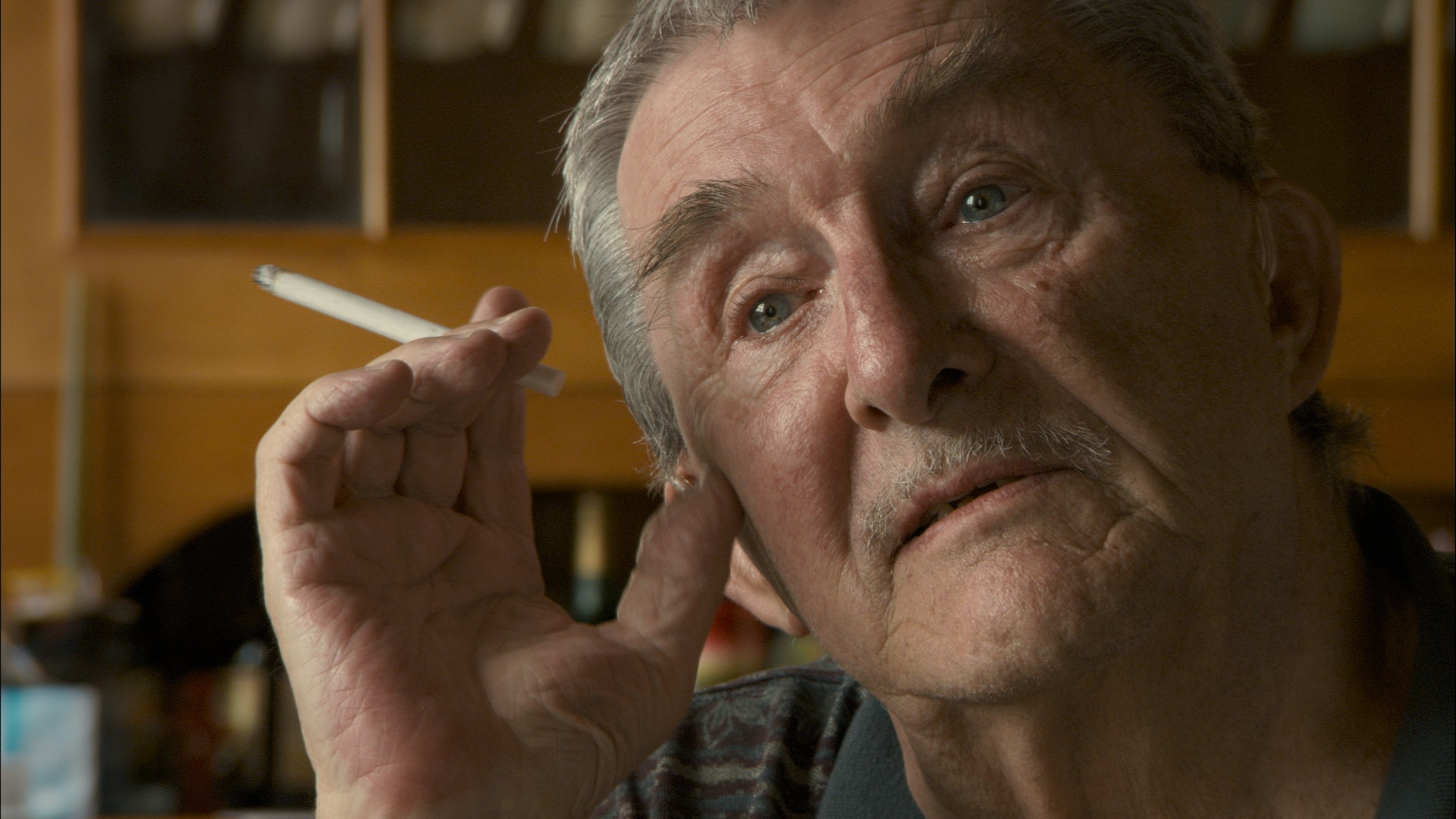
In the French film Rendez-vous in Kiruna, a selfish and curmudgeonly Paris architect takes a journey of grim obligation to northern Sweden and picks up a young Swedish lost soul for a road trip filled with funny moments. But the film’s underlying theme is the abandonment (literal or emotional) of sons by their fathers. The most riveting performance is a truth-telling monologue by the young Swede’s grandfather. It’s a wonderful moment – one of the most powerful on film this year. The journey reaches its conclusions without any cheap or sappy sentimentality, but with a moment of realization and an opportunity for redemption.
The year’s biggest breakthrough has to be 19-year-old actress Adèle Exarchopoulos, who delivered the year’s best cinematic performance in the year’s best movie, Blue is the Warmest Color.
American actress Brie Larson‘s star-making performance Short Term 12 showed her to be a big-time talent, possibly another Jennifer Lawrence.
Other remarkable breakthrough acting performances:
Elle Fanning in Ginger & Rosa (in which she, at her actual age of 14, played a 17-year-old).
In the Italian coming of age dramedy Me and You, we meet fourteen-year-old Lorenzo with his pimply face, see through mustache and bad attitude. Lorenzo lives with his mom in a comfortable Rome apartment and yearns for some low-pressure solitude. Telling his mom that he’s off to a weeklong ski holiday with schoolmates, he instead hides out in their apartment’s basement storage unit. He has stocked the basement with his favorite foods, it has a bathroom and he can listen to his tunes on headphones. It’s all looking up for him until his heroin-addicted older half-sister Olivia intrudes, looking for a place to go cold turkey.
Lorenzo resents the intrusion, but Olivia threatens to tell his mom. It turns out that the two don’t really know each other. (Lorenzo’s dad had left Olivia’s mom for his mom – and the two mothers don’t communicate.) The siblings bicker. As any 14-year-old would be, Lorenzo is fascinated by this young woman. Still immature herself, she has already lived a life – and there’s much Lorenzo can learn about the adult world from Olivia. Perhaps they can even bond for the first time as brother and sister…Lorenzo isn’t going to get his solitude, but he may get an unforgettable adventure instead.
There’s a lot of humor in Me and You, primarily stemming from the ski trip ruse and the sibling interactions. Me and You also contains a very realistic and unvarnished depiction of detox and relapse.
This is 72-year-old Italian director Bernardo Bertolucci’s first film since The Dreamers in 2003 (my choice for the best film of that year). Bertolucci, of course, is the writer-director of Last Tango in Paris (which I don’t think holds up well today) and The Conformist, 1900, The Last Emperor and The Sheltering Sky (which still stand up as excellent films). With The Dreamers and Me and You, Bertolucci seems to be matching his finest work.
I saw Me and You at the San Francisco International Film Festival; it is still waiting for a US theatrical release.