Movies to See Right Now

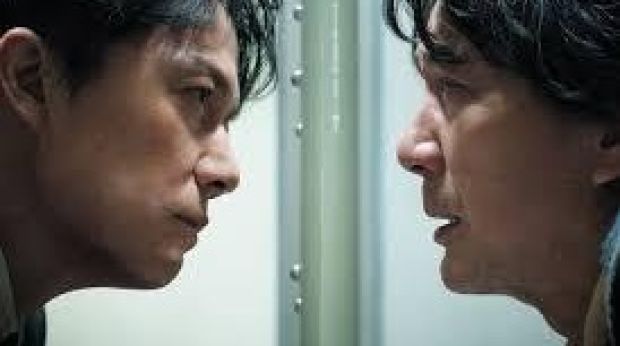
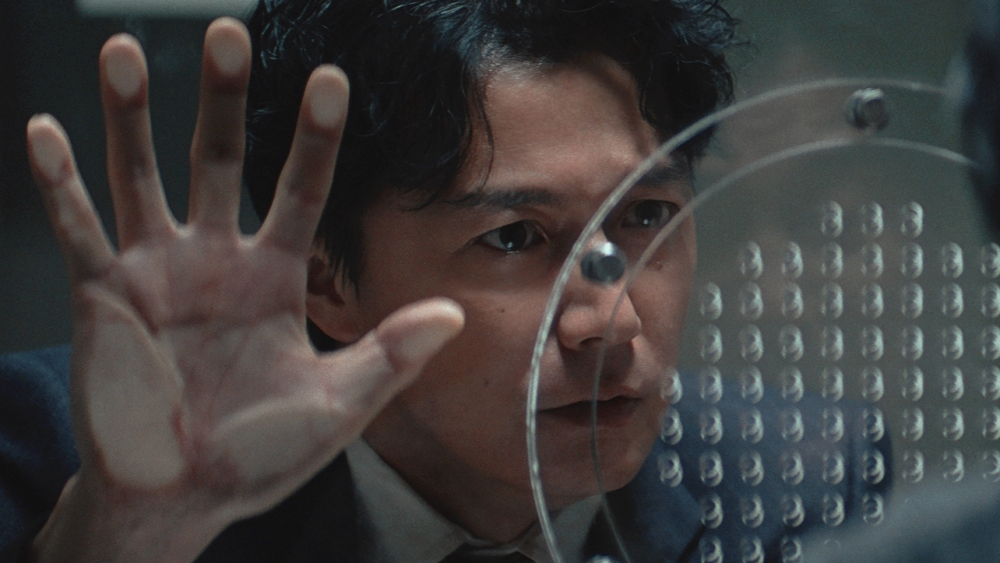
Kôji Yakusho in Hirokazu Koreeda’s THE THIRD MURDER. Photo courtesy of San Francisco Film Society (SFFILM).

Opening this week: The Third Murder is the work of director Hirokazu Koreeda, who made the 1995 art house hit Maborosi and one of the best movies of 2008, Still Walking. Koreeda’s Shoplifters just won the Palm d’Or at Cannes, and will be released in the US by Magnolia Pictures on November 23. I saw The Third Murder at the 2018 San Francisco International Film Festival (SFFILM). The Third Murder is a legal procedural that takes a philosophical turn.

OUT NOW

  • Please make every attempt to see the best movie of the year, now in Bay Area theaters: the emotionally powerful coming of age drama Leave No Trace from Debra Granik (Winter’s Bone). Superbly well-crafted, impeccably acted, thoughtful and emotionally powerful, it’s a Must See.
  • The savagely funny social satire Sorry to Bother You carries the message that humans are more than just their commercial value as consumers and labor to be exploited.
  • The political documentary Dark Money exposes the growing threat of unlimited secret money in political campaigns.
  • Puzzle intelligently and authentically traces one woman’s journey of self discovery.
  • The surprisingly emotional biodoc Won’t You Be My Neighbor? is about Fred Rogers’ fierce devotion to the principle that every child is deserving of love and our protection.
  • First Reformed: Ethan Hawke stars in this bleak, bleak psychological thriller with an intense ending.
  • Three Identical Strangers is an astonishing documentary about triplets separated at birth that ranges from the exhuverance of discovering siblings to disturbing questions of social engineering.
  • American Animals is funny documentary/reenactment of a preposterous heist.
  • RBG is the affectionate and humanizing biodoc about that great stoneface, Ruth Bader Ginsburg.

ON VIDEO

I’m sure that you’ve never seen this week’s video pick because I don’t think it got a theatrical release.  It’s the indie thriller Dose of Reality, which brings a jaw-dropper of a Big Surprise. Dose of Reality is available to stream on Amazon.

ON TV

  • This is a great week for film noir and neo-noir on Turner Classic Movies.  We begin on August 6 with The Set-Up (1949), one of the great film noirs and one of my 10 Best Boxing Movies. Robert Ryan plays a washed-up boxer that nobody believes can win again, not even his long-suffering wife (Audrey Totter).  His manager doesn’t even bother to tell him that he is committed to taking a dive in his next fight.  But what if he wins?  Director Robert Wise makes use of real-time narrative, then highly innovative. Watch for the verisimilitude of the bar where the deal goes down.
  • Also on August 6, there’s the 1950 Perfect Murder noir Tension, with Richard Basehart as the meek night manager of a pharmacy who is married to a slutty shrew (Audrey Totter – of course).  She sneers, “”You were full of laughs then. Well, you’re all laughed out now””  When the wife humiliates him with her newest affair, he works a pair of the newly invented contact lenses and some flashy clothes into a new second identity.  The wife’s boyfriend ends up fatally shot, and the cops start looking for the pharmacy manager.  Will he take the fall?  Barry Sullivan is the cop and Cyd Charisse is the good girl.
  • And on August 9, TCM plays one of my favorite neo-noirs, the Don Siegel thriller Charley Varrick.  Walter Matthau stars as the title character, an expert heist man who sets up a “perfect crime” bank robbery which, of course, goes awry. Worst of all, it turns out that Varrick has stolen a secret Mob fortune being laundered by the bank, and now the underworld organization is after him. Only his wits can save him. I’ve rewatched Charley Varrick a couple of times recently, and it still holds up for me.
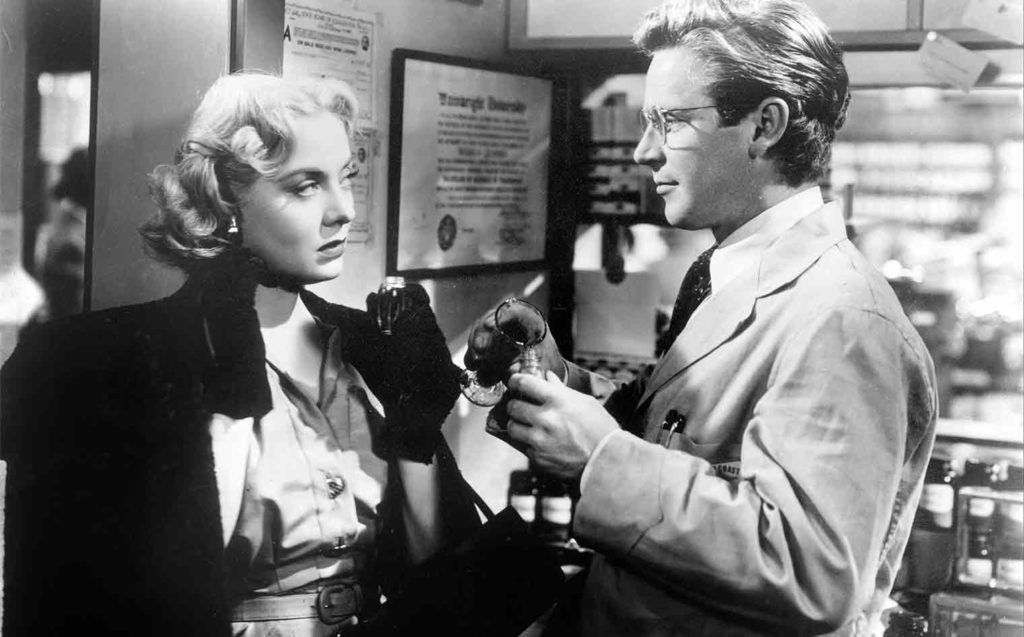
Audrey Totter and Richard Basehart in TENSION

THE THIRD MURDER: legal procedural turns philosophical

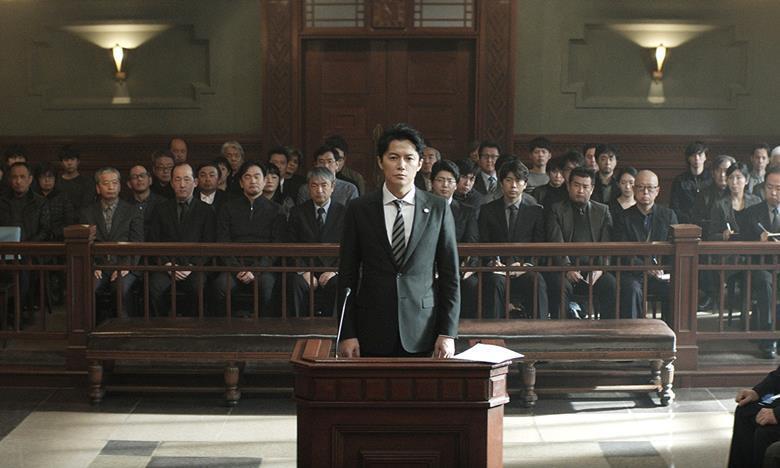
Masaharu Fukuyama and Kôji Yakusho in Hirokazu Koreeda’s THE THIRD MURDER. Photo courtesy of San Francisco Film Society (SFFILM).

The Third Murder opens with a killing, and the audience gets a clear full-face view of the killer.  Then the mystery begins – not about who done it, but about why and who will be held accountable.

A high-powered defense lawyer (Masaharu Fukuyama) has been called in to take over a challenging case; it’s potentially a death penalty case, and the defendant (Kôji Yakusho) has confessed. Moreover, the defendant has previously served thirty years for an earlier murder, he’s an oddball and he keeps switching his story.

Nevertheless, the lawyer thinks he can avoid the death penalty with a technicality about the motivation for the crime. He gets some good news from forensic evidence and then discovers one startling secret about the victims’ family – and then another one even more shocking – one that might even exculpate his client.

The Third Murder is a slow burn, as the grind of legal homework is punctuated by reveal after reveal. Eventually, there’s a shocker at the trial, and this legal procedural eventually gives way to philosophical questions. Finally, there’s an edge-of-the-seat epilogue – a final lawyer-client face-to-face where the shell-shocked lawyer tries to confirm what really happened and why.

Masaharu Fukuyama in Hirokazu Koreeda’s THE THIRD MURDER. Photo courtesy of San Francisco Film Society (SFFILM).

Yakusho (Tampopo, Shall We Dance?, Babel, 13 Assassins) is quite excellent as the defendant, a man who seems to be an unreliable mental case, but who might have a sense of justice that trumps everyone else’s.

The Third Murder is the work of director Hirokazu Koreeda, who made the 1995 art house hit Maborosi and one of the best movies of 2008, Still Walking.  Koreeda’s Shoplifters just won the Palm d’Or at Cannes, and will be released in the US by Magnolia Pictures on November 23.  I saw The Third Murder at the 2018 San Francisco International Film Festival (SFFILM).


Stream of the Week: DOSE OF REALITY

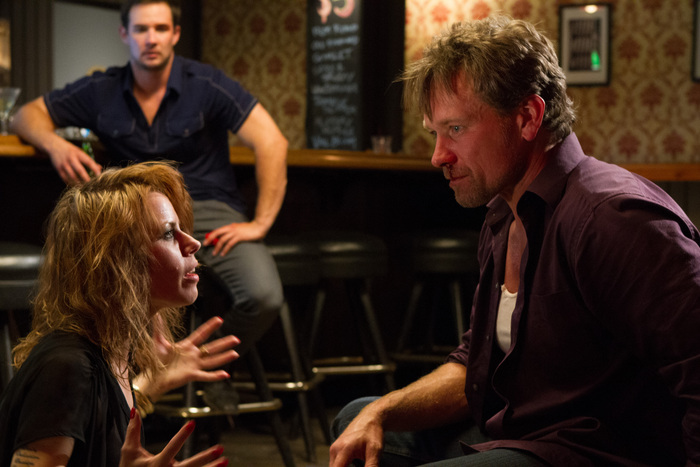
Fairuza Balk, Ryan Merriman (rear) and Rick Ravanello in DOSE OF REALITY

I’m sure that you’ve never seen this week’s video pick because I don’t think it got a theatrical release.  It’s the indie thriller Dose of Reality, which I saw at Cinequest in 2013.

Dose of Reality packs wire-to-wire intensity and a surprise ending that no one will see coming. A woman is found in a bar’s restroom after closing time, apparently beaten and raped, but unable to remember by whom. Two bar employees are the only possible suspects. Both deny it, and the woman launches a series of searing mind games to determine her attacker.

Fairuza Balk (American History X, Almost Famous) commands the screen as the woman. Her character, starting from a place of utter victimization, becomes totally dominant over the men. The most interesting of the guys is played by veteran TV actor Rick Ravanello (106 acting credits on IMDb). Ravanello’s eyes have an uncommon capacity to credibly take the character through dimness, cunning, tweaked impairment, guilt and terror.

It’s a plenty compelling movie for the first 75 minutes, but Dose of Reality is all about the Big Surprise at the end – which is a shocker on the scale of The Crying Game. Afterward, I was able to reflect back and identify at least four clues in the story, but every one of the 250 audience members at Dose of Reality’s Cinequest world premiere was rocked by the surprise on first viewing. Actor Ravanello recounts that when he first read the script, he got to the end and blurted “No Fucking Way!”.  It’s a success for writer-director Christopher Glatis.

Dose of Reality is available to stream on Amazon.

Movies to See Right Now

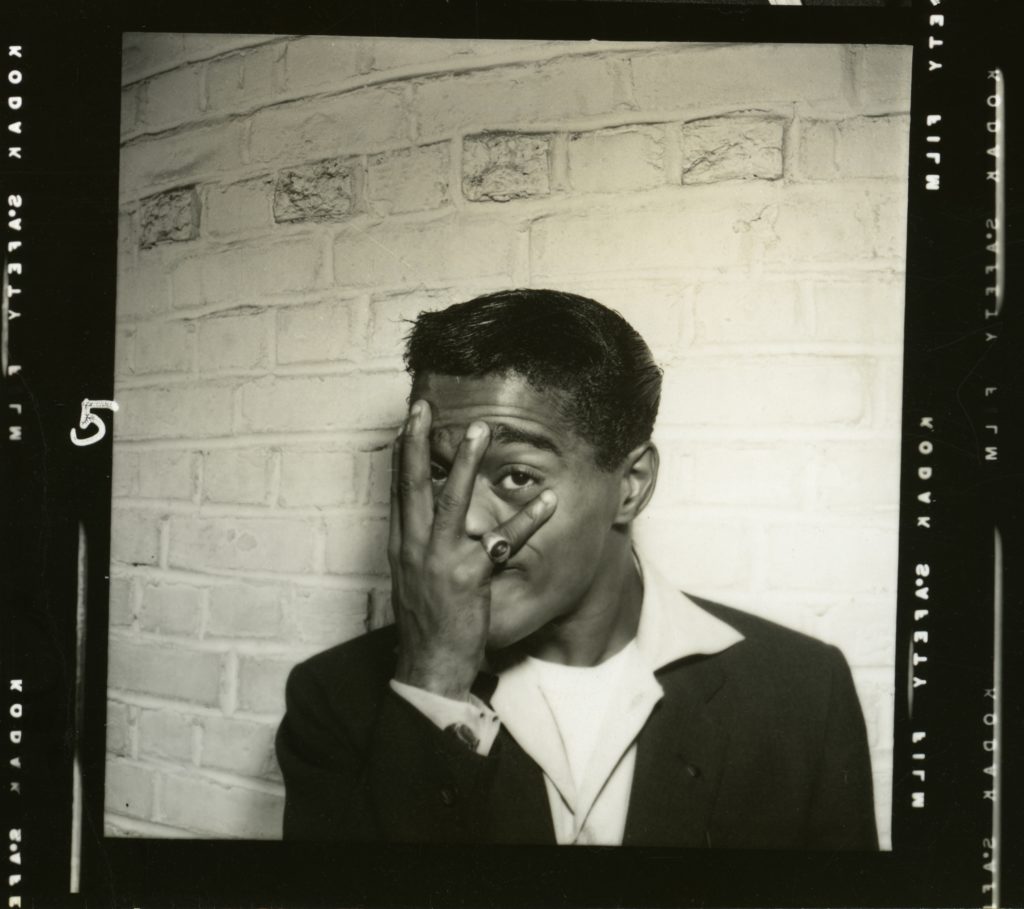
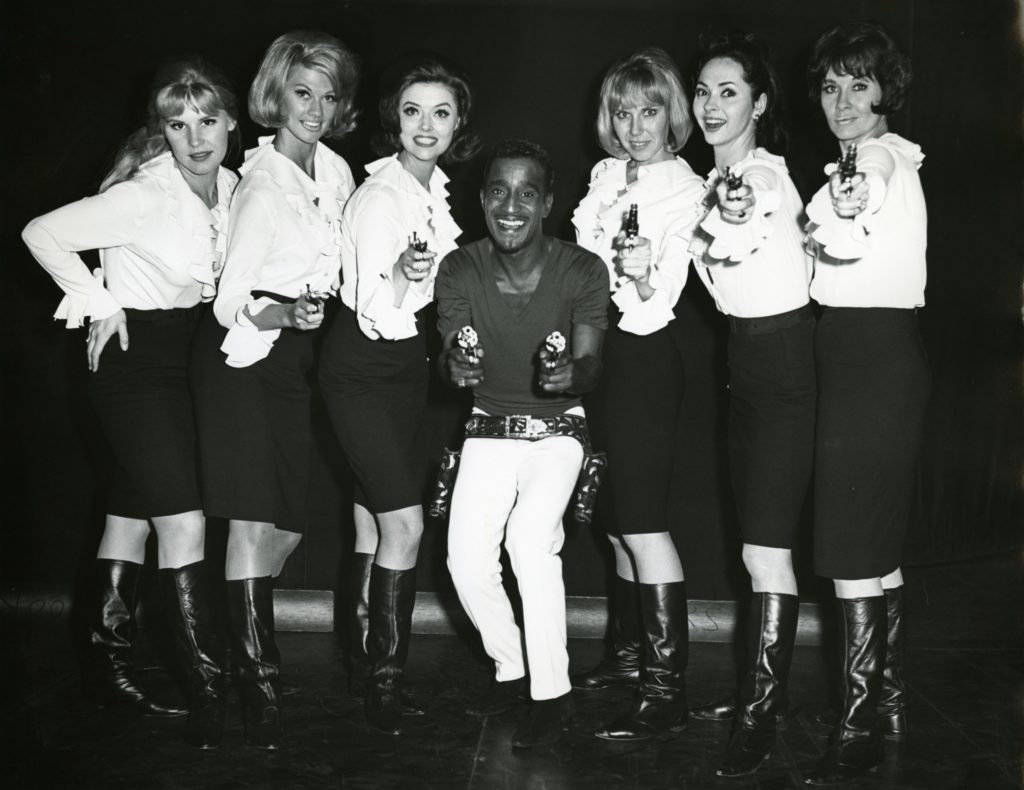
Subject Sammy Davis Jr. in a still from SAMMY DAVIS JR.: I’VE GOTTA BE ME. Photo courtesy Menemsha Films/JFI.
This week, Dark Money and Puzzle have opened in Bay Area theaters.  And one of the Bay Area’s top cinema events: the 38th annual San Francisco Jewish Film Festival (SFJFF38), has opened and runs through August 5 in San Francisco, Palo Alto, San Rafael, Albany and Oakland.  The SFJFF is the world’s oldest Jewish film festival, and, with a 2017 attendance figure of 40,000, still the largest.  As always, there’s an especially strong slate of documentaries, including my recommended Must See docs; I especially liked the closing night film Sammy Davis Jr.: I’ve Gotta Be Me.

OUT NOW

  • Please make every attempt to see the best movie of the year, now in Bay Area theaters: the emotionally powerful coming of age drama Leave No Trace from Debra Granik (Winter’s Bone). Superbly well-crafted, impeccably acted, thoughtful and emotionally powerful, it’s a Must See.
  • The savagely funny social satire Sorry to Bother You carries the message that humans are more than just their commercial value as consumers and labor to be exploited.
  • The political documentary Dark Money exposes the growing threat of unlimited secret money in political campaigns.
  • Puzzle intelligently and authentically traces one woman’s journey of self discovery.
  • The surprisingly emotional biodoc Won’t You Be My Neighbor? is about Fred Rogers’ fierce devotion to the principle that every child is deserving of love and our protection.
  • First Reformed: Ethan Hawke stars in this bleak, bleak psychological thriller with an intense ending.
  • Three Identical Strangers is an astonishing documentary about triplets separated at birth that ranges from the exhuverance of discovering siblings to disturbing questions of social engineering.
  • American Animals is funny documentary/reenactment of a preposterous heist.
  • RBG is the affectionate and humanizing biodoc about that great stoneface, Ruth Bader Ginsburg.

ON VIDEO
In honor of the San Francisco Jewish Film Festival, now underway, my this week’s video pick comes from last year’s festival. Israel was created as a home for refugees. What happens when African refugees overwhelm a neglected Tel Aviv neighborhood is the subject of the topical documentary Levinsky Park. Levinsky Park is available to stream from Amazon, iTunes, YouTube and Google Play.

ON TV

On July 31, Turner Classic Movies brings us two generationally iconic films – one from The Greatest Generation and one for Baby Boomers.

First there’s the WW II melodrama From Here to Eternity. Sure, it’s a soap opera with that much lampooned Burt Lancaster-Debroah Kerr embrace in the crashing surf. But it’s packed with a great cast, and the story threads are expertly braided together by director Fred Zinneman. Besides Lancaster and Kerr, there’s Montgomery Clift, Jack Warden and – resurrecting his career – Frank Sinatra. One of the best performances is by Ernst Borgnine as the hulking bully named Fatso.

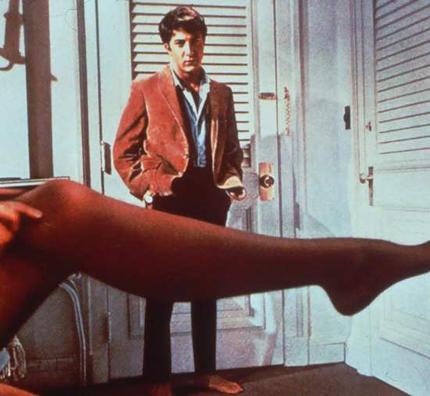
Next, it’s easy to recognize the greatness of The Graduate today, but it’s hard to appreciate how groundbreaking it was – all because of Mike Nichol’s directorial choices. Dustin Hoffman’s performance was central to the success of the film, yet he was a nobody at the time and Nichols had to fight for him – the studio preferred a conventionally handsome leading man. Nichols sure wasn’t copying anybody else when he put the Simon and Garfunkle songs in the soundtrack. And the final shot – where Nichols kept his camera lingering on Hoffman and Katherine Ross until the actors became uncomfortable – is one of cinema’s best.

Dustin Hoffman (and Anne Bancroft’s leg) in THE GRADUATE

DARK MONEY: following secret money

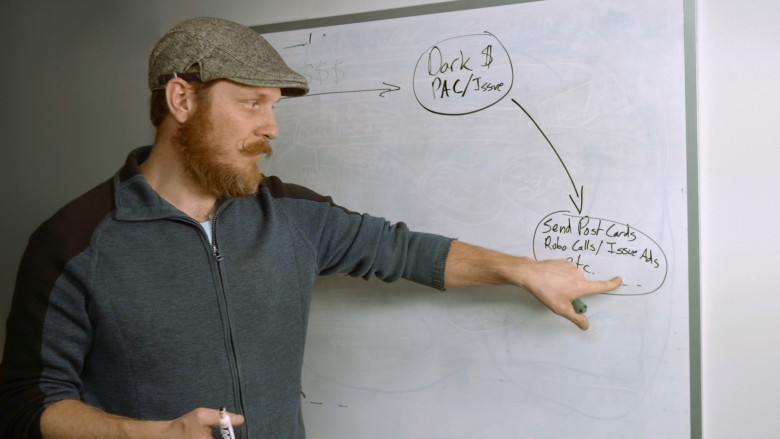
John S. Adams in DARK MONEY

The gripping documentary Dark Money exposes our new political environment, with unlimited secret money unleashed by the Supreme Court’s Citizens United ruling. Writer-director Kimberly Reed takes us to her native Montana as conservative (but independent) Republican legislators find themselves deluged by massive and monstrous attacks from some even more conservative out-of-state sources. Intrepid small-town reporter John S. Adams and the understaffed state regulators follow the money and try to hunt down who is pulling the strings.

As the mystery unfolds, Dark Money also takes us to Wisconsin, where dark money has assaulted an unexpected branch of government. And we go to Washington, DC, to the Federal Elections Commission, where Ann Ravel, the Obama-appointed chair of the FEC, has resigned in disgust after Republican commissioners have blocked all enforcement of federal campaign finance regulation. (Disclosure: I have worked with Silicon Valley native Ravel in my day job.)

Here are some of Dark Money’s most disturbing revelations:

  • While it’s bad enough that we don’t know the extent of wealthy Americans like the Koch Brothers trying to buy elections, neither do we know about the secret election participation of FOREIGN players.
  • Dark Money sources are not stopping at trying to buy legislators and governors, but are also trying to take over state supreme courts!

And just when we need MORE scrutiny of the attempts to buy the legislative and judicial branches of state governments, we are witnessing the death of statehouse journalism.

In one particularly nasty nugget, we witness GOP FEC Commissioner Don McGahn unashamedly grinding the FEC’s gears of enforcement to a stop.  Today, McGahn is the Trump White House Counsel, with major responsibility for the Supreme Court nomination of Brett Kavanagh.

Dark Money keeps us on the edges of our seats throughout and culminates in a real-life courtroom drama.

I attended the sold-out Bay Area premiere of Dark Money, co-sponsored by Silicon Valley’s Cinema Club and by Santa Clara County. Both Ann Ravel and John S. Adams appeared at the post-screening Q&A.

PUZZLE: that final puzzle piece is self-discovery

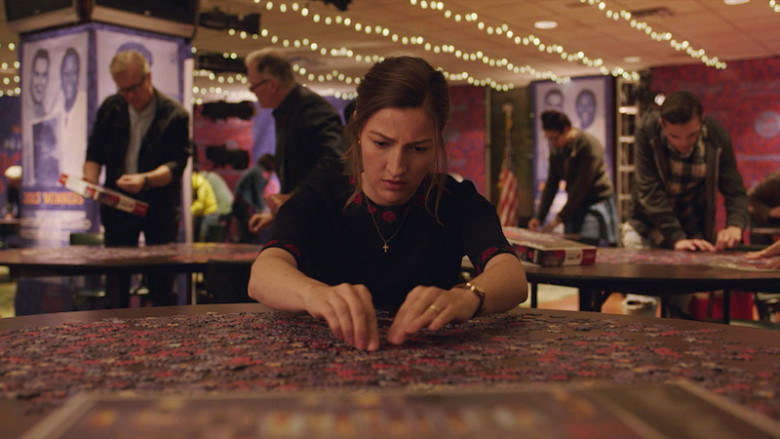
Kelly MacDonald in PUZZLE

In the self-discovery drama Puzzle, Kelly MacDonald plays a wife and mom who has subordinated all of her own needs and desires to those of her husband and two sons. Utterly selfless, she prepares every meal, performs every task, organizes every event so her husband and two sons and their church community can hum along smoothly – and without appreciation. The phrase “taken for granted” applies to every breath she takes. She receives what seems to be the most random gift, a jigsaw puzzle, and learns that she is a jigsaw puzzle savant. Suddenly, she has found herself something that she does for herself – and she is stunningly good at it.

At this point, she happens into the hitherto unknown world of jigsaw competitions (who knew?) and becomes the teammate of an unhappy divorcee (Irrfan Khan) who appreciates her and opens up new possibilities. With another experience to compares to her domestic drudgery, she realizes that she  has grown to be deeply unhappy.

The screenplay was co-written by Oren Moverman (The Messenger, Rampart, Love & Mercy, The Dinner) and Polly Mann, based on Natalia Smirnoff’s 2009 Argentine film Rompecabezas. It’s an intelligent script, filled with telling bits (she has to make her own birthday cake) and authentic interactions to portray the family dynamics. Her hubbie (David Denman) is not really mean; he’s just satisfied with the routine that they have slipped into.

There’s a wonderful scene when the mom is partway along on her road to self-realization. She suggests that the family take a major financial action. The husband says that he’ll think about it. A few days later, without circling back with her, he announces to the family that they will take this action. She is infuriated; he doesn’t understand why – after all, it was her idea. For those of you who haven’t lived this, I can assure you that this is a realistic scenario.

There’s an especially fine thread in which the mother perceives a son’s unhappiness and draws out his real aspirations.

Of course, the audience can see that the protagonist will have choices at the end.  She can stay with the husband who has finally come to appreciate her.  Or she can go off with the new guy who adores her.  What happens at the end defies the conventions of a romantic drama – it’s smart, satisfying and affirms what it is to be your own person.

Puzzle takes its time.  I suspect women will stay with its deliberate pace more willingly than will men.  That being said, it’s original and cliche-free.

Stream of the Week: LEVINSKY PARK – refuge for refugees?

LEVINSKY PARK

In honor of the San Francisco Jewish Film Festival, now underway, my this week’s video pick comes from last year’s festival. Israel was created as a home for refugees. What happens when African refugees overwhelm a neglected Tel Aviv neighborhood is the subject of the topical documentary Levinsky Park.

Director Beth Toni Kruvant takes us to Tel Aviv’s hardscrabble Hatikva neighborhood, now burdened with an influx of African refugees from sub-Saharan Africa. The refugees aren’t Jewish, they don’t speak Hebrew and they sure aren’t white. Discouraged from working legally, the refugees encamp on the streets and do what they need to survive. The Israeli government senses a lose-lose media profile on the issue and tries to duck it entirely.

So how do the local Israelis react? There is a wide spectrum. Some welcome and try to help these people fleeing for their lives. Others tag the newcomers with the loaded pejorative “infiltrators” and try to kick them out. We see some ugly, overt racism in Levinsky Park, but nothing unlike what we’ve seen in the US in the Trump Era.

It’s the same question that confronts all countries in the West about political asylum-seekers – who will actually invite them in? What’s different about Levinsky Park, of course, is that this is Israel – the one nation created by and for refugees.

A leader emerges from the refugees, the charismatic and articulate Mutasim Ali. He frames their plight as a movement, and they strive to regain some control over their own futures.

This year’s SFJFF runs from July 19 through August 5 at theaters in San Francisco, Palo Alto, Albany, San Rafael and Oakland. You can peruse the entire program and buy tickets and passes at San Francisco Jewish Film Festival.

Levinsky Park, which originally played in the Bay Area at Cinequest, is available to stream from Amazon, iTunes, YouTube and Google Play.

SFJFF: the docs

Still from SAMMY DAVIS JR.: I’VE GOTTA BE ME. Photo courtesy JFI.

You can always count on a rich slate of documentaries at the San Francisco Jewish Film Festival, now running through August 5 in San Francisco, Palo Alto, San Rafael, Albany and Oakland. Here are my recommendations from this year’s crop.

  • Sammy Davis Jr.: I’ve Gotta Be Me: As a Baby Boomer who had dismissed Sammy Davis Jr. from the moment he publicly hugged Richard Nixon, I found this to be the most surprising doc (and my favorite) at the fest. I learned that Sammy’s 61-year career as a professional entertainer began at age three (with his first movie credit at age 7), a working childhood that  left emotional needs  It turns out that Sammy was a very, very talented but needy artist,, an uncomplicated man navigating several very complicated times. BTW there is some unbelievable dancing in Sammy Davis Jr.: I’ve Gotta Be Me. It is the SFJFF’s official Closing Night film at the Castro on July 29, but you can also catch it tomorrow in Palo Alto or August 4 in Oakland.
  • The Oslo Diaries:  The inside story of the secret negotiations that led to the 1993 Oslo Accord as told by the surviving Israeli and Palestinian participants.  It’s a remarkable story of finding trust out of distrust.  Of course, what should have been a diplomatic triumph is now a poignant story of a missed, or at least delayed, opportunity at peace.
  • The Mossad: First-hand accounts of the most legendary operations of Israel’s legendary foreign intelligence service. This is a top-notch cloak-and-dagger doc (and my review suggests a companion film about another Israeli intelligence agency).
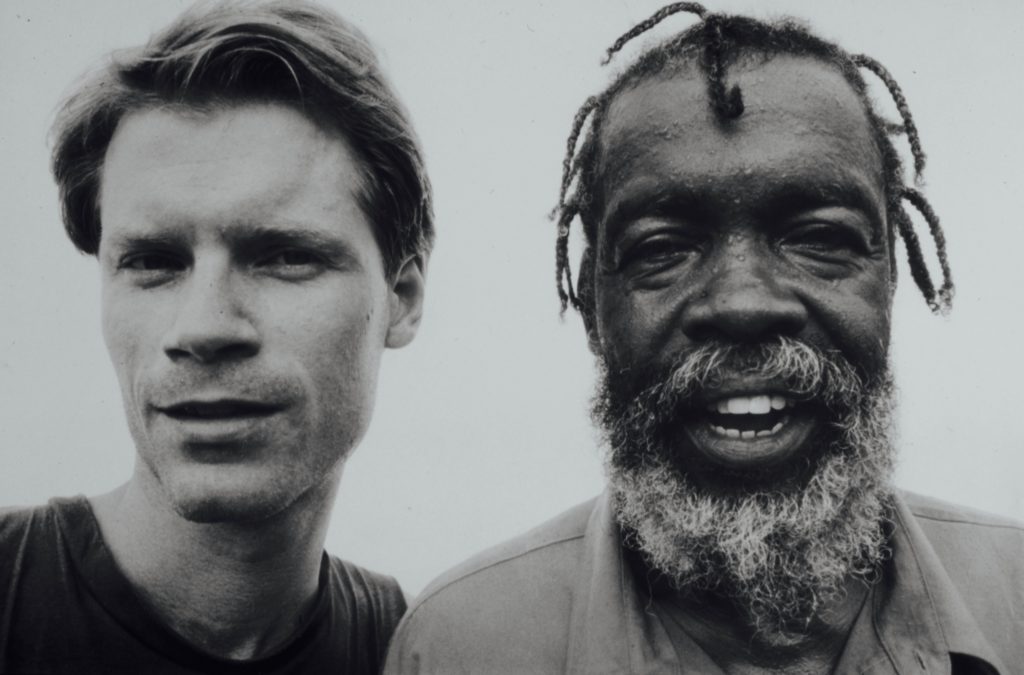
  • Satan & Adam: Adam, a young white Ivy Leaguer, takes a stroll through Harlem and encounters an older African-American street guitarist, who calls himself Mr. Satan. Adam, a talented amateur blues harmonica player sits in and soon the odd couple are a busking team. “Mr. Satan” is an alias for an artist of note. The odd couple novelty and Mr. Satan’s talent allows the act to soar. But Satan has emotional and medical issues, and Adam might be a better fit for a career in academia, so this is a story with plenty of unexpected twists and turns.
  • The Twinning Reaction: This startling and moving documentary tells the story of a Mad Men-era research project and its profound human impact. To perform a longitudinal study of nurture vs. nature, researchers INTENTIONALLY separated identical twins and placed them with families that the researchers kept in the dark for decades. My review compares The Twinning Reaction to a film in current release that covers the same facts.

My complete reviews of Sammy Davis Jr.: I’ve Gotta Be Me, The Oslo Diaries and Satan & Adam will appear when they are released in the Bay Area. You can peruse the entire SFJFF program and buy tickets and passes at San Francisco Jewish Film Festival.

From L:R – Subjects Adam Gussow and Sterling “Mr. Satan” Magee in a still from SATAN & ADAM. Photo courtesy JFI

THE MOSSAD: epic cloak and dagger

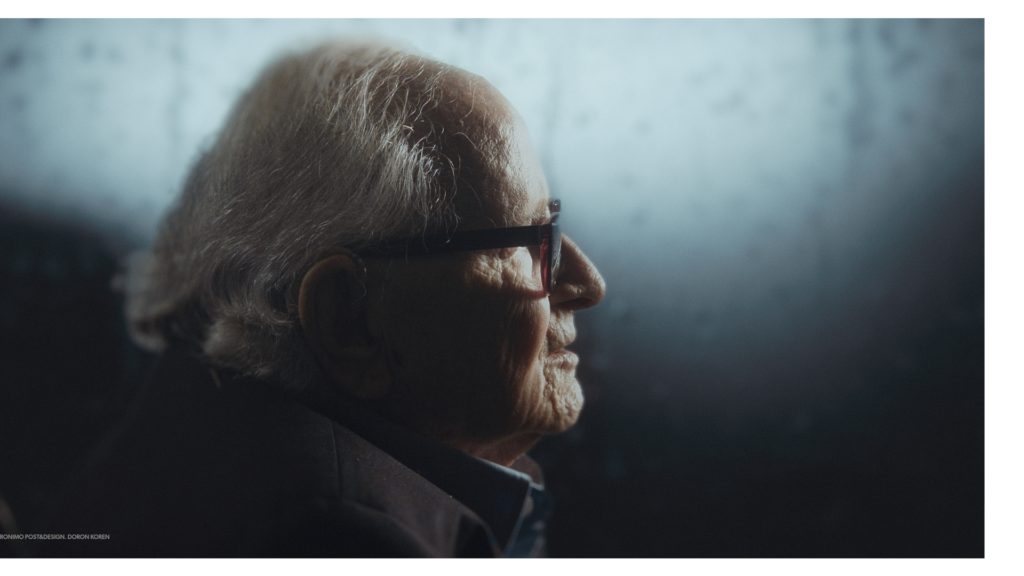
Subject Peter Malkin in a still from THE MOSSAD. Photo courtesy JFI

Anyone with an interest in historical cloak-and-dagger will appreciate the documentary The Mossad, about Israel’s legendary foreign intelligence service. We meet some current and recent Mossad officers, who are extremely tight-lipped.  But decades of intervening history have freed their older colleagues to spin first-hand tales of the Mossad’s most legendary operations:

  • The kidnapping of Nazi death camp czar Adolph Eichmann (and we hear from the guy who physically grabbed Eichmann in Buenos Aires).
  • The cultivation of a longtime mole at the highest level of the Egyptian government.  The mole is identified.  We hear how the Israeli military reacted to the advance warning of Egypt’s 1973 invasion – you may be surprised.
  • The methodical hunting down of the Palestinian terrorists who kidnapped and murdered Israeli athletes at the Munich Olympics.

The Mossad is a natural bookend to the The Gatekeepers, about another Israeli intelligence agency.  The Gatekeepers is centered around interviews with all six surviving former chiefs of Shin Bet, Israel’s super-secret internal security force. We get their inside take on the past thirty years of Israeli-Palestinian history. What is revelatory, however, is their assessment of Israel’s war on terror. These are hard ass guys who went to the office every morning to kill terrorists. But upon reflection, they conclude that winning tactics make for a losing strategy.
The Gatekeepers is available to rent on DVD from Netflix and for streaming on Amazon Instant, iTunes, Vudu, YouTube, Google Play and Flixster.

You can find how to watch The Mossad along with the entire SFJFF program at San Francisco Jewish Film Festival.

THE TWINNING REACTION: research playing with lives

From L:R – Subjects Doug Rausch and Howard Burack in a still from THE TWINNING REACTION. Photo courtesy JFI.

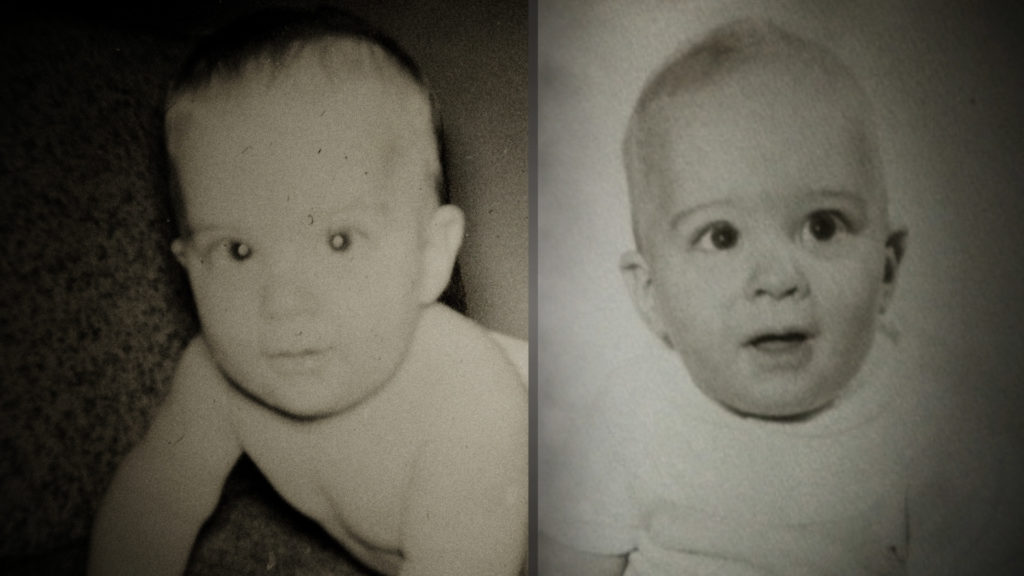
The startling and moving documentary The Twinning Reaction tells the story of a Mad Men-era research project and its profound human impact. To perform a longitudinal study of nurture vs. nature, researchers INTENTIONALLY separated identical twins and placed them with families that the researchers kept in the dark. The placements occurred AFTER the twin babies had bonded together in the crib for many months. Legally and ethically sketchy at the time, this is monstrous by today’s standards, and, in fact, caused harm to the adoptees.

Somehow, some of these twins learned the truth as adults and located their birth siblings. In The Twinning Reaction, we meet three sets of separated identical siblings. Because we meet the subjects of the study, the effects of separation are clearly apparent and highly personalized.

Writer-director Lori Shinseki has found an amazing story and source material to match. In a gripping 52 minutes, she weaves it into a coherent and compelling story.

THE TWINNING REACTION

The most astonishing set of sibs are triplets which are the subject of a film in current theatrical release, Three Identical Strangers. The Twinning Reaction focuses on the study; we meet several sets of twins, and the triplets are the jaw-dropping final act.   Three Identical Strangers focuses on the triplets and then takes a more current dive into the study.

The Twinning Reaction’s world premiere was at Cinequest two years ago. The Twinning Reaction is not yet available to stream, so your only chance to see it will be at the San Francisco Jewish Film Festival this July and August.