Movies to See Right Now

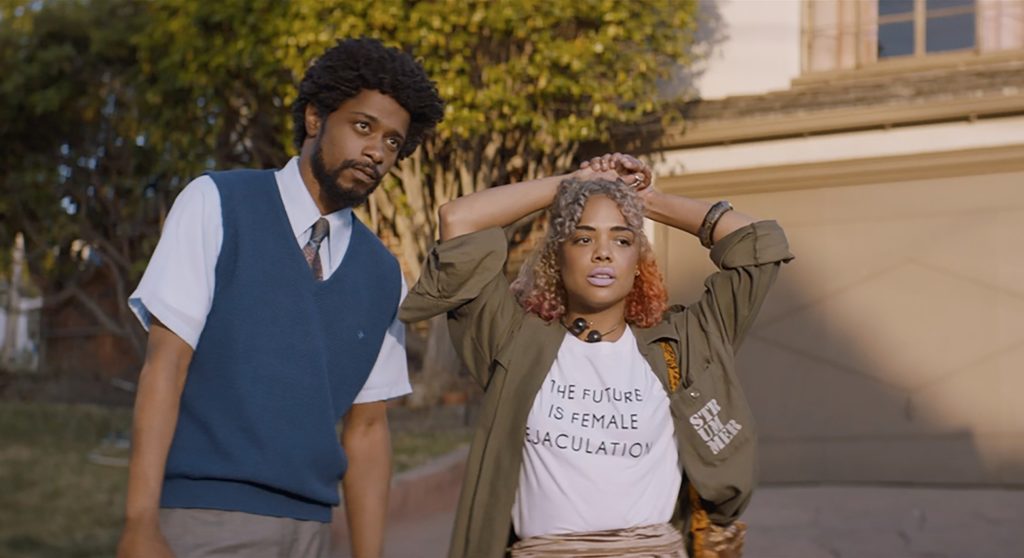
Lakeith Stanfield and Tessa Thompson in SORRY TO BOTHER YOU

OK – stay with me here – I’m recommending the most oddly-paired double bill of Sorry to Bother You and Won’t You Be My Neighbor?.   Both films fiercely stake out positions in support of basic human worth.  The savagely funny social satire Sorry to Bother You carries the message that humans are more than just their commercial value as consumers and labor to be exploited.  The surprisingly emotional biodoc Won’t You Be My Neighbor? is about Fred Rogers’ fierce devotion to the principle that every child is deserving of love and our protection.

One of the Bay Area’s top cinema events: the 38th annual San Francisco Jewish Film Festival (SFJFF38), has opened and runs through August 5 in San Francisco, Palo Alto, San Rafael, Albany and Oakland. The SFJFF is the world’s oldest Jewish film festival, and, with a 2017 attendance figure of 40,000, still the largest. As always, there’s an especially strong slate of documentaries; I’ll be writing about the Must See docs tomorrow.
LEAVE NO TRACE

OUT NOW

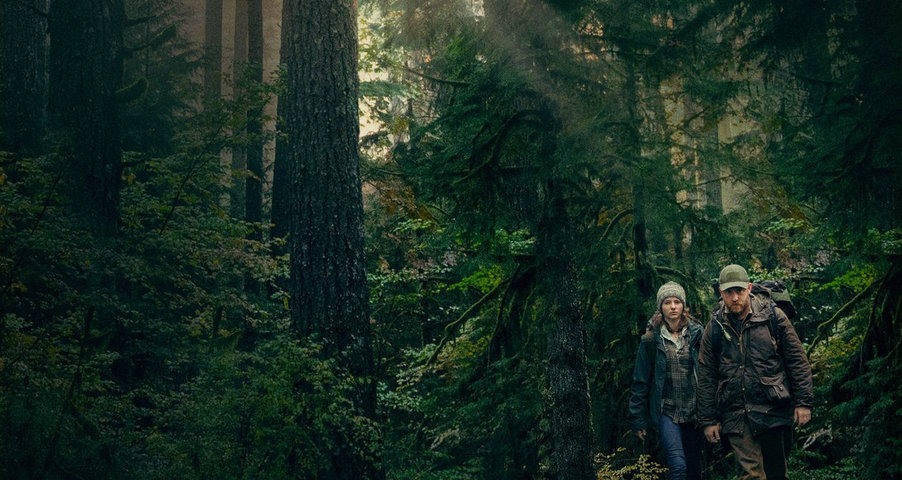
  • Please make every attempt to see the best movie of the year, now in Bay Area theaters: the emotionally powerful coming of age drama Leave No Trace from Debra Granik (Winter’s Bone). Superbly well-crafted, impeccably acted, thoughtful and emotionally powerful, it’s a Must See.
  • First Reformed: Ethan Hawke stars in this bleak, bleak psychological thriller with an intense ending.
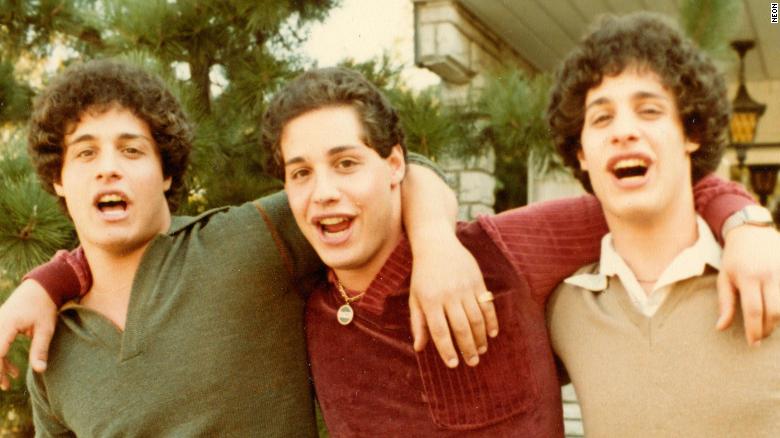
  • Three Identical Strangers is an astonishing documentary about triplets separated at birth that ranges from the exhuverance of discovering siblings to disturbing questions of social engineering.
  • American Animals is funny documentary/reenactment of a preposterous heist.
  • RBG is the affectionate and humanizing biodoc about that great stoneface, Ruth Bader Ginsburg.


ON VIDEO

This week’s video pick, the inventive Ruby Sparks, is about romance and it’s very, very funny, but it transcends the genre of romantic comedy. It’s clear that its co-star Zoe Kazan is a major talent as a screenwriter.  Ruby Sparks is available to stream from Amazon, iTunes, Vudu, YouTube and Google Play.


ON TV

This week’s offerings from Turner Classic Movies are remarkably diverse.  On July 24, there’s George Cukor’s  Dinner at Eight, an all-star 1933 Hollywood dramedy that mostly still stands up today.  Jean Harlow is hilarious as the trophy bride of the course noveau-millionaire played by Wallace Beery.  Marie Dressler is at least as funny as a former star yearning to relive an old romance.  John Barrymore adds a heartbreaking performance as a man facing disgrace.  If all this weren’t enough, we also get Lionel Barrymore, some ditziness from Billie Burke and a splash of sarcasm from quick-patter artist Lee Tracy.  Harlow, who died at 26, is usually remembered as a platinum blonde sex symbol, but Dinner at Eight reminds us of her comic brilliance.

On July 26 , TCM presents The Getaway, a 1972 crime thriller starring the charismatic Steve McQueen and his real-life squeeze Ali MacGraw.  McQueen and MacGraw are delightful to watch as they move between violent clashes and double- and triple-crosses. As befits a Sam Peckinpah film, there’s an intense shootout at the end.  The grossly underrated character actor Al Lettieri (Sollozzo the Turk in The Godfather) gets to play perhaps his most delicious villain; when he comes across a oddly matched married couple –  the nubile Sally Struthers and the nerdy Jack Dodson (county clerk Howard Sprague in The Andy Griffith Show), Lettieri layers on some glorious sexual perversity.   Speaking of character actors, we also get to enjoy the crew of Peckinpah favorites: Ben Johnson, Slim Pickens, Dub Taylor, Bo Hopkins and Richard Bright.

And, just for fun, on July 23, TCM will air the original Godzilla and two movies from my list of Least Convincing Movie Monsters: The Black Scorpion and The Killer Shrews.

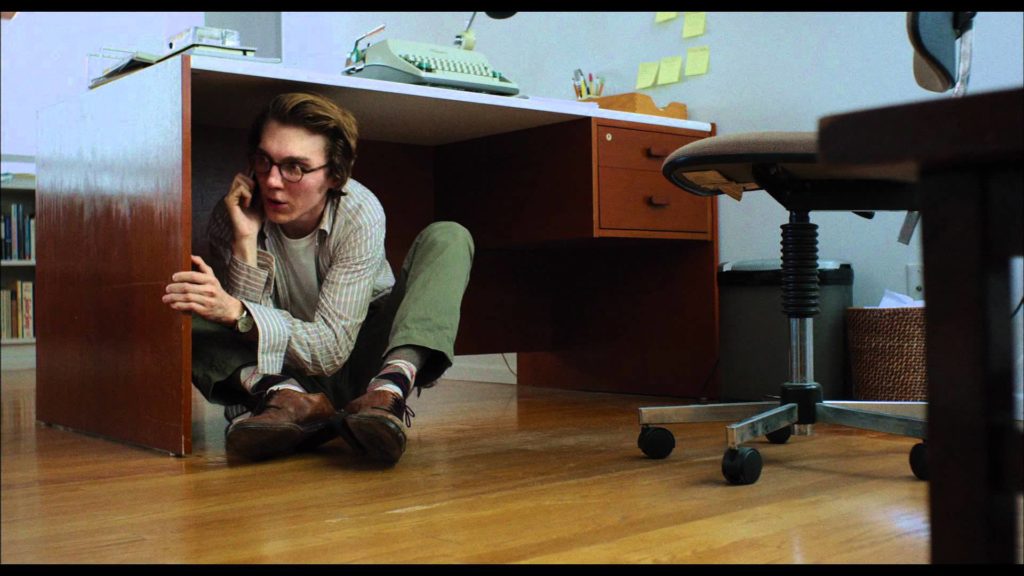
Stream of the Week: RUBY SPARKS – be careful what you ask for

Paul Dano and Chloe Kazan in RUBY SPARKS

The inventive Ruby Sparks is about romance and it’s very, very funny, but it transcends the genre of romantic comedy. A shy writer who has produced a great novel at an early age is now drifting, his writing is blocked and he has isolated himself into a lonely existence. He imagines his perfect love object, and he can suddenly write in torrents about her until…she becomes real. Yes, suddenly he has a real life girlfriend of his own design.

This is everyone’s fantasy of a perfect partner – but what are the limits of a partner that you have designed yourself? Because he can tweak her behavior by rewriting it, this brings up the adage “Be careful what you ask for”. When he is threatened by her independence, he changes her personality on the page and she becomes unattractively clinging and needy. Can his realized fantasy make him happy?

Paul Dano in RUBY SPARKS

Paul Dano is outstanding as the writer and screenwriter Zoe Kazan (granddaughter of Elia Kazan) dazzles as his creation. (Off screen, Kazan and Dano are a couple.) Chris Messina is dead on perfect as the writer’s brother, and the film benefits from an especially strong cast: Annette Bening, Antonio Banderas, Steve Coogan, Aasif Mandvi and Elliot Gould. Ruby Sparks is ably directed by Jonathan Dayton and Valerie Faris, the co-directors of another exceptional indie comedy, Little Miss Sunshine.

The biggest star in Ruby Sparks is Zoe Kazan’s ingenious screenplay. It’s funny without being silly, profound without being pretentious, bright without being precious. Every moment is authentic. It’s clear that Kazan is a major talent as a screenwriter.

Ruby Sparks is available to stream from Amazon, iTunes, Vudu, YouTube and Google Play.

San Francisco Jewish Film Festival opening this week

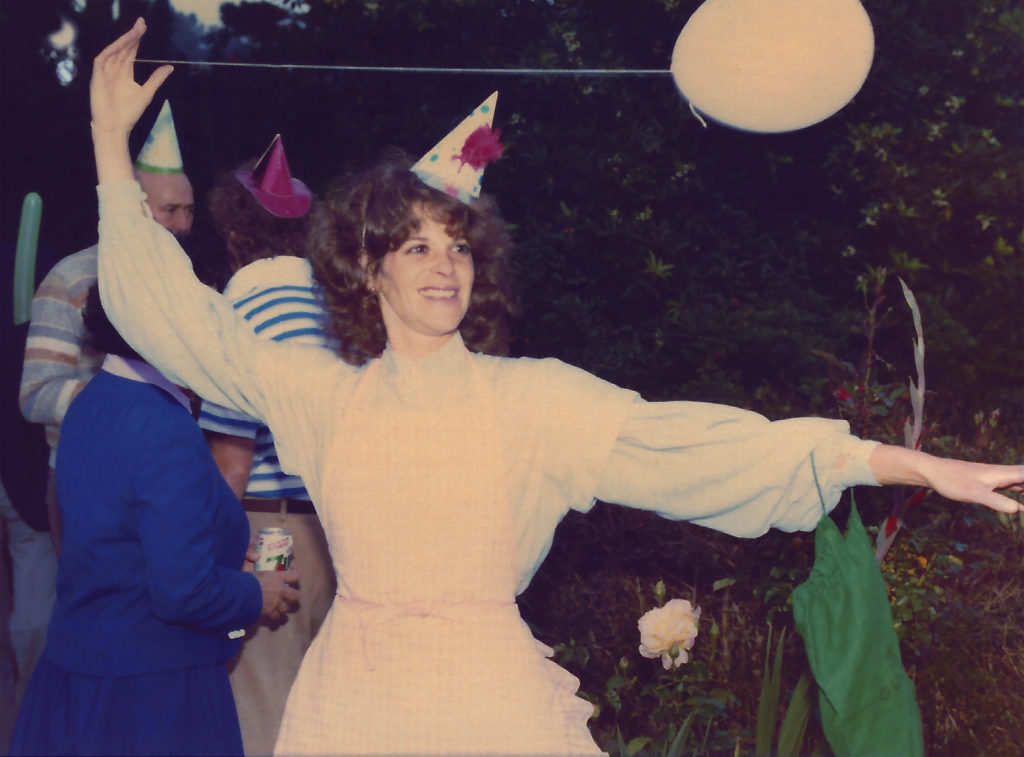
Subject Gilda Radner in a still from LOVE, GILDA. Photo courtesy JFI.

It’s time to get ready for one of the Bay Area’s top cinema events: the 38th annual San Francisco Jewish Film Festival (SFJFF38), which opens July 19, and runs through August 5 at five locations throughout the Bay Area. The SFJFF is the world’s oldest Jewish film festival, and, with a 2017 attendance figure of 40,000, still the largest.

Here’s an early peek at the fest highlights:

  • Opening night’s Bay Area premiere of the Gilda Radner biodoc Love, Gilda, featuring segments of Radner’s diaries. Director Lisa D’Apolito and original SNL cast member Laraine Newman will attend.
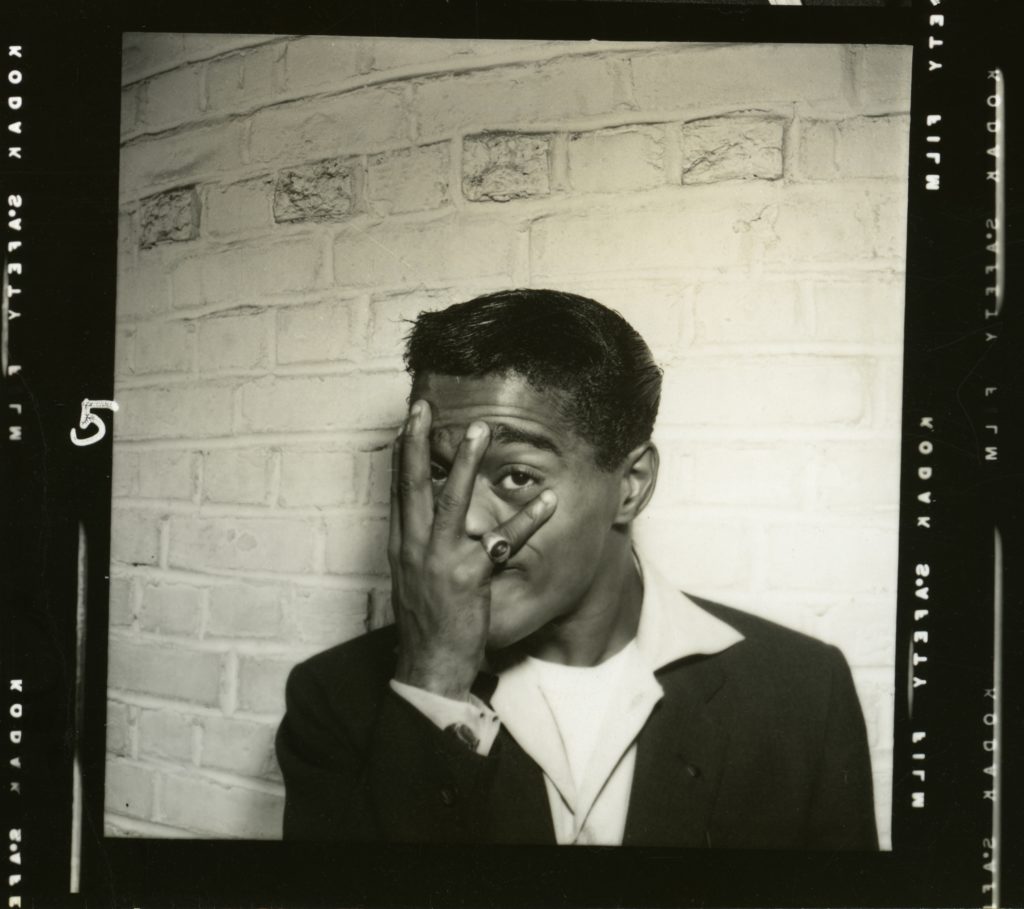
  • Closing night’s presentation of another showbiz biodoc,  Sammy Davis Jr.: I’ve Gotta Me, with director Sam Pollard in attendance.  I’ve seen it, and it’s top rate.
  • The especially strong slate of documentaries, always a rich trademark of the SFJFF. I’ll be recommending a slate of Must See docs.
  • A first-time partnership with the Film Noir Foundation, with the Hungarian neo-noir Budapest Noir presented by its director Éva Gárdos and the Czar of Noir himself, San Francisco’s Eddie Muller.
  • The 1924 silent film The City Without Jews, recently discovered in a Paris flea market and now digitally restored and presented with a commissioned live score. It’s a rare Silent Era look at the resurgence of antisemitism in Europe.
  • And the always popular program of short films, Jews in Shorts.  The SFJFF is newly an Academy Award qualifying festival in the Short Documentary Subject category.

One of the most appealing features of the SFJFF is that, wherever you live in the Bay Area, the fest comes to you. SFJFF will present film events at the Castro Theatre in San Francisco, the Landmark Albany Twin in Albany, the CinéArts Theatre in Palo Alto, the Christopher B. Smith Rafael Film Center in San Rafael, and the Piedmont Theater in Oakland.

You can peruse the entire program and buy tickets and passes at San Francisco Jewish Film Festival.

Subject Sammy Davis Jr. in a still from SAMMY DAVIS JR.: I’VE GOTTA BE ME. Photo courtesy Menemsha Films/JFI.

WON’T YOU BE MY NEIGHBOR?: gentleness from ferocity

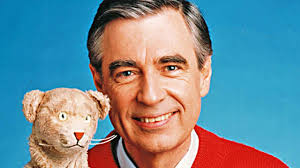
Fred Rogers with his Daniel Tiger in WON’T YOU BE MY NEIGHBOR?

Won’t You Be My Neighbor? is the surprisingly moving biodoc of Fred Rogers, the originator and host of the PBS children’s program The Mr. Roger’s Neighborhood.  I had missed this movie at the San Francisco International Film Festival where it submerged audiences in their hankies.

Of course, Won’t You Be My Neighbor? tells the story of the show.  But, more than that, it relates Rogers’ fierce passion for the plight of small children, and his need to protect them and help their emotional development.

What is so surprising is that Rogers’ sometimes laughably gentle affect sprang from such internal ferocity.  It turns that Rogers was a man who hated, hated, hated the moral emptiness and materialism of commercial children’s television.

His need to help children through difficult times drove him to explain the word “assassination” the day after RFK was killed.  And to demystify, clarify and normalize divorce and a host of other potentially child-traumatizing topics.  Utterly unafraid of (most) controversy in a timid medium, he was first and foremost the champion for small children, a cardigan-clad champion.

I am immune to Mr. Rogers nostalgia because I am too old to have watched the show as a kid, and it was no longer a first-run show when my own kid came of age.  So I was surprised to find myself choked with emotion when Fred Rogers explained to a very skeptical Senator John Pastore the need to “make it clear that feelings are mentionable and manageable”.  As Rogers recited the lyrics of his song about having feelings and staying in control, Pastore visibly melted (and so did I).

In Won’t You Be My Neighbor?, Rogers’ family and his TV crew reveal their insider views of Rogers and his show.  The origins of the characters, the puppets, the songs and themes are explained.  But the core of Won’t You Be My Neighbor? is that Fred Rogers resolutely believed that every small child is deserving of love and has value, a view which has sadly become controversial among some.

SORRY TO BOTHER YOU: audacious and savagely funny

Lakeith Stanfield and Tessa Thompson in SORRY TO BOTHER YOU

The savagely funny social satire Sorry to Bother You rips both the excesses of 21st century capitalism and the popular response to those excesses – apathetic submissiveness.  This may be the most original American film of the year.

Sorry to Bother You is set with specificity in Oakland, but the story is about the greater corporate-dominated culture.  A sinister corporation named Worry Free flourishes by enlisting consumers to “lifetime contracts” for their employment and household needs; Worry Free clients/employees are provided for life with meals, housing (in barracks crammed with bunk beds) and clothing (hospital scrubs) in return for menial factory labor.  The Worry Free system, of course, is slavery.  Almost nobody cares about that – this is a vapid culture where the most popular TV game show is I Got the Shit Kicked Out of Me, where each week’s contestant is beaten and humiliated for mass entertainment.  Only the insurgent group Left Eye resists, with graffiti and guerilla actions.

Cassius (Lakeith Stanfield), a young man without prospects, is living in his uncle’s Oakland garage with his avant-garde artist girlfriend Detroit (Tessa Thompson).  Cassius is overjoyed to finally score a telemarketing job, even though his new boss explains that every applicant is hired.  Cassius’ telemarketing career is futile until he acts on a tip from an older colleague (Danny Glover) to “use your white voice”.  Suddenly, Cassius vaults to the top of the telemarketing world, and is promoted to make big money pitching Worry Free’s slave labor force to global manufacturers. This raises the question, when does “success” become “selling out”?

Complicating matters for Cassius, his former telemarketing buddies and Detroit take on The Man by organizing a union.  Cassius becomes both the butt of a viral YouTube video and estranged from his support system just as Worry Free’s founder (Armie Hammer) offers Cassius an even bigger opportunity.  Finding slavery not  profitable enough, Worry Free is about to launch what is horrifically called “the future of labor” – a sci-fi solution to create a work force “more durable and compliant” than human slaves.  If Cassius decides to expose the atrocities, how will the public react?

Sorry to Bother You is the first feature as writer-director for Bay Area artist and rapper Boots Riley,  It’s an impressive film debut for Riley, who has proven himself to be a first-rate social observer and satirist.

Lakeith Stanfield is excellent as the stoic, hunched Cassius, and so is the rest of the cast (Thompson, Glover, Steven Yuen, Omari Harwick, Germaine Fowler).  Armie Hammer’s performance as the unapologetically monstrous entrepreneur is delicious.  Kate Berlani sparkles as the new telemarketing “team leader”, who, having drank the Kool-Aid, spouts corporate management babble.

Sorry to Bother You is a riot – in the comedic sense and also as sociopolitical disruption.  Nary a joke goes awry, from Detroit’s self-crafted earrings to the security code in the corporate elevator.  And Riley plays a final joke for us (and on us) in the closing credits.

Movies to See Right Now

LEAVE NO TRACE

Please make every attempt to see the best movie of the year, now in Bay Area theaters: the emotionally powerful coming of age drama Leave No Trace from Debra Granik (Winter’s Bone). Superbly well-crafted, impeccably acted, thoughtful and emotionally powerful, it’s a Must See.

OUT NOW

  • First Reformed: Ethan Hawke stars in this bleak, bleak psychological thriller with an intense ending.
  • Three Identical Strangers is an astonishing documentary about triplets separated at birth that ranges from the exhuverance of discovering siblings to disturbing questions of social engineering.
  • American Animals is funny documentary/reenactment of a preposterous heist.
  • RBG is the affectionate and humanizing biodoc about that great stoneface, Ruth Bader Ginsburg.

ON VIDEO

My video pick was the best foreign film at the 2017 Cinequest, the Czech and Slovak drama The Teacher. It’s a visceral peek inside the everyday dread inherent in society behind the Iron Curtain. The Teacher can now be streamed on Amazon, iTunes and Vudu.

ON TV

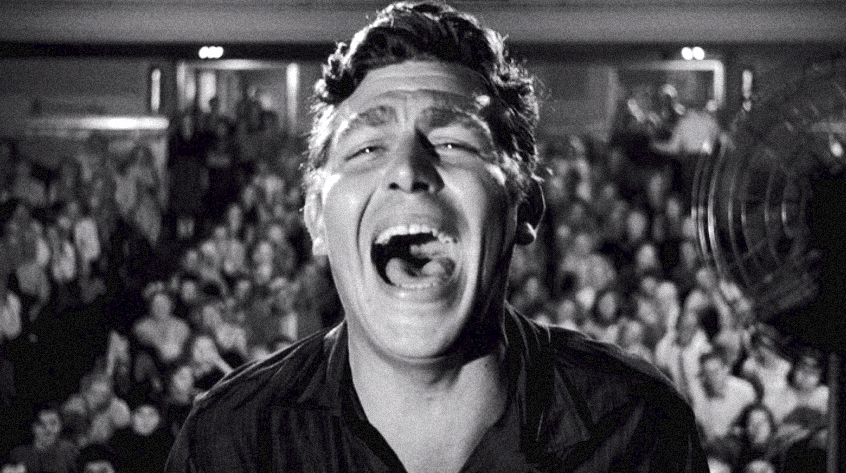
Andy Griffith in A FACE IN THE CROWD

On July 17, Turner Classic Movies is airing A Face in the Crowd. During every year of the 1960s, Andy Griffith entered the living rooms of most Baby Boomers as Sheriff Andy Taylor on The Andy Griffith Show and in guest appearances on Mayberry R.F.D. Younger folks knew him from another ten seasons on television starring as Matlock.

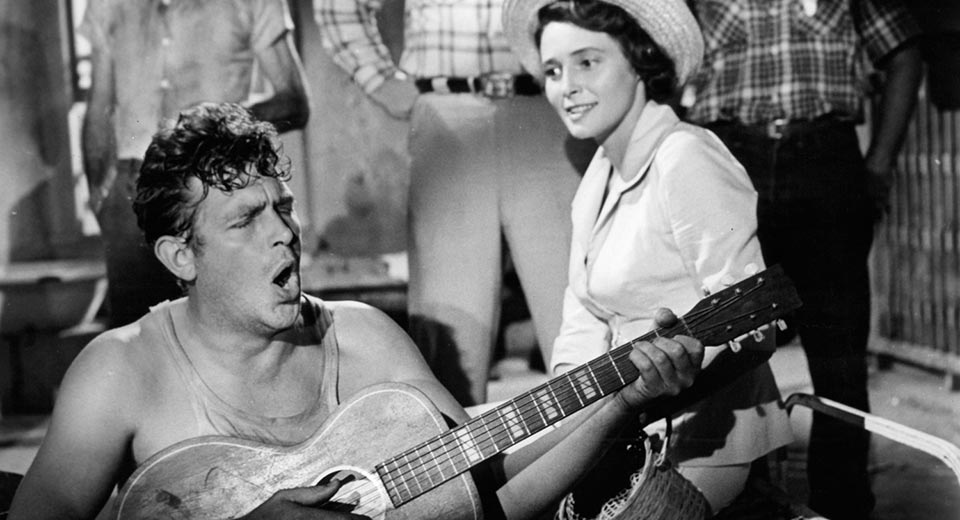
But, in his very first feature film, Griffith shed the likeability and decency that made him a TV megastar and became a searingly unforgettable villain. In the 1957 Elia Kazan classic A Face in the Crowd, Griffith plays Lonesome Rhodes, a failed country guitar picker who is hauled out of an Arkansas drunk tank by talent scout Marcia Jeffries (Patricia Neal). It turns out that he has a folksy charm that is dynamite in the new medium of television. He quickly rises in the infotainment universe until he is an A List celeb and a political power broker. To Jeffries’ horror, Rhodes reveals himself to be an evil, power-hungry megalomaniac. Jeffries made him – can she break him? The seduction of a gullible public by a good timin’ charmer predicts the careers of Ronald Reagan and George W. Bush, although Lonesome Rhodes is meaner than Reagan and less ideological than Bush.  The seduction of a gullible public by a corrupt demagogue also predicts Donald Trump although Lonesome Rhodes is far less narcissistic and fascistic than Trump.

Amazingly, A Face in the Crowd did not garner even a nomination for an Academy Award for Griffith – or for any of its other filmmakers. Today, it is well-regarded, having been added to the library of Congress’ preservation list in the US National Film Registry and rating 91% in the critical reviews tallied by Rotten Tomatoes. It is one of the greatest political films.

Andy Griffith and Patricia Neal in A FACE IN THE CROWD

Stream of the Week: THE TEACHER – a peek into communist dread

THE TEACHER
THE TEACHER

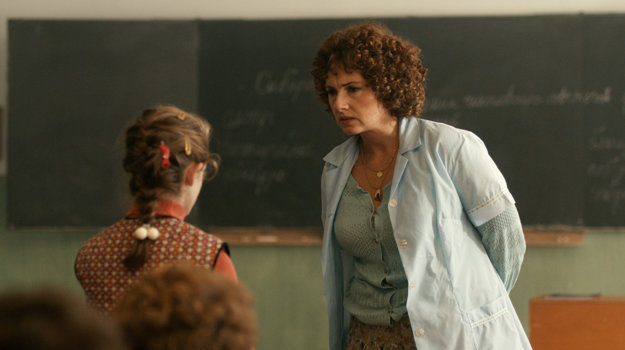
In the superb drama The Teacher, it’s the mid-1980s and the Iron Curtain is still defining Czechoslovakia; (The Teacher is a Czech movie in the Slovak language). The title character’s position as a high school teacher makes her a gatekeeper to the children’s futures, and she’s unaccountable because she’s a minor Communist Party functionary. Wielding blatant academic favoritism and even overt blackmail, she uses the advantage of her political status for her own petty benefit – coercing shopping errands, car rides, pastries and other favors from the parents of her students. Finally, she causes so much harm to one student that some of the parents rebel and seek her ouster.

Will the other parents support them? What of the parents who benefit from the regime? And what of the majority of the parents who must decide whether to risk their own futures? The risk is real: the regime has already reassigned one parent, a scientist, to a menial job after his wife had defected.

The Teacher benefits from a brilliant, award-winning performance from Zuzana Mauréry in the title role. What makes this character especially loathsome is that she’s not just heavy-handed, but grossly manipulative. Mauréry is a master at delivering reasonable words with both sweet civility and the unmistakable menace of the unspoken “or else”.

The acting from the entire company is exceptional, especially from Csongor Kassai, Martin Havelka and the Slovak director Peter Bebjak as aggrieved parents. Writer Petr Jarchovský has created textured, authentic characters. Director Jan Hrebejk not only keeps the story alive but adds some clever filmmaking fluorishes as he moves the story between flashbacks and the present.

The Teacher was the best foreign film at the 2017 Cinequest.  It can now be streamed on Amazon, iTunes and Vudu.

Movies to See Right Now

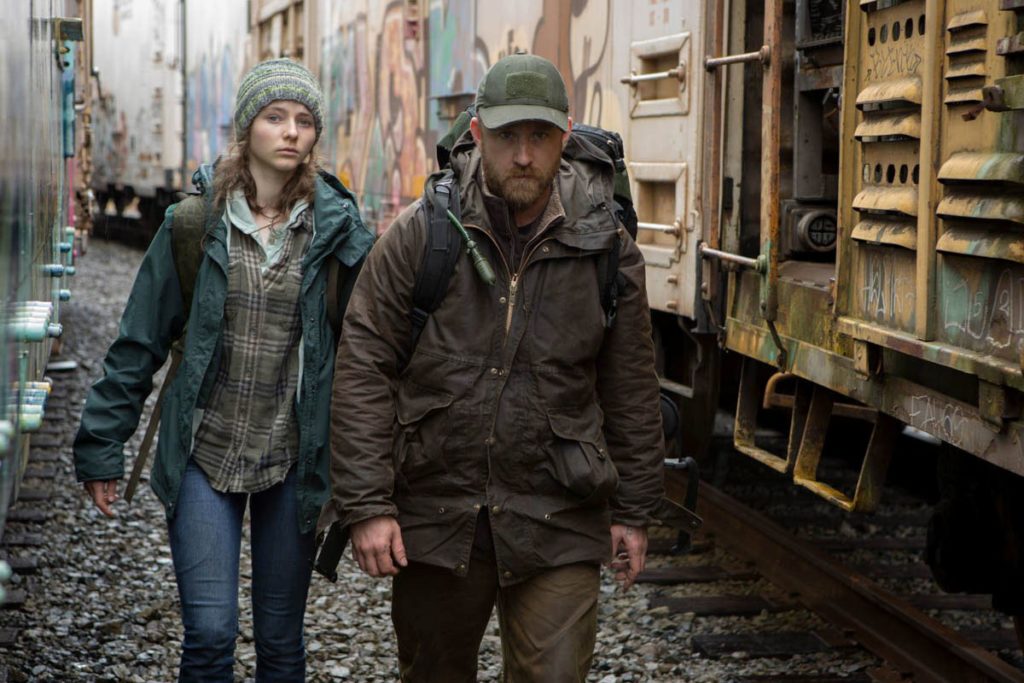
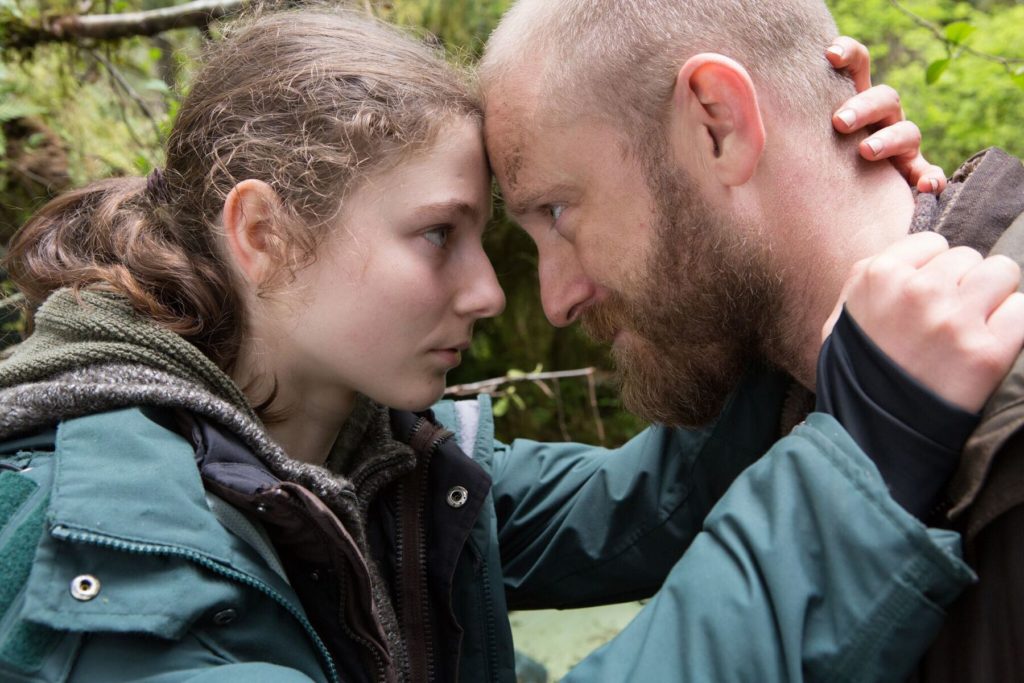
Thomasin Harcourt McKenzie and Ben Foster in a scene from Debra Granik’s LEAVE NO TRACE. Courtesy of SFFILM.

The best movie of the year so far is in Bay Area theaters: the emotionally powerful coming of age drama Leave No Trace from Debra Granik (Winter’s Bone).   Superbly well-crafted, impeccably acted, thoughtful and emotionally powerful, it’s a Must See.

OUT NOW

  • First Reformed: Ethan Hawke stars in this bleak, bleak psychological thriller with an intense ending.
  • Three Identical Strangers is an astonishing documentary about triplets separated at birth that ranges from the exhuverance of discovering siblings to disturbing questions of social engineering.
  • American Animals is funny documentary/reenactment of a preposterous heist.
  • RBG is the affectionate and humanizing biodoc about that great stoneface, Ruth Bader Ginsburg.

ON VIDEO

My DVD/Stream of the Week is still the taut 76 minutes of Caesar Must Die, in which Italian maximum security prison convicts put on a performance of Shakespeare’s Julius Caesar. It’s an excellent Shakespeare movie, and a fine prison movie, too. Caesar Must Die is available on DVD from Netflix and streaming on Amazon, iTunes, YouTube and Google Play.

ON TV

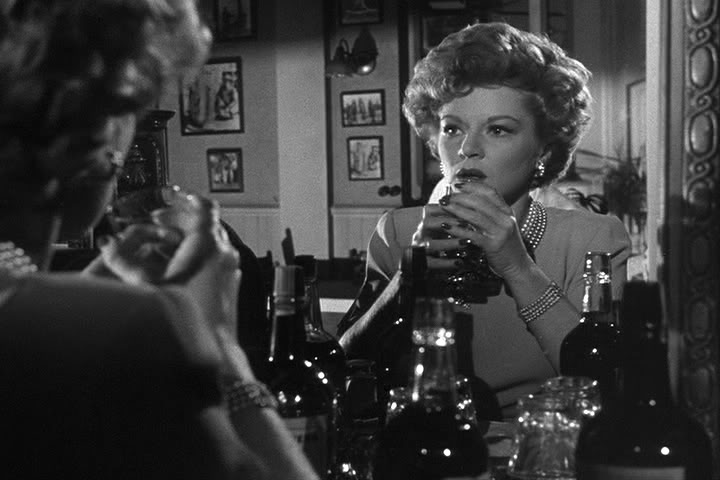
On July 10, Turner Classic Movies airs Key Largo (1948), one of the classic film noirs and still satisfying to this day. Trapped in a claustrophobic Florida island resort by a hurricane, Humphrey Bogart has to face down sadistic mobster Edward G. Robinson. 23-year-old Lauren Bacall was at her most appealing. Claire Trevor’s heartbreaking performance as a gangster’s moll aging out of her looks is one of her best.

Claire Trevor in KEY LARGO

THREE IDENTICAL STRANGERS: a Feel Good until we peel back the onion

THREE IDENTICAL STRANGERS

The startling documentary Three Identical Strangers begins with a young man’s first day on a college campus, being greeted by strangers who are convinced that they know him; that night, a fellow student connects him to his double, born on the same day. They turned out to be identical siblings separated at birth and adopted by different families.  Even more stunning, the two brothers soon find their identical triplet.

The first third of Three Identical Strangers is a wonderful Feel Good story of family discovery.  But then we find that the triplets’ separation had been orchestrated as part of a  longitudinal study of nurture vs. nature.  Researchers INTENTIONALLY separated identical twins and placed them with families that the researchers kept in the dark. The placements occurred AFTER the twin babies had bonded together in the crib for many months.

This study was not detached observation, it was human experimentation.  As details reminiscent of Josef Mengele unfold,  the fact that both the researcher and the adoption agency were Jewish becomes even more chilling.

A film that covers much of the same factual territory, Twinning Reaction, premiered two years ago at Cinequest.  Twinning Reaction focuses on the study; we meet several sets of twins, and the triplets are the jaw-dropping final act.   Three Identical Strangers focuses on the triplets and then takes a more current dive into the study.  Twinning Reaction is not yet available to stream, but it will be playing at the San Francisco Jewish Film Festival this July and August.

Three Identical Strangers won the Special Jury Prize for Storytelling at this year’s Sundance Film Festival.  It also played at this year’s San Francisco International Film Festival (SFFILM).  Well-spun, this is an amazing story.

LEAVE NO TRACE: his demons, not hers

Thomasin Harcourt McKenzie and Ben Foster in a scene from Debra Granik’s LEAVE NO TRACE.  Courtesy of SFFILM.

Here is the best movie of 2018 – so far – the unforgettable coming of age film Leave No Trace. Ben Foster and Thomasin McKenzie star as a dad-daughter team who challenge conventional thinking about homelessness and healthy parenting.    Leave No Trace is writer-director Debra Granik’s first narrative feature since her Winter’s Bone (which I had rated as the best film of 2010).

When we meet Will (Foster) and his daughter Tom (McKenzie), they are engaging in extremely low impact camping in a fern-rich Oregon forest, to the point of solar cooking foraged mushrooms on a mylar sheet.  Dad and daughter are both survivalist experts and work together as a highly trained team.  They have the fond, respectful, communicative relationship that most families with teen children aspire to but can only fantasize about.

But Will and Tom are not on vacation. They do not consider themselves homeless, because the forest is their home.   However, their lifestyle just isn’t consistent with contemporary thinking about child welfare.  Furthermore, living in a public park is illegal,and when they are discovered, social service authorities are understandably and justifiably concerned.  Investigators find Tom to be medically and emotionally healthy, Will to be free of drug or alcohol abuse, and there has been no child abuse or neglect – other than having ones child living outdoors and not going to school.

Will is a veteran who has been scarred by his military service, and he is clearly anti-social.  But Will is not your stereotypical PTSD-addled movie vet.  He is a clear thinker.  His behavior, which can range to the bizarre, is not impulsive but deliberate.

Fortunately, the Oregon, social services authorities are remarkably open-minded, and they place Will and Tom in a remote rural setting in their own house at a rural Christmas Tree farm.  Will can work on the farm, Tom can go the school, and there’s a liberal non-denominational church filled with kind folks.  It’s a massive accommodation to Will and Tom’s lifestyle, only with the additions of living under a roof and public education.

Tom blossoms with social contact, and particularly enjoys the local 4-H and one kid’s pet rabbit named Chainsaw.  Tom begins to understand how much she needs human connection – and not just with her dad,

But Will can’t help but feel defeated.  When Tom suggests that they try to adapt to their new setting, he scowls, “We’re wearing their clothes, we’re living in their house, we’re eating their food, we’re doing their work. We’ve adapted”.  She argues, “Did you try?”, “Why are we doing this?”, and “Dad, this isn’t how it used to be”.

Ben is so damaged that his parenting can nurture Tom for only so long.  Leave No Trace is about how he has raised her to this point.  Has he imparted his demons to her?  Has he helped her become strong and grounded enough to grow without him?

Thomasin Harcourt McKenzie and Ben Foster in a scene from Debra Granik’s LEAVE NO TRACE. Courtesy of SFFILM.

Winter’s Bone launched the career of Jennifer Lawrence, and Leave No Trace might do the same for newcomer Thomasin McKenzie.  McKenzie is riveting as she authentically takes Tom from a parented child to an independent young woman.  At the San Francisco International Film Festival screening, producer and co-writer Anne Rosellini said “there’s an ‘otherness’ to McKenzie,” who had “tremendous insight into the character”.  Rosellini added that McKenzie and Ben Foster bonded before the shoot, as they rehearsed with a survivalist coach.

Foster is no stranger to troubled characters (The Messenger, Rampart, Hell or High Water).  Here, he delivers a remarkably intense and contained performance as a man who will not allow himself an outburst no matter what turbulence roils inside him.  Rosellini noted that “Will is elusive, a mysterious character to everybody”.  It’s a performance that will be in the conversation about Oscar nominations.  Actors Jeff Kober, Dale Dickey, Dana Millican and Isaiah Stone (the little brother in Winter’s Bone) are also excellent in smaller roles.

Leave No Trace is thoughtful and emotionally powerful.  Superbly well-crafted and impeccably acted, it’s a Must See.