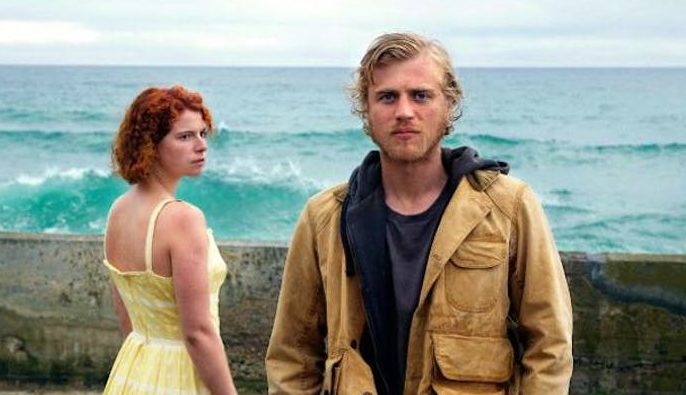
The best movie of the year so far is in at least one Bay Area theater: the emotionally powerful coming of age drama Leave No Trace from Debra Granik (Winter’s Bone).
OUT NOW
First Reformed: Ethan Hawke stars in this bleak, bleak psychological thriller with an intense ending.
American Animals is funny documentary/reenactment of a preposterous heist.
RBG is the affectionate and humanizing biodoc about that great stoneface, Ruth Bader Ginsburg.
ON VIDEO
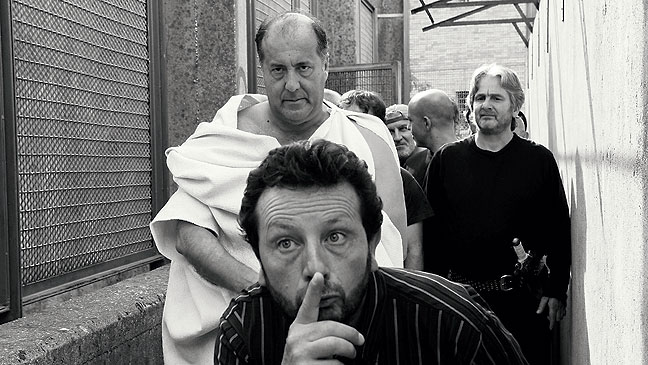
My DVD/Stream of the Week is the taut 76 minutes of Caesar Must Die, in which Italian maximum security prison convicts put on a performance of Shakespeare’s Julius Caesar. It’s an excellent Shakespeare movie, and a fine prison movie, too. Caesar Must Die is available on DVD from Netflix and streaming on Netflix Instant, Amazon, iTunes, YouTube and Google Play.
ON TV
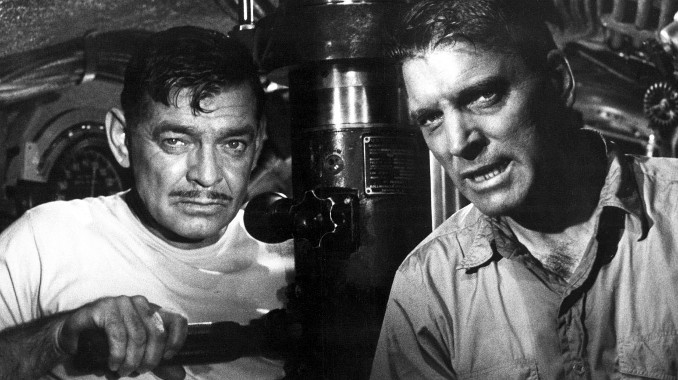
The claustrophobic setting of a submarine movie can really propel a drama by magnifying the story’s conflict. Today, Turner Classic Movies plays Run Silent, Run Deep, in which the primary conflict is between two of the sub’s officers, played by the two charismatic stars Clark Gable and Burt Lancaster. Run Silent, Run Deep is not in the class of Das Boot or The Enemy Below, but it’s still one of the best of the genre.
Clark Gable and Burt Lancaster in RUN SILENT, RUN DEEP
In the taut 76 minutes of Caesar Must Die, convicts in an Italian maximum security prison put on a performance of Shakespeare’s Julius Caesar. Every year, there’s a drama laboratory at this prison. It turns out that Julius Caesar is a perfect choice.
Julius Caesar is, most of all, a play about high stakes. And high stakes, where a decision can result in life or death or power or failure or freedom or incarceration, is something these guys profoundly understand – and have had time to reflect upon. During rehearsal, one actor snaps at the director, “I’ve been in here for 20 tears, and you’re telling me not to waste time?”. When Cassius states that he has wagered his life on the outcome of one battle and lost, the line is more powerful because we know the actor playing Cassius is himself a lifer.
When the prisoners audition, we learn that their sentences range from 14 years to “life meaning life”. Most of them are naturalistic and very effective actors. The guy who plays Caesar is especially powerful in his acting and reacting.
The Julius Caesar story unfolds in black-and-white as the prisoners rehearse and then play the early scenes in the contemporary prison setting. Segments from the performance itself – about 15 minutes worth – are filmed in color.
It all works very well as a successful Shakespeare movie – and as a prison movie, too. Caesar Must Die is available on DVD from Netflix and streaming on Netflix Instant, Amazon, iTunes, YouTube and Google Play.
My pick for the year’s best film so far, Leave No Trace, will be released next week. In the meantime, don’t forget to catch the previously ultra-rare The Man Who Cheated Himself Saturday and Sunday on TCM’s Noir Alley. The psychological thriller First Reformed is a significant work of art, but it’s a tough watch.
OUT NOW
First Reformed: Ethan Hawke stars in this bleak, bleak psychological thriller with an intense ending.
American Animals is funny documentary/reenactment of a preposterous heist.
RBG is the affectionate and humanizing biodoc about that great stoneface, Ruth Bader Ginsburg.
ON VIDEO
This week’s video pick is You Will Be My Son, a father-son saga with a thrilling and operatic ending. Set in French wine country, it’s also a pretty fair food porn movie. You Will Be My Son is available on DVD from Netflix and streaming from Tunes, Vudu, YouTube and Google Play.
ON TV
On June 27, Turner Classic Movies will present one of my very favorite Alfred Hitchcock films, North by Northwest, with perhaps the greatest ever collection of iconic set pieces – especially the cornfield and Mount Rushmore scenes, but also those in the UN Building, hotel, mansion, art auction and the 20th Century Limited train – they’re all great. Back in the days of the Production Code, some filmmakers could deliver sexual and erotic content without actually showing nudity or simulated sexual activity; one of the best examples is the flirtation between Cary Grant and Eva Marie Saint on the train (and it even culminates with the notorious allegory of the train penetrating the tunnel).
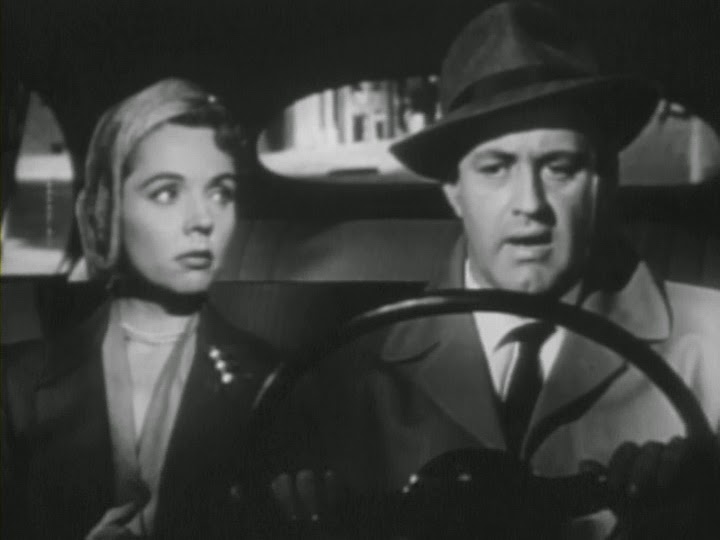
Jane Wyatt amd Lee J. Cobb in THE MAN WHO CHEATED HIMSELF
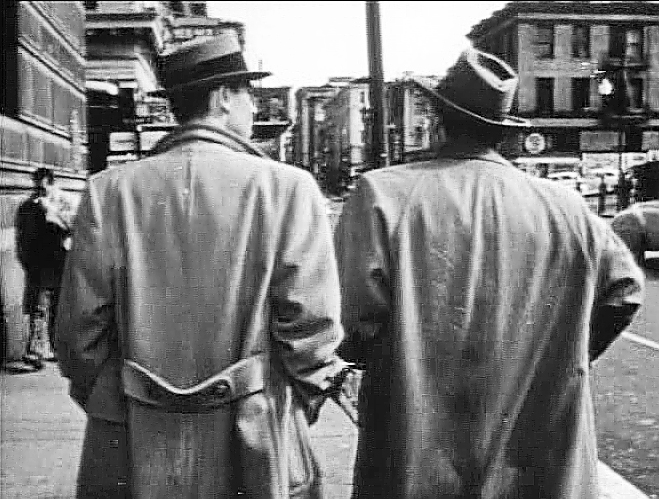
In The Man Who Cheated Himself, which I saw at the Noir City festival earlier this year, a cop falls for a dame who makes him go bad. But it’s not just any cop and not just any dame.
The cop is Ed, a seasoned and cynical pro who knows better. He is played by Lee J. Cobb, whom Czar of Noir Eddie Muller called “the most blustery actor this side of Rod Steiger”. Cobb is known for playing Juror 3, the primary antagonist to Henry Fonda, in 12 Angry Men and the ruthless mob boss Johnny Friendly in On the Waterfront. Ed seems impervious to human emotion and says things like, “You’re a big girl. Cut the tantrums”.
The dame is the much wealthier – and married – socialite Lois (Jane Wyatt). Lois is a puddle of capriciousness and carnality. She has the same fluttery appeal as Mary Astor’s Brigid O’ Shaunessy in The Maltese Falcon.
Wyatt rarely got a chance to play as mercurial a character as Lois. Of course, she’s best known as the mid-century suburban mom/wife in Father Knows Best, rock steady and super square. Before that Wyatt worked in film noir, but not as the femme fatale. She was in Pitfall as the good wife that Dick Powell gets bored with when Lizabeth Scott comes along. In Boomerang! she was the heroic DA’s wife. She played the wife of a murderer who falls for her brother-in-law in House by the River and the sister in a message picture, Gentleman’s Agreement.
But in The Man Who Cheated Himself, Wyatt got to uncork more hysterical unreliability, sexual predation and neediness than in all of her other roles combined. You know when you see a woman and think, She’s trouble? Well, Lois is trouble.
For all of his world-weariness, Ed is really enjoying his affair with Lois. Despite knowing better, he is in deep. As he says, “She’s good for me. She’s no good, but that’s the way it is.”
Lois impulsively shoots her husband, and, in the moment, Ed makes the fateful decision to cover it up.
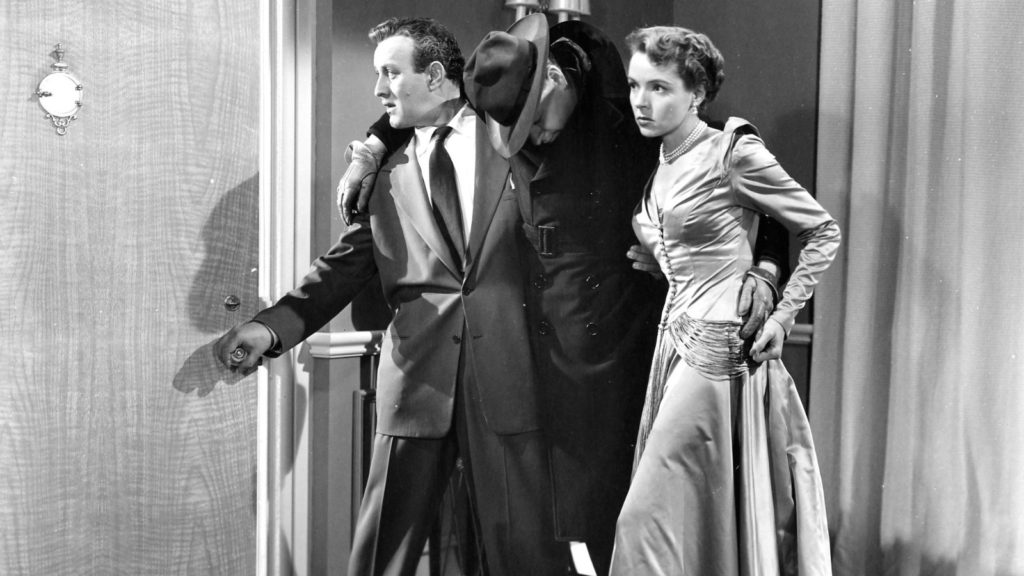
To complicate matters, Ed’s younger brother Andy (John Dall) has followed his brother on to the police force and just been promoted from walking a beat to detective. This murder is his very first case and he’s really eager to show his big brother proud. It turns out that Andy is smart and has the makings of a first class detective.
John Dall and Lee J. Cobb in THE MAN WHO CHEATED HIMSELF
Writers Seton I. Miller and Philip MacDonald cleverly plotted The Man Who Cheated Himself so Ed and Lois get not one, but two, lucky breaks that make it look like they are getting away with it. But then Andy’s young wife and a CHP officer help Andy link the pieces together. Miller and MacDonald have embedded lots of humor in double entendres and absurdly close escapes. One of the funniest bits is an eyewitness, the earnestly unhelpful Mr. Quimby (Charles Arnt).
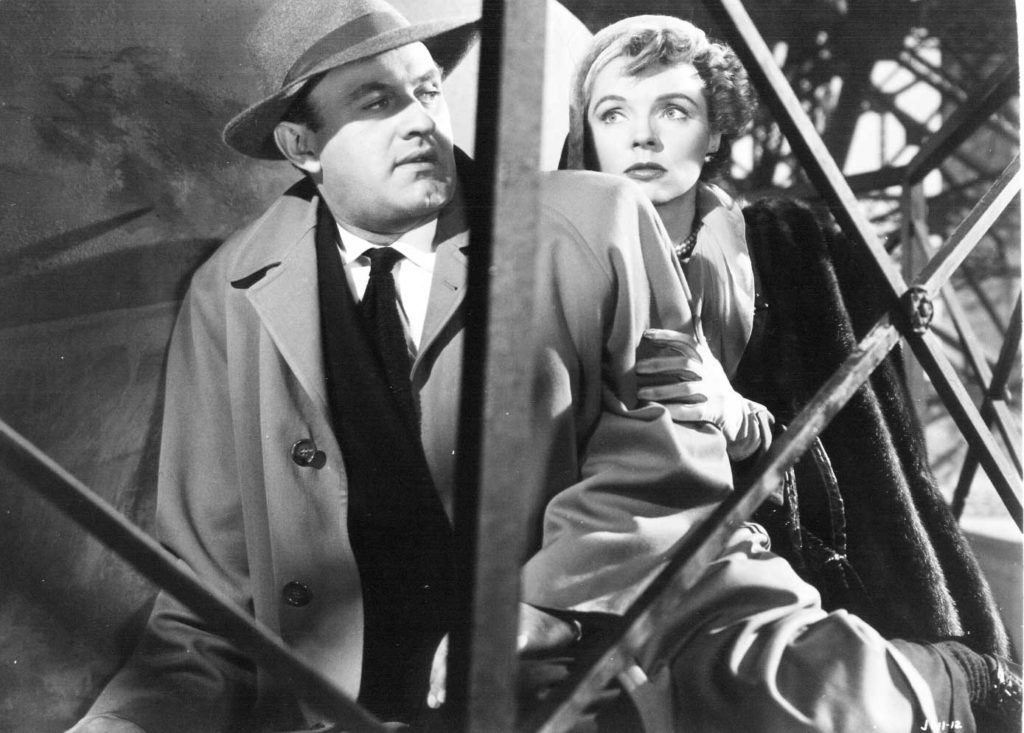
Are Ed and Lois going to get away with it? Well, this is noir. They find themselves cornered at Fort Point, the windiest spot on the west coast of North America, The notorious wind (actually underplayed in the movie) helps build the suspense.
Lee J. Cobb and Jane Wyatt in THE MAN WHO CHEATED HIMSELF
And what an ending! In their final encounter, Lois is going one way – the way that those privileged by wealth and good looks always go. Ed is going in the other direction – the way every noir protagonist goes when he falls for a bad dame. He lights a cigarette and their eyes lock wordlessly; when she leaves, we see in his eyes whether it was all worth it.
The noir in The Man Who Cheated Himself comes from the falling-for-the-wrong-woman theme and the snappy, sarcastic dialogue. There’s no noir camerawork with looming shadows, venetian-blinds-across-the-face and cigarette smoke dancing to the ceiling here.
But there are plenty of glorious mid-century San Francisco locations – hills, mansions of the nobs, grittier streets and the waterfront (back when it was a sketchy working port). It’s the San Francisco that I remember as a child in the 1950s, with women wearing gloves during the day and human-tended toll booths at the Golden Gate Bridge (when the toll was collected northbound, too!).
And, odd for a San Francisco-set noir, it is definitely not fog-shrouded. The day I saw The Man Who Cheated Himself was one of those gorgeous sunny days that San Francisco gets in the winter – and that’s what the movie looks like.
The Man Who Cheated Himself’s director was the otherwise undistinguished journeyman Felix Feist. Feist made a handful of other noirs, including The Threat with Charles McGraw as a vengeful hood, Tomorrow is Another Day with an irresistible Ruth Roman and The Devil Thumbs a Ride with Lawrence Tierney. Then Feist left the movies to direct over seventy episodes of TV shows.
The raison d‘être of the Noir City film festivals is to raise money for the Film Noir Foundation’s restoration of classic film noir. The FNF just restored The Man Who Cheated Himself so it could be seen again in a theater for the first time in decades. It’s not yet available to stream, but Turner Classic Movies will air it on Muller’s Noir Alley series on June 23 and 24.
Lee J. Cobb and Jane Wyatt in THE MAN WHO CHEATED HIMSELF
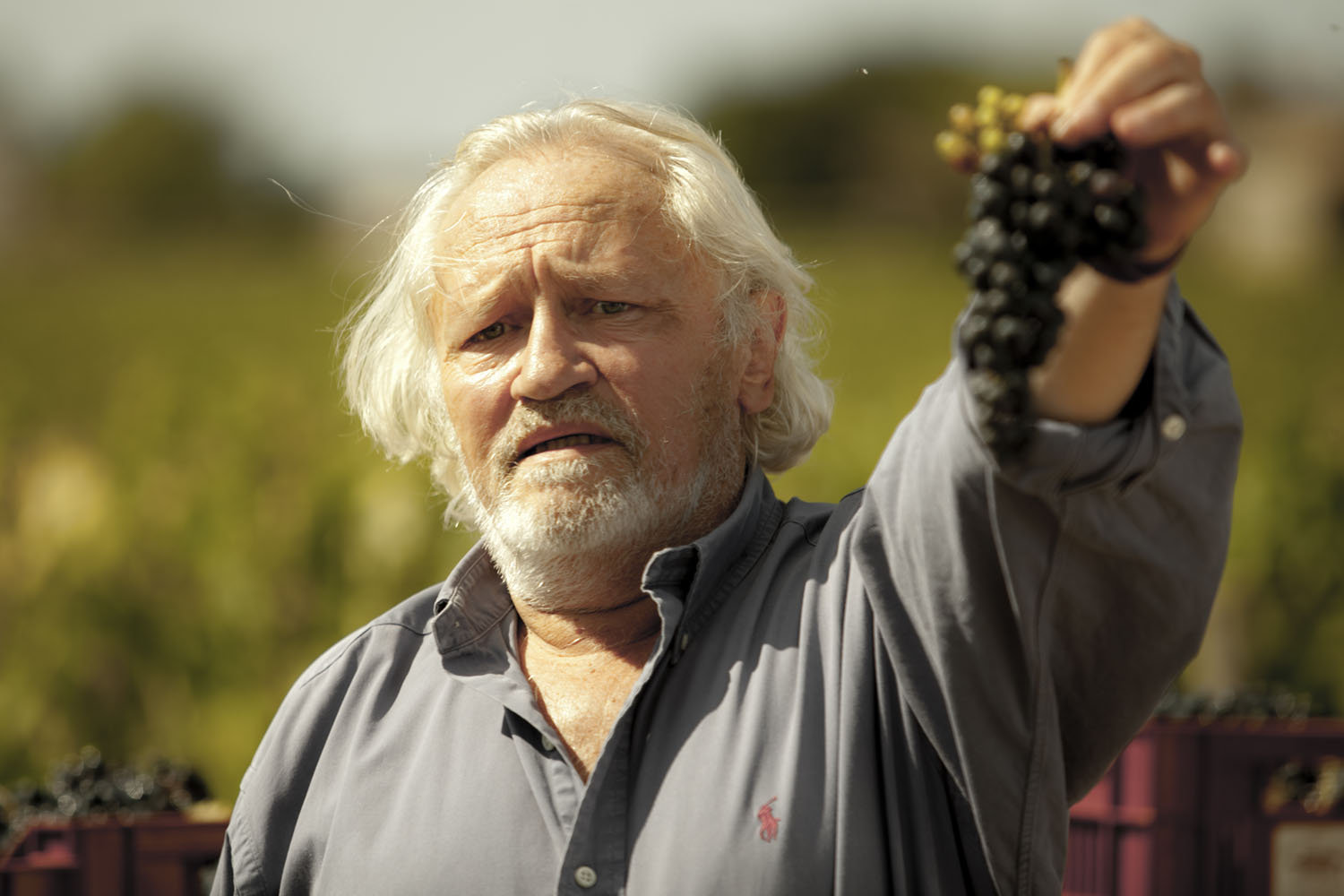
Niels Arestrup (A Prophet, War Horse) stars as the owner of French wine estate who places impossible expectations on his son, with lethal results. The poor son has gotten a degree in winemaking, has worked his ass off on his father’s estate for years and has even married well – but it’s just not enough for his old man. The father’s interactions with the son range from dismissive to deeply cruel.
The father’s best friend is his longtime estate manager, whose health is faltering. The son is the natural choice for a successor, but the owner openly prefers the son’s boyhood friend, the son of the manager. The first half of You Will Be My Son focuses on the estate owner’s nastiness toward his son, which smolders throughout the film. But then the relationship between the sons turns from old buddies to that of the usurper and the usurped. And, finally, things come down to the decades-long relationship between the two old men.
Deep into the movie, we learn something about the father that colors his view of his son. And then, there’s a startling development that makes for a thrilling and operatic ending.
It seems to be the season for psychological thrillers, and it’s hard to say which of Beast and First Reformed has the more surprising and powerful ending.
OUT NOW
Beast: Jessie Buckley is a force of nature in this psychological thriller.
First Reformed: Ethan Hawke stars in this bleak, bleak psychological thriller with an intense ending.
American Animals is funny documentary/reenactment of a preposterous heist.
RBG is the affectionate and humanizing biodoc about that great stoneface, Ruth Bader Ginsburg.
A Quiet Place is as satisfyingly scary as any movie I’ve seen in a good long time. Very little gore and splatter, but plenty of thrills. I’m not a big fan of horror movies, but I enjoyed and admired this one.
ON VIDEO
My Stream of the Week is a thinking person’s psychological thriller from Cinequest, Prodigy. You can now stream Prodigy on Amazon, iTunes, Vudu YouTube and Google Play.
ON TV
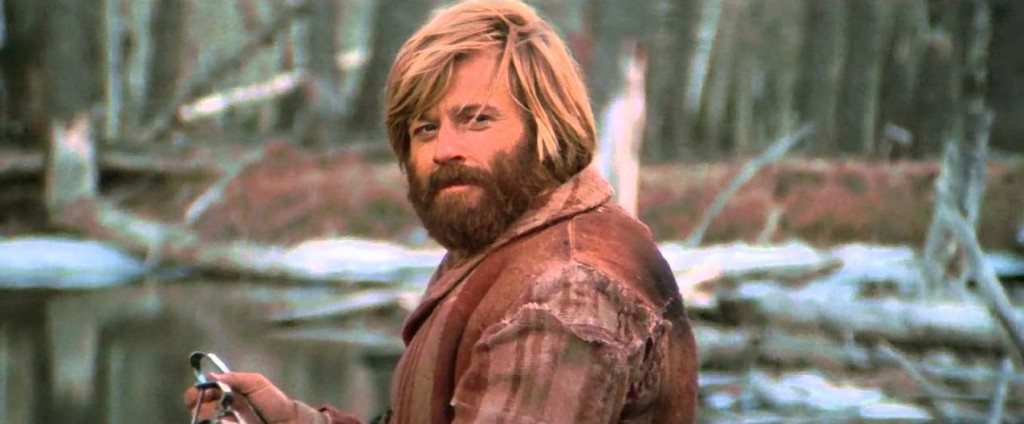
On June 16, Turner Classic Movies will air Sydney Pollack’s under recognized 1972 masterpiece Jeremiah Johnson, which features a brilliantly understated but compelling performance by Robert Redford. If you want to understand why Redford is a movie star, watch this movie. Give lots of credit to Pollack – it’s only 108 minutes long, and today’s filmmakers would bloat this epic tale by 40 minutes longer.
The psychological thriller Prodigy begins with a psychologist (Richard Neil) being brought to a secret government “black site” to interview a dangerous prisoner. When he receives an orientation, he and we expect to see a superhuman sociopath like Hannibal Lector. But he enters the secure room to face a freckled-face nine-year-old girl (Savannah Liles). Her arms are pinned to her chair with restraints. We learn that there is an understandable reason for this.
She is abnormal in every way – in her super intelligence, in her telekinetic powers and in her capacity for performing monstrous and lethal acts. The two embark on a game of wits with very high stakes. There’s a deadline (literally) so the game is also a race against the clock.
It’s the first feature for writer-directors Alex Haughey and Brian Vidal. Haughey and Vidal have bet their movie, in large part, on the performance of a nine-year-old actor. Savannah Liles is exceptional as she ranges between a very smart little girl and a monstrous psychopath and between a vulnerable child and a person who has made herself invulnerable. It’s a very promising performance.
In the Cinequest program notes, Pia Chamberlain described Prodigy as “reminiscent of a cerebral episode of the Twilight Zone“, which is pretty apt. Just like the best of Rod Serling, Prodigy’s compact story-telling takes us to an environment that we can recognize, but which has different natural laws than the ones under which we operate.
Filmmakers have shocked us before with the juxtaposition of innocent looking children and their heinous deeds Sometimes those children have been created fundamentally evil (The Bad Seed, Rosemary’s Baby, The Omen) and sometimes possessed by evil (The Exorcist). Prodigy takes a different tack – exploring how a trauma can produce monstrous behavior and whether evil behavior is reversible.
Prodigy is a thinking person’s edge-of-the-seat thrill ride. I’m looking forward to the next work from Haughey and Vidal. Note that this trailer is in color, but the version of the movie that I screened at its world premiere at Cinequest was in black and white. You can now stream Prodigy on Amazon, iTunes, Vudu, YouTube and Google Play.
This week, I’m featuring two psychological thrillers with powerful endings and a comic heist documentary.
OUT NOW
Beast: Jessie Buckley is a force of nature in this psychological thriller.
First Reformed: Ethan Hawke stars in this bleak, bleak psychological thriller with an intense ending.
American Animals is funny documentary/reenactment of a preposterous heist.
RBG is the affectionate and humanizing biodoc about that great stoneface, Ruth Bader Ginsburg.
A Quiet Place is as satisfyingly scary as any movie I’ve seen in a good long time. Very little gore and splatter, but plenty of thrills. I’m not a big fan of horror movies, but I enjoyed and admired this one.
ON VIDEO
My Stream of the Week is the very funny and sentimental The Last Movie Star with 82-year-old Burt Reynolds and Ariel Winter (Alex Dunphy in Modern Family). You can stream it on Amazon, iTunes, Vudu, YouTube and Google Play.
ON TV
FOR A FEW DOLLARS MORE
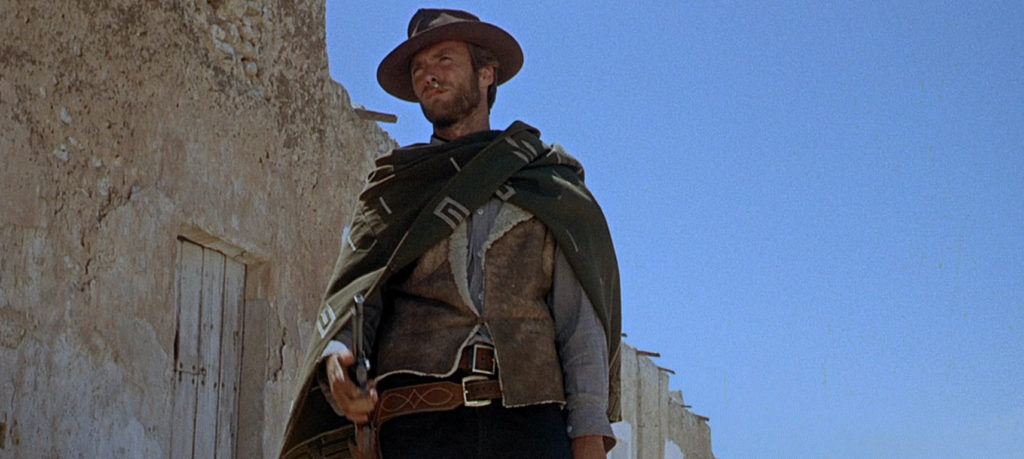
Faithful readers know that I revere the Sergio Leone/Clint Eastwood/Ennio Morricone spaghetti westerns. On June 13, Turner Classic Movies will be broadcasting the three great Sergio Leone spaghetti Westerns A Fistful of Dollars, For a Few Dollars More and The Good, the Bad and the Ugly. All star Clint Eastwood and feature wonderfully idiosyncratic scores by Ennio Morricone.
Eastwood’s character in the trilogy is referred to in film literature as “the man with no name”. But actually, the character is named Joe, Monco and Blondie in the three movies, respectively.
Here’s Morricone’s theme for A Fistful of Dollars.
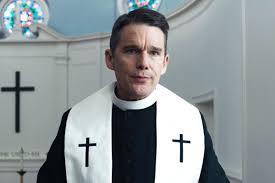
In the emotionally bleak psychological drama First Reformed, Ethan Hawke plays Toller, the clergyman in charge of a historic church with about ten parishioners. The church survives as the museum-and-gift-shop arm of a modern megachurch helmed by Reverend Jeffers (Cedric the Entertainer billed as Cedric Kyles). Toller is a very troubled guy, who is consumed by a journalling project, which he says brings him no peace, but only self-pity. Toller is content to perform a weekly service and guide the odd tourist through the church. That is all about to be disrupted by the church’s upcoming 250-year anniversary celebration, which Toller dreads.
Toller is asked by one of his tiny flock (Amanda Seyfried) to counsel her very depressed husband (Phillip Ettinger). Few understand depression as well as Toller, who, we learn, has joined the church because of a grievous family loss. He is also obsessively thinking and over-thinking a crisis, not so much of faith, but of purpose. And, it is revealed that Toller is in physical pain from a very menacing medical condition.
Toller tells the young husband that balancing hope and despair is life itself. Indeed, most of First Reformed focuses on the despair. As First Reformed gets darker and darker, it become more and more intense, all the way up to a ticking bomb of a thriller ending. The ending is such a squirm-in-your-seat nail-biter that it’s hard to watch, but the payoff is worth it.
Amanda Seyfried in FIRST REFORMED
Writer-director Paul Schrader, has created a serious work of art in First Reformed. It is a very still movie with a very spare soundtrack. The aspect of the frame is squarish and sometimes square. Everything about First Reformed is distilled down to its concentrated core. Schrader wrote Taxi Driver,Raging Bull and The Last Temptation of Christ, and directed Affliction and Auto Focus. So he is no stranger to plumbing the depths of human internal crises.
Ethan Hawke is excellent as Toller. Hawke’s performances are usually fidgety. Not here. Hawke is notable for his stillness as he plays a man who flings himself into reflection and away from social entanglements.
The supporting performances are superb: Amanda Seyfried, Cedric the Entertainer, Bill Hoag as Toller’s lay assistant and Victoria Hill as the woman who wants to rekindle a connection that Toller doesn’t have the emotional capacity for. All are suitably understated; this movie is so stripped-down to concentrate on the profound, there’s just no room for a Big Performance.
Phillip Ettinger is wonderful as the depressed young husband. This is a smart, committed and sensitive character who isn’t at all wrong – he’s just obsessing and going off the rails.
Who can be saved from despairing at the human condition? And what does it take? First Reformed provides an answer in its exceptionally powerful ending.
Burt Reynolds and Ariel Winter in THE LAST MOVIE STAR
In The Last Movie Star, an aged action movie star (Burt Reynolds playing someone very similar to Burt Reynolds) examines his life choices. It’s very funny and sentimental (in a good way).
Burt plays a thinly disguised version of himself – a retired movie star named Vic Edwards, who had played halfback at Tennessee instead of Burt’s Florida State. The movie opens with opens with a clip of the 70s Burt from the Smokey and the Bandit era. But then there’s a stark cut to Burt today, looking every one of his eighty-two years. Vic is in a depressing veterinary waiting room, about to get bad news about his pet. We see that Vic lives a lonely existence, padding about his Beverly Hills home devoid of human recognition or contact.
Vic finds himself invited to be honored at a Nashville film festival. Flattered and excited, he flies off to find that, instead of a ego-boosting tribute, the festival unleashes one indignity after another. Humiliated and enraged, he goes on a rogue road trip to his hometown of Knoxville, where he gets the chance to reflect on his life and make an important amend.
His road trip partner is his film festival driver, a nightmare of Millennial self-absorption, drama and bad attitude played by Ariel Winter (Alex Dunphy in Modern Family). Winters’ character adds an Odd Couple thread to the comedy, and Winter brings down the house with a monologue on her history with psychotropic medication.
Director Adam Rifkin cleverly inserts the 82-year-old Burt into his own movies to interact with the 36-year-old Burt. We see Burt as one of the greatest guests ever on Tonight Show with Johnny Carson. And we see him in Deliverance, brandishing a bow-and-arrow and clad in a sleeveless neoprene vest – there has never been a more studly image in the history of cinema.
The key to Burt Reynolds’ appeal is that unique combination of virility, and charm, his stunning physicality leavened by his not taking himself too seriously. I’m ridiculously handsome, and isn’t that just ridiculous?
If you’re going to be sentimental, then be unashamedly sentimental. Rifkin takes this to heart, which makes The Last Movie Star so emotionally satisfying as well as so damn funny.
I saw The Last Movie Star at Cinequest, where it was warmly received by the festival audience. The Last Movie Star was released theatrically for about a minute-and-a-half (and on only ONE screen in the Bay Area). Fortunately, now you can stream it on Amazon, iTunes, Vudu, YouTube and Google Play.