SORRY TO BOTHER YOU: audacious and savagely funny

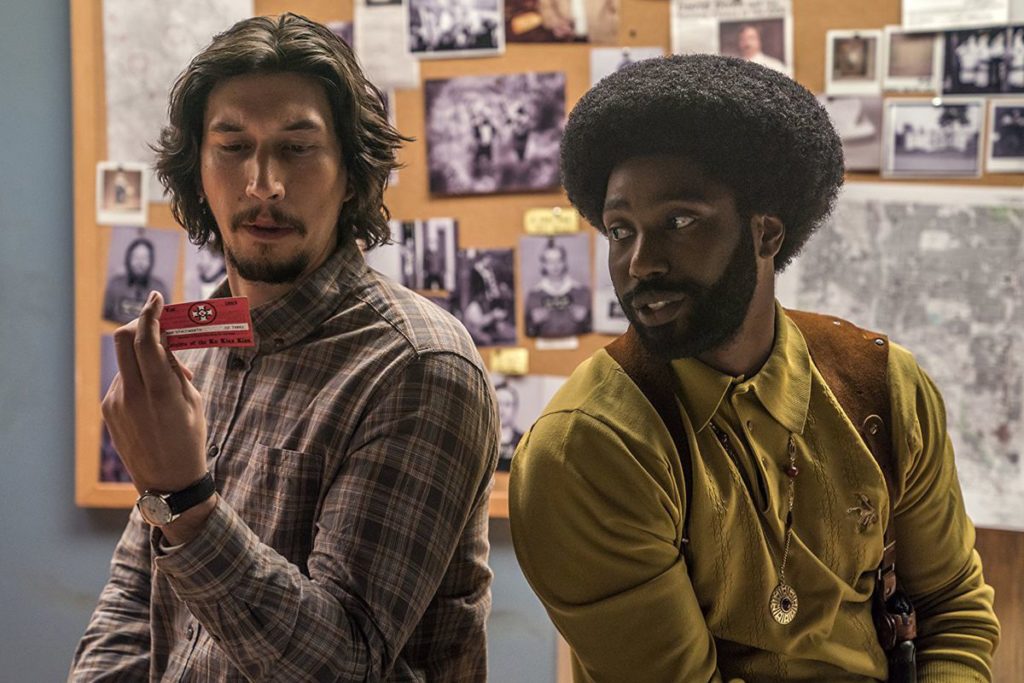
Lakeith Stanfield and Tessa Thompson in SORRY TO BOTHER YOU

The savagely funny social satire Sorry to Bother You rips both the excesses of 21st century capitalism and the popular response to those excesses – apathetic submissiveness.  This may be the most original American film of the year.

Sorry to Bother You is set with specificity in Oakland, but the story is about the greater corporate-dominated culture.  A sinister corporation named Worry Free flourishes by enlisting consumers to “lifetime contracts” for their employment and household needs; Worry Free clients/employees are provided for life with meals, housing (in barracks crammed with bunk beds) and clothing (hospital scrubs) in return for menial factory labor.  The Worry Free system, of course, is slavery.  Almost nobody cares about that – this is a vapid culture where the most popular TV game show is I Got the Shit Kicked Out of Me, where each week’s contestant is beaten and humiliated for mass entertainment.  Only the insurgent group Left Eye resists, with graffiti and guerilla actions.

Cassius (Lakeith Stanfield), a young man without prospects, is living in his uncle’s Oakland garage with his avant-garde artist girlfriend Detroit (Tessa Thompson).  Cassius is overjoyed to finally score a telemarketing job, even though his new boss explains that every applicant is hired.  Cassius’ telemarketing career is futile until he acts on a tip from an older colleague (Danny Glover) to “use your white voice”.  Suddenly, Cassius vaults to the top of the telemarketing world, and is promoted to make big money pitching Worry Free’s slave labor force to global manufacturers. This raises the question, when does “success” become “selling out”?

Complicating matters for Cassius, his former telemarketing buddies and Detroit take on The Man by organizing a union.  Cassius becomes both the butt of a viral YouTube video and estranged from his support system just as Worry Free’s founder (Armie Hammer) offers Cassius an even bigger opportunity.  Finding slavery not  profitable enough, Worry Free is about to launch what is horrifically called “the future of labor” – a sci-fi solution to create a work force “more durable and compliant” than human slaves.  If Cassius decides to expose the atrocities, how will the public react?

Sorry to Bother You is the first feature as writer-director for Bay Area artist and rapper Boots Riley,  It’s an impressive film debut for Riley, who has proven himself to be a first-rate social observer and satirist.

Lakeith Stanfield is excellent as the stoic, hunched Cassius, and so is the rest of the cast (Thompson, Glover, Steven Yuen, Omari Harwick, Germaine Fowler).  Armie Hammer’s performance as the unapologetically monstrous entrepreneur is delicious.  Kate Berlani sparkles as the new telemarketing “team leader”, who, having drank the Kool-Aid, spouts corporate management babble.

Sorry to Bother You is a riot – in the comedic sense and also as sociopolitical disruption.  Nary a joke goes awry, from Detroit’s self-crafted earrings to the security code in the corporate elevator.  And Riley plays a final joke for us (and on us) in the closing credits.

Movies to See Right Now

LEAVE NO TRACE

Please make every attempt to see the best movie of the year, now in Bay Area theaters: the emotionally powerful coming of age drama Leave No Trace from Debra Granik (Winter’s Bone). Superbly well-crafted, impeccably acted, thoughtful and emotionally powerful, it’s a Must See.

OUT NOW

  • First Reformed: Ethan Hawke stars in this bleak, bleak psychological thriller with an intense ending.
  • Three Identical Strangers is an astonishing documentary about triplets separated at birth that ranges from the exhuverance of discovering siblings to disturbing questions of social engineering.
  • American Animals is funny documentary/reenactment of a preposterous heist.
  • RBG is the affectionate and humanizing biodoc about that great stoneface, Ruth Bader Ginsburg.

ON VIDEO

My video pick was the best foreign film at the 2017 Cinequest, the Czech and Slovak drama The Teacher. It’s a visceral peek inside the everyday dread inherent in society behind the Iron Curtain. The Teacher can now be streamed on Amazon, iTunes and Vudu.

ON TV

Andy Griffith in A FACE IN THE CROWD

On July 17, Turner Classic Movies is airing A Face in the Crowd. During every year of the 1960s, Andy Griffith entered the living rooms of most Baby Boomers as Sheriff Andy Taylor on The Andy Griffith Show and in guest appearances on Mayberry R.F.D. Younger folks knew him from another ten seasons on television starring as Matlock.

But, in his very first feature film, Griffith shed the likeability and decency that made him a TV megastar and became a searingly unforgettable villain. In the 1957 Elia Kazan classic A Face in the Crowd, Griffith plays Lonesome Rhodes, a failed country guitar picker who is hauled out of an Arkansas drunk tank by talent scout Marcia Jeffries (Patricia Neal). It turns out that he has a folksy charm that is dynamite in the new medium of television. He quickly rises in the infotainment universe until he is an A List celeb and a political power broker. To Jeffries’ horror, Rhodes reveals himself to be an evil, power-hungry megalomaniac. Jeffries made him – can she break him? The seduction of a gullible public by a good timin’ charmer predicts the careers of Ronald Reagan and George W. Bush, although Lonesome Rhodes is meaner than Reagan and less ideological than Bush.  The seduction of a gullible public by a corrupt demagogue also predicts Donald Trump although Lonesome Rhodes is far less narcissistic and fascistic than Trump.

Amazingly, A Face in the Crowd did not garner even a nomination for an Academy Award for Griffith – or for any of its other filmmakers. Today, it is well-regarded, having been added to the library of Congress’ preservation list in the US National Film Registry and rating 91% in the critical reviews tallied by Rotten Tomatoes. It is one of the greatest political films.

Andy Griffith and Patricia Neal in A FACE IN THE CROWD

Stream of the Week: THE TEACHER – a peek into communist dread

THE TEACHER
THE TEACHER

In the superb drama The Teacher, it’s the mid-1980s and the Iron Curtain is still defining Czechoslovakia; (The Teacher is a Czech movie in the Slovak language). The title character’s position as a high school teacher makes her a gatekeeper to the children’s futures, and she’s unaccountable because she’s a minor Communist Party functionary. Wielding blatant academic favoritism and even overt blackmail, she uses the advantage of her political status for her own petty benefit – coercing shopping errands, car rides, pastries and other favors from the parents of her students. Finally, she causes so much harm to one student that some of the parents rebel and seek her ouster.

Will the other parents support them? What of the parents who benefit from the regime? And what of the majority of the parents who must decide whether to risk their own futures? The risk is real: the regime has already reassigned one parent, a scientist, to a menial job after his wife had defected.

The Teacher benefits from a brilliant, award-winning performance from Zuzana Mauréry in the title role. What makes this character especially loathsome is that she’s not just heavy-handed, but grossly manipulative. Mauréry is a master at delivering reasonable words with both sweet civility and the unmistakable menace of the unspoken “or else”.

The acting from the entire company is exceptional, especially from Csongor Kassai, Martin Havelka and the Slovak director Peter Bebjak as aggrieved parents. Writer Petr Jarchovský has created textured, authentic characters. Director Jan Hrebejk not only keeps the story alive but adds some clever filmmaking fluorishes as he moves the story between flashbacks and the present.

The Teacher was the best foreign film at the 2017 Cinequest.  It can now be streamed on Amazon, iTunes and Vudu.

Movies to See Right Now

Thomasin Harcourt McKenzie and Ben Foster in a scene from Debra Granik’s LEAVE NO TRACE. Courtesy of SFFILM.

The best movie of the year so far is in Bay Area theaters: the emotionally powerful coming of age drama Leave No Trace from Debra Granik (Winter’s Bone).   Superbly well-crafted, impeccably acted, thoughtful and emotionally powerful, it’s a Must See.

OUT NOW

  • First Reformed: Ethan Hawke stars in this bleak, bleak psychological thriller with an intense ending.
  • Three Identical Strangers is an astonishing documentary about triplets separated at birth that ranges from the exhuverance of discovering siblings to disturbing questions of social engineering.
  • American Animals is funny documentary/reenactment of a preposterous heist.
  • RBG is the affectionate and humanizing biodoc about that great stoneface, Ruth Bader Ginsburg.

ON VIDEO

My DVD/Stream of the Week is still the taut 76 minutes of Caesar Must Die, in which Italian maximum security prison convicts put on a performance of Shakespeare’s Julius Caesar. It’s an excellent Shakespeare movie, and a fine prison movie, too. Caesar Must Die is available on DVD from Netflix and streaming on Amazon, iTunes, YouTube and Google Play.

ON TV

On July 10, Turner Classic Movies airs Key Largo (1948), one of the classic film noirs and still satisfying to this day. Trapped in a claustrophobic Florida island resort by a hurricane, Humphrey Bogart has to face down sadistic mobster Edward G. Robinson. 23-year-old Lauren Bacall was at her most appealing. Claire Trevor’s heartbreaking performance as a gangster’s moll aging out of her looks is one of her best.

Claire Trevor in KEY LARGO

THREE IDENTICAL STRANGERS: a Feel Good until we peel back the onion

THREE IDENTICAL STRANGERS

The startling documentary Three Identical Strangers begins with a young man’s first day on a college campus, being greeted by strangers who are convinced that they know him; that night, a fellow student connects him to his double, born on the same day. They turned out to be identical siblings separated at birth and adopted by different families.  Even more stunning, the two brothers soon find their identical triplet.

The first third of Three Identical Strangers is a wonderful Feel Good story of family discovery.  But then we find that the triplets’ separation had been orchestrated as part of a  longitudinal study of nurture vs. nature.  Researchers INTENTIONALLY separated identical twins and placed them with families that the researchers kept in the dark. The placements occurred AFTER the twin babies had bonded together in the crib for many months.

This study was not detached observation, it was human experimentation.  As details reminiscent of Josef Mengele unfold,  the fact that both the researcher and the adoption agency were Jewish becomes even more chilling.

A film that covers much of the same factual territory, Twinning Reaction, premiered two years ago at Cinequest.  Twinning Reaction focuses on the study; we meet several sets of twins, and the triplets are the jaw-dropping final act.   Three Identical Strangers focuses on the triplets and then takes a more current dive into the study.  Twinning Reaction is not yet available to stream, but it will be playing at the San Francisco Jewish Film Festival this July and August.

Three Identical Strangers won the Special Jury Prize for Storytelling at this year’s Sundance Film Festival.  It also played at this year’s San Francisco International Film Festival (SFFILM).  Well-spun, this is an amazing story.

LEAVE NO TRACE: his demons, not hers

Thomasin Harcourt McKenzie and Ben Foster in a scene from Debra Granik’s LEAVE NO TRACE.  Courtesy of SFFILM.

Here is the best movie of 2018 – so far – the unforgettable coming of age film Leave No Trace. Ben Foster and Thomasin McKenzie star as a dad-daughter team who challenge conventional thinking about homelessness and healthy parenting.    Leave No Trace is writer-director Debra Granik’s first narrative feature since her Winter’s Bone (which I had rated as the best film of 2010).

When we meet Will (Foster) and his daughter Tom (McKenzie), they are engaging in extremely low impact camping in a fern-rich Oregon forest, to the point of solar cooking foraged mushrooms on a mylar sheet.  Dad and daughter are both survivalist experts and work together as a highly trained team.  They have the fond, respectful, communicative relationship that most families with teen children aspire to but can only fantasize about.

But Will and Tom are not on vacation. They do not consider themselves homeless, because the forest is their home.   However, their lifestyle just isn’t consistent with contemporary thinking about child welfare.  Furthermore, living in a public park is illegal,and when they are discovered, social service authorities are understandably and justifiably concerned.  Investigators find Tom to be medically and emotionally healthy, Will to be free of drug or alcohol abuse, and there has been no child abuse or neglect – other than having ones child living outdoors and not going to school.

Will is a veteran who has been scarred by his military service, and he is clearly anti-social.  But Will is not your stereotypical PTSD-addled movie vet.  He is a clear thinker.  His behavior, which can range to the bizarre, is not impulsive but deliberate.

Fortunately, the Oregon, social services authorities are remarkably open-minded, and they place Will and Tom in a remote rural setting in their own house at a rural Christmas Tree farm.  Will can work on the farm, Tom can go the school, and there’s a liberal non-denominational church filled with kind folks.  It’s a massive accommodation to Will and Tom’s lifestyle, only with the additions of living under a roof and public education.

Tom blossoms with social contact, and particularly enjoys the local 4-H and one kid’s pet rabbit named Chainsaw.  Tom begins to understand how much she needs human connection – and not just with her dad,

But Will can’t help but feel defeated.  When Tom suggests that they try to adapt to their new setting, he scowls, “We’re wearing their clothes, we’re living in their house, we’re eating their food, we’re doing their work. We’ve adapted”.  She argues, “Did you try?”, “Why are we doing this?”, and “Dad, this isn’t how it used to be”.

Ben is so damaged that his parenting can nurture Tom for only so long.  Leave No Trace is about how he has raised her to this point.  Has he imparted his demons to her?  Has he helped her become strong and grounded enough to grow without him?

Thomasin Harcourt McKenzie and Ben Foster in a scene from Debra Granik’s LEAVE NO TRACE. Courtesy of SFFILM.

Winter’s Bone launched the career of Jennifer Lawrence, and Leave No Trace might do the same for newcomer Thomasin McKenzie.  McKenzie is riveting as she authentically takes Tom from a parented child to an independent young woman.  At the San Francisco International Film Festival screening, producer and co-writer Anne Rosellini said “there’s an ‘otherness’ to McKenzie,” who had “tremendous insight into the character”.  Rosellini added that McKenzie and Ben Foster bonded before the shoot, as they rehearsed with a survivalist coach.

Foster is no stranger to troubled characters (The Messenger, Rampart, Hell or High Water).  Here, he delivers a remarkably intense and contained performance as a man who will not allow himself an outburst no matter what turbulence roils inside him.  Rosellini noted that “Will is elusive, a mysterious character to everybody”.  It’s a performance that will be in the conversation about Oscar nominations.  Actors Jeff Kober, Dale Dickey, Dana Millican and Isaiah Stone (the little brother in Winter’s Bone) are also excellent in smaller roles.

Leave No Trace is thoughtful and emotionally powerful.  Superbly well-crafted and impeccably acted, it’s a Must See.

Movies to See Right Now

Ben Foster in LEAVE NO TRACE

The best movie of the year so far is in at least one Bay Area theater: the emotionally powerful coming of age drama Leave No Trace from Debra Granik (Winter’s Bone).

OUT NOW

  • First Reformed: Ethan Hawke stars in this bleak, bleak psychological thriller with an intense ending.
  • American Animals is funny documentary/reenactment of a preposterous heist.
  • RBG is the affectionate and humanizing biodoc about that great stoneface, Ruth Bader Ginsburg.

ON VIDEO
My DVD/Stream of the Week is the taut 76 minutes of Caesar Must Die, in which Italian maximum security prison convicts put on a performance of Shakespeare’s Julius Caesar.   It’s an excellent Shakespeare movie, and a fine prison movie, too.  Caesar Must Die is available on DVD from Netflix and streaming on Netflix Instant, Amazon, iTunes, YouTube and Google Play.

ON TV
The claustrophobic setting of a submarine movie can really propel a drama by magnifying the story’s conflict.  Today, Turner Classic Movies plays Run Silent, Run Deep, in which the primary conflict is between two of the sub’s officers, played by the two charismatic stars Clark Gable and Burt Lancaster.  Run Silent, Run Deep is not in the class of Das Boot or The Enemy Below, but it’s still one of the best of the genre.

Clark Gable and Burt Lancaster in RUN SILENT, RUN DEEP

DVD/Stream of the Week: CAESAR MUST DIE

caesar must die
In the taut 76 minutes of Caesar Must Die, convicts in an Italian maximum security prison put on a performance of Shakespeare’s Julius Caesar. Every year, there’s a drama laboratory at this prison. It turns out that Julius Caesar is a perfect choice.

Julius Caesar is, most of all, a play about high stakes. And high stakes, where a decision can result in life or death or power or failure or freedom or incarceration, is something these guys profoundly understand – and have had time to reflect upon. During rehearsal, one actor snaps at the director, “I’ve been in here for 20 tears, and you’re telling me not to waste time?”. When Cassius states that he has wagered his life on the outcome of one battle and lost, the line is more powerful because we know the actor playing Cassius is himself a lifer.

When the prisoners audition, we learn that their sentences range from 14 years to “life meaning life”. Most of them are naturalistic and very effective actors. The guy who plays Caesar is especially powerful in his acting and reacting.

The Julius Caesar story unfolds in black-and-white as the prisoners rehearse and then play the early scenes in the contemporary prison setting. Segments from the performance itself – about 15 minutes worth – are filmed in color.

It all works very well as a successful Shakespeare movie – and as a prison movie, too. Caesar Must Die is available on DVD from Netflix and streaming on Netflix Instant, Amazon, iTunes, YouTube and Google Play.

Movies to See Right Now

Ethan Hawke in FIRST REFORMED

My pick for the year’s best film so far, Leave No Trace, will be released next week. In the meantime, don’t forget to catch the previously ultra-rare The Man Who Cheated Himself Saturday and Sunday on TCM’s Noir Alley. The psychological thriller First Reformed is a significant work of art, but it’s a tough watch.

OUT NOW

  • First Reformed: Ethan Hawke stars in this bleak, bleak psychological thriller with an intense ending.
  • American Animals is funny documentary/reenactment of a preposterous heist.
  • RBG is the affectionate and humanizing biodoc about that great stoneface, Ruth Bader Ginsburg.

ON VIDEO
This week’s video pick is You Will Be My Son, a father-son saga with a thrilling and operatic ending. Set in French wine country, it’s also a pretty fair food porn movie. You Will Be My Son is available on DVD from Netflix and streaming from Tunes, Vudu, YouTube and Google Play.

ON TV
On June 27, Turner Classic Movies will present one of my very favorite Alfred Hitchcock films, North by Northwest, with perhaps the greatest ever collection of iconic set pieces – especially the cornfield and Mount Rushmore scenes, but also those in the UN Building, hotel, mansion, art auction and the 20th Century Limited train – they’re all great. Back in the days of the Production Code, some filmmakers could deliver sexual and erotic content without actually showing nudity or simulated sexual activity; one of the best examples is the flirtation between Cary Grant and Eva Marie Saint on the train (and it even culminates with the notorious allegory of the train penetrating the tunnel).

Cary Grant in NORTH BY NORTHWEST

THE MAN WHO CHEATED HIMSELF: that woman is trouble

Jane Wyatt amd Lee J. Cobb in THE MAN WHO CHEATED HIMSELF

In The Man Who Cheated Himself, which I saw at the Noir City festival earlier this year, a cop falls for a dame who makes him go bad. But it’s not just any cop and not just any dame.

The cop is Ed, a seasoned and cynical pro who knows better.  He is played by Lee J. Cobb, whom Czar of Noir Eddie Muller called “the most blustery actor this side of Rod Steiger”.  Cobb is known for playing Juror 3, the primary antagonist to Henry Fonda, in 12 Angry Men and the ruthless mob boss Johnny Friendly in On the Waterfront.  Ed seems impervious to human emotion and says things like, “You’re a big girl.  Cut the tantrums”.

The dame is the much wealthier – and married – socialite Lois (Jane Wyatt).  Lois is a puddle of capriciousness and carnality.  She has the same fluttery appeal as Mary Astor’s Brigid O’ Shaunessy in The Maltese Falcon. 

Wyatt rarely got a chance to play as mercurial a character as Lois.  Of course, she’s best known as the mid-century suburban mom/wife in Father Knows Best, rock steady and super square.  Before that Wyatt worked in film noir, but not as the femme fatale.   She was in Pitfall as the good wife that Dick Powell gets bored with when Lizabeth Scott comes along.  In Boomerang! she was the heroic DA’s wife.  She played the wife of a murderer who falls for her brother-in-law in House by the River and the sister in a message picture, Gentleman’s Agreement.

But in The Man Who Cheated Himself, Wyatt got to uncork more hysterical unreliability, sexual predation and neediness than in all of her other roles combined.  You know when you see a woman and think, She’s trouble?  Well, Lois is trouble.

For all of his world-weariness, Ed is really enjoying his affair with Lois.  Despite knowing better, he is in deep.  As he says, “She’s good for me.  She’s no good, but that’s the way it is.

Lois impulsively shoots her husband, and, in the moment, Ed makes the fateful decision to cover it up.

To complicate matters, Ed’s younger brother Andy (John Dall) has followed his brother on to the police force and just been promoted from walking a beat to detective.  This murder is his very first case and he’s really eager to show his big brother proud.  It turns out that Andy is smart and has the makings of a first class detective.

John Dall and Lee J. Cobb in THE MAN WHO CHEATED HIMSELF

Writers Seton I. Miller and Philip MacDonald cleverly plotted The Man Who Cheated Himself so Ed and Lois get not one, but two, lucky breaks that make it look like they are getting away with it.   But then Andy’s young wife and a CHP officer help Andy link the pieces together.  Miller and MacDonald have embedded lots of humor in double entendres and absurdly close escapes.  One of the funniest bits is an eyewitness, the earnestly unhelpful Mr. Quimby   (Charles Arnt).

Are Ed and Lois going to get away with it?  Well, this is noir.  They find themselves cornered at Fort Point, the windiest spot on the west coast of North America,  The notorious wind (actually underplayed in the movie) helps build the suspense.

Lee J. Cobb and Jane Wyatt in THE MAN WHO CHEATED HIMSELF

And what an ending!  In their final encounter, Lois is going one way – the way that those privileged by wealth and good looks always go.  Ed is going in the other direction – the way every noir protagonist goes when he falls for a bad dame.  He lights a cigarette and their eyes lock wordlessly; when she leaves, we see in his eyes whether it was all worth it.

The noir in The Man Who Cheated Himself comes from the falling-for-the-wrong-woman  theme and the snappy, sarcastic dialogue.  There’s no noir camerawork with looming shadows, venetian-blinds-across-the-face and cigarette smoke dancing to the ceiling here.

But there are plenty of glorious mid-century San Francisco locations – hills, mansions of the nobs, grittier streets and the waterfront (back when it was a sketchy working port).   It’s the San Francisco that I remember as a child in the 1950s, with women wearing gloves during the day and human-tended toll booths at the Golden Gate Bridge (when the toll was collected northbound, too!).

And, odd for a San Francisco-set noir, it is definitely not fog-shrouded.  The day I saw The Man Who Cheated Himself was one of those gorgeous sunny days that San Francisco gets in the winter – and that’s what the movie looks like.

The Man Who Cheated Himself’s director was the otherwise undistinguished journeyman Felix Feist.  Feist made a handful of other noirs, including The Threat with Charles McGraw as a vengeful hood, Tomorrow is Another Day with an irresistible Ruth Roman and The Devil Thumbs a Ride with Lawrence Tierney.  Then Feist left the movies to direct over seventy episodes of TV shows.

The raison dêtre of the Noir City film festivals is to raise money for the Film Noir Foundation’s restoration of  classic film noir.  The FNF just restored The Man Who Cheated Himself so it could be seen again in a theater for the first time in decades.  It’s not yet available to stream, but Turner Classic Movies will air it on Muller’s Noir Alley series on June 23 and 24.

Lee J. Cobb and Jane Wyatt in THE MAN WHO CHEATED HIMSELF