Movies to See Right Now

Comic Aron Kader in TRAVEL BAN: MAKE AMERICA LAUGH AGAIN

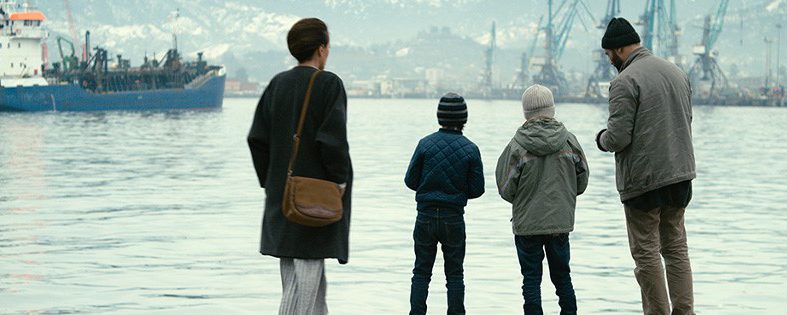
Lots to come from The Movie Gourmet as I catch up after my Cinequest coverage. I’m finishing up my interviews with Cinequest’s Mr. Documentary, Sandy Wolf, and Mine 9 director Eddie Mensore, along with Cinequest reviews of The Man Who Killed Don Quixote, Transit, Teen Spirit, Buy Me a Gun, The Bra, The Hummingbird Project, The Extraordinary Journey of Celeste Garcia, Original Sin and WBCN and the American Revolution.  At least four of these films will be in theaters soon.

Speaking of Cinequest, my strong recommendations for Mine 9 and Last Sunrise were validated by the Cinequest Jury Awards for Best Narrative Drama Feature and Best Science Fiction Feature, respectively. Travel Ban, which I also recommended, won an Audience Award.

Along with Transit, I also need to finish writing up the art house imports Birds of Passage and Sunset, along with the doc The Brink.

ON TV

On March 24, Turner Classic Movies is broadcasting Twentieth Century, a 1934 screwball comedy, which holds up as well today as it did 77 years ago. A flamboyantly narcissistic Broadway producer (John Barrymore) has fallen on hard times and hops a transcontinental train to persuade his former star (Carole Lombard), now an A-list movie star, to headline his new venture. Barrymore’s shameless self-entitlement and hyper dramatic neediness makes for one of the funniest performances in the movies.

And, on March 29, TCM airs the innovative film noir He Walked By Night, completed by an uncredited Anthony Mann. Inspired by a true life story, the LAPD goes on a man hunt for a highly skilled wacko played by Richard Basehart, with his bland good looks (but maniacal eyes). It’s a police procedural elevated by the great cinematography of John Alton, especially the sewer escape chase (right up there with the one in The Third Man).

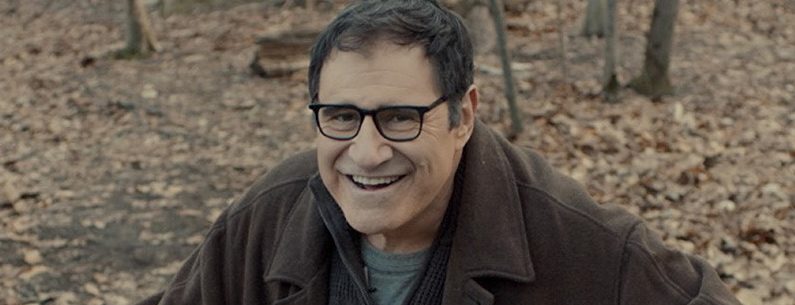
Richard Basehart in HE WALKED AT NIGHT

Movies to See Right Now

Adam Driver and Jonathan Pryce in THE MAN WHO KILLED DON QUIXOTE

I’ve been absorbed by the 2019 Cinequest, which runs through Sunday. Here’s my Cinequest preview; I’m recommending the closing movie on Sunday evening – Terry Gilliam’s The Man Who Killed Don Quixote, starring Adam Driver and Jonathan Pryce. Throughout the festival, I link my festival coverage to my Cinequest page, including both features and movie recommendations. Follow me on Twitter for the very latest coverage.

OUT NOW

  • In They Shall Not Grow Old, Lord of the Rings filmmaker Peter Jackson has, for the first time, layered humanity over our understanding of World War I. By slowing down the speed of the jerky WWI film footage and adding sound and color, Jackson has allowed us to relate to the real people in the Great War. This is a generational achievement and a Must See.
  • Roma is an exquisite portrait of two enduring women and the masterpiece of Alfonso Cuarón (Gravity, Children of Men and Y Tu Mama Tambien). It won multiple Oscars. It is streaming now Netflix.
  • Green Book: This is the Oscar winner for Best Picture. Tony Lip is a marvelous character, and Viggo Mortensen’s performance is one of the great pleasures of this year in the movies.
  • Vice: in this bitingly funny biopic of Dick Cheney by writer-director Adam McKay (The Big Short), Cheney is played by a physically transformed and unrecognizable Christian Bale. A superb performance, pretty good history, biography from a sharp point of view and a damn entertaining movie.
  • Stan & Ollie: Steve Coogan as Stan Laurel and John C. Reilly as Oliver Hardy deliver remarkable portraits of a partnership facing the inevitability of showbiz decline.
  • Pawel Pawlikowski’s sweeping romantic tragedy Cold War is not as compelling as his masterpiece Ida.
  • The Favourite: Great performances by three great actresses, sex and political intrigue are not enough; this critically praised film didn’t work for me.


ON VIDEO

My stream of the week is the Peruvian psychological drama Magallanes from the 2016 Cinequest. Magallanes can be streamed from iTunes, YouTube and Google Play.


ON TV

On March 19, Turner Classic Movies brings us The Best Years of Our Lives. It’s an exceptionally well-crafted, contemporary snapshot of post WW II American society adapting to the challenges of peacetime. Justifiably won seven Oscars. Still a great and moving film.

Harold Russell, Dana Andrews and Frederic Mrch in THE BEST YEARS OF OUR LIVES

RICH KIDS: topical, but…

kids (but not the lead kids) in RICH KIDS

Rich Kids has topicality going for it, as it explores our society’s disparity of wealth.  Matias (Gerardo Velasquez), his brainy crush Vanessa (Michelle Magallon) and their pals are dirt poor teens.  There’s a nearby vacant luxury home, and the kids hop the fence  for a dip in the pool.  The pool party moves inside, and the kids get to experience what to them is fantasy opulence.    Drama ensues.

Unfortunately, Rich Kids wears its  social message on its sleeve.  The dialogue is too obvious and heavy-handed.  Rich Kids becomes a predictable screed.  Most of the actors playing the kids are too old to pass for high school students, and they just aren’t able to elevate the dialogue.

On the other hand, the opening scene pulses with verisimilitude, and the actors who play Matias’ parents  (who I believe are Ricky Catter and Amelia Rico) are really good.

Rich Kids played at Cinequest.

THE MAN WHO KILLED DON QUIXOTE: finally!

Adam Driver and Jonathan Pryce in THE MAN WHO KILLED DON QUIXOTE

The Man Who Killed Don Quixote is director Terry Gilliam’s final conquest of the iconic Miguel Cervantes novel. Gilliam has been trying to make this movie for decades, and the 2002 documentary Lost in La Mancha, which chronicles one disastrous attempt, is a more entertaining movie than this one. Lost in La Mancha can be streamed on Amazon and iTunes.

Adam Driver plays Toby, a film director, in demand for his commercials, who had failed at a Don Quixote film as a young indie director. Now Toby returns to Spain, and tries again with more resources. He finds that the older local man (Jonathan Pryce) in the first film shoot has become deluded that he really is Don Quixote. He also finds that his earlier venture changed the life of a young girl from the village (Joana Ribeiro).

Terry Gilliam is nothing if not imaginative, as demonstrated by his earlier films Brazil, The Adventures of Baron Munchausen, The Imaginarium of Doctor Parnassus, The Zero Theorem). Here he creates thread after thread of deluded quests and braids them together. He captures the combination of absurdity and futile earnestness in the source material.

The Man Who Killed Don Quixote is witty and well-made, but neither Gilliam’s nor Cervantes’ stories make the film engrossing. I saw The Man Who Killed Don Quixote at the 2019 Cinequest, where it was the closing night film.

SOMETIMES ALWAYS NEVER: wry, deadpan and never frenetic

Bill Nighy in SOMETIMES ALWAYS NEVER

In the wry and deadpan Bill Nighy vehicle Sometimes Always Never, a father and son make an unwelcome road trip – a pilgrimage to identify a corpse, possibly that of their long-missing son/brother. This often sweet and more often funny film poses a serious question – how does one resolve the unresolvable – a tragedy in the past that is still unexplained? And, in searching obsessively for the Prodigal Son, what about the Other Son?

Writer Frank Cottrell Boyce and director Carl Hunter combine to flesh out Nighy’s character with a lot of singular touches. Nighy’s proper-looking father is an enthusiastic and ruthless Scrabble hustler (who knew THAT was a thing?). And, from some combination of a grief reaction and OCD, he tries to impose order upon his universe with a Label Maker.

The most compelling reason to watch Sometime Always Never is that Bill Nighy is always such a pleasure to watch. Here, he is delightful when he is devious at Scrabble and when he benevolently unblocks his grandson’s courtship. Perhaps one day. iPhones will learn not to autocorrect his name to “Night”.

Hunter’s pacing is most decidedly not frenetic and his color palette is Mid-Century Modern in a contemporary story.

And here’s a random note: I enjoyed seeing the actress Jenny Agutter again, 43 years after she captivated me in Logan’s Run

I saw Sometimes Always Never at Cinequest, where the affable and mischievous Bill Nighy made a personal appearance at the screening.

Stream of the Week: MAGALLANES – some wrongs cannot be righted

Magallanes_Still

To honor Cinequest, my stream of the week is a remarkable drama from the 2016 Cinequest. The title character in the Peruvian psychological drama Magallanes is a loser, but is he a lovable loser? Played by Damián Alcázar, Magallanes bounces around from odd job to odd job. He can’t break even driving a borrowed outlaw taxi around the squalid streets of Lima, he lives in a basement hovel and he has one friend. Magallanes glimpses a person from his past, and it rocks him into a series of life-changing events.

Magallanes starts out as a caper movie. But we learn that his one friendship is from his military service in a death squad unit, dispatched to repress the indigenous population with the harshest methods. What this unit did years ago has scarred all the characters (except two snarky cops), and Magallanes is revealed to be a study of PTSD.

What is driving Magallanes’ behavior in this story? We find that he is trying to right a past wrong. But what? And by whom? The revelation in Magallanes is that some wrongs cannot be righted.

Magallanes is a showcase for Mexican actor Alcázar, whom U.S. art house audiences saw in John Sayles’ Men with Guns and as the lead in Herod’s Law. Alcázar makes Magallanes so sympathetic that the movie’s climax is jarring and emotionally powerful.

Magallanes can be streamed from iTunes, YouTube and Google Play.

ORIGINAL SIN: sending up the rich

ORIGINAL SIN

The Paraguayan sex comedy Original Sin (Pecado Original) is primarily a social satire, sending up the stiffness of Paraguay’s upper class.  A young married couple is trapped by the roles expected of them, and the wife chafes at her life devoid of anything except daytime TV and day-drinking.  The husband is a prig, and has a particular repression that no male audience member will be able to relate to.  The wife MAY have purchased a painting at a charity auction, and the impossibly handsome artist show up to deliver the painting.  Raucous, and fairly predictable, humor ensues.  A duel-by-badminton is pretty funny.

Cinequest hosted the North American premiere of Original Sin.

THE BRA: just your average silent Azerbaijani comedy

THE BRA

In the charming Azerbaijani-German comedy The Bra, train tracks run through the narrow main street of a remote Azerbaijani village.  The villagers set up cafe tables and hang their laundry across the tracks.  When the daily train arrives, a 10-year-old boy runs up the tracks sounding the alarm, and the villagers scramble to clear the tracks.  Occasionally, the train snags an object or a piece of laundry, which is rescued by the train’s mournful engineer Nurian (Serbian actor Predrag ‘Miki’ Manojlovic). Nurian then hikes from his even more remote home back to the village to return the item.

One day, the train ends up with a blue brassiere. Nurian goes door-to-door, holding up the bra to each woman in the village, hoping to find its owner. Along with many doors slammed in his face, he gets a variety of responses from village women. Of course all this is absurd, and The Bra is a triumph of absurdist humor.

One day, the train ends up with a blue brassiere. Nurian goes door-to-door, holding up the bra to each woman in the village, hoping to find its owner. Along with many doors slammed in his face, he gets a variety of responses from village women. Of course all this is absurd, and The Bra is a triumph of absurdist humor

Subtitles are unnecessary in The Bra because there is no discernible dialogue.  It’s not a silent film – we hear the ambient noises and the human characters mutter and yell, but we can’t distinguish what they are saying.  Like a silent film, the actors convey their feelings by what is essentially pantomime.  And it’s all more naturalistic than it may seem on paper.

The Bra is the work of German director and co-writer Veit Helmer, who has been making films in Central Asisn nations for a decade.  The cast is Central Asian and Pan-European, with some recognizable faces like Denis Lavant from France and Paz Vega from Spain.  The performance by Manojlovic, so filled with humanity, is very special.

The little boy who runs up the tracks is a homeless orphan, cruelly treated by the villagers. The relationship that Nurian builds with the boy is a touching counterpoint to the film’s many comic situations.

Now I need to say that The Wife hated this movie and found it offensive to women; I think this was an aberration caused by her physical discomfort during the screening. I heard women laughing heartily throughout the film and other women told me how much they liked the film, which was, after all, a festival favorite among all genders.

Cinequest hosted the US premiere of The Bra, and was one of the hits of the festival. The Bra won the jury prize for Best Narrative Feature (Comedy) and, when a prime time screening needed to be filled, programmers called on The Bra. Yes, this is an Azerbaijani comedy without any dialogue, but it’s a Must See if you get the chance

THE “HIGH SIGN”: Buster on the verge

THE HIGH SIGN: Buster Keaton and the Blinking Buzzards flashing the gang sign

The High Sign is 20-minutes of Buster Keaton’s rapid-fire comedy from 1921. Buster plays a young man who cons his way into a job managing an amusement park shooting gallery and inadvertently becomes entangled with a murderous gang of thugs. The plot exists to set up two exquisite comic set pieces. In the first, Keaton sets up an elaborate Rube Goldberg device to trick the boss into believing that Keaton is a master marksman. And the second is a triumph of Keaton’s ingenuity, as the gang members chase him through a cutaway two-story house, complete with trap doors and secret passageways.

Of course the gang itself, the Blinking Buzzards, is ridiculous, especially when they flash their secret gang sign. There’s also humor in the contrast between the towering gang leader (6′ 3″ Joe Roberts) and the diminutive (5′ 5″) Keaton.

The High Sign is a two-reeler, a 20-minute short film.  The conventional wisdom among early movie studio heads was that a comedy could only be sustain audience interest for 20 minutes. Keaton, Charlie Chaplin and Harold Lloyd would soon dispel that myth.

In fact, The High Sign came just before Keaton unleashed his string of comic masterpiece features:  Sherlock, Jr. (1924), The Navigator (1924), Seven Chances (1925), The General (1926), Steamboat Bill, Jr. (1928) and The Cameraman (1928).  After The Cameraman, Keaton’s new studio took away his creative control, and his career (and personal life) crashed.

I saw The High Sign at Cinequest, accompanied by world-renowned Dennis James on the Mighty Wurlitzer organ, before Steamboat Bill Jr.  I recommend Sal Pizarro’s excellent profile of Dennis James in the Mercury News.

Also known as The “High Sign”, the film plays occasionally on Turner Classic Movies and possibly bootleg versions can be streamed on YouTube and Vimeo.

Buster Keaton in THE HIGH SIGN

BRING ME AN AVOCADO: under pressure, relationships evolve

BRING ME AN AVOCADO

In the indie drama Bring Me an Avocado, an Oakland mom goes into a coma, and her husband and two daughters must spend several months going on with their lives, not knowing whether the mom will wake up.  The mom’s sister and her BFF step up to support the family by helping out with cooking and childcare.  Of course, there’s a lot of pressure on this extended family, and the relationships between the three adults evolve and get complicated.

[MINOR SPOILER]  After months, the mom wakes up.  Things are not the same as before, and she decides, in an emotional catharsis, how the family will move forward.

Bring Me an Avocado is the first feature for writer-director Maria Mealla.  Anyone who writes a coma movie has to decide how the character gets in the coma without making it an obvious contrivance; Mealla’s solution rings authentic, an event that is horrific and absolutely plausible.

Sarah Burkhalter plays the mom, and her performance takes over the final ten minutes of the movie; her character pieces together what happened while she was comatose, processes it and acts on the future of her family.; Burkhalter makes the ending very powerful.  The child actors playing the daughters, California Poppy Sanchez and Michaela Robles, are superb.

I really wanted to like this Bay Area indie more than I did.  It runs 104 minutes, and would have been better film at 90 minutes – and without the musical interludes.    Not all of the cast is as strong as are Burkhalter and the kids.  And [MINOR SPOILER] , it’s distracting when the mom spends months in a coma without any wasting, waking up looking pretty hearty, with just a bandage on her back.

Cinequest hosted the world premiere of Bring Me an Avocado.