Movies to See Right Now

JOJO RABBIT

Now is the time we’ve all been waiting for – the year’s very best movies are coming out in waves. Parasite, Jojo Rabbit and Pain and Glory will make their share of Top Ten lists; (I saw Parasite at its first Silicon Valley screening Thursday night and will write about it soon). The Irishman and Marriage Story are coming next weekend – so see at least two movies in theaters this weekend to stay current.

OUT NOW

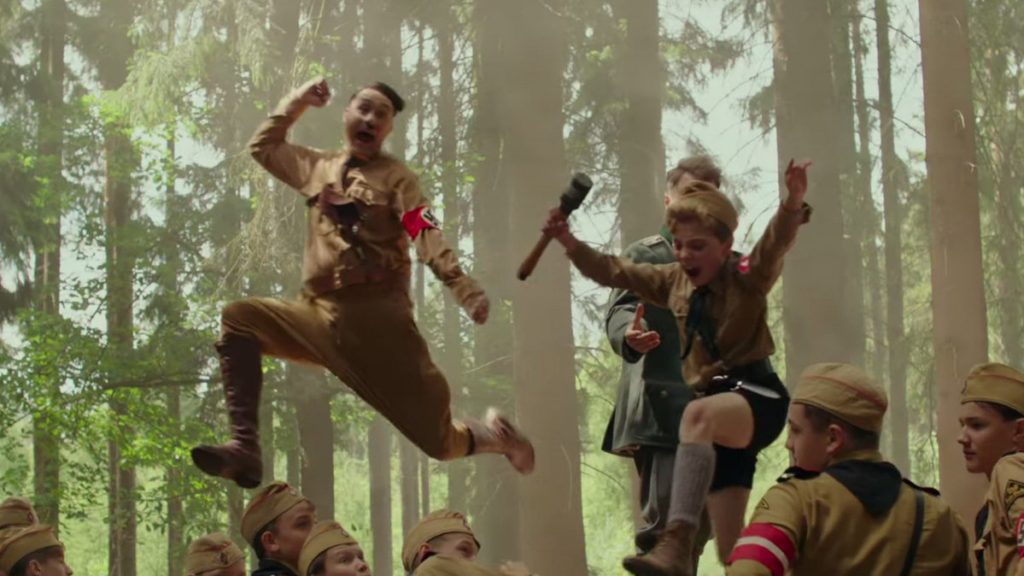
  • Filmmaker Taika Waititi takes on hatred in his often outrageous satire Jojo Rabbit. I saw Jojo Rabbit at the Mill Valley Film Festival, where the audience ROARED with laughter.
  • In his Pain and Glory, master filmmaker Pedro Almodovar invites us into the most personal aspects of his own life, illuminated by Antonio Banderas’ career-topping performance.
  • Where’s My Roy Cohn? is Matt Tyrnauer’s superb biodoc of Roy Cohn – and was there a more despicable public figure in America’s 20th Century than Cohn?
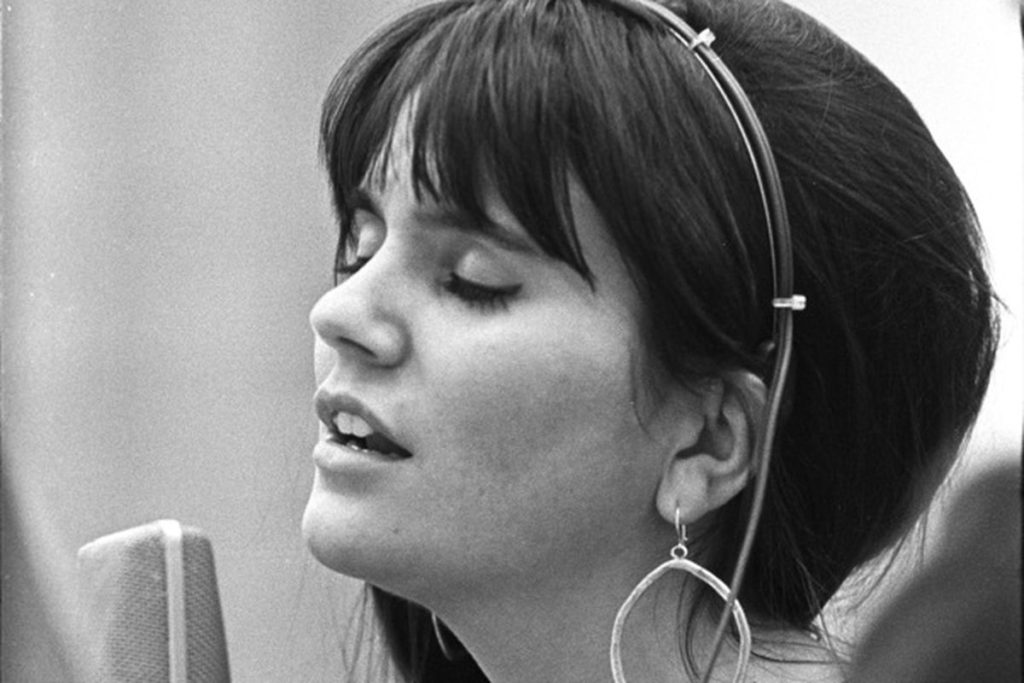
  • It’s tough to imagine anyone who wouldn’t enjoy the biodoc Linda Ronstadt: The Sound of My Voice, about the first female mega rock star. 
  • Skip Netflix’s The Laundromat and watch The Big Short again instead.

ON VIDEO

My Stream of the Week is last year’s best movie – the unforgettable coming of age film Leave No Trace. Ben Foster and Thomasin McKenzie star as a dad-daughter team who challenge conventional thinking about homelessness and healthy parenting.  Leave No Trace is available for streaming from Amazon, iTunes, Vudu, YouTube and Google Play.

ON TV

Here are two very different 1950s films coming up this week on Turner Classic Movies. On October 30, there’s the campy Bucket of Blood – it’s most interesting as a time capsule of the Beatnik Era.

And on October 28, TCM brings us A Place in the Sun: One of the great films of the 1950s.  Montgomery Clift is a poor kid who is satisfied to have a job and a trashy girlfriend (Shelly Winters in a brilliant portrayal).  Then, he learns that he could have it all – the CEO’s daughter Elizabeth Taylor, lifelong comfort, status and career.  Did I mention Elizabeth Taylor?  The now pregnant girlfriend is the only obstacle to more than he could have ever dreamed for – can he get rid of her without getting caught?
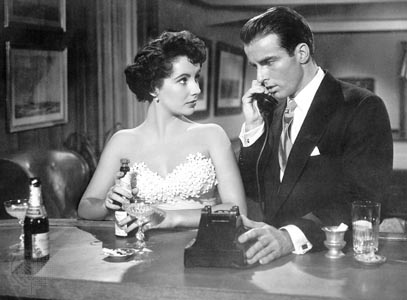
Elizabeth Taylor and Montgomery Clift in A PLACE IN THE SUN

JOJO RABBIT: a joyous and hilarious movie about the inculcation of hatred

JOJO RABBIT

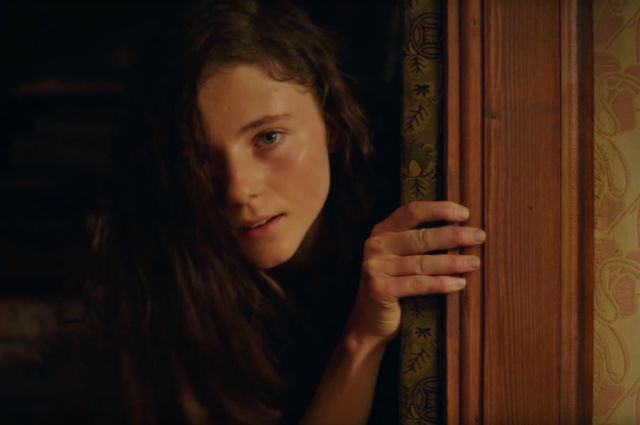
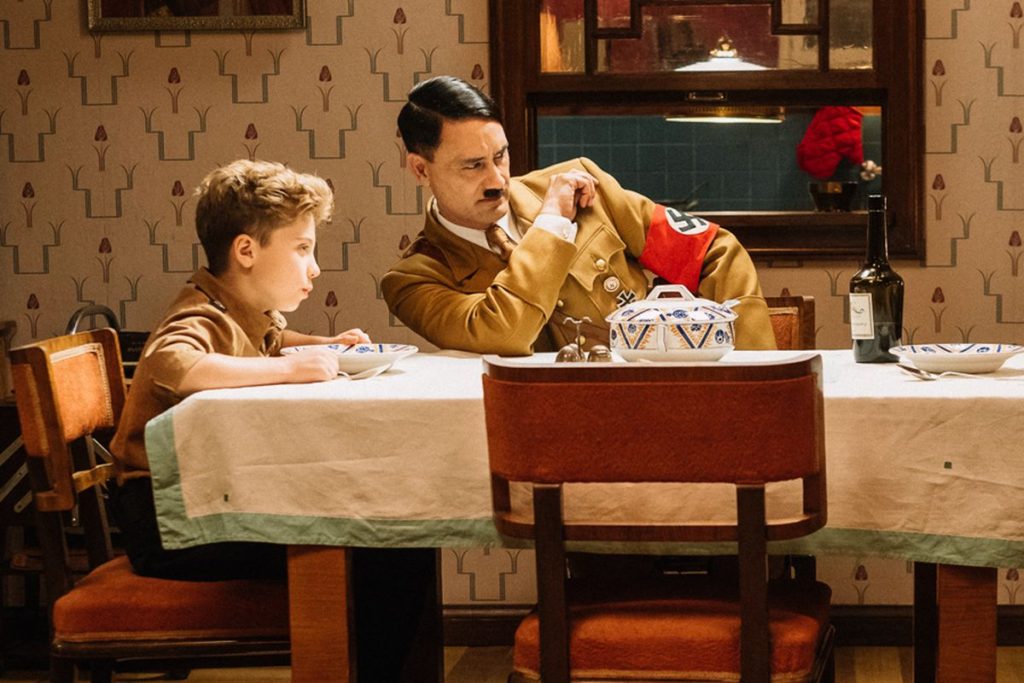
Filmmaker Taika Waititi takes on hatred in his often outrageous satire Jojo Rabbit. His protagonist is the ten-year-old German boy Jojo (Roman Griffin Davis), growing up during the final years of World War II. Jojo lives with his mom (Scarlett Johansson) because his dad is away (and we learn that the father is likely dead), It’s a tough childhood in these conditions, and Jojo copes with the help of an imaginary friend, who happens to be Adolph Hitler, played uproariously by Waititi himself.

Waititi doesn’t play the historical Hitler; he plays a benign and reassuring figure that is imagined by a child brought up on Nazi propaganda. He fills that role that uncles and grandads get to be with kids – the cherished figure who is always on your side and never make you do your chores. Of course, a playful and nurturing Hitler is absurd, and Waititi is brilliantly funny.

Jojo tries to fit in with the Hitler Youth, and his hobby is innocently filling a notebook with illustrations of the most hideous Jewish stereotypes that he has been taught. What we understand but Jojo doesn’t, is that his mom is risking her life in the anti-Nazi Resistance. She’s also been hiding the Jewish girl Elsa (Thomasin Mackenzie) in the attic a la Anne Frank.

Thomasin MacKenzie in JOJO RABBIT

Jojo discovers Elsa, and , as is usually the case with a ten-year-old boy and a fifteen-year-old girl, she becomes the boss of him. He gets an up close lesson in Jewishness, and it’s a revelation to him. It’s also clear that Germany is losing the war, although Jojo, as a child, is slower to connect the dots about that than are the adults. As the propaganda is unpeeled, the absurdities of the hatred and scapegoating are revealed to Jojo.

Roman Griffin Davis is a perfect choice to play the relatable innocent Jojo. Thomasin MacKenzie, so genuine and ethereal in Leave No Trace, is wonderful here, too. The entire cast is good, especially Johansson, Sam Rockwell as a cynical army officer, Rebel Wilson as a Nazi true believer and Stephen Merchant as a grinning Gestapo goon.

Even more than most movies, this is a film of its time. Five years ago, we might not have seen the value of a movie discrediting the Joseph Goebbels approach – pounding outrageous lies into a mass audience made gullible by its own dissatisfaction, targeting the “other” as blameworthy for all ills. But here we are, 74 years after the destruction of the Nazis, once again watching blowhard demagogues drumming up hatred for minority groups and scapegoating immigrants – in the US and Europe and around the globe. With its skewering of manufactured hatred and the Big Lie, this witty and ultimately sweet film resonates.

I saw Jojo Rabbit at the Mill Valley Film Festival, where the audience ROARED with laughter. This is going to be an audience favorite.

THE LAUNDROMAT: watch THE BIG SHORT again instead

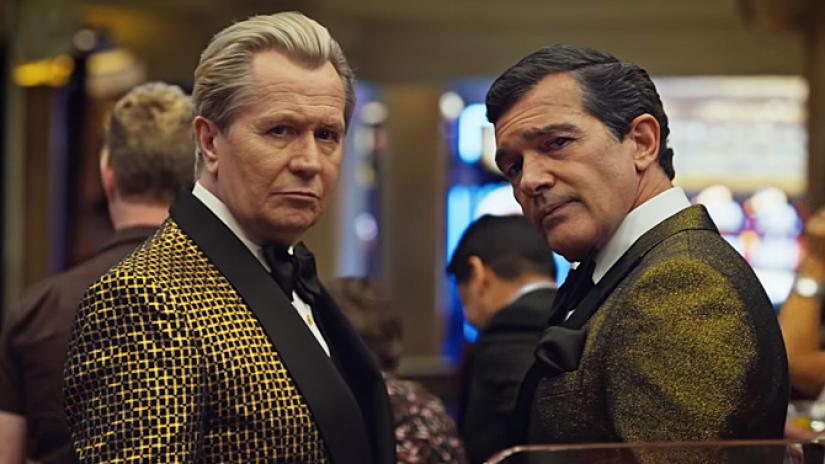
Gary Oldman and Antonio Banderas in THE LAUNDROMAT

Steven Soderbergh’s disappointing The Laundromat takes on the Panama Papers scandal of 2015, in which the shady law firm of Mossack Fonseca enabled hundreds of global fraudsters and tax cheats. Intended as an expose of financial malfeasance, it only succeeds as a demonstration of cinematic waste. There’s way too much talent harnessed to result in such a shallow imitation of The Big Short.

Meryl Streep plays an Everywoman who gets swindled by a corrupt system and by individual crooks played by Gary Oldman, Antonio Banderas and Jeffrey Wright. If there’s anything worthy about this film, it’s Oldman and Banderas, who get to break the fourth wall and blithely explain their cons to the camera – the same function that Margot Robbie, in a bubble bath, filled in The Big Short.

There just isn’t anything to engage the audience here. Worse, The Laundromat muddles it message by toggling between what’s legal and what’s not. The film explicitly claims that the crookedness depicted is legal, but it actually shows lots and lots of fraud – and fraud is already illegal. The real scandal, of course, is that the system is rigged so the big financial interests can LEGALLY screw the rest of us

It all culminates in a corny final shot that not even Streep can make convincing or palatable. If you MUST watch this crap, it’s streaming on Netflix.

Stream of the Week: LEAVE NO TRACE – his demons, not hers

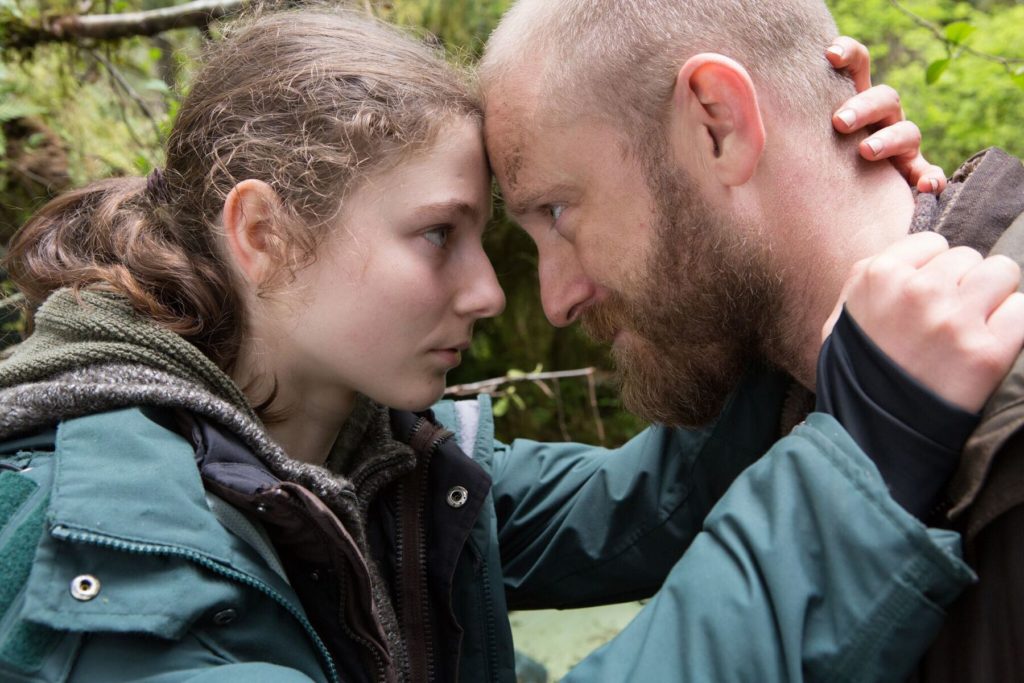
Thomasin Harcourt McKenzie and Ben Foster in a scene from Debra Granik’s LEAVE NO TRACE. Courtesy of SFFILM.

Here is the best movie of 2018 – the unforgettable coming of age film Leave No Trace. Ben Foster and Thomasin McKenzie star as a dad-daughter team who challenge conventional thinking about homelessness and healthy parenting.  Leave No Trace is writer-director Debra Granik’s first narrative feature since her Winter’s Bone (which I had rated as the best film of 2010).

When we meet Will (Foster) and his daughter Tom (McKenzie), they are engaging in extremely low impact camping in a fern-rich Oregon forest, to the point of solar cooking foraged mushrooms on a mylar sheet.  Dad and daughter are both survivalist experts and work together as a highly trained team.  They have the fond, respectful, communicative relationship that most families with teen children aspire to but can only fantasize about.

But Will and Tom are not on vacation. They do not consider themselves homeless, because the forest is their home.   However, their lifestyle just isn’t consistent with contemporary thinking about child welfare.  Furthermore, living in a public park is illegal,and when they are discovered, social service authorities are understandably and justifiably concerned.  Investigators find Tom to be medically and emotionally healthy, Will to be free of drug or alcohol abuse, and there has been no child abuse or neglect – other than having ones child living outdoors and not going to school.

Will is a veteran who has been scarred by his military service, and he is clearly anti-social.  But Will is not your stereotypical PTSD-addled movie vet.  He is a clear thinker.  His behavior, which can range to the bizarre, is not impulsive but deliberate.

Fortunately, the Oregon, social services authorities are remarkably open-minded, and they place Will and Tom in a remote rural setting in their own house at a rural Christmas Tree farm.  Will can work on the farm, Tom can go the school, and there’s a liberal non-denominational church filled with kind folks.  It’s a massive accommodation to Will and Tom’s lifestyle, only with the additions of living under a roof and public education.

Tom blossoms with social contact, and particularly enjoys the local 4-H and one kid’s pet rabbit named Chainsaw.  Tom begins to understand how much she needs human connection – and not just with her dad,

But Will can’t help but feel defeated.  When Tom suggests that they try to adapt to their new setting, he scowls, “We’re wearing their clothes, we’re living in their house, we’re eating their food, we’re doing their work. We’ve adapted”.  She argues, “Did you try?”, “Why are we doing this?”, and “Dad, this isn’t how it used to be”.

Ben is so damaged that his parenting can nurture Tom for only so long.  Leave No Trace is about how he has raised her to this point.  Has he imparted his demons to her?  Has he helped her become strong and grounded enough to grow without him?

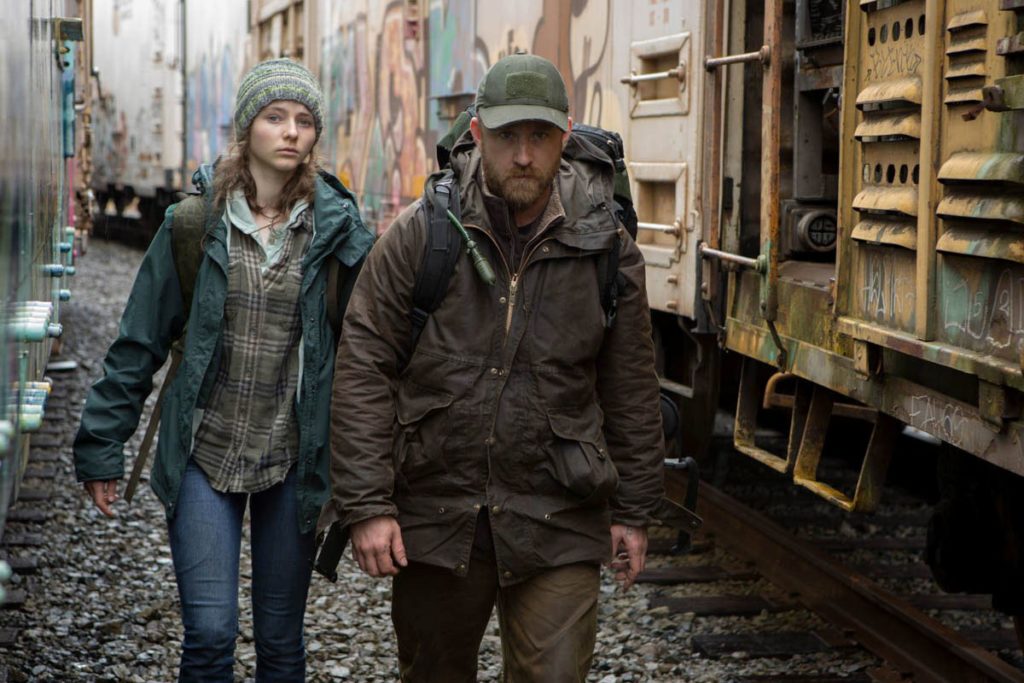
Thomasin Harcourt McKenzie and Ben Foster in a scene from Debra Granik’s LEAVE NO TRACE. Courtesy of SFFILM.

Winter’s Bone launched the career of Jennifer Lawrence, and Leave No Trace might do the same for newcomer Thomasin McKenzie.  McKenzie is riveting as she authentically takes Tom from a parented child to an independent young woman.  At the San Francisco International Film Festival screening, producer and co-writer Anne Rosellini said “there’s an ‘otherness’ to McKenzie,” who had “tremendous insight into the character”.  Rosellini added that McKenzie and Ben Foster bonded before the shoot, as they rehearsed with a survivalist coach.

Foster is no stranger to troubled characters (The Messenger, Rampart, Hell or High Water).  Here, he delivers a remarkably intense and contained performance as a man who will not allow himself an outburst no matter what turbulence roils inside him.  Rosellini noted that “Will is elusive, a mysterious character to everybody”.  It’s a performance that will be in the conversation about Oscar nominations.  Actors Jeff Kober, Dale Dickey, Dana Millican and Isaiah Stone (the little brother in Winter’s Bone) are also excellent in smaller roles.

Leave No Trace is thoughtful and emotionally powerful.  Superbly well-crafted and impeccably acted, it’s a Must See. Leave No Trace is available for streaming from Amazon, iTunes, Vudu, YouTube and Google Play.

Movies to See Right Now

Antonio Banderas in PAIN AND GLORY

Lots of new recommendations this week. My biggest takeaways from the Mill Valley Film Festival: 1) Marriage Story is an almost perfect film – right at the top of 2019 movies; 2) Jojo Rabbit is going to be immensely popular. And here’s my remembrance of the late Robert Forster.

OUT NOW

  • In his Pain and Glory, master filmmaker Pedro Almodovar invites us into the most personal aspects of his own life, illuminated by Antonio Banderas’ career-topping performance.
  • Where’s My Roy Cohn? is Matt Tyrnauer’s superb biodoc of Roy Cohn – and is there a more despicable public figure in America’s 20th Century than Cohn?
  • It’s tough to imagine anyone who wouldn’t enjoy the biodoc Linda Ronstadt: The Sound of My Voice, about the first female mega rock star. 

ON VIDEO

Because its sequel is coming out this weekend, my video pick is the riotously funny Zombieland, number one on my list of Zombie Movies for People Who Don’t Like Zombie Movies. It’s available on DVD from Netflix and streaming from Amazon, iTunes, Vudu, YouTube and Google Play.

ON TV

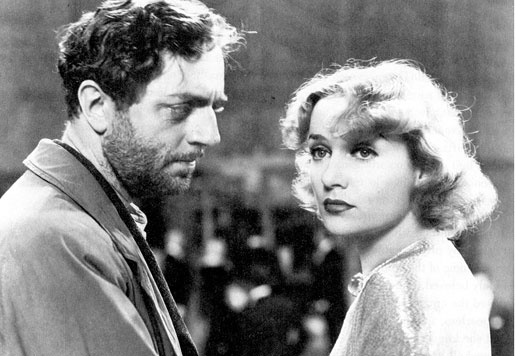
On October 20, Turner Classic Movies is airing the timeless and fantastic comedy, My Man Godfrey (1936). An assembly of eccentric, oblivious, venal and utterly spoiled characters make up a rich Park Avenue family and their hangers-on during the Depression. The kooky daughter (Carole Lombard) brings home a homeless guy (William Powell) to serve as their butler. The contrast between the dignified butler and his wacky employers results in a brilliant screwball comedy that masks searing social criticism that is still sharply relevant today. The wonderful character actor Eugene Pallette (who looked and sounded like a bullfrog in a tuxedo) plays the family’s patriarch, who is keenly aware that his wife and kids are completely nuts.

William Powell and Carole Lombard in MY MAN GODFREY

WHERE’S MY ROY COHN?: vile begets vile

Roy Cohn (center) in WHERE’S MY ROY COHN? Credit: Photo by Henry Burroughs/AP/REX/Shutterstock. Courtesy Sony Pictures Classics.

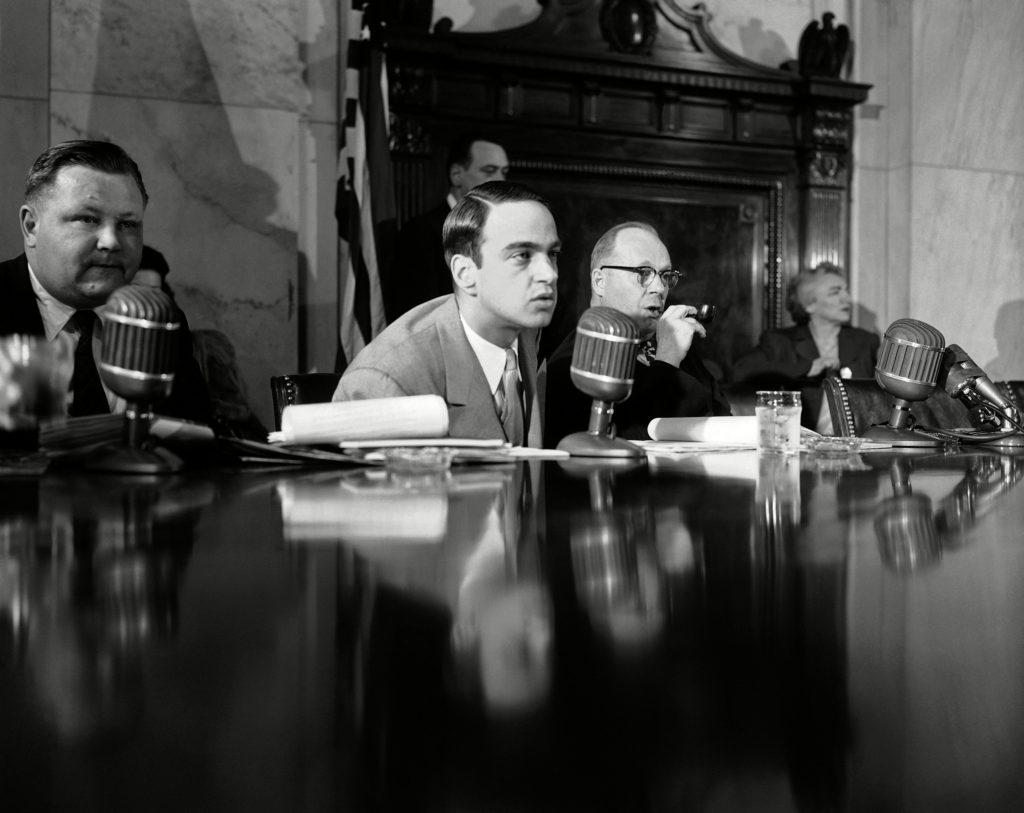
Where’s My Roy Cohn? is Matt Tyrnauer’s superb biodoc of Roy Cohn – and is there a more despicable public figure in America’s 20th Century than Cohn? Has there been a more shameless hypocrite? A bully more cruel? A crook more craven?

It would be accurate but unhelpful to say that Roy Cohn didn’t invent scorched earth tactics, like saying that Hitler didn’t invent genocide. Cohn and his proteges certainly popularized what Bill Clinton called “the politics of personal destruction”.

I can’t remember ever before quoting movie publicity materials, but I can’t improve on this trenchant description of Cohn’s legacy from Sony Pictures Classics:

Cohn formulated his playbook in the 50s, but it is all too familiar today: always attack; never admit blame or apologize; use favors and fear to ensure support for your objectives; expertly manipulate the media to gain advantage and destroy your opponents; lie shamelessly, invalidating the idea of truth; weaponize lawsuits; evade taxes and bills; and, most importantly, inflame the prejudices of the crowd by scapegoating defenseless people.”

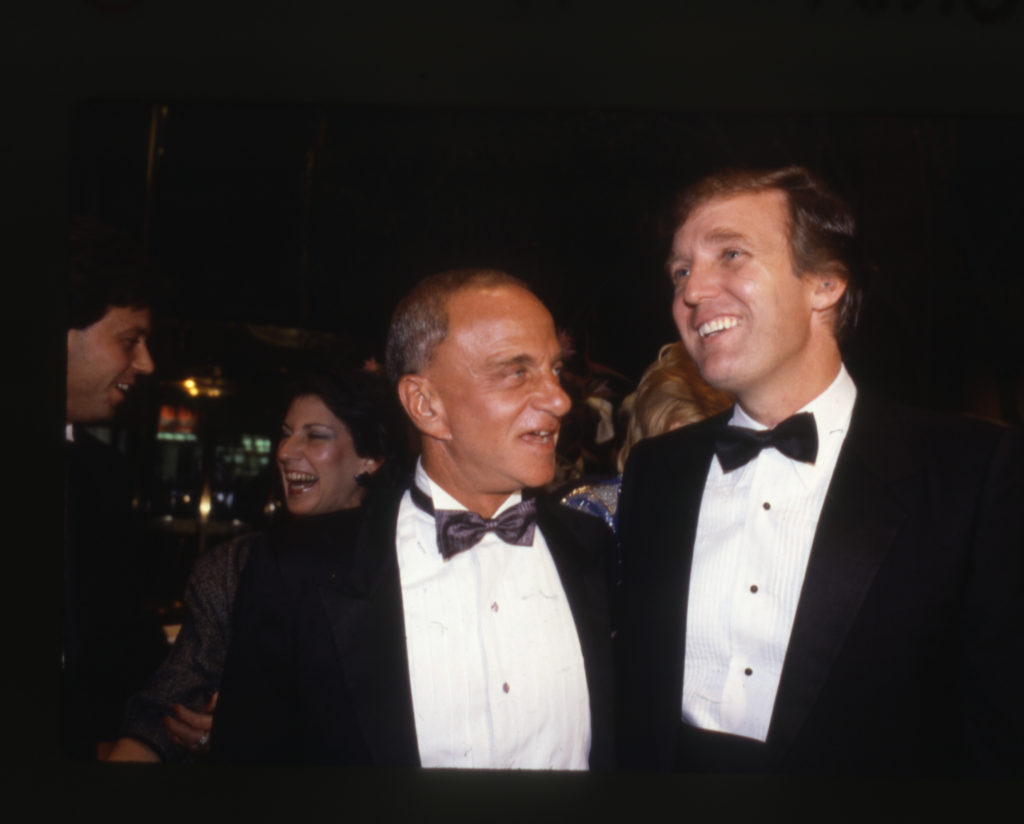
Cohn’s central role in McCarthyism is well known, as is his role as a storied, self-promoting fixer (or legal terrorist) in the 1970s and 1980s. More recently, Cohn’s formative mentorship of the young Donald Trump has come to light.

Roy Cohn and Donald Trump in WHERE’S MY ROY COHN? Courtesy Sony Pictures Classics.

In Where’s My Roy Cohn?, Tyrnauer provides us with less well-known revelations. Cohn’s cousins and his longtime boyfriend are key witnesses. We learn about Cohn’s father, who exposed him to the seamy world of a political machine, and Cohn’s mother, from whom Cohn seems to inherited his ruthlessness. There’s an absolutely jaw-dropping anecdote about how far Mrs. Cohn would go to avoid interrupting her Seder. And there’s the important story of his Uncle Bernie’s financial ruin and public disgrace, which seems to have taught Cohn all the wrong lessons. Tyrnauer also brings us Cohn’s wresting control of the Lionel Train company from family members. And there’s an “insurance fire” on Cohn’s Florida yacht, which resulted in a homicide.

Cohn was the chief henchman leading Joseph McCarthy’s Lavender Scare to persecute LGBTQ Americans in public and military service. The famous Army-McCrthy hearings were sparked by Cohn’s seeking favorable treatment for David Schine, Cohn’s assistant and the object of his infatuation, as they cavorted across US bases in Europe, making life hellish for American gay soldiers. Despite a legendary reputation for same-sex encounters and relationships, Cohn always denied being gay himself or having AIDS, of which he died.

And, for good measure, one of his cousins also pegs Cohn as a self-loathing Jew.

There are also clips of Cohn on The Late Late Show with Tom Snyder. (Man, I haven’t thought of Tom Snyder in decades.) In one clip, Cohn defines “tough” as “vicious”, and says that his clients “buy scare value”.

Why spend almost two hours with Roy Cohn? Because Roy Cohn’s story is important to our understanding of 20th Century American history and of our current public culture.

Where’s My Roy Cohn? played at the Mill Valley Film Festival and opens in Bay Area theaters this weekend.

PAIN AND GLORY: achingly personal

Antonio Banderas in PAIN AND GLORY

In his Pain and Glory, master filmmaker Pedro Almodovar invites us into the most personal aspects of his own life, illuminated by Antonio Banderas’ career-topping performance. Almodovar calls Pain and Glory “auto-fiction”, and Banderas’ central character is a filmmaker clearly modeled after Almodovar himself.

Although Almodovar is known for a fun personality and makes the most exuberant films, we learn that this filmmaker is shy and introverted. He is suffering privately from an assortment of maladies, most importantly with chronic back pain, migraine headaches and depression. Because of the chronic pain and the depression, he has isolated himself in his apartment, blocked from his work and avoiding all social engagement.

The restoration of an early film prods him into planning a public appearance with the film’s star, an actor that he has been estranged from for thirty years; that encounter plunges him into an entirely new strategy of pain management. Almodovar inserts vignettes from his childhood which illuminate his respect and adoration of women and his artistic and sexual awakenings. These flashbacks are brilliant.

Pain and Glory is as beautiful as any Almodovar film. The color palette is far less lushly vibrant than usual for Almodovar, but the more somber look is just as rich.

Banderas has never been better. His longtime close friendship with Almodovar clearly informed this searing performance, both with his close observation of his friend and because he cares for him. This performance will certainly earn Banderas an Oscar nomination.

Pain and Glory is an exquisite film. Some audiences may not want to invest in such a sometimes painful story, deliberately paced as it is. But those who settle in will be rewarded.

Stream of the Week: ZOMBIELAND – riotously funny

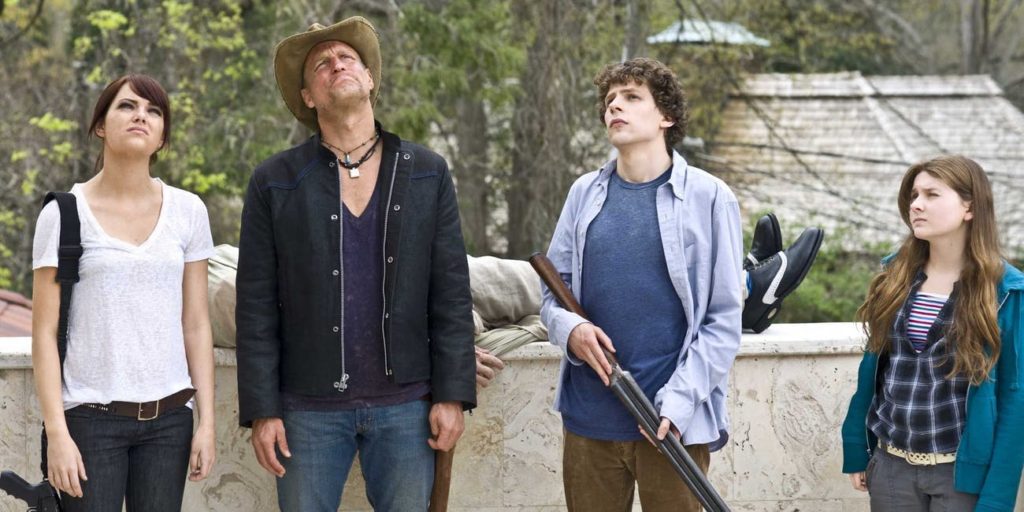
Emma Stone, Woody Harrelson, Jesse Eisenberg and Abigail Breslin in the original ZOMBIELAND

The sequel is coming out this weekend, so I think we need a refresher on the riotously funny Zombieland, number one on my list of Zombie Movies for People Who Don’t Like Zombie Movies.

Zombieland brings several nice touches.     Our young heroes (Jesse Eisenberg, Emma Stone and Abigail Breslin – very early in their careers) band together with the a master zombie killer (Woody Harrelson).  The zombie killer’s astonishing skills and unwholesome enthusiasm are very funny.  After many close calls, the group finds shelter in Bill Murray’s LA mansion where Bill Murray (playing himself) is surviving by impersonating a zombie.   The climax is a showdown in an amusement park where the zombies have cornered the heroes.

Zombieland is also on my list of Woody Harrelson’s Overlooked Gems. It’s available on DVD from Netflix and streaming from Amazon, iTunes, Vudu, YouTube and Google Play.

LINDA RONSTADT: THE SOUND OF MY VOICE: the icon who never played it safe

LINDA RONSTADT: THE SOUND OF MY VOICE

Linda Ronstadt: The Sound of My Voice is the insightful biodoc, based on Ronstadt’s own memoir, and narrated by Ronstadt herself. Ronstadt was the first female mega-rock star, and her story touches on feminism, the Counterculture and pivotal changes in the music industry. The film is comprehensive, tracing her upbringing and her romances with songwriter JD Souther and Governor/Presidential candidate Jerry Brown. The story is also poignant – her Parkinson’s disease has kept her from singing since 2007.

Ronstadt has been the auteur who is able to take someone else’s song and make it into her own art. She’s not a mere cover singer. I recommend listening to the Everly Brothers’ When Will I Be Loved, the Eagles’ Desperado, Dee Dee Warwick’s You’re No Good, Buddy Holly’s It’s So Easy and Little Feat’s Willin’ – and then matching them with Ronstadt’s versions.

Ronstadt is also unusual in that her interests and talent span the genres of pop and rock and country, various subgenres of Mexican music (earning Grammies across musical types) and even Gilbert and Sullivan (Tony nomination).

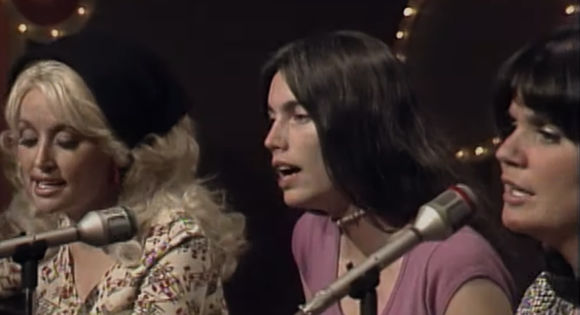
Dolly Parton, Emmylou Harris and Linda Ronstadt in LINDA RONSTADT: THE SOUND OF MY VOICE

Linda Ronstadt: The Sound of My Voice brings us a deep reservoir of witnesses: Ronstadt family members, Souther, former bandmates Don Henley and Waddy Wachtel, friends and collaborators Emmylou Harris and Dolly Parton. Both Emmylou and Dolly credit Ronstadt with helping them in critical career moments, Emmylou when she was paralyzed by grief and shock from the death of Gram Parsons.

Here’s a wonderful nugget from the film: Ronstadt had grown up in a family that sang Mexican music together, but her interest was rekindled by listening to the late night canciones of Harry Dean Stanton who was living in the garage behind Ronstadt and Souther.

It’s hard to imagine someone who wouldn’t enjoy Linda Ronstadt: The Sound of My Voice. And about that final scene of Linda with her nephew and cousin in the living room – just try to hold back the tears.

ROBERT FORSTER

Robert Forster as Max Cherry in JACKIE BROWN

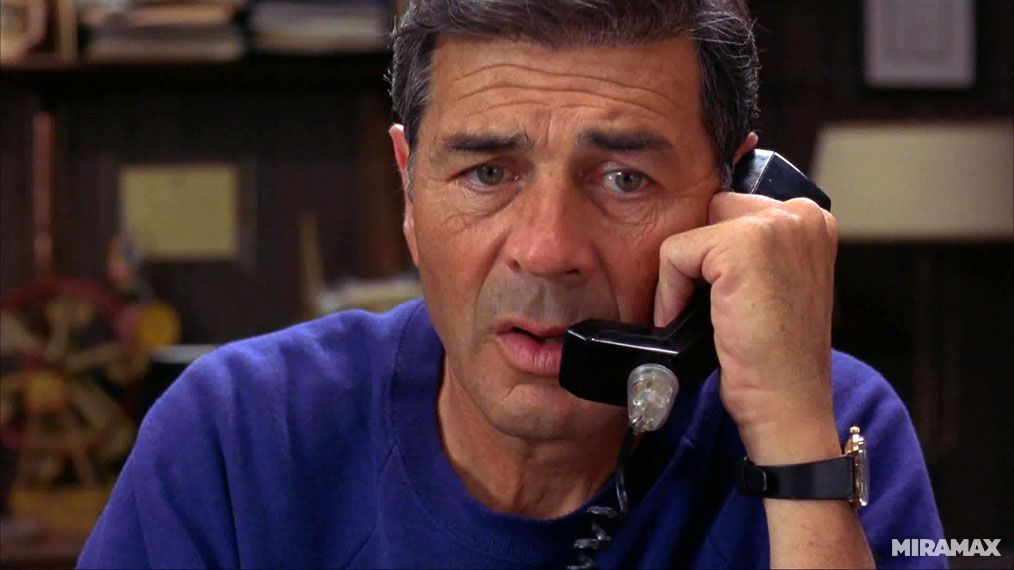
The actor Robert Forster has died at 78. Amassing 186 screen credits, Forster was a stalwart of 70s and 80s TV, starring in his owned short-lived period detective series Banyon and then Twin Peaks. But thank God for Quentin Tarantino, who revived Forster’s career with the character of Max Cherry in Jackie Brown; Max’s streetwise strength and basic Midwestern decency was a perfect fit for Forster. Forster went on to close his career with excellent material, worthy of his talent, including The Descendants and last year’s What We Had.