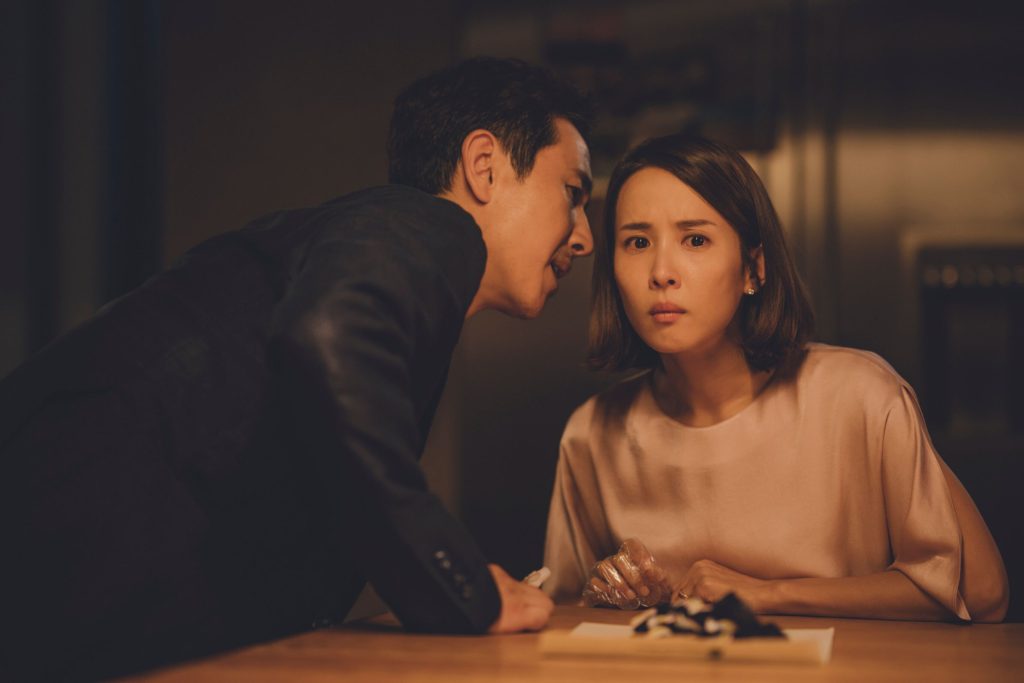
PARASITE, playing at the Mill Valley Film Festival (MVFF). Photo courtesy of MVFF.
I’m at the Mill Valley Film Festival for 63 Up, Jojo Rabbit, Frankie and Marriage Story. Some of the most promising movies of the year will come out in the next two weeks: Parasite, Jojo Rabbit, The Lighthouse and Pain and Glory. Until then, you can at least stream some of the Best Movies of 2019 – So Far – The Last Black Man in San Francisco, They Shall Not Grow Old, Amazing Grace and Booksmart.
OUT NOW
Downtown Abbey is a satisfying wrap-up for fans of the beloved PBS series.
The Sound of Silence is an engrossing character study starring Peter Sarsgaard as a man confident in his obsession until… You can stream it on Amazon, iTunes and Vudu.
ON VIDEO
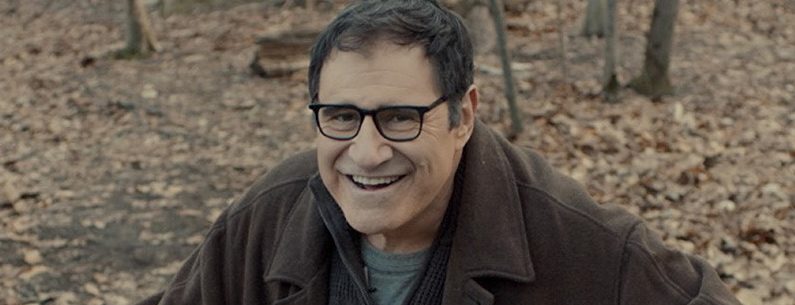
My Stream of the Week is the superb indie Auggie with Richard Kind, about artificial intelligence which is able to see your fantasies even before you can imagine them. I saw Auggie at its world premiere at Cinequest. It can be streamed from Amazon, iTunes and Vudu.
ON TV
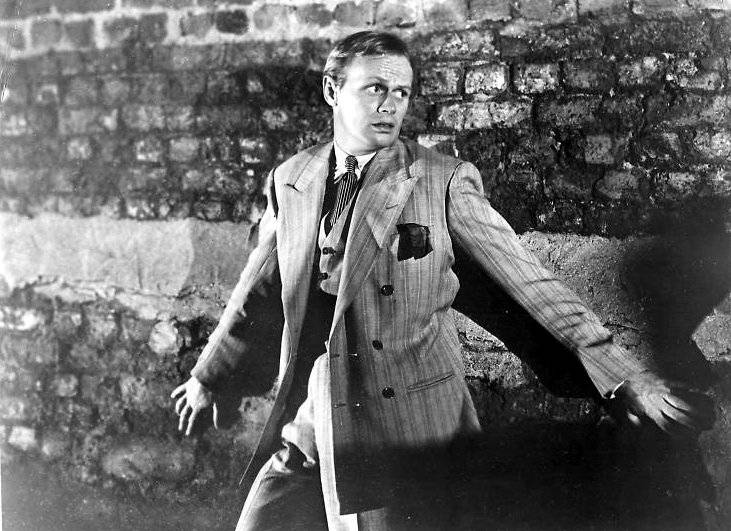
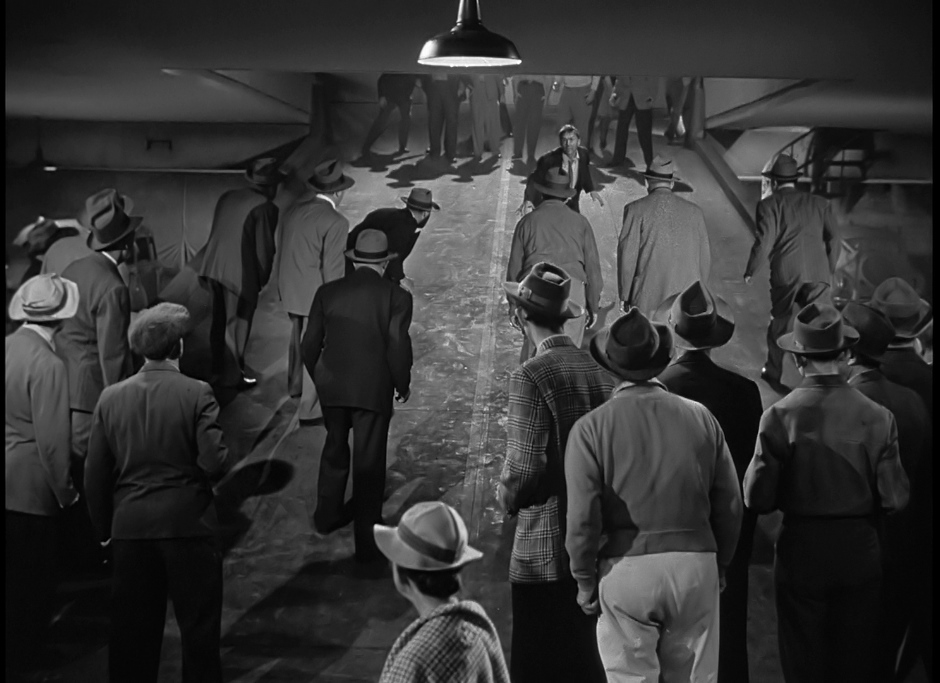
On October 13, Turner Classic Movies presents the under-appreciated 1950 Night and the City, with one of the great characters in film noir. Richard Widmark is superb as Harry Fabian, a loser who tries to corner the pro wrestling business in post-war London. The one thing that Harry Fabian is good at is finding suckers, but he doesn’t realize that the biggest sucker is Harry Fabian.
Richard Widmark running out of luck in THE NIGHT AND THE CITY
In the superb indie Auggie, Felix (Richard Kind) is pushed into retirement before he wants. He’s given a goodbye gift that he never would have thought to wish for, augmented reality glasses. Suddenly plunged into inactivity just as his wife Anne’s career is thriving, Felix finally gets around to putting on the glasses. The glasses give him a virtual companion, Auggie, equipped with the artificial intelligence to give the wearer his craved-for experiences. Most insidiously, Auggie even delivers individually customized emotional support. Everyone’s digital companion takes the form of what they desire, and Felix’s Auggie is a smoking hot and adorable young woman.
The more Felix wears the glasses, the more Auggie is able to fulfill his every need, even triggering more inner desires that he was aware of. This isn’t quite a Doctor Faust who knowingly opts into his fantasy; Auggie’s artificial intelligence is able to see Felix’s fantasies even before he can imagine them. All things in moderation, of course, but Auggie’s infinite availability becomes additive. This is no longer healthy for Felix or his family.
When a character asks, “Who do you see when you put on the glasses?”, it’s a devastating moment.
Auggie is the first feature for director and co-writer Matt Kane. Kane has avoided writing Felix as a stereotypical clumsy old grouch. As written by Kane and co-writer Marc Underhill and played by Richard Kind, he’s very smart and perceptive. He just isn’t ready for unimaginable temptation.
You’ll recognize Richard Kind, a reliable character actor and voice artist with 221 screen credits. My favorite Kind performance was the moving portrayal of a man seeking closure after the death of his wife in Clint Eastwood’s Hereafter.
Susan Blackwell is perfect at Felix’s wife Anne. Blackwell has had small parts in some very fine films and hosts her own Broadway interview show on YouTube, Side By Side with Susan Blackwell. Cristen Harper is suitably seductive as Auggie.
I saw Auggie at its world premiere at Cinequest. It can be streamed from Amazon, iTunes and Vudu.
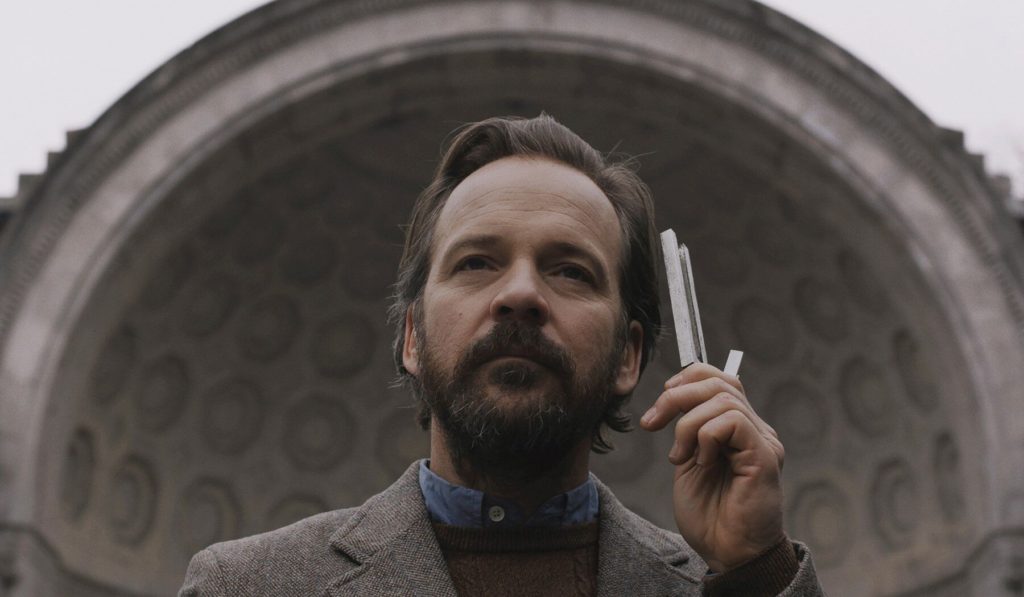
Peter Sarsgaard in Michael Tyburski’s THE SOUND OF SILENCE. Courtesy of SFFILM
This week, I’ll be at the Mill Valley Film Festival: it’s an early look at the most prestigious movies of the year. Watch for my coverage of 63 Up, Jojo Rabbit, Frankie, Where’s My Roy Cohn? and Marriage Story. If you miss the big movies at the MVFF, you can at least stream some of the Best Movies of 2019 – So Far – The Last Black Man in San Francisco, They Shall Not Grow Old, Amazing Grace and Booksmart are all available to be streamed.
OUT NOW
Downtown Abbey is a satisfying wrap-up for fans of the beloved PBS series.
The Sound of Silence is an engrossing character study starring Peter Sarsgaard as a man confident in his obsession until… It’s had a limited run at San Jose’s 3Below, and you can stream it on Amazon, iTunes and Vudu.
ON VIDEO
My Stream of the Week is the evocative and thought-provoking German drama Western.Western can be streamed from Amazon (included with Prime), iTunes, YouTube and Google Play.
ON TV
On October 5, Turner Classic Movies will air the 1950 version of M, directed by Joseph Losey. This is a remake of Fritz Lang’s great 1931 M with Peter Lorre. The Losey version is not a masterpiece like the original, and I find it pretty odd. However, Los Angeles’ storied Bradbury Building, which has been in many a movie, was never been as gloriously revealed from basement to roof as in M. The Bradbury Building and the film as a whole benefit from the cinematography of Ernest Laszlo; Laszlo also shot D.O.A., The Well, The Steel Trap, Stalag 17, The Naked Jungle, Kiss Me Deadly and While the City Sleeps, before being Oscar-nominated eight times for more respectable, but lesser films. The cast is filled with film noir faves – Raymond Burr, Norman Lloyd, Howard Da Silva, Steve Brodie and Luther Adler.
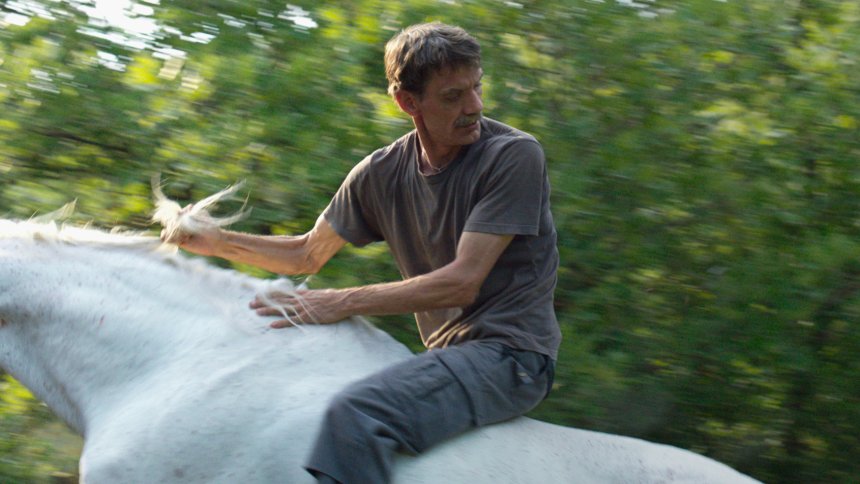
In the evocative and thought-provoking German drama Western, a crew of German hardhats sets up a construction camp on a remote Bulgarian mountainside to build a water power plant. They aren’t cultural tourists and certainly not diplomats, and they see the nearby Bulgarian village as a distraction from, even an impediment to, their project. Of the Germans, only Meinhard (Meinhard Neumann) seeks out contact with the Bulgarians.
Writer-director Valeska Grisebach lets the audience connect the dots about what’s going on. The Germans and the Bulgarians have encounters at the camp, at the riverside swimming hole and in the village. As one would expect from any modern German filmmaker, Grisebach shines a harsh light on the German sense of superiority and entitlement. One German even says, “They know we’re back. 70 years later, but we’re back.” But the characters have dimension. The blustery project boss Vincent (Reinhardt Wetrek) is an asshole, but even he has his own personal and job problems.
Of the Germans, only Meinhard makes Bulgarian friends. Meinhard is a loner among his co-workers, yet he seems to be searching for something among the Bulgarians and their alien language and culture. Meinhard is well-traveled and looks like he Has Lived a Life. He’s not a misfit (he’s very functional), but he hasn’t found where he DOES fit.
What has caused Meinhard’s alienation? That’s not clear, but it doesn’t need to be. Hell, Jack Nicholson just shows up alienated in every movie from Five Easy Pieces through The Passenger, and that works out just fine.
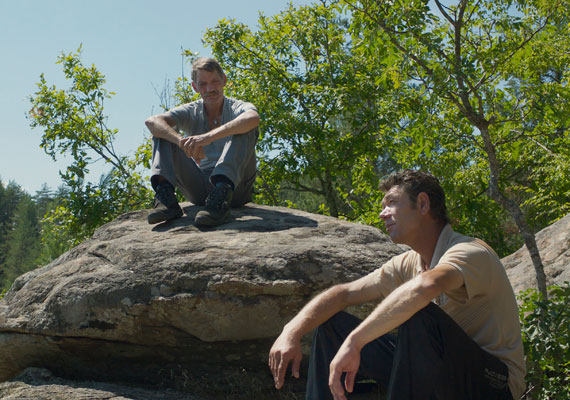
Meinhard has no ties. Asked if he is homesick, he queries, “what is homesick?” He thrives in the simpler culture, and this solitary man finds himself becoming social. He develops a deep trusting friendship with a local leader, Adrian (Syuleyman Alilov Letifov).
We have the advantage of subtitles, so we know what is being said in German and in Bulgarian. The characters are not understanding about 90% of what is spoken in the other language. The friendship between Meinhard and Adrian transcends language. The highlight of Western is a beautiful dialogue in which the two don’t understand all (or even most) of each other’s words.
Meinhard goes native. Will it work out for him? The Germans and the Bulgarians learn that they are competing for the same scarce resource. The Germans are always on the verge of provoking a riot. The insular Bulgarians are wary of strangers.
Western is not a brisk movie, but Grisebach paces it just about perfectly. This character-driven story is a sequence of revelations, and we need Grisebach to take her time. Grisebach uses the handheld camera effectively to plunge us right into the experience of the characters, who are often trying to discover something about the other guys.
Meinhard Neumann and Syuleyman Alilov Letifov in WESTERN
So that’s what is on the screen. I was astounded to learn that Grisebach used no professional actors in Western. She reportedly auditioned 600 working folks to get her cast. She snagged two sublime natural talents in Meinhard Neumann and Syuleyman Alilov Letifov. Not only that, but Grisebach did not use a script.
Quoted by Stefan Dobroiu in Cineuropa, Grisebach said, “I wanted to get closer to the solitary, inflated, often melancholic male characters of the western.” Grisebach may not have intended it, but she nailed the Going Native subgenre of Westerns, where a first world man becomes immersed into a native culture, which he ultimately embraces. Examples include A Man Called Horse and Dances with Wolves.
I saw Western in October at Cinema Club Silicon Valley. It played the Cannes and Toronto film festivals in 2017. Western can be streamed from Amazon (included with Prime), iTunes, YouTube and Google Play.
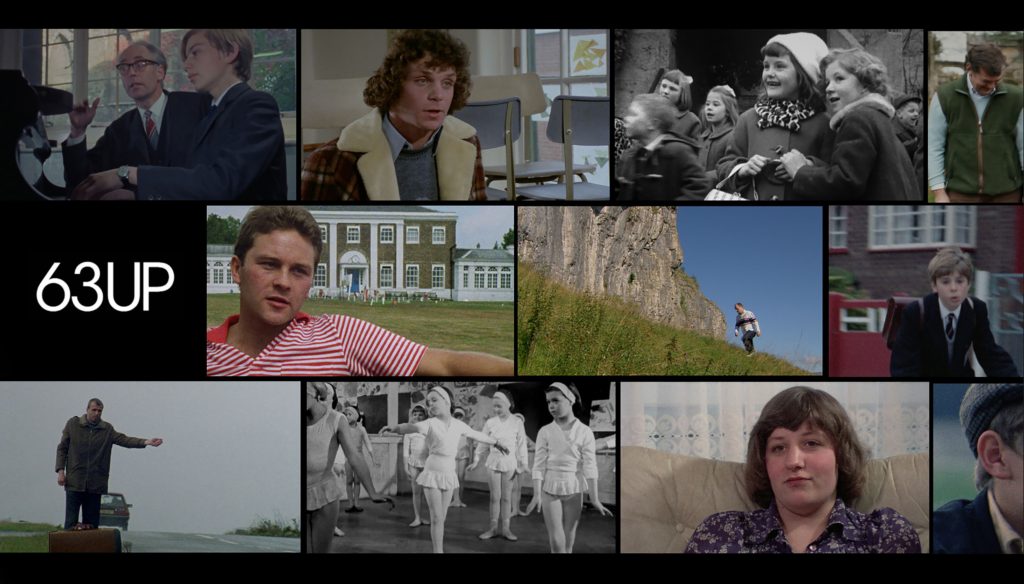
The Mill Valley Film Festival will be screening 63 Up – the latest in Michael Apted’s Seven Up series. Apted himself will appear at the screening. The Seven Up series is one of the great achievements in cinema history, certainly the greatest documentary series ever ,and on my list of Greatest Movie of All Time. Since 1964, we’ve had to wait seven years for each new chapter, and the latest is finally here.
Starting with Seven Up! in 1964, director Michael Apted has followed the same fourteen British children, filming snapshots of their lives at ages 7, 14, 21, 28, 35, 42 and 49 – and now at age 56. Choosing kids from different backgrounds, the series started as a critique of the British class system, but has since evolved into a broader exploration of what factors can lead to success and happiness at different stages of human life. (Apted was the hands-on researcher, not the director on Seven Up! and then directed the next eight films in the series.)
We have seen these characters live roller coaster lives. The surprise in 56 Up was how contented they seemed to be. They seemed to have independently reached a stage in their lives where they live with acceptance and satisfaction. Accordingly, it makes for mellow and pleasing viewing for us.
Michael Apted is a big time director (Coal Miner’s Daughter, Gorillas in the Mist). It is remarkable that he has returned so faithfully to his subjects in the Up series.
Because Apted includes clips from earlier films to set the stage for each character, you don’t need to watch all nine movies. Because there is so much turbulence in the earlier films and so little conflict in 56 Up , it would be ideal to first screen an edgier film like 35 Up or 42: Forty Two Up. The earlier films are difficult, perhaps impossible, to find streaming, but the entire series {Seven Up!, Seven Plus Seven, 21 Up, 28 Up, 35 Up, 42 Up, 49 Up, 56 Up} is available on Netflix DVDs. 56 Up stands on its own, and it’s streamable on Amazon, iTunes, Vudu, YouTube, Google Play and Kanopy.
The MVFF will screen 63 Up on October 8, and you can read more and buy tickets on page 15 of the MVFF program.
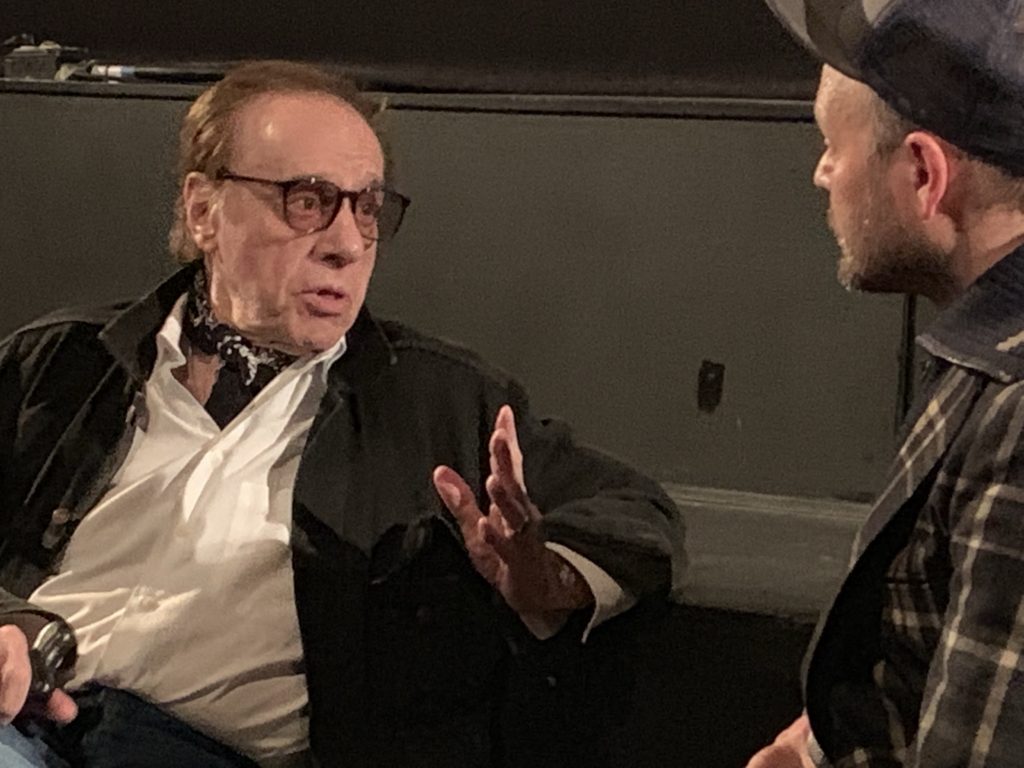
Peter Bogdanovich with Jesse Hawthorne Ficks at the Roxie
This Sunday, I was privileged to attend one of the year’s most stirring experiences of Bay Area cinema culture. The Roxie Theater screened two of director Peter Bogdanovich‘s films – the Oscar-winning The Last Picture Show (1971) and the hard-to-find Saint Jack (1979) – with the legendary Bogdanovich in attendance for two Q&A sessions. Speaking of The Last Picture Show, it’s a remarkable thing to watch a coming of age story about 18-year-olds when you are 18 and then again forty years later when you know stuff.
Check out the impressive program of the upcoming Mill Valley Film Festival: it’s an early look at the most prestigious movies of the year. If you miss the big movies at the MVFF, you can at least stream some of the Best Movies of 2019 – So Far – The Last Black Man in San Francisco, They Shall Not Grow Old, Amazing Grace and Booksmart are all available to be streamed.
OUT NOW
Downtown Abbey is a satisfying wrap-up for fans of the beloved PBS series.
The family dramedy The Farewell is an audience-pleaser.
The Sound of Silence is an engrossing character study starring Peter Sarsgaard as a man confident in his obsession until… It’s had a limited run at the San Francisco’s Presidio and San Jose’s 3Below, and you can stream it on Amazon, iTunes and Vudu.
ON VIDEO
My Stream of the Week is Werner Herzog’s mesmerizing and darkly funny documentary Grizzly Man. Grizzly Man is a superb film, which made my own list of Best Movies of the 21st Century (and Sophia Coppola’s, too) and my Best Movies of 2005. It can be streamed from Amazon, iTunes, Vudu, YouTube and Google Play, and it’s available on DVD from Netflix.
ON TV
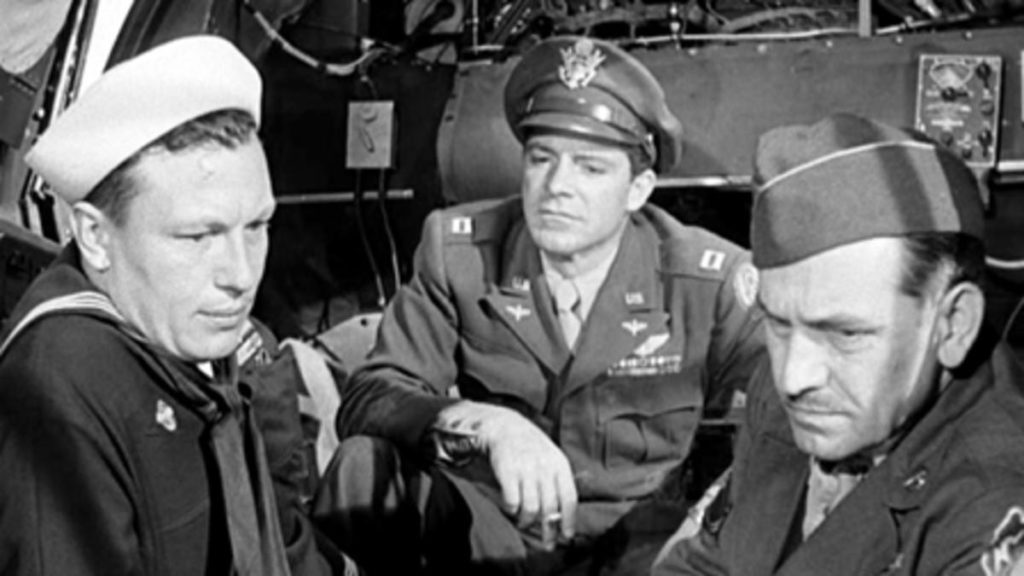
On September 30, Turner Classic Movies brings us The Best Years of Our Lives. It’s an exceptionally well-crafted, contemporary snapshot of post WW II American society adapting to the challenges of peacetime. Justifiably won seven Oscars. Still a great and moving film.
Harold Russell, Dana Andrews and Frederic March in THE BEST YEARS OF OUR LIVES
Peter Sarsgaard in Michael Tyburski’s THE SOUND OF SILENCE. Courtesy of SFFILM
In the engrossing character study The Sound of Silence, Peter Lucian (Peter Sarsgaard) is obsessed with the musical tonality of the built environment. Having assigned each area of Manhattan its own distinct musical key, Lucian prowls the city, tuning forks in hand, to map its sounds.
Lucian pays the bills as a house tuner, bringing well-heeled apartment-owners a kind of auditory feng shui. Lucian is sought after to isolate the hum of a problem refrigerator or toaster that can make a living space depression-inducing. He’s even been profiled in The New Yorker.
But we sense that Peter Lucian is a little too confident in his expertise. He is disdainful of the corporate suits trying to monetize his discoveries. “This is about universal constance, not commerce.” In a mistake of hubris, Lucian takes on a research assistant (Tony Revolori – Zero the bell boy in The Grand Budapest Hotel). Lucian is jarred by corporate espionage, and starts to unravel when a respected scientist views him as a crank. Can he recover?
Peter Sarsgaard is a marvelous choice to play a cool obsessive who seems, at time, both blissfully above validation and desperate for it. In spite of his handsome, regular features, Sargaard’s gift for uncanny stillness helps him play creepy. Sarsgaard’s Lucian has the unintended capacity of reassuring other characters, but making then even more uncomfortable.
Rashida Jones plays Ellen, a Lucian client who is not just garden-variety neurotic, but has been so rocked by a tragedy that she remains profoundly unsettled. Jones is so talented as a comic actress, a voice artist, a documentarian and the writer of that rarest of things, a smart romantic comedy (Celeste and Jesse Forever). Here, she shows her dramatic chops with a character who starts the movie adrift, but grows able to offer emotional safe harbor.
There’s even a welcome appearance by Austin Pendleton as a Lucian mentor of uncertain reliability. I’ve loved Pendleton since his turn in 1972’s What’s Up, Doc?. (Come to think of it, that movie had a musicologist obsessed with the inherent tonal qualities of igneous rocks.)
The Sound of Silence is the first feature for director and co-writer Michael Tyburski, and it’s a promising debut. Despite using an understated color palette, Tyburski delivers some stirring cinema with his use of sound. As Lucian looks over the city early in the morning, we hear a few musical notes, and then a full orchestra tuning up as the city awakens into its workday. When Lucian takes Ellen for a drink, it is to the quietest possible venue – a club with a decibel level somewhere between a library and a morgue; afterwards, Lucian emerges into urban cacophony. When an academic treats him like a crackpot, we all hear ringing, not just Lucian.
As one would hope, the sound design of The Sound of Silence is remarkable, and the score works very well. I saw it earlier this year at the San Francisco International Film Festival (SFFILM) and it’s playing at San Francisco’s Presidio and San Jose’s 3Below; you can stream it on Amazon, iTunes and Vudu.
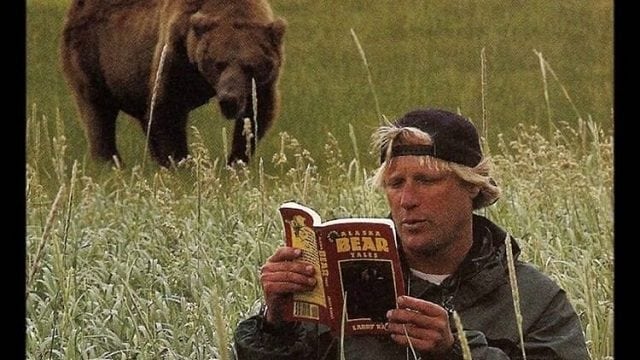
Werner Herzog’s mesmerizing and darkly funny documentary Grizzly Man is about Timothy Treadwell, who had spent summers observing the brown bears (grizzlies) in Alaska’s Katmai National Park, and believed that he had “gained their trust”. Driven by his ill-advised dream to befriend the grizzlies, Treadwell and his girlfriend Amie Huguenard essentially moved in with the grizzlies, camping by their fishing spot and personally interacting with them at close quarters. It did not end well.
Basically, grizzlies are hard-wired to hunt and eat humans. They are so fast that a human can’t escape one without a vehicle (or, possibly – but not for sure – tree climbing); They are so strong and fierce that a human can’t fend one off without a firearm (or, possibly, bear spray). This makes Treadwell’s’s quest remarkably foolhardy, This also makes Grizzly Man hilarious in a Darwin Awards way.
GRIZZLY MAN
As ridiculous as is Treadwell’s plan, this story had its life-and-death drama. Herzog’s presentation of a wristwatch and an audio recording is a moment that makes the hair on your neck stand up.
Werner Herzog, known for his German New Cinema art house hits of the 70s and 80s (Aguirre:The Wrath of God, Strozek Nosferatu the Vampyre,Fitzcarraldo), switched gears in 1997 with the underrated documentary Little Dieter Needs to Fly and followed it with Grizzly Man. Since, Herzog has become a prolific and masterful documentarian.
In Grizzly Man, Herzog makes use of 100 hours of Treadwell’s own video footage of his misadventure. As we’ve come to expect, Herzog’s research is impressively resourceful, and he assembles his finds to construct a masterpiece of story-telling Most remarkably, Herzog has also become one of the greatest narrators of English language documentaries; somehow, his German-accented narrations are hypnotic.
Grizzly Man is a superb film, which made my own list of Best Movies of the 21st Century (and Sophia Coppola’s, too) and my Best Movies of 2005. It can be streamed from Amazon, iTunes, Vudu, YouTube and Google Play, and it’s available on DVD from Netflix.
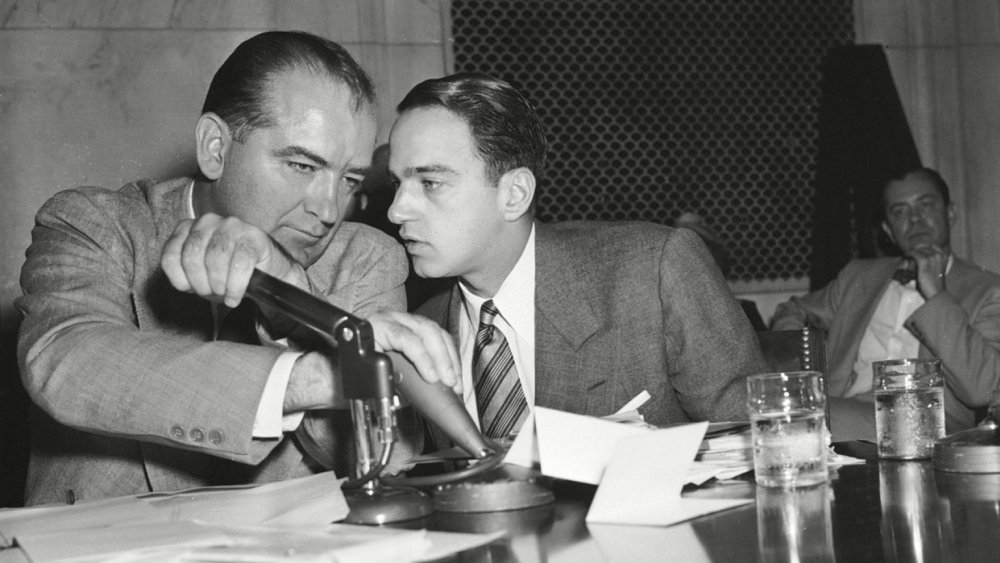
Joseph McCarthy and Roy Cohn in WHERE’S MY ROY COHN?
The upcoming Mill Valley Film Festival is the best opportunity for Bay Area film goers to catch an early look at the Big Movies. Check out my list of Best Movies of 2019 – So Far – The Last Black Man in San Francisco, They Shall Not Grow Old, Amazing Grace and Booksmart are all available to be streamed.
OUT NOW
Downtown Abbey is a satisfying wrap-up for fans of the beloved PBS series.
Where’s My Roy Cohn? is Matt Tyrnauer’s superb biodoc of Roy Cohn – and is there a more despicable public figure in America’s 20th Century than Cohn?
The family dramedy The Farewell is an audience-pleaser.
Bay Area filmmaker John Maringouin’s inventive satire Ghostbox Cowboy, skewers white entitlement and sneaks a peek inside the shadiest corners of the Chinese boom economy. Ghostbox Cowboy earned a NY TimesCritic’s Pick and can be streamed on Amazon (included with Prime).
ON VIDEO
The Aretha Franklin concert film Amazing Grace is, at once, the recovery of a lost film, the document of an extraordinary live recording and an immersive, spiritual experience. Amazing Grace can be streamed on Amazon, iTunes, Vudu, YouTube and Google Play; the DVD can be rented from Redbox.
ON TV
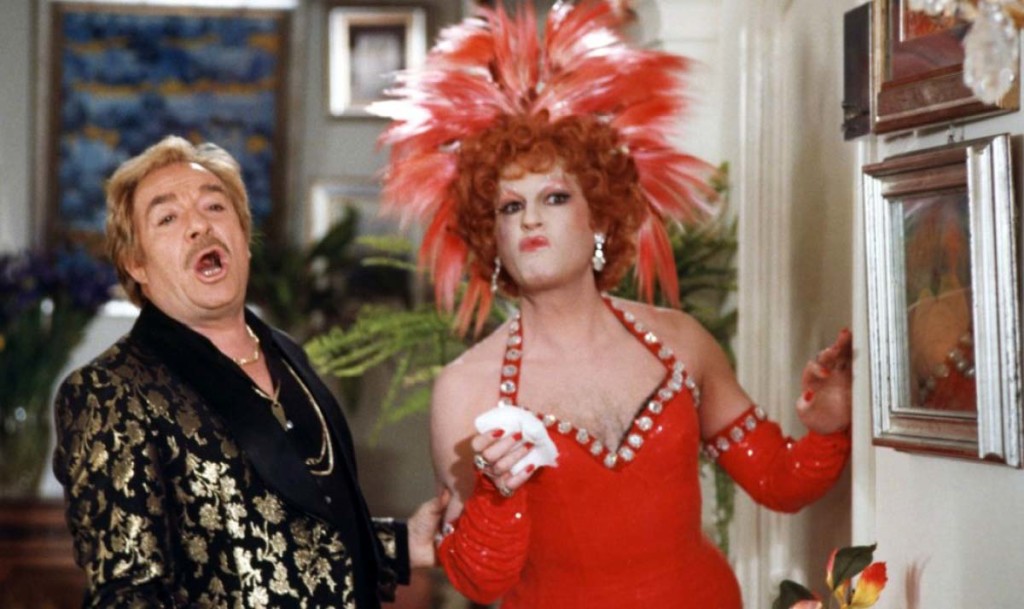
On September 25, Turner Classic Movies will present the groundbreaking French comedy La Cage Aux Folles – a daring film in 1978, when few were thinking about same-sex marriage. A gay guy runs a nightclub on the Riviera, and his partner is the star drag queen. The nightclub owner’s beloved son wants him to meet the parents of his intended. But the bride-to-be’s father is a conservative politician who practices the most severe and judgmental version of Roman Catholicism, so father and son decide to conceal aspects of dad’s lifestyle. Mad cap comedy ensues, and La Cage proves that broad farce can be heartfelt. Michel Serrault is unforgettable as Albin/Zaza – one of the all-time great comic performances. (La Cage was tepidly remade in 1996 as The Birdcage with Robin Williams, but you want to see the French original.)
Ugo Tognazzi and Michel Serrault in LA CAGE AUX FOLLES
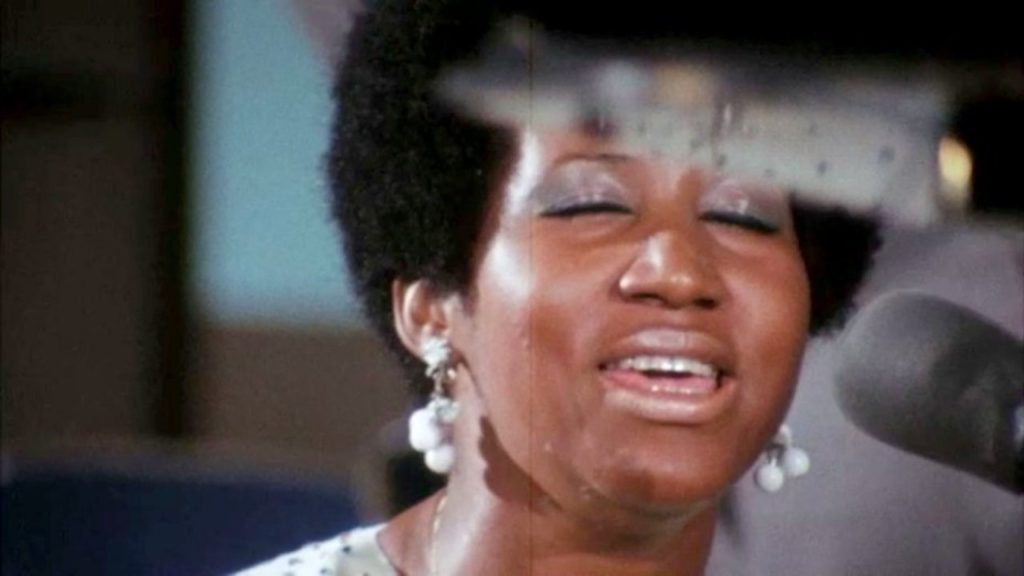
Amazing Grace is, at once, the recovery of a lost film, the document of an extraordinary live recording and an immersive, spiritual experience.
At the height of her popular success in 1972, Aretha Franklin recorded a live album of gospel music. She brought her producer Jerry Wexler and her band to New Temple Missionary Baptist Church in Los Angeles, a large but modest church with a cheesy mural of Jesus emerging from the waters after his baptism by John the Baptist. Accompanied by James Cleveland and the Los Angeles Community Gospel Choir, she performed for two nights, and the recordings became Amazing Grace, the top-selling gospel album of all time.
The whole thing was filmed by director Sydney Pollack and his crew with five cameras. Having made his bones in live television, Pollack would seem to be a great choice, but he made a critical mistake – he neglected to use clappers, the equipment that allowed for synchronizing the filmed images with the recorded sound. Frustratingly worthless, the film sat in canisters until decades later when technology allowed the music to be synced to the 16mm film. Aretha, however, was notoriously prickly in business affairs, and the rights could not be secured until after her death. Alan Eliot is responsible for finding and assembling Pollack’s footage and turning it into a feature film that could be released for the rest of us to see; appropriately, Eliot’s credit is “Realized and produced by Alan Eliot”.
What brought Aretha get to this moment in 1972? Aretha had grown up in the Detroit church led by her formidable father, C.L. Franklin, immersed in gospel music until she launched a pop music career at age 18. When she was 25, she began working with Wexler, who “got” her, and she became a soul and crossover superstar with Respect, I Never Loved a Man (The Way I Love You), Do Right Woman, Do Right Man, Baby I Love You, (You Make Me Feel Like) A Natural Woman, Chain of Fools, Ain’t No Way, Think, I Say a Little Prayer and Rock Steady. At 30, Aretha commanded the field of R&B and looked to return to her gospel roots.
When Aretha enters the church, the atmosphere is electric, and Aretha is ready from her very first note of Wholy Holy. The church audience knows their gospel music, appreciates what they are witnessing and is, to a person, thrilled. The audience becomes more and more emotionally involved.
Aretha’s version of What a Friend We Have in Jesus is unrecognizable (in the very best way). On Precious Memories, Aretha’s humming is internally intense, and then her voice soars. Completely committed, Aretha produces a prodigious amount of sweat.
The high point of the film is Aretha’s closing song on the first night, Amazing Grace. It’s a very long version of the song, and the choir doesn’t sing until the very end. As Aretha’s instrument wrings every drop of emotion from that most familiar song, we watch the choir members’ reactions, which range from admiration to inspiration, many moved to tears. The moment is one of genius for Aretha and one of epiphany for the choir and for the film audience.
One of the great pleasures of Amazing Grace is watching the choir leader, Alexander Hamilton, lead his choir with an expressiveness that is both elegant and funky. If there is a co-star in Amazing Grace, it’s Alexander Hamilton.
There are pauses for technical issues, which bring out the authenticity of the moment and reinforce that this was a live event. It’s easy to spot Mick Jagger and Charlie Watts in the crowd on the second night.
Where does Amazing Grace fit in the concert film canon along with Monterey Pop, The Last Waltz, Stop Making Sense, Woodstock and The T.A.M.I. Show? It’s in the conversation.
Amazing Grace, which is on my list of Best Movies of 2019 – So Far, can be streamed on Amazon, iTunes, Vudu, YouTube and Google Play; the DVD can be rented from Redbox.