SUBTE-POLSKA: memory, vitality and loves from the past

SUBTE POLSKA

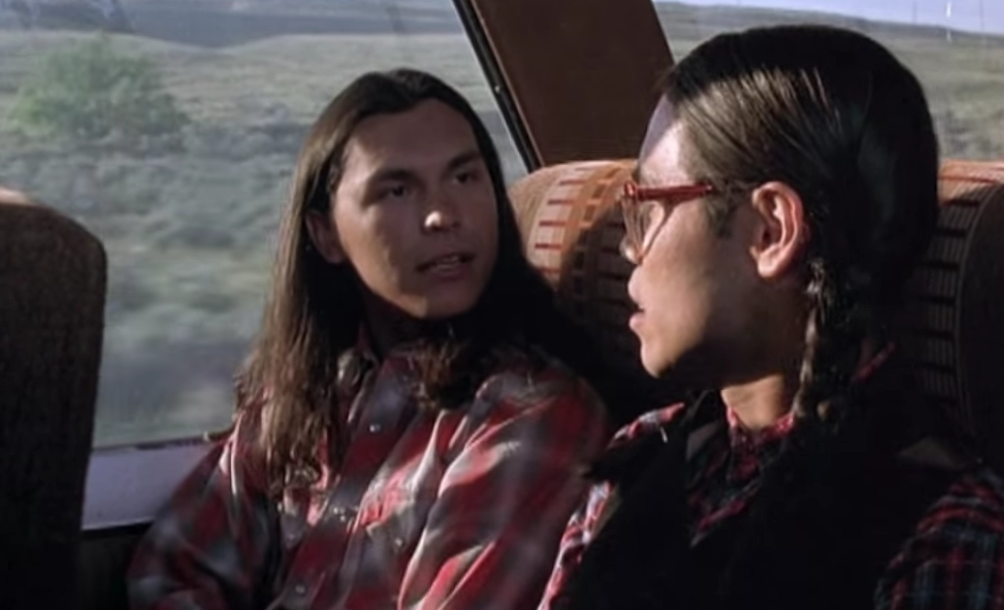
Subte-Polska is an Argentine gem about a nonagenarian chess master addressing his own memory, vitality and the need to find closure with his past.  A promising first feature for writer-director Alejandro Magnone, Subte Polska is the sleeper Must See at this year’s SFJFF.

Great movie. Off-putting title.

Tadeusz (Hector Bidonde) is a working class nonagenarian chess master. He’s still able to win several simultaneous chess matches, but his age is catching up to him and he has periods of confusion and memory loss. His doc has prescribed meds that counteract the memory loss, but he refuses to take them because they…wait for it…diminish his sexual performance.

His adult adopted son (Marcelo Xicarte) is understandably frustrated because he has to keep tracking down an unnecessarily (from his perspective) addled old man. And the son is in a touchy period in his own marriage.

Tadeusz is a Communist Jew who left Poland, his family and his girlfriend to fight fascism in the Spanish Civil War. He found another lover in Spain, but he left her,too, when they were defeated by Franco. Tadeusz’ family didn’t survive Hitler. That’s a lot of loss, and Tadeusz dealt with it by emigrating to Argentina and LITERALLY going underground. To avoid triggering painful memories, he gets a job constructing and then working in the Buenos Aires subway system. He sets up his son as a subway driver, and his best buddies also work in the subway, including the guy who runs the underground newsstand (Manuel Callau).

As Subte-Polska unfolds, Magnone explores our sense of memory, and how we consciously and subconsciously handle both the cherished memories and the devastating ones.  As he takes and abstains from taking his meds, Tadeusz’s short-term memory ebbs and flows.  This is a guy who has framed his entire life to suppress the memories of his youth, but he begins to remember his youth more and more vividly.  As he remembers, he feels a need to find closure.

Tadeusz is a strong-willed person, and Subte-Polska is pretty funny as he causes consternation in his son, doctor and friends – in everybody except his well-serviced girlfriend and his ball-busting old friend from their first days underground.  Marcelo Xicarte and Manuel Callau both prove to be excellent comic actors.

Speaking of acting, Hector Bidonde delivers a magnificent lead performance.  Bidonde plays someone who has always been determined to do what he wants, stubborn to his core, still confident in his beliefs, mental acuity and sexual prowess, but occasionally shaken by moments of confusion.

You have three chances to catch Subte-Polska at the San Francisco Jewish Film Festival:

  • Cinearts (Palo Alto), Sunday, July 23 4:25 PM
  • Castro (San Francisco), Wednesday, July 26 4:05 PM
  • Albany Twin (Twin), Tuesday, August 1 6:30 PM.

The SFJFF runs from July 20 through August 6 at theaters in San Francisco, Palo Alto, Albany, San Rafael and Oakland. You can peruse the entire program and buy tickets and passes at San Francisco Jewish Film Festival.

Subte-Polska is funny, insightful and moving. I’m still mulling it over.  This film deserves a US distributor – and a US distributor who changes the title. After all, it’s a subtitled movie about a 90-year-old; ya gotta help the audience want to see this.  It’s the under-the-radar Must See at this year’s SFJFF.

THE BIG SICK: best American movie of the year so far

THE BIG SICK
THE BIG SICK

The Must See romantic comedy The Big Sick is the closest thing to a perfect movie this summer.  Kumail Nanjiani (Dinesh in Silicon Valley) plays a Pakistani-American stand-up comedian whose parents insist on arranging a marriage with a Muslim Pakistani woman. He falls for Emily (Zoe Kazan), who is neither Muslim nor Pakistani. Kumail is too cowardly to make a choice between Emily and his family, so he keeps delaying the decision by lying to both. At a critical moment in his relationship with Emily, she suddenly and mysteriously becomes very ill and is placed in a medically induced coma.   Kumail waits out the coma in the hospital with Emily’s out-of-town parents (Holly Hunter and Ray Romano), whom he is meeting for the first time. The parents have relationship issues of their own.

How can Kumail and Emily’s parents weather the stress of an unconscious loved one on a respirator?  Will Emily’s parents accept Kumail?  Will Emily’s parents stay together themselves?  Will Kumail’s parents kick him out of the family?  Will Emily wake up, and what will she think of Kumail if/when she does?

The coma may seem contrived, so it’s important that you know that THIS REALLY HAPPENED to Kumail Nankiani’s real-life wife Emily V. Gordon.  Nanjiani and Gordon co-wrote this screenplay, with support from producer Judd Apatow.

The Big Sick is hilarious (and not just for a coma movie).  The humor comes from the characters, and how they must individually deal with life’s struggles.  Kumail is cowardly delaying a choice between Emily and his own family by lying to both; we know that’s it’s only a matter of time before somebody finds out, and the clock is ticking.  The Big Sick is flawlessly directed by comedy writer and television director Michael Showalter.

Zoe Kazan, the very talented screenwriter (Ruby Sparks) and actress, makes us fall in love with Emily along with Kumail.  Kazan nails the heartbreaking scene when she finds out that Kumail hasn’t been straight with her.  It’s a pretty remarkable performance, especially given that she’s in a coma for most of the movie.

The casting of Holly Hunter and Ray Romano as Emily parents is inspired.  Each of them brings unusual depth and texture to their characters, the tightly wound mom and the conflict-avoidant dad.  Each has at least one of the Big Scenes that bring Oscar nominations

The Big Sick is the best American movie of the year so far and the best romantic comedy in years. You’ll laugh, you’ll cry, you’ll fall in love.

THE LITTLE HOURS: sex comedy from your Western Civ class

THE LITTLE HOURS

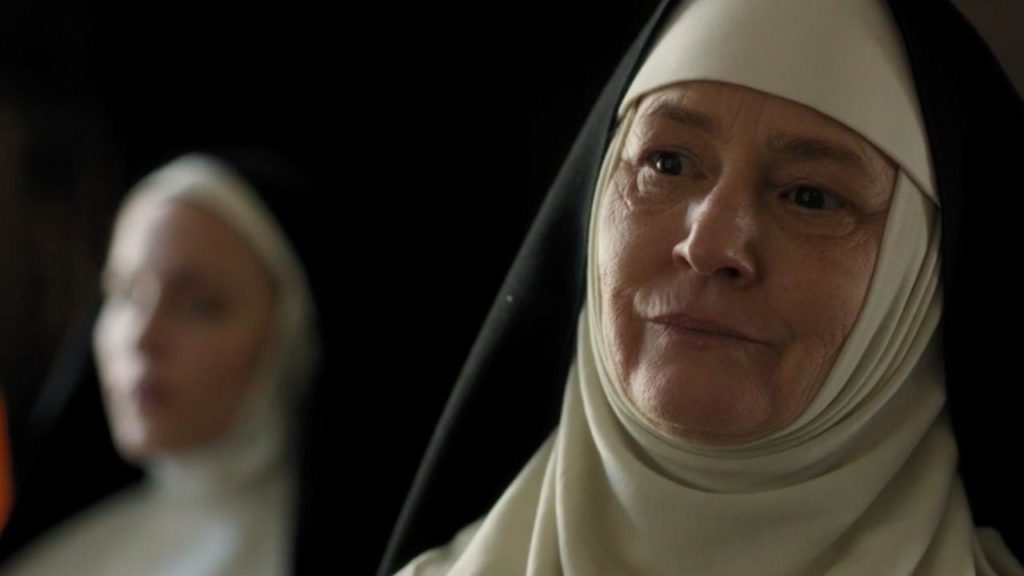
The amusingly naughty but forgettable comedy The Little Hours is based on the dirty fun in your Western Civ class, Boccaccio’s The Decameron.   A hunky young lad goes on the lam after cuckolding a local lord and hides out in a nunnery, pretending to be a deaf-mute.  He is then serially molested by the young over sexed nuns.  There is lots of sexual activity in The Little Hours, all played for laughs and none of it erotic.

It’s the 1300s but the potty-mouthed nuns speak as though it was 2017.  Aubrey Plaza is particularly funny as an unceasingly fierce nun with a knife-to-the-throat fetish and a secret life as a witch.

There are lots of low-grade laughs in The Little Hours, including an ancient nun so intent on her embroidery that she is oblivious to enthusiastic sex in the same room and communion made more challenging by a priest’s palsied hand.  Comedy stalwarts John C. Reilly, Nick Offerman, Fred Armisen and Molly Shannon all sparkle.

Horny nuns, arise!


THE JOURNEY: distrust and risk on a path to peace

Timothy Spall and Colm Meany in THE JOURNEY photo courtesy of SFFILM
Timothy Spall and Colm Meaney in THE JOURNEY
photo courtesy of SFFILM

The Journey imagines the pivotal personal interactions between the long-warring leaders of Northern Ireland’s The Troubles resulting in the 2006 St. Andrews Accords, which set up the current power-sharing government of Northern Ireland.   Ian Paisley had lit the original fuse of the Troubles in the mid-1960s by igniting Protestant backlash to Catholic pleas for civil rights.  Paisley then obstructed every attempted peace settlement for over thirty years.  Martin McGuinness had transitioned to political leadership from chief of staff of the Irish Republican Army, resisting the violent repression of the british Army with a campaign of terror.  Paisley and McGuinness led the two sides in what was essentially a decades-long civil war, although Paisley would dispute that term.  You could fairly say that both had blood on their hands, McGuinness literally and Paisley morally.  Yet they did agree to share power in 2006.

The Journey uses an entirely fictional plot device to isolate the two of them on a road trip.  (The set-up is unlikely,  but you have to go with it.)  Then The Journey relies on the delightful work of two great actors, Timothy Spall, who plays Paisley, and Colm Meaney, who plays McGuinness.

Beyond the political differences and the blood grudge, the two make a classic Odd Couple.  Spall’s Paisley seems completely impregnable to charm.  The Journey is very funny as McGuinesss’ considerable charm and wit keeps falling flat.  In fact, there are plenty of LOL moments from the awkward situations, McGuinness’ quips and their seemingly clueless driver (Freddy Highmore).  Paisley seems utterly devoid of humor until an unexpected moment.

While The Journey is completely fictionalized, it is certainly true that the two had hated each other for decades, did reach agreement in 2006 and thereafter held posts in the same government and personally got along well, evolving an even affectionate personal relationship.  We also see Tony Blair, Bertie Ahern, Gerry Adams and an imagined MI5 character played by John Hurt.

Spall and Meaney took on a considerable challenge:  Paisley and McGuinness dominated the political news in Ireland for decades and are well-known to audiences in the UK and Ireland. Paisley died in 2014, and McGuinness died just last month.  The Journey’s screenwriter Colin Bateman, was born in Northern Ireland, and The Journey was financed by Northern Ireland Screen.

Achieving a sustainable agreement with a longtime blood enemy requires deciding which of your positions are sacrosanct principles and which have more flexibility. It requires risking the loyalty of your political base, which will revolt against leaders perceived as selling them out. It requires gauging the likelihood that your opponent will stick to his side of the deal. And, you have to focus on your outcome – the long-term goal, not just on defeating your enemy in the moment.  “Young men fight for the helluvit. Old men care about their legacy”, says Hurt’s character in The Journey.

I watched The Journey in April at the San Francisco International Film Festival (SFFILMFestival).  To further explore this topic, here is my list of Best Movies About The Troubles.

BABY DRIVER: an action ballet on wheels

Ansel Elgort in BABY DRIVER

Baby Driver is an uncommonly innovative summer action movie with the action overtly tied to the rhythm of music.  The credit goes to writer-director Edgar Wright (Shaun of the Dead), who knows better than to weigh down his genre movies with pretension.  The beauty of Baby Driver is that it doesn’t aspire to be more than it is, but it delivers a surprising added dimension.

Baby (Ansel Elgort) is a professional getaway driver with preternatural driving skill.  The childhood vehicle accident that killed his parents has left Baby with tinnitus, which he covers with music from his ever-present ear buds and several pockets full of iPods.  This gimmick allows Wright to time his chase scenes (and this is a chase scene movie) to the beat of Baby’s music.  Even when Baby walks down the street, he walks musically, evoking the opening title sequence in Saturday Night Fever.

At one point, Baby loses his wheels and continues his escape on foot; his wild run turns into elegant parkour.  In an early vehicle chase, Baby creates a shell game for the cops by matching his car with two identical ones.  And Wright scores one musical chase with the 1971 song Hocus Pocus from the Dutch group Focus; you’ll find it funny – and, if you were around in the early 1970s – you’ll find it even funnier.

The story is pretty basic: Baby is working off a debt to a crime lord (Kevin Spacey), who pairs him with a differently configured set of  robbers for each heist.  Baby falls in love with Debora (Lily James – Lady Rose MacClare in Downton Abbey) and plans to run away with her after One Last Job.  Of course, because he is partnering with a bunch of psychopaths, things don’t go well, and soon he is imperiled, along with Debora and his beloved deaf foster dad.  So there are lots of reasons for him to chase and be chased.

Wright has the perfect star in the baby faced teen heartthrob Ansel Elgort (Caleb in the Divergent/Allegiant/Insurgent franchise and the star of the teen melodrama The Fault in Our Stars).   Elgort’s mom is a ballet dancer (as is his girlfriend), and he tried on ballet before his acting career.  Elgort naturally moves like a dancer and can overtly walk, run and even drive like he’s dancing.

Jamie Foxx and Jon Hamm light up the movie with their performances.  Foxx is terrifying as a murderous psychopath with a hair trigger.  Hamm’s bad guy is less flamboyant at first, but takes over the end of the movie with a relentless and lethal slow burn. Baby’s foster parent is played by CJ Jones, a deaf actor playing a deaf character.  It’s not a very textured role on the page, but Jones brings an unexpectedly deep humanity to his character.

The Mexican actress Eiza González, who has been appearing in action and vampire movies, plays one of the robbers.  Besides being beautiful and sexy, González has a magnetic presence and, in Baby Driver, she’s able to match up with Spacey, Hamm and Foxx.    She’s going to star in an upcoming James Cameron screenplay directed by Robert Rodriguez titled Alita: Battle Angel, which looks like a trashy franchise, but it just might make her a star.

Lily James is winning as a good girl with a wild side, in a much different performance than her good girl with a wild side in Downton Abbey.  The rest of the cast is good, too, down to the bit parts.  And it’s always fun to be surprised by a Paul Williams cameo.

The car stunts are first rate.  Baby Driver doesn’t claim to be a great movie, but it is a damn entertaining one and may well win an Oscar nomination for film editing.


MOKA: whodunit mixed with psychological thriller

Emannuelle Devos in MOKA

In the atmospheric ticking clock drama Moka, Emanneulle Devos plays Diane, a Swiss woman whose daughter has been killed in a hit-and-run accident.  Months afterward, she is still consumed with grief.  Impatient with the slow and uncertain pace of the police investigation and with her husband’s attempts at finding closure, Diane launches her own investigation to find the responsible party and make them pay.

Diane starts connecting dots and begins to suspect Marlène (Nathalie Baye), a shopowner from a neighboring town in France.   Diane adopts the alias of Hélène and, creepily, begins to infiltrate Marlène’s life.  Moka is a whodunit mixed with psychological thriller – who is really the perp and what is Diane capable of doing?

I, for one, didn’t see the big plot twist coming.  Director Frédéric Mermoud adapted the screenplay from the Tatiana De Rosnay novel.

The prolific French actress Emanneulle Devos made a splash in 2001 with Read My Lips and popped up last year in the indie Frank & Lola.  Devos has a very compelling quality.  She excels at playing women who are very intense and possibly dangerous, women like Diane in Moka.

Nathalie Baye is the Meryl Streep of France, nominated ten times for France’s Best Actress award.  She started off in 1972 as Joëlle the script girl in Trauffaut’s Day for Night, and had risen to international stardom by 1982 and her performance in The Return of Martin Guerre – one of the greatest acting turns in all cinema. In Moka, Baye’s Marlène is a seemingly uncomplicated woman.  We correctly suspect that she’s  something else under the surface, but we don’t guess what that really is.  It’s great to see Baye take this supporting role and nail it.

Moka is a well-crafted fuse-burner and a showcase for two great actresses.

Nathalie Baye and Emmanuelle Devos in MOKA

OKJA: a girl and her supermutant pet flee from corporate greed

OKJA
OKJA
Okja is a master filmmaker’s wickedly biting anti-corporate satire.  It’s an endearing Girl-And-Her-Supermutant story with one of the best comic chase scenes since What’s Up, Doc?.  Okja also carries a strident anti-meat-eating message (see my diatribe several paragraphs below).

Director Bong Joon Ho made Memories of Murder, which I consider a masterpiece of neo-noir and of both the cop buddy and serial killer sub-genres. I have Memories of Murder at #14 on my Best Movies of the 21st Century – So Far. I also loved his affecting drama Mother. As with the sci-fi hit Snowpiercer, Bong Joon Ho got a Hollywood budget for Okja so his imagination could run wild.

And run wild he does.  A malevolent and monstrous corporation has engineered “superpigs” for future human consumption.  In a scheme to “Green wash” the product, they have distributed the least disturbing-looking of these freaks to be raised by indigenous farmers around the world.  One of the superpigs, a female named Okja, is raised on a verdant Korean mountainside by the girl Mija (Seo-hyun Ahn) and her grandfather,  Mija and Okja are best friends.  But Mija will need to find a way to thwart the corporate baddies who have planned all along to turn Okja into mutant bacon.

The chubby and clumsy Okja, created by a first-rate Korean CGI crew, is instantly lovable for her love for and loyalty to Mija – they even spoon at bedtime.  Okja looks and moves  more like a hippo than a pig, which makes the movie’s point about genetic engineering while keeping her adorable.

Most of Okja is pretty funny.  It opens with the artificially happy music of an industrial film (one imagines a title like Your Friend the Manhole).  There’s a slacker Millennial with the worst possible attitude for an employee, sure to be recognized by any boss in the audience. The humor ranges from the sly and cutting corporate satire to the literally scatological comedy when Okja expels manure.

The funniest part of Okja is a cell of sweetly earnest and deluded radical animal rights activists, the Animal Liberation Front (ALF), led by Jay (Paul Dano).  One of their members  is so committed to erasing the human impact on the planet that he refuses to eat anything from animals OR plants, and has to be periodically force-fed by his companions when he passes out from malnutrition.  The ALF plans elaborate actions, like repeated rescues of Okja, that play out in mad cap craziness that brings to mind the best of Mack Sennett and Richard Lester.

Okja’s highlight is a chase scene that begins in a tunnel and ends in an underground mall in Seoul.  It’s a triumph of zany thrills.

Tilda Swinton plays twin sisters who are heirs to a vile robber baron industrialist and, with great relish, Swinton depicts them to represent contrasting faces of modern capitalism. One is the corporate leader who wants to make money by exploiting the rest of us, but wants to be loved for it and be perceived as benign; I know a big business leader who continually describes himself as of “the employer community”.  The other is the type of unapologetic, Social Darwinist corporate villain who just doesn’t care what we think – if it has value, she wants it and she will take it.

Seo-hyun Ahn is appropriately steely as the spunky Mija.  Paul Dano is lovable as the clumsily passionate activist leader.  A very broad Jake Gyllenhall plays a corporate spokesman at once despicable, dissolute and ridiculous in his 1970s shorts.

There’s one superb performance in Okja that is escaping critical notice.  Giancarlo Esposito plays Frank, the chief henchman and corporate advisor to both of the twin sister CEOs.   Frank is a master of “managing up”, and one scene in which he spurs a CEO to adopt his idea – and really, really believe that she thought up herself – is brilliantly funny.  In a movie filled with very broad performances, Esposito underplays Frank to great effect.

I do have a problem with Okja’s militant anti-meat perspective.  I advocate knowing where our food comes from, whether it’s the sweet corn that I buy at my farmer’s market from a farmer in Brentwood, California, or the preserved lemons I buy in a jar from Egypt.  Today less than 2% of Americans live on farms, but in my parents’ day, pretty much everyone had experienced firsthand the butchering of meat.

Humans have been eating meat since we could catch another animal (or stumble across one that was already dead).  There is no way to eat meat without killing an animal, skinning and bleeding it and cutting it up.  Even chicken and steers and pigs that are raised free-range, fed organic corn and yada yada still have to be killed and cut up somewhere – they don’t jump into those shrink-wrapped packages themselves.  All that being said, I understand that some people prefer not to see this.

I have toured a meat-packing plant, and the slaughterhouse in Okja is a pretty accurate depiction of the process, although the lighting has been dimmed for a more sinister effect.  I have also seen animals slaughtered for dinner on an All-American family farm, and the slaughterhouse is much cleaner and arguably more humane.

Still, even in Okja, Mija catches fish for dinner, and her grandfather raises – and cooks – chickens.  I respect the members of my own family who choose not to eat animals.  But I think that Okja runs astray by making this perfectly reasonable choice into a moral litmus test.

Some folks will also have a problem with the movie’s extreme changes in tone.  The Animal Liberation Front’s Seoul rescue scene has a very Keystone Kops vibe, where nobody gets hurt.  In the Manhattan chase scene, however, commandos rain down realistic and brutal violence upon the Animal Liberation Front, making the point that corporate forces play for keeps.

I do NOT recommend Okja for children younger than middle school-aged, for whom the slaughterhouse scenes could be traumatizing.

There’s ONE MORE scene at the very end of the closing credits, so stick around.

I saw Okja at a theatrical preview, courtesy of the Camera Cinema Club; most viewers are going to watch this at home on Netflix, but I recommend viewing Okja on the big screen if you get the chance.

Stream of the Week: SEARCHING FOR SUGAR MAN – he didn’t know he was a rock star

SEARCHING FOR SUGAR MAN

What a story! A Detroit construction laborer named Sixto Rodriguez was also a singer-songwriter who cut two albums in 1970 and 1971. The albums didn’t sell in the US, and he faded back into obscurity. Yet in South Africa – completely isolated by the sanctions of the apartheid era – the artist known as Rodriguez became huge, and his songs fueled a protest movement. Rodriguez never knew of his success, and South Africans believed that he had suffered a dramatic rock star death. The powerful documentary Searching for Sugar Man is the story of some stubborn South African music geeks trying to find out what really happened to Rodriguez, and the startling truths that they uncovered. (The title comes from Rodriguez’ most iconic anthem, the song Sugar Man.)

I have never seen a biographical documentary of a contemporary figure with less comment from the subject himself. There is a brief filmed interview with the eccentric Rodriguez, who reveals very little of his perspective on his own story. His songs can only be written by a reflective person, but Rodriguez is the farthest thing from self-absorbed. Still, the interviews with his family, friends and fans and his songs help us feel like we know him.

It’s a flabbergasting and unpredictable story and well told. Sadly, the young director Malik Bendjelloul suddenly died just fifteen months after Searching for Sugan Man won the Best Documentary Oscar. You can stream it from Amazon, iTunes, Vudu, YouTube and Google Play.

THE WOMEN’S BALCONY: a righteous man must keep his woman happy

THE WOMEN'S BALCONY
THE WOMEN’S BALCONY

A community of women in a traditional culture revolt in the delightfully smart and funny Israeli comedy The Women’s Balcony.   The balcony in a small Jerusalem synagogue  collapses, and the building is condemned.  The old rabbi’s wife is seriously injured, and he suffers a trauma-induced psychotic breakdown.  Just when it looks like the leaderless congregation will die, a young and charismatic rabbi (Avraham Aviv Alush) appears, enlivens the congregation and repairs the building.  But he rebuilds the synagogue WITHOUT the women’s section.  Profoundly disrespected, the synagogue’s women strike in protest.

The women live in a culture where males have all the power and religious authority trumps all.  The women all have their individually distinct gifts, personalities and rivalries. But they all appreciate the injustice of the situation, and they are really pissed off.  They are very creative in finding way to leverage the power that they do have, and the result is very, very funny.

This could have been a very broad comedy (and a Lysistrata knock-off).  Instead, it’s richly textured, with an examination of ethical behavior and loving relationships.  It’s also dotted with comments on the relations between Israeli Orthodox and Ultra-Orthodox and on the importance of food in this culture.  It’s the first – and very promising – feature for both director Emil Ben-Shimon and writer Shlomit Nehana.

THE WOMEN'S BALCONY
THE WOMEN’S BALCONY

There are plenty LOL moments, including a scene where one of the congregants masquerades as the demented old rabbi to secure the needed psychotropic meds.

We soon understand that the young rabbi has a very unattractive side – grossly sexist and power-hungry. But he has seduced the men and then cows them by manipulating his religious authority. He’s tearing apart a closely bound community braided together by decades of deep friendship and inter-reliance. The movie turns on whether the men can recognize when his supposed righteousness veers into what is really unethical and, in one pivotal scene with the old rabbi, indecent.

Two of the male characters, deeply in love with their women, step up and do the right thing. This overt comedy has a very a romantic core.

Most of all, The Women’s Balcony is about mature relationships. Most of these couples have been married for decades, especially the couple at the core of the story, Ettie (Evein Hagoel) and Zion (Igal Naor). Ben-Shimon and Nehana prove themselves to be keen and insightful observers of long-lasting relationships.

A righteous man must keep his woman happy. This may not be written in the Holy Scriptures, but it’s damn useful advice. (It also helps, we learn, if he can make a mean fruit salad.) The longer you’ve been married, the funnier you’ll find The Women’s Balcony.

THE HERO: taking ones own measure

Sam Elliott in THE HERO

The bittersweet dramedy The Hero has one thing going for it – Sam Elliott, he of the profoundly deep and sexy voice.  Elliot has a rascal’s sparkle in his eye and a smile that can make panties slide off by themselves.  He pulls off a mustache that would be ridiculed on any other man walking the earth.

In The Hero, Elliott plays Lee, a selfish screen actor of Elliott’s real age (73).  Lee has made “one film I’m proud of” – a Western from forty years ago titled “The Hero“.  Now, in a hilarious Sam-Elliott-winks-at-himself, Lee is relegated to doing commercial voice-overs, his buttery tones hawking a supermarket BBQ sauce.  He has left some relationship carnage in the wake of his career : an ex-wife (Elliott’s real-life wife Katharine Ross) and an estranged daughter (Krysten Ritter) in his wake.  And his best friend is his pot dealer (Nick Offerman).

Lee receives a very, very bad cancer diagnosis (even for cancer).   Contemplating – or avoiding contemplating – the end of his life, he is forced to take his own measure.  He knows that he’s “The Hero” on-screen but angry daughter knows well enough that he’s no hero off-screen, and so does he.

He finds himself fascinating a younger woman (Laura Prepon – Alex from Orange Is the New Black and Donna in The 70s Show).  And he stumbles into a viral social media frenzy that promises to reignite his career when it’s too late. But what he hungers for the most is patching things up with his daughter.

Lots of drugs are consumed in this movie, mostly massive amounts of marijuana going up  in smoke.  The Hero’s dream sequences are already vivid and then Lee takes shrooms… Lee becomes the guest star for a bottom-scraping fan group event, and shows up totally high on Molly; the scene is hilarious.

Elliott’s movie debut was playing Card Player #2 in 1969’s Butch Cassidy and the Sundance Kid.  His career went through a hunky phase, but then blossomed in Elliott’s middle age with an indelible performance in 1993’s Gettysburg and then Tombstone, The Big Lebowski, We Were Soldiers, I’ll See You in My Dreams and last year’s Grandma, of which I wrote “worth seeing for ten minutes of Sam Elliott”.

I saw The Hero at the Camera Cinema Club.  There’s nothing here that you haven’t seen before. But then it’s usually worth watching Sam Elliott again, anyway.