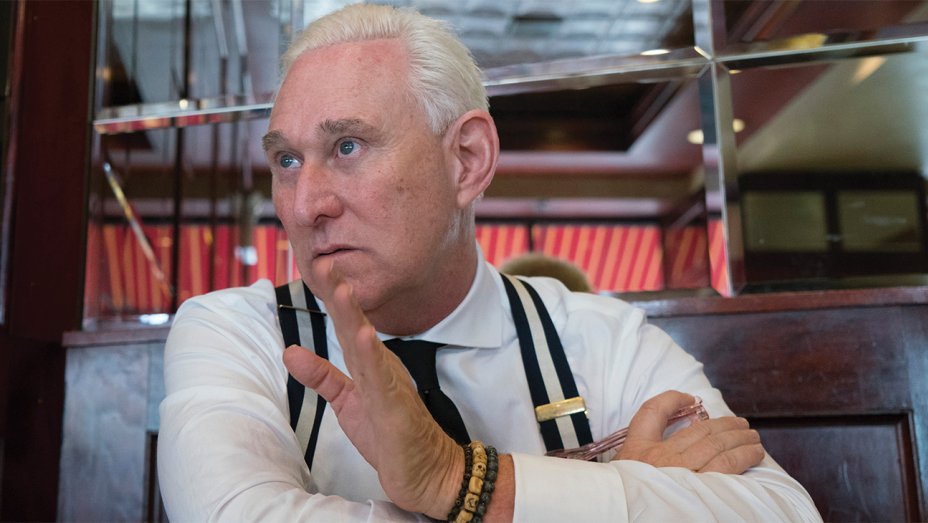
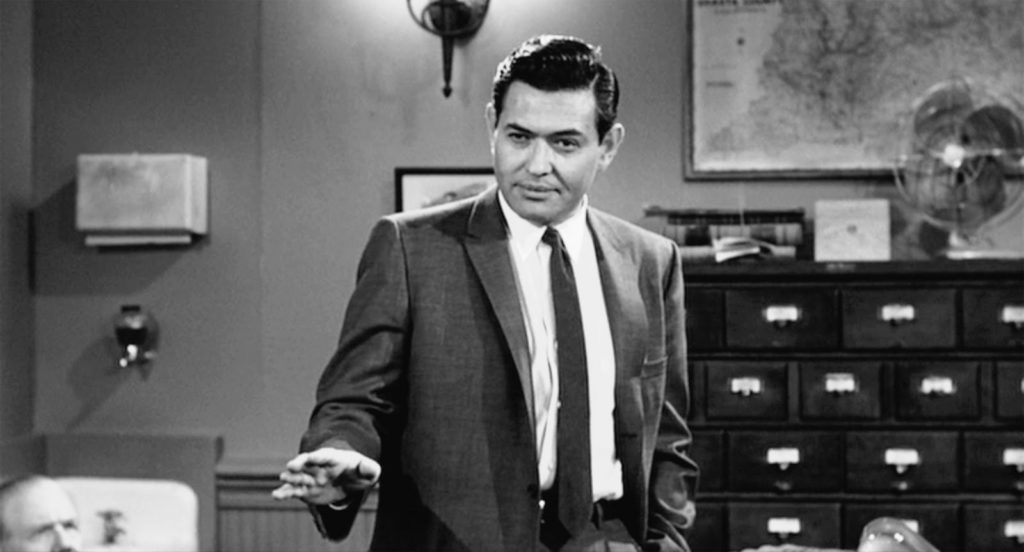
Roger Stone in GET ME ROGER STONESo this week’s biggest news has been the indictment of former Trump campaign chief Paul Manafort. The indictment comes out of special prosecutor Robert Mueller’s probe of the Russian hacking of last year’s presidential campaign. Earlier this year, Netflix released the documentary Get Me Roger Stone, and IMDb bills Paul Manafort third in the “cast”, right behind Roger Stone and Donald Trump.
Get Me Roger Stone is an insightful look at the career of political consultant/provocateur Roger Stone, one of the most outrageous characters on the American political scene. What’s especially relevant today is that Roger Stone and Paul Manafort together invented a new model of lobbying – where the political consultants who help get a candidate elected to high office, then sell their influence over said elected official.
Even without the Manafort angle, Get Me Roger Stone is an entertaining watch, although you might find Roger Stone himself too loathsome to watch. Stone will do anything – no matter how duplicitous – to win a political campaign. He will do anything to bring public attention (i.e., notoriety) upon himself. And he is utterly unapologetic about both. Stone is the political world’s version of a pro wrestling villain.
Roger Stone is the unmatched master of high jacking a news cycle with a preposterous smear. The man has a tattoo of Richard Nixon’s face on his back, which tells you a whole lot about him.
Get Me Roger Stone also chronicles Stone’s decades-long quest to get Trump to run for president, and then Stone’s role as an unofficial/official/unofficial Trump strategist. The documentary also touches on a Roger Stone sex scandal.
Anyway, it’s ripped from the headlines, and you can stream it from Netflix Instant.
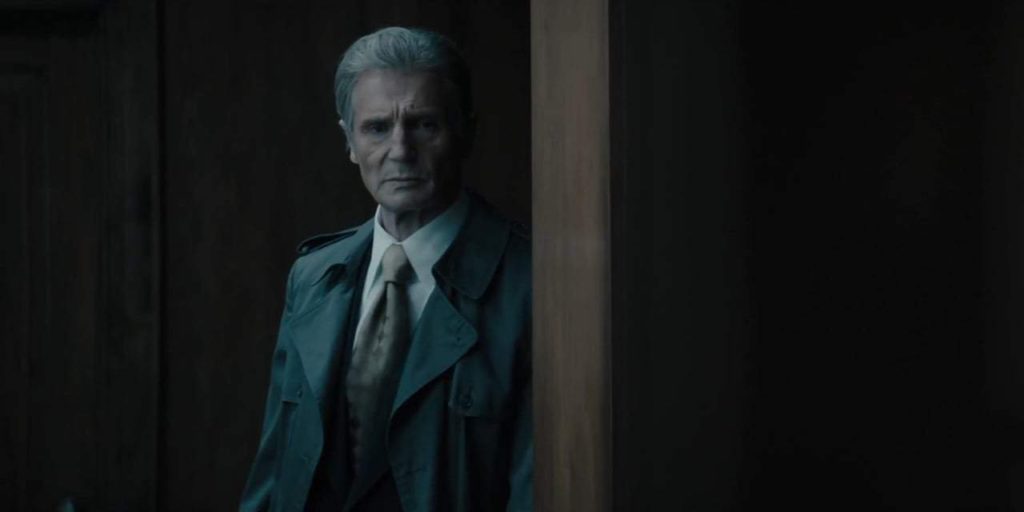
Liam Neeson in MARK FELT: THE MAN WHO BROUGHT DOWN THE WHITE HOUSE
In the sagging docudrama Mark Felt: The Man Who Brought Down the White House, Liam Neeson plays the title character – the man at the center of modern American history’s most compelling mystery. The Washington Post source known as Deep Throat was responsible for keeping the Watergate scandal alive until it dethroned Richard Nixon from the presidency. Deep Throat’s identity remained secret for thirty years. It turned out to be Mark Felt, the number two official at the FBI.
Think about it – this was one of the most compelling people in America for thirty years. Deep Throat was clearly one of a handful of men so well-positioned at the center of government power that we would know him, but no one could finger him. The intrigue was brilliantly captured in All the President’s Men, in which Hal Holbrook played Deep Throat.
In Mark Felt: The Man Who Brought Down the White House, Neeson plays Felt as a stolid, principled and crafty bureaucratic survivor. Somehow the character just isn’t that personally interesting. The story attempts to flesh him out with a troubled wife (Diane Lane, always superb, even in this thankless role) and a runaway hippie daughter.
As we watch Mark Felt, it gradually becomes apparent that this is a one-note character in a one-note movie. The leaden, pseudo-dramatic soundtrack doesn’t help. Mark Felt also fumbles the chance to get some spark out of Watergate icons John Dean, John Erlichman and John Mitchell. The real-life mystery is so much more interesting than this movie. The movie may be irresistible to Watergate buffs like me, but probably should be resisted.
Mark Felt was directed by Peter Landesman, who recently made the near-masterpiece Parkland. Parkland explores the JFK assassination from the viewpoints of the secondary participants. Mark Felt, however, is not a work of directorial mastery.
Marton Csokas is excellent as weak-willed and overmatched FBI Director L. Patrick Gray. Nixon handpicked Gray to be his stooge only to leave Gray, as henchman John Erlichman indelibly described, to “twist slowly, slowly in the wind”.
In Loving, Csokas, with pitiless, piercing eyes, was remarkably effective as the Virginia sheriff dead set on enforcing Virginia’s racist statute in the most personally intrusive way. Too often, actors seem to be impersonating Rod Steiger in In the Heat of the Night when they play racist Southern sheriffs, but Csokas brought originality to that performance. Here Csokas is able to portray a man of ability and ambition, but not spine.
The great but personally turbulent actor Tom Sizemore showcases his talent once again in the film’s most showy role, a bitter and cynic relic of the FBI’s most sordid skullduggery. Sizemore brings a magnetic cocktail of menace and humor to the role. Besides Diane Lane, the always welcome Bruce Greenwood and Eddie Marsan show up in minor roles.
Perhaps needless to say, Mark Felt: The Man Who Brought Down the White House has made my list of Longest Movie Title.
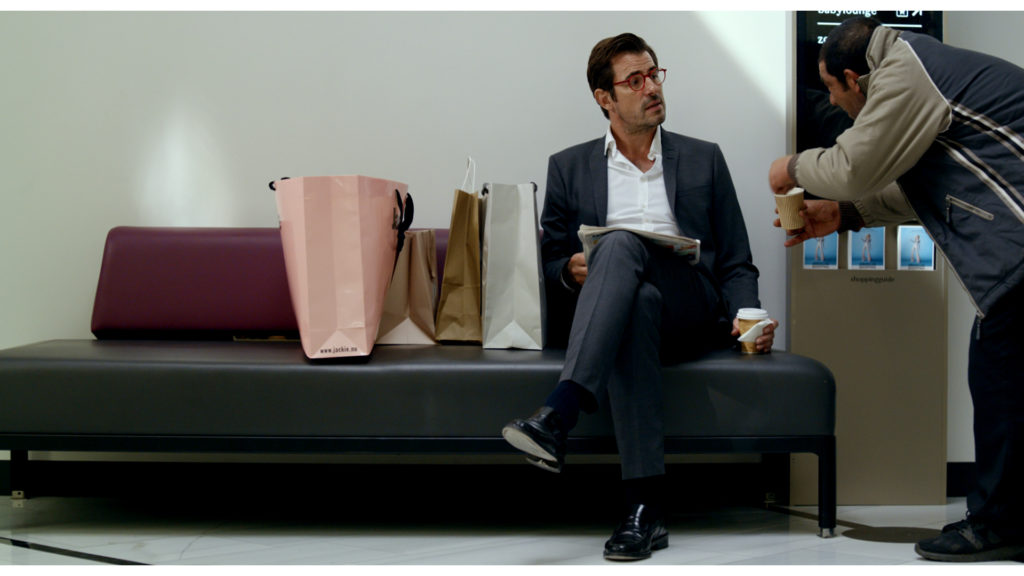
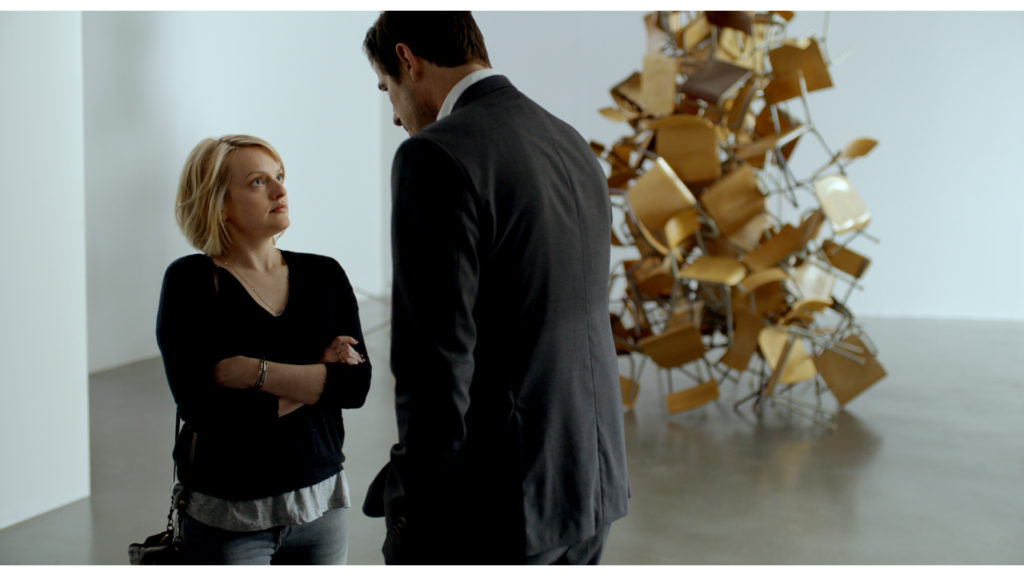
Claes Bang in THE SQUARE. Photo courtesy of Magnolia Pictures.
The Square, the social satire from Swedish writer-director Ruben Östlund is one of the most ambitious movies of the year. Often LOL funny, and just as often uncomfortable, The Square hits moments of triumph that would constitute a great movie if they were braided together more cohesively.
The Square is set in a world that is ripe for mockery – Christian (Claes Bang) is chief curator at a Stockholm museum of modern art. The museum is funded by the very rich, and the art is impenetrably pretentious, inaccessible to all but those predisposed to deconstruct it (or at least pretend to). One installation is described in straight-faced mumbo jumbo as “relational aesthetics”. Another is a roomful of conical piles of rubble, with a museum guard rebuking visitors with a stern “no pictures!”.
Christian is comfortable in his privilege, but he is curious about exploring social inequity – but only as an intellectual exercise. Christian is interested in street beggars (and finds one especially ungrateful one), and The Square is filled by “help me” moments. He is victimized by a robbery that seems like performance art, and sets off on an adventure called the “Tesla of Justice”, which goes horribly awry.
There are lots of laughs in The Square. Christian admonishes a colleague not to use Comic Sans font in a threat letter. There’s a very funny tug of war in a post-coital spat. A self-congratulatory on-stage interview with a precious artist wearing a blazer over pajamas, is disrupted by an audience member with Tourette’s who ejaculates “cock godammit” and the like, all while the audience pretends it’s all ok. And there’s a riotous thread with PR guys making a BS pitch that results in the very most counter-productive promotional video (think Springtime for Hitler in The Producers).
Östlund is very gifted at finding the humor in interruptions. The most serious, intimate and formal discussions are interrupted by a baby crying, construction noise and lots of cell phones ringing.
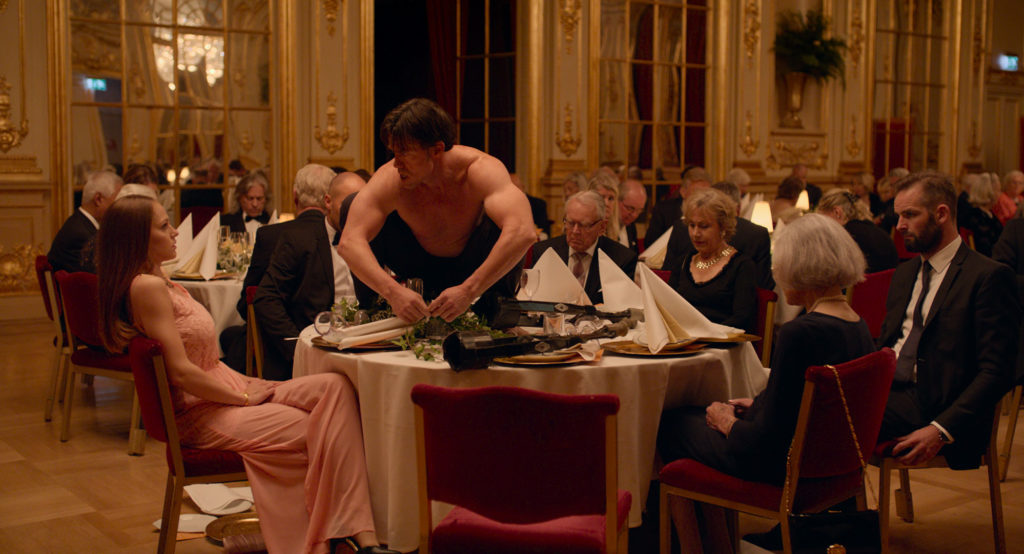
And, finally, there is a museum opening gala with a “welcome to the jungle” theme. This segment of The Square could stand alone as a sort film and probably win an Oscar. (Again, completely universal terror is interrupted by a ringing cell phone.) But, it’s unclear how this fits inside The Square’s themes.
Elisabeth Moss and Claes Bang in THE SQUARE. Photo courtesy of Magnolia Pictures.
The Square is very well-acted. Claes Bang is exceptional as Christian, exuding the ennui of Marcello Mastroianni in 8 1/2, Gabriele Ferzetti in L’Avventura and David Hemmings in Blow-up.
As an American journalist, Elisabeth Moss (who is always excellent) gets to show us her playful side, which is a treat; there’s a wonderful Moss moment when her eyes tell us she’s made a decision about her sex life while in the restroom line.
The most stunning performance is by Terry Notary as the performance artist at the gala. Notary, a stunt coordinator, choreographer and movement coach, is a master of motion capture, and his work has been featured in the Planet of the Apes and The Hobbit franchises and Andy Serkis’ Jungle Book. It’s one thing to imitate an ape, but Notary’s performance in The Square plays off of and dominates a banquet room full of other actors. It’s a really singular performance.
Terry Notary (on table) in THE SQUARE. Photo courtesy of Magnolia Pictures.
I loved Ruben Östlund’s Force Majeure, which made my list of Best Movies of 2014 Force Majeure was Sweden’s submission for the Best Foreign Language Oscar. It is available on DVD from Netflix and streaming from Amazon, iTunes, Vudu and Xbox Video. Force Majeure was a satirical drama with some very funny moments; The Square is a satirical comedy with some very serious themes.
The Square is a movie that my head liked a lot, but it didn’t thrill my heart. Filled with brilliant moments, it just doesn’t hold together as one cohesive great movie.
[SPOILER: At the end, Christian tries to be genuinely helpful by making amends – but he is proven ultimately and ironically helpless.]
It’s the favorite month for scary movies, so The Movie Gourmet is featuring Hitchcock’s classic Psycho, with two superb 2017 accompaniments.
I recommend that you start with the six-part series of podcasts Inside Psycho. Podcaster Mark Ramsey begins with the real-life crime that sparked Psycho’s origin story and takes us through the purchase of the book rights, which turned out to be a very one-sided business deal. Ramsey puts Psycho in the context of Hitchcock’s career moment and reveals the film’s stepchild status at Paramount (it was filmed at Universal with a TV crew). He gives us a deep dive into the filming of the shower scene, including the censors’ search for the nudity (was it really in there?). We even learned about Hitchcock’s demands as to how Psycho would be exhibited – rules that changed the movie-going habits in our culture. Ramsey even tells us what happened to Marion’s car.
You’ll enjoy the movie more after you’ve listened to this podcast. Go to your podcast app and search for “Inside Psycho” or access the Inside Psycho website.
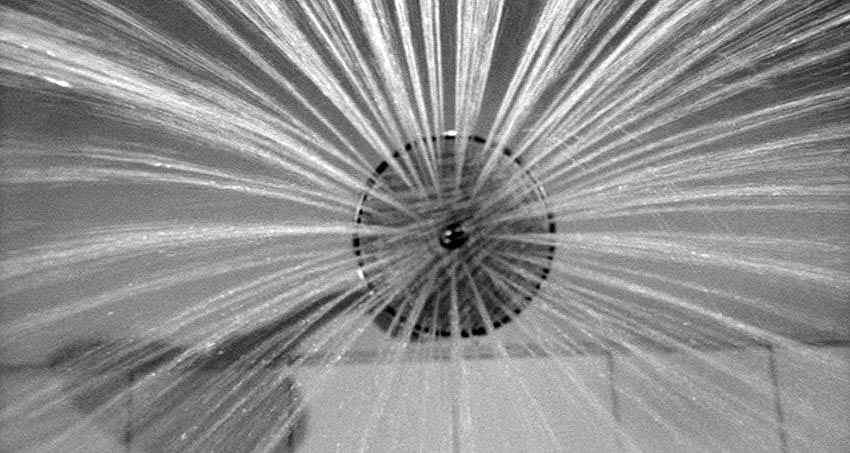
For your next course, I recommend this year’s documentary 78/52: Hitchcock’s Shower Scene, named for the 78 setups and 52 cuts in Psycho’s shower scene. Documentarian Alexandre O. Philippe takes us through aspects of the movie, but drills most deeply into the notorious shower scene. Philippe brings us noted composer Danny Elfman to comment on Bernard Herrmann’s famously screeching strings. We hear from Walter Murch, the brilliant film editor who invented the field of movie sound design, about the visual imagery and sound effects. And Amy Duddleston, the film editor on the 1998 Gus Van Sant Psycho remake, ruefully recounts how it’s all even harder than it looks.
Here’s a representative nugget from both Inside Psycho and 78/52. Before her shower, Janet Leigh as Marion enters the bathroom, tears up paper notes and flushes them down the toilet. Amazingly, this is the first flushing toilet in hitherto prudish American cinema. Seconds later, of course, come more shocks.
And here’s a treat, we meet the perky and amiable Marli Renfro, the Playboy Bunny and pin-up girl who was Janet Leigh’s nude body double in the shower scene. That scene took seven grueling days to film. Jamie Lee Curtis relates her mom’s weariness with the strategic moleskin that kept slipping off. Renfro was just happy to pick up the extra paychecks.
Finally, there’s a fun montage of Psycho references in later movies and popular culture. In what must be a spectacular half-joke, the documentary is dedicated “to Mother”. 78/52: Hitchcock’s Shower Scene is available to stream from Amazon, iTunes, YouTube and Google Play.
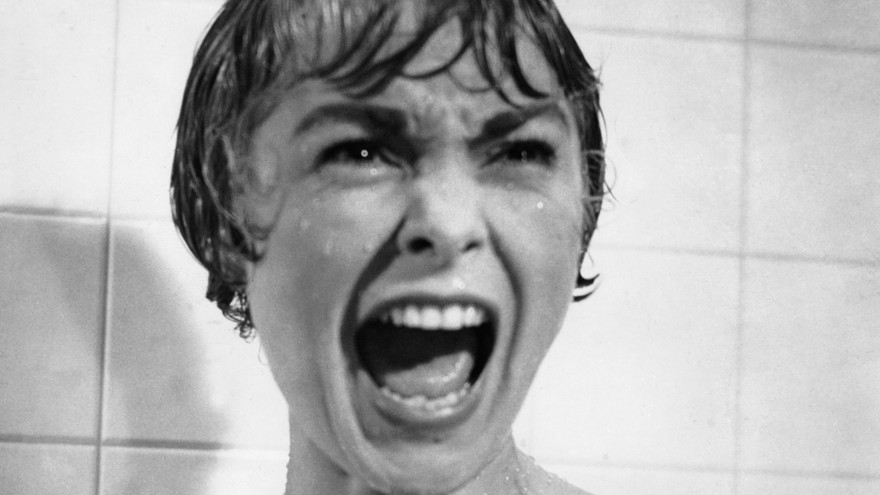
Janet Leigh in PSYCHO and 78/52: HITCHCOCK’S SHOWER SCENE
And then, of course there’s the original Psycho itself. It’s still effectively shocking – both in killing off the star one-third of the way through (almost unthinkable even today) and in the climactic reveal. Anthony Perkins is wonderful as Norman Bates, especially in how he gets us to understand immediately that Norman’s awkward oddness may be an indicator of more severe insanity.
Psycho is one hour and 49 minutes long. The key is to stop watching as soon as poor Simon Oakland shows up on-screen as the shrink Dr. Fred Richman. The usually reliable character actor Oakland was thanklessly tasked with delivering an interminable five-minute lecture on Norman Bates’ diagnosis. It’s painful overexplaining and brings downs the Psycho experience. You’ll thank me.
You can rent the original Psycho on DVD from Netflix, stream it from iTunes, Vudu and YouTube, or catch it on Turner Classic Movies or elsewhere on TV.
When there’s a movie that is supposed to be good for you, but you really don’t enjoy it, I call it an “eat your broccoli” movie, and the documentary Dawson City: Frozen Time is an example.
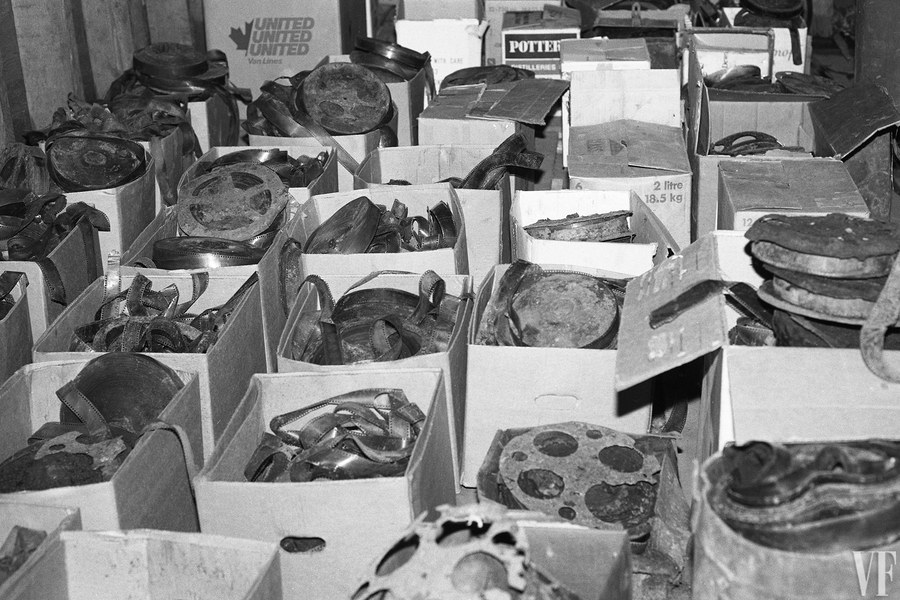
An estimated 75% of all silent movies have been lost. Dawson City: Frozen Time is about the discovery of hundreds of silent films. It turns out that Dawson City, a mining hamlet in the Canadian Yukon, was the last stop on a movie distribution circuit. When a movie played Dawson City, it was already two years after the initial release, so the distributors didn’t find it worthwhile to pay for the return of the film. Accordingly, many movies from the silent era were stored or disposed of in Dawson City, where they were uncovered by a construction bulldozer in 1978.
That’s all interesting enough, and 5-10 minutes would be enough to tell this story, and then we could focus on the most compelling of the actual Lost Films, and that could make a fine documentary. But the two hours of Dawson City: Frozen Time is a loooong two hours.
There are some interesting documentary nuggets. One example is an illustration of how hand grenades were manufactured for WW I.
Baseball fans will treasure clips from the 1919 World Series, which is infamously known for the “Black Sox” scandal. Some Chicago White Sox stars took money from gamblers to throw the series. In Dawson City, we actually get to see some of the suspiciously inept plays by the heavily favored Sox.
The best part is about two-thirds through – a montage of found films. The images are compelling, and the performances have a surprising magnetism.
By far the worst part of Dawson City is its off-putting score. The drone of discordant chords (is that an oxymoron or just impossible?) played on various keyboard instruments is distracting and then finally unbearable. I was annoyed enough, but then The Wife, from another room in the house, called out, “That music is TERRIBLE”.
I need to tell you that I’m outside the critical mainstream on Dawson City: Frozen Time, which has an impressive Metacritic score of 85. Major critics that I highly respect have described it as “instantaneously recognizable masterpiece”, “thrilling”, “hypnotic” and even “elevates…to the level of poetry”. But not for me.
Dawson City: Frozen Time can be streamed from Amazon, Vudu, YouTube and Google Play.
The Belgian writer-director brothers Luc and Jean-Pierre Dardennes are among my very favorite filmmakers. Their movies about everyday people in gritty industrial Belgium have been startlingly authentic and emotionally gripping. However, their latest, The Unknown Girl, is a bit of a slog.
In The Unknown Girl, a compassionate and hardworking doctor (Adèle Haenel) is working late and doesn’t answer the office doorbell after hours. It turns out that a young woman had been trying to get inside just before she was murdered. The cops can’t even identify the victim. The doc is wracked with guilt and embarks on a quest to identify the young woman and to solve the crime.
So this is a murder mystery – the closest thing ever to a Dardennes brothers genre movie. Unfortunately the deliberate, real-time pace that intensifies the emotional experience of the Dardennes’ other work just drags in The Unknown Girl. And there are just one or two coincidences in the plot to swallow.
Adèle Haenel (recently so good in In the Name of My Daughter) is excellent and the best thing about the film. She’s in every scene and portrays a driven and remarkably self-aware character, who often intentionally suppresses her emotions to do the best job possible for her patients.
This isn’t a bad movie, just not a spectacularly good one. By all means, see a Dardennes film, just make it The Son or The Kid with a Bike.
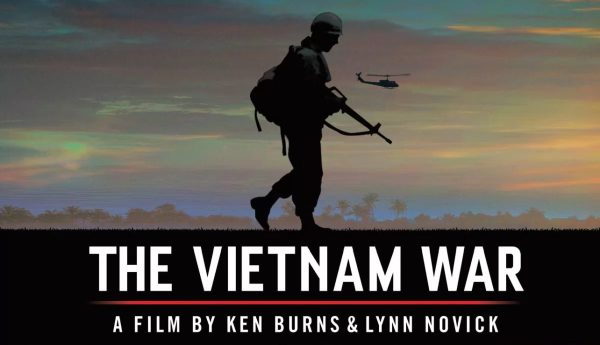
The new PBS documentary by Ken Burns and Lynn Novick, The Vietnam War, is one of the best documentaries of the century and a superb history lesson, crucial to understand the America of today. It’s a Must See for Baby Boomers. For different reasons, it’s a Must See for Americans of later generations. The ten episodes of The Vietnam War can be streamed from PBS through October 15.
It’s impossible to overstate the effect of the Vietnam War upon Americans of my generation. I was watching TV at nine years old when I viewed a Buddhist monk setting himself on fire. Vietnam got my attention on that day and held it throughout my youth. I remember watching the television news, with the weekly “body count” scorecards for dead Americans, Army of the Republic of Vietnam (ARVN), Viet Cong and North Vietnamese Army (NVA). I was almost 15 when, overnight, the Tet Offensive changed the appraisal of the war by the mainstream American public. I was almost 19 when I got my draft lottery number. I was 22 and about to graduate from college when Saigon fell.
Last week, a carpenter about my age did some work at my house. When he arrived, he commented that he heard through the door that I was watching The Vietnam War. It took us about two sentences to get to the draft. Each of us instantly remembered our lottery numbers (mine was 65, his was 322). Both of us remembered where we were on February 2, 1972, the night of that lottery drawing.
For Baby Boomers, The Vietnam War provides context for our experience, along with some new revelations. Younger Americans who watch The Vietnam War will now understand what happened then and how it affects our culture and our politics to this day.
Burns and Novick tell their story mostly through first person accounts, from real people recounting their experiences 40-60 years ago. The American talking heads aren’t big shots, but people who were soldiers, protesters, POWs, journalists and family members who lost loved ones. But Burns and Novick also bring us Vietnamese witnesses – soldiers and civilians from the ARVN, Viet Cong and NVA. Including the Vietnamese points of view – as disparate as the American ones – works to complete the picture.
The Vietnam War also brings us new information about the era’s most iconic photos. We all remember the shocking still photo of the summary pistol-to-the-temple execution of a Viet Cong by a South Vietnamese police official; The Vietnam War brings us the original network TV film clip that was shot and shown only once on the TV news. There’s the unforgettable photo of the Kent State coed, with hands outstretched over the corpse of a fellow student; we also see a never-before-shown home movie clip shot of the scene by another student. Finally, we hear from the journalist who photographed the running Vietnamese girl burned by napalm, and we see film from that scene, too.
Who remembers that “light at the end of the tunnel” was coined by a French general in Vietnam, and later adopted by American brass (a bad choice, given the French experience)? We hear the phrase used again in a very grim joke in late April 1975.
The Vietnam War shows us that Le Duan had shouldered Ho Chi Minh aside and ran the North Vietnamese side of the war for its last eight years. Study of Le Duan provides us with some important lessons. First, never get in a war of attrition with a fanatic. Second, never let a fanatic run your postwar economy or foreign relations.
The Vietnam War is unmatched in tracing the evolution in the American public’s attitude during the long, long war. There was some public opposition to the War almost from the beginning, but the Tet Offensive in early 1968 convinced the great majority that the US could never win and needed to find a way out. But many Americans despised the anti-war protests. It was the protests that divided the American nation. Oddly, at the same time there was both a policy consensus (get out of Vietnam) and a cultural civil war.
And The Vietnam War, through his own words on White House tapes, exposes Henry Kissinger (the favorite of the American press) as the cynical sycophant that he was, ever flattering Nixon and conspiring to delay peace to favor Nixon’s political fortunes.
There is no more evocative aspect of The Vietnam War than its soundtrack, with 120 songs from the era from Jimi Hendrix, Bob Dylan, The Beatles, The Rolling Stones, Buffalo Springfield, Nina Simone, Simon and Garfunkel, Cream, Janis Joplin, Pete Seeger and even the Zombies, Procol Harum, Vanilla Fudge and Link Wray. One episode ends with my choice as the anthem for 1971 in America – Marvin Gaye’s What’s Going On. The songs are absolutely perfectly matched with the usual and spoken content, perhaps the most masterful use of popular music on a soundtrack that I have seen (and heard). You can even review the episode playlists .
Through October 15, you can stream, The Vietnam Warhere.
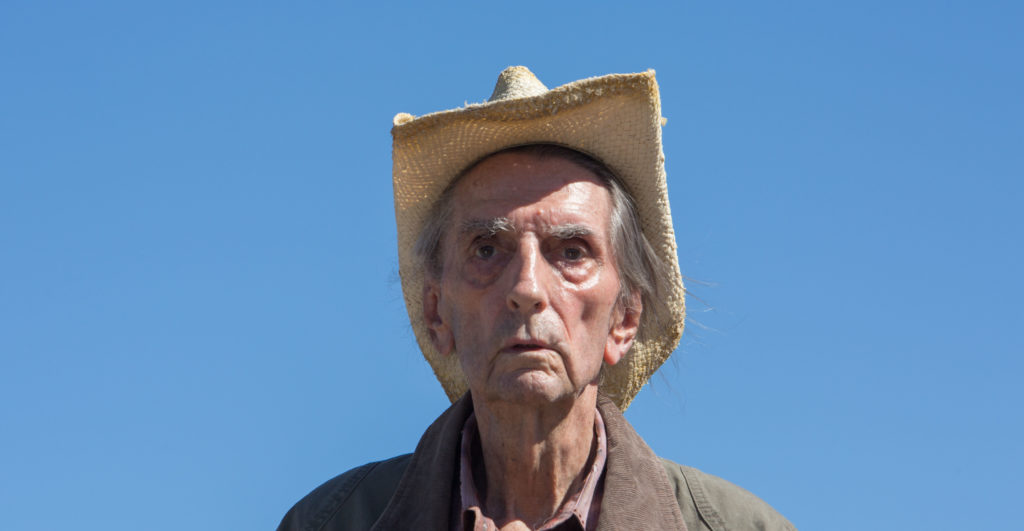
Harry Dean Stanton in LUCKY. Photo courtesy of Magnolia Pictures
Let’s not bury the lede: Lucky is Harry Dean Stanton’s last film. Lucky was written for Harry Dean, and the main character is reportedly not dissimilar to Stanton. Here’s my Harry Dean Stanton remembrance.
Lucky is a vivid portrait of a singular character. It’s also a meditation on life and the end of life and how you can control how you live.
Stanton plays Lucky, a nonagenarian who lives in his isolated house on the edge of a Mojave desert town. The town is so small that everyone knows everyone else. There’s not a lot of action in Lucky. We watch Lucky as he purposefully plods through his modest daily routine: to his refrigerator, to the diner, to the local bar, plopped in front of his TV to watch “my shows”. Lucky is sometimes confused by age, but retains great strength of conviction and a formidable will.
Lucky is not really anti-social but he is minimally social. He values his privacy and doesn’t seek human interaction, but he accepts it as it occurs organically. He is not a stereotypical movie curmudgeon with a heart of gold. He’s prickly, but capable of authentic tenderness, as when he shares a joint with a waitress friend and when he belts out the Mexican tearjerker Volver, Volver.
He’s also an atheist. Being areligious doesn’t mean that someone is amoral. Not at all. Lucky lives by a firm code – he is so offended when thinks someone is exploiting a grieving friend, he fiercely tries to fight a man fifty years his younger.
But as we observe Lucky not doing much, we are pulled into an increasingly profound contemplation. How do we choose to live our lives if there’s no afterlife? How afraid are we of the finality of death? What is meaningful? What’s in our control?
This is also a pretty funny film. Lucky reminds us that Harry Dean was a master of both the deadpan and the sarcastic jibe. And Lucky has lived decades without female or other supervision, and his habits, like watering cactus in his underwear and cowboy boots, are pretty entertaining.
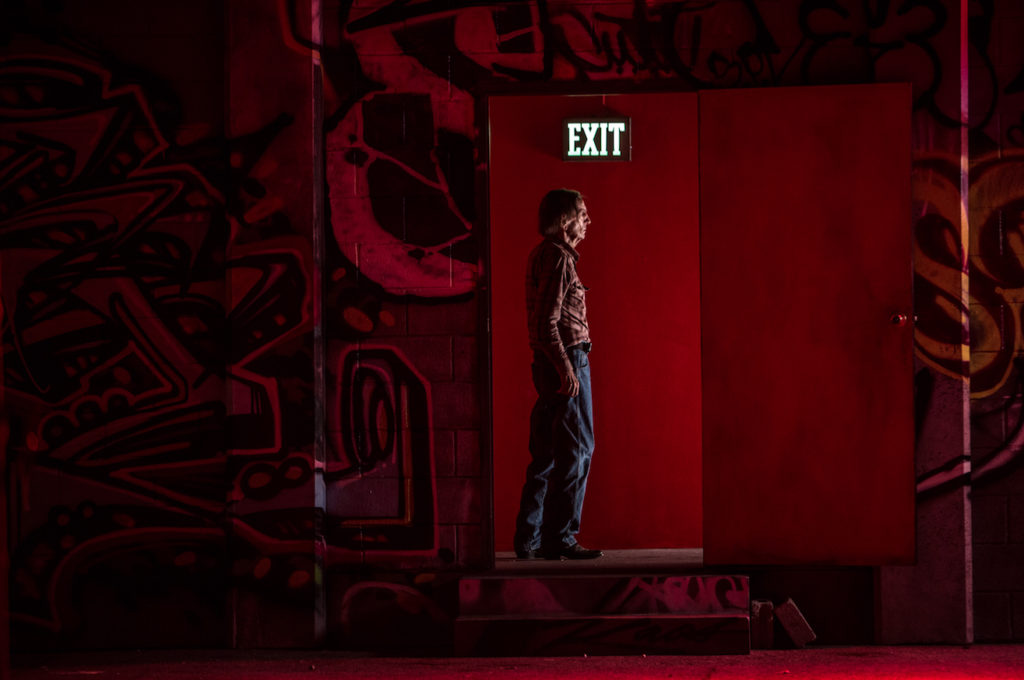
Lucky is the first film directed by the actor John Carroll Lynch, so creepy in Zodiac and so heartbreaking in The Founder. Lynch is a confident enough director to take his time. And, if you have any doubt about where Lynch sees Lucky on the continuum of life, check out this shot.
Harry Dean Stanton in LUCKY. Photo courtesy of Magnolia Pictures
Lynch gets excellent performances out of the rest of the cast: Ed Begley, Jr., James Darren (yes, the 60s heartthrob), Ron Livingston, Barry Shabaka Henley (recently so good in Paterson), Yvonne Huff and, surprisingly, the director David Lynch. Tom Skeritt delivers a moving monologue.
But, in the end, this is Harry Dean Stanton’s film. And, to Lynch’s credit, it’s a fine way to remember Harry Dean.
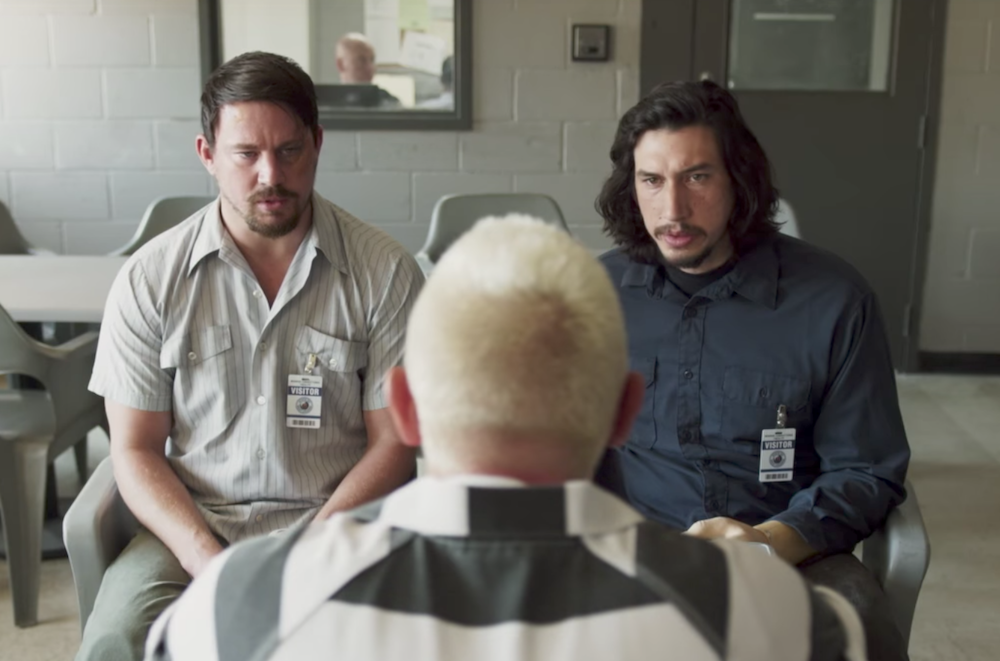
Channing Tatum and Adam Driver face Daniel Craig in LOGAN LUCKY
There’s not much to say about Stephen Soderbergh’s Logan Lucky, except that it’s a benign and sporadically entertaining two hours at the movies. A couple of down-on-their-luck West Virginia brothers, played by the always appealing Channing Tatum and Adam Driver, mastermind a high-profile heist. These guys have never had a bit of success in their lives, and they are Not Bright, but they are seeking to outsmart an icon of American corporate culture. The funniest aspects of Logan Lucky stem from their need to enlist an imprisoned safe-cracker, improbably played by Daniel Craig; Craig, deadpan in his bleached buzz-cut, is very funny.
The heist is cool because I hadn’t seen this particular money delivery system before (it ain’t an armored car), and one of the guys gains some critical intel because he’s a coal miner. There’s an effective plot twist AFTER the heist, and Hilary Swank shows up to presage a sequel.
I was moderately glad that I saw it and haven’t thought much about it since.
On September 21, Turner Classic Movies presents five movies with some of the most unforgettable rock concert footage:
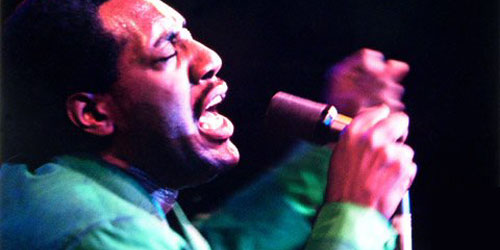
Monterey Pop (1968): This is one of the few DVDs that I still own, for the performances by Mamas and the Papas, Jimi Hendrix, Janis Joplin, Otis Redding, Canned Heat, Simon and Garfunkle, Jefferson Airplane, Eric Burdon and the Animals, Country Joe and the Fish and The Who. It’s okay with me if you fast forward over Ravi Shankar. Pete Townsend and Jimi Hendrix had a guitar-destroying competition, which Hendrix, aided by lighter fluid, undeniably won. The Otis Redding set is epic.
Woodstock (1970): TCM is airing the director’s cut of the film chronicling the most iconic rock concert ever, also a pivotal social and cultural phenomenon. Performers include: Joan Baez, Crosby Still & Nash, Arlo Guthrie, The Who, Sha Na Na, Richie Havens, Joe Cocker, Country Joe and the Fish, Jimi Hendrix, Sly and the Family Stone, Santana and (wait for it…) Ten Years After.
Gimme Shelter (1970): The anti-Woodstock – the ill-fated Rolling Stones concert at Altamont, showing what happened when someone tried to put on a major free concert without Bill Graham or any other adult supervision, depending on the (literally) murderous Hell’s Angels for security. Includes some footage of that notorious publicity grabber, attorney Melvin Belli in real-time negotiations. What’s unforgettable, of course, is watching Mick Jagger dealing with a murder at the foot of his stage.
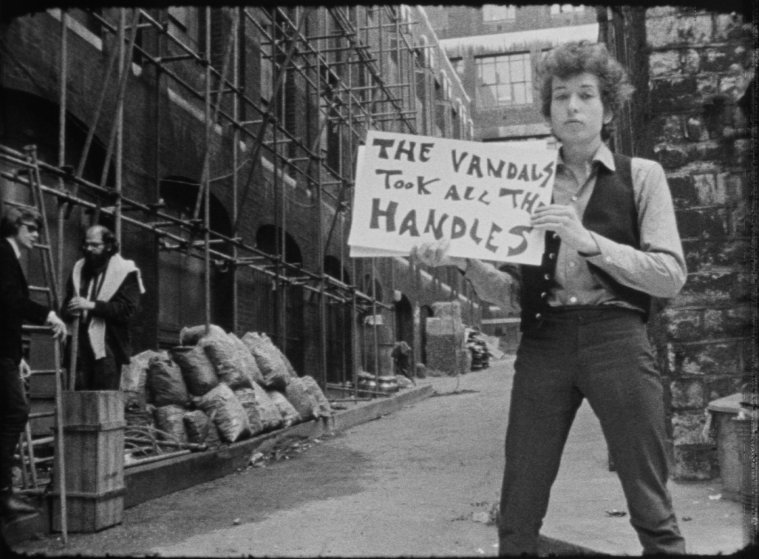
Bob Dylan: Don’t Look Back (1967): The story of Bob Dylan’s 1965 tour of England, when he was transitioning from an acoustic to an electric artist. This film opens with what must be the first music video, as Dylan holds up cards with the lyrics for Subterranean Homesick Blues. The pump don’t work ‘Cause the vandals took the handles
Jimi Hendrix (1973): I haven’t seen this movie, which contains 1967-70 concert footage and interviews with his contemporaries. Here’s a tip for Hendrix fans – the Hendrix display in his hometown’s Seattle Rock and Roll Museum (now Museum of Pop Culture) is superb.
D.A. Pennebaker directed both Monterey Pop and Don’t Look Back. Pennebaker also excels in political documentaries; he was the cinematographer for Primary and the director of The War Room.
I would argue that the Janis Joplin and Otis Redding sets in Monterey Pop are the best live performances ever filmed. Watch for Mama Cass in the audience reacting to Janis with a “Wow”.
Great music and lots of stoned people. Set that DVR.
D.A. Pennebaker invents the music video in BOB DYAN: DON’T LOOK BACK