The Ballad of Buster Scruggs is the Coen Brothers’ homage to the Western genre; it’s an anthology with SIX of their darkly funny stories. They clearly share Mark Twain’s cynically wry take on human nature, which they depict in Western situations of wagon trains, stagecoach rides, prospecting and hangings. The Coen brothers are not just making fun of Western clichés but also celebrating the genre, with beautiful vistas of New Mexico’s harshness and the spectacular Colorado high country.
The funniest is the opening vignette, with its over-the-top send up of Western conventions – white and black hats, saloon gambling, super fast gunplay and the rest, including nods to the “loquacious Western” subgenre. And it cements Tim Blake Nelson as having the funniest shit-eating grin in cinema.
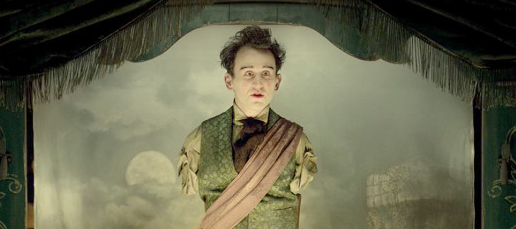
The best performance is Harry Melling’s in the Meal Ticket segment. Melling is best known as Harry Potter’s Dudley Dursling. He plays an itinerant performer who only speaks during his performances; Melling is startlingly brilliant in those performances and even better when he silently and fatalistically regards his competition.
Harry Melling in THE BALLAD OF BUSTER SCRUGGS
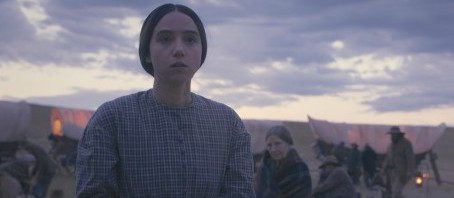
By far the best story is the saddest, The Gal Who Got Rattled, about a sad-eyed young woman (Zoe Kazan) who is following her delusional brother west, to what we all know will be heartbreak. Untethered by her obligation to the brother, she gets the Old West’s opportunity to remake her destiny until the Old West’s cruel chance intervenes.
The movie peters out in the ghostly last story, The Mortal Remains, despite Saul Rubinek’s delicious portrayal of a Frenchman in the Old West.
I don’t recommend The Ballad of Buster Scruggs for general audiences, but Westernphiles and fans of the Coen Brothers dark, dark humor will find it worthwhile viewing; it doesn’t rise anywhere near the level of the Coen’s best: Blood Simple, Fargo, A Simple Man, No Country for Old Men or True Grit. The Ballad of Buster Scruggs is playing in a few theaters and streaming from Netflix.
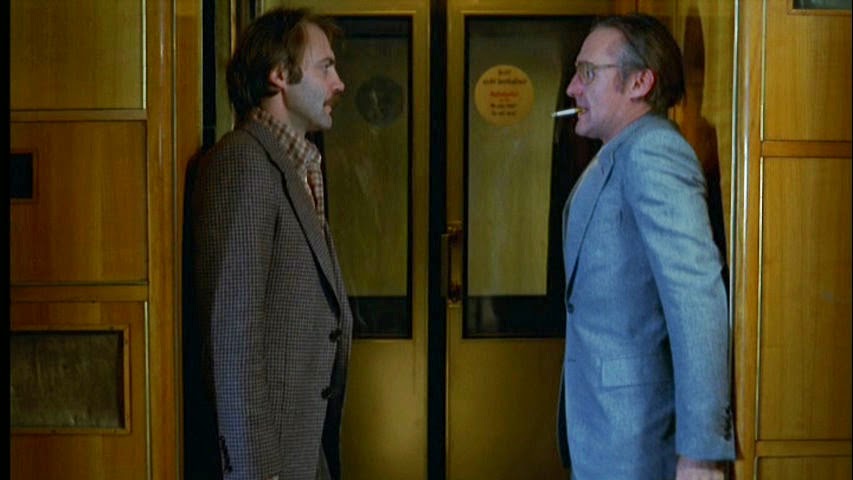
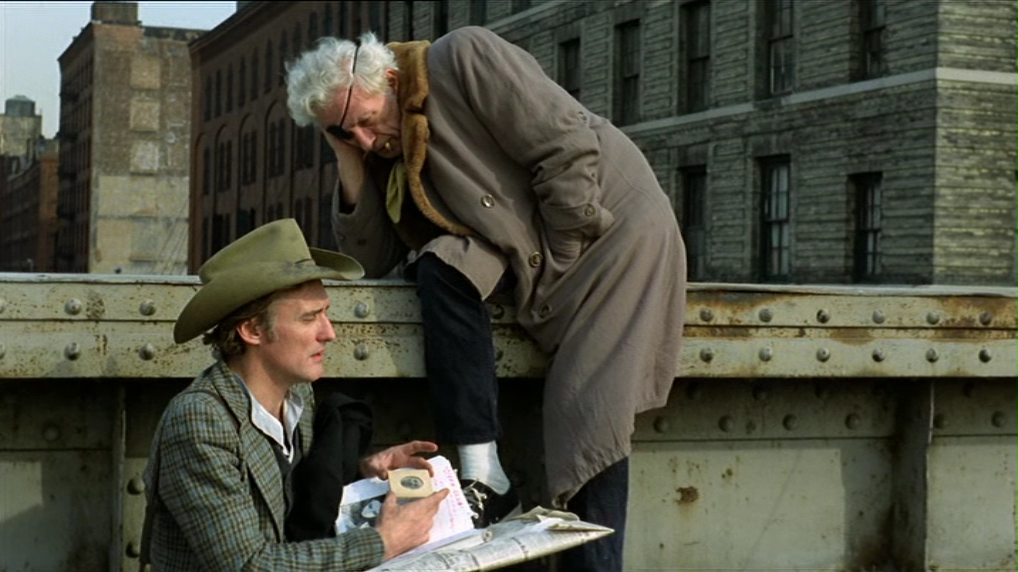
Bruno Ganz and Dennis Hopper in THE AMERICAN FRIEND
Dennis Hopper, in his Wild Man phase, brings electricity to the 1977 neo-noir The American Friend, an adaptation of the Patricia Highsmith novel Ripley’s Game. Highsmith, of course, wrote the source material for Strangers on a Train along with a series of novels centered on the charming but amoral sociopath Tom Ripley; her gimlet-eyed view of human nature was perfectly suited for noir.
German director Wim Wenders had yet to direct his art house hit Wings of Desire, his American debut Hammett or his masterpiece Paris, Texas. He had directed seven European features when he traveled to ask Highsmith in person for filming rights to a Ripley story.
In The American Friend, Zimmermann (Bruno Ganz) is a craftsman who makes frames for paintings; he dabbles in the shady world of art fraud, making antique-appearing frames for art forgeries. Tom Ripley (Dennis Hopper) entangles him in something far more consequential – a murder-for-hire.
As befits a neo-noir, Zimmermann finds himself amid a pack of underworld figures, all set to double-cross each other with lethal finality. In very sly casting by Wenders, all the criminals are played by movie directors: Sam Fuller, Nick Ray, Peter Lilienthal, Daniel Schmid, Gérard Blain, Rudolf Schündler, Jean Eustache. Nick Ray is especially dissolute-looking with his rakish eye-patch. Sam Fuller, in his mid-60s, insisted on performing his own stunt, with a camera attached to his body on a dramatic fall.
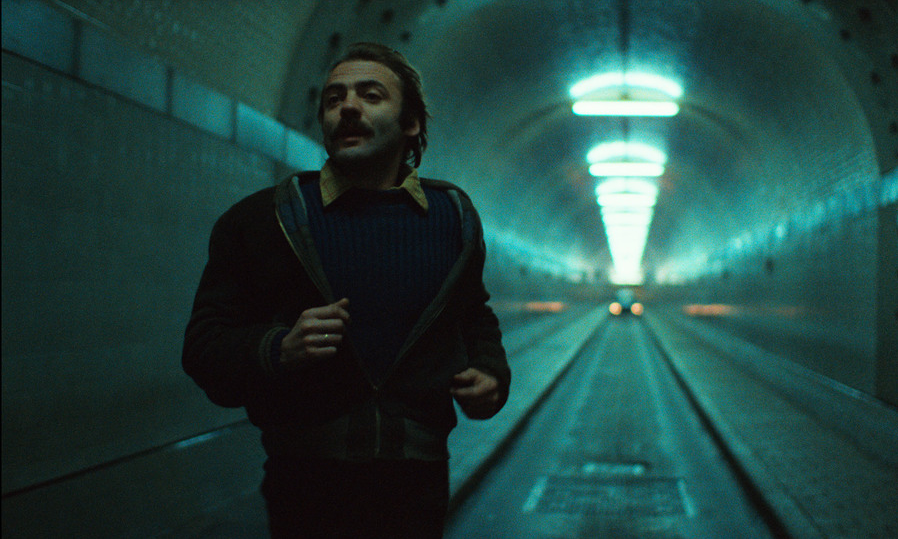
Bruno Ganz in THE AMERICAN FRIEND
As the murder scheme unfolds, there is a tense and thrilling set piece on a train, worthy of The Narrow Margin. Other set pieces include a white-knuckle break-in and the ambush of an ambulance.
Here’s one singular sequence. After a meeting with Ray, Hopper walks away from the camera along an elevated highway. Then Hopper is shown, still on the highway, in long shot from what turns out to be Fuller’s apartment, where Fuller interrupts the filming of a skin flick to deny having a guy shot on the Paris Metro. Then we see Hopper on an airplane, and then Ganz on a train. Finally, Ganz returns to a seedy neighborhood by the docks. It’s excellent story-telling – at once economical and showy and ultra-noirish .
Dennis Hopper and Nick Ray in THE AMERICAN FRIEND
Cinematographer Robby Müller pioneered use of fluorescent lighting in The American Friend. The nighttime interiors have a queasy eeriness that matches the story perfectly. Müller, who died in 2018, was endlessly groundbreaking. He made the vast spaces of the Texas Big Bend country iconic in Paris, Texas. He was also responsible for the one-way mirror effect in Paris, Texas’ pivotal peepshow scene. For better or worse, he jerked the handheld camera in Breaking the Waves, spawning a legion of lesser copycats. Müller gave a unique look to indie movies from Repo Man to Ghost Dog; The Way of the Samurai.
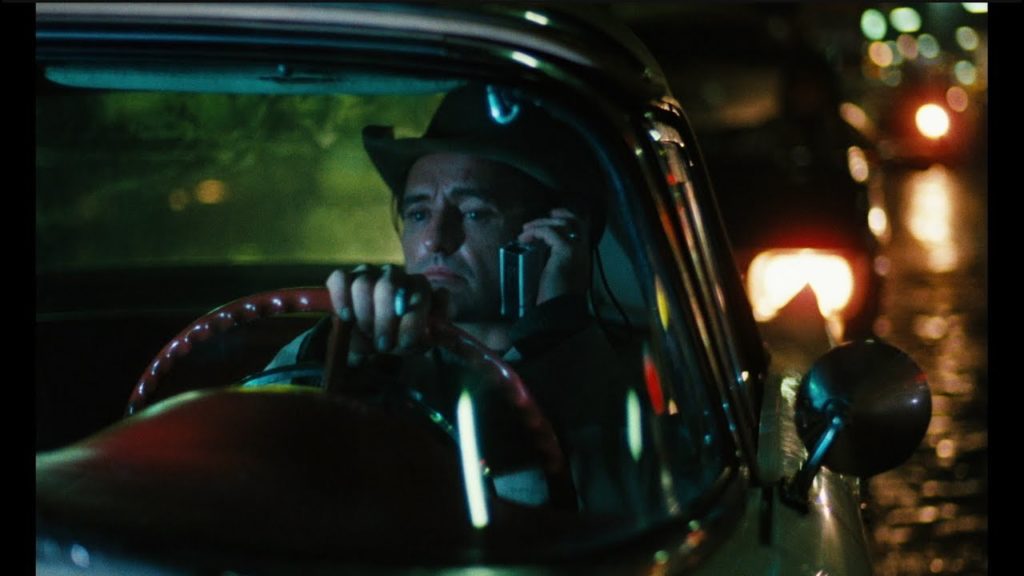
Dennis Hopper in THE AMERICAN FRIENDDennis Hopper in THE AMERICAN FRIEND
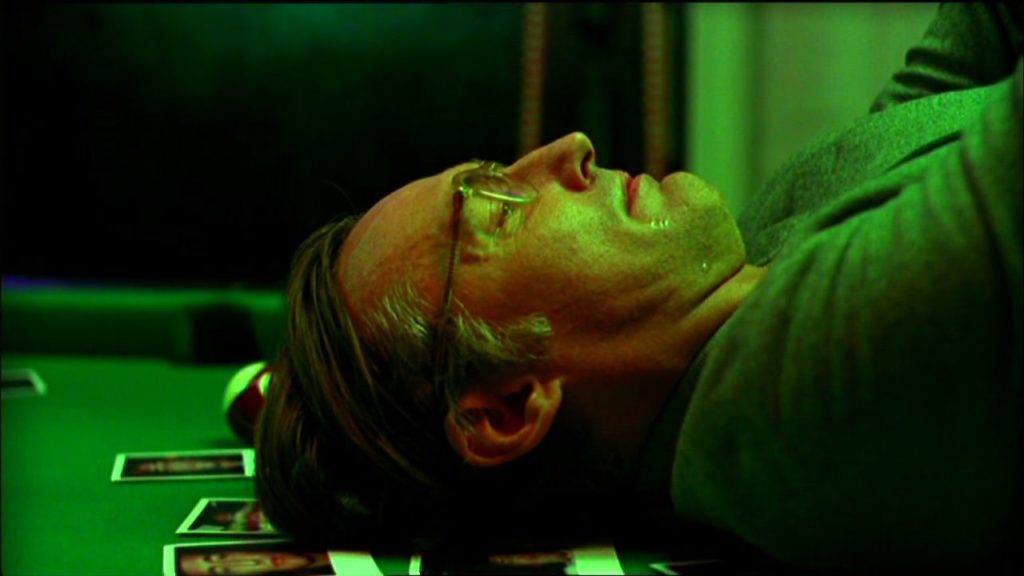
The American Friend was shot in 1977, in the midst of Dennis Hopper’s tumultuous drug abuse phase. He had just directed his notorious Lost Film The Last Movie and arrived in Europe from the Philippines set of Apocalypse Now!, where he was famously drug-addled and out of control. After getting Hopper’s substance abuse distilled down to only one or two drugs of choice, Wenders gave Hopper carte blanche to take chances in his performance, The American Friend being the only movie Tom Ridley in a cowboy hat. It paid off in a brilliant scene in which Hopper lies on a pool table, snapping selfies with a Polaroid camera; it’s a brilliant imagining of a sociopath in solitary, with no one to manipulate. John Malkovich, Matt Damon and even Alain Delon have played some version of Tom Ripley. Hopper’s is as menacing as any Ripley, and – by a long shot the most tormented. Courtesy of the Criterion Collection, here is Wenders on Hopper.
The American Friend is not a great movie. Zimmermann is motivated by a grave health issue, but too much screen time is wasted on that element, causing the movie to drag in spots. Movie auctions come with built-in excitement, but The American Friend’s art auction is pretty ordinary. And, other than Fuller, Ray and Blain, the directors are not that good as actors.
Still, the unpredictability in the high wire Dennis Hopper performance, the look of the film and the action set pieces warrant a look.
The American Friend can be streamed from Amazon, iTunes and Vudu. The late great FilmStruck offered some exceptional features, including a 38-minute interview with Wenders (excerpted above).
Ando Sakura, Sasaki Miyu, Jyo Kairi, Lily Franky, Matsuoka Mayu and Kiki Kirin in SHOPLIFTERS, a Magnolia Pictures release. Photo courtesy of Magnolia Pictures.
Shoplifters is a witty, and finally heartbreaking, look at a family that lives on the margins – and then is revealed to be not what it seems. Everyone in this contemporary Japanese family – dad, mom, teen girl and even grandma – has some shady job or outright scam. The dad has taught the 10-year-old boy to become a skilled shoplifter and tells him that he isn’t sent to school because he’s too smart. The dad and son rescue a lost and neglected four-year-old girl from a harsh winter night; the family decides to adopt her into the family. Of course, we wonder if the little girl’s biological parents will report her missing and whether the authorities will track her down.
Other than informally adding a child, not much seems to happen as the family goes on with its daily life – “work”, “shopping”, meal prep, bedtime and the rest, even a beach excursion. These lovable scoundrels are a hoot, and Shoplifters is very funny.
Writer-director Hirokazu Koreeda reveals – character by character – how each came into the family. Eventually that becomes critically important to the family’s survival – and leads to an emotionally powerful ending. The closest families are chosen by each other.
Lily Franky and Jyo Kairi in SHOPLIFTERS, a Magnolia Pictures release. Photo courtesy of Magnolia Pictures.
Shoplifters features a magnificent performance by Sakura Andô as the family’s mother figure – pretty understated until she gets to a knock-your-socks-off seduction scene. Her two jailhouse interviews at the end of the film are heartbreaking.
Jyo Kairi, with one of the best child performances of the year, is also superb as the boy.
Shoplifters just won the Palm d’Or, the top award at this year’s Cannes Film Festival. Koreeda is known for the 1995 art house hit Maborosi, one of the best movies of 2008, Still Walking and this year’s The Third Murder. I saw Shoplifters in early October at the Mill Valley Film Festival.
The fine Lynn Shelton drama Outside In begins when a man (Jay Duplass of Transparent) returns to his small town community after 20 years in prison. Having been incarcerated since he was a teenager, he’s a bit emotionally stunted; he was a good kid who is now trying to be a good man. He tries to negotiate his way among his not-so-supportive family, some former friends who share a secret and suspicious townspeople.
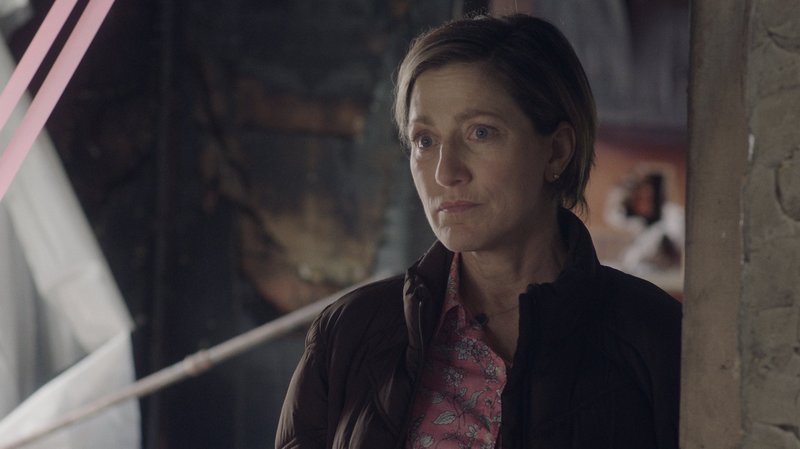
He’s free only because of a persistent campaign for justice by one of his high school teachers (Edie Falco). The case has been an obsession for the teacher, much to annoyance of her blue-collar husband. Now that the campaign has ended, the teacher must fill that vacuum with another passion.
There isn’t much passion in her marriage. Shelton brilliantly depicts a husband who has expectations of their relationship and their future – he just doesn’t communicate them to his wife, or check to see if those expectations are shared. He’s not a terrible person, and the relationship isn’t abusive – it’s just lapsed into staleness.
The freed convict and the teacher are comforted by each other. There are several ways that this story could go, several of them trite. Let’s just say that Shelton takes us in some unpredictable directions, while maintaining authenticity.
Outside In is a story of self-discovery. The teacher must assess what will make her happy and make some hard choices. In a tour de force, Falco takes us through her confusion, dissatisfaction, longing, passion and, finally, determination.
Kaitlin Dever (Justified) is also excellent as the teacher’s teen daughter. Outside In is an acting showcase for Falco, Duplass and Dever. Falco’s performance, however, is stunning.
I saw Outside In before its release at Silicon Valley’s Cinema Club. It can be streamed on Netflix, Amazon, Vudu, YouTube and Google Play.
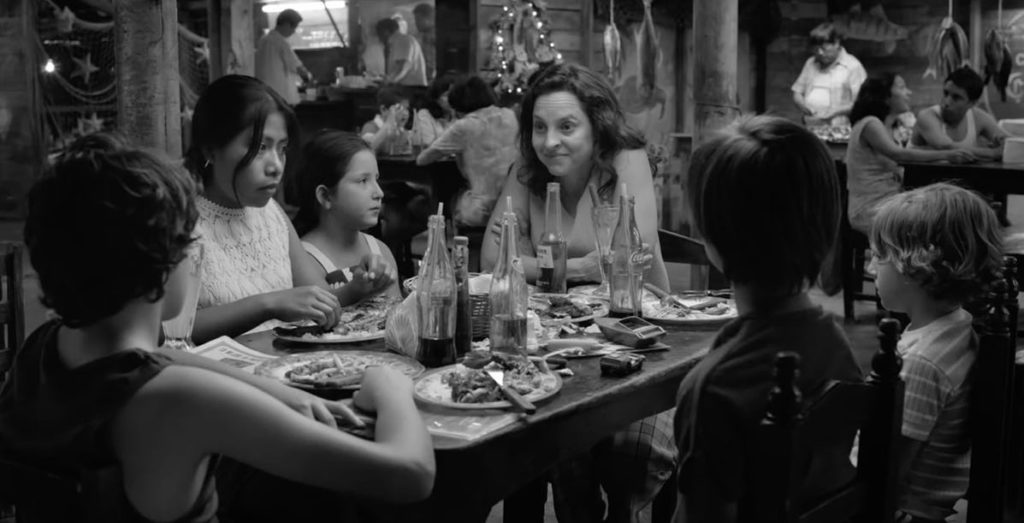
Yalitza Aparicio (second from left) and Marina de Tavira (center) in ROMA
In the powerful and sublimely beautiful Roma, Cleo is the cheerful and ever-on-duty domestic servant in the Mexico City home of Sofia, her doctor husband, their four kids and Sofia’s mother. Sofia’s upper middle class family are light-skinned gueros and Cleo is indigenous. Sofia’s husband leaves her, and she tries to hold her household and her emotions together without letting on to the kids. Sofia and Cleo’s relationship changes and is forged closer when each faces a personal crisis.
That distillation of the story doesn’t begin to capture the profound depth of Roma. Despite their differences in race and class, Cleo and Sofia are in the same situation – facing life’s travails and the responsibilities of family without any help. They are isolated and they must find ways to endure.
Cleo (Yaritza Aparicio) encourages and nurtures the imagination of the youngest child, Pepe. She is playful and adored by the children. This is Aparicio’s first acting gig; she was chosen from among 3000 candidates for the role. Sofia, who is balancing on a knife-edge throughout the story, is played by veteran actress Marina de Tavira, who found Sofia’s story to be the same as her own mother’s. These are two wonderfully authentic performances.
Roma is written, directed and edited by master filmmaker Alfonso Cuarón (Gravity, Children of Men and Y Tu Mama Tambien). This may be his masterpiece. Cuarón won two Oscars For Gravity, in which he conveyed the terrible and unforgiving enormity of outer space. In Children of Men, he created one of the longest, most intricate and compelling action shots in cinema history.
Shot in glorious black and white, Roma is packed with amazing set pieces, both with long static shots and even longer tracking shots. There’s a nighttime tracking shot that follows Cleo through several blocks of a bustling Mexico City downtown street. In another extended single, dolly shot, the camera follows characters from the beach into the surf, beyond the surf break and then back to shore.
Emergencies in the surf of a beach resort and in a hospital are among the most harrowing movie scenes that I’ve seen this year – even more intense than climactic scenes in thrillers.
As heartbreaking as Roma can get, there’s a great deal of humor here. Much is centered on the family dog and his massive production of excrement. There’s also the repeated ordeal of an oversized Ford Galaxy inching its way into an undersized car park. A rural hacienda contains some very unusual wall decorations. And there’s an unexpected and remarkably inappropriate naked martial arts performance.
According to those who would know, Roma is an evocative time capsule of Mexico City at the beginning of the 1970s.
The characters of the mom and the domestic, along with the events – the riot, the forest fire, the earthquake, etc. – are recreated from Cuarón’s most vivid and enduring memories of his own childhood. It’s a deeply personal and individual story, but one which is universal – that of women carrying on without the support of (and even despite) the men in their lives.
I saw Roma at the Mill Valley Film Festival in October at a screening with Aparicio, de Tavira and producers Gabriella Rodriguez and Jonathan King. Cuarón shot the film in sequence over 108 days and only showed the cast the script one day at a time, directing them to “surrender” to the story. Rodriguez confirmed that the family sees Marooned at the movie in a nod to Gravity.
Roma takes its title from the family’s neighborhood in Mexico City.
Roma will be released in New York, LA and Mexico City theaters this weekend and will open more widely on November 29. Having been financed by Netflix, it will stream to Netflix subscribers on December 14. This is one of the year’s very best films, and it will receive multiple Oscar nominations.
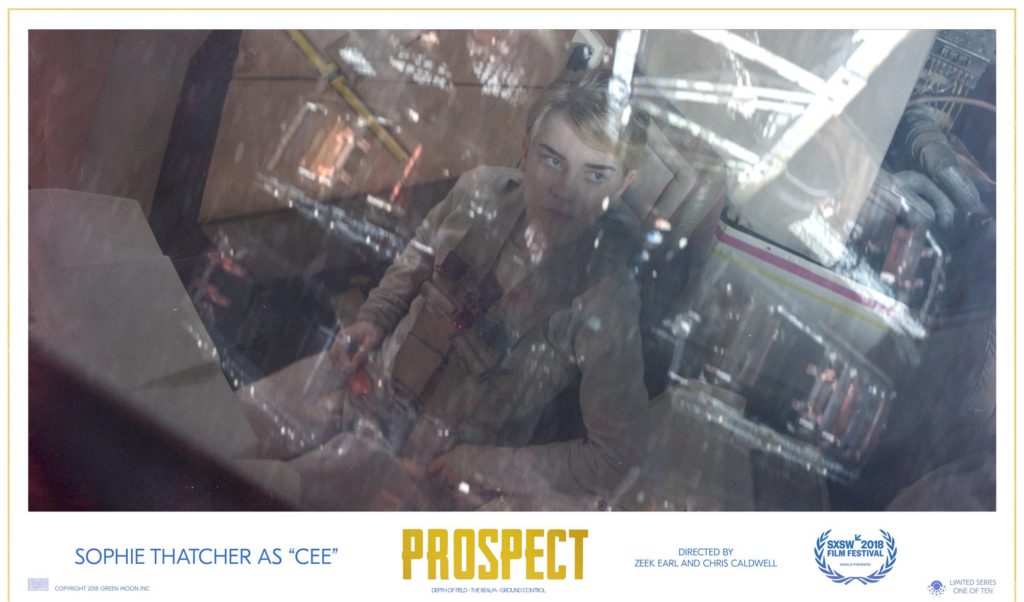
The ingeniously original Prospect is a frontier coming of age movie. It’s just set in space, not in the Old West. The teenage girl Cee (Sophie Thatcher) accompanies her dad (Jay Duplass) as he pilots their tired spaceship from planet to planet, seeking to extract something precious (hence the title Prospect as in prospectors). It’s an enterprise for misfits and hustlers. She has grown into an able assistant. He is a skilled pilot and prospector, but is very erratic in his judgment.
Sure, this is a future version of our world, but these characters live in a bottom-feeding sub-culture; their space travel hardware comes from the surplus store and has the look of NASA’s Mercury program – far less sleekly hi tech than the dashboard of a 2013 Prius. It’s a choice by co-writer and co-directors Christopher Caldwell and Zeek Earl to reinforce that we’re dealing with folks living on the margins.
Isolated by circumstance on a planet that is only populated by a few other sketchy transients and some disturbing settlers, Cee is thrown into a series of life-and-death situations. She must depend on her wits to survive a sequence of that can only be resolved through negotiation. I saw Prospect before its release at Silicon Valley’s Cinema Club. In the screening’s Q&A, co-writer filmmakers Caldwell and Earl affirmed that the story is centered on negotiation and that they drew from that under-recognized subgenre, the “loquacious Western”.
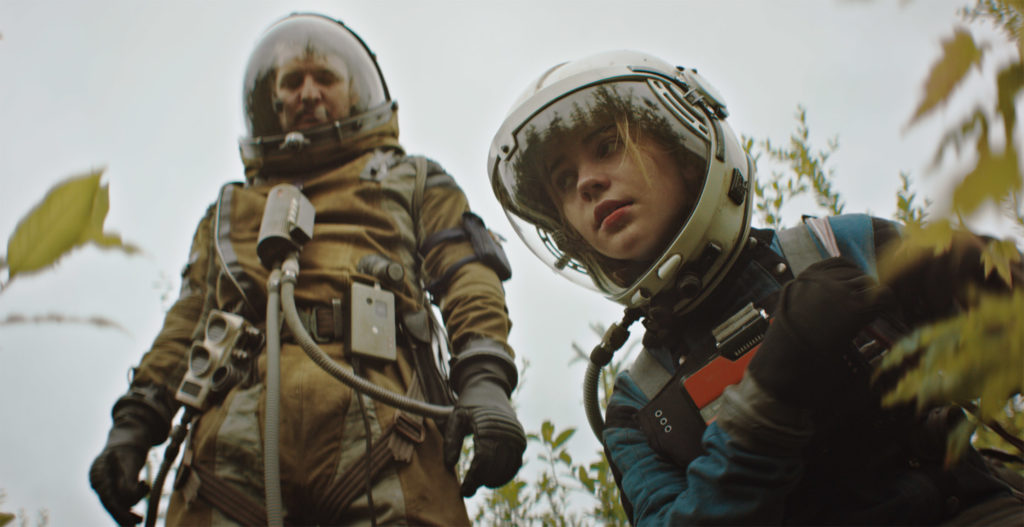
Pedro Pascal and Sophie Thatcher in PROSPECT
A key character that Cee must deal with is another rogue prospector Ezra (Pedo Pascal), a man of wit, charm, lethality and devoted self-interest. Pascal (Oberyn Martell in Game of Thrones) makes Ezra one of the most compelling and funniest movie characters of the year.
Someone has labeled Prospect at “True Grit in space”, which isn’t far off. The Treasure of the Sierra Madre is also evoked. A consistently unpredictable plot and superb performances by Pascal and young Ms. Thatcher make Prospect well worth seeking out. It’s currently in a one-week run at San Jose’s 3Below.
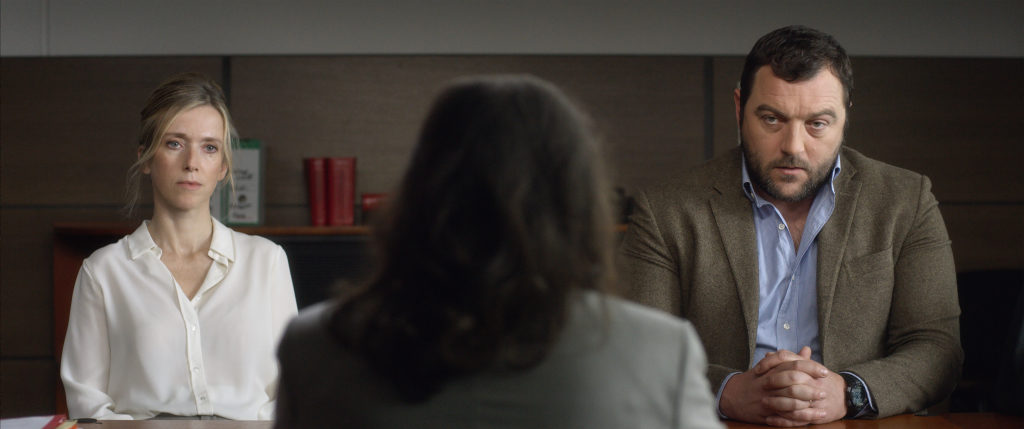
In his searing French thriller Custody, writer-director Xavier Legrand paints the most elemental and realistic depiction of domestic violence that I’ve seen. Custody begins with a child custody hearing over an almost 18-year-old daughter and an 11-year-old son. Neither kids wants anything to do with the dad, and there’s more than a hint of spousal abuse in their past, but the court awards the father weekend visits with his son.
The father (Denis Ménochet) is acting very reasonably at the custody hearing, of course, but we soon see signs of the need for domination and control that is the core of domestic violence. He can’t bear not knowing where his ex-wife (Léa Drucker) lives. He needs to be the “winner” in every transaction. With naked entitlement, he says “I get an extra hour because I picked you up an hour late”. Too vile even for his own parents, the father is an insistent stalker.
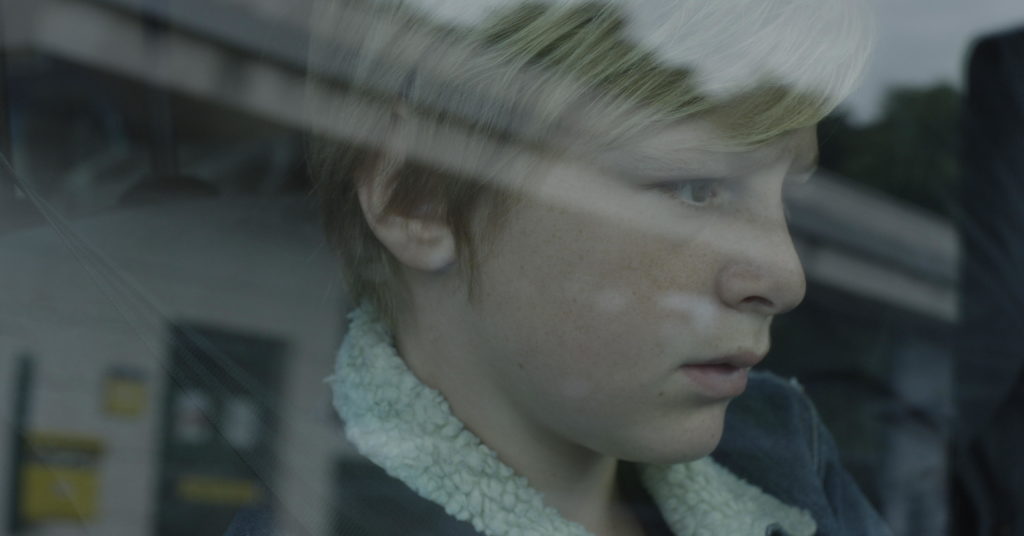
Especially through the eyes of the son (Thomas Gioria in a miraculous performance), Legrand helps the audience understand the traumatization of family violence. Every family member lives with dread of the father surprising them like a bogeyman. The boy takes on responsibility to protect his mom and sister by keeping the dad away from them – it’s an emotionally wracking burden that no child should bear. The mom is not a hero or a feminist icon – she just wants to survive and not be a victim.
Intimate partner violence is about power and control. In Custody, the father doesn’t react physically until the movie’s midpoint, and he doesn’t touch another character until almost the end. But, without hitting anyone, he is successful in terrorizing the family. By buzzing the mom’s doorbell in the middle of night, he proves that he really is a terrorist. And his lethality emerges in the thriller ending. LeGrand says that the thriller aspect of Custody comes organically from fear.
Léa Drucker and Denis Ménochet, in CUSTODY. Courtesy Kino Lorber.
Every performance is excellent, and Menochet’s has received plaudits. But the child actor Thomas Gloria goes places you don’t expect a child to go; his performance is stunning. Menochet discusses his performance and Gioria’s in this Inside Picturehouse interview on YouTube.
As the sister, Mathilde Auneveux delivers a mesmerizing performance of Proud Mary at her birthday party. She is clearly distracted by at least one event in her life, but which is it?
In Custody, Legrand has also filmed the most perfectly shot pregnancy test scene ever.
Custody is the remarkable first feature from Xavier Lagrand. The story grew out of his Oscar-winning short film with the same actors, Just Before Losing Everything. Custody won Legrand the Silver Lion (Best Director) at the Venice film festival. I saw it at Silicon Valley’s Cinema Club months before its release.
Custody can be streamed from Amazon, iTunes, Vudu, YouTube and Google Play.
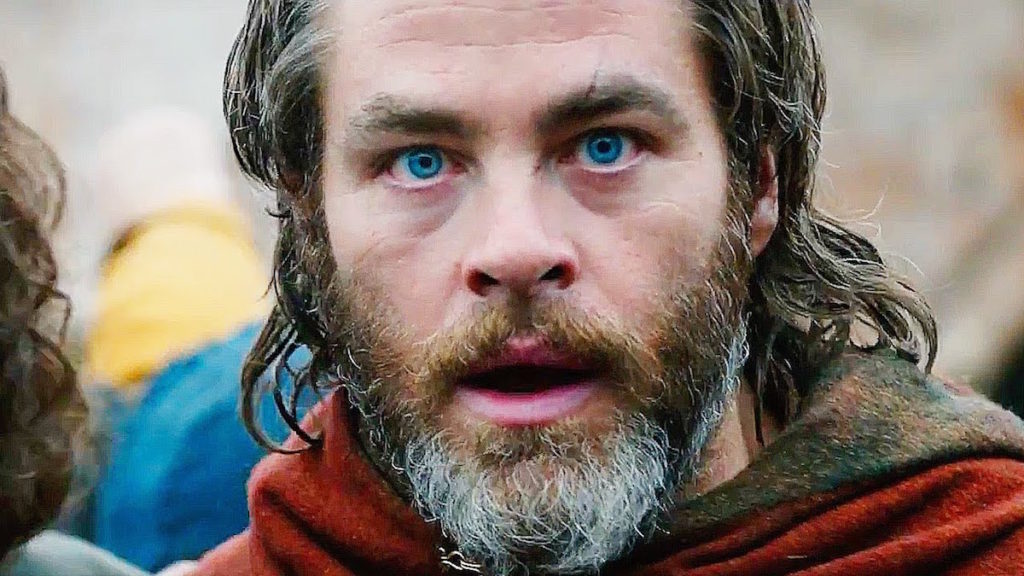
Chris Pine has the title role in Netflix’s The Outlaw King. It’s the story of Robert the Bruce, who wrested control of Scotland from the English and became the Scottish king in the early 1300s. I like Chris Pine, and he makes a medieval warlord very relatable, but this movie is pretty flat. I was especially disappointed because I admired director David Mackenzie’s last movie (Hell or High Water – also with Chris Pine) so much.
I’m guessing from Mackenzie’s surname that he was drawn to Bruce as an icon of Scottish nationalism. But all these historical struggles of conquest and rebellion in the feudal era were really just tugs of war between rival warlords – the moral equivalent of the Soprano Family. To its credit, The Outlaw King (as do Shakespeare’s histories) does not overly romanticize the self-serving motivations of the nobility
The Outlaw King is kinda historically accurate – it captures the overall arc of the story, although Bruce’s archenemy, the future Edward II, was not at the battle of Loudin Hill and, hence did not engage in a mano a mano showdown with Bruce there as depicted.
On the other hand, there isn’t much in the historical record about most women in the early 1300s, particularly Bruce’s second wife, Elizabeth (Florence Pugh). The filmmakers have constructed a pretty interesting character in Elizabeth, so that’s all to the good.
We do know that Edward II was a pretty interesting cat (not a complement), but, while The Outlaw King portrays Edward’s problems with Dad and hints at his narcissistic bravado, it misses the chance to go deeper.
There is a lot of the hacking and hewing of medieval combat a la Braveheart, in The Outlaw King, chiefly in Bruce’s pivotal victory at the battle of Loudon Hill. But the overall emptiness of the movie leaves the battle scenes, as well-crafted as they are, less thrilling than those in Orson Welles’ Chimes at Midnight and Kenneth Branagh’s Henry V.
The Outlaw King exists for those who need a dose of medieval slaughter and a spunky queen, but there’s not enough there for the rest of us.
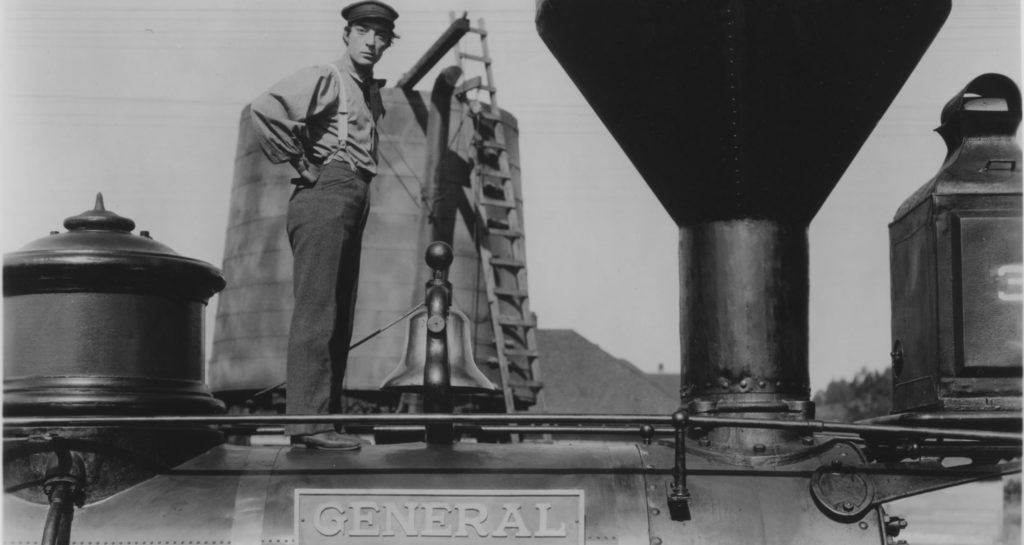
Buster Keaton’s THE GENERAL in THE GREAT BUSTER: A CELEBRATION. Courtesy of Cohen Media Group.
The documentary The Great Buster: A Celebration traces the life and career of the filmmaking genius Buster Keaton. Every chance I get, I recommend Keaton’s silent masterpieces Seven Chances and The General. But The Great Buster puts Keaton’s work in helpful context.
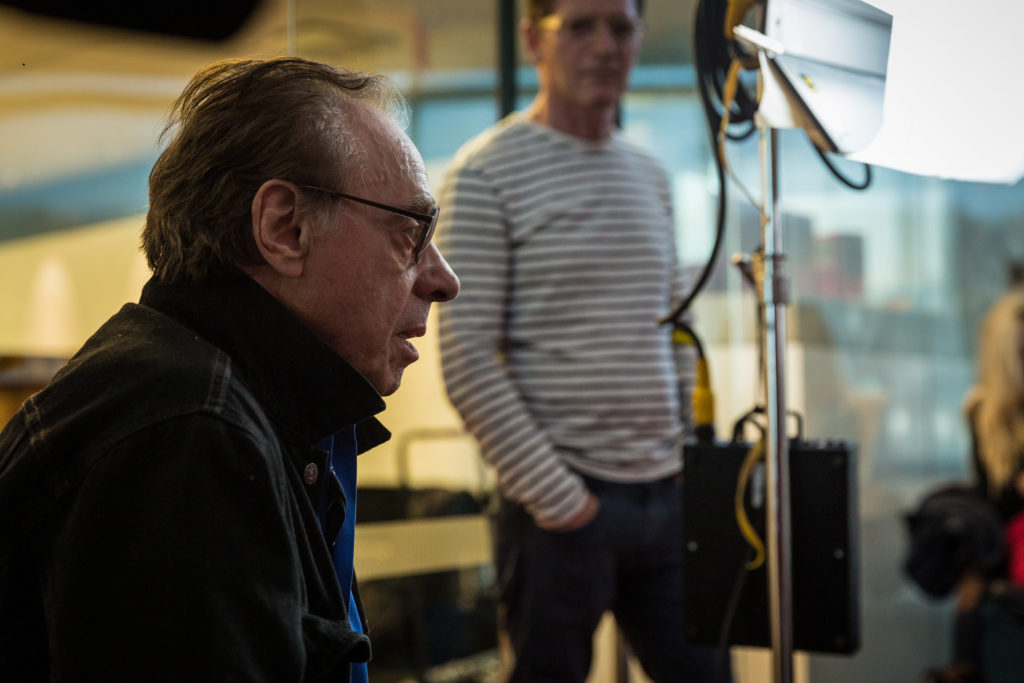
First, director/film historian Peter Bogdanovich introduces us to Keaton’s upbringing as the child star in his parent’s vaudeville act. This is a CRAZY story, about Keaton working one-night performances from the age of FOUR in an act where he was essentially a guided missile in a fake leprechaun beard.
Next we learn about the young adult Keaton being introduced to the movie business by San Jose’s own, Fatty Arbuckle, and then moving on to creating his own two-reelers. Then The Great Buster focuses on the ten great features on which Buster had complete creative control. And then Bogdanovich takes us through MGM’s mishandling of Keaton’s career and the resultant decline. I thought that I had a good handle on Keaton’s body of work, but The Great Buster is essential to understanding it.
The Great Buster gives us many cool tidbits from his work in TV commercials through his final happy marriage. And 100-year-old actor Norman Lloyd relates an anecdote about performing a scene in Limelight with Keaton and Charlie Chaplin.
Peter Bogdanovich in THE GREAT BUSTER: A CELEBRATION. Courtesy of Cohen Media Group.
The Great Buster: A Celebration opens this weekend in the Bay Area.
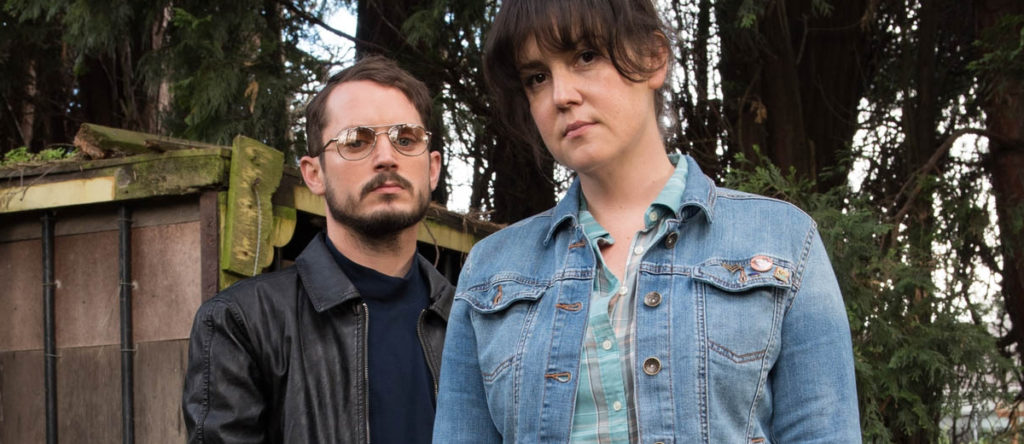
Elijah Wood and Melanie Lynskey in I DON’T FEEL AT HOME IN THIS WORLD ANYMORE
In the wonderfully dark comedy I Don’t Feel at Home in this World Anymore, Ruth (Melanie Lynskey) is wallowing in a lonely, depressing, humdrum existence, when she has one of those days where everything goes wrong. When she staggers home in abject failure, she finds that her home has been burglarized. It’s the last straw, and Ruth becomes energized in an obsessive quest to track down the thieves. She picks up her geeky neighbor (Elijah Wood) an a confederate. Soon the lovable loser and her oddball sidekick follow the clues to a very dangerous gang, and they find themselves in a lethal thriller.
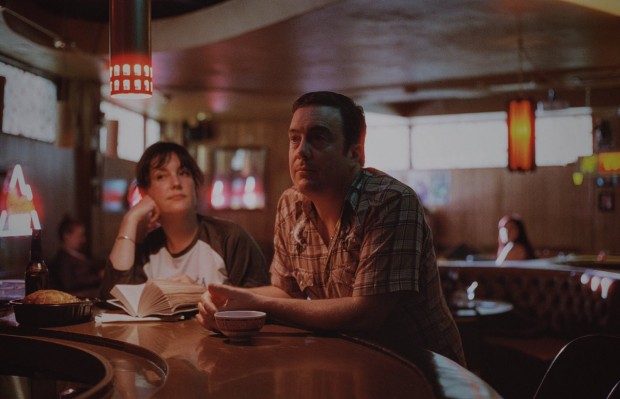
Melanie Lynskey and Mcon Blair in I DON’T FEEL AT HOME IN THIS WORLD ANYMORE
I Don’t Feel at Home in this World Anymore is the directorial debut of actor Macon Blair, an actor who has elevated a slew of indies, especially the refreshingly original thriller Blue Ruin. Blair has a tiny but very funny role as spoiler-dropping bar patron.
Melanie Lynskey is a comic treasure, and her deadpan earnestness carries I Don’t Feel at Home in this World Anymore. What’s so funny here is that her Ruth, a workaday schlub, only needs to become SLIGHTLY deranged before she falls into a life-and-death adventure.
After a Blink-And-You’ve-Missed-It theatrical run, I Don’t Feel at Home in this World Anymore is available to stream on Netflix Instant.