Movies to See Right Now

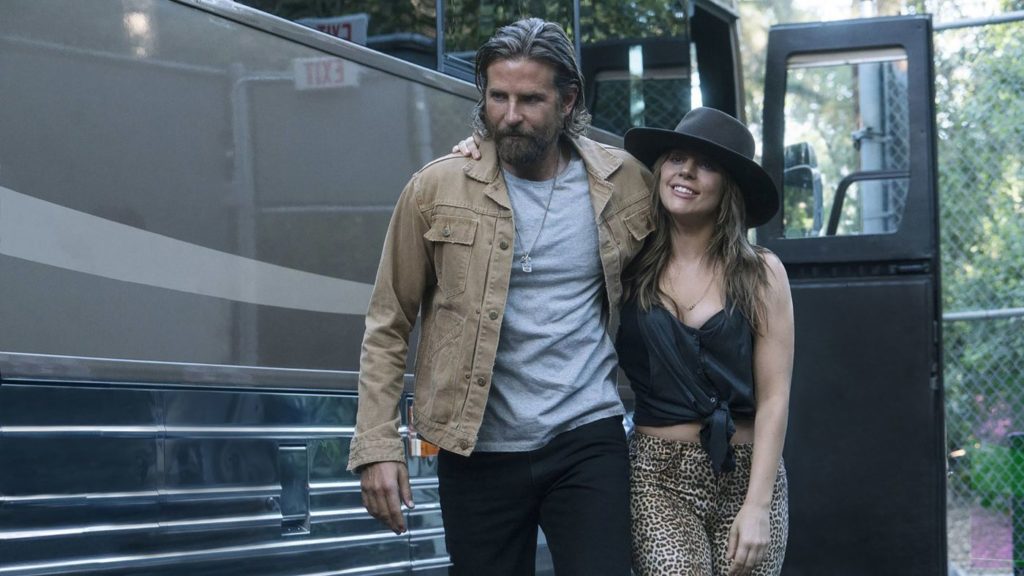
Bradley Cooper and Lady Gaga in A STAR IS BORN[/caption]

I just saw A Star Is Born last night – and you should, too. I’ll be writing about it this weekend. I’ll also be heading to the Mill Valley Film Festival to see three of the most exciting Prestige Season releases: Cold War, Roma and Shoplifters.

OUT NOW

  • Spike Lee’s true story BlacKkKlansman is very funny and, finally, emotionally powerful.
  • The first-rate thriller Searching is more than just a gimmick (it entirely takes place on computer screens) and is filled with authentic Silicon Valley touches.
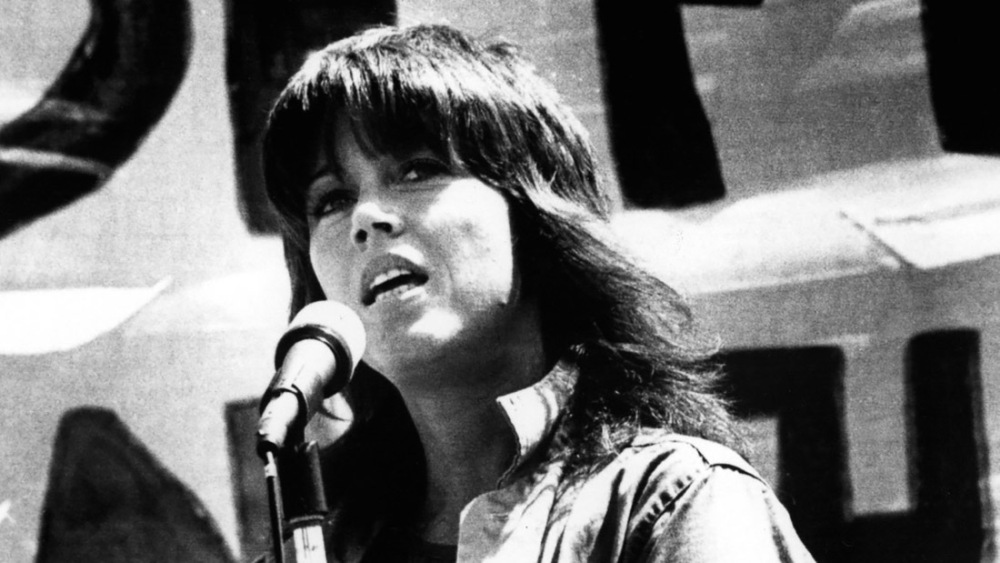
  • Jane Fonda herself spills her most intimate secrets in the irresistible HBO biodoc Jane Fonda in Five Acts.
  • Crazy Rich Asians is wildly popular for a reason – it’s damn entertaining and probably the year’s most appealing date movie. You’ll laugh, you’ll cry and you’ll wait for the chance to see Awkwafina in her next movie.

ON VIDEO

My Stream of the Week is the appealing transgender dramedy Venus, which won the Cinequest award for best narrative feature. Venus is available for streaming from Amazon and iTunes.

ON TV

Tune into Turner Classic Movies on October 6 for director Robert Altman’s underappreciated California Split.  Elliott Gould plays a guy deep in the throes of gambling addiction, and George Segal plays another guy well on his way.  The two join up and play the LA-area card clubs before heading to Reno for a poker game that may be too big for them.  Gould is at his manic, wise cracking best, and plays off the more reserved Segal in a very funny adventure.  Of course, their decision-making is influenced by their addiction.

Actor Joseph Walsh wrote the screenplay about his own gambling addiction and plays the bookie you don’t want to owe money to.  Real card club and casino patrons play the poker players, so the verisimilitude of the poker games is unmatched.  The real Amarillo Slim elevates the big game.

California Split was the first non-Cinerama movie to use eight tracks for sound, which was perfect for Altman’s style of overlapping dialogue and tidbits of side and background conversations.

The poker is both authentic and entertaining.  The two guys “read a table”, analyzing the other players in one particularly funny moment.

Reliable character actor Bert Remsen has a memorable bit in drag.   Mickey Fox is memorable as a suspicious poker loser.  Look for a young Jeff Goldblum, too.
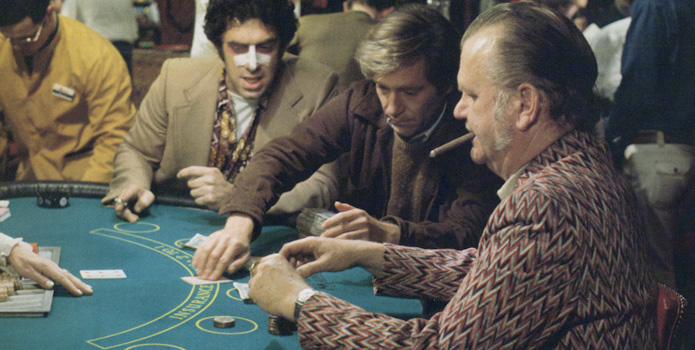
Elliott Gould (center left) and George Segal (center right) in CALIFORNIA SPLIT

JANE FONDA IN FIVE ACTS: self-assessment and self-revelation

Jane Fonda appears in JANE FONDA IN FIVE ACTS by Susan Lacy, an official selection of the Documentary Premieres program at the 2018 Sundance Film Festival. Courtesy of Sundance Institute | photo courtesy of Everett Collection.

HBO is airing a remarkable biodoc of Jane Fonda, Jane Fonda in Five Acts.  It turns the talking head documentary on its, well, talking head, because the main narrator/commentator on Jane Fonda’s life is Jane Fonda herself.  She reveals the most personal, even intimate, experiences and feelings; you could tag this as “extremely personally revealing” or even as “oversharing”.  either way, I found it irresistible.

The theme is that Fonda’s life was shaped, in phases, by (or to reflect), the four most important men in her life: her father Henry Fonda and her husbands Roger Vadim, Tom Hayden and Ted Turner.  Hayden, Turner,  her son Troy Garity and her BFF Paula Weinstein get the most screen time among various confidantes.  But mostly, this film is Jane herself, neat with a chaser.

From being the daughter of a movie super star dad and a suicidal mom, through a starlet period, to the shrill activist with the Klute hairdo, to the video exercise queen and then billionaire’s bride, it a helluva story.  If you dislike Jane Fonda, you’ll find this biodoc annoying.  If you’re like me, you’ll find it fascinating.

SEARCHING: more than a gimmick

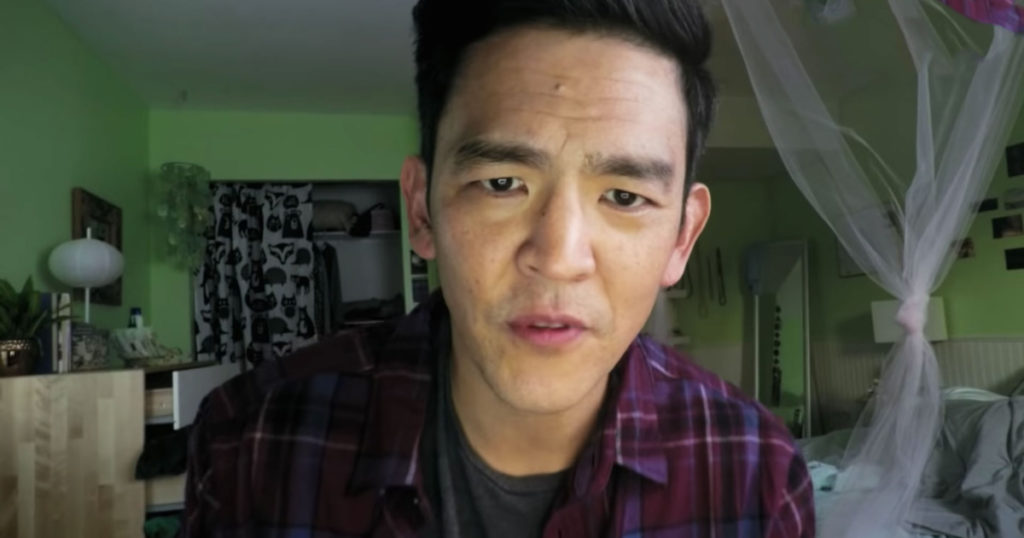
John Cho in SEARCHING

I regret that I’m a latecomer to the thriller Searching, which has been in theaters for a while – this is a damn good movie.  A  Silicon Valley engineer David (Jon Cho) has been single-parenting his daughter since the death of his wife when the daughter, now sixteen, doesn’t come home.  Has she run away?  He she been abducted?  Is she even still alive?  Searching is a ticking clock thriller as David and the investigating police detective Vick (Debra Messing) race against time to solve the case.  There are several red herrings, a couple major plot twists and one mega-surprise.

Here’s what is really different about Searching – the movie is entirely on the character’s screens -those of his computers, but also on smartphones, television, a security video and a live funeral cam.  The sixteen year-old flashbacks are shown on a sixteen-year-old version of Windows desktop.

This is NOT a “gimmick movie”. It is a complete movie that writer-director Aneesh Chaganty has chosen to tell through this device. For example, Chaganty barely gives a glimpse of the comments on on-line news reports – and no character comments on them – but the audience finds them maddening and suffers the indignities along with David. In the same vein, I also enjoyed the recent teen horror Unfriended, also told on a computer screen, and the drama Locke, claustrophobicly set in the driver’s seat of an auto.

Detective Vick asks David, “Who is your daughter and who does she talk with?”, which puts the spotlight on the movie’s theme.  He’s her dad, and he was certain that he knows his daughter – but he finds out that, as a teenager, she has developed into an entirely new and unrecognizable person.  Obviously, that revelation brings him enormous guilt to go along with the shock, but he throws himself into the search by grabbing her laptop and hacking her social media.  As any good Silicon Valley parent, he opens a spreadsheet and starts filling it with what he finds out from the trail she has left online.

John Cho’s performance is pretty much perfect.  Of course, he’s already achieved popular success in two movie franchises – as Harold in the Harold and Kumar stoner series and Sulu in Star Wars.  Here, he gets a full-out, adult dramatic role and knocks it out of the park.  Cho modulates David’s increasing tension and desperation through the story, and he is perfect in the flashback scenes, too.

Aneesh Chaganty is a San Jose native.  Although he says that only two percent of the movie was actually filmed in San Jose,Searching really nails the vibe of Silicon Valley in 2018.  Locals will unmask the very slight name changes to recognize the Sharks, the SJPD, Oakridge Mall, Evergreen/Silver Creek Highs and more.  (The only egregious misstep is one character referencing Highway “101” in LA-speak as “the 101” .)

Stream of the Week: VENUS – meeting your kid for the first time while transitioning

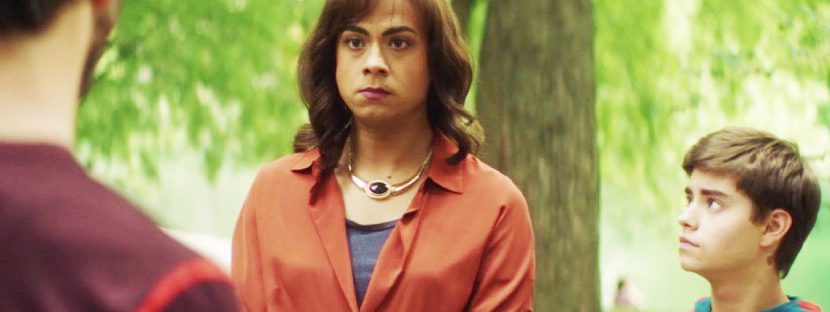
Debargo Sanyal (center) in VENUS

In the appealing Canadian transgender dramedy Venus, Sid (Debargo Sanyal) is at a personal crossroads. Single after things didn’t work out with his closeted boyfriend Daniel (Pierre-Yves Cardinal), Sid has just begun to dress like a woman in public and to take hormones for his transition. Then, he is shocked to learn that he has a 14-year-old son Ralph (Jamie Myers). The boy thinks that having a transgender dad with Indian heritage is very cool and, unbeknownst to his mom, starts spending more and more time with Sid. Sid has to deal with this, along with the reactions of his more traditional Indian parents and a chance meeting with Daniel.

In her first narrative feature, writer-director Eisha Marjara has crafted a funny, touching and genuine story. Venus is successful largely because of Debargo Sanyal’s performance. Eschewing flamboyance, Sanyal’s Sid is a man driven to keep his dignity in the most inescapably awkward situations. It helps that Sanyal is a master of the comic take; Sid’s reactions to his mother’s and Ralph’s intrusiveness are very funny.

I predicted that Venus, at its US premiere at Cinequest, would become one of the most popular indies at the festival; indeed, it won the Cinequest award for best narrative feature. Venus is available for streaming from Amazon and iTunes.

Lon Chaney: worth another look

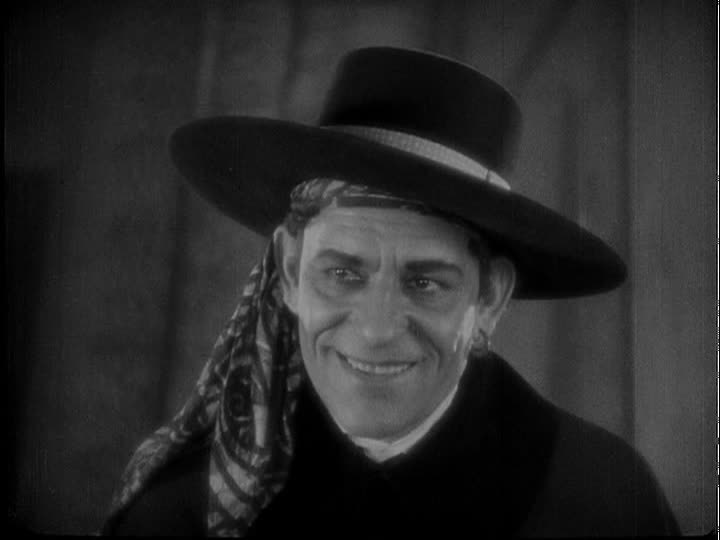
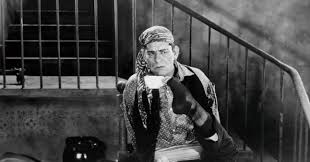
Lon Chaney in THE UNKNOWN

OK – work with me here. On Wednesday, Turner Classic Movies is presenting a bunch of Lon Chaney films, and I think that Chaney’s charisma is worth sampling. And as a fun experience, not a “this is good for you” experience.

I will fess up that I am not a huge silent movie fan. I usually watch only one silent movie each year (out of the 250-300 movies that I see annually). I like the Charlie Chaplin, Harold Lloyd and Buster Keaton comedies, but I find sitting through most of the silent dramas to be “eat your broccoli” experiences. But Lon Chaney really enlivens his films. It’s like he is acting in a more modern movie than are the other actors.

Chaney was an expert with makeup and is well-known for grotesque roles like Quasimodo, and the Phantom of the Opera.  Accordingly, I had always thought of Chaney as his nickname, “Man of a Thousand Faces”.

But, for all his reliance on changing appearances, Chaney was NOT a gimmick actor.  He was very naturalistic, a relaxed actor whose screen-acting was very modern.   His course features and his charm combine for a unique magnetism.  I think that he would have been very successful in today’s cinema.

Unfortunately, Chaney died suddenly at age 47, so he was able to make only one talkie – the 1930 remake of his 1925 silent The Unholy Three.  You can find snippets of the remake on YouTube and hear his voice.

On October 3, Turner Classic Movies will present The Unknown and five other Lon Chaney films.  I also recommend the 1925 silent The Unholy Three, like The Unknown directed by Tod Browning.  (After Chaney’s death, horror master Browning went on to make Dracula and Freaks.)  TCM will also air Chaney in  The Phantom of the Opera, which I’ve seen, and three flicks I haven’t seen: The Monster, The Penalty and He Who Gets Slapped.

The Unknown has a completely outlandish plot.  Chaney plays Alonzo, a circus freak with no arms, who throws knives and shoots rifles with his feet.  But actually, Alonzo is a criminal on the lam who is merely PRETENDING to be armless.  He’s love with his much younger assistant, played by 21-year-old Joan Crawford (already in her 18th film), who spends much of the movie in a bikini top.  The thing is, she has a phobia and only feels comfortable with Alonzo because she think he has no arms.  Alonzo starts contemplating amputation to get her to marry him.  Yep, this is about a farfetched as a plot can get, but Chaney’s expressive face transcends the weirdness.

(Don’t confuse him with his son Lon Chaney, Jr., who also counted many horror pictures among his 197 screen roles.  I remember Lon Jr. most for playing Lennie in Of Mice and Men and the old retired sheriff in High Noon.)

Lon Chaney in THE UNKNOWN


THE CATCHER WAS A SPY: why couldn’t this have been a good movie?

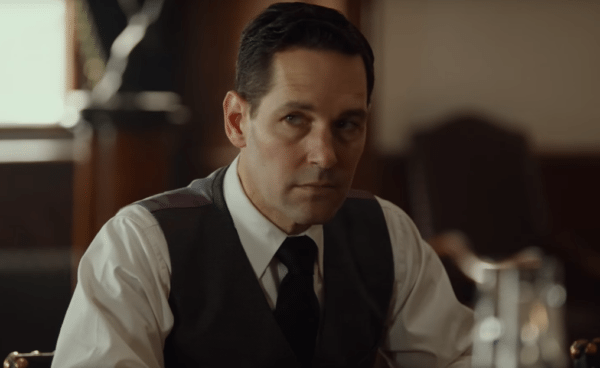
Paul Rudd in THE CATCHER WAS A SPY

The fact that Moe Berg’s is the only baseball card displayed at CIA headquarters tells us that he was a candidate for The Most Interesting Man in the World. Berg was a graduate of Princeton and Columbia Law who played 15 years in the Major Leagues, one of the few Jews in pre-war baseball.  While a pro player in the early 1930s, he visited Japan twice, learned Japanese and surreptitiously photographed Tokyo for US intelligence. During World War II, he performed secret missions in Europe for the OSS, the precursor to the CIA.

That’s quite a life. Unfortunately, The Catcher Was a Spy drains the interest out of it by trying to portray that most cerebral of real-life characters, Moe Berg, in kind of an actiony movie. The climax is a will-he-or-won’t-he decision that Berg has to make on a secret mission. If you are still awake by then…

Most of The Catcher Was a Spy is Paul Rudd as Moe Berg being watchful. Berg was an enigma and notoriously closed-mouthed – so we see him being enigmatic and silent. Not very cinematic.

The cast is remarkably talented: Mark Strong, Sienna Miller, Jeff Daniels, Tom Wilkinson, Guy Pearce and Paul Giamatti, Connie Nielson, and Shea Whigham. Strong has a pivotal role, but we only glimpse the others, and I still can’t place who Connie Nielsen played; it must have been that other female character…

If you’re a history geek like me, you might stream this. But don’t expect an espionage thriller.

STRANGER ON THE THIRD FLOOR: Nicholas Musaraca and the beginning of film noir

Margaret Tallichet in STRANGER ON THE THIRD FLOOR

There has to be a first of everything, and more scholars name Stranger on the Third Floor as the first film noir than any film.  (Personally, I go with the more popular and influential The Maltese Falcon, released 14 months later.)  Indeed, due to the groundbreaking cinematography of Nicholas Musaraca, Stranger on the Third Floor did pioneer the look of German Expressionism in an urban American crime drama – so it has the look of a film noir.

A go-getter reporter (John Maguire) is the witness who placed a murder defendant (Elisha Cook, Jr.) at the scene of the crime. The reporter’s fiance (Margaret Tallichet), however, can’t stop worrying that an innocent man is going to the air, so the reporter turns detective to find exculpatory evidence. Mid-story, a creepy loner (Peter Lorre) shows up – is he the real murderer, and a serial killer to boot?

The engaged couple is sickeningly lovey-dovey. This sappiness and the corny ending almost disqualfy Stranger on the Third Floor from noirdom. But the story does has some noir aspects.

For one thing, it is very cynical about the American justice system. Elisha Cook, at his most loserly, is convicted by an apathetic court jury. Everyone involved in the trial, including his own lawyer and the judge, can’t wait to send him to the chair so they can go to lunch.

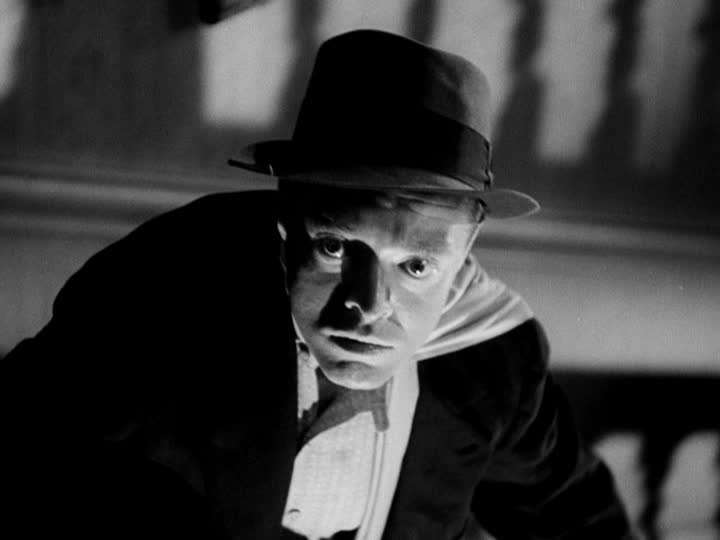
Then there’s Lorre, sneaking around like a malevolent elf. It’s almost as if he is sending up his serial killer role in M. He practically holds up an “I Am a Serial Killer placard”.

Peter Lorre in STRANGER ON THE THIRD FLOOR

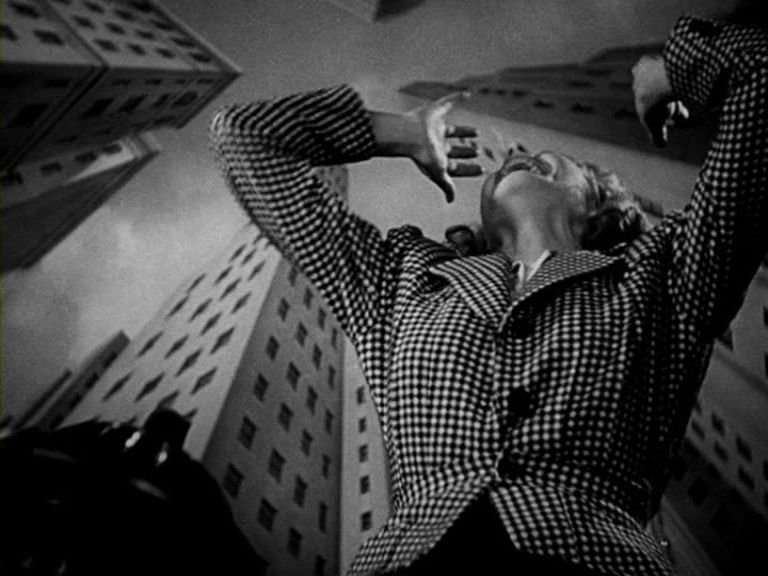
And the bland reporter hates his obnoxious neighbor so much that he has his own murder fantasies. His torment leads to a surreal nightmare. Most of the 1940 audience had probably never seen anything as bizarre as this dream sequence.

There’s also the voiceover interior dialogue so typical of film noir.

Margaret Tallichet, however, is very engaging. Her performance comes less than two years into her 43 year marriage to William Wyler, just before she left the movies to raise her kids.

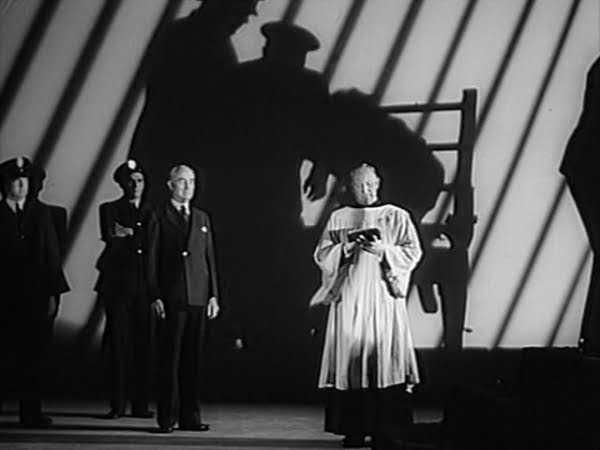
And then there is Musaraca’s cinematography. There are shadows everywhere, most exaggerated during the nightmare scene. The faces are dramatically uplit. Musaraca really gives the film what was in 1940 an entirely fresh look.

In 1940, the Italian-born Nicholas Musaraca was already a Hollywood veteran, having operated cameras since 1923.  Soon after Stranger on the Third Floor, Musaraca shot Val Lewton’s seminal horror films Cat People, The Seventh Victim and The Curse of the Cat People; the dark, dark look of those films also highly influential.  Then Musaraca returned to noir with The Fallen Sparrow, Deadline at Dawn, The Locket, Out of the Past, Born to Be Bad, Roadblock, Clash by Night, The Hitch-Hiker, The Blue Gardenia, and Where Danger Lives.  Along the way he shot films for Jacques Tourneur, Ida Lupino and Fritz Lang.  All of these movies were before 1953.  After 1955, Musaraca only worked in television, except for the 1957 noir Man on the Prowl.

In contrast, John Alton, the other great master film noir cinematographer didn’t get started in noir until noir’s high point of 1947-49, with his The Big Combo coming in 1954.

Turner Classic Movies will be airing The Stranger on the Third Floor on September 18. Or you can stream it from Amazon, iTunes, Vudu, YouTube or Google Play.

the electric chair dream sequence in STRANGER ON THE THIRD FLOOR

JULIET, NAKED: okay rom com with a fresh premise

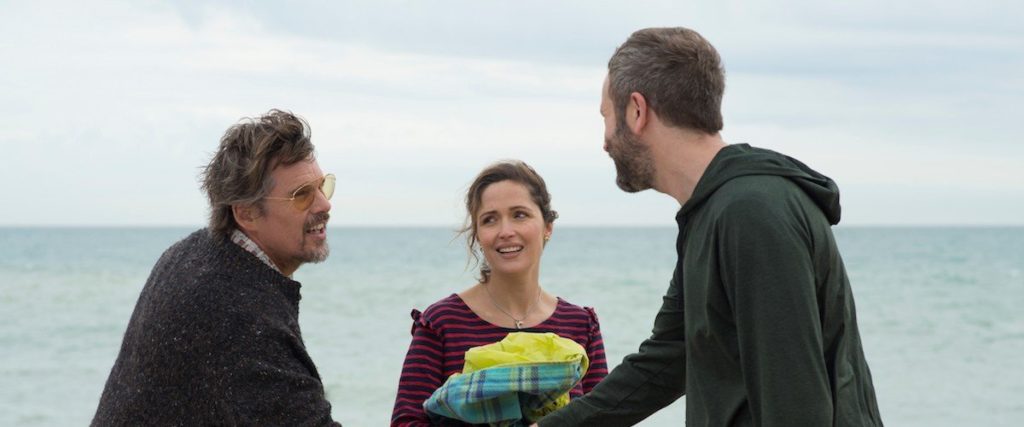
Ethan Hawke, Rose Byrne and Chris Dowd in JULIET, NAKED

Rose Byrne, Ethan Hawke and Chris O’Dowd sparkle in the affable romantic comedy Juliet, Naked. This rom com has a fresh premise – boy loses girl and finds her pursued instead by his lifelong idol. But the core of the film is, is it ever too late to jump start your life?

Annie (Byrne) lives what has become a very unsatisfying life in a British beach resort. Upon her father’s death, she returned to her hometown to help raise her little sister and the take over her father’s tiny museum. She fell in love with the local professor Duncan (O’Dowd), and they’ve been living together for over a decade. But now the sister is grown, she’s outgrown the museum, and the self-absorbed Duncan just doesn’t care about her opinions or her wants. She’s very unhappy – and it’s all sneaked up on her.

Duncan, on the other hand, is completely fulfilled by his obsessive fandom for the pop singer-songwriter Tucker Crow, who disappeared into seclusion twenty years ago. He’s filled a room of their apartment with Tucker Crowe memorabilia, and lives for the online discussions that he moderates discussions on his Tucker Crowe website. He derives status and gratification from being the world’s leading self-appointed authority on Tucker Crowe.  He is a major league bloviator.  In the movies, O’Dowd always seems so lovable; here, he;s successful in stretching himself into an unsympathetic character.

Tucker Crowe (Hawke), is living in an exile of self-loathing. Whereas Annie has settled for a life she no longer wants, Tucker has blown his life up with bad choices. After fathering several kids with several mothers – and abandoning them – he is now trying for redemption as the stay-at-home dad for his youngest, an eight-year-old boy. It turns out that one act of bad behavior in particular has – to him – discredited all his hit songs.

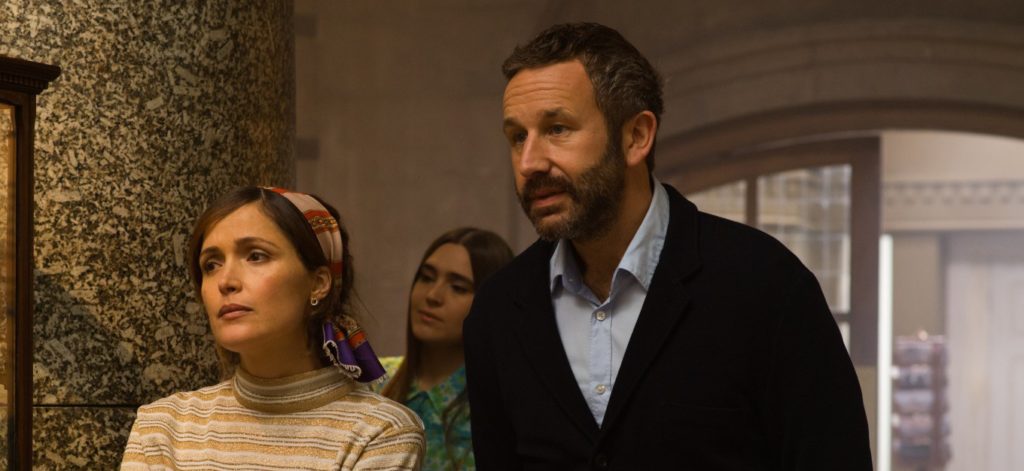
Rose Byrne and Chris Dowd in JULIET, NAKED

A turn of events lead to Annie kicking out Duncan, and Annie and Tucker – two unhappy and lonely people – meet online. Comedy and romance ensues. Among the funnier moments are when Duncan meets Tucker in real life, when Tucker stumbles into Duncan’s Tucker Crowe shrine and when all of Tucker’s exes and progeny descend on Tucker and Annie in a hospital room.

Ethan Hawke, who is a fair musician, nails a sweet cover of The Kinks’ Waterloo Sunset. Hawke also performs many of the songs on the soundtrack, including a very fun punk anthem during the closing credits.

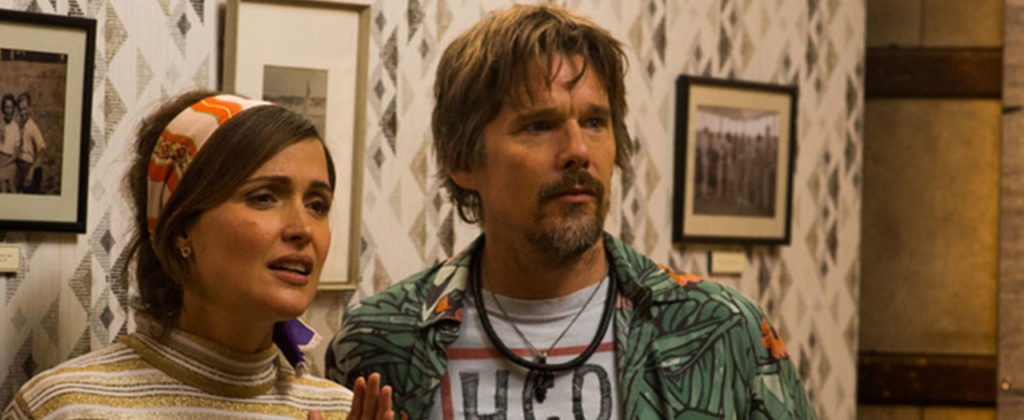
Rose Byrne and Ethan Hawke in JULIET, NAKED

Overall, I liked Juliet, Naked as an agreeable romp. The Wife recommends it as a home video watch, not for a special trip to the theater.

The Wife also said she was distracted by all the clumsy efforts to hide Rose Byrne’s pregnancy – extra-roomy dresses and Byrne’s awkwardly front-carrying duffels and all manner of objects. I didn’t notice, but Byrne did gave birth in November 2017, so I assume that The Wife was once, again, far more observant than I.

WYETH: what is a muse?

Andrew Wyeth’s Christina’s World, featured in WYETH

Wyeth, the latest documentary in the PBS American Masters series, takes on the odd case of the great painter Andrew Wyeth and explores the question, what is a muse?    And how can great art come from the most unlikely and obscure subjects?

Every artist has a source of inspiration, and it’s amazing that Wyeth was able to find his while living an unusually parochial life.   Choosing not to “see the world”, Wyeth spent his entire life in two rural settings – his childhood home in  Chadds Ford, Pennsylvania. and his summer coastal home in Cushing, Maine.  Fortunately, some of his neighbors allowed him to hang around and watch them in their daily lives.  Wyeth would then pad along home to his studio and churn out hundreds of finely detailed paintings from what he remembered.

In doing so, he rendered iconic some very unlikely subjects by painting them again and again – a disabled neighbor woman, a stolid farmer, an alcoholic eccentric.

We learn that Wyeth could spend all of his time on his two obsessions – studying the locals and painting them – because of his wife Betsy.  From age 17, Betsy managed Wyeth’s business, household and family, freeing him to devote every thought to the artistic process.

That’s why it was so shocking when Wyeth revealed fifteen years’ work – over 200 paintings, many erotic – with a subject Betsy had known nothing about.

Wyeth draws upon rich source material, including never-before-seen family photos and artifacts, and we meet Wyeth’s family members, neighbors and subjects, and visit the actual homes where Wyeth studied his subjects.

Wyeth will be airing on the PBS American Masters series beginning on September 7.

LET THE CORPSES TAN: an exercise in style

A scene from LET THE CORPSES TAN, courtesy of Kino Lorber

Neo-noir and Spaghetti Westerns converge in the hyper-violent and stylized Belgian thriller Let the Corpses Tan.

Written and directed by Hélène Cattet and  Bruno Forzani, this is a contemporary thriller that pays loving homage to the Sergio Leone canon.  Tight closeups on characters’ eyes aren’t just for the big showdowns in this flick.  They even use two Ennio Morricone musical cues from 1969 and 1971.  A pivotal character even smokes cigarillos like Clint Eastwood’s Man With No Name in the Leone movies.

Let the Corpses Tan is set in a compound of ruins atop a Mediterranean cliff, occupied by an oversexed artist who hosts visitors.  Besides a writer, she’s hosting three mysterious out-towners.  They turn out to be criminals who, with their shady lawyer, have pulled off an armored car heist and are flush in gold bars.  Just as they are ready to sneak away, the writer is surprised by his estranged wife, her kid and her nanny.  Then two cops happen upon the residents, and a gun battle explodes.

There’s only one road out of the compound and two groups of criminals and two groups of the non-criminals occupy various shelters in the ruins.  It’s a standoff because no one can escape – or escape with the gold. They are forced to hunt each other in a lethal and claustrophobic game of cat-and-mouse, including even the guy caught without any clothes.  Under life-and-death pressure, allegiances become malleable and the double crosses and side-switching begin.

So do the casualties.  Sam Peckinpah would wince at some of the gore and splatter, and Let the Corpses Tan lives up to its deliciously brutal title.

As exhaustion mounts from the siege, various characters have vivid fantasies.  Let the Corpses Tan gets very, very trippy.  One breast milk crucifixion fantasy is like nothing I have seen or could have imagined.  Eventually, there’s a Death character in female form, at one point a urinating Death.

There’s one interesting character.  The artist/hostess is basically a goddess of carnality.  She is played by Elina Löwensohn (from 1994’s Amateur with Isabelle Huppert), and Löwensohn’s eyes are voracious.

Let the Corpses Tan is essentially a soulless exercise in style, more interesting than gripping.  It’s a visual stunner, though, and the Leone references are fun.