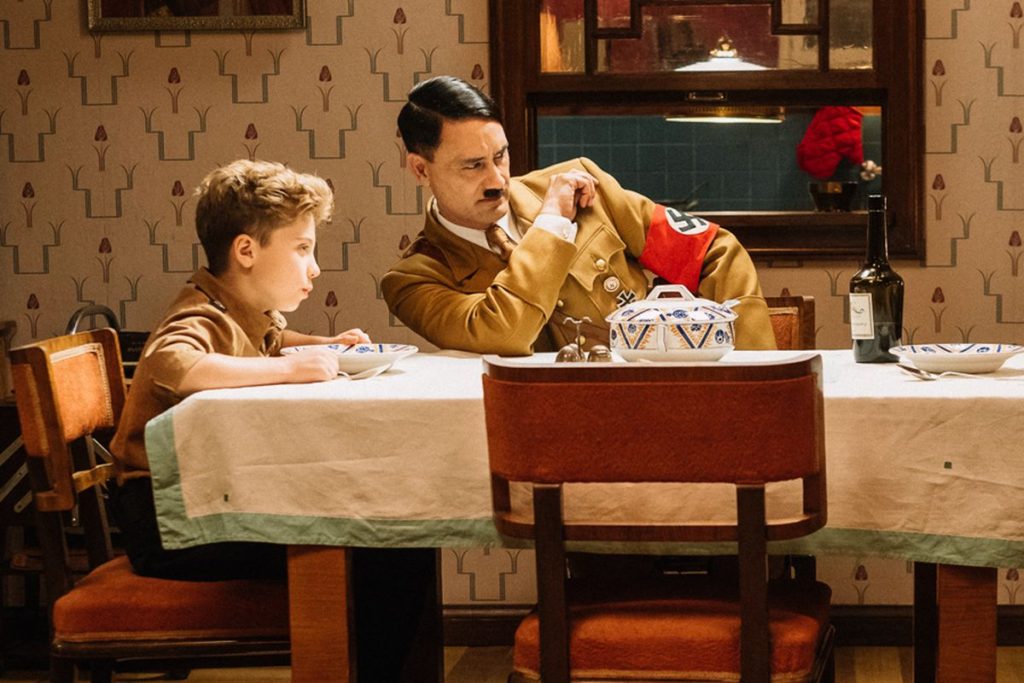
JOJO RABBIT: a joyous and hilarious movie about the inculcation of hatred

JOJO RABBIT

Filmmaker Taika Waititi takes on hatred in his often outrageous satire Jojo Rabbit. His protagonist is the ten-year-old German boy Jojo (Roman Griffin Davis), growing up during the final years of World War II. Jojo lives with his mom (Scarlett Johansson) because his dad is away (and we learn that the father is likely dead), It’s a tough childhood in these conditions, and Jojo copes with the help of an imaginary friend, who happens to be Adolph Hitler, played uproariously by Waititi himself.

Waititi doesn’t play the historical Hitler; he plays a benign and reassuring figure that is imagined by a child brought up on Nazi propaganda. He fills that role that uncles and grandads get to be with kids – the cherished figure who is always on your side and never make you do your chores. Of course, a playful and nurturing Hitler is absurd, and Waititi is brilliantly funny.

Jojo tries to fit in with the Hitler Youth, and his hobby is innocently filling a notebook with illustrations of the most hideous Jewish stereotypes that he has been taught. What we understand but Jojo doesn’t, is that his mom is risking her life in the anti-Nazi Resistance. She’s also been hiding the Jewish girl Elsa (Thomasin Mackenzie) in the attic a la Anne Frank.
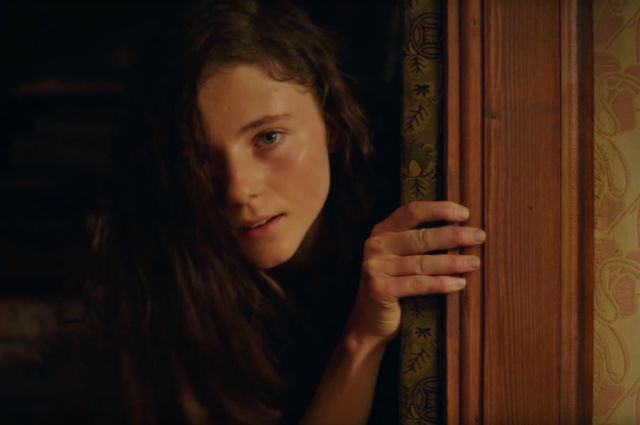
Thomasin MacKenzie in JOJO RABBIT

Jojo discovers Elsa, and , as is usually the case with a ten-year-old boy and a fifteen-year-old girl, she becomes the boss of him. He gets an up close lesson in Jewishness, and it’s a revelation to him. It’s also clear that Germany is losing the war, although Jojo, as a child, is slower to connect the dots about that than are the adults. As the propaganda is unpeeled, the absurdities of the hatred and scapegoating are revealed to Jojo.

Roman Griffin Davis is a perfect choice to play the relatable innocent Jojo. Thomasin MacKenzie, so genuine and ethereal in Leave No Trace, is wonderful here, too. The entire cast is good, especially Johansson, Sam Rockwell as a cynical army officer, Rebel Wilson as a Nazi true believer and Stephen Merchant as a grinning Gestapo goon.

Even more than most movies, this is a film of its time. Five years ago, we might not have seen the value of a movie discrediting the Joseph Goebbels approach – pounding outrageous lies into a mass audience made gullible by its own dissatisfaction, targeting the “other” as blameworthy for all ills. But here we are, 74 years after the destruction of the Nazis, once again watching blowhard demagogues drumming up hatred for minority groups and scapegoating immigrants – in the US and Europe and around the globe. With its skewering of manufactured hatred and the Big Lie, this witty and ultimately sweet film resonates.

I saw Jojo Rabbit at the Mill Valley Film Festival, where the audience ROARED with laughter. This is going to be an audience favorite.
THE LAUNDROMAT: watch THE BIG SHORT again instead

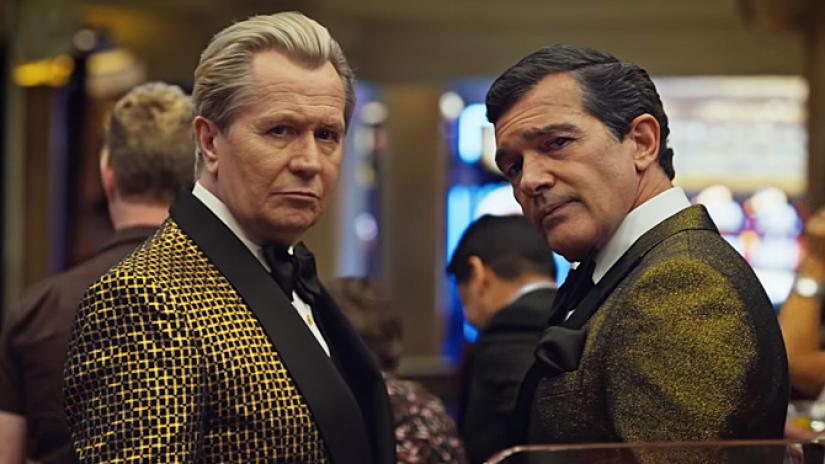
Gary Oldman and Antonio Banderas in THE LAUNDROMAT

Steven Soderbergh’s disappointing The Laundromat takes on the Panama Papers scandal of 2015, in which the shady law firm of Mossack Fonseca enabled hundreds of global fraudsters and tax cheats. Intended as an expose of financial malfeasance, it only succeeds as a demonstration of cinematic waste. There’s way too much talent harnessed to result in such a shallow imitation of The Big Short.

Meryl Streep plays an Everywoman who gets swindled by a corrupt system and by individual crooks played by Gary Oldman, Antonio Banderas and Jeffrey Wright. If there’s anything worthy about this film, it’s Oldman and Banderas, who get to break the fourth wall and blithely explain their cons to the camera – the same function that Margot Robbie, in a bubble bath, filled in The Big Short.

There just isn’t anything to engage the audience here. Worse, The Laundromat muddles it message by toggling between what’s legal and what’s not. The film explicitly claims that the crookedness depicted is legal, but it actually shows lots and lots of fraud – and fraud is already illegal. The real scandal, of course, is that the system is rigged so the big financial interests can LEGALLY screw the rest of us

It all culminates in a corny final shot that not even Streep can make convincing or palatable. If you MUST watch this crap, it’s streaming on Netflix.

WHERE’S MY ROY COHN?: vile begets vile

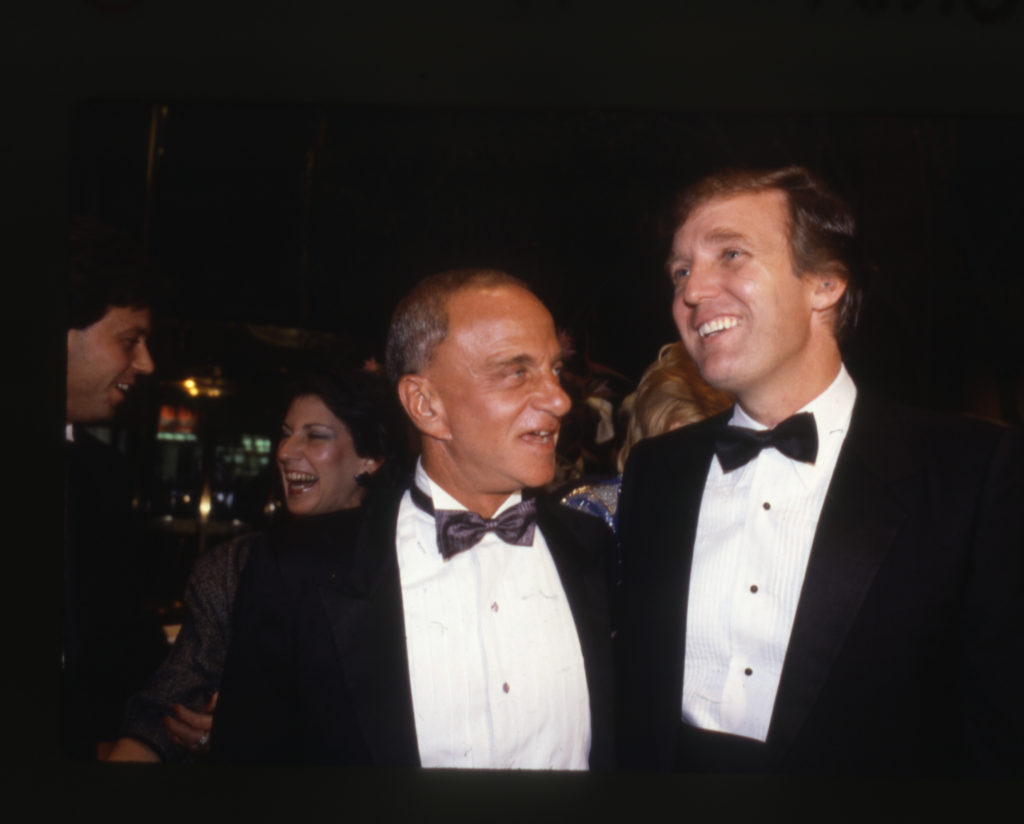
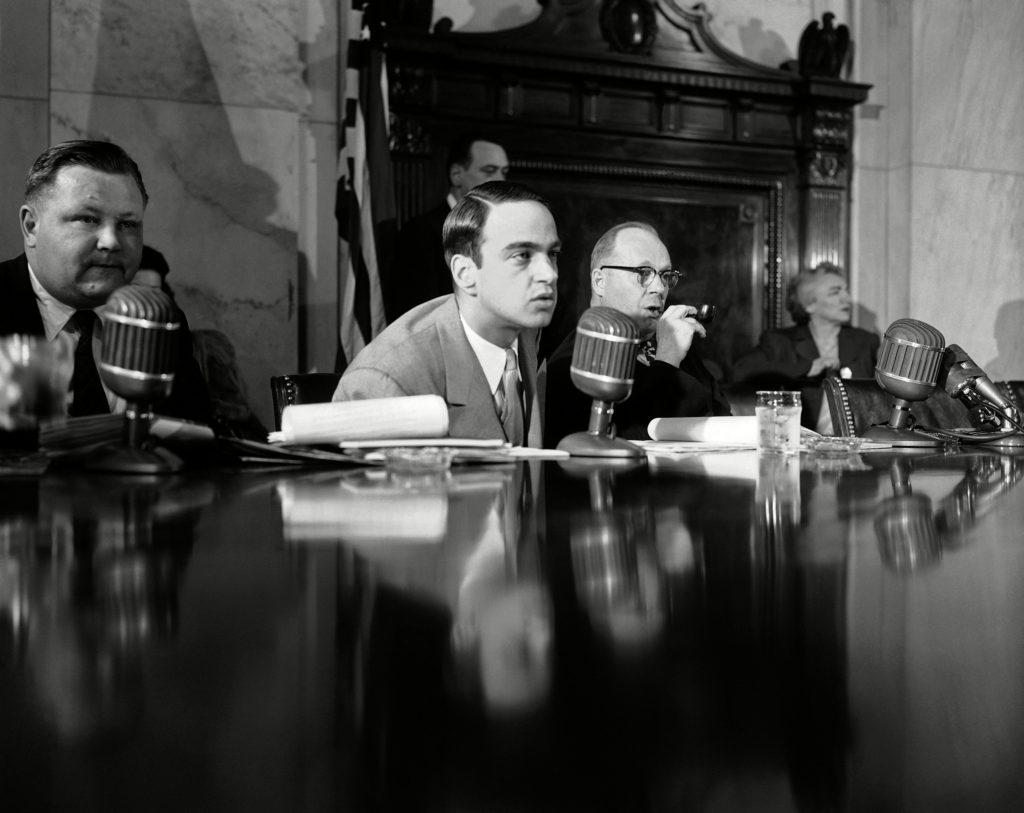
Roy Cohn (center) in WHERE’S MY ROY COHN? Credit: Photo by Henry Burroughs/AP/REX/Shutterstock. Courtesy Sony Pictures Classics.

Where’s My Roy Cohn? is Matt Tyrnauer’s superb biodoc of Roy Cohn – and is there a more despicable public figure in America’s 20th Century than Cohn? Has there been a more shameless hypocrite? A bully more cruel? A crook more craven?

It would be accurate but unhelpful to say that Roy Cohn didn’t invent scorched earth tactics, like saying that Hitler didn’t invent genocide. Cohn and his proteges certainly popularized what Bill Clinton called “the politics of personal destruction”.

I can’t remember ever before quoting movie publicity materials, but I can’t improve on this trenchant description of Cohn’s legacy from Sony Pictures Classics:

Cohn formulated his playbook in the 50s, but it is all too familiar today: always attack; never admit blame or apologize; use favors and fear to ensure support for your objectives; expertly manipulate the media to gain advantage and destroy your opponents; lie shamelessly, invalidating the idea of truth; weaponize lawsuits; evade taxes and bills; and, most importantly, inflame the prejudices of the crowd by scapegoating defenseless people.”

Cohn’s central role in McCarthyism is well known, as is his role as a storied, self-promoting fixer (or legal terrorist) in the 1970s and 1980s. More recently, Cohn’s formative mentorship of the young Donald Trump has come to light.

Roy Cohn and Donald Trump in WHERE’S MY ROY COHN? Courtesy Sony Pictures Classics.

In Where’s My Roy Cohn?, Tyrnauer provides us with less well-known revelations. Cohn’s cousins and his longtime boyfriend are key witnesses. We learn about Cohn’s father, who exposed him to the seamy world of a political machine, and Cohn’s mother, from whom Cohn seems to inherited his ruthlessness. There’s an absolutely jaw-dropping anecdote about how far Mrs. Cohn would go to avoid interrupting her Seder. And there’s the important story of his Uncle Bernie’s financial ruin and public disgrace, which seems to have taught Cohn all the wrong lessons. Tyrnauer also brings us Cohn’s wresting control of the Lionel Train company from family members. And there’s an “insurance fire” on Cohn’s Florida yacht, which resulted in a homicide.

Cohn was the chief henchman leading Joseph McCarthy’s Lavender Scare to persecute LGBTQ Americans in public and military service. The famous Army-McCrthy hearings were sparked by Cohn’s seeking favorable treatment for David Schine, Cohn’s assistant and the object of his infatuation, as they cavorted across US bases in Europe, making life hellish for American gay soldiers. Despite a legendary reputation for same-sex encounters and relationships, Cohn always denied being gay himself or having AIDS, of which he died.

And, for good measure, one of his cousins also pegs Cohn as a self-loathing Jew.

There are also clips of Cohn on The Late Late Show with Tom Snyder. (Man, I haven’t thought of Tom Snyder in decades.) In one clip, Cohn defines “tough” as “vicious”, and says that his clients “buy scare value”.

Why spend almost two hours with Roy Cohn? Because Roy Cohn’s story is important to our understanding of 20th Century American history and of our current public culture.

Where’s My Roy Cohn? played at the Mill Valley Film Festival and opens in Bay Area theaters this weekend.

PAIN AND GLORY: achingly personal

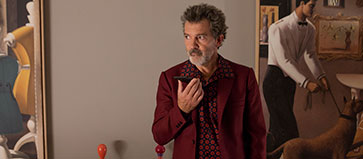
Antonio Banderas in PAIN AND GLORY

In his Pain and Glory, master filmmaker Pedro Almodovar invites us into the most personal aspects of his own life, illuminated by Antonio Banderas’ career-topping performance. Almodovar calls Pain and Glory “auto-fiction”, and Banderas’ central character is a filmmaker clearly modeled after Almodovar himself.

Although Almodovar is known for a fun personality and makes the most exuberant films, we learn that this filmmaker is shy and introverted. He is suffering privately from an assortment of maladies, most importantly with chronic back pain, migraine headaches and depression. Because of the chronic pain and the depression, he has isolated himself in his apartment, blocked from his work and avoiding all social engagement.

The restoration of an early film prods him into planning a public appearance with the film’s star, an actor that he has been estranged from for thirty years; that encounter plunges him into an entirely new strategy of pain management. Almodovar inserts vignettes from his childhood which illuminate his respect and adoration of women and his artistic and sexual awakenings. These flashbacks are brilliant.

Pain and Glory is as beautiful as any Almodovar film. The color palette is far less lushly vibrant than usual for Almodovar, but the more somber look is just as rich.

Banderas has never been better. His longtime close friendship with Almodovar clearly informed this searing performance, both with his close observation of his friend and because he cares for him. This performance will certainly earn Banderas an Oscar nomination.

Pain and Glory is an exquisite film. Some audiences may not want to invest in such a sometimes painful story, deliberately paced as it is. But those who settle in will be rewarded.

LINDA RONSTADT: THE SOUND OF MY VOICE: the icon who never played it safe

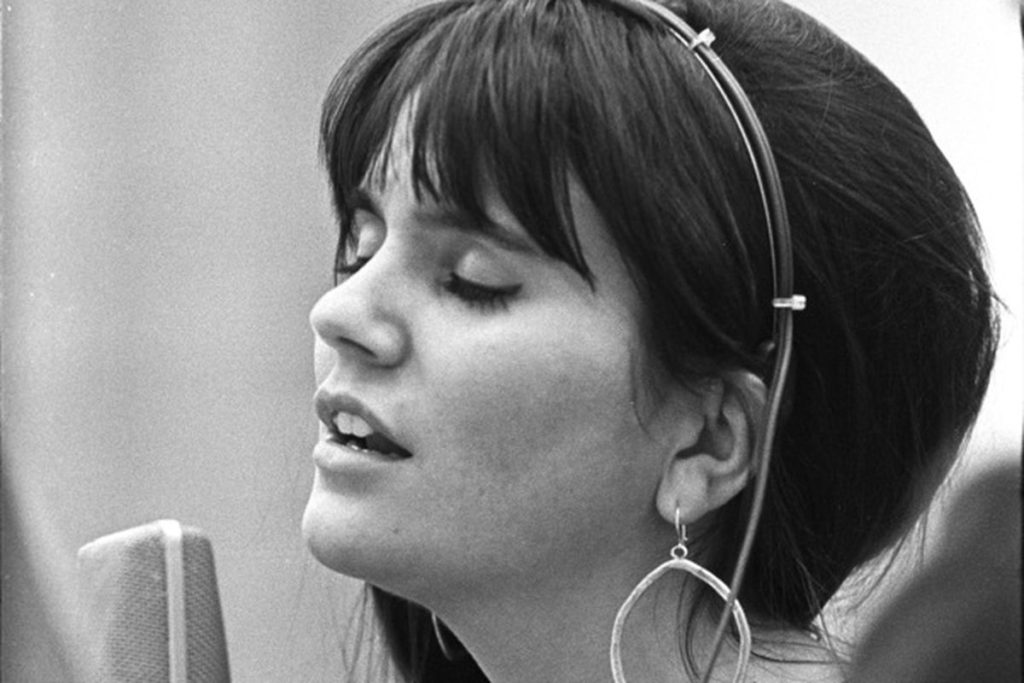
LINDA RONSTADT: THE SOUND OF MY VOICE

Linda Ronstadt: The Sound of My Voice is the insightful biodoc, based on Ronstadt’s own memoir, and narrated by Ronstadt herself. Ronstadt was the first female mega-rock star, and her story touches on feminism, the Counterculture and pivotal changes in the music industry. The film is comprehensive, tracing her upbringing and her romances with songwriter JD Souther and Governor/Presidential candidate Jerry Brown. The story is also poignant – her Parkinson’s disease has kept her from singing since 2007.

Ronstadt has been the auteur who is able to take someone else’s song and make it into her own art. She’s not a mere cover singer. I recommend listening to the Everly Brothers’ When Will I Be Loved, the Eagles’ Desperado, Dee Dee Warwick’s You’re No Good, Buddy Holly’s It’s So Easy and Little Feat’s Willin’ – and then matching them with Ronstadt’s versions.

Ronstadt is also unusual in that her interests and talent span the genres of pop and rock and country, various subgenres of Mexican music (earning Grammies across musical types) and even Gilbert and Sullivan (Tony nomination).

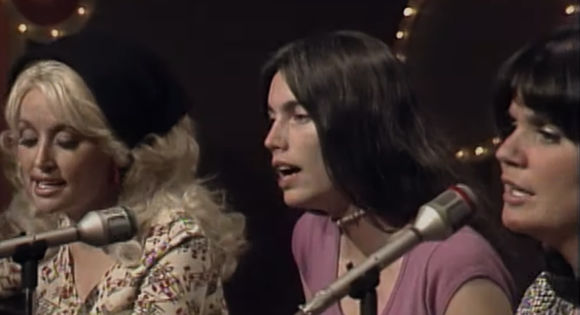
Dolly Parton, Emmylou Harris and Linda Ronstadt in LINDA RONSTADT: THE SOUND OF MY VOICE

Linda Ronstadt: The Sound of My Voice brings us a deep reservoir of witnesses: Ronstadt family members, Souther, former bandmates Don Henley and Waddy Wachtel, friends and collaborators Emmylou Harris and Dolly Parton. Both Emmylou and Dolly credit Ronstadt with helping them in critical career moments, Emmylou when she was paralyzed by grief and shock from the death of Gram Parsons.

Here’s a wonderful nugget from the film: Ronstadt had grown up in a family that sang Mexican music together, but her interest was rekindled by listening to the late night canciones of Harry Dean Stanton who was living in the garage behind Ronstadt and Souther.

It’s hard to imagine someone who wouldn’t enjoy Linda Ronstadt: The Sound of My Voice. And about that final scene of Linda with her nephew and cousin in the living room – just try to hold back the tears.

Stream of the Week: AUGGIE – Who do you see when you put on the glasses?

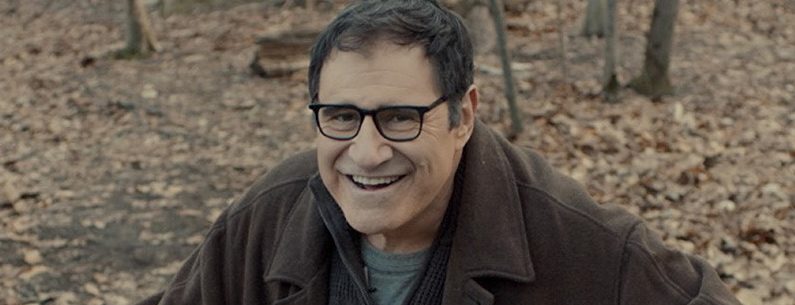
Eichard Kind in AUGGIE

In the superb indie Auggie, Felix (Richard Kind) is pushed into retirement before he wants.  He’s given a goodbye gift that he never would have thought to wish for, augmented reality glasses. Suddenly plunged into inactivity just as his wife Anne’s career is thriving, Felix finally gets around to putting on the glasses.  The glasses give him a virtual companion, Auggie, equipped with the artificial intelligence to give the wearer his craved-for experiences.  Most insidiously, Auggie even delivers individually customized emotional support. Everyone’s digital companion takes the form of what they desire, and Felix’s Auggie is a smoking hot and adorable young woman.

The more Felix wears the glasses, the more Auggie is able to fulfill his every need, even triggering more inner desires that he was aware of.  This isn’t quite a Doctor Faust who knowingly opts into his fantasy; Auggie’s artificial intelligence is able to see Felix’s fantasies even before he can imagine them.  All things in moderation, of course, but Auggie’s infinite availability becomes additive.  This is no longer healthy for Felix or his family.

When a character asks, “Who do you see when you put on the glasses?”, it’s a devastating moment.

Auggie is the first feature for director and co-writer Matt Kane.  Kane has avoided writing Felix as a stereotypical clumsy old grouch.   As written by Kane and co-writer Marc Underhill and played by Richard Kind, he’s very smart and perceptive.  He just isn’t ready for unimaginable temptation.

You’ll recognize Richard Kind, a reliable character actor and voice artist with 221 screen credits. My favorite Kind performance was the moving portrayal of a man seeking closure after the death of his wife in Clint Eastwood’s Hereafter.

Susan Blackwell is perfect at Felix’s wife Anne.  Blackwell has had small parts in some very fine films and hosts her own Broadway interview show on YouTube, Side By Side with Susan Blackwell.  Cristen Harper is suitably seductive as Auggie.

I saw Auggie at its world premiere at Cinequest. It can be streamed from Amazon, iTunes and Vudu.

THE SOUND OF SILENCE: novel and engrossing

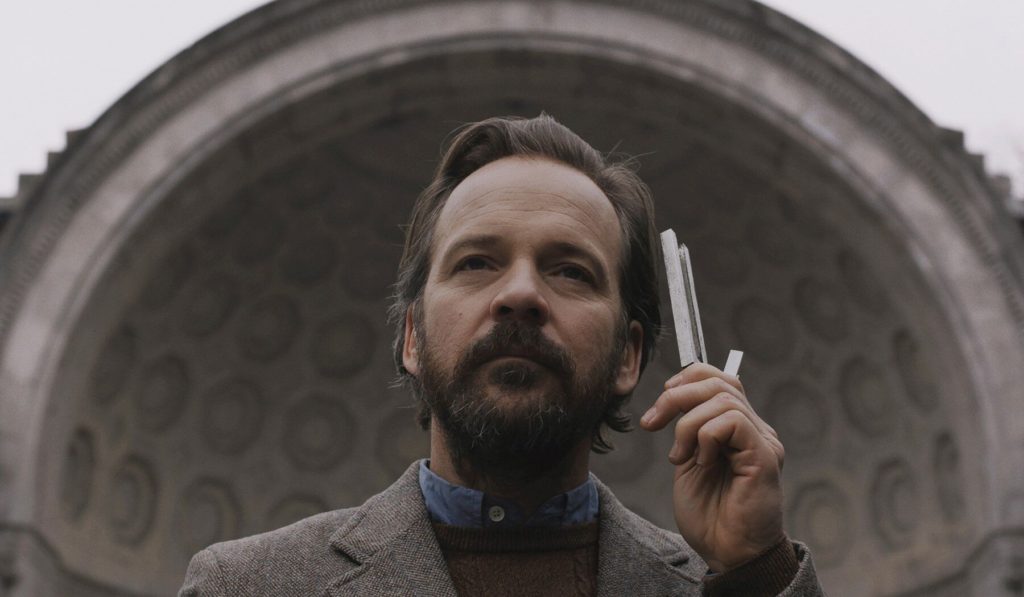
Peter Sarsgaard in Michael Tyburski’s THE SOUND OF SILENCE. Courtesy of SFFILM

In the engrossing character study The Sound of Silence, Peter Lucian (Peter Sarsgaard) is obsessed with the musical tonality of the built environment.   Having assigned each area of Manhattan its own distinct musical key, Lucian prowls the city, tuning forks in hand, to map its sounds.

Lucian pays the bills as a house tuner, bringing well-heeled apartment-owners a kind of auditory feng shui.  Lucian is sought after to isolate the hum of a problem refrigerator or toaster that can make a living space depression-inducing.  He’s even been profiled in The New Yorker.

But we sense that Peter Lucian is a little too confident in his expertise.  He is disdainful of the corporate suits trying to monetize his discoveries.  “This is about universal constance, not commerce.”  In a mistake of hubris,  Lucian takes on a research assistant (Tony Revolori – Zero the bell boy in The Grand Budapest Hotel).   Lucian is jarred by corporate espionage, and starts to unravel when a respected scientist views him as a crank.  Can he recover?

Peter Sarsgaard is a marvelous choice to play a cool obsessive who seems, at time,  both blissfully above validation and desperate for it.  In spite of his handsome, regular features, Sargaard’s gift for uncanny stillness helps him play creepy.   Sarsgaard’s Lucian has the unintended capacity of reassuring other characters, but making then even more uncomfortable.

Rashida Jones plays Ellen, a Lucian client who is not just garden-variety neurotic, but has been  so rocked by a tragedy that she remains profoundly unsettled.   Jones is so talented as a comic actress, a voice artist, a documentarian and the writer of that rarest of things, a smart romantic comedy (Celeste and Jesse Forever).  Here, she shows her dramatic chops with a character who starts the movie adrift, but grows able to offer emotional safe harbor.

There’s even a welcome appearance by Austin Pendleton as a Lucian mentor of uncertain reliability.  I’ve loved Pendleton since his turn in 1972’s What’s Up, Doc?. (Come to think of it, that movie had a musicologist obsessed with the inherent tonal qualities of igneous rocks.)

The Sound of Silence is the first feature for director and co-writer Michael Tyburski, and it’s a promising debut.  Despite using an understated color palette, Tyburski delivers some stirring cinema with his use of sound.  As Lucian looks over the city early in the morning, we hear a few musical notes, and then a full orchestra tuning up as the city awakens into its workday.  When Lucian takes Ellen for a drink, it is to the quietest possible venue – a club with a decibel level somewhere between a library and a morgue; afterwards, Lucian emerges into urban  cacophony.  When an academic treats him like a crackpot, we all hear ringing, not just Lucian.

As one would hope, the sound design of The Sound of Silence is remarkable, and the score works very well.  I saw it earlier this year at the San Francisco International Film Festival (SFFILM) and it’s playing at San Francisco’s Presidio and San Jose’s 3Below; you can stream it on Amazon, iTunes and Vudu.

Stream of the Week: GRIZZLY MAN – a fool’s misadventure

GRIZZLY MAN

Werner Herzog’s mesmerizing and darkly funny documentary Grizzly Man is about Timothy Treadwell, who had spent summers observing the brown bears (grizzlies) in Alaska’s Katmai National Park, and believed that he had “gained their trust”. Driven by his ill-advised dream to befriend the grizzlies, Treadwell and his girlfriend Amie Huguenard essentially moved in with the grizzlies, camping by their fishing spot and personally interacting with them at close quarters. It did not end well.

Basically, grizzlies are hard-wired to hunt and eat humans. They are so fast that a human can’t escape one without a vehicle (or, possibly – but not for sure – tree climbing); They are so strong and fierce that a human can’t fend one off without a firearm (or, possibly, bear spray). This makes Treadwell’s’s quest remarkably foolhardy, This also makes Grizzly Man hilarious in a Darwin Awards way.

GRIZZLY MAN

As ridiculous as is Treadwell’s plan, this story had its life-and-death drama. Herzog’s presentation of a wristwatch and an audio recording is a moment that makes the hair on your neck stand up.

Werner Herzog, known for his German New Cinema art house hits of the 70s and 80s (Aguirre:The Wrath of God, Strozek Nosferatu the Vampyre, Fitzcarraldo), switched gears in 1997 with the underrated documentary Little Dieter Needs to Fly and followed it with Grizzly Man. Since, Herzog has become a prolific and masterful documentarian.

In Grizzly Man, Herzog makes use of 100 hours of Treadwell’s own video footage of his misadventure. As we’ve come to expect, Herzog’s research is impressively resourceful, and he assembles his finds to construct a masterpiece of story-telling Most remarkably, Herzog has also become one of the greatest narrators of English language documentaries; somehow, his German-accented narrations are hypnotic.

Grizzly Man is a superb film, which made my own list of Best Movies of the 21st Century (and Sophia Coppola’s, too) and my Best Movies of 2005. It can be streamed from Amazon, iTunes, Vudu, YouTube and Google Play, and it’s available on DVD from Netflix.

MAKING WAVES: THE ART OF CINEMATIC SOUND – a movie fan’s primer

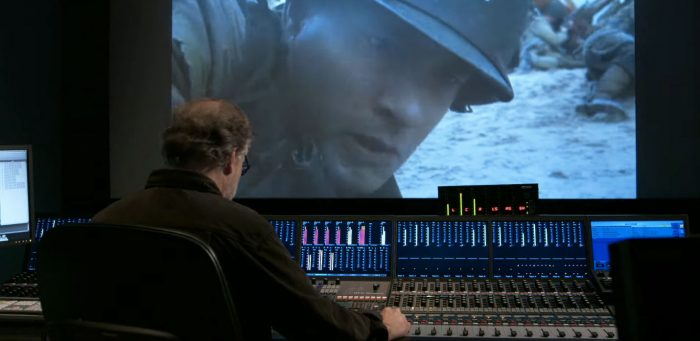
Steven Spielberg and Saving Private Ryan in AKING WAVES: THE ART OF CINEMATIC SOUND

We usually say that we SEE a movie, but what we hear (or don’t hear) is just as essential to the movie’s impact. The impact of movie sound is SUPPOSED to be subliminal, so we often enjoy a film without appreciating the sound. The documentary Making Waves: The Art of Cinematic Sound is a comprehensive primer on the art and science of movie sound.

Making Waves begins with the first decades of cinema, when movies aspired to include sound with images, but could only be accompanied by live music and live sound effects at their exhibition. Technology caught up in 1926 with synchronization of recorded sound and images.

The end of the studio period in the late 1960s coincided with the arrival of Walter Murch, the genius who invented modern movie sound design. Thankfully, Making Waves serves up plenty of Murch (The Godfather, The Conversation and Apocalypse Now!), before introducing us to Ben Burtt, who won an Oscar in his first gig (Star Wars) and Pixar’s Gary Rydstrom, who pioneered digital sound design. We also see the impact on movie sound of George Martin and the Beatles (multi-track recording), Barbra Streisand (movie exhibition in stereo) and Robert Altman (shooting with multiple mics).

Making Waves is best described as thorough and systematic, and I wouldn’t call it thrilling. But it’s a great choice for anyone who wants to understand and appreciate filmmaking.

There are plenty of cool tidbits, like how Burtt came up with Chewbacca’s vocalizations with the help of a bread-loving bear. And we see Foley artists at work, rolling a pine cone across dry lasagna to create just the right effect.

Making Waves is the feature debut for director Midge Costin and will be released theatrically later this fall. I saw Making Waves: The Art of Cinematic Sound at Cinema Club Silicon Valley, with a Q&A with Costin.

DOWNTON ABBEY: wrapping up a beloved series

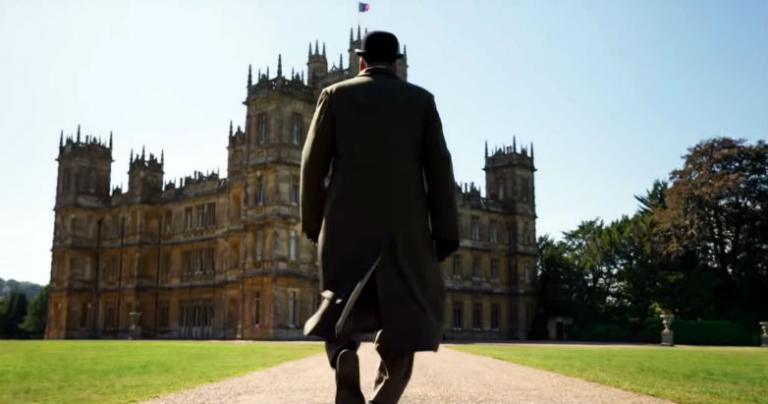
Carson (Jim Carter) returns in DOWNTON ABBEY

Downton Abby is writer Julian Fellowes’ satisfying wrap-up of the beloved series. So how good is it? It’s well-crafted and brings a hopeful, romantic and sentimental conclusion to virtually every character in the series.

It’s now 1927, and the aristocratic Crawley family and the Downton Abbey staff must host a visit from the King and Queen on short notice. There are two sources of conflict. Upstairs, there is a question of inheritance, which is where the series began, and which introduces a new character (played by the great Imelda Staunton) to do social combat with Violet (Maggie Smith). Downstairs, the royal family has a traveling squad of servants who try to humiliatingly push aside the Downton staff for the visit.

Fellowes gets credit for creating the marvelous character of Violet Crawley, Dowager Countess of Grantham. The delightfully unfiltered Violet has allowed Maggie Smith to scene-steal for a decade, and she returns with her cutting bon mots and appalled reaction to modernity.

There is one shark-jumping scene, an action thriller sequence that isn’t really necessary for the story. It serves to make a point about the character of Tom, but that point could have ben made without the Jack Ryan moment.

Downton Abbey is not really a stand-alone movie. If you haven’t watched the series, it won’t mean as much. This is a series finale – it’s just in theaters instead of on TV

This is not The Sopranos, Throne of Blood or Tales of the City. Pretty much all Downtown Abbey fans will feel good about where the story concludes.