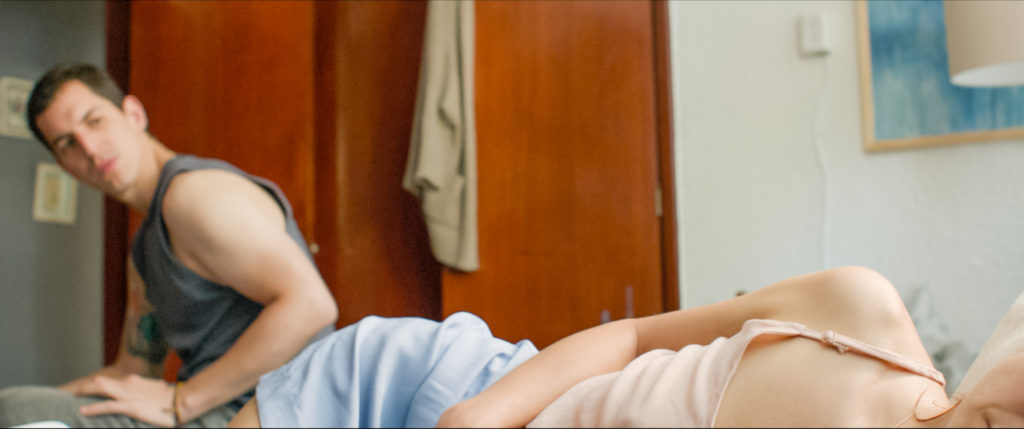
In the Norwegian teen coming of age film Psychobitch, Marius (Jonas Tidemann) is his high school’s high achiever. Frida (Elli Rhiannon Müller Osbourne), on the other hand, is emotionally troubled and always on the verge of flaming out. To help Frida, a well-meaning teacher pairs the odd couple on a group project. Odd couple humor ensues.
Frida is more than just a misfit, a high school outcast. She is battling a serious psychiatric disorder, and she often thinks suicidal thoughts and pushes away those who could help. “Psychobitch“, the best movie title in this year’s Cinequest, is Marius’ initial assessment of Frida.
Marius is devoutly conventional, and there is nothing that Frida rejects more enthusiastically than conventionality. But both of these kids are smart and fun-loving, and being with Frida reveals a funnier and more spirited Marius than had been apparent. Frida is a bundle of vitality, and her constant defiance turns out to be a mask.
Marius learns that there’s something about himself, an aspect of his personality, that is not working out for him. For Marius to be happy and to become his own man, there’s a change he needs to make.
Of course, all of this plays out in a high school, with its classes and detentions, cliques and proms. Cinequest Director of Programming Mike Rabehl noted that it has the air of a 1980s John Hughes film. If you squint, you can almost see Pretty in Pink with a bipolar Molly Ringwald.
This an audience-pleaser. Cinequest hosts the North American premiere of Psychobitch.
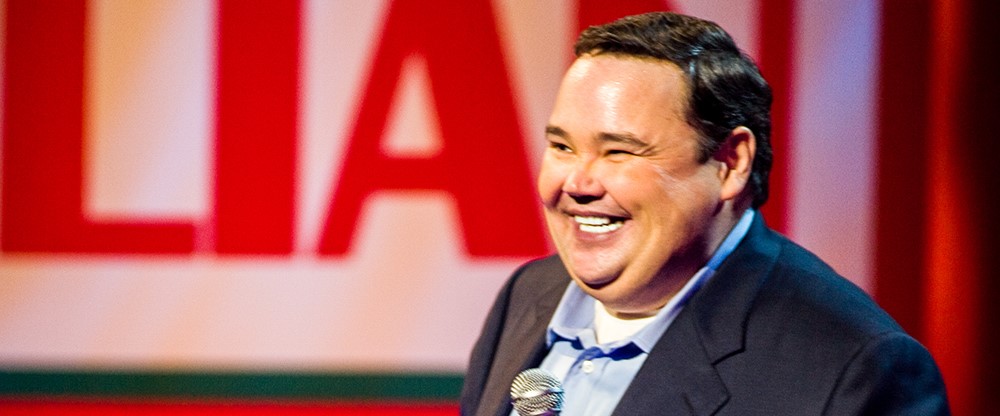
JOHN PINETTE: YOU GO NOW. Photo cpurtesy of Cinequest
John Pinette: You Go Now, the biodoc of the comedian, plumbs beneath Pinette’s cherubic skin for insights into what sparked his humor – and his obesity. Let’s just say that his childhood was not the most nurturing.
The clips of Pinette’s performances are very funny, and the ones from his youth illustrate his remarkable gift at mimicry. Pinette himself thought that he had inherited genes that predisposed him to addiction, but he was clearly also born with immense talent.
Cinequest hosts the world premiere of John Pinette: You Go Now. It’s only the second time in Cinequest’s 30-year history that an open submission has been selected as the festival’s opening night film.
Tawny Cypress and Thalia Thiesfield in INEZ & DOUG & KIRA. Photo courtesy of Cinequest.
The devastating indie drama Inez & Doug & Kira opens with a couple, Doug (Michael Chernus) and Kira (Thalia Thiesfield), facing the recent suicide of Kira’s sister Inez (Tawny Cypress). We learn the back story through flashbacks. Doug tries to peel back the past and slips into obsession.
Who was Inez and why did she kill herself? What is up with Doug? What is up with Kira?
I’ve loved watching Chernus since I first noticed him in Higher Ground, and Chernus is the reason that I screened this movie (and I’m glad that I did). Cypress has the showiest role, but she knocks it out of the park – Inez is sexy, needy, domineering, manipulative and a red hot mess.
Inez & Doug & Kira is the first feature for writer-director Julia Kots, and it’s a very promising debut.
Cinequest hosts the Bay Area premiere of Inez & Doug & Kira, and I understand that the Cinequest audience will be only the second, after the Woodstock Film Festival, to see this film.
UPDATE: Now streaming on Amazon, AppleTV, Vudu, YouTube.
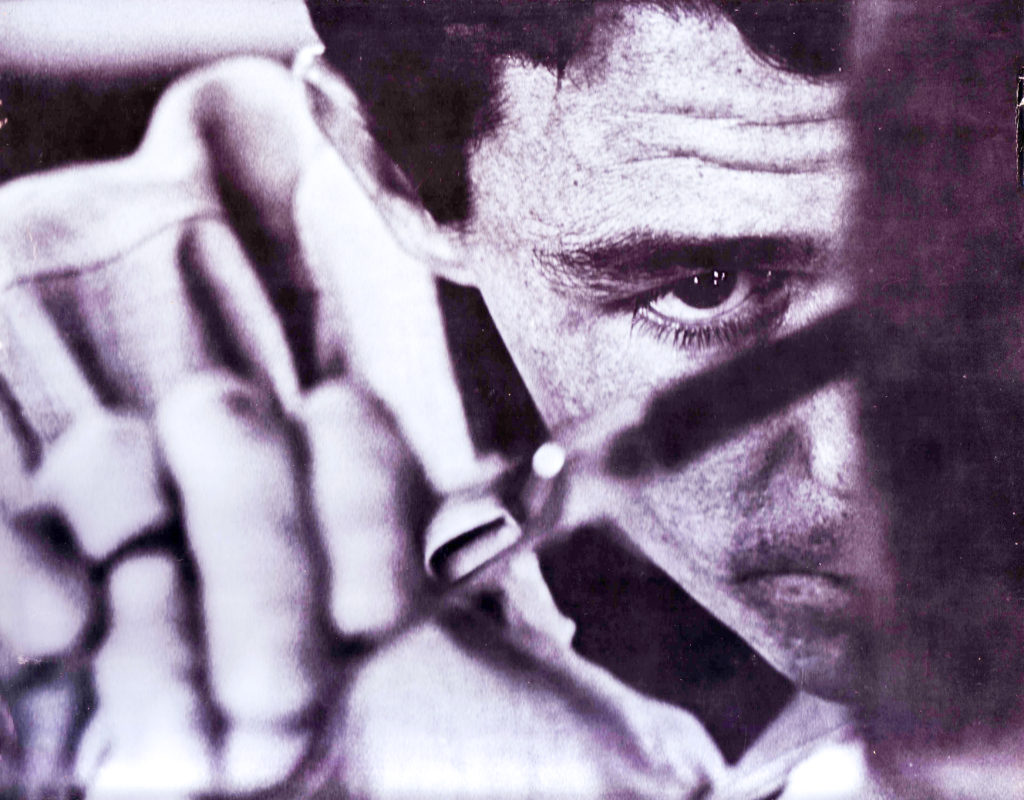
JAY SEBRING…CUTTING TO THE TRUTH. Photo courtesy of Cinequest.
Jay Sebring…Cutting to the Truth attacks the indignity of a person being remembered, not for his significant achievements, but for his victimhood. Jay Sebring was, along with his friend Sharon Tate, one of the Manson Family’s murder victims. But Sebring invented – by himself – the men’s hairstyling industry. And as what we now call an influencer, he led American men out of the Brylcreem Age.
This documentary is directed by Anthony DiMaria, the son of Sebring’s sister. The film is remarkably well-sourced, with Sebring’s sister, his best Navy buddy, his first wife, his first hair-cutting partner and Hollywood pals like actor Stuart Whitman. There’s even footage with Sebring’s first celebrity customer – Vic Damone (!), who introduced him to the Rat Pack and other crooners like Paul Anka; actors like Steven McQueen, Paul Newman and Henry Fonda soon followed.
Oddly, we meet Sebring himself through an industrial film he commissioned; this is as stilted as any of the industrial films of the 60s, so we don’t get any excitement coming from Sebring, only his drive and passion for hair styling. But that’s OK, because we get a sense of Sebring’s vitality and charisma through the people who knew him.
It took a substantial time it took to uncover the actual but unimaginable facts of the Manson Family’s murderous lunacy. Jay Sebring sadly reminds us that, during this period, the stories of the victims were sullied, when even mainstream media feasted on lurid speculation. Jay Sebring busts up those urban legends, adds some under-reported facts about Sebring’s actions during the Manson attack and a glimpse into what could have been a future with Sharon Tate.
Cinequest hosts the world premiere of Jay Sebring…Cutting to the Truth.
In the excellent Slovenian drama I Am Frank, the title character returns to Slovenia after years abroad. Frank has some baggage, so hardly anyone is happy to see him back, including his own mother. Frank’s brother Brane greets him warmly, but warily.
Frank is one of those opinionated, contentious and perpetually dissatisfied people who think nobody can get along with because of their unbending principles; but it’s really because he’s too self absorbed to understand any one else’s point of view. A Marxist true believer, he’s let Slovenia after the dissolution of Communist Yugoslavia, but has now left Israel in outrage after his kibbutz was privatized. Frank leaves no emotional scab unpicked and has never left well enough alone.
Frank and Barnes father has died leaving an unexpected fortune. Brane, a successful if shady entrepreneur, starts thinking about how to invest the inheritance and get richer. Frank is consumed by the fact that the windfall must have been built illegitimately. What Frank uncovers leads us into a paranoid thriller and tumult between the brothers and Brane’s dangerous business associates.
Writer-director Mitod Pevec has created a marvelous charcter in the charismtic misfit Frank, well played by Janez Skof. Valtar Gragan is equally good in the less showy part of Brane, the guy with his own business and family challenges, trying to hold it all together despite his volatile brother.
Cinequest hosts the US premiere of I Am Frank. which is one of the world cinema highlights of the festival.
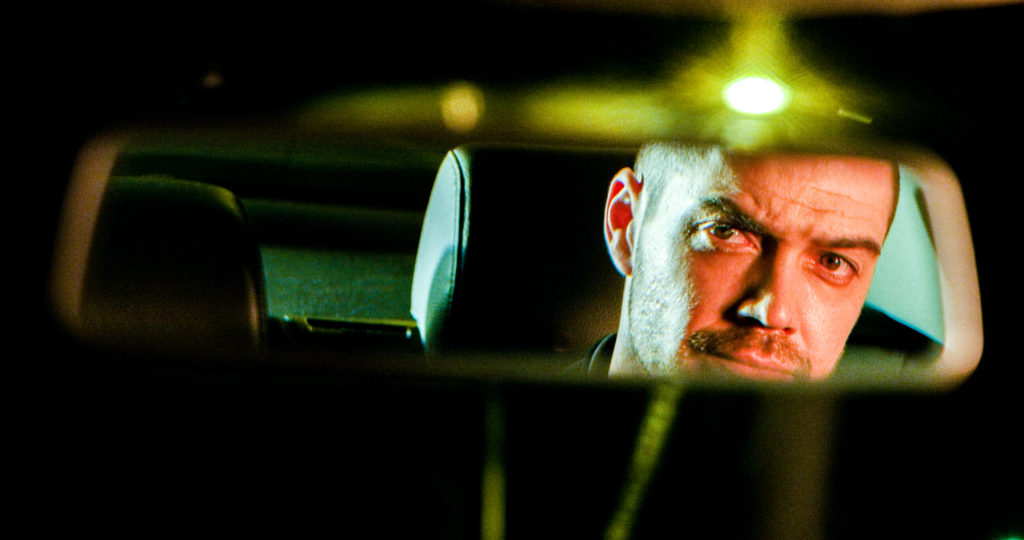
Michael Olavson in FOX HUNT DRIVE, premiering at Cinequest. Photo courtesy of Cinequest.
In the thriller Fox Hunt Drive, Alison (Lizzie Zerebko) is an architect whose career has been stymied by an unfair blackballing; she works as a rideshare driver at night to make the rent and subsidize her futile daytime job search. She picks up a ride (Michael Olavson) who may be a serial killer, and we’re all off on one wild ride.
The rider is anything but the wild-eyed Charlie Manson type. He is polite, professional and contained, and he doesn’t show any sign of compulsivity. But Alison finds some disturbing evidence in his bag…
So, here we have a woman alone, driving around deserted streets at night with a killer in the back seat, and the audience is screaming “Get away! Get away!” But she doesn’t.
This sets up a massive plot twist. Setting up this turn of events so that it’s credible as well as gobsmacking requires some ingenuity, so kudos to screenwriters Adam Armstrong and Marcus Devivo and director Drew Walkup.
Cinequest will host the world premiere of Fox Hunt Drive.
In the offbeat dramedy Closet, Jin is reeling from a breakup and gets a very unusual job. The job is with a non-sexual escort service where clients pay him to cuddle with them as they try to get to sleep. It’s one of those quirky only-in-Japan things, like capsule hotels and golf in highrise buildings.
The cuddle is often preceded by a massage and/or a listening session. Cuddling is so intimate that the audience often expects sex to break out, but it doesn’t.
The service appeals to insomniacs because they can drift off to sleep with the comfort of another warm human body. Closet moves through vignettes on a varied set of customers – all differently motivated. One is a lively spirited 18-year-old student (Aino Kuribayashi).
Given his recent medical and relationship traumas and the weirdness of his new job, Jin (Yosuke Minokawa) often looks bewildered.
Cinequest will host the world premiere of Closet. Closet, with its novel premise, is a worthwhile choice.
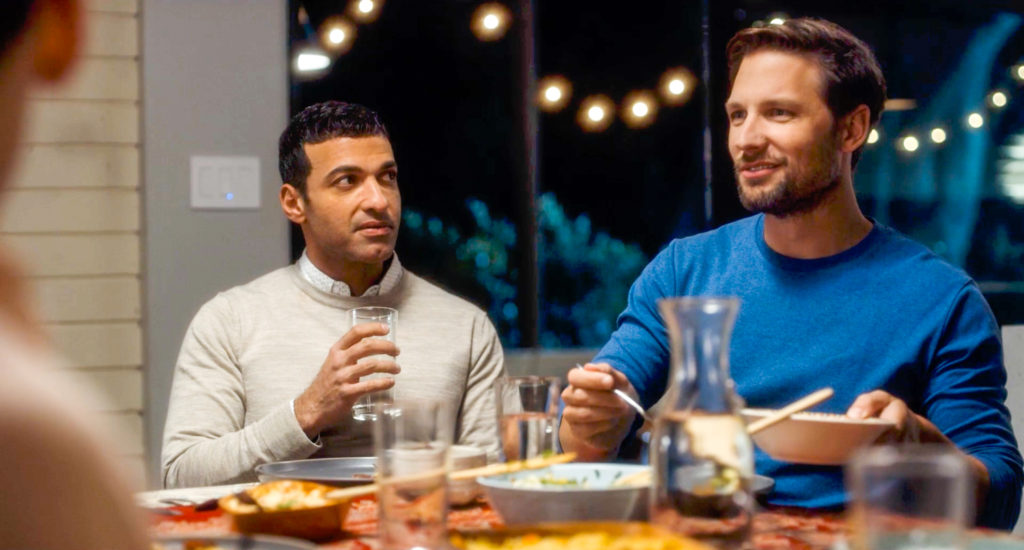
Haaz Sleiman and Michael Cassidy in BREAKING FAST. Photo courtesy of Cinequest.
In Breaking Fast, successful physician Dr. Mo (Haaz Sleiman) is a practicing Muslim who is out to his family, friends and work colleagues; although he lives in West Hollywood, he’s not part of the gay club scene. He has a longtime boyfriend Hassan (Patrick Sabongui), and Mo’s most flamboyant behavior is scoring the best desserts from the local Middle Eastern bakery for family gatherings.
Hassan’s family is not so tolerant, and Hassan – buried deep in the closet – believes that he must enter a sham heterosexual marriage, which Mo cannot stomach, and they split. Then, Mo meets meets Kal (Michael Cassidy), sparks fly, and the audience recognizes that Kal is perfect for Mo. But Kal is neither Arab nor Muslim, and Mo is still obsessed with losing Hassan. A romantic dramedy ensues.
The term “Gay-rab” pops up. And there is a stereotypical Gay Best Friend, Sam (Amin El Gamal), who is so gay that his party features a gospel choir singing Happy Birthday.
Sleiman is an adorable lead, and the flawless main characters must navigate a straightforward conflict.
This is a first feature by writer-director Mike Mosallam. He delivers solid entertainment here, elevated with insights into the quandaries faced by LGBTQ Muslim-Americans. Authentic-seeming cultural glimpses in the lives of Arab-Americans, Muslim-Americans and LGBTQ LA are a bonus.
There’s even an effective cameo by Veronica Cartwright. BTW it’s good to see these Arab-American actors getting chance to play something other than terrorists on episodic TV.
Although the most striking aspect of Breaking Fast is its breaking ground on the topic of LGBTQ Muslims, we should note that it’s a romantic comedy about someone on his forties, which isn’t all that that common, either.
So, this is just another gay Muslim romantic comedy…I predict that Breaking Fast will become the Feel Good hit of the 2020 Cinequest. And I wouldn’t bet against Breaking Fast getting a shot at theatrical distribution. Cinequest hosts the world premiere of Breaking Fast.
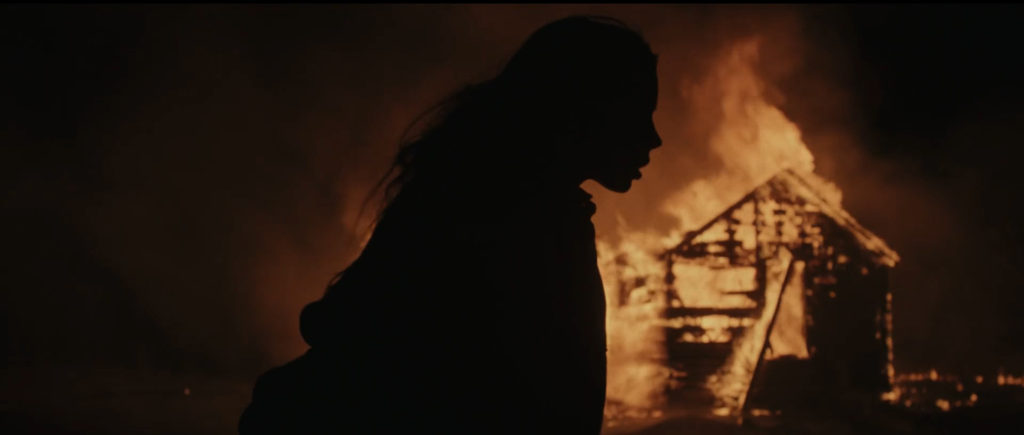
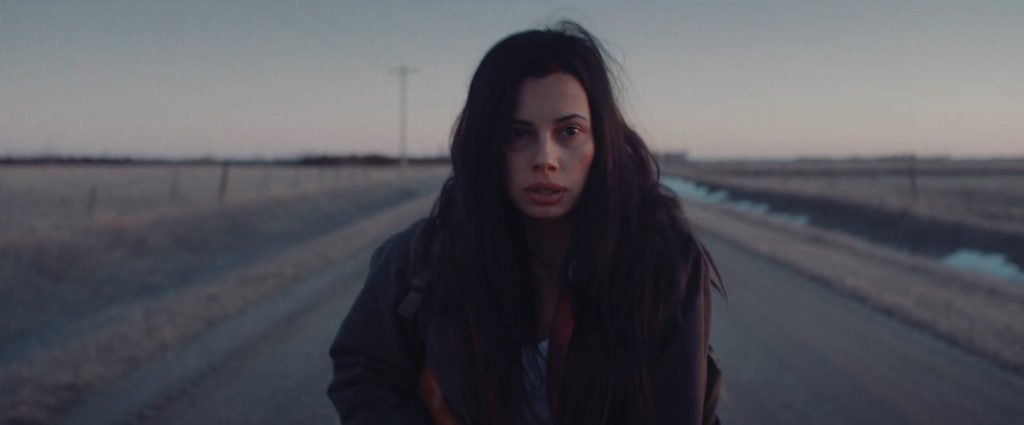
In the thriller Before the Fire, this year’s Must See at Cinequest, the only escape from an apocalyptic flu pandemic is a woman’s long-estranged rural hometown – but the scary family who traumatized her childhood is there, too. Written by its female star Jenna Lyng Adams, and the first feature by its female director Charlie Buhler, this indie thriller rocks.
Ava Boone (Adams) is a Hollywood actress who has found some success “pretending to be a vampire”, as she puts it, on a television series. As a killer flu sweeps America’s cities, her photojournalist husband (Jackson Davis) seeks to save her by tricking her into refuge with his family in their sparsely populated childhood hometown.
The problem is that growing up in a family ruled by her abusive father was deeply traumatizing. And it’s only a matter of time until her family finds out that she’s back.
As star and screenwriter Adams has said, “but what if the last place you wanted to go was the only place you could go?”
Veteran Charles Hubbell is excellent as the monstrous dad. The part is written to acknowledge that domestic abuse is about power and control – and not just physical abuse. This guy emanates physical brutality, but he is also a master manipulator.
To make things worse, the dad leads a militia of Deliverance-style yahoos, whose strategy to suppress the flu is to murder outsiders.
Ava was once – and is definitely no longer – a farm girl. For necessity’s sake, she begins repairing fences and doing the other hard, dirty and unglamorous work of the family farm run by her husband’s brother (Ryan Vigilant) and his mother (M.J. Karmi). Along the way, she physically hardens up and develops some skills with firearms.
Unsurprisingly (since she wrote it), the role of Ava is a showcase for Jenna Lyng Adams (The Kominsky Files). When Ava first sees her father again, she’s terrified to her core, which tells us all we need from the back story. Adams’ performance is compelling and credible as Ava has to devise and execute her own survival plan. Adams is on-screen in almost every scene and carries the picture.
“Audiences are thirsty for unconventional, layered, and imperfect women on-screen,” said Adams. “I wanted our protagonist to find her strength by facing the darkest parts of her life in the darkest hours of the world. She reinvents herself over and over again to survive.”
“We fought to make this movie, because we felt that there was a very specific expectation about the types of stories women were able to tell,” says director Charlie Buhler. “Male directors shift between genres much more fluidly, and I think you can feel it in the types of stories that make it to the screen. But Jenna and I both love action, we both love sci-fi, so we wanted to make a female protagonist that we women could really rally behind.”
Indeed, women filmmakers shouldn’t be left to the high-falutin’ Message Pictures while the guys have all the fun with the genre movies.
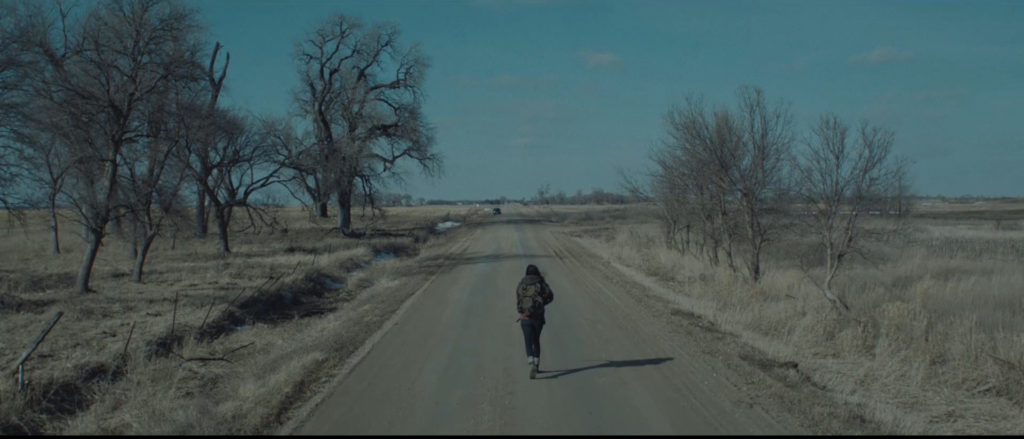
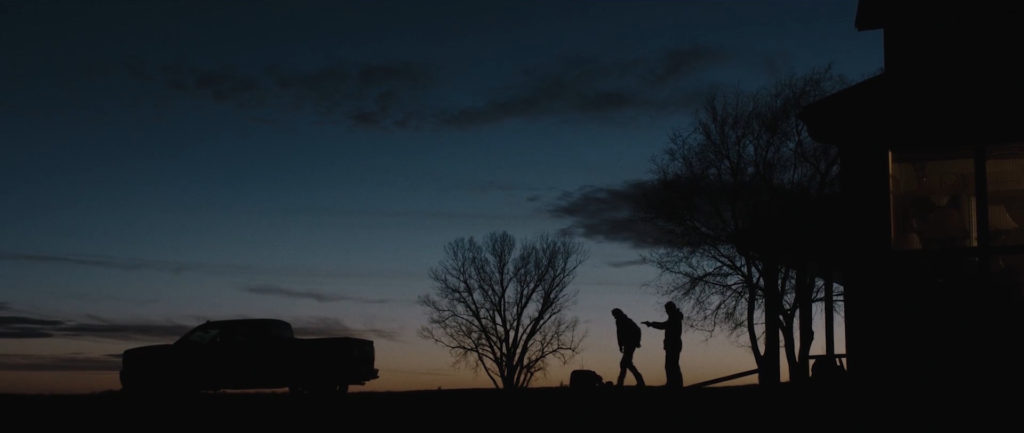
Before the Fire was filmed on location in South Dakota. Cinematographer Drew Bienemann (visual effects in Beasts of the Southern Wild) makes the barren wintry landscape work to illustrate the Ava’s isolation and vulnerability.
Cinequest will host the world premiere of Before the Fire, which is the best American narrative feature in the fest.
In the Mexican sexual psychodrama Ana’s Desire, Ana (Laura Agorreca) is a conscientious working single mom. She is unsettled by the sudden appearance of her shady younger brother Juan (David Calderón León), who has been out of contact for years. With his motorcycle and his subversion of Ana’s bedtime and dietary routines, Juan becomes that Way Cool, fascinating uncle to Ana’s son Mateo (Ian Garcia Monterrubio).
It turns out that Ana and Juan had a tough childhood, having been raised by a less-than-ideal widowed father. They became very close then, and Ana’s visit back to their hometown rekindles old memories and deep-rooted feelings.
What is going on here between Ana and Juan? Writer-director Emilio Santoyo lets the audience connect the dots in a slow burn compressed into only 80 minutes. The ending pays off.