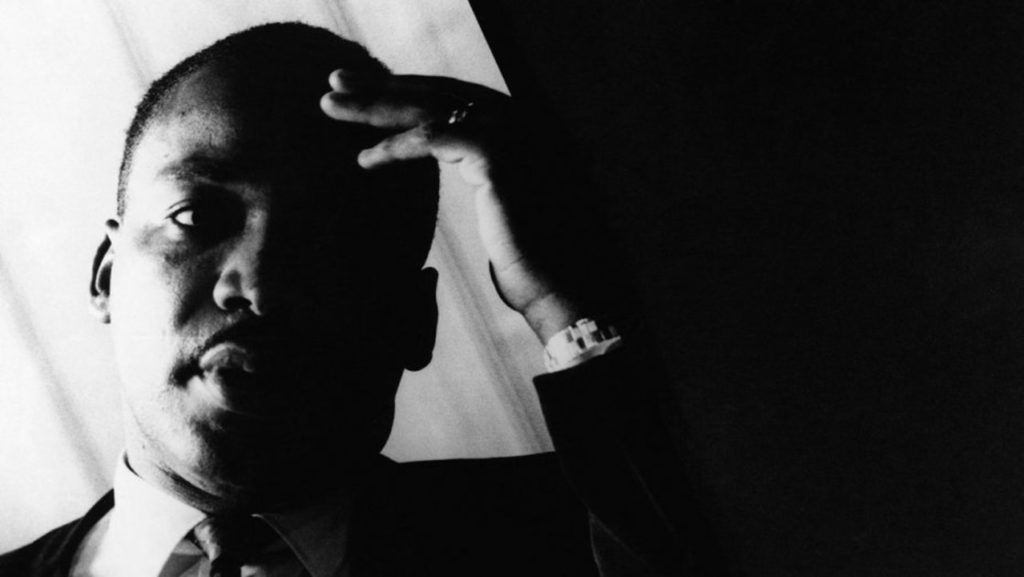
KING IN THE WILDERNESS: an icon, foundering

KING IN THE WILDERNESS. Photo by Flip Schulke Archives – ©. Courtesy of Sundance Institute.

The superb documentary King in the Wilderness follows Martin Luther King, Jr., through his turbulent final two years. Although King had already become an icon, he was facing the challenges of a new political and societal landscape that King himself had helped create. And he was foundering.

  • King’s approach, which overcame the overt cultural racism and statutory segregation in the South, was not working against the de facto segregation and urban riots in the North. Nor was King gaining traction to expand the movement against bigotry into a movement against poverty.
  • His leadership in the Black community was being usurped by younger, more militant, leaders. Stokely Carmichael and his peers were quick to discard longtime White Civil Rights workers and to alienate White America with a message of Black Power, which resonated in the Black community. King refused to use the weaponized term, while trying to hang on to his base.
  • King was under pressure to make public his opposition to the Vietnam War. King’s strong anti-militarism came naturally from his study of Gandhi and his commitment to non-violence. But campaigning against the War would be seen as a betrayal by King’s most effective ally and benefactor, President Lyndon B. Johnson. King was genuinely grateful to LBJ, and LBJ was famously vindictive.

King was just off the Civil Rights Act of 1964 and the Voting Rights Act of 1965, the two greatest legislative Civil Rights victories since the 13th Amendment prohibiting slavery one hundred years before. In King in the Wilderness, it’s only a year later, and Martin Luther King, Jr. is facing a big fat case of What Have You Done For Me Lately?
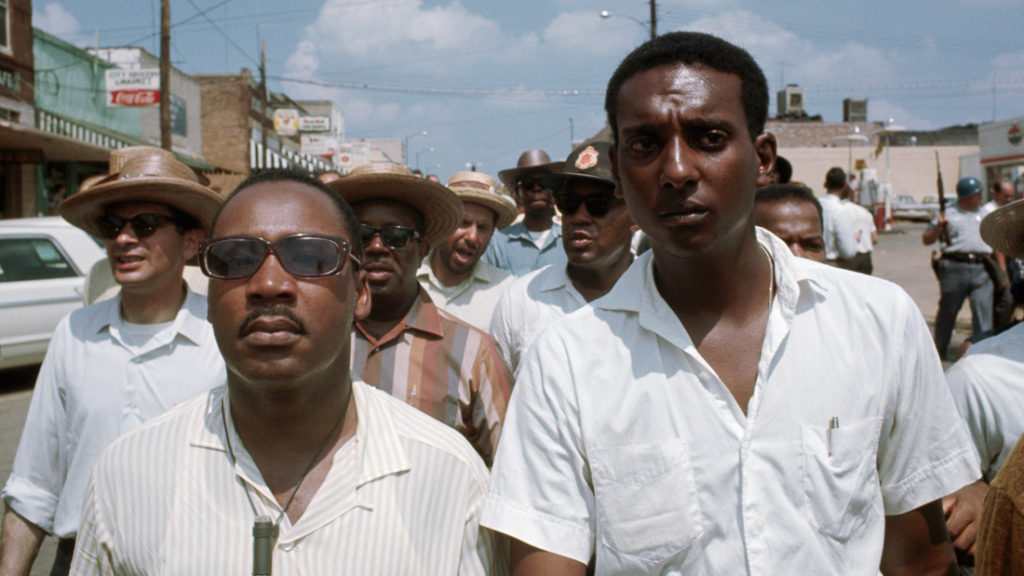
Dr. Martin Luther King Jr. and Stokely Carmichael in KING IN THE WILDERNESS. Photo by Flip Schulke Archives – ©. Courtesy of Sundance Institute.

It’s easy for us to forget just how young King was:

  • He was only 26 when he led the Birmingham Bus Boycott.
  • King wrote the Letter from Birmingham Jail and led the the March on Washington at 34.
  • He won the Nobel Peace Prize at 35.
  • He led the march from Selma to Montgomery at 36.

After a great historic victory, it can be difficult to find a new objective. It’s hard to gain political power, and it can be just as hard to keep it. It’s difficult for a public figure to remain relevant in changing times. These are the challenges of leadership.

By focusing on this period of King’s life and career, director Peter Kunhardt and writer Chris Chuang have made an inspired choice. They have also sourced it brilliantly, with the remembrances of King intimates, most notably Andrew Young and Henry Belafonte, along with Stokely Carmichael’s fellow SNCC leader Cleveland Sellers. King family confidante Xernona Clayton bookends the movie with the two most poignant anecdotes.

King in the Wilderness was originally aired on HBO and won an Emmy for best historical documentary. It’s now widely available on streaming platforms.
PALE FLOWER: bracing neo-noir

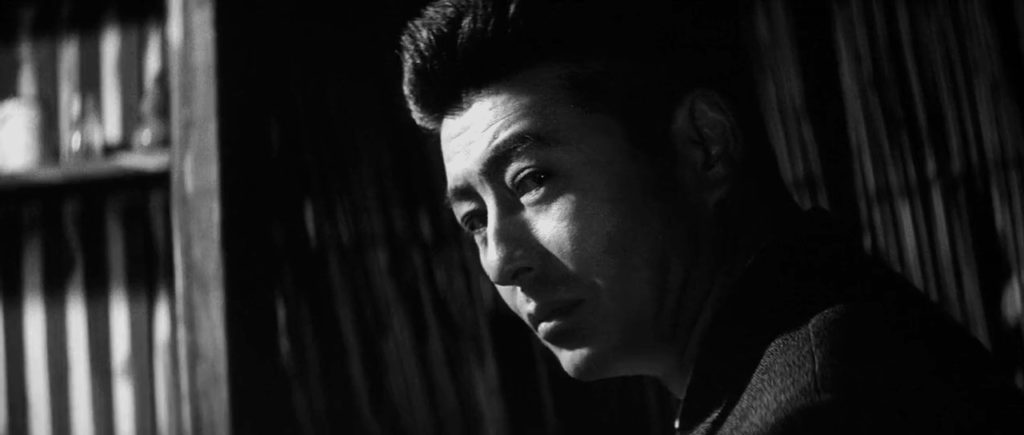
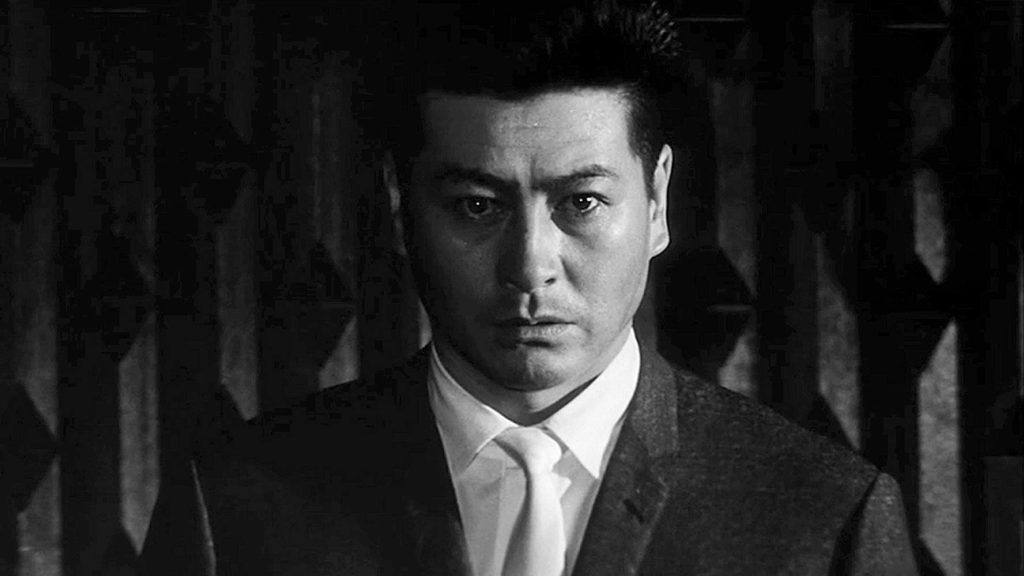
Ryô Ikebe in PALE FLOWER

Coming up on Turner Classic Movies on June 18, the Japanese neo-noir Pale Flower is a slow burn that erupts into thrilling set pieces. This is pioneering neo-noir. Pale Flower is writer-director Masahiro Shinoda’s masterpiece; its look and feel is as different from classic noir as are Elevator to the Gallows and Blast of Silence.

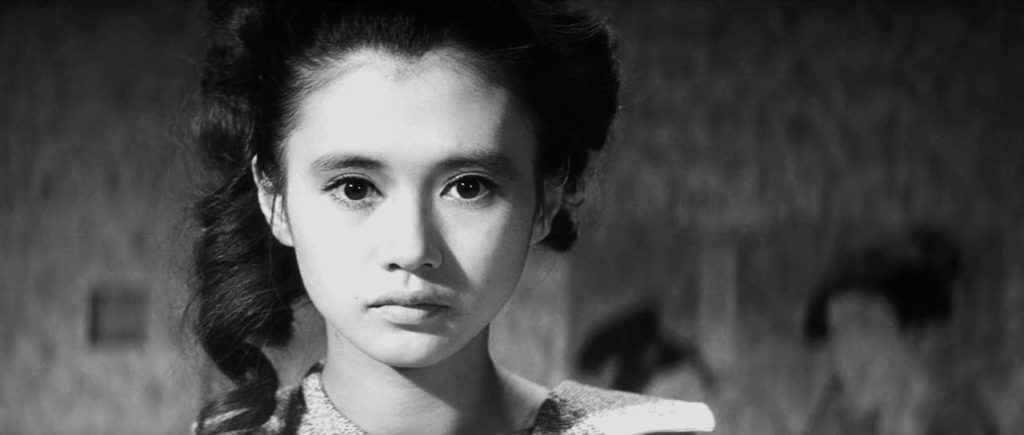
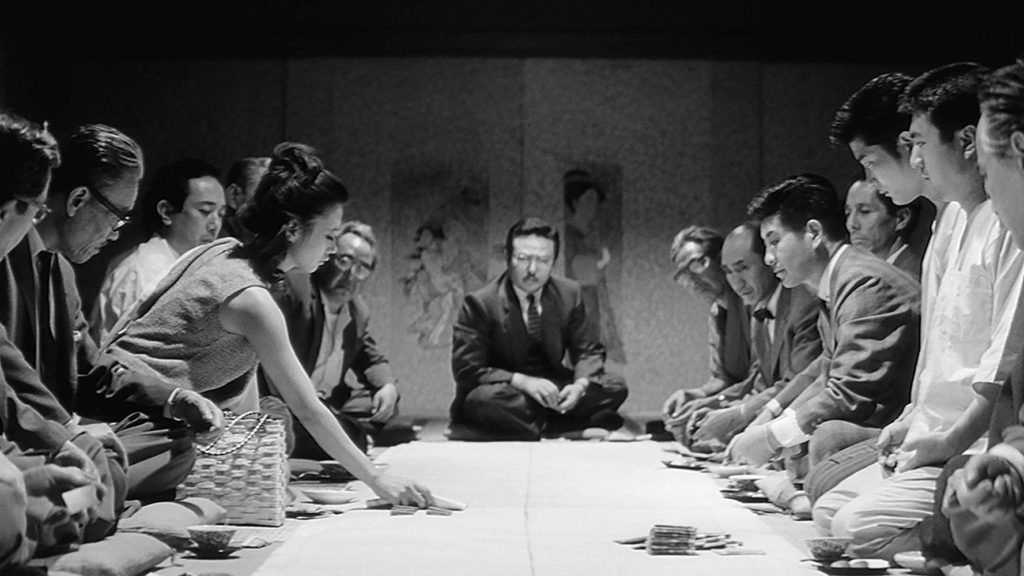
Maraki (Ryô Ikebe) is a fortyish Yazuka hit man, just released from loyally serving a prison term. He went away for offing a gangland rival, but now the two gangs have become allies. Out gambling with fellow Yakuza, he encounters the much younger woman Saeko (Mariko Kaga). The stoic and completely self-contained Maraki becomes fascinated by – and then obsessed with – Saeko, who lives her life seeking thrill after thrill.

PALE FLOWER

Maraki and Saeko meet gambling on the Japanese card game of hanafuda (flower cards). She is the only woman at a table surrounded by male gangsters. Shinoda makes the tension of card games resemble that of walking into a hostile bar or waiting an Old West quick draw gunfight. The card games are silent but for the ritual betting and the players clicking their cards. The film’s title refers to both hanafuda and Saeko.

Mariko Kaga in PALE FLOWER

Just who is this mystery woman? Muraki is snagged, but he is too cool to search out her background. His obsession is more complicated than sexual passion alone, although there is a sexual element (watch whether he acts on it when he can). The mystery makes Saeko (the then 20-year-old Mariko Kaga in only her fourth movie) all the more captivating.

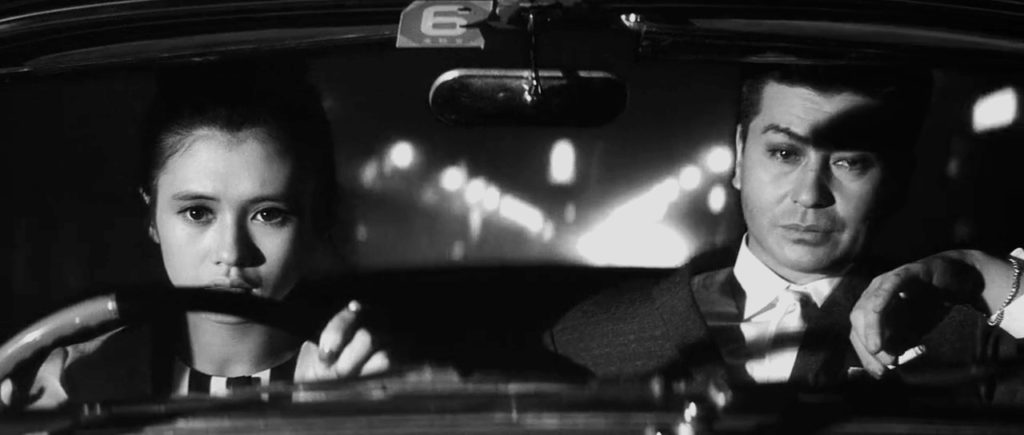
In another gripping set piece, Saeko races her sports car through Tokyo’s tunnels and overpasses at 2:30 AM. In the passenger seat, Muraki is transfixed by her recklessness. He’s not thrilled by the careening wild ride, he’s thrilled by Saeko’s compulsion to seek the thrill.

Mariko Kaga and Ryô Ikebe in PALE FLOWER

The ultimate thrill might be to accompany a hit man on the job. The climactic three-minute scene is a mob hit in a church, set to an aria, Henry Purcell’s Dido’s Lament. It is operatic – and remarkably similar to Francis Ford Coppola’s later montage in The Godfather where Michael Corleone’s assassins kills all his enemies while he is standing in church at the christening of his sister’s baby. Muarki’s murder-for-hire is up-close-and-personal.

When Maraki and Saeko are on-screen, Pale Flower is dramatically and stylistic Stylistic – the card games, the car race, the final killing, In contrast, we see the mundane plotting of the Yazuka bosses (but not their crimes) as they kibbitz at the horse races. Their underlings go bowling.

Does it all matter? is a central theme in film noir. Pale Flower’s powerful final prison scene is the the ultimate neo-noir ending.

Pale Flower is included in Roger Ebert’s Great Movies. Pale Flower is challenging to find; it can be streamed with a subscription to Criterion Collection or Kanopy, and it plays occasionally on TCM, including on June 18.

Ryô Ikebe in PALE FLOWER

THE LAST FULL MEASURE: pedestrian, except for the oldsters

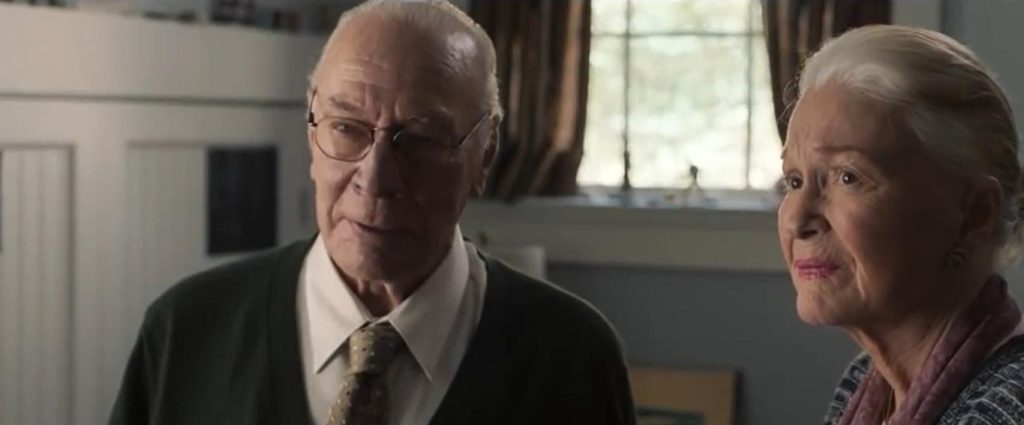
Christopher Plummer and Diane Ladd in THE LAST FULL MEASURE

The Last Full Measure tells the true story of a slain military hero who, due to the efforts of those who survived the battle, finally get a deserved Congressional Medal of Honor decades after his death. It’s a pedestrian movie periodically enlivened by excellent supporting performances.

The Last Full Measure is set in 2000, 32 years after the battle, when a selfish Pentagon career-climber (Sebastian Stan) is stuck with the unwanted assignment of validating the act of valor (it ain’t going to help him advance his career). He bitterly visits geezer after geezer to find out why the medal is deserved and why it wasn’t awarded earlier.

I’m not convinced that Sebastian Stan brings anything to non-action movies, and his parts of the film drag (which is bad, because he’s the main character).

Remarkably, the supporting cast of William Hurt, Christopher Plummer, Diane Ladd, Samuel L. Jackson, Amy Madigan, Peter Fonda and Ed Harris have combined for two acting Oscars and sixteen nominations. Christopher Plummer ia absolutrly radiant here; it’s some of his best work. Peter Fonda, in his final movie, also gives an indelible performance. Amy Madigan’s part is perfect matched to Madigan’s piercing eyes. And every Social Security-eligible actor is very, very good.

The battle scenes in the flashback are well-crafted, and Jeremy Irvine is very good as the hero. But this won’t make any list of top 20 Vietnam War films.

If you must watch The Last Full Measure, which is available on most of the streaming platforms, just fast forward until you see somebody old.

THE LOVEBIRDS: plot playful, relationship truthful

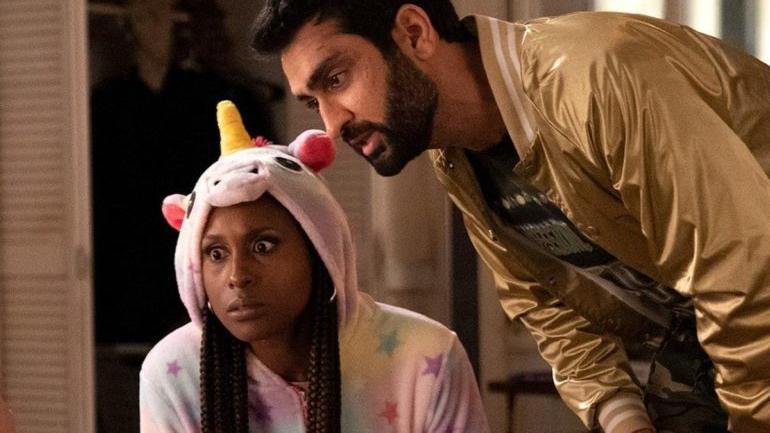
Issa Rae and Kumail Nanjiani in THE LOVEBIRDS

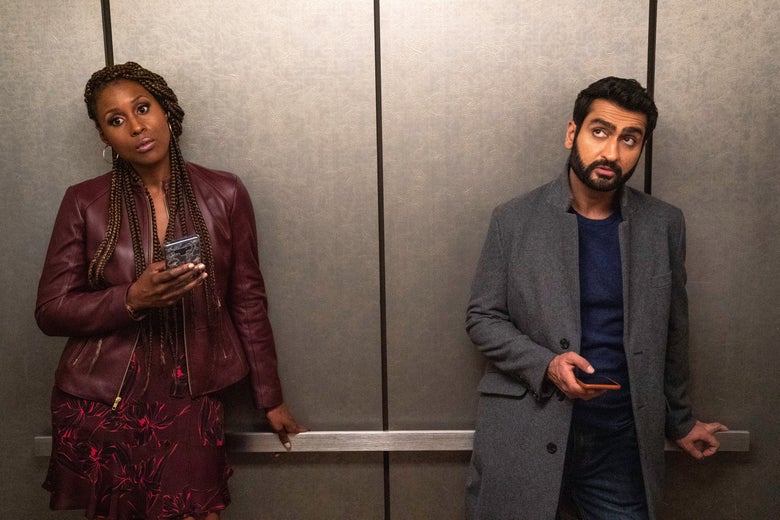
In the Netflix comedy The Lovebirds, Issa Rae and Kumail Nanjiani star as a couple, once passionately in love, who have reached the breaking point. At the very moment that they call it quits, they are plunged into a dire situation – to clear themselves of a murder, they must evade the cops and find The Real Killer.

This is a rom com where the characters have ALREADY met cute. As they endure ever more outrageous indignities, they remember why they fell in love in the first place, despite the other’s foibles. The plot is playful, but the relationship is very truthful.

Rae (Insecure) and Nanjiani (Silicon Valley, The Big Sick), both so appealing, are pitch perfect.

The Lovebirds is successful as a light diversion with plenty of LOL moments, and it’s streaming on Netflix. Here’s the trailer.

Issa Rae and Kumail Nanjiani in THE LOVEBIRDS

TOUCHING THE VOID: when you must do the unthinkable

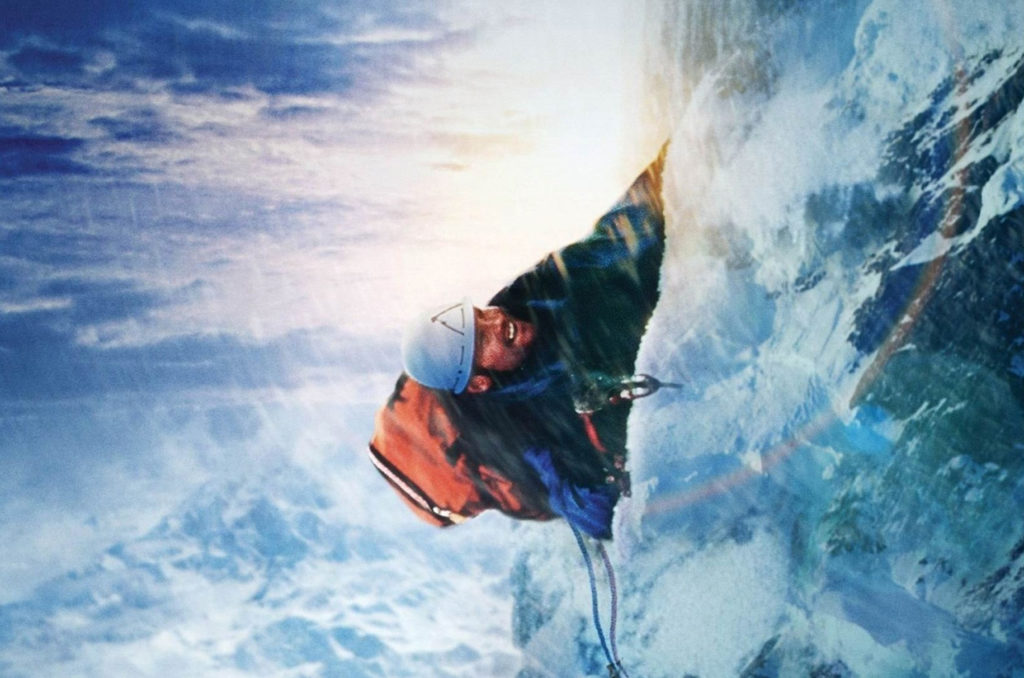
TOUCHING THE VOID

Mountain climbing partners tie a line between themselves so – if one of them falls – he can be saved by the other. But what if an accident puts BOTH of them at mortal risk? What if the fallen climber can’t be pulled up? What if one climber’s fall has doomed the other? The gripping documentary Touching the Void retraces that situation in real life – what happens if you cut your partner’s line?

In 1985, this happened to expert climbers Joe Simpson and Simon Yates in the Peruvian Andes. The 2005 film Touching the Void re-enacts the incident with the reflections of participants.

There’s no more life-or-death decision than “Should I cut the rope?” Although the issues of betrayal and guilt naturally arise, it turns out to be lot more complicated than that.

That moment of decision is dramatic, of course, but it’s only one segment of Touching the Void, which includes multiple survival stories in one adventure. One of them is absolutely epic.

Touching the Void was directed by Kevin Macdonald, who won the Best Documentary Oscar for 2000’s One Day in September, about the terrorist attack at the 1976 Munich Olympics. Touching the Void has been acclaimed as “the most successful documentary in British cinema history”. Touching the Void can be streamed from Amazon and iTunes.

DRIVEWAYS: authentic, heartfelt, brilliant

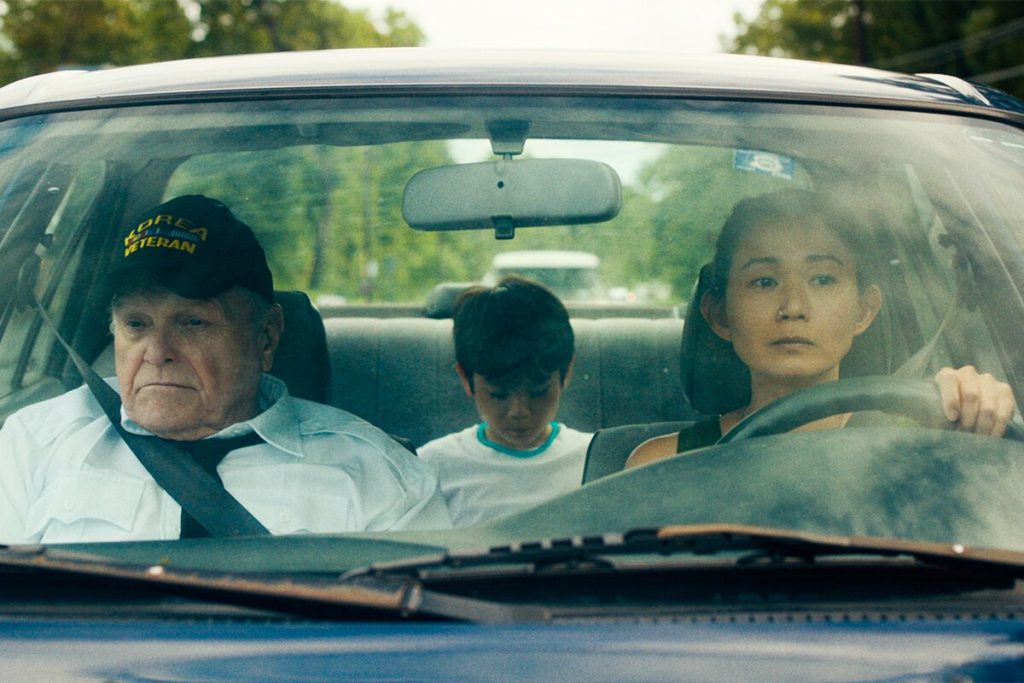
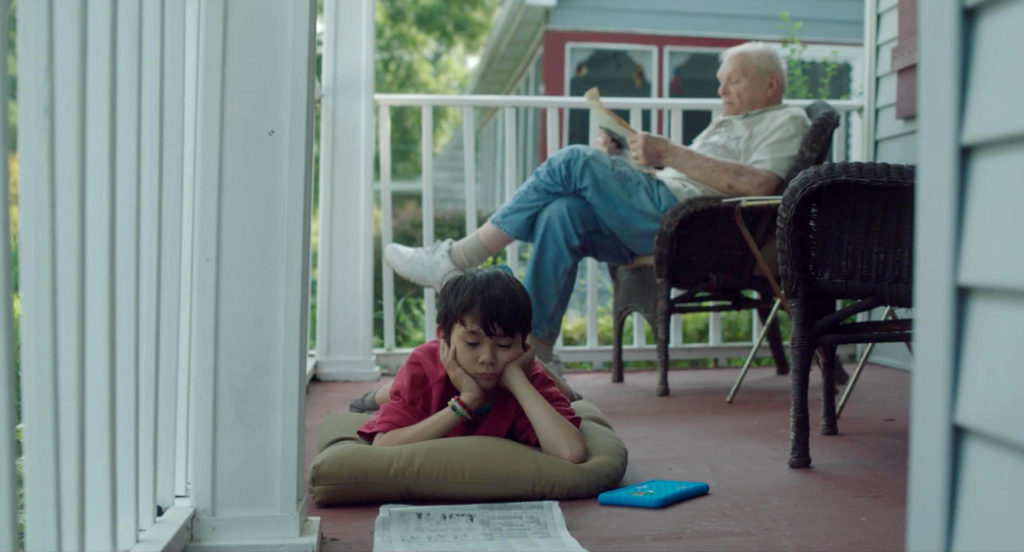
Brian Dennehy, Lucas Jaye and Hong Chau in DRIVEWAYS

I can’t think of a more authentic movie about intergenerational relationships than the charming, character-driven Driveways. It’s a modest little indie, and it’s one of the Best Movies of 2020 – So Far.

Kathy (Hong Chau) and her nine-year-old Cody (Lucas Jaye) arrive in a small town to clean out and flip the house of Kathy’s late sister. Kathy and her much older sister had lost touch,and Kathy is surprised and disheartened to discover that the sister had become a hoarder, making the clean-up job monumental. The octogenarian next-door neigbor Del (Brian Dennehy) watches from his porch.

All three are facing life challenges. Kathy is a single mom trying to navigate a career change; now she has an unwanted chore and some guilt from not reviving the relationship with her sister. Cody is a sensitive kid who isn’t comfortable in many situations and who has an embarrassing reaction to anxiety. Del is grieving the loss of his wife and facing the loss of his independence. Things do not go as the audience expects.

Hong Chau in DRIVEWAYS

Director Andrew Ahn, by dropping subtle clues, lets the audience connect the dots about the characters and their back stories. We learn about the mom-son relationship when she discards a cigarette on the ground and he wordlessly grinds it out with his shoe. We learn about Del’s fears about his independence when he glances at an increasingly forgetful buddy.

Driveways is a three-hander and all three actors, Hong Chau, Lucas Jaye and Brian Dennehy are superb. 91-year-old character actor Jerry Adler is brilliant in a few very brief scenes.

This was the final performance for Brian Dennehy (scroll down to bottom for my remembrance). His performance – so remarkably genuine and subtle – in Driveways is award-worthy. Dennehy’s facial expression, in one fleeting moment, conveys Del’s profound regret about a mistake that he made with his own daughter.

Brian Dennehy and Lucas Jaye in DRIVEWAYS

Driveways played at Cinequest 2020 with an in-person appearance by Hong Chau, which I skipped because I sized it up as too sappy. I was wrong.

You know how children are drawn to some kids and not to others? Driveways perfectly captures the joy of making friends when a kid discovers another kid with common interests.

That authenticity is exactly what keeps Driveways from being corny. There’s not a hint of manipulation from Ahn. That’s why Driveways is that rarity, a recommendation from The Movie Gourmet that can be described as”heartfelt”.

Cody is as much the lead character as are the mom and the old guy. The Wife thinks that the movie is too slow for kids. But I’d give it a try and challenge the kids. It’s only 83 minutes, and I think kids will be drawn to the portrayal of a kid that is so real-world and unlike the stock characters spoon fed them by the likes of the Disney Channel.

Driveways is available to stream on all the major platforms.

THE T.A.M.I. SHOW: rock giants as they emerged

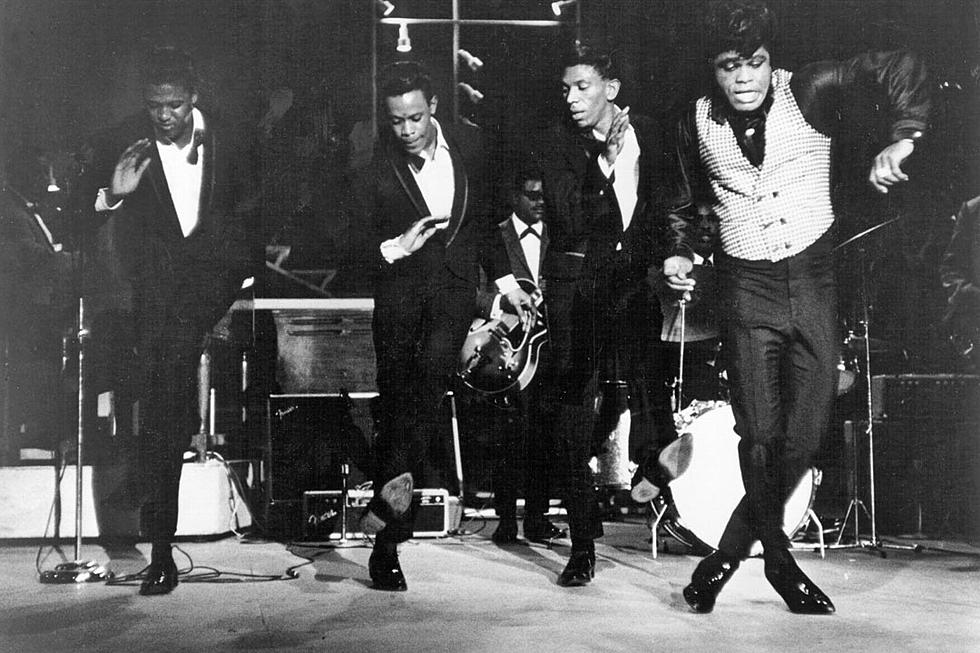
James Brown and His Famous Flames in THE T.A.M.I. SHOW

The T.A.M.I. Show is probably the first concert film as we think of the genre today. An amazing confluence of talent gives us an unfiltered 1964 time capsule of British Invasion, Surf, Motown, Pop and early Soul (but there’s no Folk) music.

Here are the performers:

  • The Rolling Stones
  • James Brown
  • The Beach Boys
  • Chuck Berry
  • The Supremes
  • Marvin Gaye
  • Smokey Robinson and the Miracles
  • Lesley Gore
  • The Blossoms (backing Gaye)
  • Gerry and the Pacemakers
  • Jan and Dean
  • The Barbarians
  • Billy D. Kramer and the Dakotas

Eight The T.A.M.I. Show performers are in the Rock and Roll Hall of Fame: Berry, the Stones, the Beach Boys, James Brown and the Famous Flames, the Supremes, Marvin Gaye, Smokey Robinson and the Miracles and The Blossoms singer Darlene Love, who was inducted as a solo act. Future actress Teri Garr and choreographer/pop artist Toni Basil were two of the Go Go Girls. Members of the famed Wrecking Crew session musicians constituted the house band, including guitarist Glen Campbell, pianist Leon Russell and drummer Hal Blaine, along with the jazz great, bassist Jimmy Bond. The house band is rarely glimpsed, but you can see them to the right during The Supremes’ set and at the finale.

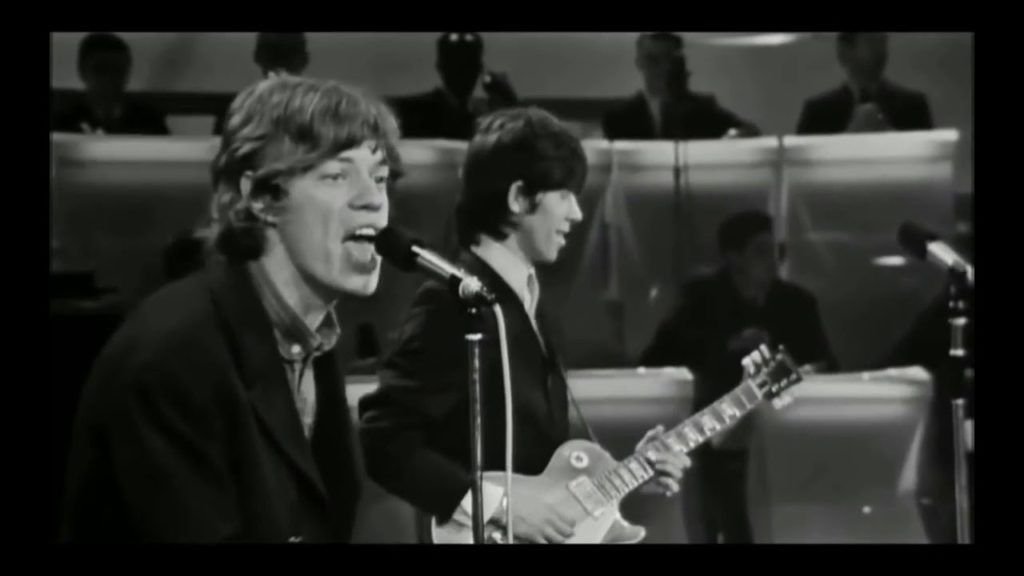
Mick Jagger and Keith Richards of the Rolling Stones in THE T.A.M.I. SHOW

The T.A.M.I. Show was filmed in two performances at the Santa Monica Civic Auditorium. Tickets were free for LA teenagers. (Future film director John Landis and future teen heartthrob David Cassidy went as seventh grade classmates.) The event was emceed by by Jan and Dean. T.A.M.I. stands for either Teen Age Music International or Teenage Music Awards International (although there were no awards).

James Brown absolutely killed. His was a performance for the ages, and the crowd went nuts. To their everlasting regret, the Rolling Stones had to follow him to close the show.

In this performance, the Stones were hippy Brits singing Blues music (that, oddly, White American teens were only now discovering though these White guys from the UK). It’s most notable for Mick Jagger’s groundbreaking definition of a Front Man. As I write this in 2020, I just heard a Stones song on the radio that I didn’t recognize and learned that it was released this year – 56 years after the T.A.M.I. Show.

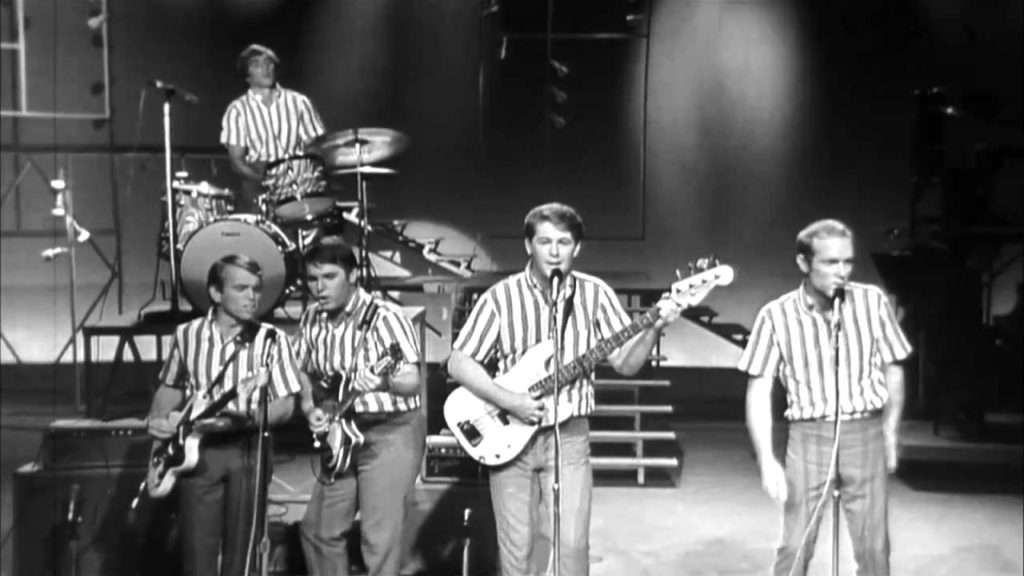
The Beach Boys in THE T.A.M.I. SHOW

The Beach Boys came on immediately after a Jan and Dean song, which does not favor Jan and Dean today in comparison. Brian Wilson’s genius and the band’s fun energy were many rungs above what Jan and Dean had to offer as musicians. It’s poignant to watch the the young, 1964 Beach Boys today, knowing that everything about them hung precariously on Brian Wilson’s traumatized mental health.

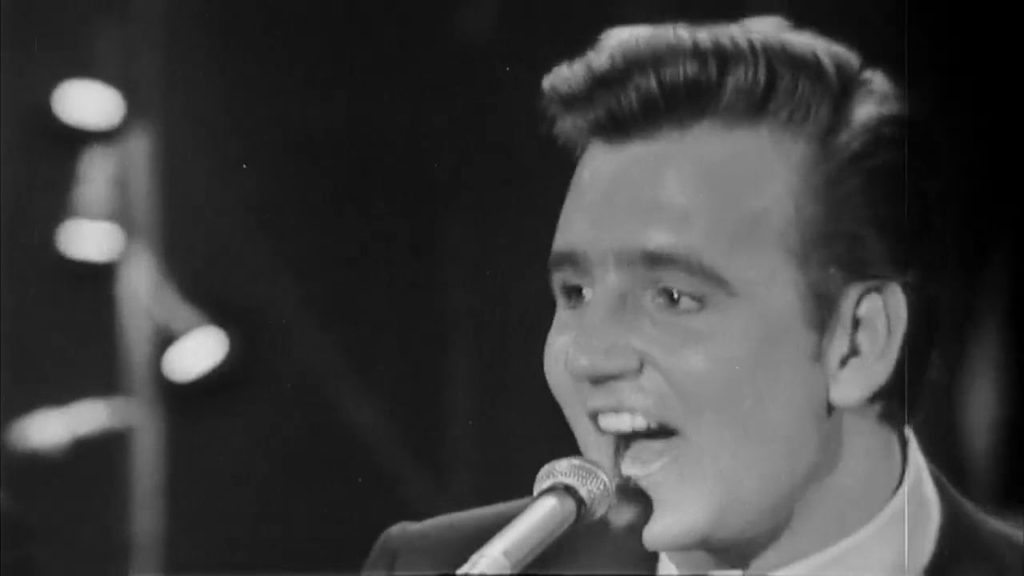
Billy J. Kramer fronting the Dakotas in THE T.A.M.I. SHOW

There are two very odd “What are those guys doing here?” sets. One is the slick-haired Brit popster Billy J. Kramer and the Dakotas, an act managed by Brian Epstein and produced by George Martin at the same time as the Beatles; Kramer got to perform FOUR songs!

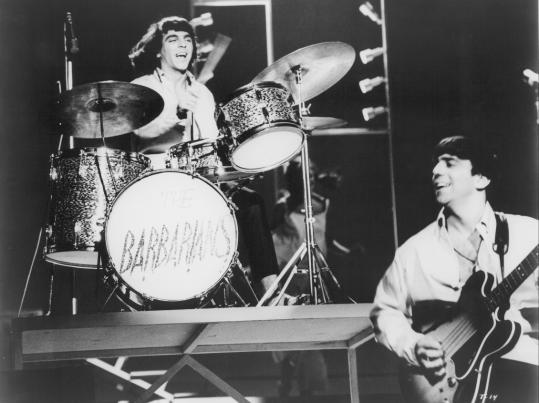
The second is one of the first shaggy haired American rock bands, The Barbarians. They perform Hey Little Bird, which preceded their one novelty hit Are You a Boy or Are You a Girl?

The Barbarians, for some reason, performing in THE T.A.M.I. SHOW

When I watch these 1964 performances, I can’t help but think about what these artists still had ahead of them. James Brown had just recorded I Got You (I Feel Good), but it wouldn’t be widely released until 1965. The Stones still hadn’t created EARLY Stones songs like Satisfaction, Paint It Black, Sympathy for the Devil and You Can’t Always Get What You Want. Marvin Gaye hadn’t yet sung I Heard It Through the Grapevine or What’s Goin’ On. Ahead for the Supremes were Love Child and a flock of other number one hits. And this was before The Beach Boys did California Girls and Good Vibrations, not to mention the Pet Sounds album.

The T.A.M.I. Show is on the Library of Congress’ National Film Registry. It probably would have been more influential, except that hardly anybody saw it for years. It’s somewhat of a Lost Film, having fallen off the radar after its 1964 release. I recall seeing it on late night TV sometime in the late 1970s or early 80s. It was resurrected in VHS bootleg form in the 80s (but without the Beach Boys set).

It’s still not available to rent a stream, but The T.A.M.I. Show is available on Netflix DVD. It’s very easy to find the full one hour 52 minute version for free on YouTube, along with clips of each of the acts.

SPACESHIP EARTH: Last Stand of the Renaissance Man?

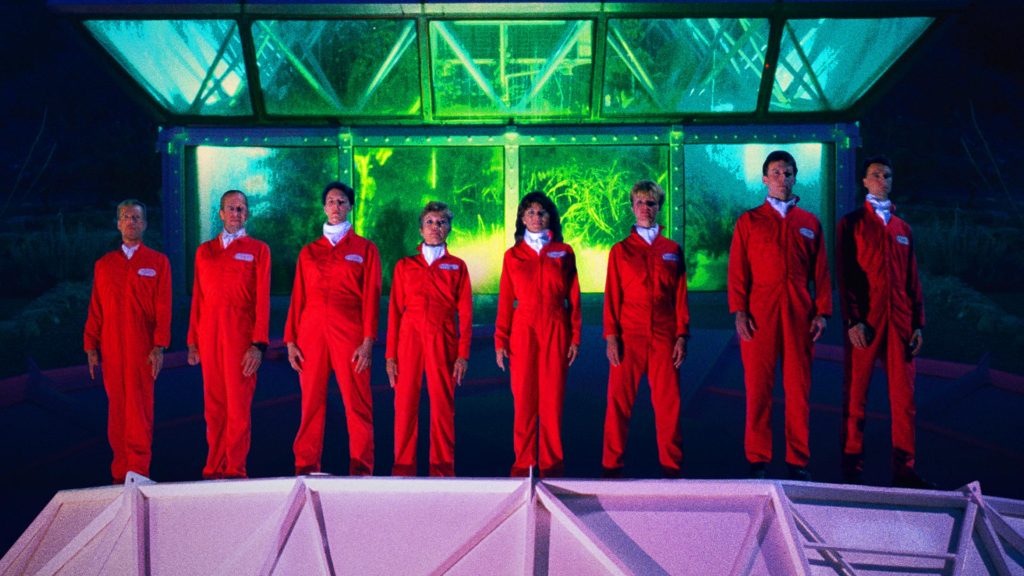
SPACESHIP EARTH, Photo courtesy of NEON.

The latest from Silicon Valley native documentarian Matt Wolf, Spaceship Earth traces an audacious scientific quasi-experiment of the 1990s, the Biosphere 2, perhaps the Last Stand of the Renaissance Man.

A few months ago, Wolf released Recorder: The Marion Stokes Project. He is the son of Cinequest documentary screener Sandy Wolf; in this recent profile of Sandy, I also highlight Matt Wolf’s career (scroll down).

How ambitious was Biosphere 2? (Biosphere 1 is Earth.) It was the construction of an enormous structure – big enough to host a series of ecosystems – jungle, desert, etc. And to fill it, like Noah’s Ark, with an array of plant and animal species. And then sealing a team of eight humans inside for two years to survive (don’t underestimate Job 1 in this experimental artificial environment), tend the agriculture and conduct scores of scientific experiments. The promise was to learn about how humans could survive in future space colonies.

Biosphere 2 in SPACESHIP EARTH.. Courtesy of ecotechnics.edu and Spaceship Earth.

Scientists quibble about how closed and controlled the experiments really were. Ultimately, the experiment itself is not as meaningful a story as who did it and why. Wolf could have made this a procedural, or an expose about a cult or a fiasco.

Instead, Wolf made the inspired choice to begin 25 years earlier, with the San Francisco hippie commune that became the core leadershop of Biosphere 2. Led by the charismatic John Allen and a cadre of very smart and able women, they moved to rural New Mexico, then Berkeley and then around the world. These were unusually highly functioning hippies because they didn’t dive into drugs, and they focused on tangible projects like building a seaworthy ship and a hotel in Nepal – and always experimental theater.

Along the way, billionaire-with-a-B Ed Bass took a shining to Allen and the group and became their benefactor and sponsor. That made it possible for a pipe dream about sustainability to become a real project with a budget in the hundreds of millions.

SPACESHIP EARTH, Courtesy of Spaceship Earth

Here’s what is stunning about this story. If someone, say NASA, had undertaken to create an Earth-like closed environment in preparation for space colonization, these are the LAST people who would have been asked to be involved. None of these hippies had academic or professional credentials or experience that even remotely would qualify them, in an objective sense. But they got there first with the idea and with Ed Bass’ money.

That’s what I found so amazing about the folks behind Biosphere 2 – they weren’t specialists, like the folks who build spaceships. Think of the generalist Renaissance Man who works across disciplines. These folks had a profound commitment to sustainability and said “what if?”, much like Da Vinci designing buildings, bridges and fortification, conceptualizing parachutes, helicopters and deep sea diving bells while painting great art. Or like the 18th Century gentleman inventors/scientists/industrialists/collectors.

The resultant 1990s media circus, certainly enough to scar the participants, seems almost quaint today. With an instantaneous and never ending news cycle, tribal and agenda-driven commentary and viral social media, God help them if they tried this today. It didn’t turn out to be the New Age Garden of Eden that was advertised.

Of course, there was hubris and tone deaf PR from the organizers, and the inevitable personality clashes between any eight nonconformists locked up together in a fish bowl for twp years. And then there was that sudden soaring of the CO2 level, threatening the lives of many species, including the humans.

What happened? In Spaceship Earth, it’s not treated as a catastrophe or a self-immolation or a betrayal, although you could make the argument for any of those characterizations. What’s more important is what these folks aspired to do and how far they got.

This was a genuine quest for sustainability, with some valid scientific experiments embedded in grand performance art.

Just released this weekend, Spaceship Earth can be streamed from iTunes, Vudu, YouTube and Google Play.

COLD CASE HAMMERSKJOLD: a historical mystery and a quirkier investigation

Cold Case Hammarskjöld

Mads Brügger’s eccentric and irresistible documentary Cold Case Hammarskjöld purports to solve a historical mystery. In 1961, Secretary-General of the United Nations Dag Hammarskjöld was flying to cease-fire negotiations near the Congo-Rhodesia border when his plane crashed, killing all aboard. There has never been a satisfactory explanation of why or how the plane crashed.

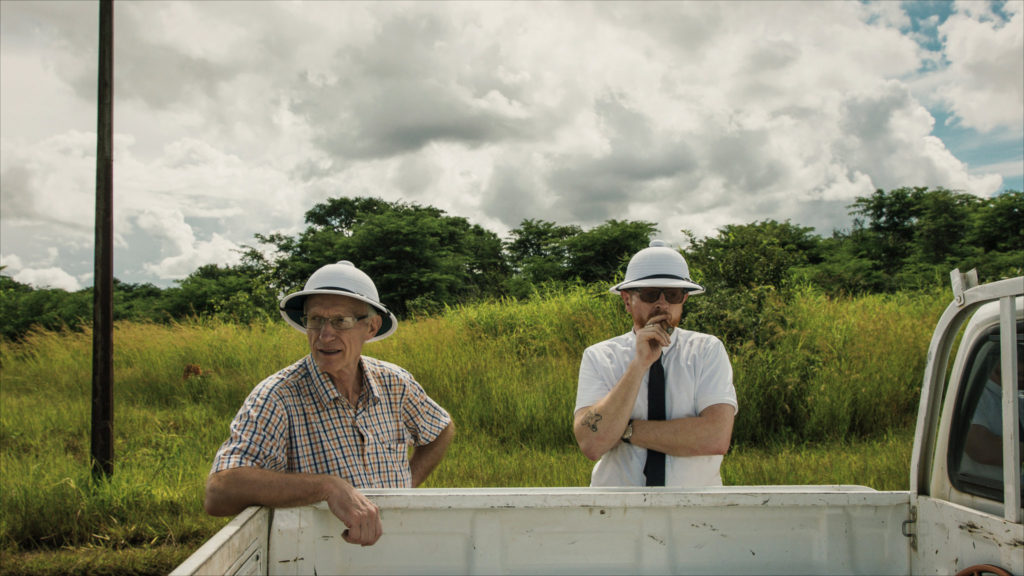
Danish filmmaker Brügger enlists the Swedish private investigator Göran Björkdahl, who has been researching the Hammarskjöld crash, and heads off to Africa in search of witnesses and clues. Björkdahl is dead serious. Brügger is, well, entertaining. With an ironic wink at the audience, Brügger begins by equipping the two with pith helmets for their African exploration.

The two come across a very plausible conspiracy that the Hammarskjöld plane was targeted. And, as they move among the shady world of South African reactionaries, they encounter an even more shocking conspiracy theory. But Brügger is a story-teller, not a historian; fortunately, he doesn’t have to deliver a smoking gun.

Idiosyncratically, Brügger chooses to narrate his film by dictating the “script” to two African secretaries. Midway, he admits that what really drives him is the excuse to hop around Africa talking to aged fixers and mercenaries. And it’s a rich collection of scoundrels that he finds, some revealing old secrets, some covering them up and some apparently spinning wild tales.

That’s the fun of Cold Case Hammarskjöld, now available from all the usual streaming services.

ASHES AND DIAMONDS: a killer wants to stop

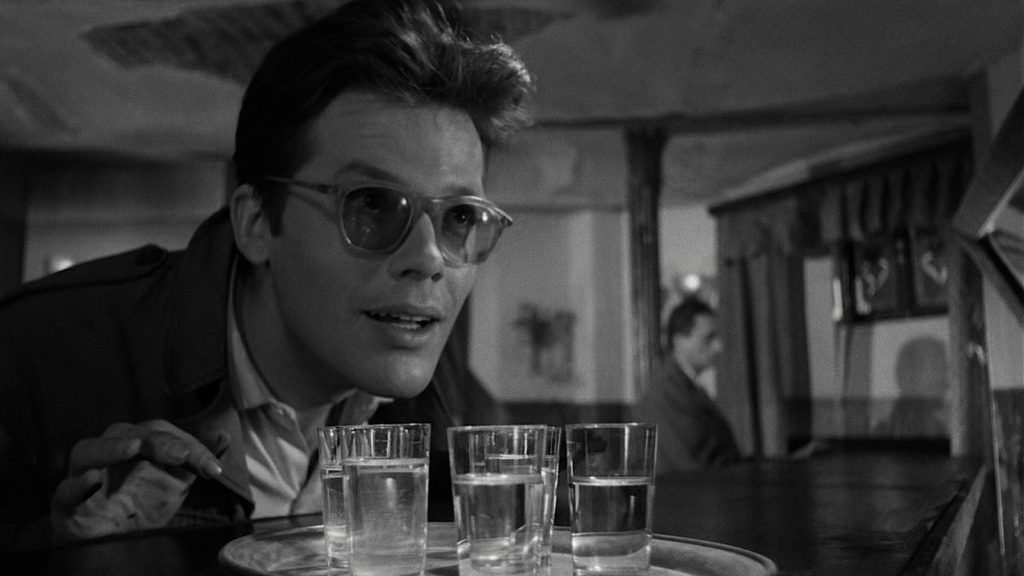
Zbigniew Cybulski in ASHES AND DIAMONDS

Coming up tomorrow night on Turner Classic Movies, a masterful director and his charismatic star ignite the war-end thriller Ashes and Diamonds, set amidst war-end treachery. It’s one of my Overlooked Noir.

It’s the end of WW II and the Red Army has almost completely liberated Poland from the Nazis. The future governance of Poland is now up in the air, and the Polish resistance can now stop killing Germans and start wrestling for control. Maciek (Zbigniew Cybulski) is a young but experienced soldier in the Resistance. His commanders assign him to assassinate a communist leader.

Maciek is very good at targeted killing, but he’s weary of it. As he wants out, he finds love. But his commander is insisting on this one last hit.

This is Zbigniew Cybulski’s movie. Often compared to James Dean, Cybulski emanates electricity and unpredictability, Unusual for a leading man, he often wore glasses in his screen roles. He had only been screen acting for four years when he made Ashes and Diamonds. Cybulski died nine years later when hit by a train at age forty,

Zbigniew Cybulski in ASHES AND DIAMONDS

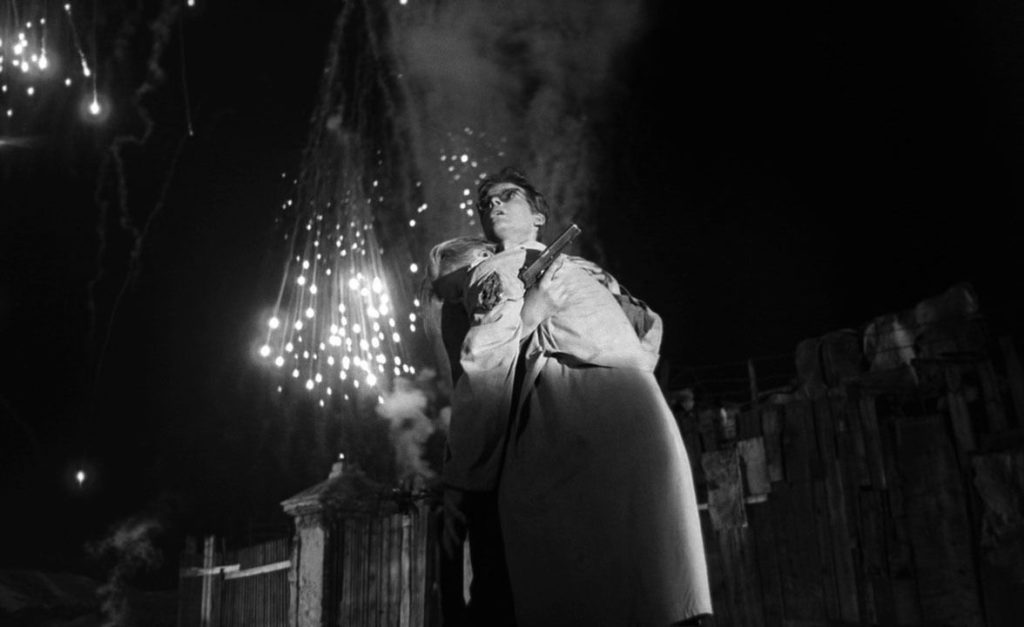
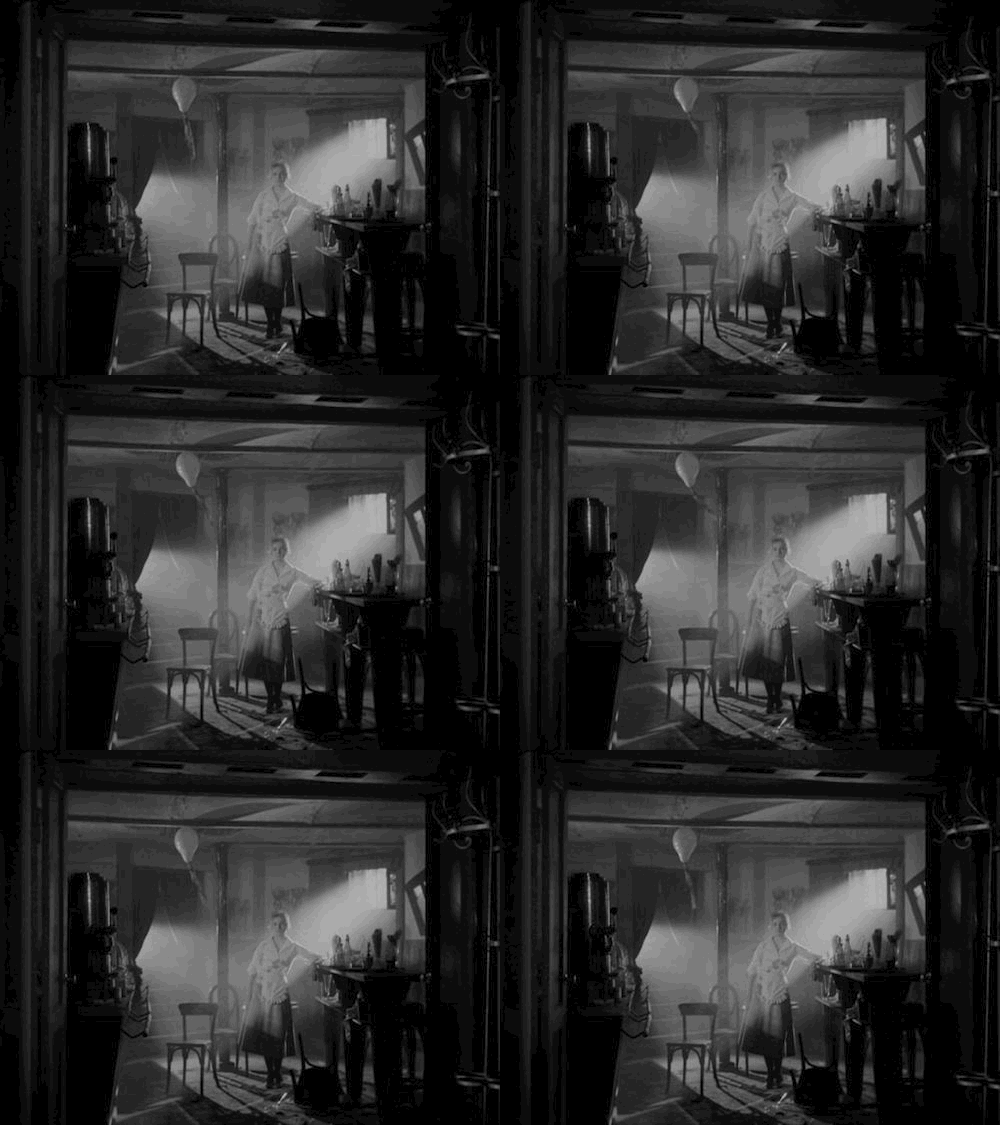
Andrzej Wajda fills the movie with striking visuals, such as viewing Maciek’s love interest, the waitress Krystyna (Ewa Krzyzewska), alone amidst the detritus of last night’s party, through billows of cigarette smoke. Wajda’s triumphant signature is, literally, fireworks at the climax; the juxtaposition of the celebratory fireworks with Maciek’s emotional crisis is unforgettable.

Ewa Krzyzewska in ASHES AND DIAMONDS

Wajda adapted a famous 1948 Polish novel into this 1958 movie. In the adaptation, the filmmaker changed the emphasis from one character to another.

Ashes and Diamonds was the third feature for Andrzej Wajda, who became a seminal Polish filmmaker and received an honorary Oscar. US audiences may remember his 1983 art house hit Danton with Gerard Depardieu.

TCM will be preceding Ashes and Diamonds with the documentary Wadja by Wadja, which I haven’t seen, but I will be recording. Ashes and Diamonds can be streamed from Amazon and iTunes. It was featured at the 2020 Noir City film festival.

Zbigniew Cybulski in ASHES AND DIAMONDS