MY NAME IS BULGER: two brothers, two paths to power

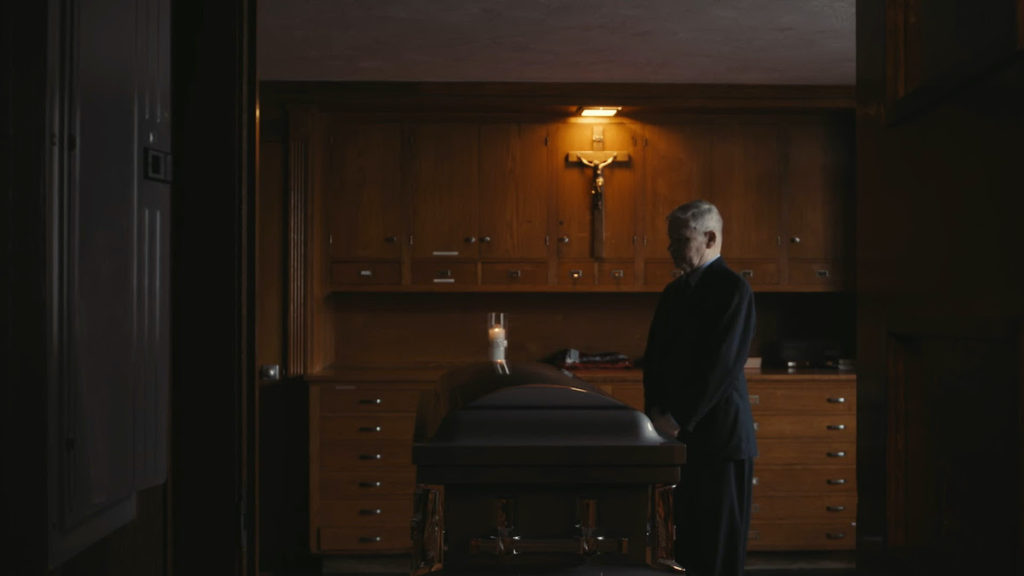
William Bulger in MY NAME IS BULGER. Photo courtesy of discovery+.

The documentary My Name Is Bulger traces the life of one fascinating man – made even more compelling by the life of a second man. Bill Bulger, one of nine kids raised in the projects, was a political wunderkind. First elected at age 26, his 35-year career in the Massachusetts State Legislature was topped by 18 years as President of the State Senate. No less than the squeaky clean former Governor Michael Dukakis credits Bill Bulger for cleaning up the previously corrupt institution.

Now, here’s the kicker – while Bill Bulger was dominating Massachusetts politics, his brother James “Whitey” Bulger was the state’s most fearsome crime lord.

Politics is public, and crime is private. Politics requires self-promotion, and crime requires secrecy. The brothers Bulger are parallel studies in power.

For decades, my day job has been in politics. It’s not unusual for politicians to deal with embarrassing, and even unsavory, relatives, but what do you do if your vocation is politics and your older sibling is a notorious criminal?

Very bright and armed with wit and charm, Bill Bulger was able to artfully, even miraculously, keep his career separate from Whitey’s. As Whitey became more infamous, Bill was able to delay being hurt by the association. It was widely known that Whitey had been in Alcatraz as early as 1959.

We meet Bill Bulger himself, now 85, and several of his adult children (who also remember their “Uncle Jim”). Dukakis appears, along with another former governor, William Weld. There’s also a former crime partner of Whitey’s. And we hear from the recently released Catherine Greig, Whitey’s longtime girlfriend and fellow fugitive, captured with Whitey in Santa Monica.

As sympathetic to Bill Bulger as is My Name Is Bulger, it doesn’t hide his opposition to busing in the 1970s, a political necessity that put him on the same side as South Boston’s ugliest racists. Nor does it shy away from the moment Whitey became a high-profile fugitive and Bill was cornered into taking the Fifth.
William Bulger in MY NAME IS BULGER. Photo courtesy of discovery+.

My Name Is Bulger is told from the point of view of Bill Bulger’s family. The Bulgers are understandably resentful of Bill’s political enemies in the press (and former Governor Mitt Romney). It’s more difficult to appreciate the family grudge against the government for harshness to Whitey, who, after all, was convicted of 19 murders.

For the story of how Whitey was able to use the FBI to eliminate his competition in the local Italian Mafia and the Irish mob, I also recommend another recent doc, Whitey: The United States vs. James J. Bulger.

My Name Is Bulger will stream on discovery+ beginning June 17.

IN THE HEIGHTS: Vibrant, earnest and perfect for this moment

Photo caption: Anthony Ramos and Melissa Barrera in IN THE HEIGHTS. Photo credit: Warner Bros. Pictures

The exuberant musical In the Heights is based on the Tony-winning Broadway show created by Lin-Manuel Miranda. In the Heights celebrates immigrant aspirations and Latino subcultures, and it touches on the raw issues of racism and economic displacement. Vibrant, spirited and earnest, it’s perfect for this moment – when we’re emerging from our COVID cocoons.

The titular Heights is Washington Heights, the primarily Dominican neighborhood at the northern tip of Manhattan. Miranda’s Washington Heights is a boisterous and colorful place, filled by hard-working , marginalized people, each with his or her own dream. Life goes on with a salsa beat, and you can practically smell the carne ripiada. (Miranda himself appears in a small role as a piragua vendor.)

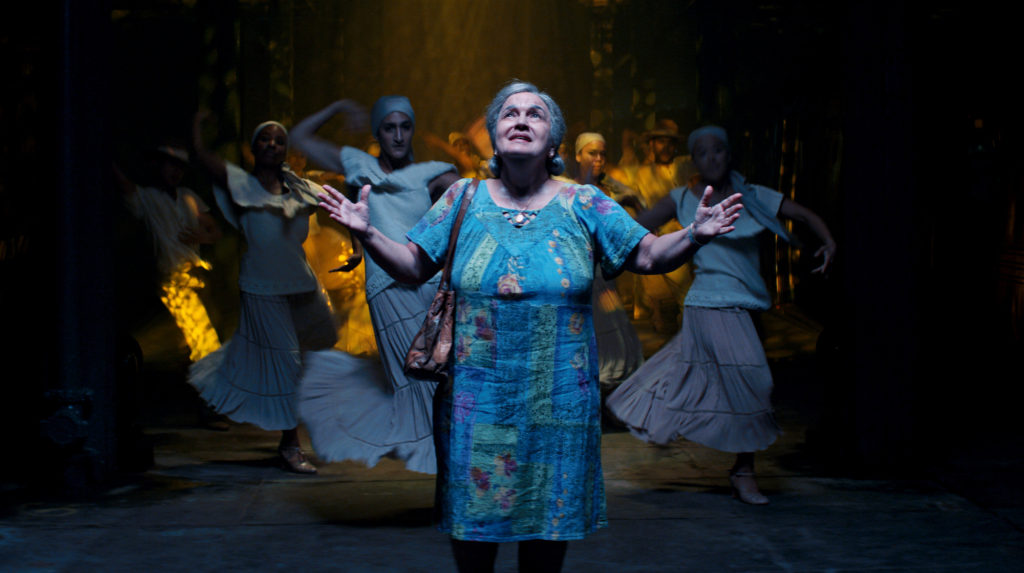
29-ear-old Usnavi (Anthony Ramos) runs a bodega, and employs his younger, precocious cousin Sonny (Gregory Diaz IV). Usnavi is so infatuated with Vanessa (Melissa Barrera)that he is paralyzed from asking her out. Vanessa, a nail tech and wannabe designer, has big dreams and confidence to match. The neighborhood’s version of a magnate is Kevin (Jimmy Smits), who runs a car service, with his dispatcher Benny (Corey Hawkins). The neighborhood’s soul and anchor is everyone’s surrogate grandma, Abuela Claudia (Olga Merediz).

Corey Hawkins and Leslie Grace in IN THE HEIGHTS. Photo credit: Warner Bros. Pictures

The most interesting story thread is that of Kevin’s brilliant daughter Nina (Leslie Grace), who is just back from her first year at Stanford, which she did not find to be a welcoming place. Having suffered some unsettling indignities, he doesn’t want to return, but her dad won’t hear of it. Her old beau Benny is glad to have her back in the Heights, so…What’s best for Nina, and will everyone reach that conclusion?

The local Latino businesses are being priced out, and everyone is conscious of displacement as a real and present threat. To its credit, In the Heights doesn’t oversimplify the displacement issue with cartoonish corporate villains.

The cast is thoroughly excellent (although Jimmy Smits is the weak link on singing and dancing). Gregory Diaz IV and Corey Hawkins are the standouts.

The best acting performance is by – of all people – Marc Anthony – who perfectly captures the dead eyes of Sonny’s troubled, hope-exhausted father. I had forgotten that, 1990-2004, Anthony acted in some pretty good movies: Big Night, Bringing Out the Dead, Man on Fire.

Olga Merediz in IN THE HEIGHTS. Photo credit: Warner Bros. Pictures.

Director Jon M. Chu (Crazy Rich Asians) is a Silicon Valley native, son of the founder of Chef Chu’s, the beloved institution in Los Altos. Chu was a film school wunderkind and was signed to direct films right out of USC.

Chu is a master of filming dance. He has become one of the greatest directors of dance in cinema – and deserves to be ranked with the likes of Stanley Donen, Mark Sandrich, Busby Berkeley and Bob Fosse. I’m not gushing here – there;s no doubt that the guy has the chops.

The dancing in In the Heights is spectacular. The critic Jason Gorber tweeted that he was watching In the Heights a second time and focusing on the moves of the background dancers. If you do that, you will be able to confirm that the dancer to the right of Sonny in the swimming pool is indeed double-jointed.

Chu fills the frame with detailed content – and often with what seems like hundreds of dancers. See In the Heights on the biggest screen you can; The Wife and I watched it on a 65-inch television, which worked well, but a theater would have been even better.

In the Heights is in theaters and streaming on HBO Max through July 11.

BAD TALES: perhaps too dark

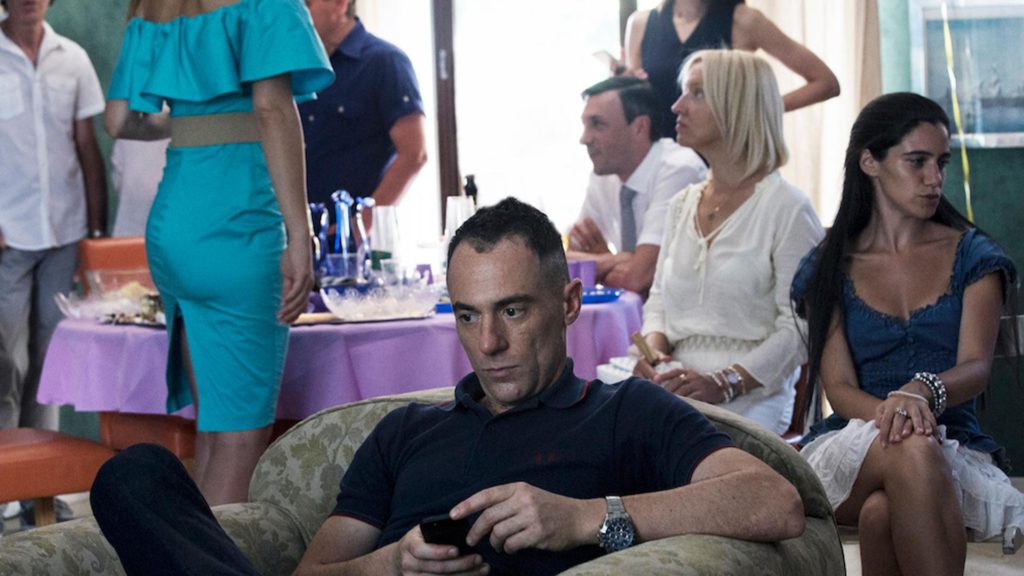
Photo caption: Elio Germano in BAD TALES. Photo courtesy of Strand Releasing.

In the Italian coming of age film Bad Tales, middle schoolers must navigate adolescence. It’s droll, dark and captivating – and, finally, perhaps too dark.

The kids head into summer vacation while their suburban families languish someplace between ennui and malaise. The fathers radiate toxic masculinity.

Co-directors and co-directors Damiano and Fabio D’Innocenzo won for best screenplay at the Berlinale; it’s just their second feature film.

The kids in Bad Tales are much more sympathetic than are real life middle schoolers in my experience. They’re at that awkward and confusing age where there’s nothing to be confident about. It’s the age where the boys call each other spazz and the last day of school transitions into summer vacation with a glorious water balloon fight.

The kid actors are exceptionally good. The D’Innocenzos must be both extremely adept at casting and lucky; the boys are all perfect for the ages of the characters – and just one unpredictable growth spurt or a voice-deepening from aging out of their parts.

As we observe human foibles, Bad Tales‘ overall tone is caustically amusing. But things get deeply tragic at the end, including the most cowardly behavior I’ve ever seen from a movie father – and then there’s the most insidious act by a movie teacher.

Bad Tales is streaming on on Virtual Cinema; I watched it at Laemmle.

ABOUT ENDLESSNESS: damned if I know

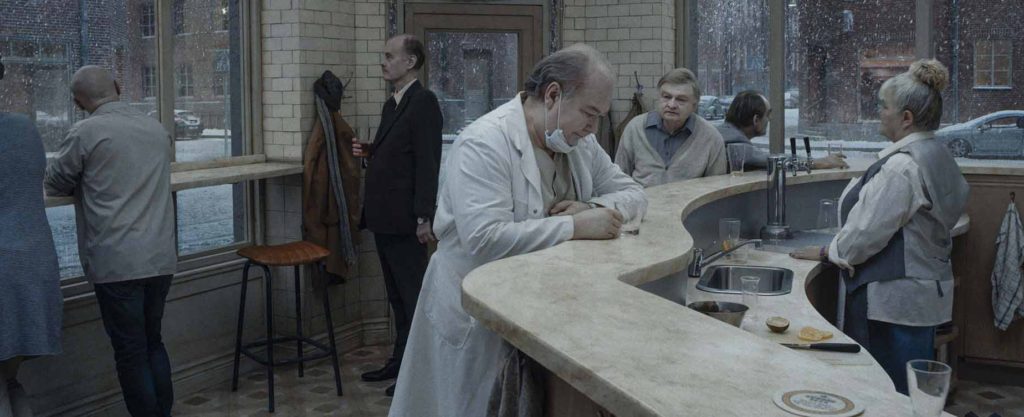
Photo caption: ABOUT ENDLESSNESS

In About Endlessness, Roy Andersson, that genius of deadpan existential cinema, probes the meaning of human life.

Andersson movies are a series of vignettes, with ponderous Scandinavians arranged or paraded in front of a stationary camera, in a way that critic Justin Change has likened to diorama. There is never a closeup. It is all superbly photographed by cinematographer Gergely Pálos.

Now, Andersson is not for everyone. This is what I wrote in 2014 about his most recent film:

Some viewers are going to hate, hate, hate the droll Swedish existentialist comedy A Pigeon Sat on a Branch Contemplating Existence, but it’s kind of a masterpiece. For most of its 101 minutes, dull Swedes sit and stand talking about dull things.  It’s no secret that the Scandinavians (who The Wife refers to as “Your people”) are not the most lively bunch.  Filmmaker Roy Andersson uses this trope to probe the meaning of life itself.

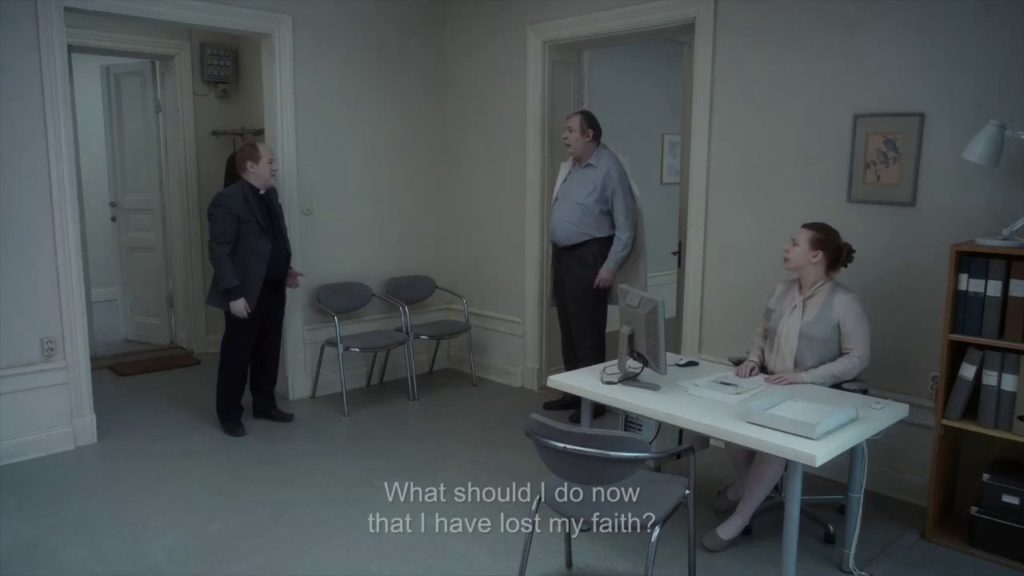
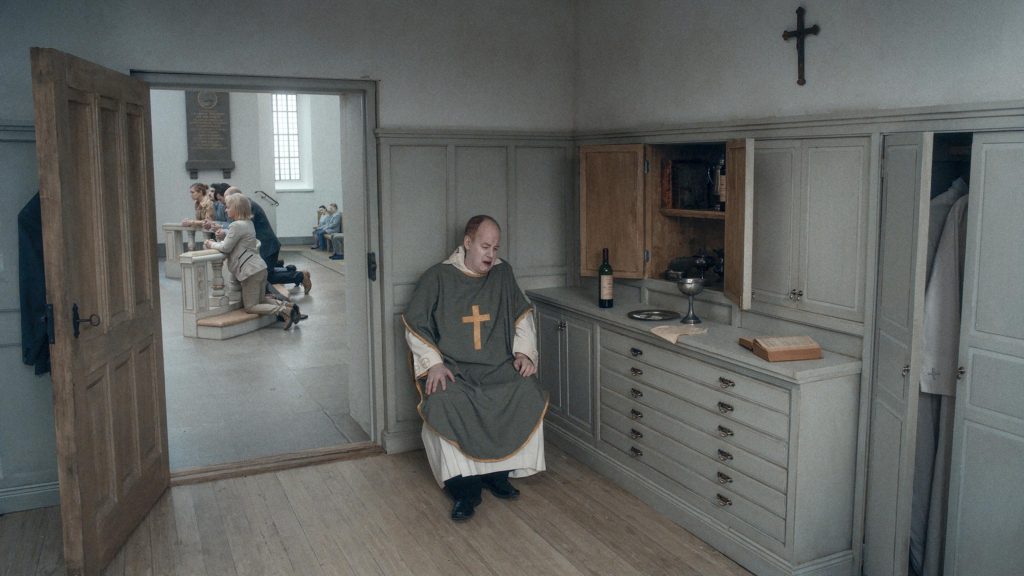
About Endlessness, with all its randomness, is more direct than A Pigeon Sat on a Branch Contemplating Existence. This time, in a psychiatry office and in a student’s bedroom, Andersson is explicit. When a doubting priest asks the point of life without religious belief, his shrink answers, “Damned if I know.  Maybe being content with being alive.” 

Most vignettes are absurdist and darkly funny, often about someone deeply engaged in something that Andersson sees as trivial. But, About Endlessness, contains some life and death moments, mixed among the clearly meaningless.

This time, some of Andersson’s vignettes are bracing. In one, a man has committed a horrific and irreversible act that he has come to realize, too late, was profoundly misguided.

Two other vignettes are among the sweetest you’ll see this year – one with young women bursting into into an impromptu dance, the other with a father tying his small daughter’s shoes.

About Endlessness is an art film in the best sense, an experience that demonstrates what what cinema can do in the hands of a talented artist with something to say. I recognize that it’s not for everyone – but it’s only 76 minutes, so give it a chance. I’m putting it on my list of Best Movies of 2021.

In just over a month, the 78-year-old Andersson will be out with another film, Being a Human Person.

About Endlessness is streaming on Amazon, Vudu, YouTube and Google Play.

UNDINE: a slow burn, barely flickering

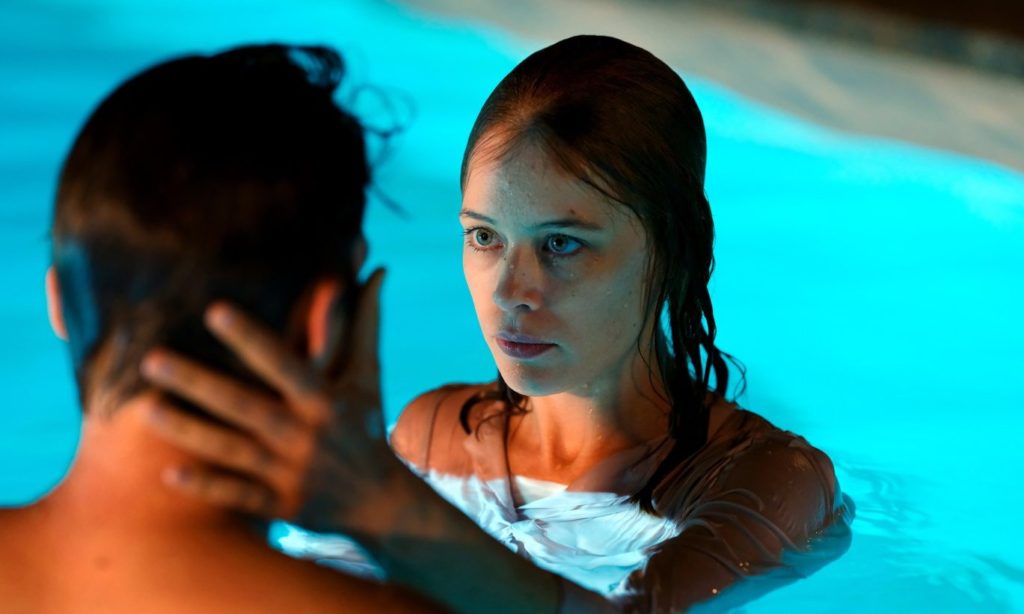
Paula Beer in UNDINE. Courtesy of MVFF.

In Christian Petzold’s German tragic romance Undine, Paula Beer plays the title character, a young woman of passion and unproven emotional stability. One morning, she experiences a heartbreaking breakup and rebounds into a profound love story. The course of that love affair becomes operatic and supernatural, and very tragic.

In mythology, Undine was a water nymph, and Petzold maintains the story framework of the original legend, but sets it in contemporary times.  Undine meets Christoph (Franz Rogowski). I often roll my eyes at a “meet cute”, and I sure didn’t expect one from Euro art film director Petzold, but this one really works.  Christoph is capitated by Undine and persists in courting her.  He becomes obsessed, she less so, and a tragic romance ensues.

Undine strives for the operatic but is too much of a slow burn (as in barely flickering at times).

I was thrilled by Petzold’s Barbara and then his Phoenix.  I was much less satisfied by his Transit (also with Rogowski and Beer). I’m becoming less of a Petzold enthusiast after these last two disappointments.

Beer, as she was in Transit, is exceptionally expressive and captivating. Rogowski (whose supporting character in Victoria was the most memorable turn in that film) excels when he plays a haunted man – as he does here and in Transit.

I saw Undine at the Mill Valley Film Festival in October, and it opens in Bay Area theaters this weekend.

DRUNK BUS: escaping the rut

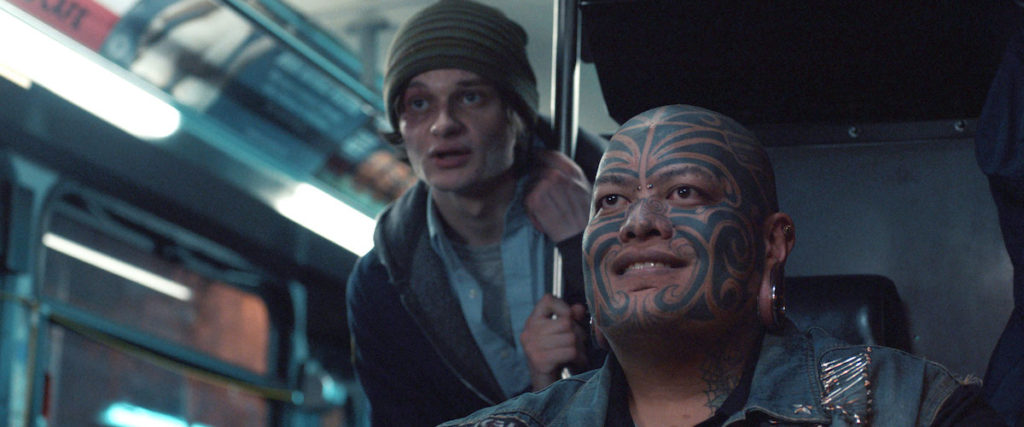
Photo caption: Charlie Tahan and Pineapple Tangaroa in DRUNK BUS. Photo courtesy of Filmrise.

In the light and appealing coming of age comedy Drunk Bus, a young slacker (Charlie Tahan) is paralyzed by the disappointment of a breakup. He’s stuck driving the shuttle between a college town’s bars and the dorms (the “Drunk Bus”). One running gag is that he is fixated upon an ex girlfriend that every other man in America would find insufferably frustrating.

He needs someone to shake him up, which is what he gets in the form of a 300-pound Samoan security guy with facial tattoos (Pineapple Tangaroa). It’s all sweet and predictable.

This is the first feature for co-directors John Carlucci and Brandon LaGanke.

I screened Drunk Bus, which had played at the 2020 SXSW, in March at the 2021 Cinequest. It’s now available to stream from Laemmle.

BILLY GRAHAM: the need to pray with Presidents

Photo caption:BILLY GRAHAM. Photo courtesy of PBS American Experience.

The fine PBS documentary series American Experience brings us Billy Graham, an especially insightful look at back at the famed evangelist.

i hadn’t though much about Billy Graham lately. When I was growing up, Billy Graham was already a national institution and the most famous American religious leader – and the world’s most visible Protestant clergyman. Then, what happened?

Billy Graham traces Graham’s meteoric rise from Boy Wonder preacher to national stardom, taking evangelism from tent revivals in the rural Bible Belt to big city stadiums and television.

That story of Graham’s talent and ambition is interesting in itself, but Billy Graham examines both the strengths of his character and his vulnerability. Graham was rigorously disciplined in refusing to enrich himself and in his strict devotion to his marriage. Almost uniquely for TV preacher, Graham was never tainted by a financial or a sexual scandal and seemed impervious to hypocrisy.

But Billy Graham explores Graham’s yearning to become pastor to Presidents – both to promote his evangelism and as a manifestation of his own vanity. That paid off for Graham with his close relationship with Ike (and Ike and Billy’s impact on the nation’s public religiosity).

But then came Richard Nixon, who Graham was naive enough to think a soul mate. Being publicly anchored to Nixon made Graham’s position as an arbiter of national morality, well, untenable.

Graham’s career – through his consorting with politicians and his pioneering use of mass media – set the stage for the Moral Majority-type politicization of culturally conservative evangelicals. Notably, he intentionally took another path.

In his final act (which I had lost track of), Graham became an international peace campaigner. He mellowed into a more tolerant, less hell-fire theology and we glimpse him on a NYC stage at age 87. I was surprised to learn that Graham died in 2018 at age 99.

You can stream Billy Graham at American Experience.

WE STAND ALONE TOGETHER: THE MEN OF EASY COMPANY – what they endured

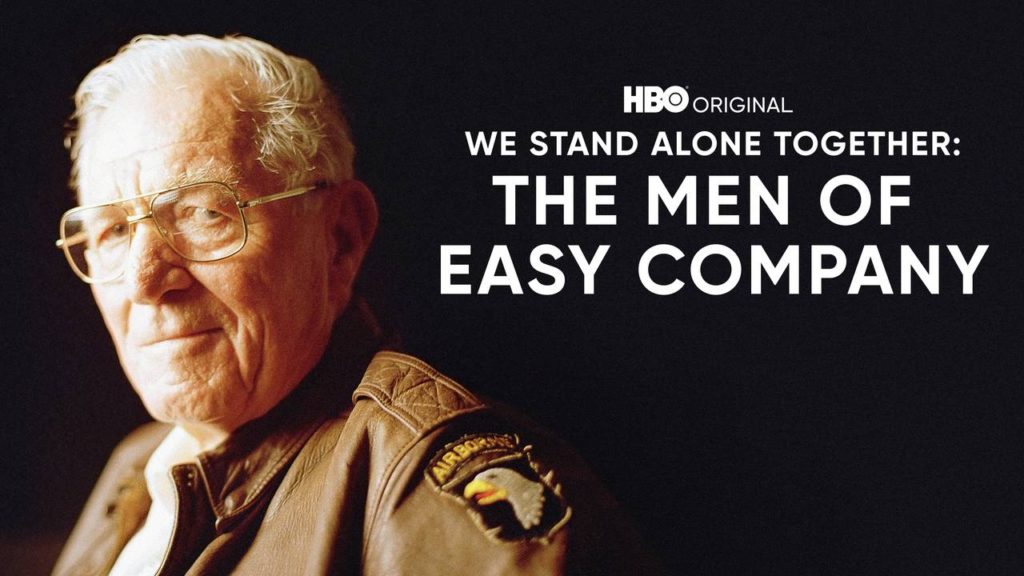
There’s no better movie choice for Memorial Day than the documentary We Stand Alone Together: The Men of Easy Company.  A companion to the fine 2001 miniseries Band of Brothers, this oral history gives voice to soldiers as they revisit what they endured.

The Easy Company of the title was part of the 101st Airborne, a storied WW II unit of regular guys who became elite paratroopers. We meet a bunch of those guys as they recount their journey of 55 years before – their basic training, their first combat – on D-Day. Easy Company went on to play a part in WW II’s most pivotal moments: the Normandy invasion, the liberation of the Netherlands, beating back Germany’s last offensive at the brutal Battle of the Bulge and conquering Hitler’s own private getaway, the Eagle’s Nest.

These are men of The Greatest Generation, a term coined four decades later by Tom Brokaw. For those most part, they didn’t share their war experiences with their families and friends. We are hearing many of them tell their stories for the first time.

I’m a Baby Boomer, and my Dad and all of my friends’ dads were WW II vets – basically every dad-aged adult male. We knew them as grocery clerks, science teachers, factory workers, insurance agents and mechanics like my Dad. All of us kids, growing up on a steady diet of WW II movies and TV, asked them, but they would never talk about the war. I now realize that I knew men who had served as infantry in Europe and Marines in the Pacific.

One family member did tell me about getting shot down over New Guinea and spending time with an indigenous tribe before his rescue. What he didn’t relate was in a journal that I found long after his death – that the repeated terror of over twenty bombing missions finally became more than he could bear.

Above all, We Stand Alone Together: The Men of Easy Company is the story of men who experienced one trauma after another. The unit suffered over 50% casualties on D-Day. Their eleven months of combat missions must have seemed endless. They deserve, finally, to be heard.

We Stand Alone Together: The Men of Easy Company can be streamed from HBO Max.

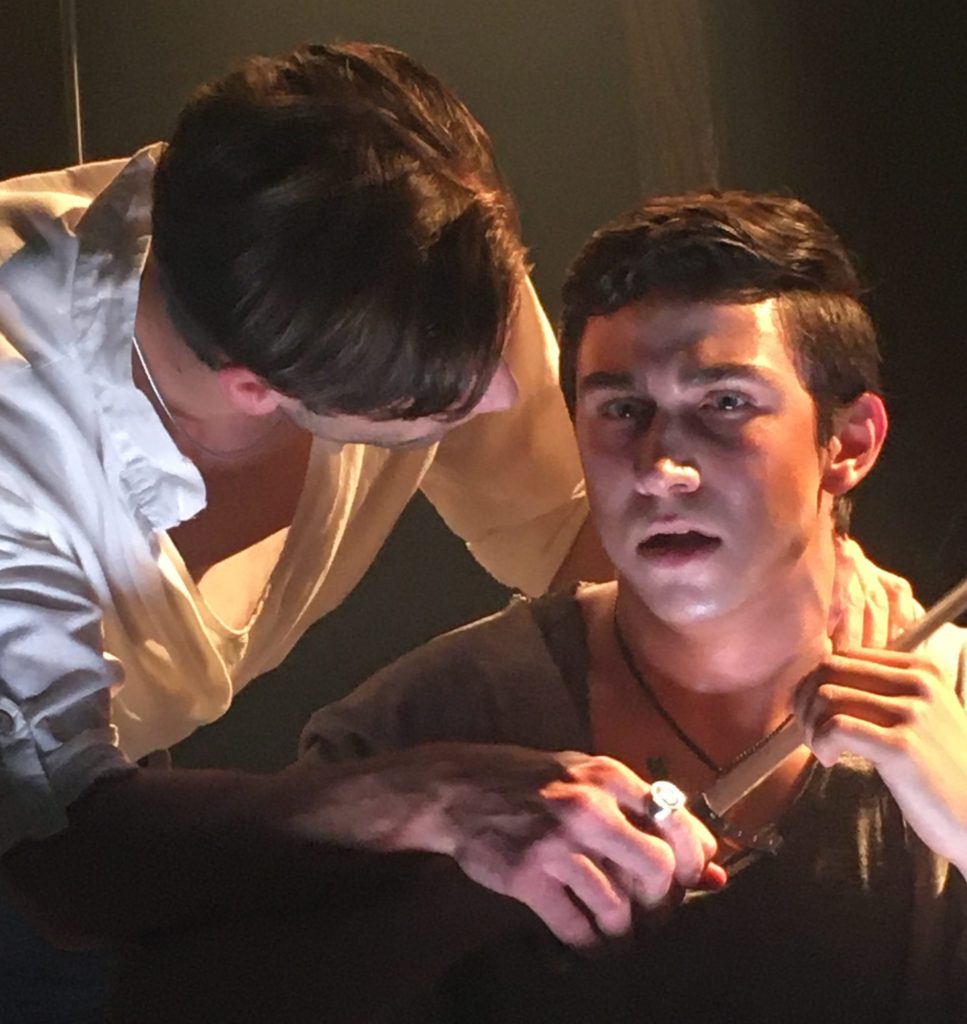
HAMLET/HORATIO: less angst, more tragedy

Themo Melikidze as Horatio and Andrew Burdette as Hamlet in HAMLET/HORATIO

In Hamlet/Horatio, director Paul Warner and writer David Vando put a new twist on Shakepeare’s Hamlet.  Warner and Vando gives us a Hamlet from the point of view of Hamlet’s bestie Horatio (Themo Melikidze), as he fulfills his promise to retell the tragic fate of his friend.  That means that it’s not from Hamlet’s the internal point of view of Hamlet himself (Andrew Burdette), as he simmers in inner turmoil.

The result is almost soliloquy-free, and many famous lines are not spoken.  This is decidedly NOT a Cliff Notes version; Warner and Vando have intentionally left out some stuff that WILL be on the test.

Hamlet is generally thought of as a character-driven story about Hamlet’s angst and indecision. We all know that Hamlet has good reason to be depressed and angry at his father’s death and the usurpation by his uncle.  By focusing on Horatio’s retelling of his friend’s story, the spotlight is on the external plot – how Hamlet was wronged by treachery, seeks redress, and how, tragically, almost everyone winds up dead.

Hamlet is not my favorite Shakespeare play because I’m generally ambivalent to Hamlet wringing his hands for two or three hours.  Still, I missed that aspect in Hamlet/HoratioHamlet/Horatio does succeed with the Closet scene and the Gravedigger scene; both are exceptionally good. Does Hamlet need a refreshing?  Why, sure.  Kenneth Branagh’s fine 1996 unabridged movie version had a running time of four hours, two minutes, and IMO that’s just too long for a movie.  And, as Warner points out, it’s not the most accessible play for a modern audience.  In contrast to Branagh’s and other movie versions, Hamlet/Horatio is a remarkably crisp 101 minutes.   

Joe Menino plays Polonius as ridiculously devoid of self-awareness, but without the usual broad comedy. Menino’s performance is very effective and still funny.  Just because Polonius never recognizes that he is a pompous blowhard, you don’t need to play him as Foghorn Leghorn.  The actors Anna Maria Cianciulli, as Gertrude, and Wayne Stephens, as Laertes, are very good.

Yesterday, I published my own list of Best Shakespeare MoviesHamlet/Horatio will be available to stream on June 1.

THE DRY: a mystery as psychological as it is procedural

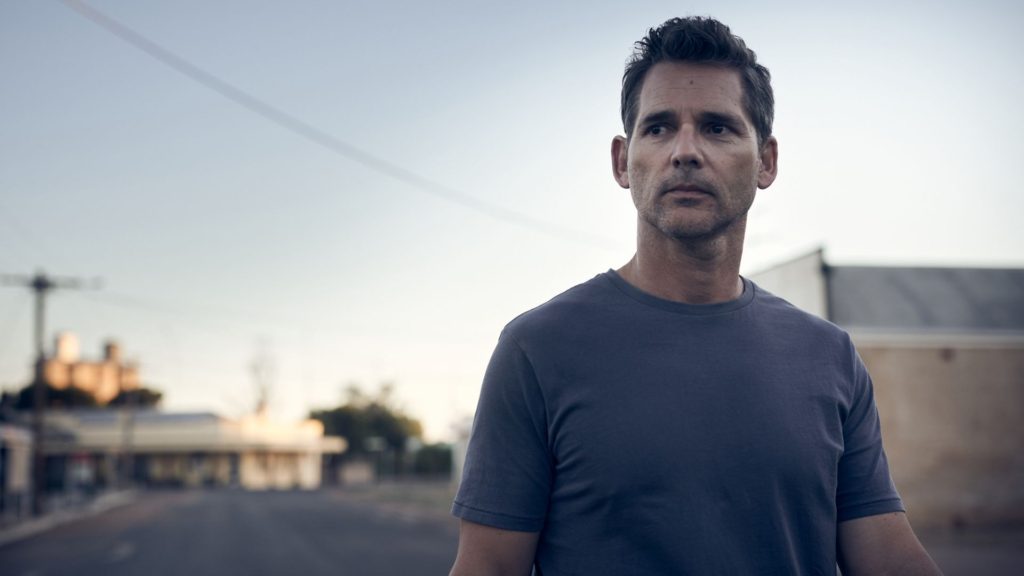
Photo caption: Eric Bana in Robert Connolly’s film THE DRY, which playes at SFFILM. Photo courtesy of SFFILM.

Eric Bana soars in The Dry, an atmospheric, slow-burn tale of murder and long-festering secrets from the Australian outback. The Dry is as psychological as it is procedural.

Bana plays Aaron, a renowned big city police officer who returns to his remote, tiny hometown, for the funeral of his childhood best friend. The friend, with his wife and young son, have been shotgunned to death, and all signs point to a murder-suicide. The friends’ parents implore Aaron to see if there is another explanation.

That task is complicated by the act that Aaron is not welcomed by many in his hometown. His teen heartthrob was mysteriously drowned, and Aaron was a prime suspect, causing him to flee the town. Twenty years later, all he knows is that he didn’t do it and that he lied about his alibi.

As indicated by the title, writer-director Robert Connolly sets The Dry in Australian outback in the Climate Change. The vast, tinder-dry landscapes underscores the literal and psychological isolation of the locals.

Aaron, racked with feelings about the twenty-year-old mystery death, starts investigating the current day murders. He joins up with the inexperienced local cop, and they poke around the rural community over several, searingly hot days. It takes a while to get there, but I thought the payoff justified the slow pace; The Wife didn’t. Both of us were surprised when the The Real Killer was revealed.

Eric Bana’s performance as Aaron is superb. The whole movie is about Aaron trying to keep his investigative focus while being buffeted by feelings about his childhood friends and his hometown and the trauma that caused him to move away from them.

Because of his good looks and his physicality, Bana appears in a lot of big movies that don’t test his emotional range (Hulk, Troy, Black Hawk Down). But Bana is always good and even better in movies like Munich and Hanna, where we get to glimpse his thinking and feeling. For a really good and overlooked Eric Bana movie, I recommend the 2012 thriller Deadfall, available to stream on Amazon, AppleTV, Vudu, YouTube and Google Play.

The Dry played at SFFILM in April, but I missed it there. The Dry is now in Bay Area theaters and streaming on AppleTV, YouTube and Google Play.