499: the legacy of Mexico’s Original Sin

499. Photo courtesy of Cinema Guild.

In director and co-writer Rodrigo Reyes’ highly original docu-fable 499, one of Hernán Cortés’ soldiers (Eduardo San Juan Breñais) is transported centuries into the future and plunged into contemporary Mexico. The movie’s title reflects a moment 499 years after Cortés’ conquest of the Aztecs in 1520; the conquistador and the audience discover that the dehumanization inherent in colonialism has persisted to plague modern Mexico.

I’m calling Reyes’ medium a “docu-fable” because it is all as real as real can be (the documentary), except for the fictional, 500-year-old conquistador (the fable).

Cast upon a Veracruz beach after a shipwreck (but 500 years later), he conquistador is terribly disoriented, and retraces Cortés’ march from Veracruz to Tenochtitlan/Mexico City. Seeing everything with a 500 year old lens, he is initially disgusted that the Indians that he conquered are now running things.

Soon he finds a Mexico reeling from narco terror. He meets Mexicans who have been victimized by the cruel outrages of the drug cartels, those risking their lives to hop a northbound train, and those in prison. In the emotional apex of 499, one mother’s account of a monstrous atrocity, clinical detail by clinical detail, is intentionally unbearable.

Reyes wants the audience to connect the dots from Mexico’s Original Sin – a colonialism that was premised on devaluing an entire people and their culture. Will the conquistador find his way to contrition?

499, with its camera sometimes static, sometimes slowly panning, is contemplative. Cinematographer: Alejandro Mejía’s work won Best Cinematography at the 2020 Tribeca Film Festival.

499 releases into theaters on August 20, and will play San Francisco’s Roxie in early September, before its national rollout.
DIRT MUSIC: a gorgeous bodice-ripper with a WTF ending

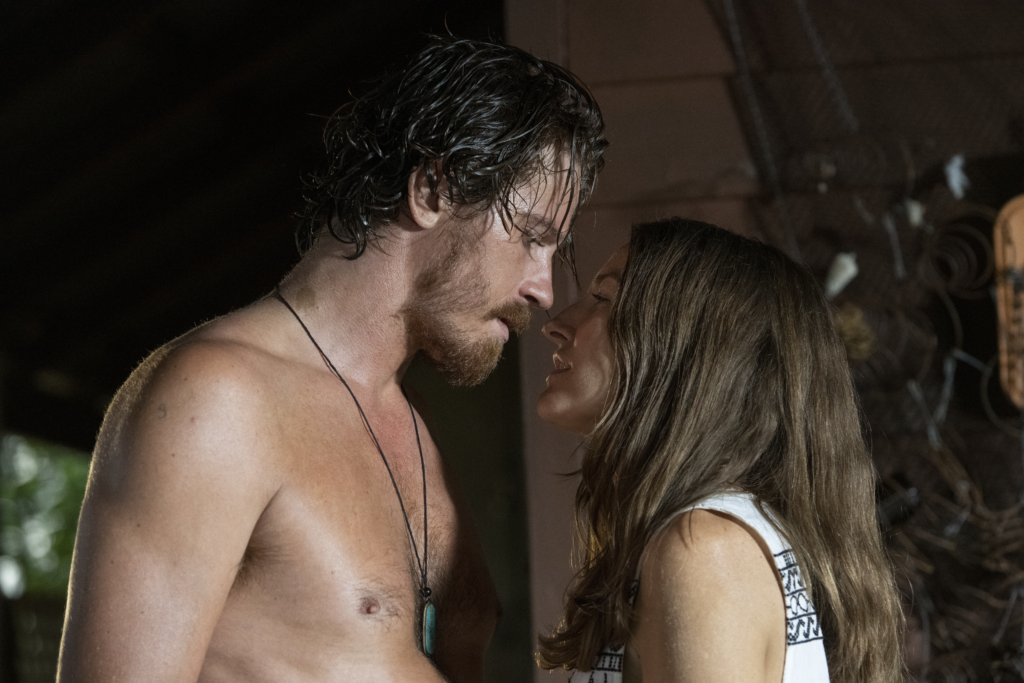
Garrett Hedlund and in Kelly MacDonald in DIRT MUSIC. Photo courtesy of Blue Finch Film Releasing.

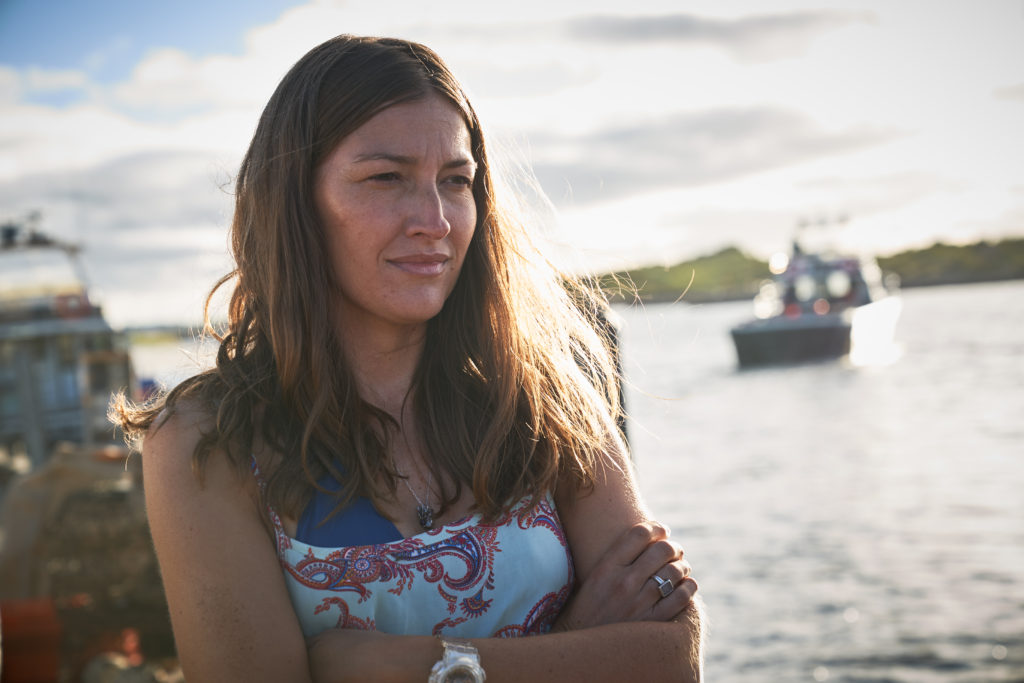
Dirt Music is a contemporary bodice-ripper set on the wild West Coast of Australia. Georgie (Kelly Macdonald) has become increasingly dissatisfied in her lot as the second wife of Jim (David Wenham), the local commercial fishing baron. Taking some personal time out on the beach, she happens upon Lu, a recluse who ekes out his subsidence from midnight poaching; it turns out that Lu has been emotionally scarred by tragedy in his family.

Georgie and Lu are soulmates and soon become passionate bedmates. Jim, pissed off about Lu’s poaching and REALLY pissed that he is screwing his wife, drives Lu out of town. Georgia goes on a quest to find Lu, who has become even more reclusive, becoming a needle in an endless haystack of tiny coastal islands. At this point, there’s a very unexpected plot twist that is justified later by a dark secret about the earlier tragedy,

During Georgie’s search, the landscapes and seascapes of Western Australia, become even more spectacular.

Will Georgie reunite with Lu or will she have to live only with his tragic memory? The WTF ending wants to have it both ways. As I said, WTF?

Dirt Music is based on the award-winning novel by Australian writer Tim Winton, (and I am assuming that a substantial percentage of the Australian movie audience had previously read the novel). In fact, this is one of those stories that might be better told as a novel.

Kelly MacDonald in DIRT MUSIC. Photo courtesy of Blue Finch Film Releasing.

Kelly Macdonald has been a compelling screen presence since her debut in Trainspotting. She’s brought her intelligent watchfulness to roles in Gosford Park, Intermission, Finding Neverland, No Country for Old Men, Boardwalk Empire and Puzzle. Macdonald’s performance elevates this material, which could have been completely silly with a lesser actress.

Garrett Hedlund is appropriately moody and hunky as Lu; he plays most of the movie with his shirt off and the rest with his shirt unbuttoned. David Wenham is very good as the unsympathetic husband. It’s always a treat for me to watch a movie with Aaron Pederson, so great as detective Jay Swan in the movies Mystery Road and Goldstone and the more recent miniseries Mystery Road; here, Pederson has a small part as Jim’s indigenous factotum Beaver.

Dirt Music has an abysmal Metacritic score of 35 because critics have uniformly opined that its corniness outweighs the gorgeousness. I could tell this was going to be a chick flick from the trailer; that usually means that I’m not the ideal audience for it, but I really admire Kelly Macdonald, and took a flyer in case some family members might enjoy it.

Those who can swallow the ending might enjoy this romantic melodrama in a visually spectacular setting. Dirt Music can be streamed from Amazon, AppleTV and YouTube.

THE NEUTRAL GROUND: the supremacist legacy of old statues

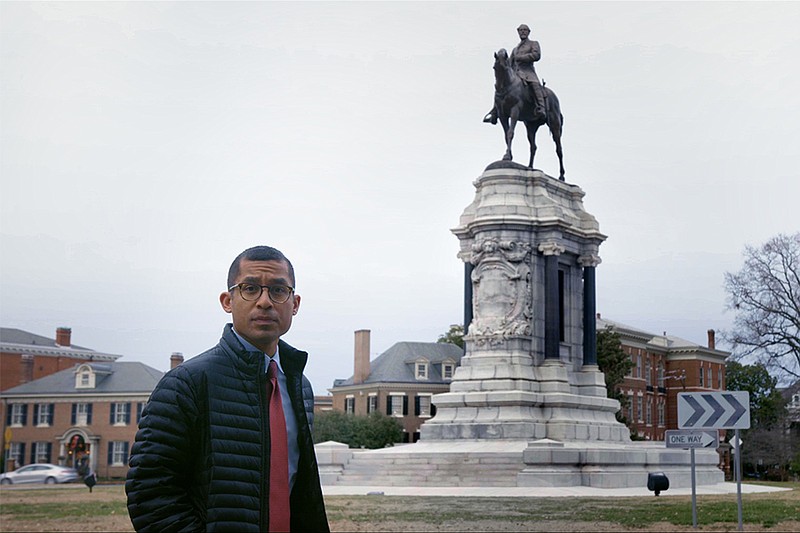
Photo caption: C.J. Hunt in NEUTRAL GROUND. Photo courtesy of PBS POV.

In the pointed documentary The Neutral Ground, C.J. Hunt explores the continuing legacy of Confederate monuments in America. Finding the backlash against removing New Orleans’ Confederate monuments so absurd, Hunt, a producer for The Daily Show, started out to make a snarky YouTube video. But he found himself drawn more deeply into the history of Confederate monuments, so intentionally braided with white supremacy.

In my view (and C.J. Hunt’s), it’s a no-brainer to remove monuments that should never have been erected in the first place. After all, these monuments celebrate men who led a traitorous insurrection against their own country, who sought to keep other human beings enslaved and who lost a disastrous war. Traitors. Slavers. Losers.

But Hunt is fascinated by the chorus of White Southerners advocating for the preservation of Confederate monuments to maintain pride in (White) Southern heritage. All of them claim that the Civil War was not about slavery. And none of them would say that they are White supremacists or that slavery was acceptable. Hunt notes a disconnect with historical fact:

The founding documents of the Confederacy talk so obsessively about slavery, the real mystery is how so many people came to believe that Confederate symbols have nothing to do with it.

I am a student of American history, and this is one of my pet peeves. If you’re interested, you can read more thoughts about THE NEUTRAL GROUND and the Lost Cause lie.

Now back to the movie, The Neutral Ground.

Hunt is very funny. To a woman who wants to keep all the statues in their prominent places with plaques for context, he suggests this wording: “Hi, I’m Robert E. Lee. A long time ago, I turned on my country and led over 200,000 Southern sons to their graves, so we could keep our basic right to own human beings as property. #SorryI’mNotSorry“.

After meeting a round of genteel “as long as you stay in your place” racists, Hunt is unnerved by encounters with the “I want to kill you” variety of racists.

For me, the highlights of The Neutral Ground were Hunt’s sparring with his own African-American father. His dad, moving about his kitchen in an Aunt Jemima apron, critically recounts the evolution of C.J.’s own racial awareness and imparts his own unblinking view of institutional racism in America. This repartee sets the stage for The Neutral Ground to become even more personally-focused for C.J. Hunt.

I watched The Neutral Ground on PBS’ POV; it’s now streaming on PBS.

Coming up on TV – CUTTER’S WAY – sometimes there really is a conspiracy

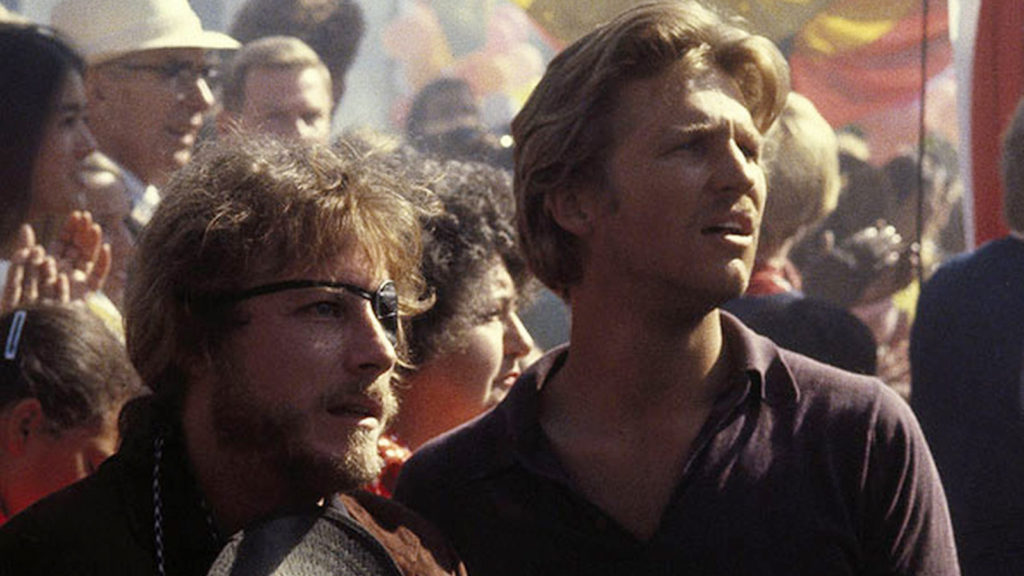
Photo caption: John Heard and Jeff Bridges in CUTTER’S WAY

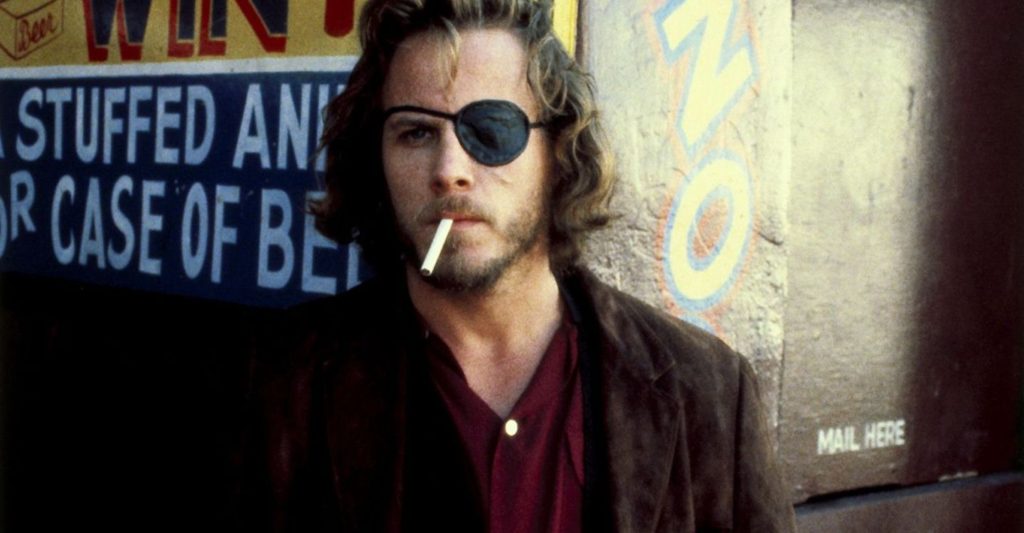
This Friday, July 23, Turner Classic Movies brings us the overlooked 1981 neo-noir Cutter’s Way. A paranoid thriller framed by post-Vietnam War disillusionment, it features an early Jeff Bridges and career-best performances by John Heard and Lisa Eichhorn.

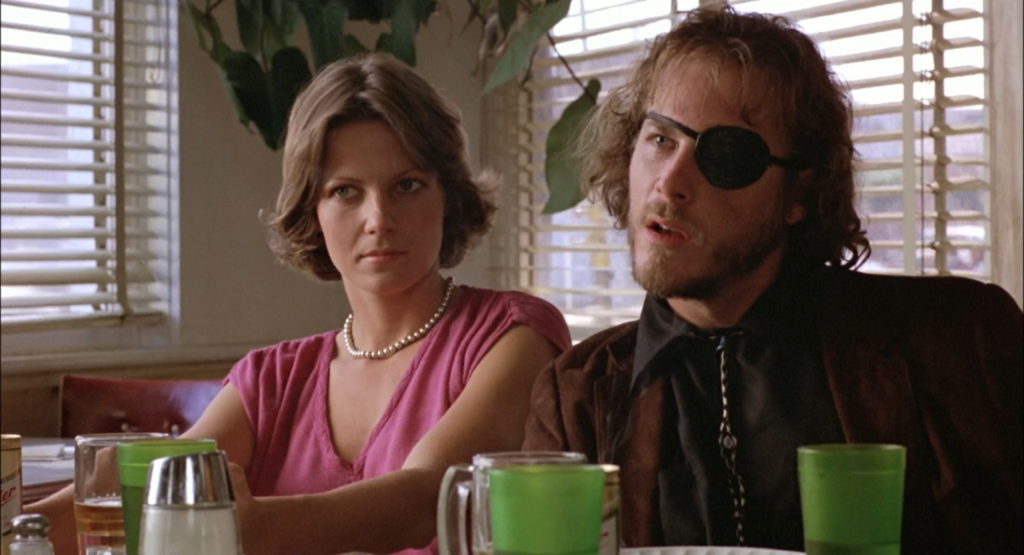
Bridges plays Bone, an aimless and hedonist slacker, bumming around the Santa Barbara yacht harbor. Bone’s buddie Cutter (Heard), a disabled Vietnam War vet, and Cutter’s wife Mo (Eichhorn) are decidedly not Yacht Club material. Cutter has been physically and emotionally scarred by the war, and Mo is damaged by what Cutter has become (a bitter drunk).

Lisa Eichorn and John Heard in CUTTER’S WAY

One night, Bone thinks he has witnessed the dumping of a murder victim. As he pokes around, he finds himself framed for the murder.

Bone becomes understandably engrossed and comes to a conspiracy theory, but then the stakes keep going up and up. Bone is a witness and then a suspect; Cutter is a kibitzer and then a victim. Cutter becomes even more obsessed than is Bone.

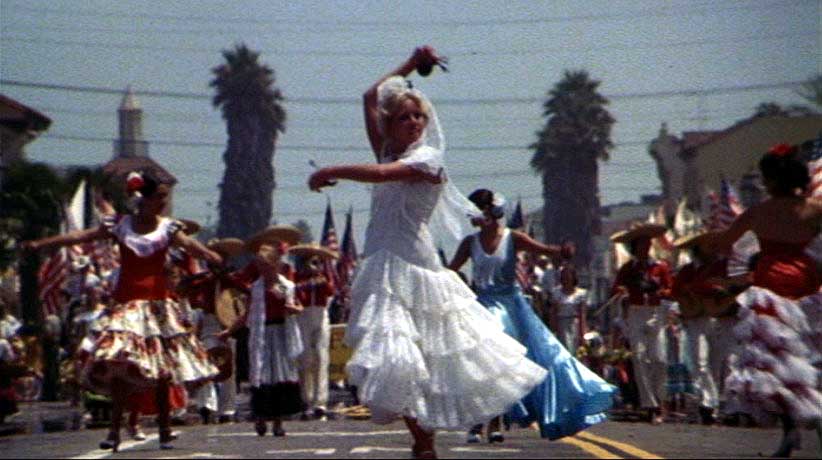
Santa Barbara Founder’s Day parade in CUTTER’S WAY

The marginalized trio finds itself in the tony Spanish-style clubs and posh haunts of Santa Barbara’s rich elite. From its beginning at the yacht harbor and the Founder’s Day Parade, Santa Barbara is a core ingredient in Cutter’s Way, and it’s still the best film set in Santa Barbara.

Cutter’s Way perfectly captures the post-Viet Nam cynicism that was an ideal petri dish for escalating paranoia. The screenplay was adapted by Jeffrey Alan Fishkin from a novel by Newton Thornburg.

Director Ivan Passer came out of the Czech New Wave (Intimate Lighting) to work in the US (fifteen features including award-winning Haunted Summer and Robert Duvall’s Stalin). My favorite Passer film is Cutter’s Way.

TCM will air Cutter’s Way on Friday in its July neo-noir series, hosted by Eddie Muller and Ben Mankiewicz.

I watched it again recently and it still holds up; you can stream it from Amazon, iTunes, Vudu, YouTube and Google Play.

John Heard in CUTTER’S WAY

SIN LA HABANA: land of opportunity?

Yonah Acosta Gonzalez in SIN LA HABANA. Photo courtesy of JFI.

The stylish Canadian indie Sin la Habana braids together the yearnings of an Afro-Cuban couple and a Jewish-Iranian woman.

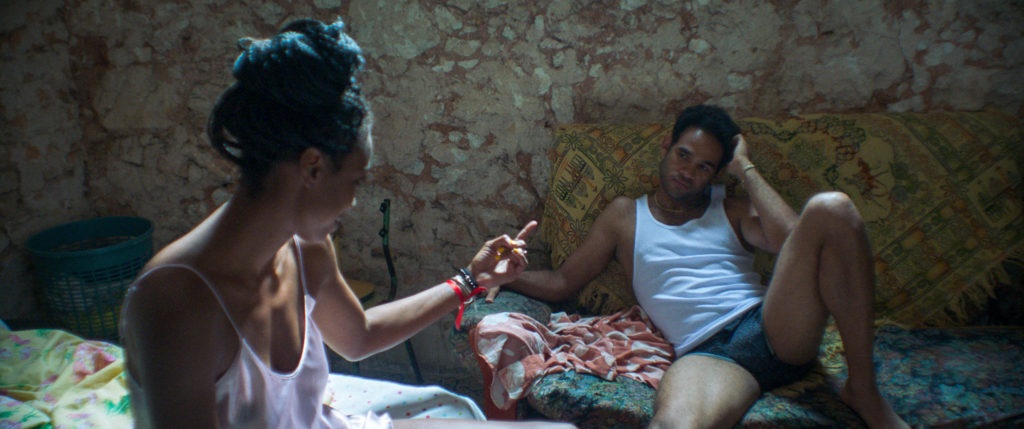
Leonardo (Yonah Acosta Gonzalez) is a Havana ballet dancer frustrated by what he sees as racist favoritism in his company. It doesn’t help that he is an impulsive hothead. His beautiful and canny girlfriend Sara (Evelyn Castroda O’Farrill) is a lawyer. In the socialist paradise of Cuba, their incomes consign them to a cramped, squalid apartment. They want out.

Sara concocts a plan – Leonardo will seduce a foreign tourist who can invite him to leave Cuba; once legally ensconced in the first world, Leonardo will send for Sara.

Evelyn Castroda O’Farrill and Yonah Acosta Gonzalez in SIN LA HABANA. Photo courtesy of JFI.

The cynical scheme begins to work. Leonardo gives salsa lessons (and more) to a Canadian visitor, Nasim (Aki Yaghoubi). Nasim, who is Jewish-Iranian, brings Leonardo back to Montreal.

But then stuff happens. Leonardo is not welcomed as the ballet star that he sees himself to be, and it’s unexpectedly more difficult for him to get the job that will bring him legal residence. And Nasim turns out to be far less of a dupe than first apparent.

The ending is well-crafted and authentic.

Sin la Habana is visually arresting from the very first shot, a closeup of a rooster’s red eye soon followed by arty shots of ballet practice. Havana feels steamy and Montreal feels frigid.

Aki Yaghoubi in SIN LA HABANA. Photo courtesy of JFI.

It’s pretty clear that writer-director Kaveh Nabatian, cinematographer Juan Pablo Ramírez and editor Sophie Leblond know how to tell a story with cinema. There are a couple too many flashbacks of Santería rituals, but Sin la Habana is otherwise well-paced.

I screened Sin la Habana for this year’s San Francisco Jewish Film Festival, which opens on Friday. You can peruse the festival’s program and schedule at SFJFF, and here’s my own SFJFF preview. Here’s where you can stream Sin la Habana.

KINGS OF CAPITOL HILL: evolution of a lobby

Benjamin Netanyahu in KINGS OF CAPITOL HILL. Photo courtesy of JFI.

The Israeli documentary Kings of Capitol Hill traces the history of an American political institution, the American Israel Public Affairs Committee (AIPAC). Founded as a lobby group to advocate for the interests of Israel, AIPAC has grown in power and has shifted (and narrowed) its mission.

AIPAC is controversial because the policies of the recent right-wing Israeli governments, supported by AIPAC, and those of most Jewish-Americans have diverged.

Kings of Capitol Hill highlights two pivotal moments. The first came in 1984 when Paul Simon unseated Charles Percy as US Senator from Illinois, and AIPAC was given the credit and the accompanying political fearsomeness. The second came a decade later, when AIPAC abruptly rejected bipartisanship to become a mouthpiece for the Israeli Right and the US Republican Party.

For 60 years, AIPAC leaders have refused to be interviewed about the organization. Israeli filmmaker Mor Loushy has secured the oral histories of many of AIPAC’s top leadership from its founding and fashioned them into a compelling story.

Note: The film was completed before both Donald Trump and Benjamin Netanyahu, two of Kings of Capitol Hill’s villains, were unseated in the past nine months.

I screened Kings of Capitol Hill for this year’s San Francisco Jewish Film Festival, which opens on Friday. You can peruse the festival’s program and schedule at SFJFF, and here’s my own SFJFF preview. Here’s where you can stream Kings of Capitol Hill.

ROADRUNNER: A FILM ABOUT ANTHONY BOURDAIN – bad ass romantic

Photo caption: ROADRUNNER: A FILM ABOUT ANTHONY BOURDAIN

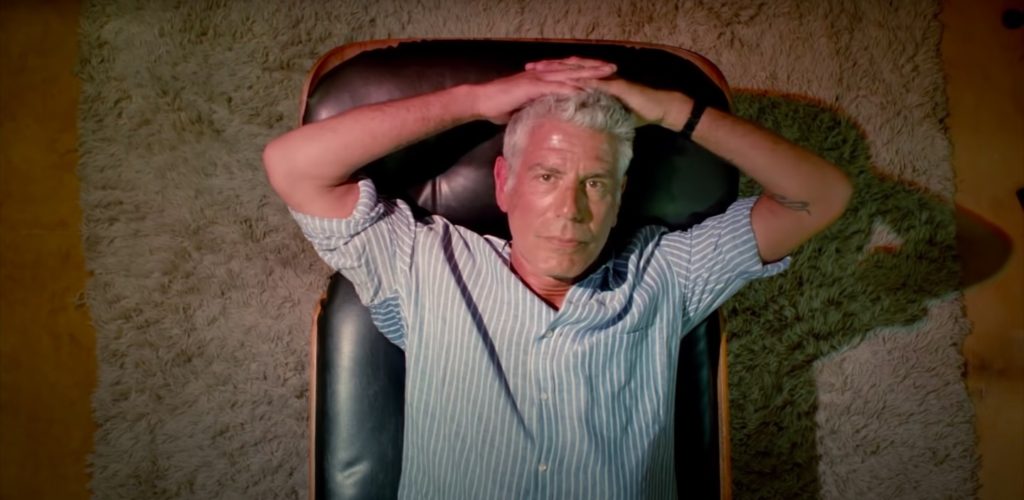
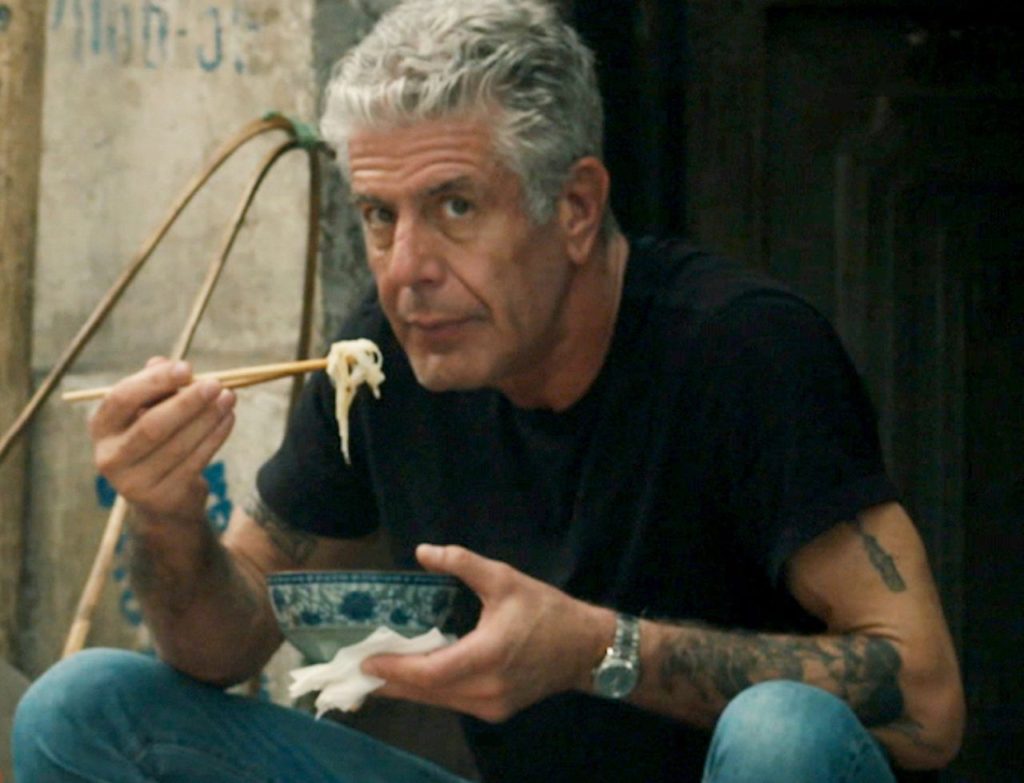
Roadrunner: A Film About Anthony Bourdain is an unusually profound, revealing and unsentimental biodoc. Rarely has a documentary revealed so much about such a complicated and ambiguous person. Roadrunner deliberately builds into a triumph for director Morgan Neville, Oscar-winner for 20 Feet from Stardom.

In Roadrunner, we hear from Bourdain’s brother, second wife and his close friends and associates. His friends were creatives – artists, musicians, writers, chefs. His work partners — agent, publisher, producers, TV crew – had all stayed with him for many years.

Bourdain attained overnight celebrity as the Bad Boy chef with his ribald and iconoclastic memoir Kitchen Confidential. That platform propelled him into his television career as a traveling professional foodie – and then as a professional traveler.

I didn’t know that, before his TV shows, Bourdain had not traveled outside the US except for boyhood visits to family in France. One friend observes that, “his travels were in his head“. Tony himself was allured by the chance to “have adventures while antisocial“. Bourdain’s brother said that Tony was “reborn” through travel.

ROADRUNNER: A FILM ABOUT ANTHONY BOURDAIN

Bourdain was so fun to watch because he was a kind of adult Holden Caulfield, perpetually aggrieved by phoniness in any form. The dark humor in his caustic observations was unfiltered. Yet, Bourdain was an unexpectedly shy man for such a bad ass. Often, when someone (including Bourdain himself) made an incisive statement, Tony would furtively glance directly into the camera – was this his “tell”?

His friends saw Bourdain, despite his overt cynicism, as a romantic . Romantics are always disappointed in – and sometimes betrayed by – reality.

Roadrunner: A Film About Anthony Bourdain does reveal what upset him on the night that he, cold sober, chose to kill himself. But it doesn’t label that disappointment as the simplistic reason for his suicide. Instead, Roadrunner thoughtfully documents his life as a “runner”, focusing his addictive personality on everything from heroin to jujitsu to evade his demons.

Ultimately, Roadrunner is about the people who loved Tony and his difficulty in accepting their love. The saddest scene in Roadrunner recounts when Tony dramatically summoned his producers and proclaimed that he needed to quit; he never anticipated that, far from pushing back, that they would be wholly supportive.

Bourdain was beloved by his fans (including me). If you need a dose of the sentimentality that Roadrunner eschews (and there’s nothing wrong with that), CNN-produced retrospectives are available in episodes 93 and 95 of Parts Unknown, which can be streamed from HBO Max.

[Note: Roadrunner has provoked some contretemps in the chattering class. A computer-simulated voice reads one of Bourdain’s emails as if it were Bourdain himself, and Neville chose not to invite Asia Argento, Bourdain’s last girlfriend, to participate as a talking head (although we see and hear plenty of her on film). In both cases, Neville was seeking the fundamental truth about Bourdain and made the absolutely best choices as a filmmaker. Ignore the hoohaw.]

One more thing – Neville went with the perfect ending for Roadrunner: A Film About Anthony Bourdain, so perfect that, now that I’ve seen it, I can’t imagine any better one. This is one of the Best Movies of 2021.

coming up on TV – THE BITTER STEMS, a lost masterpiece, rediscovered

Photo caption: Vassili Lambrinos and Carlos Cores in BITTER STEMS

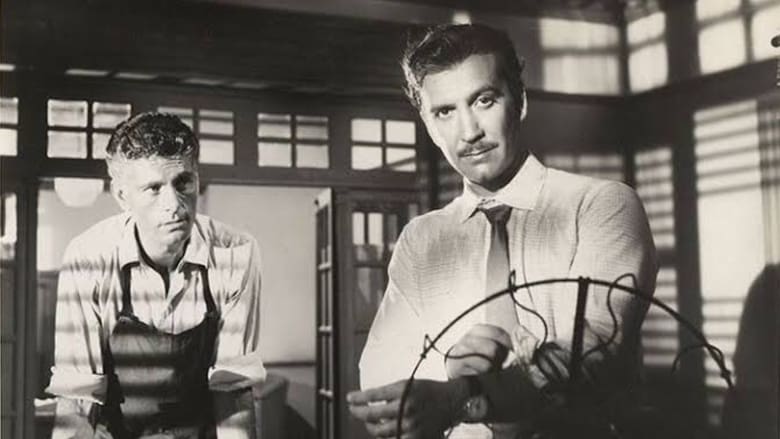
Turner Classic Movies brings us a rare treat this Saturday and Sunday, July 17-18, the recently recovered Argentine masterpiece of film noirThe Bitter Stems (Los tallos amargos). TCM will air it on Eddie Muller’s Noir Alley.

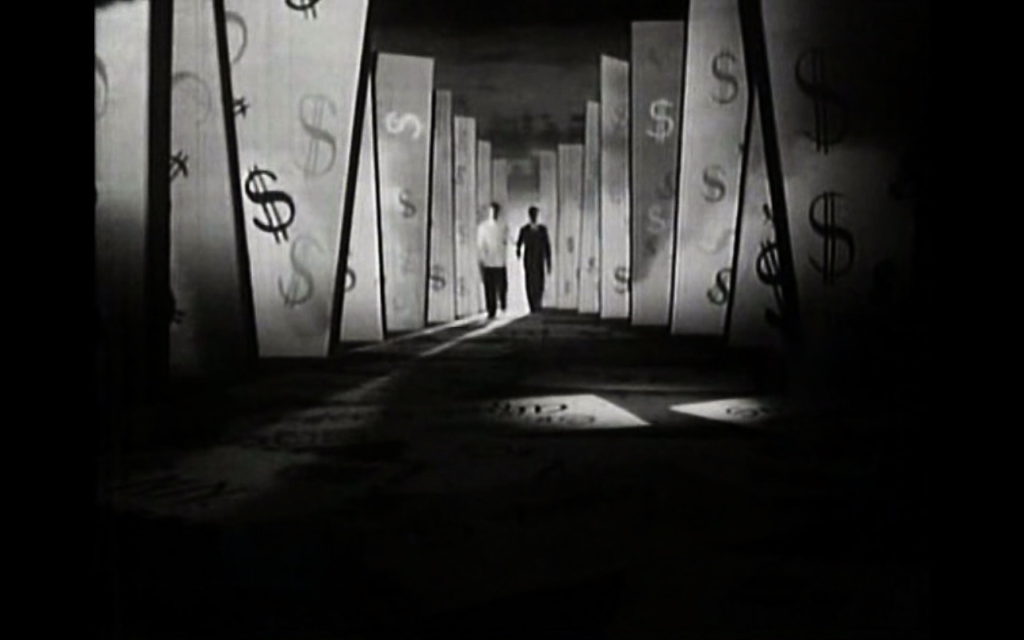
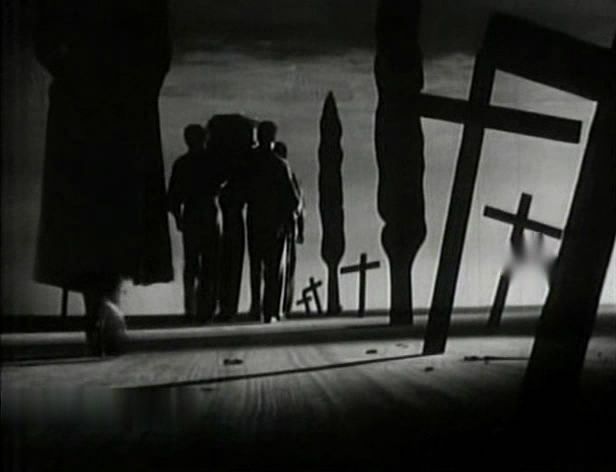
The Bitter Stems was listed as one of the “50 Best Photographed Films of All-Time” by American Cinematographer. It won the Silver Condor (the Argentine Oscar) for both Best Picture and Best Director (Fernando Ayala).

The Bitter Stems was thought to be lost until a print was discovered in a private collection in 2014 and restored with the support of Muller’s Film Noir Foundation. I saw it – and was enthralled – at the 2016 Noir City film festival in San Francisco. That was probably The Bitter Stem’s US premiere and probably the first time that it was projected for any theater audience in over fifty years.

There is often an Icarus theme in film noir, with protagonists who over-reach and risk a lethal fall. Here, Gaspar (Carlos Cores), a grasping Argentine journalist, conspires with Hungarian immigrant Liudas (Vassili Lambrinos) to concoct a fraud that will make them a quick and easy fortune. Unfortunately, the scheme requires a hamster-in-the-wheel effort to stay ahead of collapse – and everything must go just right…

Lambrinos’ performance is particularly sui generis.

This was a very early film for director Fernando Ayala, who went on to establish himself as one of Argentina’s major directors. Cinematographer Ricardo Younis had studied under Greg Toland, who originated the groundbreaking techniques in Citizen Kane. Ayala and Younis combined to create the film’s storied dream sequence – one of the most surreal in cinema (see images below).

The Bitter Stems (Los tallos amargos) is a masterpiece, but almost nobody has seen it in over fifty years. Don’t miss it this time – set your DVR.

THE BOYS IN RED HATS: Rorschach America

THE BOYS IN RED HATS. Photo courtesy of Shark Dog Films.

Remember the resulting frenzy when the Kentucky prep school boy at the Lincoln Memorial smirked at the indigenous tribal elder? Documentarian Jonathan Schroder is an alum of that very prep school – Covington Catholic or “CovCath”. In The Boys in Red Hats, his point of view shifts as he peels back the onion on what really happened. It comes down to insights into media, social media and, especially, White privilege.

Like most of us, Schroder was initially outraged at the boys; as more facts emerged, he became sympathetic to what seemed like mistreatment of the boys in social media. Don’t give up on this movie as a whitewash – as the story gets more complicated and Schroder becomes more reflective, his needle sways back and forth until the final payoff.

This was a Rorschach event at the Lincoln Memorial. One thing is for sure, these privileged kids and their chaperones, confronted by a crazy hate group (Black Hebrew Israelites), were unequipped to deal with a momentary convergence of disorder and diversity.

To put my own cards on the table, I am not disposed to sympathize with rich kids who were comfortable in being shipped to an anti-choice rally, wearing MAGA hats. In The Boys in Red Hats, the journalist Anne Branigan’s perspective most resonated with me.

Schroder gives plenty of rope to a professional conservative talking head, two CovCath dads and the school’s alumni director, none of whom display a modicum of sensitivity or empathy to those less rich, less white or less male than they.

Schroder sees the significance when one of his CovCath buddies says, “I like my bubble”.

I screened The Boys in Red Hats for its world premiere at Cinequest, and it made my Best of Cinequest 2021. The Boys in Red Hats releases in theaters and streaming on Virtual Cinema on July 16.

MAMA WEED: it’s always fun when Huppert gets outrageous

Photo caption: Isabelle Huppert in MAMA WEED. Photo courtesy of Music Box Films, ©Photo Credit Guy Ferrandis

In the French comic thriller Mama Weed, Isabelle Huppert plays Patience, a woman beset by money troubles stemming from the care of her aged mother.  She embraces an increasingly bizarre and risky solution.  Mama Weed starts out droll and blossoms into madcap.

Patience, having been born in colonial Algeria, is fluent in Arabic.  Her day job is as the translator for a French police unit that wiretaps Arabic-speaking drug dealers.  She learns that the cop are about to take down the son of her mom’s beloved caregiver, and she tips the kid off. That results in her gaining the possession of a ton and a half of somebody else’s hashish.  Patience disguises herself, enlists some dimwitted street dealers and seeks to monetize her haul.   Did I mention that she is dating her boss on the Narc Squad?

Her own employers are now throwing all their resources toward catching this mysterious new dealer, whom they don’t know is sitting in their midst.  The original owners of the hash, a murderous lot, are also hunting her down.

She’s more and more at risk, but the story gets commensurately funnier.  She adopts a retired drug-detecting police dog.  One of her client drug dealers is ravaged by the Munchies in a kabob shop.   Much of the humor is centered on the experience of Arabs and Chinese in contemporary France.  One central theme is the cynical principle that money makes world go round.

Mama Weed also recognizes how we value the caregivers who take loving care of our elderly parents; those folks can become more dear than family.

I’ll watch anything with Huppert in it, although it’s hard to top her electrifying performance in Elle. Of course she’s a great actress, having been nominated 16 times for an acting César (France’s Oscar).  But here’s her sweet spot – no other actor can portray such outrageous behavior with such implacability as Huppert.  She is probably the least hysterical actor in cinema. 

Mama Weed opens in theaters in July 16 and on digital on July 23.