ONE FALSE MOVE: the inevitable confrontation with America’s original sin

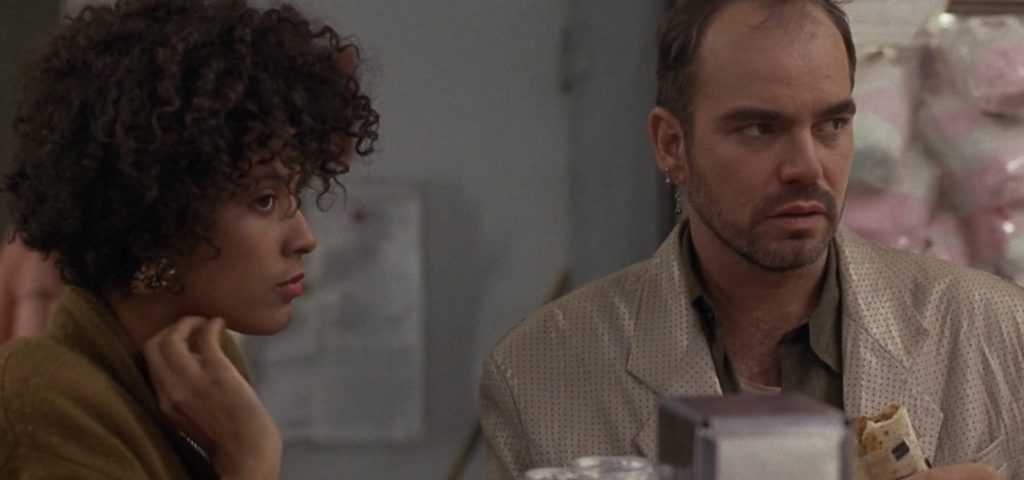
Cynda Williams and Billy Bob Thornton in ONE FALSE MOVE

The gripping contemporary neo-noir One False Move begins with a home invasion in Los Angeles. Two vicious professional robbers, with one’s beautiful girlfriend, steal money and cocaine, leaving a trail of corpses. The crime is solved right away – the cops know who did it and that the murderers are headed to a small town in Arkansas. The LA cops fly to Arkansas and lay in wait with the local constabulary. One False Move is a ticking time bomb as we wait for the criminals to drive across the Southwest to the inevitable confrontation.

This is a fundamentally noir story – there are guys overreaching for greed and ambition, a femme fatale, and a very dark secret. The screenplay was written by Billy Bob Thornton (before his breakthrough Sling Blade) and his writing partner Tom Epperson. One False Move was filmed in Cotton Plant, Arkansas, about two hours from where Thornton grew up, in and around Hot Springs.

The robbers are an odd couple that met in prison. Ray (Thornton) is white, an edgy, coke-fueled, brutal and not very smart gunsel, always on the verge of an epic misjudgement. Pluto (Michael Beach) is black, an ever-calculating crime machine – a cold, brilliant and bloodthirsty sociopath. They are accompanied by Ray’s beautiful black girlfriend Fantasia (Cynda Williams).

When the two seasoned LA homicide detectives (Jim Metzler and Earl Billings), arrive in Arkansas well ahead of the robbers, they encounter the local Sheriff, Dale “Hurricane” Dixon (Bill Paxton). Hurricane is overeager and over-enthusiastic, and his nickname obviously comes from his being an irrepressible force of nature. He’s comfortable as a big fish in a little pond, but now he fantasizes about being a big city cop. As he charges around thoughtlessly, he thinks that this is his big chance to be the kind of cop that he watches on TV.

This was Fantasia’s hometown, where she grew up with her given name of Lila. Dale and Lila share a significant past.
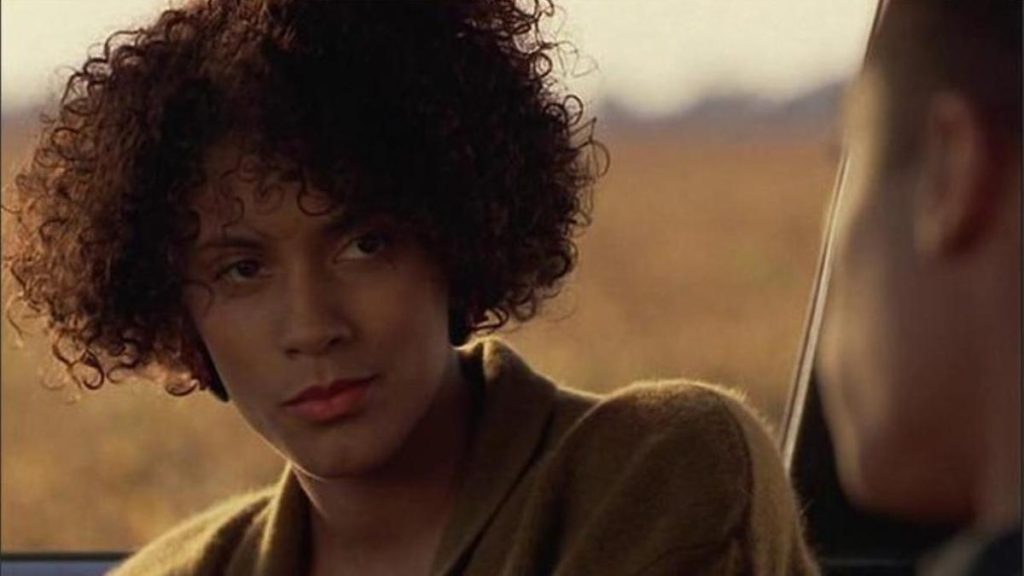
Cynda Williams in ONE FALSE MOVE

As a femme fatale, Fantasia/Lila can manipulate both Ray and Dale, although Pluto is immune to her charms. She is clearly a more decent person than Ray and Pluto, and she has one relatable vulnerability. but she does things and intends to do things that are very, very bad.

This was Cynda Williams’s second film role. She was married to Billy Bob Thornton for two years, including during the making of One False Move. She has worked consistently since (playing Halle Berry’s sister in two movies), but One False Move has certainly been her best-remembered performance.
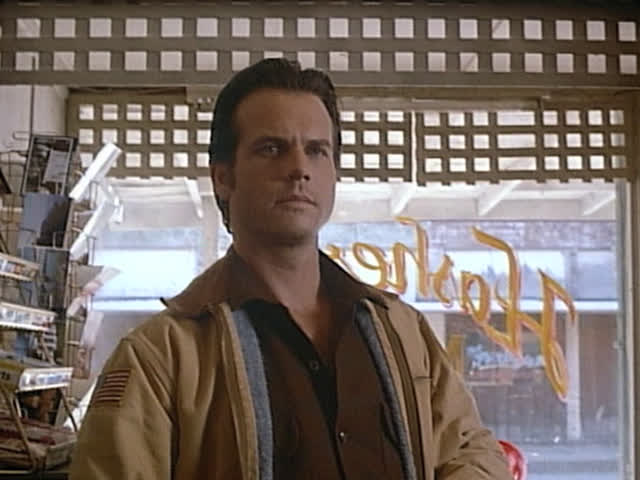
Bill Paxton in ONE FALSE MOVE

Bill Paxton left a great body of work that included starring in the topflight episodic series Big Love and a key role in Apollo 13. Big Love and One False Move demonstrate that he should have gotten more leading roles. Paxton’s Hurricane is always bubbling over, whether it’s with ambition, naivete or good ol’ boy chumminess.

One False Move was directed by Carl Franklin. who also directed the period neo-noir Devil in a Blue Dress. Franklin has directed lots of TV, including episodes of House of Cards and Mindhunters).

America’s original sin – race – is at the core of One False Move. The entire plot is predicated on something that happened when Lila was 17 – and neither that occurrence nor any of the following events would have happened if Lila were white.

Ray and Fantasia/Lila are an interracial couple, the two LA cops are white and black, and Dale unwittingly leaks his casual racism.

One False Move is on my list of Overlooked Neo-noir and can be streamed from Amazon, AppleTV, Vudu and YouTube.
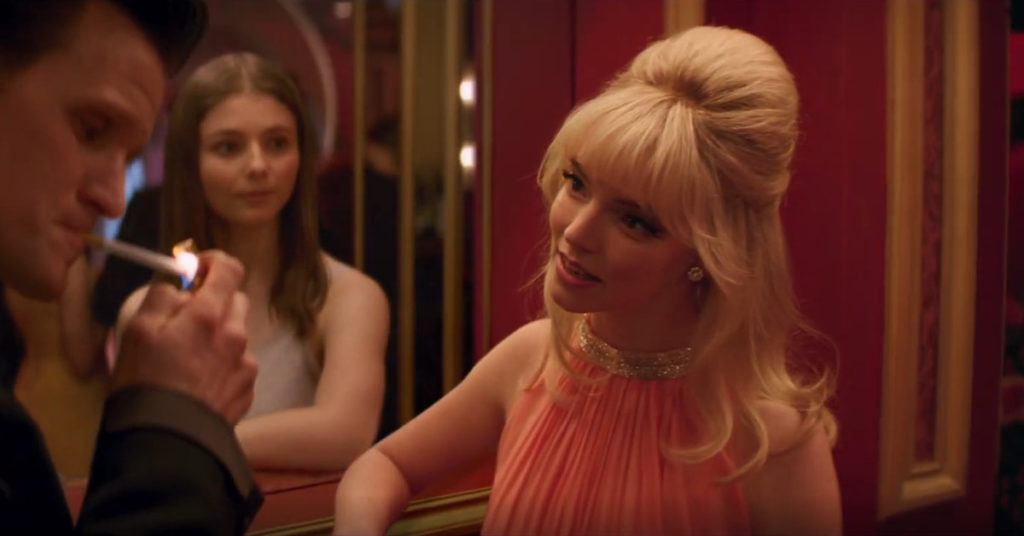
LAST NIGHT IN SOHO: clever and entertaining horror

Photo caption: Matt Smith, Thomasin McKenzie and Ana Taylor Joy in LAST NIGHT IN SOHO. Courtesy of Focus Features.

In Edgar Wright’s Last Night in Soho, the contemporary fashion student Ellie (Thomasin McKenzie) moves from a sheltered upbringing in rural Cornwall to London, but finds herself ill-suited for a boisterous college dorm. She rents her own modest digs and seems magically transported to her fantasy Mod London of the 1960s, where she finds a would-be alter ego, the cool and confident Sandy (Ana Taylor Joy). But she also finds the dark side of the London scene and a fifty-year-old violent incident that haunts her very bedsit.

Through Ellie’s eyes, the story shifts between today’s London and that of 1965. Edgar Wright brilliantly weaves Ellie and Sandy into scenes and shots together. Wright also gets the period and place just right – you just expect Oliver Reed or David Hemmings to step into the picture at any moment (or Terence Stamp).

Is Ellie in an alternative reality – or fantasizing – or hallucinating? Ellie has a rich fantasy life, as well as a “gift of seeing things?”. Of course, she’s also the right age for a psychotic breakdown, and she has a disturbing family history of mental illness.

Last Night in Soho begins as the is she going crazy? subgenre of horror, and then morphs onto a straight horror movie. Wright shrewdly waits to the last minute before revealing who the evil force really is.

Thomasin McKenzie, now age 22 after juvenile roles in Leave No Trace and Jojo Rabbit, projects an other-worldliness – so, if anyone could happen upon a portal to another time and place, it’s McKenzie

It sure is fun to watch the charismatic Ana Taylor Joy (The Queen’s Gambit, Thoroughbreds). Taylor Joy seems like the quintessential Brit, but she is of Argentine-Spanish heritage, lived her first six years in Argentina and her first language was Spanish.

Matt Smith is good as a guy with both charm and cruel lethality. Smith was superb in a much different role – the young married Prince Philip in 20 episodes of The Crown., and also did 54 episodes of Dr. Who as The Doctor.

I love Terence Stamp. Stamp, of course was a Pretty Boy star during the actual 1960s (Billy Budd, The Collector, Far from the Madding Crowd). I’ve felt that his best work has been in his middle age and since (The Hit, The Limey, The Adjustment Bureau). Here in Last Night in Soho, still ith striking features and dead-cold eyes, he looks dangerous from our first glimpse of him.

Speaking of the Swinging London of the 1960s, no woman was more symbolic than Diana Rigg, famous for her role as Emma Peel in The Avengers. Last Night in Soho was Rigg’s final screen performance.

Another 60s stalwart, Rita Tushingham (A Taste of Honey and Doctor Zhivago), also appears.

Edgar Wright broke out with the delightful Shaun of the Dead and Hot Fuzz (and the less funny The World’s End) before showing us all in Baby Driver that he was more than a low-brow funnyman.

Last Night in Soho is a clever, entertaining and sometimes artsy horror movie, but in the end, it’s just a horror movie.

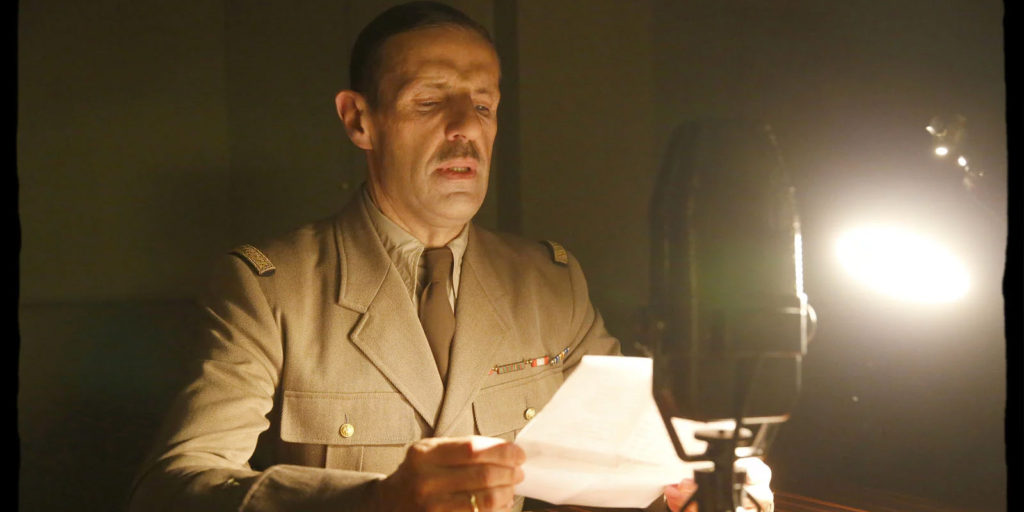
DE GAULLE: a man and his moment

Photo caption: Lambert Wilson in DE GAULLE. Courtesy of Samuel Goldwyn Films.

De Gaulle takes us to a pivotal moment in French WW II history that is no longer well-understood by most Americans. The French Army has collapsed in the face of German invasion, and the fall of Paris is both inevitable and imminent. The French government is considering asking Hitler for an armistice, seeking to end the slaughter and to repatriate its 2 million POWs.  

Charles de Gaulle (Lambert Wilson) is also losing his battle to convince the government not to surrender, but to keep fighting the Nazis from outside France itself, based in France’s colonial possessions. In this moment of catastrophe, de Gaulle is virtually alone in imagining that Great Britain, joined by America’s industrial might, could someday liberate France. It doesn’t help that, for the authoritarian and anti-Semitic French military establishment, Hitler isn’t so abhorrent.

Writer-director Gabriel Le Bomin has focused De Gaulle on only two weeks of WW II history – between June 5 and June 19, 1940. Every minute counts – and the clock is ticking.

It’s a similar approach as in Darkest Hour, where all of the story takes place in May, 1940, as Churchill is facing England’s moment of existential peril. In fact, the Darkest Hour (Amazon, AppleTV, Vudu, YouTube and HBO Max) would complete an excellent double feature with De Gaulle.

The tension is enhanced with a parallel thread – the political crisis has isolated de Gaulle in London while his family, completely out of communication, is scrambling to escape the Nazis in France.

Aloof, shy and an egomaniac, de Gaulle was easily dislikeable. Le Bomin has humanized him by including his most relatable attributes – his relationship with his wife and kids, especially his daughter with Down’s Syndrome.

Le Bomin and Wilson had to meet high expectations on the portrayal of an icon. After all, De Gaulle’s appearance, speech and mannerisms are as familiar to a French audience as those of Elvis Presley, Richard Nixon, Jacqueline Kennedy and Muhammad Ali are to an American one.

I wouldn’t have immediately thought of Lambert Wilson for the role. Wilson, known for the Matrix franchise, is handsome and physically graceful. But, for starters, Wilson is tall enough, at 6-2, to play de Gaulle, just under 6-5. Prosthetics and makeup completed the physical transformation. Wilson’s acting craft took him the rest of the way – capturing de Gaulle’s stiffness and the physical awkwardness that some very tall people have.

I streamed De Gaulle on Virtual Cinema at Laemmle.

THE VELVET UNDERGROUND: immersing us in a cultural moment

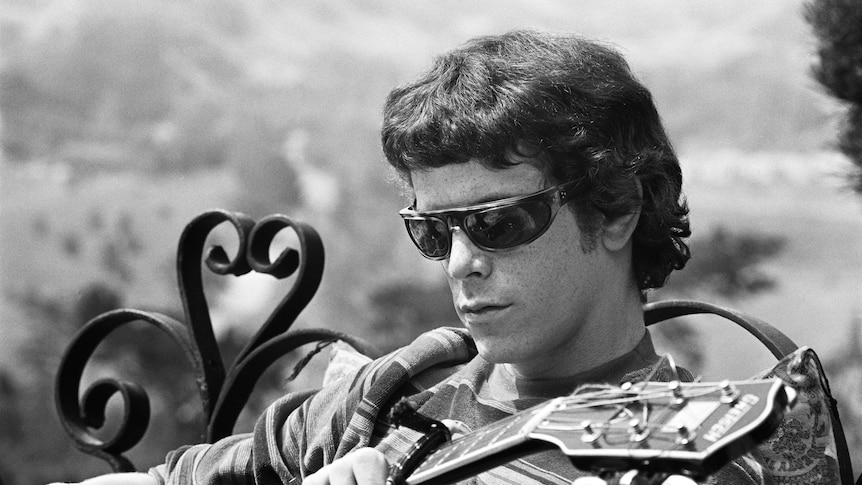
Photo caption: Lou Reed in THE VELVET UNDERGROUND. Courtesy of AppleTV.

It’s rare for a documentary film to immerse the audience as deeply into a time and place as does Todd Haynes’ The Velvet Underground. Even if you’re not a fan of the band, you’ll appreciate this sensory dive into a cultural moment.

Haynes takes the time to bio the two artistic driving forces of the Velvet Underground, the avant-garde musicologist John Cale and the troubled song-writing prodigy Lou Reed. Equally essential is the world of Andy Warhol’s The Factory.

The Velvet Underground is exceptionally richly sourced, with load of file footage and photos and a host of eyewitnesses, especially the surviving band members John Cale and Maureen Tucker. and in this cultural moment.

But it’s the LOOK and FEEL and SOUND of the film which is so singular. That’s because Haynes, a filmmaker known for the lush and evocative Far from Heaven and Carol, has brought his sensibilities to bear on a documentary. And because the artists in Warhol’s circle left such a film record.

The Velvet Underground is in theaters and streaming on AppleTV.

BECOMING COUSTEAU: amazing guy, pedestrian biodoc

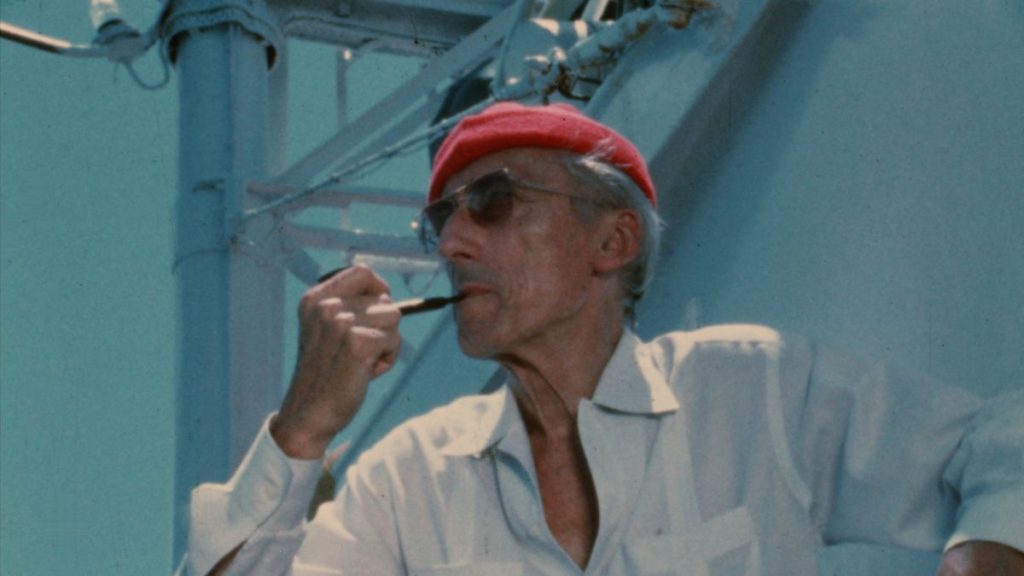
Photo caption: BECOMING COUSTEAU. Courtesy of National Geographic.

The educational if not scintillating biodoc Becoming Cousteau traces the world-changing career of Jacques-Yves Cousteau.

This was an important man. Before Cousteau, we looked at the oceans the way that humans had regarded them for centuries – based on what was on their surface and at their edges. The vastness of the oceans gave them a mask of invulnerability.

Becoming Cousteau tells how Cousteau, a pilot recovering from a motoring accident, became one of one three free divers in France before WWII, and how he was involved with or responsible himself for the invention of the aqualung, undersea stations, the underwater movie camera and his scientific ship Calypso.

Fortunately, Cousteau’s second passion was cinema, which allowed him to reveal the undersea world to the general public. He strongly preferred to call his work adventure film instead of documentary. (The cinematographer for Cousteau’s breakthrough 1956 film was Louis Malle, only two years before Malle’s own breakthrough masterpiece Elevator to the Gallows.)

That allowed Cousteau to become the great popularizer of ocean science through his ABC series The Undersea World of Jacques Cousteau.

Becoming Cousteau shows us how, at first, Cousteau had the explorer’s outlook of conquering the elements – but evolved into an ecologist. Cousteau canoodled with the oil industry in the 1950s, which he regretted in the 1970s. The preservation of Antarctica may be his enduring legacy.

Becoming Cousteau is dotted with some revealing tidbits such as how his first wife Simone was in love with Calypso and lived there, while Cousteau was on the road and their sons were in boarding school.

I am usually entranced by documentaries as superbly sourced and revelation-filled as Becoming Cousteau, but I found it a bit of a yawner. Twice Oscar-nominated director Liz Garbus packs a lot into 94 minutes, but it seems longer. Vincent Cassel voices Cousteau’s written words.

ONLY THE ANIMALS: surprise after surprise

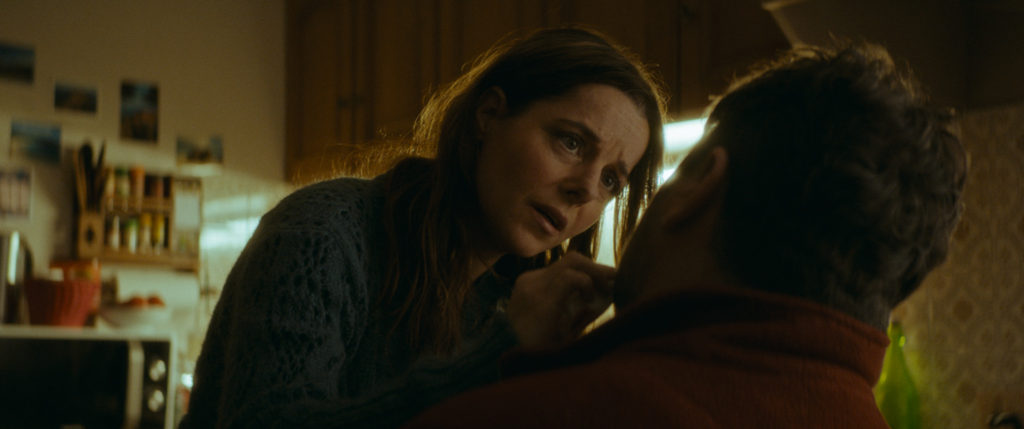
Valeria Bruni Tedeschi and Nadia Tereszkiewicz in ONLY THE ANIMALS. Courtesy of Cohen Media Group.

The ever-surprising Only the Animals is no ordinary mystery. After an opening sequence with a most unusual piggy-back ride, a wealthy woman (Valeria Bruni Tedeschi) disappears among the wintry cattle farms in France’s mountainous and sparsely inhabited Lozere highlands. We meet a series of local characters, each of whom may hold the key to the puzzle, as may the young hustler Armand (Guy Roger ‘Bibisse’ N’Drin), a world away in Côte d’Ivoire.

The intricately constructed story reveals elements of the mystery, from each character’s perspective in sequence. The first French character we meet is Alice (Laure Calamy) – cheery, good-hearted and goofy, with atrocious taste in men; Alice’s neediness leads her to make a poor decision. Then the others, whose behavior is motivated variously by obsessive infatuation, misdirected passion and psychotic delusion, plunge completely off the rails. Their individually random acts collect into a pool of perversion.

By the time we reach the satisfying conclusion, the audience has learned the what and the why (which the investigating police will never uncover), and the most seemingly disparate story lines have intersected.

The story comes from a novel by Colin Niel, adapted by Only the Animals’ director Dominik Moll, with Gilles Marchand. Moll and Marchand were nominated for the César (France’s Oscar equivalent) for adapted screenplay. (Niel himself has a cameo at the agricultural coop’s store counter.)

Laure Calamy and Denis Ménochet in ONLY THE ANIMALS. Courtesy of Cohen Media Group.

The story is the real star of Only the Animals, but the cast is superb. Tedeschi is marvelous as the worldly woman with a private reason to get away to her husband’s rural getaway, especially when she flashes the briefest instant of anger. Calamy, recently in Sibyl and My Donkey My Lover and I, is one of my favorite international comic actresses. Denis Ménochet, César-nominated for Custody, perhaps the best ever domestic violence drama, plays Alice’s boorish and secretive husband Michel. Damien Bonnard plays Joseph, a damaged loner with an underestimated psychosis.

Nadia Tereszkiewicz plays the young waitress Marion, who turns a one night stand into a disturbing infatuation. This is only the fifth feature and third significant movie role for 25-year-old Tereszkiewicz. She now has four films in production or pre-production, including one directed by Tedeschi.

Guy Roger ‘Bibisse’N’Drin (left) in ONLY THE ANIMALS. Courtesy of Cohen Media Group.

N’Drin and the other key Ivorian players – Perline Eyombwan, and Christian Ezan – are also excellent.

The surprises keep popping up until the final shot. Only the Animals opens this weekend in a limited theatrical release, which will soon include the Bay Area’s Landmark Shattuck.

LAMB: dark fable of karma

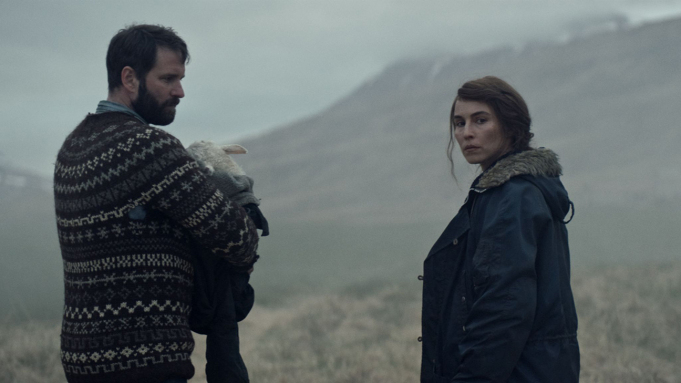
Photo caption: Ingvar Hilmir Snær and Noomi Rapace in LAMB. Courtesy of A24.

The very quiet drama Lamb is one of the most gripping films of the year, and one of the most unsettling. I’ve seen Lamb described as a horror film, but it is very unlike most of today’s horror films. I would rather label it as a dark, cautionary fable of karma with some supernatural elements.

It’s difficult to imagine a more pastoral setting than Lamb’s remote Icelandic sheep farm. Maria (Noomi Rapace) and Ingvar (Hilmir Snær Guðnason) run the farm with studied competence, caring for the sheep and maintaining their tractor. No neighbors are in sight. Neither the routine nor the isolation burdens them; they are comfortable with and enjoy each other’s company.

One of their routine tasks is birthing lambs. We see that Maria and Ingvar have an established division of labor and confidence. We think we know what to expect until a lamb is birthed and Maria and Ingvar’s reaction shows that this newborn is anything but normal.

It’s remarkable that the two never debate what to do or consult experts. They both immediately fall into behaving in complete alignment. But we suspect that they are not behaving as most people would.

Writer-director Valdimar Jóhannsson is such an able story-teller, that he doesn’t show us the lamb’s body right away, and we have to surmise what’s going on by the reactions of the characters. When Ingvar’s nogoodnik bother Petur (Björn Hlynur Haraldsson) shows up uninvited, he brings with fresh eyes and asks WTF?

Jóhannsson uses the starkly beautiful but menacing Icelandic landscape to fill us with foreboding. Something is not right here. And there will come a reckoning.

Lamb drove me to the dictionary to review the meanings of the word monster. In Lamb, there is a creature who fits under the definition, but which is pure and sweet. Another creature is the terrifying kind of monster. And a human takes an action that is normal from a human point of view, but from a monster’s perspective is, well, monstrous.

The cast (and this is really a three-hander) is excellent. You may recognize Rapace as the pierced-and-inked Lisbeth Salander in the Swedish Girl with the Dragon Tattoo franchise.

Lamb is the first feature for Valdimar Jóhannsson – and it is a superb debut. You haven’t seen anything like this movie before.

NO TIME TO DIE: went to a James Bond movie and a romance broke out

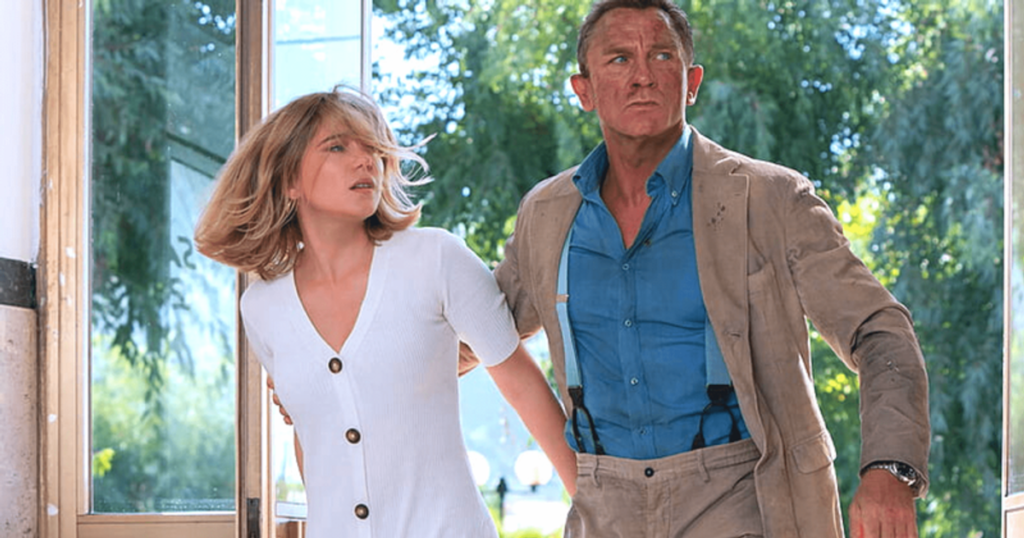
Léa Seydoux and Daniel Craig in NO TIME TO DIE. Photo credit: Nicola Dove © 2020 DANJAQ, LLC AND MGM.

I went to a James Bond movie and a romance broke out. No Time to Die, a fitting farewell to Daniel Craig’s reign as James Bond, has all the action set pieces, fantastic gizmos and exotic locations that you would want in a Bond film; it all just comes down to his profound love for a woman.

Remember when the Bond formula was impossibly sexy woman beds James Bond and then tries to kill him; repeat. In No Time to Die, however, there are no disposable women.

Bond, retired from the British MI6, is living in domestic bliss in Southern Italy with his girlfriend Madeleine Swann (Léa Seydoux) from the previous Bond movie, Spectre. Bond is also grieving for the redeemed double agent of past Bond films, Vesper Lynd (most recently played by Eva Green); on the suggestion of Madeleine, who is a psychiatrist, he visits Vesper’s grave – but an assassination attempt kicks off the action in No Time to Die.

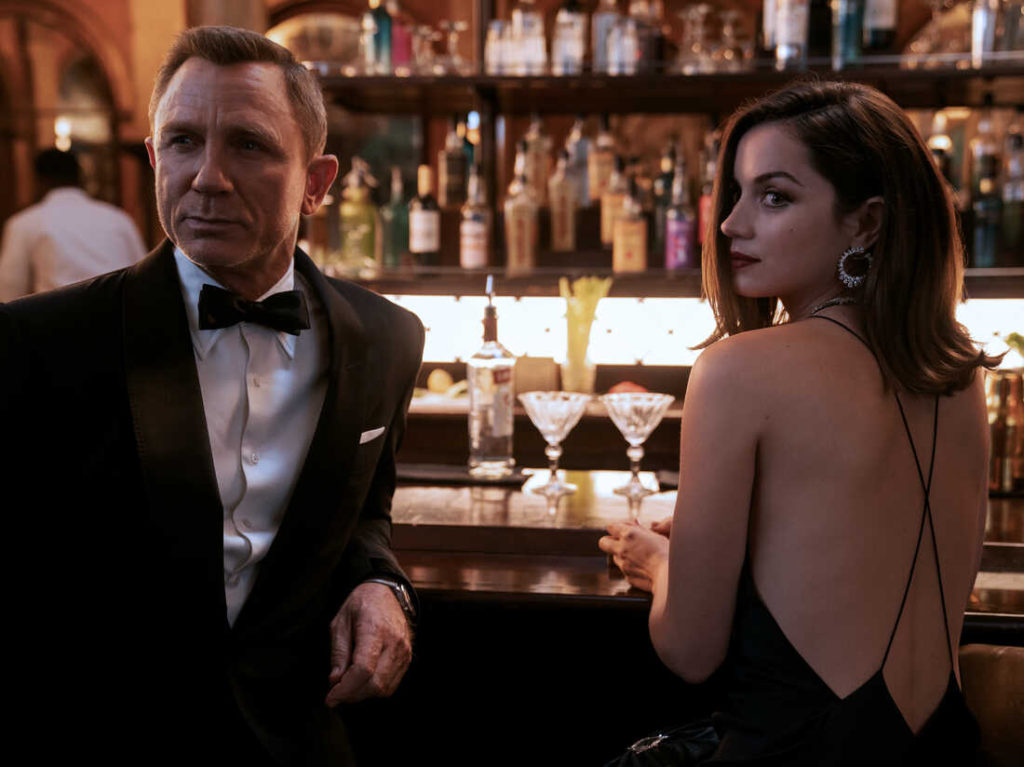
Besides Madeleine and Vesper, Bond faces another woman, his own replacement in MI6’s new Agent 007 Lashana Lynch. 007 is talented and cocky, and Bond and 007 slide effortlessly into comradeship. Ana de Armas is very funny as the supposedly inexperienced agent Paloma in a set piece (in de Armas’ native Cuba) – lethal in a stunning Bond Girl dress.

Daniel Craig and Ana de Armas in NO TIME TO DIE. Photo credit: Nicola Dove © 2020 DANJAQ, LLC AND MGM.

But No Time to Die revolves around Bond’s relationship with Madeleine. Madeleine’s father was also a hunter of super villains, and she has as many secrets as Bond. So, Madeleine’s reliability comes into question, and the oft-betrayed Bond certainly has justification for his trust issues. Bond once ruefully mutters, “No – I don’t know her at all.” Can Bond summon the trust that is requisite to love?

Don’t worry – the action set pieces are spectacular, particularly the once before the opening titles. That one features perhaps the most impressive deployment ever of the Bondmobile.

There’s also a super villain (Rami Malek) with a biological weapon of mass destruction. There’s a lot of blah blah about how this weapon works, and then more blah blah between the supervillain and Madeleine. And then Bond has a face-to-face with the previous supervillain, Blofeld (Cristolph Waltz) with more blah blah. I started to doze during this part of No Time to Die, but soon we were plunging back into another thrilling action.

Neither supervillain is as entertaining as the traitorous agent Logan Ash (Billy Magnussen), an ever smiling bro boy so white bread that he is referred to as “Book of Mormon”.

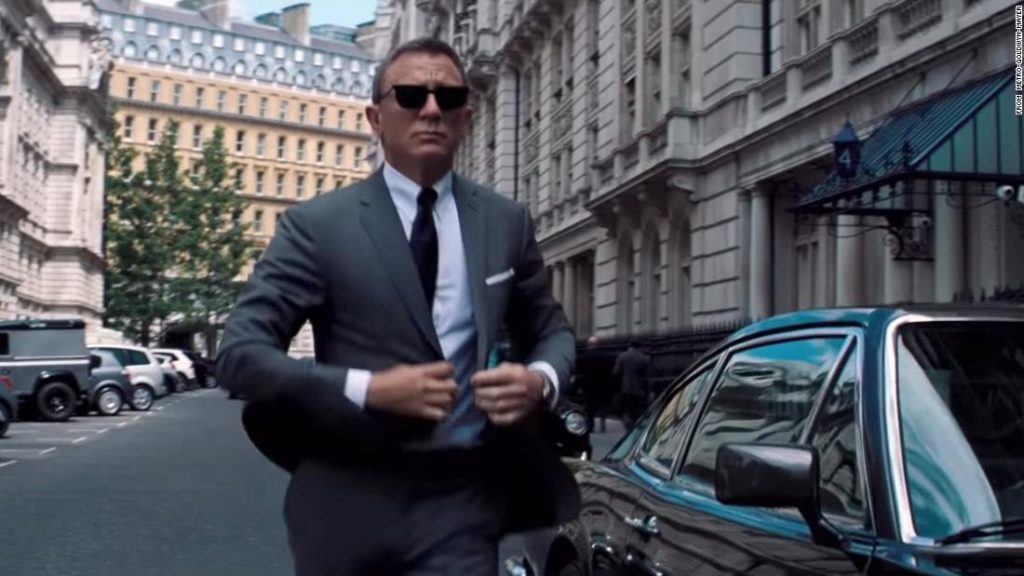
Daniel Craig in NO TIME TO DIE. Photo credit: Nicola Dove © 2020 DANJAQ, LLC AND MGM.

IMO Sean Connery was essential to the Bond franchise by creating a studly character so arrogant yet sympathetic – the guy who men want to be and women want to be with. Movie James Bonds have come and gone; (Pierce Brosnan was good, I never saw the Timothy Dalton Bond movies, and my least favorite Bond was the brattily insouciant Roger Moore.) To me, Daniel Craig is every bit as good as Connery. Craig has the requisite physicality, confidence and sex appeal, while off-loading a Connery’s hint of brutishness and adding a sad tint of world-weariness.

The Bond franchise itself is remarkable. Mick LaSalle recently wrote:

…The key to its resiliency is that it has changed with the times, yet never so much that it fully lost contact with what initially made it popular. This amazing balancing act has played out for 59 long years. (To give you a sense of how long that is in movie time, 59 years before the first Bond movie, “Dr. No,” it was 1903.)

No Time to Die is ably directed by the Bay Area’s own Cary Joji Fukunaga (Sin Nombre, Beasts of No Nation, True Detective). No Time to Die is epic and is the keystone to Daniel Craig’s run as James Bond.

THE MANY SAINTS OF NEWARK: Tony Soprano’s origin story

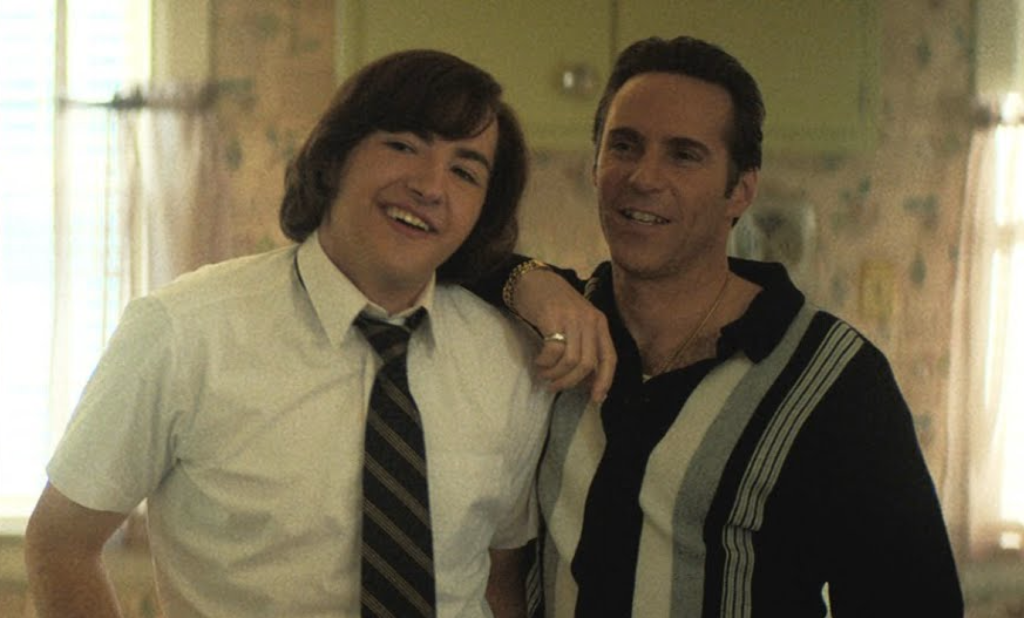
Michael Gandolfini and Alessandro Nivola in THE MANY SAINTS OF NEWARK

In the The Many Saints of Newark, David Chase’s prequel to The Sopranos, we get a peek inside the world that formed Tony Soprano. It’s pretty good.

Set when Tony Soprano was a high schooler, The Many Saints of Newark centers on Tony’s favorite “uncle”, mobster Dickie Moltisanti (and moltisanti is Italian for Many Saints). Dickie is played by Alessandro Nivola, who has had important, but supporting, roles in plenty of good movies (Junebug, Ginger & Rosa, American Hustle, A Most Violent Year, Selma). Here, he plays the story’s protagonist, charming and smarter than the average goon, and also capable of sudden, irrevocable violence.

Dickie and Tony are not really related, but, while Tony’s dad is incarcerated, his mob colleague Dickie is looking after his family. When we meet Tony’s sulking brute of a dad (Jon Bernthal) and his nightmare of a mom (Vera Farmiga), it’s clear why Dickie is young Tony’s role model.

Michael Gandolfini, James Gandolfini’s son, plays the young Tony. Beyond the resemblance to James Gandolfini’s adult Tony, the kid can act. He’s good, but the lead is Nivola.

Ray Liotta plays Dickie Moltisanti’s dad, Hollywood Dick Moltisanti. I don’t personally KNOW Ray Liotta, so I will refrain from saying that he can play mobsters effortlessly or that’s he’s a natural. Let’s just say that Liotta makes his mobster performances LOOK effortless. Here, his Hollywood Dick, returning home from an Italian holiday with a trophy bride, is filled with gusto. There’s also a bonus Liotta performance as a related, but much different, second character.

There’s enough in The Many Saints of Newark to show us how Silvio Dante, Big Pussy and Paulie Walnuts, all a few years older than Tony Soprano, would come to accept Tony as he crew leader. And there’s a big reveal about the extent of Uncle Junior’s (Corey Stoll) vindictiveness.

The Many Saints of Newark includes a depiction of the 1967 Newark riots, rising Black consciousness and the changing demographics of Newark and its suburbs,

Has there ever been better episodic television than The Sopranos? Breaking Bad and The Wire can stake their claims, but it’s clear that The Sopranos sets the standard.

The David Chase-crafted story of Dickie Moltisanti would allow The Many Saints of Newark to stand on its own as entertainment. For fans of The Sopranos, however, it’s even more insightful and evocative.

The Many Saints of Newark is in theaters and streaming on HBO Max.

OLD HENRY: too late for redemption

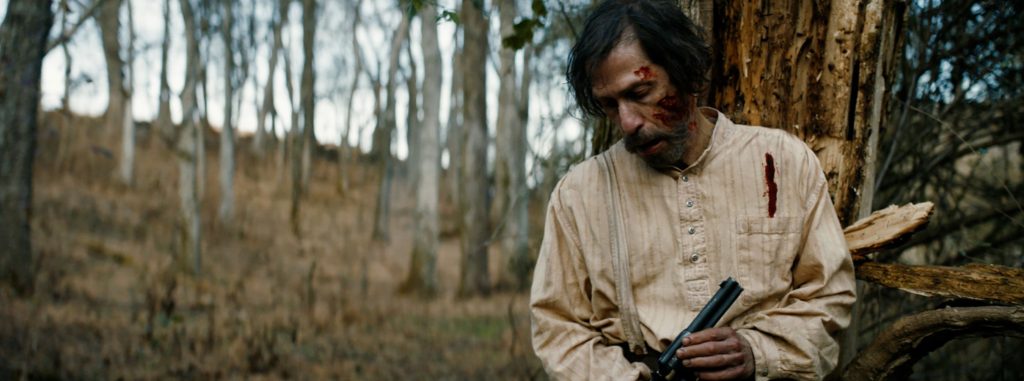
This image has an empty alt attribute; its file name is old-henry-1024x381.jpeg
Photo caption: Tim Blake Nelson in OLD HENRY. Courtesy of Shout! Factory.

The fine western Old Henry is centered on Henry (Tim Blake Nelson), a widowed settler in the wilds of 1906 Oklahoma.  Henry is content with being a solitary sod buster, but he has serious skills from a violent past, and both the past and the skills are unknown to his teen son (Gavin Lewis).  The son is brash and impulsive, and desperate to escape the drudgery and isolation of the homestead.

A man badly wounded by a gunshot (Scott Haze) turns up with a satchel full of cash ( (obviously contraband).  Henry nurses him, and chooses to hide him when three armed men show up, led by Ketchum ( Stephen Dorff), who claims to be a sheriff.  Ketchum knows that his target is in Henry’s cabin, and he recognizes that Henry is more than a dirt farmer.  When Ketchum returns with reinforcements, a climactic gun battle is inevitable.

One wild card is the wounded man, with his uncertain identity and motives.  Another is the son, rigorously sheltered by Henry and ignorant of the cost of real violence.  He’s spoiling to get into a fight  – and that is not helpful.

Tim Blake Nelson, with nary a wasted word or action, commands the screen as the ever steely Henry. I saw Old Henry in personat the Nashville Film Festival,  where Nelson revealed that his performance was informed by “restraint and stillness” because, for Henry, “any exposure means vulnerability”.  So, Blake made Henry “laconic in actions as well as words”.  

Nelson is a magnificent actor, who has elevated many a character role (Oh Brother, Where Art Thou?).  Here he gets the lead role in a movie that premiered at the Venice Film Festival. Good for him.

Old Henry is the the first feature written and directed by Potsy Ponciroli. And it’s a well-crafted film.  The filmmakers get the period right.  The art direction and the production design are flawless, and the weapons have the necessary heft.  Old Henry was filmed on a cattle farm in Tennessee, but it sure looks like Oklahoma. 

If you appreciate a good western, then Old Henry is your movie.  The big shootout is thrilling, and Tim Blake Nelson is so good as a man who knows he can’t have redemption and only seeks some solace. Old Henry is now playing nationally, including for one-week run at San Francisco’s Roxie.