Robot & Frank: funny and revealing as a man ages

Frank Langella’s performance in Robot & Frank elevates the film from a pretty good comedy to a revealing study of getting older.  Langella’s character Frank lives an isolated retirement in upstate New York, and he is experiencing some symptoms consistent with the early onset of dementia.  Naturally, his adult kids are worried.  The story takes place in the near future, so his son helpfully provides Frank with robotic personal healthcare assistant.  Frank resists, and this is where, in lesser hands,  Robot & Frank could have become just another comedy about a crusty old curmudgeon.

But the focus of Robot & Frank is deeper than that – it’s about an older person’s strategy to accept, resist, deny or adapt to the various ravages of becoming older.  As the robot institutes a daily routine with improved diet and exercise, Frank becomes less addled.  With his new-found lucidity, he can now try to resist aging by making some new goals.  It turns out that Frank’s career was as a cat burglar  – and he would prefer to be only semi-retired – so….

It’s an enlightening exploration, which becomes more profound when a fact is revealed very late in the film.

The supporting cast, including the always appealing Susan Sarandon, is very good. The sardonically detached Peter Sarsgaard was the perfect choice to voice the robot.  Jeremy Strong is very good as a particularly despicable yuppie.

The trailer makes Robot & Frank appear lighter than it is.  It is a funny movie, but also has some heft.
Premium Rush: cool bike chase, not much else

Premium Rush is a thriller set in Manhattan’s bike messenger subculture and is basically one 90-minute chase scene.  It is cool to watch skilled outlaws bob in and out of NYC traffic, running red lights and just missing cabs, more cabs and the occasional baby carriage.  But that’s all that Premium Rush has to offer.

Premium Rush does employ – and mostly waste – the talents of two of our greatest actors, Joseph Gordon-Levitt and Michael Shannon.  Gordon-Levitt is just fine, and, Lord knows, he deserves a Hollywood payday after making all those wonderful indies.  The same goes for Shannon (who better to play a maniacal villain?), who does well when called upon to be scary and less well when he displays Elmer Fudd frustration.

Coming up on TV: Warren William, the King of Pre-Code

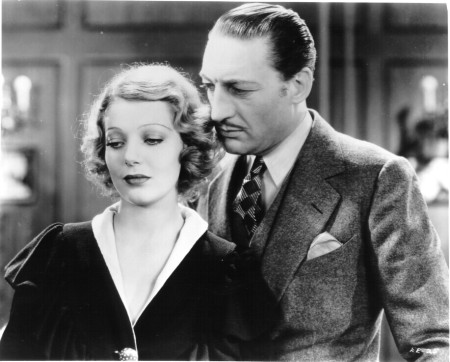
Warren William with Loretta Young in EMPLOYEES ENTRANCE

I’ve recently discovered the actor Warren William, whose movies from the early 30s remain fresh today.  On August 30, Turner Classic Movies will be broadcasting sixteen Warren William movies.  Although he is not well-known today, William was “King of the Pre-Code”, starring in 25 movies between 1931 and 1934, many with the sexual frankness and moral ambiguity that was to be erased by the Production Code.  His leading ladies included the likes of Bette Davis, Barbara Stanwyck, Loretta Young, Ann Dvorak and Claudette Colbert.

With his striking features (including a prominent and noble nose) and his deep and cultured voice, William was a natural for the newfangled talkies.  William excelled in the Pre-Code movies because he could play deliciously shameless scoundrels who would use their wit and position to exploit everyone else, especially for sex, power and money.  His characters are fun to watch because they take such delight in their own depravity.  But in 1934, the new Production Code meant that movies could no longer allow his characters to have sex and otherwise behave badly and get away with it.

My recommendation among TCM’s offerings this week is the 1933 Employees Entrance.  William plays a department store manager who is viciously ruthless with his competitors and suppliers.  He abuses his own employees and is indifferent to the resultant suicide attempts.  He uses his position to have sex with a young employee (Loretta Young), even after she marries someone else.  And he keeps a floozy on the payroll to distract another executive (his putative supervisor) from meddling in the business.  And for all 75 minutes of Employees Entrance, William’s joyously despicable character is richly enjoying himself.  If you’re looking for the triumph of Good over Evil, this isn’t your movie.

One of my favorite movies is 1932’s hilarious political comedy The Dark Horse, in which William plays an equally ruthless and amoral campaign manager.  He is such a scoundrel that he must first get sprung from jail to teach his dimwitted candidate to answer every question with “Yes…and, then again, no.”  He describes his own candidate (the gleefully dim Guy Kibbee) thus:  “He’s the dumbest human being I ever saw. Every time he opens his mouth he subtracts from the sum total of human knowledge.”  (Unfortunately, TCM is not showing The Dark Horse this week.)

Ever the sexually predatory cad on the screen, the real life William led a quiet life and was married to the same woman for twenty-five years until his death.

Celeste and Jesse Forever: another actress-written, smart, funny movie

I really enjoyed Celeste and Jesse Forever, starring Rashida Jones and Andy Samberg as best friends who have been married, are now working on an amiable divorce and are still best friends.  The screenplay is co-written by Rashida Jones (Paul Rudd’s fiance in I Love You, Man) and, once you accept the comic premise that this couple is made for each other but not as a married couple, everyone’s behavior is authentic.  Sure, he wants to get back with her when she isn’t in a place to do that – and, then, vice versa – but the characters resolve the conflict as they would in real life.  Here’s a mini-spoiler – this movie is just too smart to end in rushing to the airport or disrupting the wedding or any of the other typical rom com contrivances.

The supporting characters are funny without being absurdly zany (except for one pot dealer).   Chris Messina pops up in Celeste, as he did in Ruby Sparks, and does a good job here, too.

I’m certainly looking forward to Rashida Jones’ next screenplay.

2 Days in New York: a diversion, sometimes funny

Writer-director Julie Delpy and Chris Rock play a couple living together in a cramped New York City apartment with their kids from previous relationships when her eccentric French family comes for a visit.  Most French are reserved and impeccably polite; because that’s not funny, Delpy wrote her visitors to be very badly behaved extreme hedonists.  The stress of the first visit by the in-laws, the claustrophobia of packing people into a tiny apartment and language and cultural barriers are all promising comic situations.   A mid-range comedy, 2 Days in New York has its moments.

As a screenwriter, Delpy’s strengths are a keen eye for family dysfunction, brisk pacing and a willingness to get raunchy.  But much of the broadest gags in 2 Days in New York fall flat.  There is a funny bit about Delpy’s emotionally brittle artist literally selling her soul as a piece of performance art.  And it’s funny when Delpy invents a preposterous tragedy to avoid facing a complaint from a neighbor.  But the funniest moments are two Chris Rock monologues when he retreats to his man cave to converse with a large poster of Barack Obama.

I wouldn’t recommend a special trip to the theater to see 2 Days in New York, but it’s a pleasant enough diversion to watch on DVD or stream later this year.

DVD/Stream of the Week: Time Out

Aurelien Recoing in TIME OUT

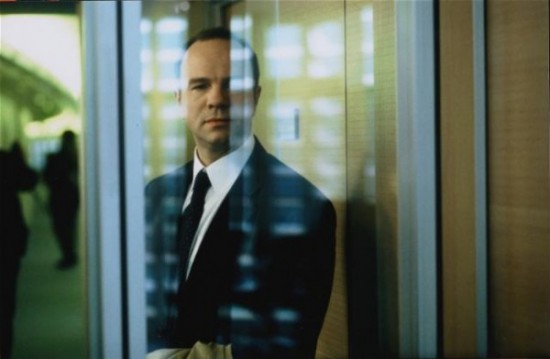
In Time Out (L’emploi du Temps)(2001), a middle-aged guy (Aurelien Recoing) loses his job with an international consulting firm in France and can’t bring himself to tell his family.  Instead, he pretends to still have that job, and then invents a new, better job in Switzerland.  He doesn’t spend his days at the local bar – he actually goes on faux business trips from which he calls his family.  He even dresses in a suit and visits the Swiss corporate HQ where he claims to be working, prowling the cubicles and lounging in the lobby while talking on his cell phone like a big shot.  The lengths to which he goes in convincing his family (and embracing denial for himself) are pathetic, then creepy and finally chilling.

Ironically, he has a smart and supportive wife (Karin Viard); we can tell that, had he told her the truth immediately, she would help him out.  He also has very successful father with the bucks to keep the family afloat until he finds something else.  But so much of his self-identity is wrapped up in his career, that he just can’t bear the thought of disappointing them.

Of course, he can’t keep up this charade forever.  There’s the matter of income, for example, which drives him to join a scam.  And then there is the web of lies that must eventually unravel.  His wife intuits that something is amiss and starts sniffing around….

Recoing is outstanding as the man inside a pressure cooker of his own making.  The great French actress Karin Viard (Polisse, Potishe, Paris) is, as always, perfect.

Time Out is a superb film because of the acting and the writing.  Director Laurent Cantet (2008’s popular The Class) co-wrote the screenplay with Robin Campillo.

Time Out is available on DVD and on Netflix streaming.  (I have not embedded the Miramax trailer because it, replete with swelling music from another film, makes the movie look heart-warming and  melodramatic, and it is neither.)

Searching for Sugar Man: he didn’t know he was a rock star

What a story!  A Detroit construction laborer named Sixto Rodriguez was also a singer-songwriter who cut two albums in 1970 and 1971.  The albums didn’t sell in the US, and he faded back into obscurity.  Yet in South Africa – completely isolated by the sanctions of the apartheid era – the artist known as Rodriguez became huge, and his songs fueled a protest movement.  Rodriguez never knew of his success, and South Africans believed that he had suffered a dramatic rock star death.  The powerful documentary Searching for Sugar Man is the story of some stubborn South African music geeks trying to find out what really happened to Rodriguez, and the startling truths that they uncovered.  (The title comes from Rodriguez’ most iconic anthem, the song Sugar Man.)

I have never seen a biographical documentary of a contemporary figure with less comment from the subject himself.  There is a brief filmed interview with the eccentric Rodriguez, who reveals very little of his perspective on his own story.  His songs can only be written by a reflective person, but Rodriguez is the farthest thing from self-absorbed.  Still, the interviews with his family, friends and fans and his songs help us feel like we know him.

It’s a flabbergasting and unpredictable story and well told.  It’s worth searching out Searching for Sugar Man.

Ruby Sparks: be careful what you ask for

The inventive Ruby Sparks is about romance and it’s very, very funny, but it transcends the genre of romantic comedy.  A shy writer who has produced a great novel at an early age is now drifting,  his writing is blocked and he has isolated himself into a lonely existence.  He imagines his perfect love object, and he can suddenly write in torrents about her until…she becomes real.  Yes, suddenly he has a real life girlfriend of his own design.

This is everyone’s fantasy of a perfect partner – but what are the limits of a partner that you have designed yourself?  Because he can tweak her behavior by rewriting it, this brings up the adage “Be careful what you ask for”.  When he is threatened by her independence, he changes her personality on the page and she becomes unattractively clinging and needy.  Can his realized fantasy make him happy?

Paul Dano is outstanding as the writer and screenwriter Zoe Kazan (granddaughter of Elia Kazan) dazzles as his creation.   (Off screen, Kazan and Dano are a couple.)  Chris Messina is dead on perfect as the writer’s brother, and the film benefits from an especially strong cast:  Annette Bening, Antonio Banderas, Steve Coogan, Aasif Mandvi and Elliot Gould.  Ruby Sparks is ably directed by Jonathan Dayton and Valerie Faris, the co-directors of another exceptional indie comedy, Little Miss Sunshine.

The biggest star in Ruby Sparks is Zoe Kazan’s ingenious screenplay.  It’s funny without being silly, profound without being pretentious, bright without being precious.  Every moment is authentic.  It’s clear that Kazan is a major talent as a screenwriter.

Bill W.: the reluctant founder of a movement

The excellent documentary Bill W. tells the story of Bill Wilson, the founder of Alcoholics Anonymous, and it’s quite a story.  We see Wilson’s own battle with the bottle, including a pivotal moment when he is about to enter a hotel bar in Akron, but instead decides “to call another drunk”.  The story follows his cobbling together what became the 12 step model and his keeping alive the AA movement in its early days.  But the most compelling story – and the heart of the film – is Bill Wilson.

Wilson was a reluctant movement leader.  His primary passion was for business, in which his drinking killed his potential success.  Instead, he achieved fame and historical importance in a field not of his choosing.  As the founder, he could have easily formed AA into a hierarchy with himself at the top – and AA as his personal power base.  But, once AA could stand on its own, he chose to walk away from its leadership.  His decision not to commercialize AA deprived himself of a millionaire’s lifestyle.

Producer and co-director Dan Carracino reminded the audience at my screening that the movie aims to tell the story of Bill Wilson, not to be an exhaustive history of AA.

Because Bill W. primarily uses historical film footage and photos for visuals, and the recorded voice of Wilson himself, along with talking heads who knew him, the audience gets a solid sense of his personality.  There are some visual re-enactments (of Wilson’s drinking days  and early AA meetings) that are successful because they are narrated by the real Bill W. himself.

I was fortunate to see the film in an audience that contained over 200 AA members, and they responded especially favorably to the film.  At its core, Bill W. tells a fascinating story, and I would recommend it for anyone.  Bill W. is being self-distributed with both special screenings and theater runs in various cities.

360: 11 characters plus 11 life choices equal 1 snoozer

Eleven (count ’em, eleven) main characters traipse through Paris, London, Bratislava and Denver and each faces choice that can change the direction of a life.  Unfortunately, we don’t care that much about any of the characters and their stories aren’t that compelling or even original.  It’s not a bad movie, but the story (stories) make it a snoozer.

360 is otherwise well-made by acclaimed director Fernando Meirelles (The Constant Gardener) and well-acted by an international ensemble cast that includes Jude Law and Rachel Weisz (completely unrecognizable behind a full set of bangs).  The two most interesting characters are the father of a missing crime victim (Anthony Hopkins) and a convicted sex offender in a very fragile recovery (Ben Foster).  Foster (The Messenger, Rampart, 11:14) is one of my favorite actors, as is also Jemel Debbouze (Let It Rain, Angel-A, Amelie).  But even these actors can’t really punch up a story that isn’t there.