Enemy: Gyllenhaal plus Gyllenhaal equals…

enemy
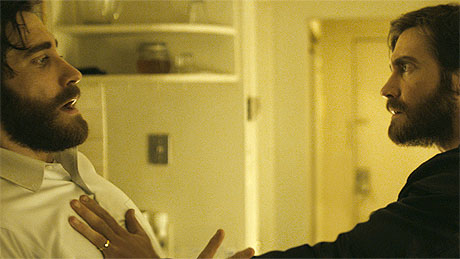
In the psychological thriller Enemy, a guy finds out that he has an exact physical double – down to their voices and the scars on their bellies. He can’t resist looking up and meeting his twin, which unleashes some unanticipated consequences.

One guy is a tweedy college professor, kind and introspective. His doppelganger is an actor who doesn’t filter his own venal self-interest. Essentially, the difference between these two  is that one guy has a conscience and the other guy doesn’t.  They are both played by Jake Gyllenhaal.

The physical similarities even confound their partners (Sarah Gadon and Melanie Laurent).   Gadon’s performance is especially compelling in a scene when she first meets an amiable guy who doesn’t know her, but physically seems to be her husband.  Yeesh.

The key to Enemy’s surpassing the gimmick of double casting is that Gyllenhaal’s performance is so brilliant.  The difference between the two characters is so subtle.
You always know which guy you’re watching, but, other than wardrobe, it’s often hard to figure out how we can tell – it’s just in Gyllenhaal’s carriage, the occasional gesture and the hint of rapaciousness in the one character’s eyes.

Enemy is not completely literal and realistic.  Be prepared for some large and startling creatures that you will not expect.

Director Denis Villenueve knows how to deliver suspense and thrills, as he did in my top movie of 2011, Incendies, and in last year’s underrated thriller Prisoners, (also with Gyllenhaal).  Enemy isn’t as good as those films, but it’s an entertaining and mildly thought-provoking thriller.
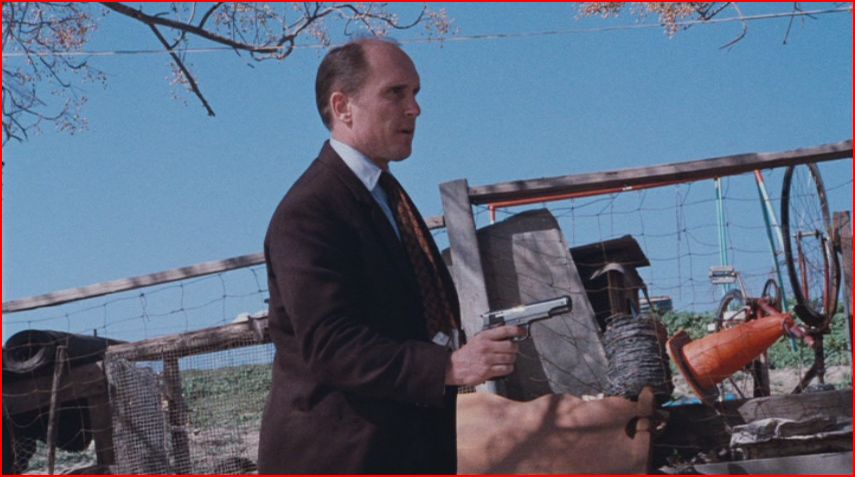
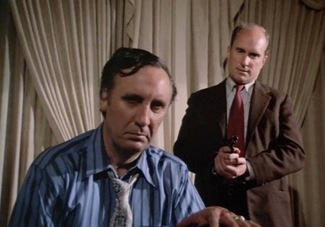
The Outfit: Robert Duvall, Linda Black and Joe Don Baker on the loose in the 70s

Robert Duvall in THE OUTFIT

The Outfit (1974) is a revenge/crime story starring Robert Duvall as a bank robber released from prison who starts a campaign of terror against the crime syndicate that killed his brother.  It turns out that Duvall’s gang robbed a bank that, unbeknownst to them, was mob-owned.

The Outfit is well acted by Duvall (of course) and his fellow 70s stars Linda Black, Joe Don Baker and Bill McKinney (Deliverance and Worst Movie Teeth).  Black delivers one of her patented 70s lovable floozies, defined by a concoction of shopworn sexiness, bad luck and unreliability.  Baker is especially appealing as Duvall’s buddy.

The cast also stands out for its crew of 1950s film noir veterans:  Robert Ryan (mob kingpin), Timothy Carey (chief henchman), Jane Greer, Elisha Cook Jr and Marie Windsor.  Then there’s the dependable Richard Jaeckel, whose career bridged the decades. Joanna Cassidy plays Ryan’s bimbo du moment.

Duvall pisses off Timothy Carey in THE OUTFIT

I was most pleasantly surprised by the directing of John Flynn, who directed a handful of otherwise pedestrian crime films and action vehicles for Sly Stallone, Jan Michael Vincent and even Steven Seagal.  Flynn also did have a knack for working with good actors (James Woods, Tommy Lee Jones, Ned Beatty, Frank Langella, Danny Aiello, Brian Dennehy).

In The Outfit, Flynn shows himself to be a master of the stationary camera, the long shot and off-screen action.  The movie opens with a driver stopping at a remote gas station and getting out of the car to approach the attendant.  We see what happens in a single shot from roadside, outside the car, looking through the passenger side window and then again through the driver’s side window toward the gas station.  We see that there’s another man in the back seat, but we can’t identify him.  We only hear the ordinary music on the car radio. Still, we can tell that the driver is asking directions, and we sense that the two men in the car are up to no good.

The two men find their destination, and it turns out that they are hit men.  We see them sneaking into position around a home while the dog barks, and then we see them fire shots.  We don’t see the victim getting splattered.  We just see the dog barking his warning while we are hearing the shots.  Then the dog becomes agitated and whines.  Finally, in long shot, we see the victim prone.  It’s another very effective sequence.

Late in the story, we first sense that something has happened to Linda Black when we see the look in Joe Don Baker’s eyes in his rear view mirror.

The Outfit’s story is a little dated (not as violent as today’s crime films), but Duvall and Baker make for an appealing duo, and Flynn gives the film an interesting look. The Outfit plays this week on Turner Classic Movies and is available streaming from Amazon, iTunes and Vudu.

The trailer slaps together every scene with a gun to make The Outfit look like too much like a shoot ’em up, but it does include a great line reading from Timothy Carey.

Cinequest: Mystery Road

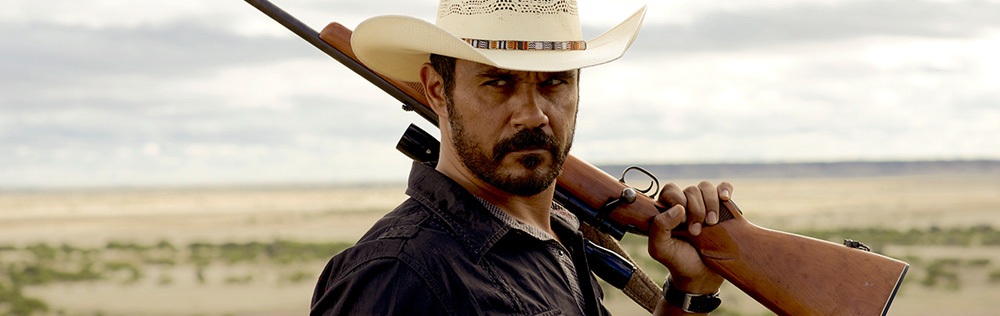
MysteryRoadCinequest spotlighted the contemporary murder mystery Mystery Road, set in the Australian outback.  An indigenous detective returns to his small town to encounter racist co-workers, a drunk and shiftless ex-wife and a resentful teenage daughter.  The daughter is a concern because her gal pals are starting to turn up murdered one by one.  Mystery Road is a solid but unexceptional police procedural except for two things:

  • the very strong lead performance by Aaron Pederson, who brings out the inner conflict within a guy who needed to leave his hometown and his marriage but is tormented by the consequences of those decisions; and
  • the movie’s climactic gun battle between guys using hunting rifles through telescopic sights – a real show stopper .

Hugo Weaving chews up some scenery with a supporting role as a cop with ambiguous motivation.  Weaving, with his supporting roles in The Matrix, V for Vendetta, Lord of the Rings, Transformers, etc., may be the world’s most financially successful character actor.  I first saw Weaving in the 1991 Proof, the breakout film for then 26-year-old Russell Crowe.  In Proof, Crowe plays a young buck who falls in with an eccentric blind man (Weaving) and an uncomfortably needy and manipulative woman (Genevieve Picot).  Proof (available on DVD from Netflix and streaming from iTunes and Amazon) is an excellent and oft overlooked film.  Mystery Road has its moments, too.

Cinequest: Happenings of the Eighth Day

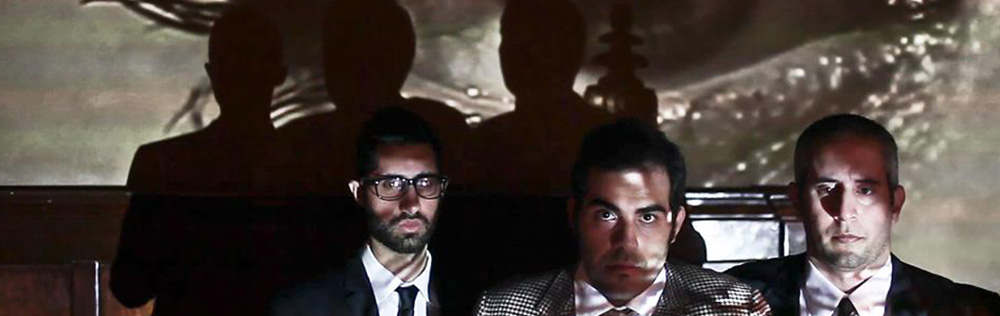
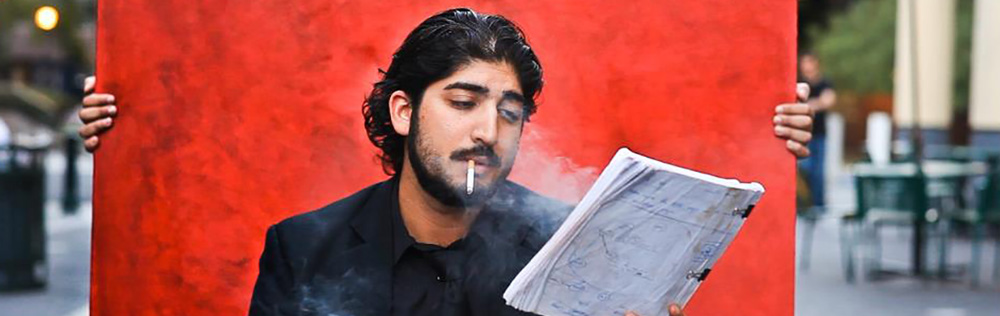
happeningsThe extremely trippy Happenings of the Eighth Day is a pure art film, for better and for worse.  It consists of some live action sketches wedged into some moody montages of characters driving around or walking on the beach and lots of evocative snippets of file footage and news photos. The sketches often center around a movie-within-a-movie and are tongue-in-cheek funny.  The fourth wall is often broken, with the script tossed into and out of scenes and, most hilariously, when the boom lowers into a scene and then the sound guy himself sits down with the actors.  The iconic movie images range from the pioneering silent The Kiss to Fritz the Cat.  There are very graphic and provocative film clips from the Holocaust, 9/11, Sarajevo and other horrors.

Some random comments:  There’s a frequent use of video insets.  Happenings employs the handheld background used famously in the Danish The Five Obstructions (see photo below).  Even by Hollywood standards, the actresses were merely ornamental.

Happenings isn’t about a conventional narrative, so what’s going on here? Writer/director/actor/cinematographer/co-editor/actor Arya Ghavamian says that the theme is the oppression which he felt in his boyhood Iran and continues to feel in American society, a feeling he describes as “consistent paranoia”.  Hmmm.

Here’s my ambivalence:  With its humor, vivid imagery and driving music, Happenings almost worked for me as eye candy.  But the clash between the smirking characters and the images of real atrocities seemed exploitative, and it put me off.  Now, if you buy into Ghavamian’s explicit intention – a contemplation of oppression – the atrocity shots are justified, but I didn’t find that message coherent, nor did I think that it fit within the appealing overall slyness of the film.  But, with the exception of a couple sketches that ran on too long and some moments that were annoying or offensive, I found it pretty entertaining.

Happenings of the Eighth Day is a VERY low-budget film, and its sound is particularly bad and its editing is particularly good.

I saw Happenings of the Eighth Day at its World Premiere at Cinequest in the San Jose Repertory Theatre and, I’ve got to say, no premiere in the history of cinema could have been any closer to its filming locations.  The San Jose Rep is on the Paseo de San Antonio and 75% of the movie’s exteriors were shot along the Paseo from the Cesar Chavez fountains and the Fairmont Hotel past the Post Office to The Movie Gourmet’s own personal bench between Philz Coffee and the Tangerine salon. A former Philz barrista even appears in the film.

happenings2


Cinequest: Teenage

teenageThe most important ingredient for a documentary is a good story, and Teenage has just that – the 20th century emergence of a hitherto unknown phenomenon: the teenager. Teenage postulates that through the end of the 1800s, kids – by going to work when they were 12 – transitioned directly from the child’s world to the adult one; the advent of child labor laws gave the 12 to 18-year-olds the leisure time to express all of that hormone-driven energy. Combined with the generational disgust felt by the young for the older generation that had wasted much of their cohort in WWI, that mix of rebelliousness, immaturity and bad judgement we now as the modern teenager was born – and has driven our popular culture ever since.

To make the case for that thesis, filmmaker Matt Wolf has assembled some stunningly evocative file footage and sprinkled in some re-creations.  The re-created characters are read by the likes of Jena Malone and are shot in color.  The problem is that some of the black-and-white footage ALSO has the look of re-creation, so I couldn’t tell what was a historical document and what was the filmmaker’s interpenetration of the period. This was just enough to lose me. I wish Wolf had the faith to let his file footage speak for itself.  Still, it’s a good story, and worth the watch.

Cinequest: The Illiterate

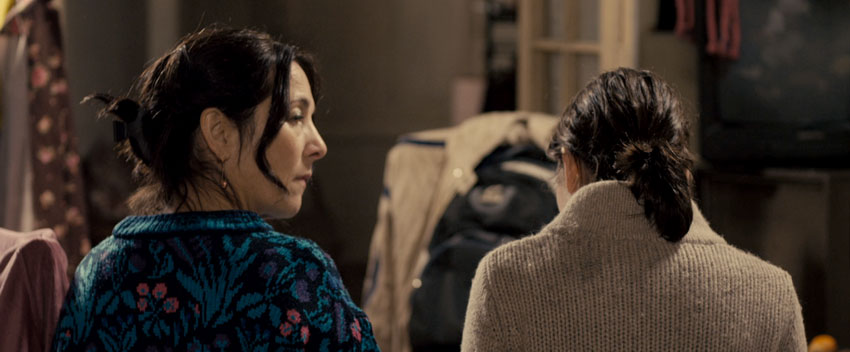
AnalfabetasThe Illiterate is a Chilean two-hander of a drama. A woman in her mid-50s can’t read. She navigates life by telling passersby that she has lost her glasses and needs them to read the signage to her. A woman in her 20s comes to read her the newspaper. Prompted by an unread letter from the older woman’s father, the younger woman decides to teach her to read. The older woman is proud and prickly, and they clash. Each has a meltdown as we move from first to second to third act. When she finally reads the looming letter from the father, it’s underwhelming.

The illiterate is played by the accomplished and appealing Chilean actress Paulina Garcia (Gloria), and The Illiterate is mostly an excuse for Garcia to act up a storm. Not much else here.  Too bad, because I love promoting Chilean cinema and really wanted to like this.

Cinequest: Unforgiven

Unforgiven
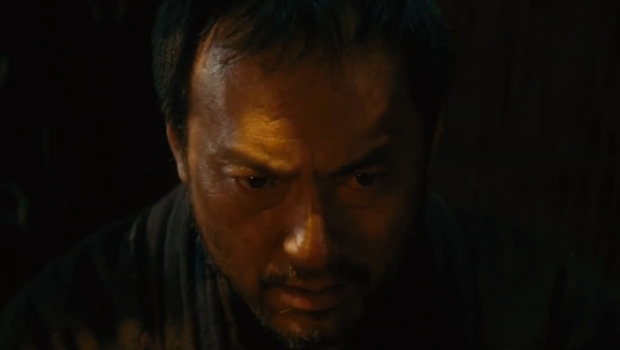
Unforgiven is the Japanese remake of Clint Eastwood’s Oscar-winning Unforgiven, starring Ken Watanabe (Inception, The Last Samurai, Letters from Iwo Jima).   Since Clint’s career was boosted by a remake of Yojimbo (A Fistful of Dollars), it’s fitting that his Unforgiven is remade as a samurai (technically a post-samurai) film.  [Remarkably, it’s been 22 years since Clint’s Unforgiven – a powerful comment on both violence and movie violence.]

This Unforgiven is set in remote northern Japan beginning in 1869, as the samurai of the defeated Shogun are hunted down by the new government.  We all know the story – a prostitute is disfigured, and her peers hire some retired killers to kill the perps.  One of old vets is Jubee (Watanabe) the once invincible action hero who is now defeated and still reeling from personal loss (Eastwood’s Bill Munney in the 1992 film). When a younger man is troubled by his first kill, Jubee advises, “Drink until you forget. You’ll remember later”. His conscience remains tortured by an unpardonable atrocity that he committed during his fighting days.

Some of the vistas are so grand that they remind me of Kurosawa’s Ran and Kagemusha.  Director Sang-il Lee’s version is more beautiful, funnier and more crisply-paced than Eastwood’s original.  But Eastwood’s was more profound – and the comment on violence was more accessible.  In both versions, there’s a ruthless and despicable villain to be dispatched. The killing is unadorned and very, very personal.

Ken Watanabe is always good, and here he channels Clint to produce a character worn down and defeated by tragedy, but still plenty dangerous.  In perhaps an even better performance, Akira Emoto plays his comrade Kingo (the Morgan Fairchild role).

It’s pretty ambitious to remake a movie that won the Academy Award for Best Picture.  Unforgiven passes the test.  It’s a damn fine movie.

Cinequest: Grand Piano


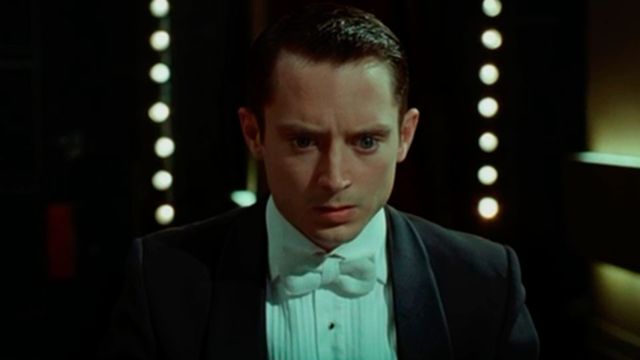
grandpianoExpressly Hitchcockian in style, Grand Piano is a wannabe thriller that unfortunately falls short. Elijah Wood plays a superstar concert pianist who has spent five years in seclusion after melting down from stage fright. As he sits at the piano for his big comeback concert, he receives a threat: if he misplays even one note, either he or his wife will be immediately killed. Already a bundle of nerves, he must navigate his way through the performance while trying to find his tormentor.

What Grand Piano has going for it is Elijah Wood. Who else would you cast for wide-eyed terror (or wide-eyed anything for that matter)?  But the plot is just too contrived to engage us. So the manipulative suspense is there, but, ultimately, not the thrills.

Cinequest: Hunting Elephants

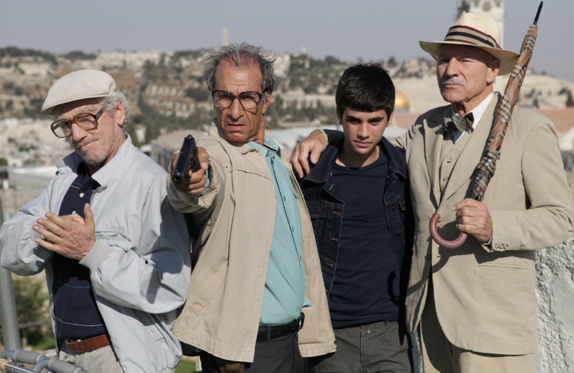
Hunting ElephantsAlong with The Grand Seduction, the Israeli caper comedy Hunting Elephants has been the audience favorite at Cinequest. Apparently, Israelis see just as little generosity, fair-mindedness and decency in their bankers as we do in ours. When a particularly smarmy banker goes too far, a victimized family unleashes a team of septuagenarians led by a 12-year-old to make things right. The old guys are veterans of Irgun, the Zionist terrorists (or freedom fighters, depending on your perspective) who forced an end to the British Mandate in Palestine, so they’re a particularly tough set of characters (even ravaged as they are by age). To their – and his – discomfort, they are teamed with an effete and pretentious scoundrel from the British stage (Patrick Stewart).

The genius of Hunting Elephants is that it combines the comic potential of a coming of age story, a geezer liberalization tale, a gang-that-couldn’t-shoot-straight saga and a fish-out-of-water (the Patrick Stewart character) farce. Mixed with the poignancy of the boy and the old men grasping for some dignity, the result is satisfying crowd pleaser.

Cinequest: I’m the Same, I’m Another

imthesameimtheotherIn I’m the Same, I’m Another, a man in his 30s is on the run with a 10-year-old girl. Writer-director Caroline Strubbe challenges the audience to figure out why and from whom and to what end they are running – and even what is the relationship between the man and the girl.  Although I’m the Same, I’m Another is a Belgian film, the two Dutch-speaking characters primarily speak in English.
We worry about the welfare of the child, so there is a consistent tension over the film’s 110 minutes. At the end, we learn the general category of the relationship between the man and the girl and the trajectory of what will happen to each of them, but not much more.
I generally like movies that require the audience to meet the story halfway instead of having the story all wrapped and dropped on your porch like a UPS parcel. And I’m definitely OK with an ambiguous ending. But I’m the Same requires a helluva investment from the audience – two hours with not much action and plenty of anxiety.  Ultimately, I didn’t think that the payoff was worth the two hours of angst.
SPOILER ALERT: What I’m the Same does especially well is the portrait of the girl who has been traumatized by a sudden loss. Although she is not overtly abused by the man, and although he provides her with basic needs, and although her need for attachment draws her to bond with him, it’s clear that he is not going to be able o address her emotional damage in the long run.  Because they hide out in an industrial outpost on the northern British coast, both their impoverished and furtive circumstance and the dreary setting contribute to a pretty grim cinematic experience.