Along with The Grand Seduction, the Israeli caper comedy Hunting Elephants has been the audience favorite at Cinequest. Apparently, Israelis see just as little generosity, fair-mindedness and decency in their bankers as we do in ours. When a particularly smarmy banker goes too far, a victimized family unleashes a team of septuagenarians led by a 12-year-old to make things right. The old guys are veterans of Irgun, the Zionist terrorists (or freedom fighters, depending on your perspective) who forced an end to the British Mandate in Palestine, so they’re a particularly tough set of characters (even ravaged as they are by age). To their – and his – discomfort, they are teamed with an effete and pretentious scoundrel from the British stage (Patrick Stewart).
The genius of Hunting Elephants is that it combines the comic potential of a coming of age story, a geezer liberalization tale, a gang-that-couldn’t-shoot-straight saga and a fish-out-of-water (the Patrick Stewart character) farce. Mixed with the poignancy of the boy and the old men grasping for some dignity, the result is satisfying crowd pleaser.
In I’m the Same, I’m Another, a man in his 30s is on the run with a 10-year-old girl. Writer-director Caroline Strubbe challenges the audience to figure out why and from whom and to what end they are running – and even what is the relationship between the man and the girl. Although I’m the Same, I’m Another is a Belgian film, the two Dutch-speaking characters primarily speak in English.
We worry about the welfare of the child, so there is a consistent tension over the film’s 110 minutes. At the end, we learn the general category of the relationship between the man and the girl and the trajectory of what will happen to each of them, but not much more.
I generally like movies that require the audience to meet the story halfway instead of having the story all wrapped and dropped on your porch like a UPS parcel. And I’m definitely OK with an ambiguous ending. But I’m the Same requires a helluva investment from the audience – two hours with not much action and plenty of anxiety. Ultimately, I didn’t think that the payoff was worth the two hours of angst.
SPOILER ALERT: What I’m the Same does especially well is the portrait of the girl who has been traumatized by a sudden loss. Although she is not overtly abused by the man, and although he provides her with basic needs, and although her need for attachment draws her to bond with him, it’s clear that he is not going to be able o address her emotional damage in the long run. Because they hide out in an industrial outpost on the northern British coast, both their impoverished and furtive circumstance and the dreary setting contribute to a pretty grim cinematic experience.
In the unusually thoughtful romantic comedy Words and Pictures, Clive Owen and the ever-radiant Juliette Binoche star as sparring teachers. The two play world-class artists – Owen a writer and Binoche a painter – who find themselves in teaching jobs at an elite prep school. As they spiritedly disagree over whether words or pictures are the most powerful medium of expression, they each admire and are drawn to the other’s talent and passion.
Words and Pictures contains the wittiest movie dialogue in many moons and reminds us that real wit is more than some clever put downs. Owen’s English teacher worships the use of language to evoke original imagery and also revels in pedantic wordplay – the more syllables the better. When his boss asks him, “Why are you always late?”, he retorts “Why are you always dressed monochromatically?”.
The reason that he IS always late is that he’s an alcoholic hellbent on squandering his talent and alienating his friends and family. This is a realistic depiction of alcoholism and of its byproducts – unreliability, broken relationships and fundamental dishonesty. In an especially raw scene, he expresses his self-loathing by using a tennis racquet and balls to demolish his own living space. Top notch stuff.
Binoche plays a woman of great inner strength and confidence who has been shaken by the advances of a chronic illness. According to the credits, Binoche herself created her character’s paintings.
Words and Pictures sparkles until near the end. When the students make the debate over words vs pictures explicit in the school assembly, the intellectual argument loses its force and the tension peters out. So it may not be a great movie, but Words and Pictures is still plenty entertaining and a damn sight smarter than the average romantic comedy.
The Italian comedy Zoran, My Nephew the Idiot is centered around Paolo, a hard-drinking slob who works in a cafe kitchen in the Italian region that borders Slovenia. Boorish as he is, Paolo is mostly marked for his unrestrained selfishness. “You are a bad man,” he is told. When an aunt dies, he is dismayed to learn that, not only has he not inherited anything of value, he is to burdened for a few days by her grandson, his nephew. Having been raised in isolation, the nephew is an odd duck with some tendencies of autism and/or Asberger’s. Paolo wants to dump the kid until he finds out that the nephew is a savant in one area that Paolo just might be able to exploit.
The comedy comes from the outrageousness of Paolo’s bad behavior (a very funny sprinkling of ashes, for example) and his venal attempts to profit from the nephew. Of course, he has an opportunity for redemption at the end. Although I wouldn’t go out of my way to see it, it’s all pretty funny, and Zoran, My Nephew the Idiot is a pretty satisfying little comedy.
What kind of douchebag would fake his own death to see who shows up to his funeral? Indeed, in the comedy Friended to Death, there’s a reason why everyone calls Michael Harris a douchebag. He is a colossal jerk who revels in the misfortunes of others. In his job as a parking enforcement officer, he’s a gleeful Johnny Appleseed of misery. Worse yet, he is a social media addict who narcissistically insists on constantly blasting his escapades on Facebook and Twitter. He’s oblivious that his own social media proves himself to be the asshole everybody says that he is.
You know that Michael is ripe for a comeuppance, and he gets a dose of his own medicine when one of his premature vehicle tows unleashes an unhinged enemy for life. There are plenty of madcap moments as Michael (Ryan Hansen from TV’s Friends with Benefits) and his reluctant co-conspirator Emile (James Immekus) frantically try to conceal their hoax.
Friended to Death writer-director Sarah Smick and co-writer Ian Michaels archly comment on the “social” in social media. Their Michael Harris says “I have 417 friends – you don’t expect me to know ALL of them!” and “I speak in text”. Really smart comedy writing is pretty rare, and Smick and Michaels have the gift. Michaels got the idea after reading about a guy who faked his own death and wrote scathing rebukes to those who missed his faux memorial. By dropping that kernel into our current environment of over-sharing, Smick and Michaels were able to alchemize it into a biting social satire.
Smick and Michaels are longtime collaborators who married last October. In 2011, Smick and Michaels brought their equally funny Here’s the Kickerto Cinequest; (Michaels directed that one). Here’s the Kicker is available streaming on YouTube and is also is out on DVD.
In Friended to Death, Smick and Michaels play characters trying to expose the fraud. They are very good in their roles, as is veteran Robert R. Shafer (Bob Vance in The Office) as that boss who just can’t restrain himself from yelling.
In Friended to Death, TMI becomes LOL. Pointedly smart and well-crafted dark comedies don’t come along every day. Don’t miss Friended to Death, playing again at Cinequest tonight and on Friday.
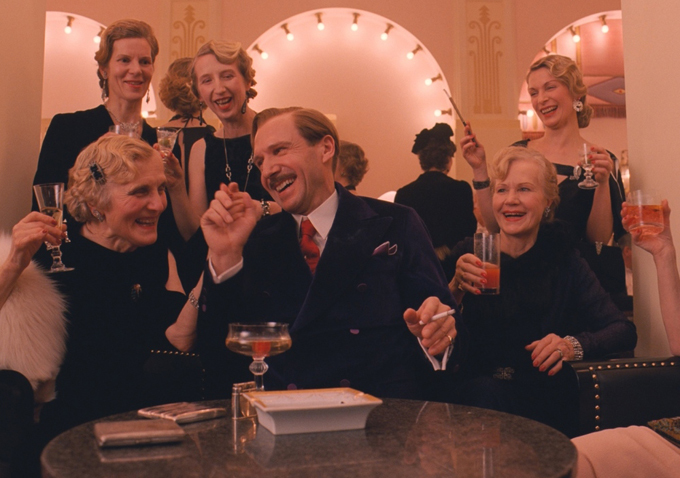
Cinequest opened on an especially uproarious note with the Canadian comedy The Grand Seduction. The audience, including me and The Wife, rollicked with laugh after laugh.
Brendan Gleeson (In Bruges, The Guard, The General, Braveheart) and Gordon Pinsent (Away from Her) play isolated Canadians try to snooker a young doctor (Taylor Kitsch of Friday Night Lights) into settling in their podunk village. They enlist the entire hamlet in an absurdly elaborate and risky ruse, and the result is a satisfying knee-slapper that reminds me of Waking Ned Devine with random acts of cricket.
Like Ned Devine, I think that The Grand Seduction can become a long-running imported art house hit like The Best Exotic Marigold Hotel or The Full Monty. And I would definitely see it again.
The Chinese thriller Parallel Mazetries to be Psycho with parallel universes thrown in. Unhappily, it is a shoddy and incoherent film. Here’s how you could end up with Parallel Maze: show an eighth grader Upstream Color, hand him a digital camera along with 200 bucks and tell him, “Make THAT”.
Ed Wood is alive, and he is Chinese. Parallel Maze employs – from time to time and for seemingly no reason – every conceivable film effect: shaky cam, jump cuts, split screen even animation. It’s all just kinda thrown up there. And in the Psycho like shower scene, you can tell right away which character is the slasher, which fatally dilutes the impact.
It’s clear that the filmmakers are movie lovers – besides a movie-within-the-movie and the explicit homage to Psycho, there are references to movies from Love Story to The Treasure of the Sierra Madre. The parallel threads of the story’s structure and the movie references were a promising start, but the low production values and random filmmaking techniques are just too distracting.
I saw Parallel Maze at its world premiere at Cinequest.
The dark Hungarian comedy Heavenly Shift (Isteni mûszak) is deliriously funny. A rogue ambulance crew gets kickbacks from a shady funeral director if the patient dies en route to the hospital. Said undertaker also uses his coffin inventory for his human smuggling ring, and he makes his payoffs in a Chinese restaurant. The ambulance driver is addicted to laughing gas and scolds everyone about the difference between samurai and ninja swords. Then there’s the addict who lives in the subway and repeatedly slashes herself so she can jump the responding ambulance crew and steal their morphine.
The laughs are enhanced by spaghetti western music, complete with showdown-in-the-main-street power chords for dramatic confrontations. The cast delivers wonderfully dead pan performances, especially Roland Rába (Question in Details in the 2011 Cinequest). There’s an especially messy emergency tracheotomy in a produce market and a hysterically madcap runaway ambulance sequence near the end.
Now this is a DARK comedy – and if you don’t find the likes of Killer Joe, The Guard, Bernieand Headhunters really funny, then this may not be for you. For cynics like me, the more noir the better, and I think Heavenly Shift is a freaking riot.
Heavenly Shift’s North American Premiere is March 7 at Cinequest, and it plays again on March 12 and 14.
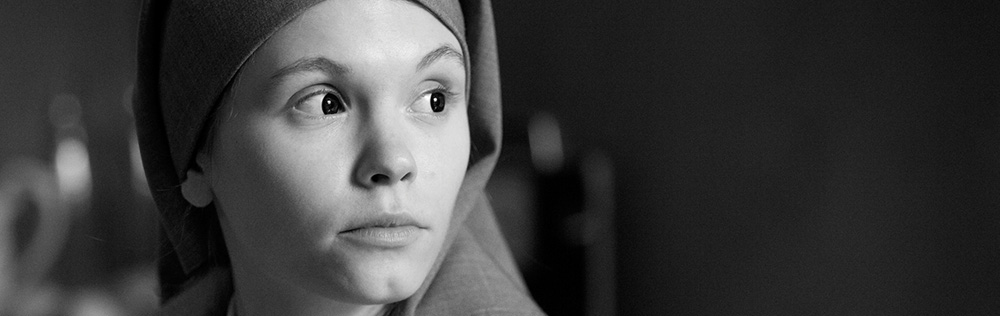
The Polish drama Ida is a gem – one of the best movies at this year’s Cinequest. The title character is a novice nun who has been raised in a convent orphanage. Just before she is to take her vows in the early 1960s, she is told for the first time that she has an aunt. She meets the aunt, and Ida learns that she is the survivor of a Jewish family killed in the Holocaust. The aunt takes the novice on an odd couple road trip to trace the fate of their family.
The chain-smoking aunt (Agata Kulesza) is a judge and consumes vast quantities of vodka to self-medicate her own searing memories. But the most profound difference isn’t that the aunt is a hard ass and that the nun is prim and devout. The most important contrast is between the worldly aunt (who has been around the block) and the utterly naive and inexperienced novice. The young woman must make the choice between a future that follows her upbringing or one which her biological heritage opens to her. As Ida unfolds, her family legacy makes her choice an informed one.
The novice Ida, played by newcomer Agata Trzebuchowska, is very quiet but anything but fragile. Saying little, she takes in the world with a penetrating gaze and a just-under-the-surface magnetic strength.
Superbly photographed in black and white, each shot is exquisitely composed. Watching shot after shot in Ida is like walking through a museum gazing at masterpiece paintings one after the other. Ida was directed and co-written by Pawel Pawlikowski, who also recently directed the British coming of age story My Summer of Love (with Emily Blunt) and the French thriller The Woman in the Fifth (with Kristin Scott Thomas and Ethan Hawke). He is an effective and economic story-teller, packing textured characters and a compelling story into an 80 minute film.
Ida is also successful in avoiding grimness. Pawlikowski has crafted a story which addresses the pain of the characters without being painful to watch. There’s some pretty fun music from a touring pop/jazz combo and plenty of wicked sarcasm from the aunt.
Ida won the International Critics’ Award at the Toronto International Film Festival. Ida plays just one more time at Cinequest (unless it makes the Encore Day program) – on this Sunday, March 9, at noon.
OK, here’s a movie like none you’ve seen before – not that this is always a good thing…The offbeat German film Finsterworld peels back the orderly veneer of German society to reveal odd subcultures (they have Furries and foot fetishists in Germany, too). Finsterworld (the title presumably punned after its writer director Frauke Finsterwalder) begins and ends with Cat Stevens’ bubbly The Wind and perks along like a quirky comedy, until it descends into a scathing and pessimistic assessment of German society.
The story follows a pedicurist, a documentation, a traffic cop, a forest hermit, some high school kids, a rich couple and a teacher who are revealed to be interconnected – and all deeply troubled under the surface. Ranging from quirky to twisted to downright evil, the characters are cursed with collective guilt from You Know What (hint: 1933-1945).
I must point out that there is one unforgettable scene of (all things) cookie-baking – at once appalling, disgusting and very funny.
Finsterworld, which had its North American Premiere at Cinequest, has its moments and never drags. But engaging with the film depends on whether you’re ready for a cynical and hopeless assessment of today’s Germans.