Cinequest: The Grand Seduction

Cinequest opened on an especially uproarious note with the Canadian comedy The Grand Seduction.  The audience, including me and The Wife, rollicked with laugh after laugh.

Brendan Gleeson (In Bruges, The Guard, The General, Braveheart) and Gordon Pinsent (Away from Her) play isolated Canadians try to snooker a young doctor (Taylor Kitsch of Friday Night Lights) into settling in their podunk village.  They enlist the entire hamlet in an absurdly elaborate and risky ruse, and the result is a satisfying knee-slapper that reminds me of Waking Ned Devine with random acts of cricket.

Like Ned Devine, I think that The Grand Seduction can become a long-running imported art house hit like The Best Exotic Marigold Hotel or The Full Monty.  And I would definitely see it again.

Cinequest: Parallel Maze

Parallel MazeThe Chinese thriller Parallel Maze tries to be Psycho with parallel universes thrown in.  Unhappily, it is a shoddy and incoherent film.  Here’s how you could end up with Parallel Maze: show an eighth grader Upstream Color, hand him a digital camera along with 200 bucks and tell him, “Make THAT”.

Ed Wood is alive, and he is Chinese.  Parallel Maze employs – from time to time and for seemingly no reason – every conceivable film effect: shaky cam, jump cuts, split screen even animation.  It’s all just kinda thrown up there. And in the Psycho like shower scene, you can tell right away which character is the slasher, which fatally dilutes the impact.

It’s clear that the filmmakers are movie lovers – besides a movie-within-the-movie and the explicit homage to Psycho, there are references to movies from Love Story to The Treasure of the Sierra MadreThe parallel threads of the story’s structure and the movie references were a promising start, but the low production values and random filmmaking techniques are just too distracting.

I saw Parallel Maze at its world premiere at Cinequest.

Cinequest: Heavenly Shift

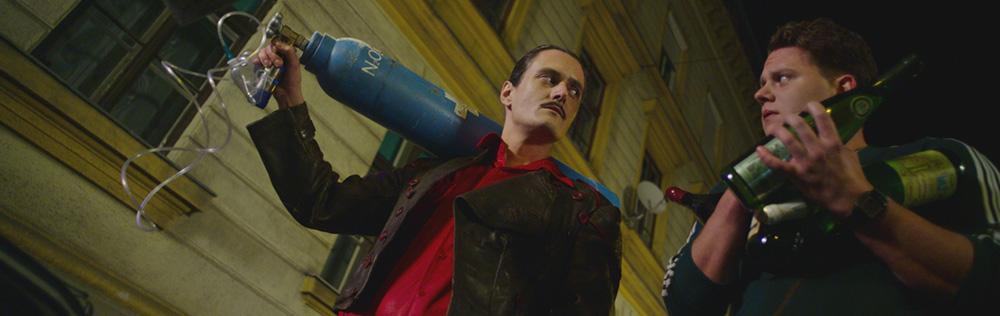
Heavenly Shift1The dark Hungarian comedy Heavenly Shift (Isteni mûszak) is deliriously funny.  A rogue ambulance crew gets kickbacks from a shady funeral director if the patient dies en route to the hospital.  Said undertaker also uses his coffin inventory for his human smuggling ring, and he makes his payoffs in a Chinese restaurant.  The ambulance driver is addicted to laughing gas and scolds everyone about the difference between samurai and ninja swords.  Then there’s the addict who lives in the subway and repeatedly slashes herself so she can jump the responding ambulance crew and steal their morphine.

The laughs are enhanced by spaghetti western music, complete with showdown-in-the-main-street power chords for dramatic confrontations.  The cast delivers wonderfully dead pan performances, especially Roland Rába (Question in Details in the 2011 Cinequest).  There’s an especially messy emergency tracheotomy in a produce market and a hysterically madcap runaway ambulance sequence near the end.

Now this is a DARK comedy – and if you don’t find the likes of Killer Joe, The Guard, Bernie and Headhunters really funny, then this may not be for you.  For cynics like me, the more noir the better, and I think Heavenly Shift is a freaking riot.

Heavenly Shift’s North American Premiere is March 7 at Cinequest, and it plays again on March 12 and 14.

Cinequest: Ida

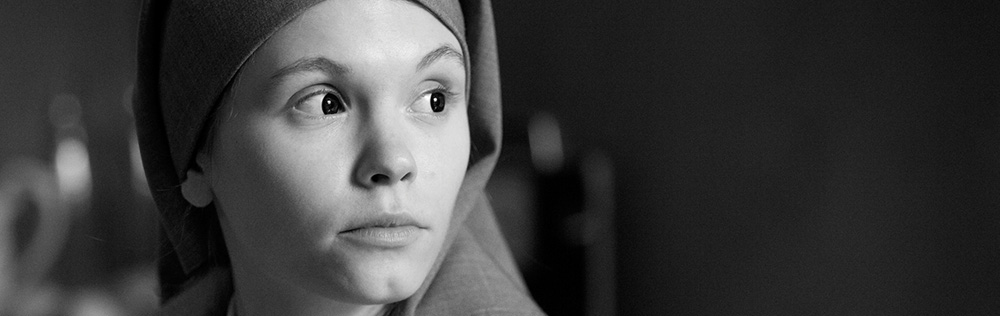
IdaThe Polish drama Ida is a gem – one of the best movies at this year’s Cinequest.  The title character is a novice nun who has been raised in a convent orphanage. Just before she is to take her vows in the early 1960s, she is told for the first time that she has an aunt.  She meets the aunt, and Ida learns that she is the survivor of a Jewish family killed in the Holocaust.  The aunt takes the novice on an odd couple road trip to trace the fate of their family.

The chain-smoking aunt (Agata Kulesza) is a judge and consumes vast quantities of vodka to self-medicate her own searing memories. But the most profound difference isn’t that the aunt is a hard ass and that the nun is prim and devout.  The most important contrast is between the worldly aunt (who has been around the block) and the utterly naive and inexperienced novice.  The young woman must make the choice between a future that follows her upbringing or one which her biological heritage opens to her.  As Ida unfolds, her family legacy makes her choice an informed one.

The novice Ida, played by newcomer Agata Trzebuchowska, is very quiet but anything but fragile.  Saying little, she takes in the world with a penetrating gaze and a just-under-the-surface magnetic strength.

Superbly photographed in black and white, each shot is exquisitely composed.  Watching shot after shot in Ida is like walking through a museum gazing at masterpiece paintings one after the other.  Ida was directed and co-written by Pawel Pawlikowski, who also recently directed the British coming of age story My Summer of Love (with Emily Blunt) and the French thriller The Woman in the Fifth (with Kristin Scott Thomas and Ethan Hawke).  He is an effective and economic story-teller, packing textured characters and a compelling story into an 80 minute film.

Ida is also successful in avoiding grimness. Pawlikowski has crafted a story which addresses the pain of the characters without being painful to watch.  There’s some pretty fun music from a touring pop/jazz combo and plenty of wicked sarcasm from the aunt.

Ida won the International Critics’ Award at the Toronto International Film Festival.  Ida plays just one more time at Cinequest (unless it makes the Encore Day program) – on this Sunday, March 9, at noon.


Cinequest: Finsterworld

FinsterworldOK, here’s a movie like none you’ve seen before – not that this is always a good thing…The offbeat German film Finsterworld peels back the orderly veneer of German society to reveal odd subcultures (they have Furries and foot fetishists in Germany, too).   Finsterworld (the title presumably punned after its writer director Frauke Finsterwalder) begins and ends with Cat Stevens’ bubbly  The Wind and perks along like a quirky comedy, until it descends into a scathing and pessimistic assessment of German society.

The story follows a pedicurist, a documentation, a traffic cop, a forest hermit, some high school kids, a rich couple and a teacher who are revealed to be interconnected – and all deeply troubled under the surface.  Ranging from quirky to twisted to downright evil, the characters are cursed with collective guilt from You Know What (hint: 1933-1945).

I must point out that there is one unforgettable scene of (all things) cookie-baking – at once appalling, disgusting and very funny.

Finsterworld, which had its North American Premiere at Cinequest, has its moments and never drags.  But engaging with the film depends on whether you’re ready for a cynical and hopeless assessment of today’s Germans.

Cinequest: The Circle Within

Circle Within

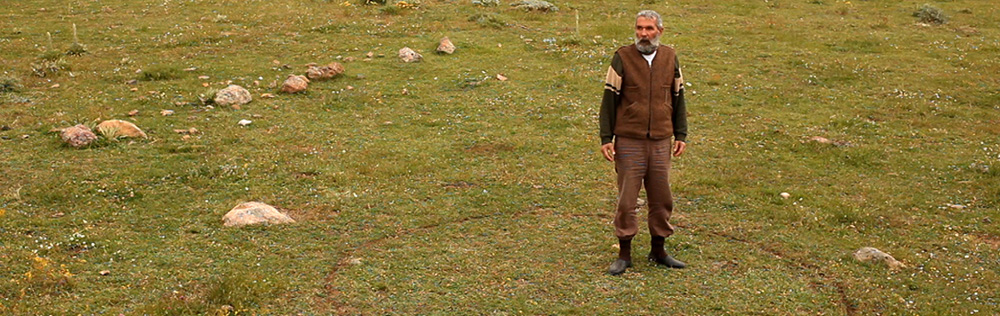
The Circle Within (Icimdeki Cember) is a Turkish fable that turns into a psychological drama. An old peddler trudges between isolated hamlets when a younger man knocks him senseless and draws a circle in the dirt around the fallen old man.  When he awakes, the old man refuses to leave the circle, which is not a surprise to the younger man.  Why is the younger man so cruel?  How the younger man know that the peddler won’t leave the circle?  Who is really trapped?  And why?

The power of the circle stems from the Kurdish religion of yezidism, a non-Islamic minority religion related to Zoroastrianism and Sufism.

Only 72 minutes long, The Circle Within is very slow, and I had trouble staying awake. The Circle Within is not a favorite of mine, but it provides a rare glimpse into yezidism, the Kurds and the Big Sky country of eastern Turkey. The Circle Within’s North American Premiere is March 5, and it plays at Cinequest on March 6, 7, and 10.

Cinequest: The Verdict

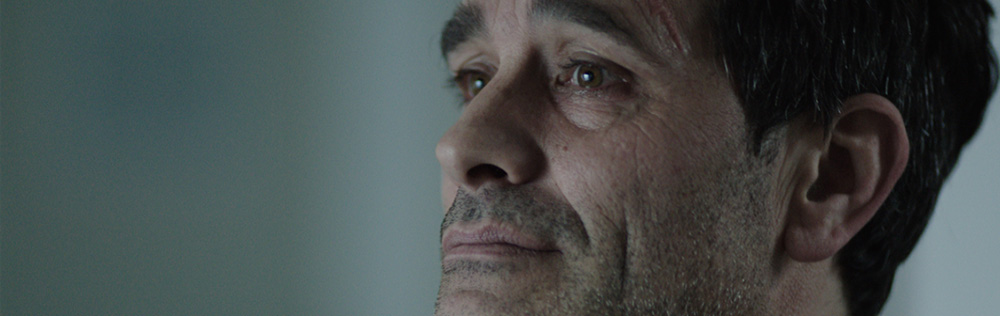
VerdictThe Belgian drama The Verdict (Het Vonnis) won Best Director at the Montreal Film Festival.  A man’s family is destroyed by an especially senseless and brutal crime, and the monstrous perp is freed by an infuriatingly absurd legal technicality.  When he takes vigilante revenge, he is tried for the crime.  Any American jury would free this guy in about eleven seconds, but this is Belgium and the dead perp’s lawyer is passionate about the rule of law, and the cynical prosecutors need to convict the guy to cover up their own incompetence.  So we have a courtroom drama.  The Verdict advocates the political position that the Belgian justice system protects the rights of criminal defendants at the expense of victims – kind of like Dirty Harry (only in Dutch).

As well-crafted as is The Verdict, I think that it will be difficult for American audiences to relate to the political morality play; The Verdict is more accessible as a psychological drama – the portrait of a man who has nothing left to lose, but still grasps for a glimmer of justice.

Cinequest: Class Enemy

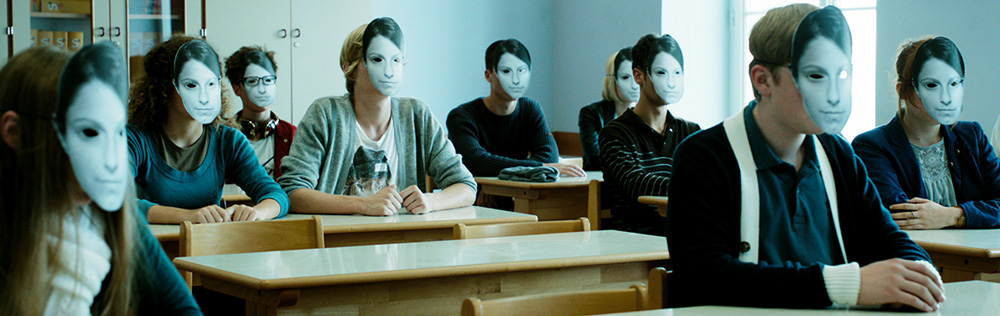
Class EnemyIn the gripping drama Class Enemy (Razredni sovraznik), a high school class is a pretty typical collection of teenagers – some more rebellious than others, some a little more mature – but generally a potent package of hormones and bad judgement.  One boy has just lost his mother and has anger issues, one artistic girl is very sensitive and another boy is just a smug punk.  The class gets a new foreign language teacher, and he is demanding, humorless, abrasive and insensitive.  The kids are already wary of him when they are rocked by a tragedy – and they explode.

Here’s what is special about Class Enemy.  The kids’ reactions vary, but are true to their individual personalities.  The reactions of the kids and adults are completely plausible, and not the least bit contrived.  And the filmmakers avoid taking the side of any kid or any adult – no character is completely correct.  This story could have been turned into a really trite Hollywood movie about kids united against a mean adult authority figure, but the filmmakers trust the audience to accept the nuance and ambiguity that we experience in real life.

Class Enemy, Slovenia’s entry for the Best Foreign Language Oscar, is an authentic and taut drama.

Omar: a heartbreaking love story inside a West Bank thriller

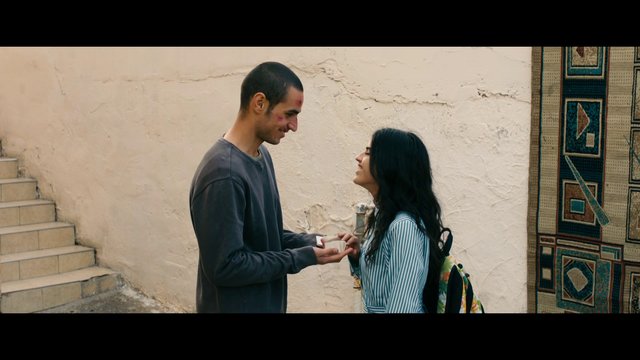
omarThe gripping and thought-provoking Palestinian drama Omar, which opens tomorrow, is a fundamentally a love story that drives an action thriller.  It seems to be about a college-age Palestinian guy named Omar and his two buddies.  They live in a West Bank Arab community that is repressed by apparently omniscient and omnipotent Israeli security forces.  It’s an environment where one bad choice can spiral one’s life completely out of control – and one that is toxic with betrayals.

There are thrills aplenty when the Israeli security teams are chasing our hero.  We’ve never seen more riveting chase scenes through the alleys and rooftops of West Bank cities.  Shot in Nazareth and Nablus, Omar gives us a novel look at these Arab communities and the Israeli security wall.

But it is basically a love story, albeit a heartbreaking one, because most of the plot is motivated by Omar’s love for his sweetheart Nadia.  The first action by the three young guys stems from politics, testosterone and the foolhardiness of youth.  But everything that happens after is because of Omar’s yearning for Nadia.  We also see the chaste Palestinian courtship rituals; the kids are burning with passion for each other as they exchange letters and discreet glances.

Omar is not for everyone.  For one thing, it doesn’t try to be even-handed about the Israeli Occupation – everything is seen through the Palestinian lens.  It’s realistic – one Israeli character in particular is humanized and it’s easy for the audience to disapprove of the boneheaded behavior by the young Palestinians.  But if you aren’t open to that Palestinian perspective, you’re not going to like this movie.  And the ending is unusually jarring – my fellow audience members sat in shocked silence for a few seconds.

Omar won a jury prize at Cannes and is nominated for this year’s Best Foreign Language Oscar.

Stranger by the Lake: an effective thriller with LOTS of explicit gay sex

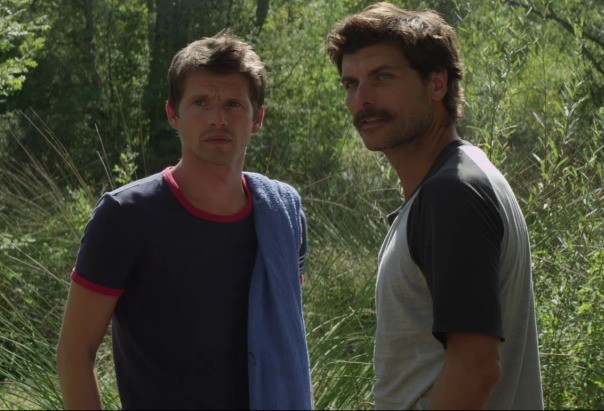
Writer-director Alain Giraudie uses the milieu of gay cruising to set his thriller, Stranger by the Lake (L’inconnu du lac), launched with great notoriety at Cannes. A young man frequents a secluded beach to hook up with other gays. He spots a dreamy newcomer, but he just can’t seem to meet the new guy. After a few frustrating days, he witnesses a murder by drowning – and the murderer is the guy that he’s hot for. The next day, the murderer comes on to him and our hero can’t resist…until his new boy toy suggests that they go for a swim.

Stranger by the Lake is notorious because of lots of genitals-in-your-face male nudity and LOTS of explicit gay sex acts. At least some of the sex is actual (not just simulated) sex. I saw Stranger by the Lake in an audience that must have been 80% gay male, and there were lots of knowing chuckles at the cruising behaviors (along with gasps at an episode of decidedly unsafe sex).

Stranger by the Lake does work as a thriller, and a limited US release is underway; in the San Francisco Bay Area, it’s currently playing in just two theaters – the Clay and the Shattuck.  It is unrated, but would certainly qualify for a NC-17.