Neighbors: an actress gets to have fun in a low brow comedy

Rose Byrne and Seth Rogen in NEIGHBORS

In Neighbors, Rose Byrne and Seth Rogen play a couple of new parents whose world is rocked when a fraternity (led by Zach Ephron) moves in next door.  Neighbors begins with a more-or-less realistic tone for a comedy that escalates into a demented farce as Byrne and Rogen get more and more desperate to force the frat out of the neighborhood.

We know that Seth Rogen and Zach Ephron (Liberal Arts) can be funny, but Rose Byrne is the pleasant surprise.  Unlike in most of the current crop of bromance and gross-out comedies, the female character relishes, is not a nag and can be outrageous and unrestrained herself.  Byrne is also a good sport in a scene with a gross-out sight gag for the ages (that seeks to match the “hair mousse” in There’s Something About Mary, etc.).

This isn’t a Must See – and it doesn’t aspire to cinematic greatness.  But Neighbors is not a bad choice if you’re in the mood for a low brow comedy: solid cast, a darkening sensibility and a good role for the gal.

Words and Pictures: unusually thoughtful romantic comedy

words picturesIn the unusually thoughtful romantic comedy Words and Pictures, Clive Owen and the ever-radiant Juliette Binoche star as sparring teachers. The two play world-class artists – Owen a writer and Binoche a painter – who find themselves in teaching jobs at an elite prep school. As they spiritedly disagree over whether words or pictures are the most powerful medium of expression, they each admire and are drawn to the other’s talent and passion.

Words and Pictures contains the wittiest movie dialogue in many moons and reminds us that real wit is more than some clever put downs. Owen’s English teacher worships the use of language to evoke original imagery and also revels in pedantic wordplay – the more syllables the better. When his boss asks him, “Why are you always late?”, he retorts “Why are you always dressed monochromatically?”.

The reason that he IS always late is that he’s an alcoholic hellbent on squandering his talent and alienating his friends and family. This is a realistic depiction of alcoholism and of its byproducts – unreliability, broken relationships and fundamental dishonesty. In an especially raw scene, he expresses his self-loathing by using a tennis racquet and balls to demolish his own living space. Top notch stuff.

Binoche plays a woman of great inner strength and confidence who has been shaken by the advances of a chronic illness. According to the credits, Binoche herself created her character’s paintings.

Words and Pictures sparkles until near the end. When the students make the debate over words vs pictures explicit in the school assembly, the intellectual argument loses its force and the tension peters out. So it may not be a great movie, but Words and Pictures is still plenty entertaining and a damn sight smarter than the average romantic comedy.

I saw Words and Pictures earlier this year at Cinequest.

Locke: a thriller about responsibility

lockeThe thriller Locke is about an extremely responsible guy (Tom Hardy) who has made one mistake – and he’s trying to make it right.  But trying to do the responsible thing in one part of your life can have uncomfortable consequences in the others.  The title character drives all night trying to keep aspects of his life from crashing and burning.

In fact, he never leaves the car and, for the entire duration of the movie, we only see his upper body, his eyes in the rearview mirror, the dashboard and the roadway lit by his headlights.  All the other characters are voiced – he talks to them on the Bluetooth device in his BMW.  Sure, that’s a gimmick – but it works because it complements the core story about the consequences of responsibility.

Locke is written and directed by Steven Knight (Dirty Pretty Things, Eastern Promises).  The story is actually a domestic drama – there are no explosions to dodge, no one in peril to rescue and no bad guys to dispatch.  But it’s definitely a thriller because we care about whether Locke meets the two deadlines he will face early the next morning.

It’s a masterful job of film editing by Justine Wright (Touching the Void, The Last King of Scotland).  After all, her cuts help keep us on the edge of our seats, despite her working with a very finite variety of shots (Locke’s eyes, the dashboard, etc.).

Hardy, who’s known as an action star, is excellent at portraying this guy who must try to keep his family, biggest career project and self-respect from unraveling at the same time, only armed with his ability to persuade others.  It’s a fine film.

Ida: best movie of the year so far

IdaOpening more widely tomorrow, the Polish drama Ida, which I saw at this year’s Cinequest, is the best movie I’ve seen this year.

The title character is a novice nun who has been raised in a convent orphanage. Just before she is to take her vows in the early 1960s, she is told for the first time that she has an aunt. She meets the aunt, and Ida learns that she is the survivor of a Jewish family killed in the Holocaust. The aunt takes the novice on an odd couple road trip to trace the fate of their family.

The chain-smoking aunt (Agata Kulesza) is a judge who consumes vast quantities of vodka to self-medicate her own searing memories. But the most profound difference isn’t that the aunt is a hard ass and that the nun is prim and devout. The most important contrast is between their comparative worldliness – the aunt has been around the block and the novice is utterly naive and inexperienced (both literally and figuratively virginal).  The young woman must make the choice between a future that follows her upbringing or one which her biological heritage opens to her.  As Ida unfolds, her family legacy makes her choice an informed one.

The novice Ida, played by newcomer Agata Trzebuchowska, is very quiet – but hardly fragile. Saying little, she takes in the world with a penetrating gaze and a just-under-the-surface magnetic strength.

Superbly photographed in black and white, each shot is exquisitely composed. Watching shot after shot in Ida is like walking through a museum gazing at masterpiece paintings one after the other.  Ida was directed and co-written by Pawel Pawlikowski, who also recently directed the British coming of age story My Summer of Love (with Emily Blunt) and the French thriller The Woman in the Fifth (with Kristin Scott Thomas and Ethan Hawke).  He is an effective and economic story-teller, packing textured characters and a compelling story into an 80 minute film.

Ida is also successful in avoiding grimness. Pawlikowski has crafted a story which addresses the pain of the characters without being painful to watch. There’s some pretty fun music from a touring pop/jazz combo and plenty of wicked sarcasm from the aunt.

Ida won the International Critics’ Award at the Toronto International Film Festival.  Ida was my pick as the best film at Cinequest, where it won the Jury Prize for Best Narrative Feature.

Finding Vivian Maier: hiding her own masterpieces

vivian maier1
The engrossing documentary Finding Vivian Maier begins with the death of a Chicago woman so obscure that none of her neighbors knew her name.  She was a standoffish hoarder, and when a box of her junk is acquired at an estate auction, the buyer, a picker named John Maloof, finds lots and lots of photographs.  He posts some of them on the Internet, and it turns out that the woman was, hitherto undiscovered, one of the great 20th Century photographers.  So Maloof acquires the other boxes from the auction and embarks on a quest to find out who she was, why she took over 100,000 images and why she never showed them. Fortunately, we get to come along.

We quickly learn that her name was Vivian Maier, and that she worked as a nanny.   As Maloof’s journey of discovery takes us to another city and then to another country, we begin to piece together her life.  Because Maier lived with families to raise their children, we meet some of her former charges. We are able to construct what she looked and sounded like, how she dressed and walked and about her array of eccentricities.  We learn about a very disturbing dark side.

But Maier remained secretive even inside the families’ homes, so some of the puzzle pieces remain undiscovered.  We can infer that a pivotal event happened during her childhood.  We conclusively find out that she was obsessively private, but we can only guess why.

Vivian Maier is no longer obscure.  Her work is now shown widely in museums and galleries.  As a photographer, she had an uncommon gift to connect personally with her subjects and to document the humor and tragedy of the most human moments.  In the guise of a detective story, Finding Vivian Maier does her justice.


vian maier2

Run & Jump: a romance, a family drama and a promising first feature

Maxine Peake in RUN & JUMP

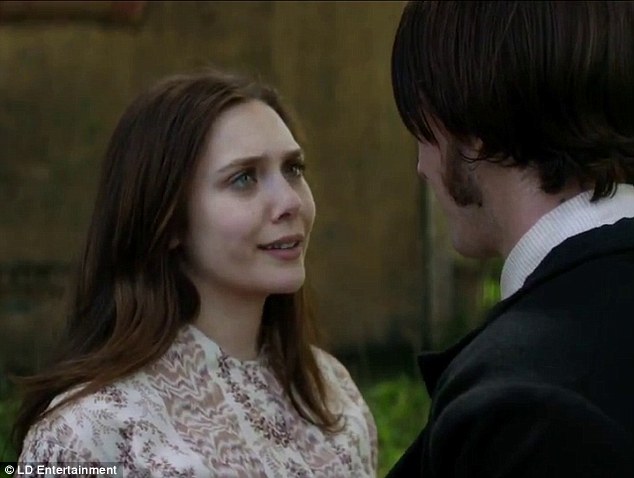
In the indie Run & Jump, a rare type of stroke has changed the personality of an Irish furniture maker; he has survived, but now prone to rages and catatonia, he is never going to be the same as before.  He is returned to his family, led by his firecracker wife (Maxine Peake).  Along comes an American medical researcher (Will Forte from Saturday Night Live and Nebraska), who moves with the family so he can continually film his patient’s symptoms.

The family initially resents the constant filming, although they desperately need the income from the research stipend.  The researcher is so socially awkward that he’s almost catatonic himself, but he is able to provide the adult male presence that the family now misses, and they are eventually drawn to his kindness.  Although he tries to maintain clinical distance, he is inevitably attracted to the vitality of the wife – a real live wire.  But this isn’t going where you might expect…

Run & Jump succeeds both as a romance and as a family drama.  The primary credit goes to co-writer and director Steph Green.  A Bay Area filmmaker who now works in Ireland, Green was Oscar nominated for a live action short.  Run & Jump is her first feature.

Maxine Peake’s affecting performance as the wife drives the film; Run & Jump is really the story of the wife’s struggles as she fights to keep her family afloat while making a near impossible adjustment.

Run & Jump is available streaming on Amazon, iTunes, Google Play, YouTube and Xbox Video.

Under the Skin: unsatisfying…but, then again, there’s Scarlett

under skinUnder the Skin is the most bizarro movie of the year so far – by a long shot.  A space alien in the form of a human woman attracts men sexually and then harvests their bodies. As each man steps forward, entranced in lust, he doesn’t notice that he is sinking into an ever deeper black pool until he vanishes.   Later, we learn that he is suspended in the viscous liquid until, suddenly, his body is deflated like a popped balloon, leaving just the latex-like skin, while a red pulp (presumably pulverized human bone and tissue) heads up on a conveyor belt to the aliens for their use.  This lurid story is set in the gloomy dank of Scotland and yo-yos between the gritty streets of Glasgow and a highly stylized sci-fi world a la Solaris.

Scarlett Johansson, who puts the lure in allure, plays the alien who any heterosexual man would crawl on his knees across broken glass for.  Scarlett is a helluva good sport.  Johansson is that rare A-list movie star who doesn’t take herself too seriously and has VERY good taste.  You can’t criticize her for picking up a paycheck in the occasional comic book movie when you consider a body of top-tier work that is remarkable for a 29-year-old:  Ghost World, Lost in Translation, Girl with a Pearl Earring, Match Point, Vicky Christina Barcelona, Her.  Here, she is suitably sensual and perfectly nails the alien’s changing degree of emotional detachment/attachment, which is really the core of the movie (I think).  And she gets naked several times.

Director Jonathan Glazer (Sexy Beast) co-wrote the screenplay with Walter Campbell from a Michael Faber novel.  This is NOT a movie for those who need to know what is going on at all times.  And, to connect the dots the best we can, we have to sit through some VERY repetitive action.

Again and again, the alien drives around Glasgow, scanning hundreds of men, asking the ones with the most unintelligible accents for directions and picking up the single ones.  This happens a lot.  She has an alien handler in the form of a human man dressed in motorcycle gear, who strides around with aggressive purposefulness and speeds around the Scottish back roads on his bike and never speaks.  This happens a lot, too.

Under the Skin is getting critical praise (currently a Metacritic score of 77), which I attribute to its novel look and overall trippiness and to its being the first movie in three months that challenges the audience.  But overall, the payoff isn’t really worth watching the repetition, trying to figure out what’s going on and why.

SPOILER ALERT:  As an alien people-harvester, she is initially emotionally uninvolved with humans.  She has no reaction to a family beach tragedy that would highly disturb a human.  Dragged into a disco, she is disoriented until some poor guy chats her up and she can lapse into the role she was trained/programmed for.

But then she picks up an Elephant Man for harvesting; she is touched by his longing for companionship and sex – and ends up letting him go.  Another man shows her kindness and she tries out humanity, tapping her fingers to human music, trying a bite of chocolate cake (and spitting it out, gagging).  She attaches to the kind man but finds herself biologically unequipped to take the relationship to a new level.

And there are some holes in the story.  If this alien race is so advanced, why can’t her handler find her with some GPS-like capacity?  Why don’t the aliens harvest more people, and why do they just pick the solitary loners?  Why don’t they consume the skin? But that’s just thinking too much about Under the Skin.

Joe: bad ass redemption in the backwoods

JoeIn Joe, Nicholas Cage plays the title character, who lives a solitary life in backwoods Texas – self-isolated by problems with anger management and booze that long ago estranged his family and cost him some time in the state pen.  Somehow Joe has stayed out of trouble for years, but he’s always on a slow simmer, seemingly close to boiling over.  Joe meets Gary (Tye Sheridan of Mud), a boy who belongs to a family of drifters led by a father who beats them and takes all their money to spend on cheap likker.  Joe bonds with Gary, and ultimately finds redemption in a sacrifice he makes for the boy.  Dark and violent, Joe is ultimately successful as a gripping drama.

Indie writer-director David Gordon Green excels at authentic character-driven Southern dramas (George Washington, All the Real Girls and Undertow).  Here he brings us to a world of nasty chained-up dogs, where everyone smokes cigarettes and eats canned food, and nobody has heard of espresso or the Internet.

Cage’s performance is excellent – never over-the-top and much more modulated and realistic than we’ve come to expect from him.

Sheridan, so good in Mud, might be even better here; he smolders at the abuse and neglect the family suffers at the hands of his father. He’s become a strapping kid who came employ violence against an adult, but the father-son tie keeps him from unleashing it on his despicable father. Sheridan is especially brilliant in an early scene where he playfully banters with his drunken dad and in another where Joe teaches him how to fake a pained smile to attract girls.

The biggest revelation in Joe is a searing performance by non-actor Gary Poulter as the drunken father who may shamble like a zombie, but is always cruising like a shark, on the hunt for someone to manipulate or rob.  It’s stirring portrait of final stage alcoholism, where there is no moral filter anymore – he will resort to ANY conduct for some three dollar wine.  There is nothing left but evil borne of desperation for a drink.  Although Poulter was a reliable member of the filmmaking team, within two months after the conclusion of photography, he had resorted to his previous self-destructive lifestyle and died.  Thanks to Green, he leaves one great cinematic performance as his legacy.

The Unknown Known: Rumsfeld exposed…by himself

Rumsfeld: unruffled by the Errol Morris documentary treatmentErrol Morris is a master documentarian (Gates of Heaven, The Thin Blue Line, Standard Operating Procedure), so he is the perfect guy to explore the personality and career – and, above all, the self-certainty – of Donald Rumsfeld, architect of the American wars in Afghanistan and Iraq.  For most of the film, Rumsfeld himself is on-screen talking to Morris’ camera.  Rumsfeld is apparently completely immune from self-doubt, but ultimately reveals more about himself than he would like.

The title of the picture comes from a Rumsfeld memo that describes a policy maker’s “unknown known” as that which you thought you know but it turns out that you didn’t.  Of course, the classic “unknown known” is the certainty that the Iraq War would be justified and would turn out well.

In contrast, the “unknown unknown” is something that you don’t know that you don’t know and that Rumsfeld says that you have to imagine (such as the Pearl Harbor and 9/11 attacks).  Of course, the imagining of all kinds of such attacks drives the neo-conservative theory of preemptive war – to strike at those who can be IMAGINED to threaten you.

Rumsfeld is remarkably glib and very effective at selling his own version of reality.  Morris takes this on early in the documentary by getting Rumsfeld to deny linking Saddam with Al Qaeda and then shows him doing exactly that in a pre-Iraq War news conference.  Indeed, Morris himself is an effective off-screen participant throughout, sparring with Rumsfeld, with each guy winning his share of verbal tussles.

When Rumsfeld thinks that he’s won a point, he grins the infuriating grin in the image above.  The one time he loses his smile is when Morris mentions a moment when Rumsfeld almost became Reagan’s Vice-President (and then future President), and Rumsfeld acknowledges that, yes, this was possible.  The film is brilliantly edited, and Morris knows EXACTLY how long to extend a shot to catch Rumsfeld in moments of reflection.

The movie traces Rumsfeld’s remarkable life and career from his marriage and early start as a young Congressman  thru his roles in the Nixon and Ford administrations with the end of Watergate, the fall of Saigon, his salesmanship for defense spending increases in the 1970s and his service as Reagan’s Middle East envoy.  After a time in the wilderness during Bush I, of course, he came to his greatest power during Bush II.  He gives a stirring first-person account of the 9/11 attack of the Pentagon, relating what the scene was like even before the first responders arrived.  But the core of the film is about the Rumsfeld decisions about Iraq.

Unusual for a current events documentary, there’s also some top shelf music from Danny Elfman, Oscar nominated for Good Will Hunting and Milk.

You can find The Unknown Known tomorrow in theaters and streaming now on Amazon, iTunes, YouTube, Google Play and Xbox Video

Swerve: predictable action and one scary dude

Jason Clarke in SWERVE

In the Australian thriller Swerve, a Good Samaritan drifter gets caught up in a deadly entanglement involving a briefcase full of drug money, some very dangerous guys and a sexy woman of uncertain loyalty.  The movie gets its title from some key moments when vehicles swerve and move the plot along.  There’s a lot of convincing action (there not even any dialogue for the first seven minutes and two fatalities), but writer-director Craig Lahiff is a better director than a writer. If you’ve seen a femme fatale and some action thrillers, nothing in the plot will surprise you. Unfortunately, the wife with wandering thighs is played by Emma Booth, who is unable to elevate the Bad Girl to Kathleen Turner/Lana Turner territory.

The best thing about Swerve is that hulking Jason Clarke (Animal Kingdom, Zero Dark Thirty, Lawless) is really good at playing menace and indestructibility, and here he adds a mad glint in his eyes. Plus there some pleasingly absurd touches with marching bands randomly wandering into otherwise tense scenes. Bottom line: Swerve is one hour forty minutes of unsurprising and predictable action peppered with one fun performance.

Swerve is available on DVD from Netflix and streaming from Amazon, iTunes and Vudu.