How to Train Your Dragon 2: action-packed and fun-filled for the young and young-at-heart

How Train Dragon

By guest bloggers Sean Breen (Nephew 2) & Lisa Breen Strickland (The Wife)

The action-packed and fun-filled How to Train Your Dragon 2 picks up four years after the original movie’s story.  Hiccup, the hero, looks much older and has much more confidence.  As the movie begins his father Stoick offers Hiccup the opportunity to succeed him as the Chief of the Berk – their village and its merry band of Vikings and their dragons. Hiccup is not so sure about this plan.  But before he gets to decide Drago Bloodfist, an arch enemy of Stoick, comes back to the region to continue amassing his dragon army, with the intention of controlling Berk and the world.  Hiccup wants to use his persuasive powers to dissuade Drago from his evil plan.  Hiccup discovers more about himself – his past, present and future – as his plan unfolds.

We found this movie to be entertaining, engaging, and touching — and we liked it! We think that others like us – an 11 year old (or younger) and the young at heart – would enjoy the movie because it is even better than the book.  The way the animators portrayed the dragons was amazing – each so different, some scary, some cute – and some we would like to have as pets (especially Toothless).  It was impressive how they could animate the alpha dragons – with different and very useful skills that were used both for evil (when controlled by Drago) and good (when handled by Hiccup).

We say – grab your favorite nephew or aunt, get your popcorn, Slushee and Diet Coke and go see How to Train Your Dragon 2.

In Secret: predictable, stilted and too many clothes

in secret

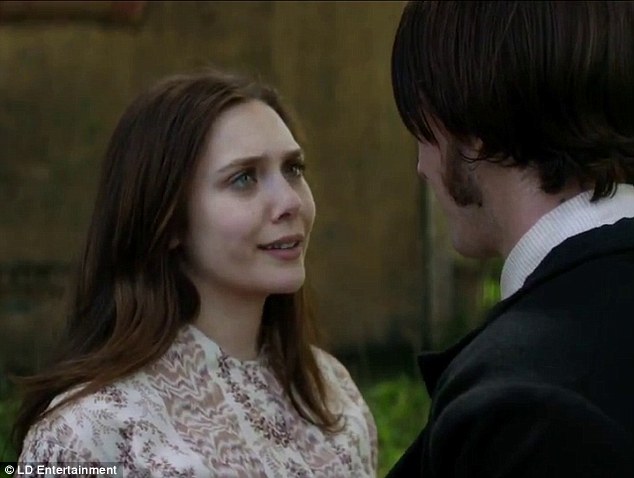
In Secret is a period romance with the look and set-up of a Jane Austin movie, the plot of The Postman Always Rings Twice and the appeal of neither.  A poor orphan girl (Elizabeth Olsen) is dispatched to living with her wealthy relatives, who eventually force a marriage to her sickly cousin Tom Felton (Draco Malfoy in the Harry Potter movies).  His hunky friend (Oscar Isaacs from Inside Llewyn Davis) shows up and, before ya know it, he and the young bride are humping like bunnies.  And before you can say “Double Indemnity”, it occurs to them that they could be together forever with a lot of money if only the husband met his end.  This being the 19th Century, the poor cuckold hasn’t yet seen A Place in the Sun or Leave Her to Heaven, so he gets in the boat…

Unfortunately, In Secret telegraphs every point in the plot, so the audience is never surprised.  In Secret fails to deliver the edginess of a noir thriller, but it retains the worst of the Austin period movies – the stilted dialogue and all the boring stuff.

Olsen is a fine actress and she makes the most of the material.  Unfortunately, Jessica Lange, as the family matriarch, has some meltdowns that are embarrassing.

One more complaint: the two lovers may well be having a torrid affair, but one of my pet peeves is movie-sex-in-clothes.  I understand that women wore more layers of garments in the 19th Century, but – trust me – NOBODY has this much sex without undressing.

In Secret is available on DVD from Netflix and streaming from Amazon, iTunes, Vudu and Xbox Video.

Witching and Bitching: witty comment on mysogyny inside a rockin’ horror spoof

WITCHING AND BITCHING

The rockin’ Witching and Bitching (Las brujas de Zugarramurdi), by Spanish cult director Alex de la Iglesia, features a gang of robbers – one is dressed as a silver Jesus on the cross and another as a Green Army Guy – on the lam rocketing into an occult nightmare.  They run smack dab into a coven of witches – the full-out Macbeth-stir-the-cauldron kind of witches.  This film has the feel of an early Almodovar madcap comedy – if Almodovar were into goth horror. It’s all rapid-pulsed fun – and surprisingly smart.

The underlying theme is misogyny.  The male characters grouse about the stereotypical complaints about women – all while themselves exemplifying the worst of the stereotypical male flaws.  For example, one guy complains that his ex won’t consent to joint custody on the grounds of his irresponsibility – yet he brings their seven-year-old along on an armed robbery.  One underlying joke is that the men see women as bitches, but it’s the men who spend the whole movie bitching.  Another is that the men become trapped by REAL witches whose ball busting far exceeds the men’s most negative misogynistic fantasies.

These Spanish actors are wonderful, including the great Carmen Maura (Almodovar’s Women on the Verge of a Nervous Breakdown and Volver) and appropriately named hottie Carolina Bang. They’re very adept at the deadpan delivery of lines like this:

Driver: This village is damned. They hold witches sabbaths.
Boy: What’s that?
Robber: Like a kegger but medieval.

De la Iglesia maintains a deliciously frantic pace throughout.  The final orgiastic ritual goes on a long time but maintains audience engagement.

This was the first de la Iglesia movie that I’d seen, but I’m definitely going to check out more of his work.  Speaking of which, he nicely sets up a sequel.  But go ahead and watch Witching and Bitching now – streaming in Amazon Instant, iTunes and Xbox Video.

Life Itself: Roger Ebert’s truth

Roger Ebert in LIFE ITSELF

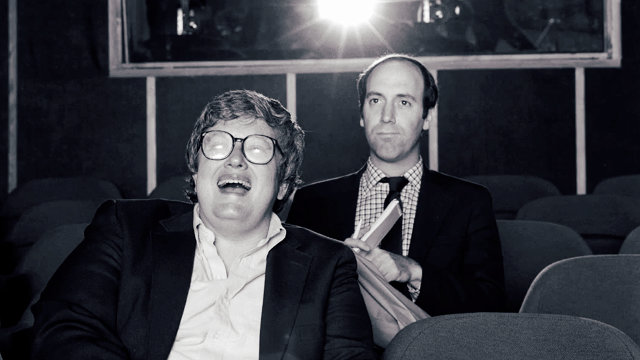
Life Itself is the affectionate but not worshipful documentary on movie critic Roger Ebert’s groundbreaking career, courageous battle against disease and uncommonly graceful death.  Ebert popularized movie criticism and evangelized for the lesser known foreign films, documentaries and indies that I love.  In a 2002 cancer treatment, Ebert lost his lower jaw and, with it, his ability to talk or eat.  Astonishingly, this didn’t slow him down; he replaced his television show with a pioneering blog and Twitter account – and remained just as productive and influential as ever.

Filmmaker Steve James set out to make a movie of Ebert’s memoir of the same name, but – just as the project started – Ebert’s cancer returned.  So the story includes Ebert’s final illness and death.  Ebert retained the joy in his life far longer than could most in his situation – it’s a marvel and a model for the rest of us.

James is one of the deserving filmmakers whose art was boosted by Ebert, who picked James’ obscure documentary Hoop Dreams as the best film of the year. Ebert similarly helped directors from Spike Lee in the 1980s to Raman Bahrani in the 2000s. In Life Itself, Errol Morris says that he would have had no career without Ebert and Siskel, and Martin Scorsese says that they saved his career.

But the primary theme of Life Itself is truth.  In his work, Ebert demanded truth from himself and from the cinema that he reviewed.  In this film, Ebert insisted on showing the person he was at the end – with his infirmities on full display.  There are moments of frustration where he is not so lovable and stories about his personal flaws.  We are all packages of virtues and weaknesses; seeing Roger’s weaknesses just adds credibility to his strengths and accomplishments.

Life Itself is a Must See for fans of Roger Ebert and for people musing on their own mortality.  People with less of an interest in Ebert may find the movie a little too long.  But the human story of a life – challenged and then ending – is very strong.

Whitey: United States of America v. James J. Bulger: mildly interesting

WHITEY: THE UNITED STATES OF AMERICAN V. JAMES J. BULGER

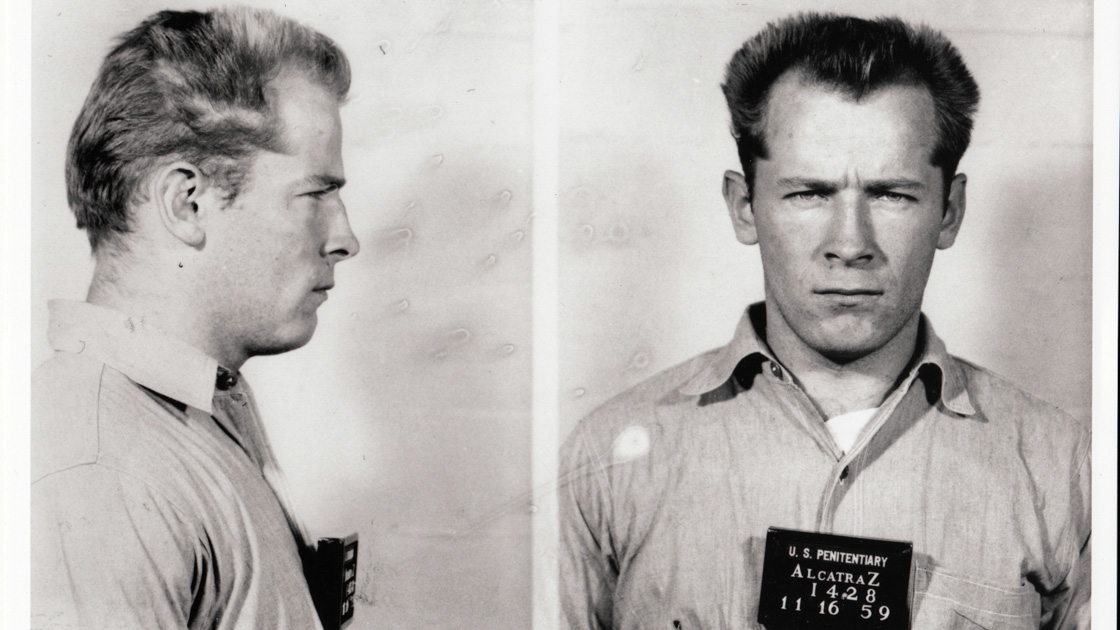
The documentary Whitey: United States of America v. James J. Bulger is about the trial of Whitey Bulger, the Irish mob boss who ruled the Boston crime scene for 25 years until he went on the lam in 1994 and evaded the FBI until 2011.  It turns out that he had been protected from arrest because he had been an informant to corrupt local FBI agents.  In his 2013 trial, he was convicted of 11 murders.

The Whitey Bulger saga has been most notable for the protection by the FBI, the long manhunt and his dramatic capture in Santa Monica.  This documentary focuses on the trial and Bulger’s odd defense.  Bulger was perfectly willing to admit to murderous crimes, but demanded a chance to deny that he had been an FBI snitch (which was totally irrelevant to whether he had committed the crimes that he was charged with).  Equally oddly, the prosecution was intent on proving Bulger’s snitchdom (although not needed for his conviction).

We hear from some of the people who Bulger victimized, and we get a sense of the lives that Bulger ruined, not just the cops and robbers aspect of his story.  We also hear Bulger himself on phone calls to his lawyers.

It’s an interesting story, but the filmmaking has look and feel of cable TV non-fiction shows, repeating over and over the same shots of black SUV’s hauling Whitey to trail and helicopter sweeps across Boston harbor, aerial shots of the Boston federal courthouse,  and the like.  On the whole, I didn’t find Whitey very compelling.

Whitey: United States of America v. James J. Bulger is available streaming on iTunes, Vudu, YouTube, Google Play and Xbox Video.

DVD/Stream of the Week: True Detective

true detective
My DVD/Stream of the week – perfect for binge-viewing on the holiday weekend – is the eight one-hour episodes of HBO’s True Detective. It’s a dark tale of two mismatched detectives – each tormented by his own demons – obsessed by a whodunit in contemporary back bayou Lousiana. Woody Harrelson is very good – but Matthew McConaughey’s performance may have been the best on TV this year.

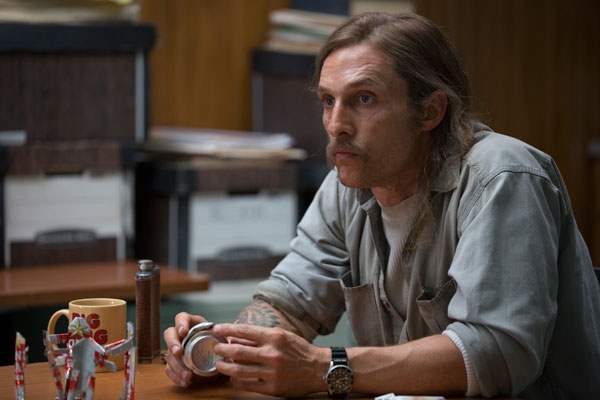
The two detectives are shown pursuing a case together in 1995 and then being interviewed separately about it in 2012.  In the 2012 scenes, McConaughey sits at a table, his eyes dead but occasionally flashing, behind a coffee mug and an increasing lineup of empty beer cans.  He chain smokes and stares down his interrogators – doing very little with frightening intensity.  McConaughey has recently delivered brilliant performances in excellent movies (Mud, Bernie, The Paperboy, Killer Joe, The Wolf of Wall Street, Dallas Buyers Club) – and this may be his best.  McConaughey is reason enough to watch True Detective.

True Detective is available on DVD from Netflix and streaming from HBO GO.

Citizen Koch: righteous but lame

xxx Koch (center)  in CITIZEN KOCH
David Koch (center) in CITIZEN KOCH

The advocacy documentary Citizen Koch exposes the terrible effects of the US Supreme Court’s Citizens United decision, which allows the right-wing billionaire Koch brothers to anonymously spend unlimited treasure to promote political candidates, measures and legislation that I (The Movie Gourmet) abhor.  Filmmakers Carl Deal and Tia Lessin, who have worked with Michael Moore, share Moore’s use of documentary to persuade by observation: here are the facts that will lead you to agree with us.

The very best aspect of Citizen Koch is the core story of Governor Scott Walker’s assault on public employees and their unions in Wisconsin.   Citizen Koch meticulously connects the dots between the Koch Brothers’ strategy of degrading the Democratic Party’s strength by weakening public employee unions and Walker’s machinations.  It’s a conspiracy in plain sight.  Citizen Koch is at its best when this thread is told from the perspective of a few Wisconsin public employees – who are themselves Republicans.

Unfortunately, what could have been a superb film on the political conflict in Wisconsin gets flabby and diluted with threads about Citizens United and Charles and David Koch.  The worst part is a fourth thread about Buddy Roemer, a sleazy opportunist who has changed political parties three times but is held up as some sort of beacon of good government; it’s outrageously naive and potentially discredits the rest of the film.

And here’s a little controversy that is illustrative of the Koch Brothers political power.  PBS was going to air Citizen Koch on its documentary series POV, but chickened out because David Koch sits on the board of PBS’ NYC affiliate WNET and is a huge contributor to PBS products like Nova.

Jersey Boys: evocative pop and a dash of Christopher Walken

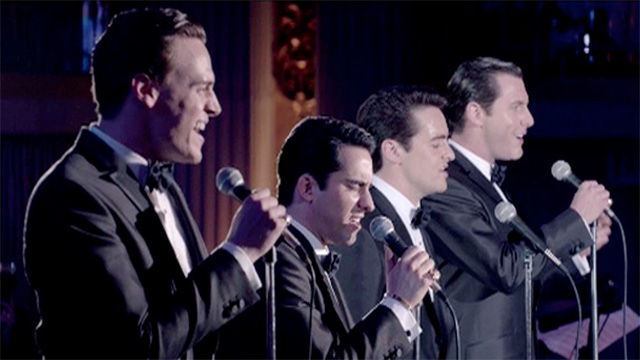
Erich Bergen, John Lloyd Young, Vincent Piazza and Michael Lomenda in JERSEY BOYS

Jersey Boys, while not great cinema, is definitely a fun time at the movies.  We might have expected great cinema because this is Clint Eastwood’s version of the Broadway musical, itself a show biz bio of Frankie Valli and the Four Seasons.  The acting is a little uneven, the female parts are underwritten and some parts drag.  But what Jersey Boys does offer – the Four Season’s evocative pop hits, a couple charismatic performances and a dash of Christopher Walken – is worth the trip to the theater.

The story’s arc is a familiar one – after paying their dues with years of bottom-scraping gigs, a bunch of nobodies achieve overnight fame and wealth and then destruct.  Three things are a little different about these guys.  First, the core of the group is mobbed up (and you can see how the real Frankie Valli could later play a mobster so well in The Sopranos).  Second, their catalyst is the pop music-writing genius Bob Gaudio, a suburban teen who joins the hardscrabble threesome from a tough neighborhood and serves them their hits: Sherry, Big Girls Don’t Cry, Walk Like a Man, Rag Doll, Dawn (Go Away) and Can’t Take My Eyes Off You.  Finally, the cause of the group’s downfall is neither external (e.g., crooked business manager or evil record company) nor pervasive substance abuse.

Eastwood tells the story in four segments – each from the perspective of one of the guys – and this works pretty well.  He gets a big boost from the performances of Vincent Piazza as the cocky group leader, Erich Bergen as the creative mastermind Gaudio and Mike Doyle as their flamboyant producer.  John Lloyd Young reprises his Broadway role as the group’s big star, lead singer Frankie Valli.  Young can do Valli’s very distinctive voice, but has a very limited emotional range.  And it turns out that Valli, because he’s a pretty square guy, has the least interesting story of the group.  When Valli does have relationship angst, the story gets bogged down.  Michael Lomenda plays the fourth guy and get to ask the plaintive question, “What if you’re Ringo?”

Jersey Boys also contains yet another delightful turn by Christopher Walken, this time as the Four Seasons’ mobster mentor.  Walken himself started out as a chorus boy, and it’s fun to see him holding his own in the grand musical finale.  And remember the young and dreamy Christopher Walken belting out The Four Seasons’s Can’t Take My Eyes Off You in The Deer Hunter’s great bar scene?  It’s near the beginning of this trailer.

The Rover: bleakness and hyperviolence aren’t not enough

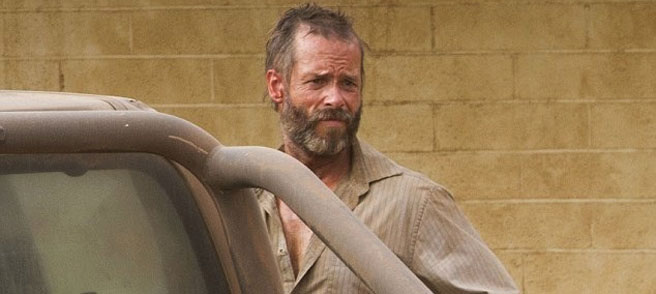
Guy Pearce in THE ROVER

Man, I was really looking forward to the violent Aussie thriller The Rover, because its co-writer/director David Michôd had written and directed one of my recent favorites: Animal Kingdom. Unfortunately, although The Rover delivers the dark violence of Animal Kingdom, it really just doesn’t have enough story.

That story is set “10 years after The Collapse”, in an Australian outback where the social order has completely broken down. No manufactured goods seem to available except for gasoline, which fuels the armed thugs who cruise through the severely bleak landscape preying on what locals remain fortified in their homes and on each other. A perpetually angry and sweaty loner (Guy Pearce) has his car stolen by a gang of robbers, and sets off after them. He soon picks up the injured, half-witted brother of one of the gang (Robert Pattinson of the Twilight movies), who had been left to die at a robbery gone bad. Driving and violence ensues.

By the end of the story co-written by Michôd and the actor Joel Edgerton, we learn why Pearce’s character is so angry and why he wants his car back. But those answers just aren’t enough of a payoff to justify the ride.

I gotta mention the eccentric performance by Pattinson, adorned with some really bad teeth and, for some reason, effecting a West Virginia hillbilly accent. It’s been a long, long time since I’ve seen an actor employ more tics – so many that Pattinson often looks like he is doing a Joe Cocker impression. The rest of the cast, especially Pearce and Gillian Jones, are uniformly excellent.

Skip The Rover and watch Animal Kingdom again instead.

Gore Vidal: The United States of Amnesia: the man who invented snark

GORE VIDAL: THE UNITED STATES OF AMNESIA

Nicholas D. Wrathall’s documentary Gore Vidal: The United States of Amnesia is an affectionate portrait of the famously prickly novelist. Vidal, himself an American blue blood, delighted in the harshest criticism of American society, culture and politics. In the film, he observes “When I want to know what the United States is up to, I look into my own black heart.”

Vidal practically invented snark. Most of all, he seemed to relish the role of provocateur, publicly spewing out outrageous (and oft factually unreliable) statements. There has never been a more entertaining TV talk show guest.  In Gore Vidal: The United States of Amnesia, we see many of the famous talk show moments – including the 1968 NBC debate when he baited the ubercool William F. Buckley into calling him a queer; that was a pricelessly typical moment, where Vidal playfully PRETENDED to take himself very seriously in labeling Buckley “crypto-Nazi”, causing Buckley – who really WAS taking himself seriously – to erupt.

Wrathall’s film benefits from his access to Vidal himself, facilitated by Vidal’s nephew, the director Burr Steers (who co-produced and appears).  So there are glimpses into less well-known aspects of Vidal’s life, including his longtime partner and his love of living in Italy.

Say what you must, Vidal was both absorbing and ever-amusing, which makes Gore Vidal: The United States of Amnesia an intelligent diversion.