Mikiko Sasaki’s ever surprising The Great Sasuke starts out with the most essential element of a documentary – a compelling subject. Here it’s a Japanese pro wrestler who achieved stardom after bringing a Lucha Libre mask (and a wife) from his training days in Mexico. Between 1992 and 2006, The Great Sasuke won championships and filled large Tokyo arenas. He especially thrilled audiences with his aerial moves (that’s when he climbs up on the turnbuckles and jumps off on to the hapless opponent). But all that combat has taken a toll on his body, and now he is headquartered in his obscure hometown 300 miles north of Tokyo, performing in front of a couple hundred on folding chairs or floor mats. So far we have the familiar story of an athlete aging out of fame and success, but two aspects of The Great Sasuke make this story much more interesting.
First, this guy NEVER takes off his mask. We see him striding down the sidewalk in a business suit, briefcase in hand – fully masked. And we see him eating breakfast with his kids, vacuuming the floor, driving, brushing his teeth – all in his mask. He’s even developed a technique for changing between his everyday mask and his performance mask – all in a way that doesn’t let anyone glimpse his face. (At the Cinequest screening, director Sasaki said that The Great Sasuke’s wife insisted that she would not be married to a guy who didn’t take the mask off in the bedroom, and The Great Sasuke’s kids have seen his face, too.)
Second, he’s a quirky guy who plunges himself in to offbeat (and doomed) schemes to set up business enterprises and even run for political office. He is completely sincere and just couldn’t work any harder, but he won’t listen to anyone tell him that his plans are completely half-baked. He may be a force of nature, but it’s pretty hard to sway voters when you’re campaigning on street corners in a wrestling mask. It all adds up to a good movie experience.
The Swedish comedy Staying Alivetreads the now familiar ground of An Unmarried Woman – a woman’s husband has traded her in for a newer model, leaving her to address the challenges of self-identity, parenting, sexuality and economic survival in an post-marriage environment. Staying Alive has two things going for it – an appealing performance by its lead actress, Agnes Kittelsen, and some bawdy, broad humor from her bestie.
Staying Alive is mildly enjoyable entertainment, but there’s really no other reason for this film to have been made.
Remember Me is an odd couple comedy about two mismatched cousins who visit their grandparents just as the old man dies so they have to take grandma (the great Rita Moreno) off on a road trip to the old folks home. Remember Me is written and directed by Steve Goldbloom, who also stars as the more professionally successful and reserved cousin; Joel Kelly Dauten plays the wild man cousin, banging around between failed fantasies. Both guys are emotionally stunted in their own ways.
The dead grandpa situation is very funny, and there’s a witty joke about the Goldbloom character’s day job as a guy who reads news stories about wars in the Third World for NPR (without ever leaving the US to cover a story). But these two immature thirty-year-olds just aren’t interesting enough to carry a feature film.
Rita Moreno is very good, but this is a one of those man-child-coming-of-age movies. That subgenre is getting tiresome, as was Remember Me.
The sci-fi comedy Man Underground is centered around the entirely humorless Willem (George Basil), who is emotionally scarred by a failed relationship and an occurrence that he believes was an encounter with space aliens. Unburdened by any lack of confidence, Willem makes his way as a lecturer and Internet personality specializing in paranoid theories of government cover-ups. He decides to make his own biopic, assisted by oddball acolytes Todd (Andy Rocco) and Flossie (Pamela Fila).
Most of Man Underground fills out the portrait of the deeply troubled and absurdly misguided Willem. But, even with cringe humor, it’s hard to watch Willem when it turns out that the really interesting characters are Todd and Flossie. Todd and Flossie finally get their due, but too much of Man Underground is about Willem.
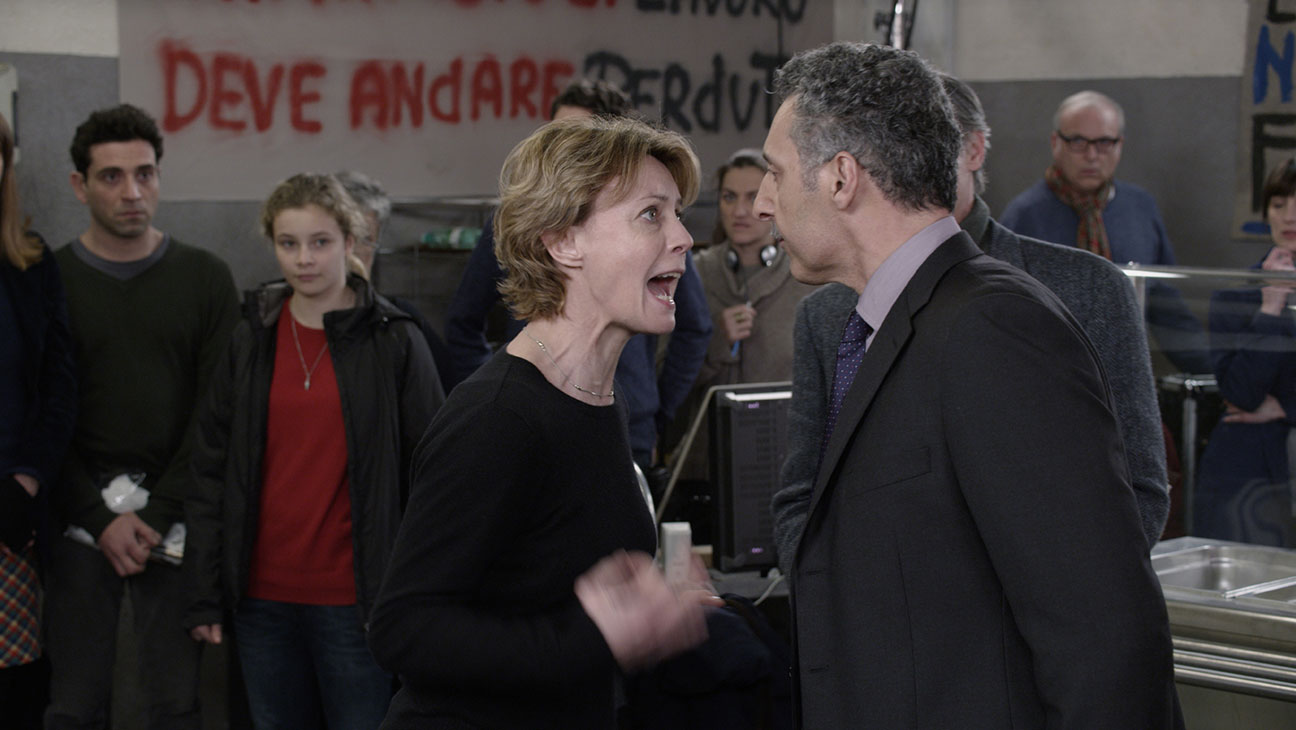
So let’s get one thing straight right up front – My Mother is NOT a dramedy. It’s an Italian drama that is leavened with bits of comedy. Writer-director Nanni Moretti has constructed a deeply personal portrait of a person in mid-career and mid-life who is losing her aged parent. There’s never a convenient moment to go through this experience, and Moretti’s protagonist, a movie director (Margherita Buy), is juggling her job and her relationships with her teen daughter, her ex-husband and her brother (played by Moretti). It’s all very complicated – just like it is in real life, and Moretti brings authenticity to the story.
All of this is pretty somber, but our heroine is making a movie, and she has cast an astonishingly pompous American star (John Turturro) who claims to speak more Italian that he really does and who can’t remember his lines. Every scene with Turturro is hilarious as he bumbles through the filmmaking with shameless bravado.
Nanni Moretti is a gifted filmmaker who has been successful in varied genres. I really enjoyed his comedy We Have a Pope, about a newly elected pope who suffers a panic attack and flees the Vatican. This is more serious stuff. The Wife, who liked it less than I did, refers to it as the “depressing Italian dying mother movie”. I found it very affecting, especially the emotionally satisfying ending.
I saw My Mother at the Mill Valley Film Festival in October 2015, but its theatrical release is now expected in March 2016.
In the sex comedy Friends Effing Friends Effing Friends, several twenty-somethings start hooking up with each other in random combinations, even though some are in relationships. The sexual entanglements predictably lead to both comic situations and hurt feelings.
Happily, sometimes there is Truth in Advertising, and there is a lots of Effing in Friends Effing Friends Effing Friends. There’s so much sex that, although it has a real plot and much better acting, it wouldn’t be totally out-of-place on late night Showtime.
The cast is young, appealing and able, and Friends Effing Friends Effing Friends works as a trifle (and there’s nothing wrong with that). Its world premiere was at Cinequest.
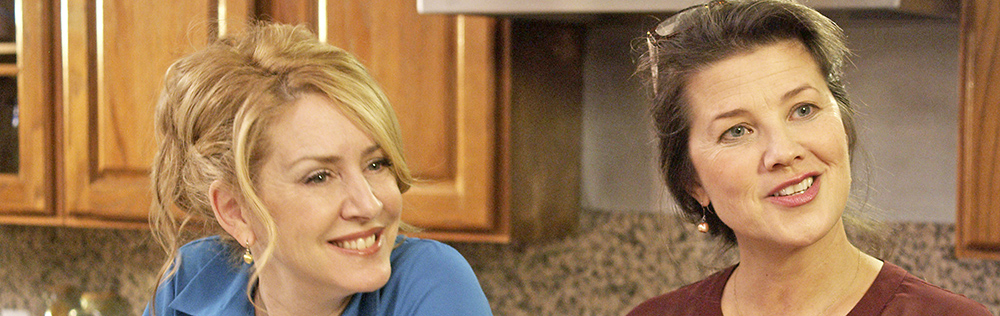
The contemporary and topical comedy Search Enginestakes on our obsession with We see an extended family Thanksgiving – and everyone is bowing into that screen-gazing posture. All the characters are preoccupied by their smart phones as they text, video, read recipes and blog away. Suddenly, something blocks their coverage, and we see what happens when all the screens go dark.
Search Engines has a promising cast (Daphne Zuniga, Joely Fisher, Natasha Gregson Wagner and even Connie Stevens!), and they all perform well. The strongest part of Search Engines is its topicality, but as mildly amusing as it is, it just ain’t a knee slapper.
Here’s an interview with the Lori Stoll, writer-director of Heaven’s Floor.
[NOTE: THIS INTERVIEW CONTAINS SPOILERS]
The Movie Gourmet: The protagonist Julia is so restless, and the restlessness seems to drive her impulsiveness. Is she just naturally restless, or is there some deficit in her satisfaction that is filled by Malaya?
Lori Stoll: Both really. Her experience with Malaya forced her to grow up. When she says she just wants to be good, she sincerely means it, even when being good required her to take responsibility for her actions and take other people into consideration. Julia’s natural state is one of restlessness, always looking for an escape – a character flaw that clearly gets her in a heap of trouble.
Having said that, Julia sees the best of herself in Malaya, but she doesn’t realize it until Malaya rejects her and is about to leave. At that point Julia also realizes that her actions created unintended consequences. Julia chooses to take responsibility for her wanderlust, terminating her gallivanting around the globe. When she promises her son she is grounded she means it.
TMG: Do you think that Julia, once more satisfied, is still impulsive?
Lori Stoll: Julia grew up through the experience of blowing up her life- perhaps she would like to continue to act on her impulsivity, but has learned to consider the who she is hurting by her decisions. However Julia’s restlessness did create her family.
TMG: So the movie starts with “Based on a true story” and ends with stills of the real Malaya and the obligatory “Any resemblance to real persons” disclaimer. How much of this story really happened this way? The arctic rescue for example?
Lori Stoll: The arctic rescue happened. The emergency shelter happened. Actually most of what was filmed in the arctic really happened and it was much more treacherous in reality, which we were unable to capture on film. For example, the rescue took place in a blizzard, and we had to slide down a frozen waterfall in the middle of the night. When we finally made it to the lodge in Pang, I was as banged up as Julia is in the film. I did lose my film on the ice and I was stuck in Pang for 10 days. I gave Malaya and her friends my candy bars and my sled. And she did ask me if she could tell her friends that I was her mother. Both Malaya’s mother and grandmother died. I did go back up for the funeral, and I did bring her back to LA with me. US Immigration did inform us that for Malaya to stay in Los Angeles she had to be legally adopted, and she was given a visa good for a one month stay in the US.
TMG: Movies are not often kind to characters who resist someone’s “following their heart”, no matter how impractical or whatever the consequences to others. Yet your depiction of the husband Ed is very sympathetic, as someone reacting with understandable resistance to impulsive, unilateral and life-changing commitments. Will you share any of the real back story on that relationship?
Lori Stoll: It’s funny, I see Ed as you do, he’s married to this crazy woman, he really loves her, and his biggest fault is being overwhelmingly practical. It’s complicated – he loves her, he wants her to be happy, he tries to understand her.
Julia feels held down by Ed, and forced into a conventional relationship. She resents his practically. If you are asking about my husband and our real backstory, clearly spontaneously adopting an almost teenage child from another culture created a lot of conflict. Having said that, I’m happy to share with you that today my husband and I are together, Malaya is 27 and the executive producer of Heaven’s Floor, and our son Zach is 20 and a sophomore at the University of Chicago.
TMG: The Arctic scenes are really impressive. How did your background in photography inform the film’s cinematography for the Arctic scenes? You are a first time director, and I see that your first time DP for the Canadian locations is a veteran camera operator. How “hands on” were you in the cinematography?
Lori Stoll: Regarding the cinematography, I was very hands on. I’ve been a photographer for 30 years, and I’m most comfortable working in a visual medium. Having said that, both George Billinger (Arctic DP) and Danny Moder (LA DP) are both so talented. For a first time director, I truly had the A team for my crew.
Heaven’s Floor’s World Premiere is tonight at Cinequest with more screenings on March 6 and 11.
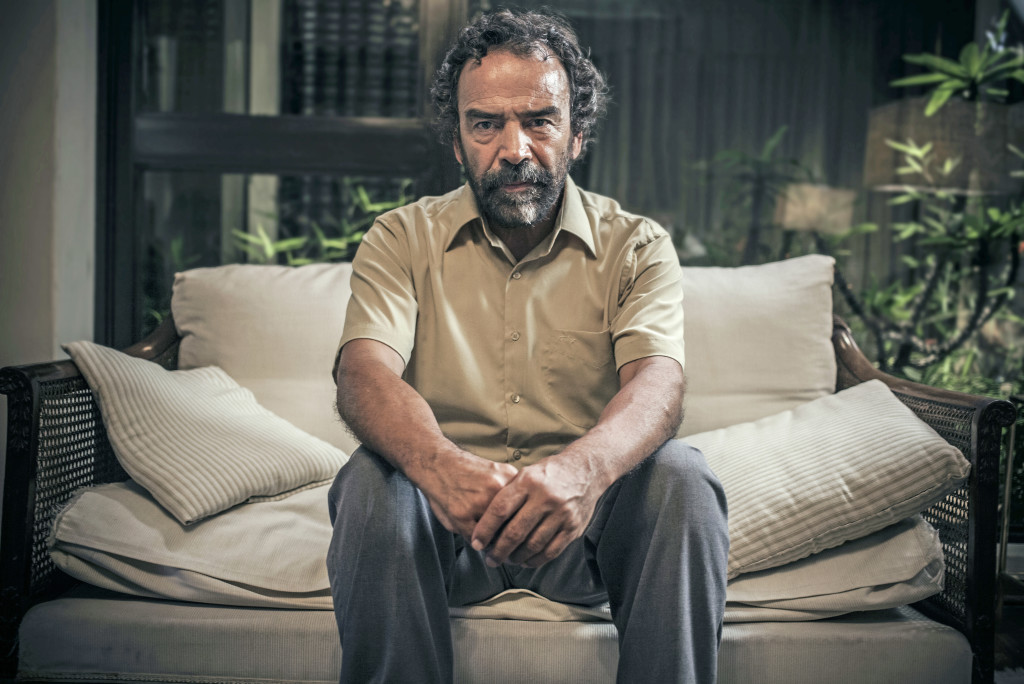
The title character in the Peruvian psychological drama Magallanes is a loser, but is he a lovable loser? Played by Damián Alcázar, Magallanes bounces around from odd job to odd job. He can’t break even driving a borrowed outlaw taxi around the squalid streets of Lima, he lives in a basement hovel and he has one friend. Magallanes glimpses a person from his past, and it rocks him into a series of life-changing events.
Magallanes starts out as a caper movie. But we learn that his one friendship is from his military service in a death squad unit, dispatched to repress the indigenous population with the harshest methods. What this unit did years ago has scarred all the characters (except two snarky cops), and Magallanes is revealed to be a study of PTSD.
What is driving Magallanes’ behavior in this story? We find that we is trying to right a past wrong. But what? And by whom? The revelation in Magallanes is that some wrongs cannot be righted.
Magallanes is a showcase for Mexican actor Alcázar, whom U.S. art house audiences saw in John Sayles’ Men with Guns and as the lead in Herod’s Law. Alcázar makes Magallanes so sympathetic that the movie’s climax is jarring and emotionally powerful.
I saw Magallanes at Cinequest, where it plays again on March 10 and 12.
Here’s what you want in a disaster movie: 1) a really impressive disaster and 2) lots of suspense about which of the main characters will survive. The Norwegian The Wave successfully delivers on both counts.
As a non-Norwegian, I didn’t know that, every few decades, an unstable mountainside somewhere in Norway breaks loose, plunging hundreds of tons of rock into a fjord; this triggers a tsunami, which rages down the fjord, destroying everything and every one that doesn’t reach high ground. Norwegian geologists are even perched above these fjords to trigger early warning systems. A siren goes off, and everyone downstream has TEN MINUTES to climb to safety. As disasters go, this is pretty novel – not your ordinary earthquake, fire, flood, shipwreck and not even your ordinary tsunami (Hereafter, The Impossible). In The Wave, the tidal wave itself is pretty impressive, and the special effects are believable.
But the best part about The Wave is the tension produced by, not one, but TWO ticking clock scenarios. The filmmakers build the tension as we wonder just when the upcoming disaster is going to hit and whether the characters will have time to escape. And then, there’s an excruciating race-against-time to save family members from a hopeless situation.
The main characters are sympathetic, the acting is very good and the dialogue is very witty for the genre. Ane Dahl Torp plays the mom, and her character’s off-the-charts take charge heroism and resilience is a big part of the fun. I’m not a real fan of disaster movies, but I still stayed with The Wave for its entire length.
I saw The Wave at Cinequest, where it gripped and exhausted the audience (in a good way). It will be released theatrically in the Bay Area on March 11.