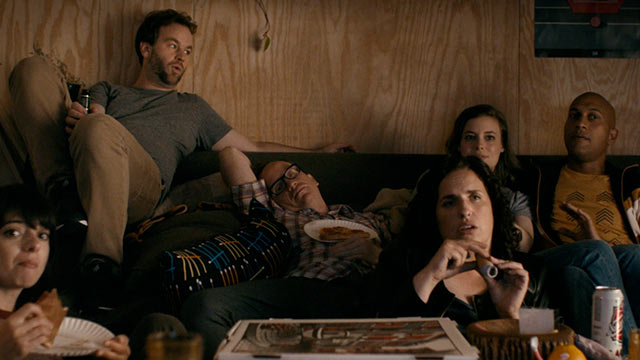
Don’t Think Twice is a dramedy set in the world of comedy. Six artists of varying talent have formed an improvisational comedy troupe. They’re scraping by without much affirmation and with no financial success when one of them gets a chance to join the cast of a hit show a la Saturday Night Live. How do they react when only one attains the stardom that they all crave?
The comic Mike Birbiglia wrote and directed Don’t Think Twice about a world that he knows well. Like his previous Sleepwalk with Me, Don’t Think Twice is smart, funny and filled with authentic human reactions.
Here are the questions that Don’t Think Twice explores. When is “following your dream” an excuse for staying comfortable? When is it delusional? When is it an excuse to sabotage your own success? And when does following your dream keep you from following a more promising dream? When do you call it off?
Keegan-Michael Key and Gillian Jacobs flash the best performances, but the entire troupe is watchable. Generously, Birbiglia plays the least sympathetic character himself. Birbiglia, who is in real life a brilliant comic, is up to the challenge of playing someone whose talent just falls short.
Because it is about very funny people who work in comedy, Don’t Think Twice is very witty. It’s also packed with moments of Cringe Humor, and we’re cringing because we’ve seen these behaviors in our own lives. This is another good little movie by Mike Birbiglia.
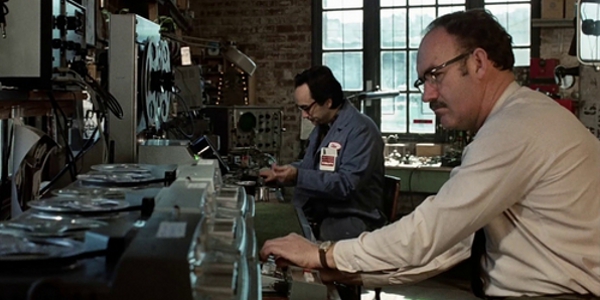
Friday, September 9, Turner Classic Movies is presenting one of the greatest movies ever – The Conversation (1974). At the height of his powers, Francis Ford Coppola directed The Conversation between The Godfather and The Godfather: Part II, and The Conversation is every bit the masterwork as the others.
In a role just as iconic as in The French Connection, Gene Hackman plays an audio surveillance expert entangled in a morally troubling assignment – and then obsessed. Veteran character actor Allen Garfield is just as good and the irreplaceable John Cazale makes us cringe and ache as always. Look for a very young Harrison Ford and for a glimpse of an uncredited Robert Duvall as a corpse.
The most significant achievement in The Conversation, however, is the groundbreaking sound editing by Walter Murch. After experiencing The Conversation, you’ll never again overlook movie sound editing.
Toby: “You’re talkin’ like you don’t think we’re going to get away with it.”
Tanner: “I never met anyone who got away with anything.”
The character-driven crime drama Hell or High Water is remarkably atmospheric and gripping, and I’ll be putting it at the very top of my Best Movies of 2016 – So Far. As it begins, we think we’re watching a very well-made film about white trash losers on a crime spree, but eventually, as we understand how original the characters are and how intricate the plot is, we understand that we’re watching a triumph of the perfect crime genre – and with an embedded political point of view. Screenwriter Taylor Sheridan, an actor who wrote last year’s Sicario, has proven that he is an artist of uncommon depth.
Director David Mackenzie imbues Hell or High Water with an astonishing sense of time (the present) and place (rural West Texas). The story is set in the dusty flatlands between Lubbock and Wichita Falls (shot just over the border in eastern New Mexico). Mackenzie employs Giles Nuttgens’ cinematography and the music, some composed by Nick Cave, to evoke an environment that is rich in horizons but, except in the bursts of occasional oil booms, dirt poor in every way. He begins Hell or High Water with a 360 degree shot of a bank branch parking lot with a teller sneaking the last cigarette before her shift; the starkness and anonymity of the dying downtown immerses us right where Mackenzie wants us.
It’s a place where people know the difference between Dr. Pepper and Mr. Pibb – and it’s important. It’s also a place where many civilians are gun-totin’, which adds a whole new element to the average bank robbery.
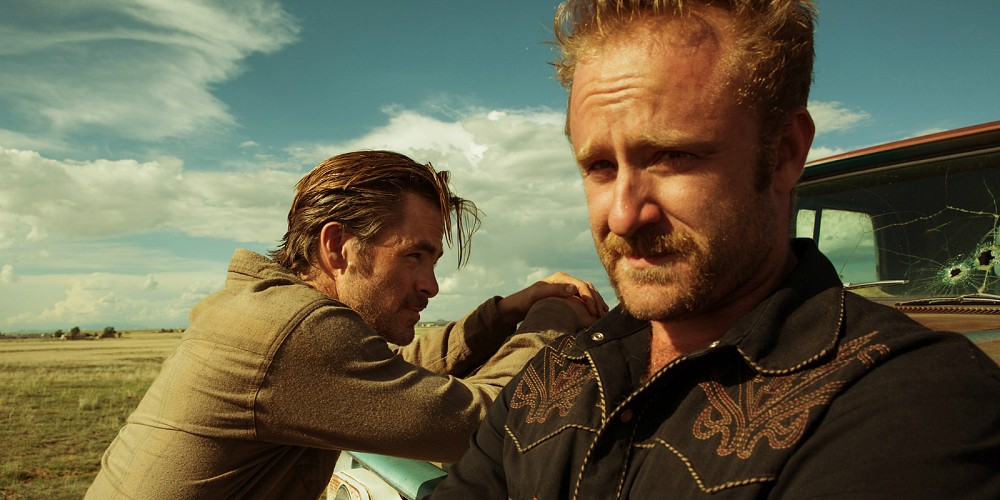
Toby (Chris Pine) and Tanner (Ben Foster) are brothers. Toby is the more complex – both poorly educated and wise. While Toby takes personal responsibility for the bad choices of his youth that have ruined a marriage and left him unable to contribute to the future of his two sons, he appreciates that generational poverty and the economic system have stacked the odds against him. Toby cared for his dying mother and is now committed to making things right for his sons and ex-wife; he is highly moral but he’s not about to follow rules that he sees as unjust. He looks like another unemployed oilfield roughneck, but he’s surprisingly cagey and strategic.
Tanner is the classic lowlife psychopath, whose impulses have always led him into trouble with the law. Asked “How have you stayed out of jail for a year?”, Tanner replies, “It’s been difficult.” He’s also a little smarter and lot more charming than he looks, but it’s clear that he is destined for a bad end.
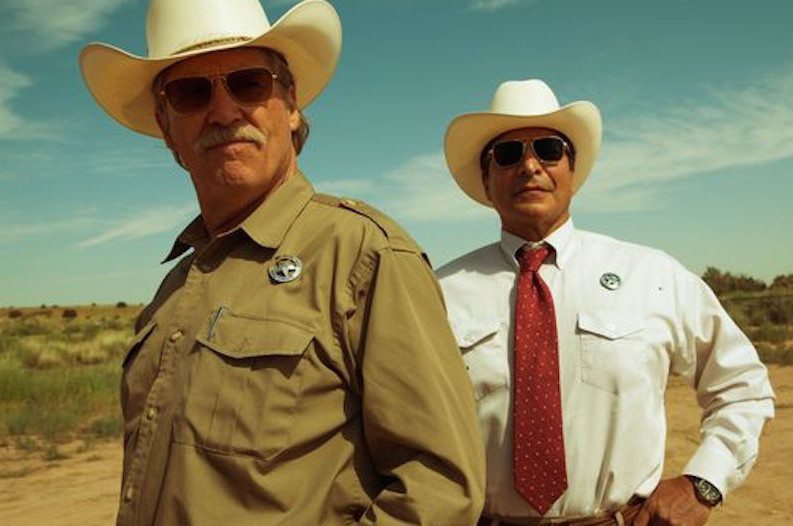
Marcus Hamilton (Jeff Bridges), an aged Texas ranger who is three weeks from retirement, is on the brothers’ trail. Marcus is an astute and unsentimental student of human behavior. Marcus relishes a good whodunit, and the wheels in his mind are always turning. His partner Alberto (Gil Birmingham) offers that, for a happy retirement “you’ll need someone to outsmart”. Indeed, it’s from Marcus, not the brothers themselves, that we learn that the bank robbers are likely raising money for some cause, against some deadline
In Hell or High Water, the banks are the real robbers. Marcus spots a bank manager with “Now this looks like a man who could foreclose on a house”. In the world of Bonnie and Clyde, victims of the Depression lost farms to foreclosure, but many banks failed, too; that movie’s anti-heroes were misfits like Tanner. In the world of Hell or High Water, the game is fixed so that the banks can’t fail, and so banking is just legalized criminality.
Jeff Bridges and Gil Birmingham in HELL OR HIGH WATER
Hell or High Water is exceptionally well-acted. This is the best work so far by Chris Pine (Kirk in Star Trek). Ben Foster, unsurprisingly, nails the Born To Lose character of Tanner. Gil Birmingham (Billy Black in the Twilight movies) is stellar as Marcus’ reflective and long-suffering partner Alberto. Jeff Bridges has matured into a master actor who delivers absolute perfection and makes it look effortless.
And the high quality performances just keep coming throughout Hell or High Water. The film opens with nice turns by Dale Dickey (unforgettable in Winter’s Bone) and veteran Buck Taylor. Marin Ireland is excellent as Toby’s ex-wife, and Margaret Bowman sparks a diner scene as the world’s most authoritarian waitress. Katy Mixon is Oscar-worthy in a role as a waitress who may long for companionship, but really, really needs to keep her tip; I just hope enough people see this movie and experience Mixon’s eyes narrowing and gleaming with resolve.
While Jeff Bridges is reason enough to see Hell or High Water, all of its elements add up to a masterpiece. Not that Chris Pine needs a star-making breakthrough performance, but Hell or High Water certainly proves that he can carry a better movie than Hollywood franchises allow. I’m going to see Hell or High Water again; then I’m going to line up to see Taylor Sheridan’s next film, whatever and whenever that will be.
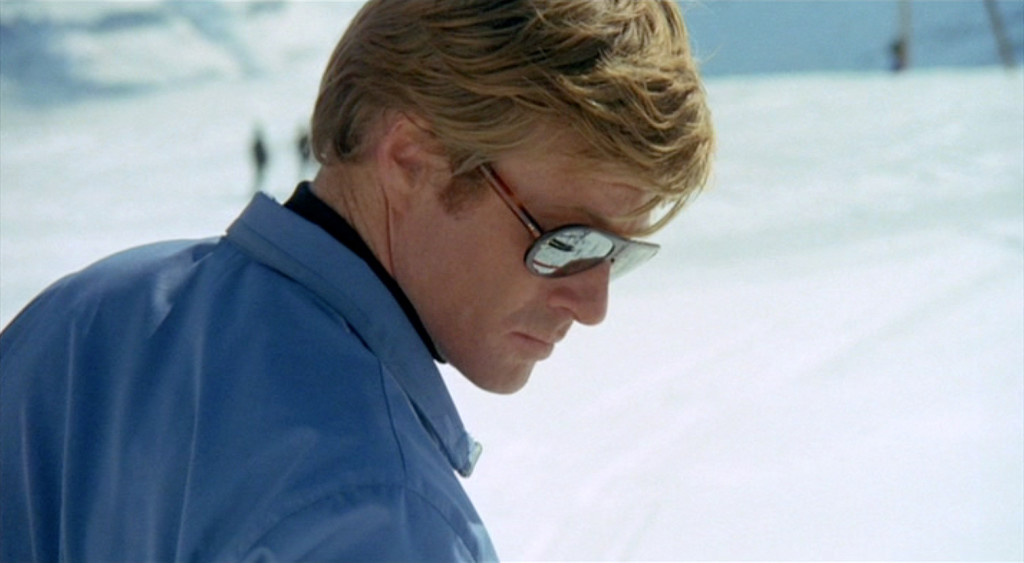
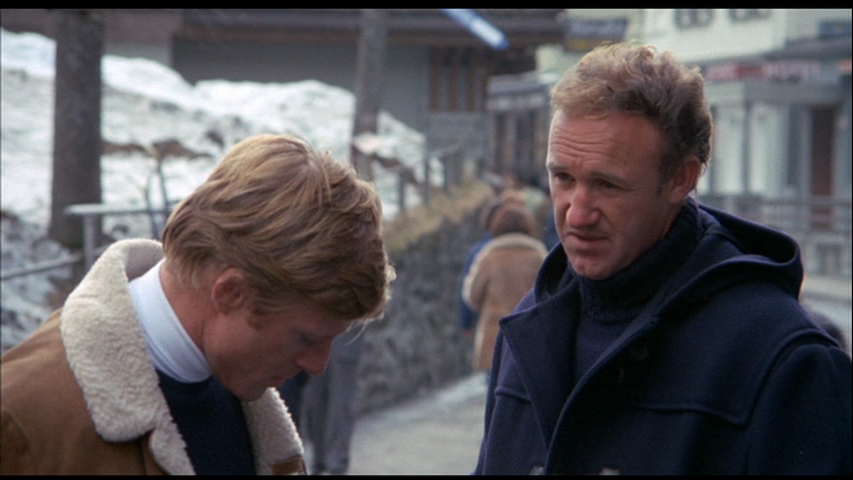
On September 2, Turner Classic Movies is airing 1970’s Downhill Racer, set in the world of competitive Alpine skiing. Robert Redford plays a handsome and talented, but insolent, ski star with daddy issues and a tendency to self-sabotage. As he strives to make the US team, he clashes with the no-nonsense coach (Gene Hackman). Downhill Racer came at a pivotal point in the careers of Redford, Hackman and the director Michael Ritchie.
As a filmmaker, Ritchie was comfortable telling a story without much dialogue – very spare, Hackman’s character is terse, and Redford’s is a sphinx. Redford’s character, especially, is often quietly observed as he goes about his business, emphasizing his self-isolation. The ski races are classic, with soundtrack adorned only with the swishing of the skis and the crunching of the snow.
Downhill Racer remains at the top of the ski movie genre. The great sound is matched by beautiful mountain visuals and groundbreaking camerawork.
To most Americans, alpine skiing was pretty new and sexy in 1970. We had become familiar with the sport through ABC’s Wild World of Sports and the 1968 Olympics, dominated by the handsome Jean-Claude Killy. The sport’s American stars were not from the among the affluent Americans who took ski vacations, but from workaday kids who grew up in the Rockies – just like Redford’s character.
When they made Downhill Racer, the three principals were each at the cusp of stardom. Ritchie had directed lots of TV, but this was his first theatrical feature. He followed it with his masterpiece The Candidate, still the best film ever about American politics. He followed that with work that included The Bad News Bears, Semi-tough, Fletch, The Scout and The Positively True Adventures of the Cheerleader-Murdering Mom; note that, except for Fletch, those films centered on competition in sports and politics.
Redford became well-known for Barefoot in the Park in 1967 and then a huge star with Butch Cassidy and the Sundance Kid (1969). In 1970, he was poised for an amazing run with The Candidate, Jeremiah Johnson, The Way We Were, The Sting, The Great Gatsby, The Great Waldo Pepper, Three Days of the Condor and All the President’s Men – all made in the FIVE years 1972-1976
Gene Hackman had a memorable supporting turn in 1967’s Bonnie and Clyde and then starred in The Gypsy Moths (1969). He made Downhill Racer just before his career exploded with I Never Sang for My Father, The French Connection, The Conversation and his two Oscars.
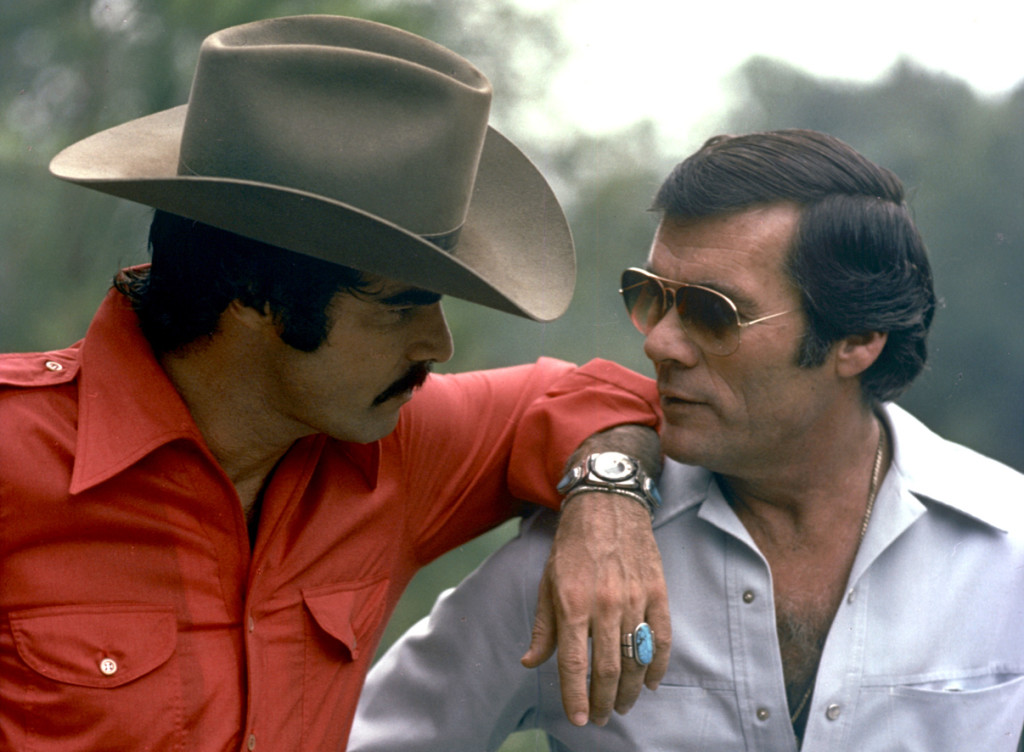
Burt Reynolds and Hal Needham in THE BANDIT. Photo courtesy of the San Francisco Film Society.
Writer-director Jesse Moss describes The Bandit as “a buddy movie about a buddy movie”, and he’s right. The buddies are mega-star Burt Reynoldsand his stuntman/friend/roommate Hal Needham, who directed the enormously successful Smokey and the Bandit franchise.
Needham, one of only two stuntmen with an Oscar, is arguably cinema’s greatest stunt performer and stunt coordinator. Reynolds did many of his own stunts, and we we see some hard, hard falls in The Bandit. But Burt did nothing to nothing to match Needham, whose FIRST career stunt was jumping off an airplane wing to tackle a rider off his horse. We see many instances where Needham became a LITERAL car crash test dummy.
One of The Bandit’s highlights is the Needham stunt that broke his back – jumping a car off a dock and onto a barge – and slamming into the barge a little short.
There’s rich source material here from Burt’s garage (Reynolds calls it “King Tut’s Tomb for documentarinans”), which stored tapes back to 1956.
For added color, Needham and Reynolds were epic partiers, who embraced and exemplified the Mad Men era. Needham was a vivid character and lived a helluva life. I strongly recommend Terry Gross’ Fresh Air interview with Needham.
Hal’s widow told Bay Area filmmaker Jesse Moss that Needham hated documentaries because they were boring, so Moss aimed to make a documentary that Hal would enjoy. Indeed, The Bandit opens with the sly Reynolds, in maroon leisure suit with flared pant legs, mocking his own image outrageously. And, it’s a hoot throughout.
(Moss’ first movie was at San Francisco’s Castro Theater in 1979, when his dad took him a double feature of Erroll Morris’ Gates of Heaven and Hardware Wars, a documentarian born!)
I saw The Bandit at its premiere at the San Francisco International Film Festival (SFFILM). It played on TV channel CMT, and now can be streamed on Amazon, Vudu, YouTube and Google Play.
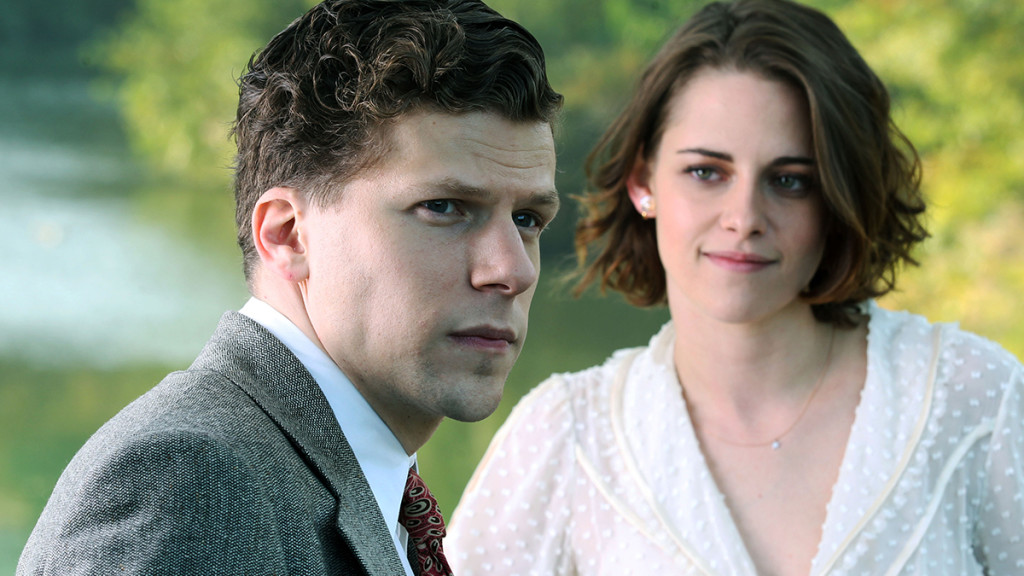
Jesse Eisenberg and Kristen Stewart in CAFE SOCIETY
Woody Allen’s Café Society is an entertaining comedy centered on a love triangle. Because it takes awhile for all of the characters in Café Society to catch on to the identities of those involved in the triangle, there is an element of Shakespearean comedy of errors. It’s witty and well-crafted, but not compelling enough to make it a Must See.
The three stars – Jesse Eisenberg, Kristin Stewart and Steve Carell – are excellent. Corey Stoll (so compelling as Congressman Peter Russo in House of Cards) makes for a fine gangster-in-the-family. And it’s great to see Jeannie Berlin, who has only made six other features since 1972’s The Heartbreak Kid, have so much fun as a solidly Jewish mother and exasperated wife.
Café Society is an example of why Kristin Stewart is a movie star. Repeatedly, the camera lingers on her face in close up as the audience watches her silently express thoughts and feelings that she is withholding from the other characters. I found her performance to be magnetic and compelling. Now, on the way to dinner after watching this film, my opinion was shot down by The Wife, who continues to view Stewart’s acting as grossly overrated. So there’s that.
Stewart showed much promise at the beginning of her career by effectively playing emotionally tortured and rebellious young women in Into the Wild, Adventureland and The Runaways. That launched her stardom in the Twilight franchise, in which she was oft criticized for biting her lower lip in seemingly every scene. I admired her performance in another recent movie that I didn’t like (Clouds of Sils Maria), and I think that she’s developed into a fine actress.
Woody’s DP for Café Society is Vittorio Storaro, the storied cinematographer for Apocalypse Now, The Last Emperor and the beautifully shot 1990 Sheltering Sky (with Debra Winger and John Malkovich). Café Society’s Old Hollywood and 30’s nightclub scenes look authentic and enticing.
The core of Café Society‘s story is whether two soul mates are destined to be together or be apart. To explore this theme with better movies, I recommend the comedy Drinking Buddies and the drama Mademoiselle Chambon.
Woody Allen is 81 and continues to make a movie each year. In the last decade, his ten features have included some stinkers (Irrational Man, To Rome with Love), an excellent comedy (Vicky Christina Barcelona), an unforgettable acting showcase (for Cate Blanchett in Blue Jasmine) and a masterpiece (Midnight in Paris). Any auteur should be satisfied with that record. In the middle of that pack, Café Society is a well-made diversion.
UNDER THE SUN. Photo courtesy of San Francisco Film Society.
The subversive documentary Under the Sun is a searing insight into totalitarian North Korean society, all from government-approved filming that tells a different story than the wackadoodle dictatorship intended.
The North Korean regime gave filmmaker Vitaly Mansky permission to film the story of a young girl who is training to take part in one of North Korea’s ritualized propaganda spectacles – when children “join” the Korean Children’s Union on the birthday of the current Supreme Leader’s father. The script and the filming locations were all assigned by the North Korean regime and all film reviewed by their censors. But Mansky was able to conceal and preserve the outtakes – and those moments are devastatingly revelatory about life on North Korea.
What we see is a grim society, virtually devoid of vibrancy and joy. Families are posed briefly mechanically and unsmilingly for ritual family photos in front of flower-bedecked giant portraits of the Leaders. The streets are drab and empty of vehicle traffic even at rush hour. Mansky shows us surreptitious glimpses of his minders and even of boys raiding garbage cans. There’s a lot of regimentation depicted in Under the Sun and lots of people drearily filing to and fro. Sometimes it gets tiresome – but that’s the point.
Everyone is conscripted to perform and watch phony staged spectacles of the grandest scale. The rapturous crowds shown on TV contrast with the stoic crowds forced to view the televised events. North Korea must have the world’s most professional event planners per capita.
Most chillingly, we see a class where 6-year-olds are taught to hate Japanese and Americans. This appears to be a scene that the North Koreans INTENTIONALLY included in the movie.
The beautiful irony of Under the Sun is that, in trying to tell a story about the best of their society, the North Koreans actually reveal their worst. I saw Under the Sun earlier this year at the 59th San Francisco International Film Festival. Under the Sun opens July 29 at the Lee 4-Star in San Francisco.
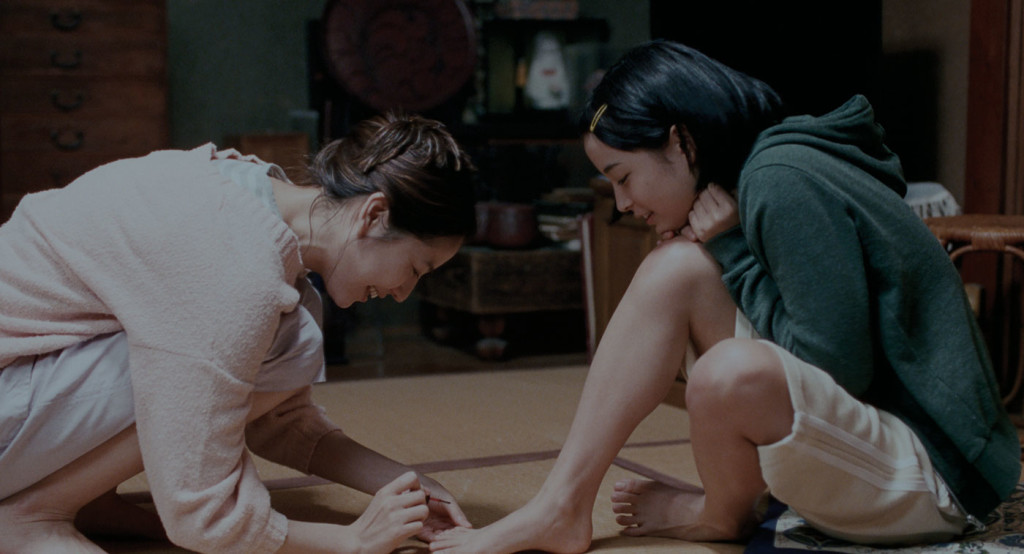
The remarkably uplifting Japanese domestic drama Our Little Sister centers on three 20-something sisters whose father left them over fifteen years ago and whose flighty, selfish mom was never much of a factor in their lives. The sisters are single and live together when their estranged dad dies and they travel to his funeral. They meet their 15-year-old half-sister, and rescue her from her step-mom, the father’s third wife. Now the household contains four siblings, all with different personalities, but all dealing with some sense of parental loss.
The four go about their daily lives, working, going to school, eating at a diner, watching fireworks. Now here’s the beauty of Our Little Sister, although there’s essentially no action and very little overt conflict, we learn a lot about these women. And we begin to care for them. And we become engaged in their journeys of self-discovery.
Writer-director Hirokazu Kore-eda was introduced to American fans of indie cinema in 1996 with Maborosi, and I listed his Still Walking on my Best Movies of 2009. It’s a privilege to spend two hours with Kore-eda’s characters in Our Little Sister. It’s impossible to leave Our Little Sister without being touched by its tenderness (and I’m a pretty cynical and hard-boiled viewer).
The Israeli-Palestinian conflict has inspired both documentary and narrative movies, but none is more imaginative than Wrestling Jerusalem. This year’s San Francisco Jewish Film Festival(SJFF36) will host Wrestling Jerusalem’s world premiere.
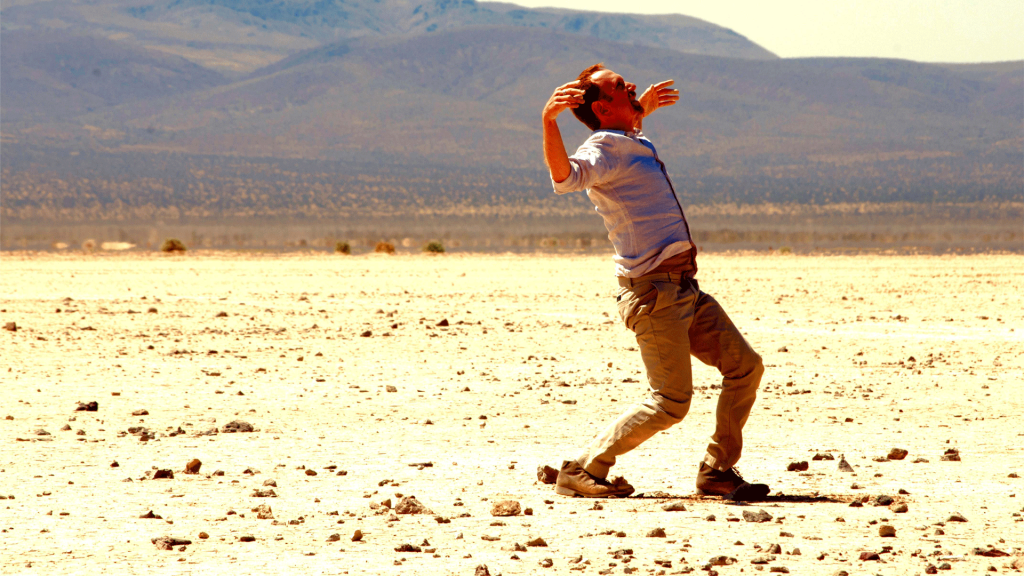
Wrestling Jerusalem is a one-man play written and performed by Aaron Davidman, who creates seventeen different characters, both Jews and Arabs, who each relate their own experiences of the conflict. Davidman portrays his characters without benefit of costume; he varies the accents, but mostly we can tell the characters apart from the content of their stories. Davidman’s performance is vivid and startlingly personal.
Davidman launches Wrestling Jerusalem with a montage of his characters explaining “It’s complicated” – a defining truth that most would accept. Then the characters continue by disagreeing about the conflict’s start (1946, 1947, 1967, 1973, the Hebron massacre – both of the massacres) and who is to blame for its continuation (Abbas, the settlers, the Orthodox, the terror attacks, Bibi, etc.). Then each character unspools his or her own perspective. Over a crisp 90 minutes, it’s absorbing stuff.
Thankfully, with one just guy on-screen for the entire film, the filmmakers keep Wrestling Jerusalem from being too stagey. They place Davidman in two locations, a solitary theatrical stage and in the desert (looks like Israel/Palestine, but it’s the California Mojave). It’s an impressive job by director Dylan Kussman, editor Erik C. Andersen and cinematographer Nicole Hirsch Whitaker.
Davidman has a point of view, but was careful not to make Wrestling Jerusalem into a screed. Instead, he’s careful to let his audience connect the dots in our own minds. Near the end, one of his characters says, “You are Israel, for you have struggled with God and with men” from Genesis 32:28, but does not does not finish the quote with “and have prevailed”.
You can experience Wrestling Jerusalem at its world premiere at this year’s San Francisco Jewish Film Festival(SJFF36), where you can see it at San Francisco’s Castro on July 27, at the Berkeley Rep’s Roda Theater on July 30, at CineArts in Palo Alto on July 28 and at the Rafael in San Rafael on August 7
False Flagis an absolutely riveting Israeli miniseries that we’ll get to see in the US at some point. The miniseries has 8 episodes (each a taut 45 minutes). The first two episodes are playing together as one ninety-minute program at this year’s San Francisco Jewish Film Festival(SJFF36).
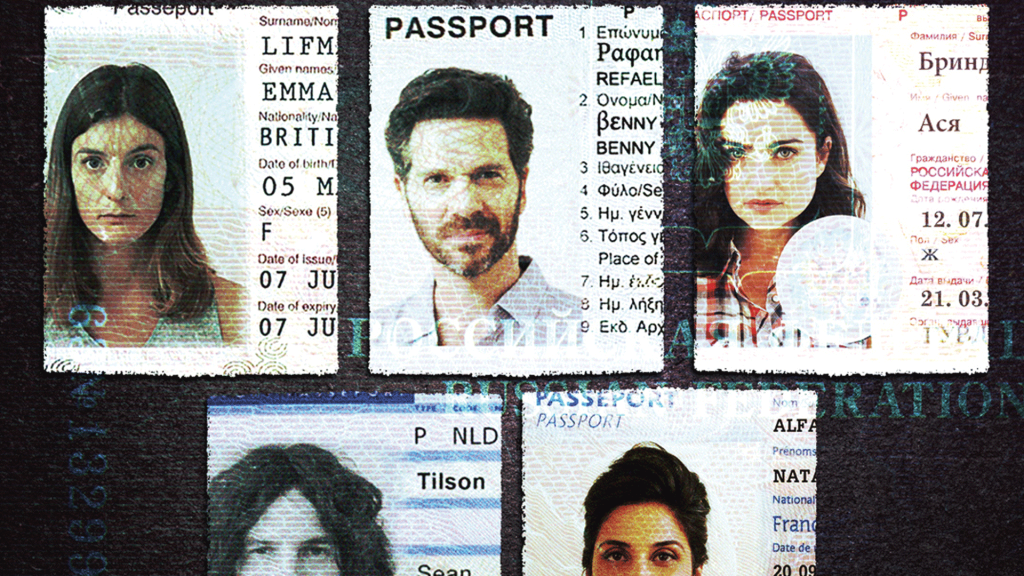
As False Flag opens, Israeli television news reports that five Israeli citizens were responsible for the kidnapping of an Iranian diplomat out of his Moscow hotel. We see four of the five – each appearing totally shocked by the revelation and denying any involvement to their families and friends. They don’t seem to know each other, and the only connection seems to be that they each have dual citizenship and a second passport. We first question whether this was a covert operation by Israeli intelligence forces for which they were framed? But we soon learn that the Mossad wasn’t involved either, and Israeli security forces are soon hunting down the five to find out what really happened.
But then we start to learn that some of the five may be connected. Their alibis have holes. And some of the five are not what they seem. Are they involved? Who commissioned the kidnapping? Who is going to find out and how? And what is going to happen to each of the five? False Flag evolves into a superb thriller that spans, at once, the genres of the whodunit, the paranoid thriller, the perfect crime movie and the espionage procedural.
The five protagonists have very different personalities, which makes False Flag a successful character-driven thriller. The three women are a tough cookie, a party girl and a low-self esteemed shoulder-slumper. The two men are a bewildered regular guy and an international man of mystery. The acting from Ishai Golan, Magi Azarzar, Orna Salinger, Ania Bukstein, and Angel Bonnani is first-rate.
False Flag (titled Kfulim in Hebrew) was broadcast last fall in Israel, and was the first non-English language series to be acquired by Fox International Channels. It’s expected sometime in the next year on American TV. The release of the first two episodes at SFJFF36 will help build buzz for the US release.
The Joke was on The Movie Gourmet. When I was going through my screeners for the SFJFF36, I neglected to read anything about False Flag except for “thriller”, so I was expecting that the entire story was contained in the 90 minutes. When what is really Episode 2 ended, I was on the edge of my seat braying, “Oh no! What happens next?”.
You can get your own addicting taste of False Flag at the San Francisco Jewish Film Festival, where you can see it at CineArts in Palo Alto on July 23, at San Francisco’s Castro on July 30, at the Berkeley Rep’s Roda Theater on July 31, and the Rafael in San Rafael on August 6.