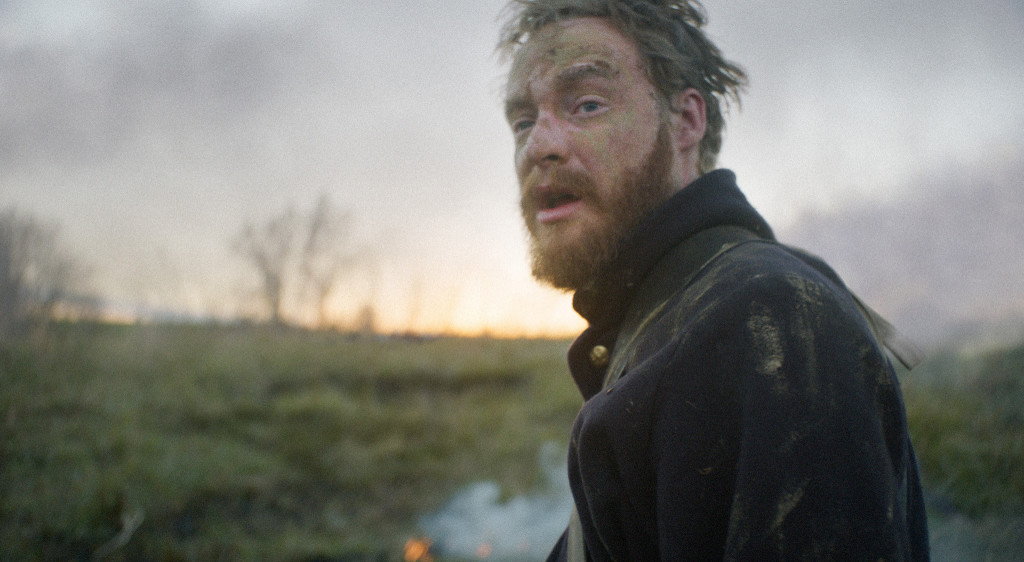
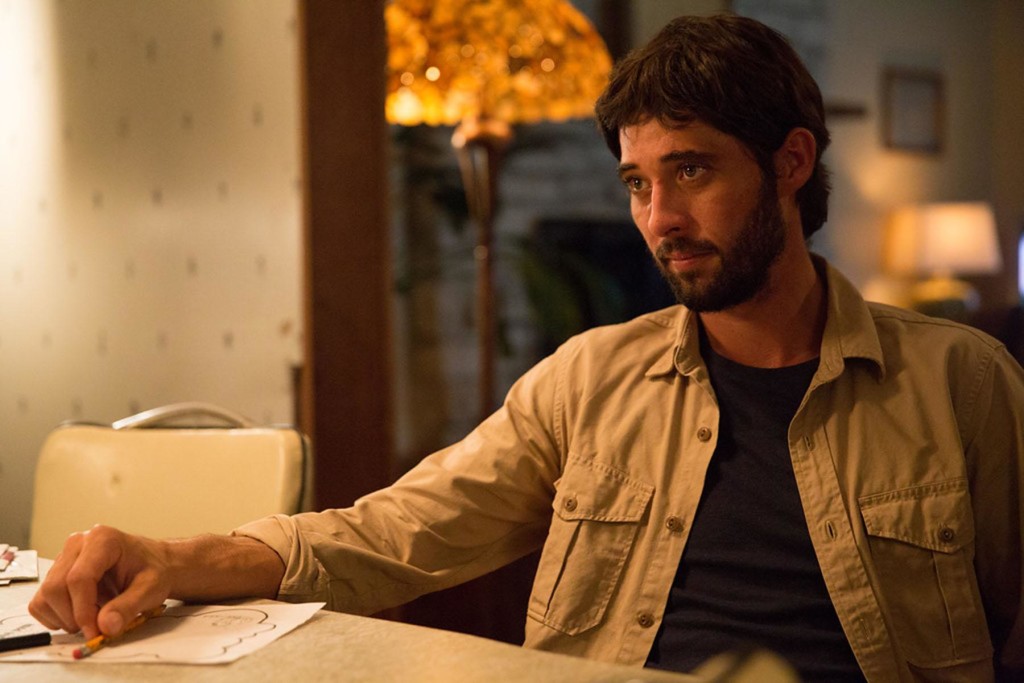
In the indie drama Men Go to Battle, it’s 1861 and two bachelor brothers are sharing an especially unprosperous farmstead in rural Kentucky. Brash and loudmouthed, brother Francis (David Maloney) confidently plunges into one foolhardy scheme after another. His quiet practical brother Henry (Timothy Morton) picks up the pieces. Not one to use words to express his feelings, Henry has finally had enough of Francis and simply leaves for the Civil War without notice.
Observing Francis is plenty amusing, because of his unerringly wrongheaded impulses. But the stone faced Henry, for whom still waters run deep, is much more interesting – we wonder what he is thinking and what he is going to do. Once he’s made up his mind, he is decisive and resolute. In a remarkably powerful scene on the morning after the Battle of Stones River (Perryville), he wordlessly decides about war and about his part in it.
Men Go to Battle is the first feature for director and co-writer Zachary Treitz. His co-writer is the actress Kate Lyn Sheil (Sun Don’t Shine, House of Cards), who has a small acting part (as does indie director Amy Seimetz).
Visually, much of movie is way too dark (as in you can’t see what is going on). But Men Go to Battle does an exceptional job of illustrating the QUIET of pre-electric and pre-motorized North America.
[Note: Some critics have described this movie s “Civil War Mumblecore”. Indeed, it’s a low-budget indie made by thirty-somethings and the male actors DO mumble a lot. But I despise the Mumblecore genre because the stories are about underachieving slackers who are navel gazing and whining about first world problems. That’s not the case here. This movie is about a real family relationship, and there is no entitlement or snivelling, so it’s NOT Mumblecore.]
Men Go to Battle is available to to stream from Amazon Instant, iTunes, Vudu, YouTube and Google Play.
THE GREASY STRANGLER (title character on the right)
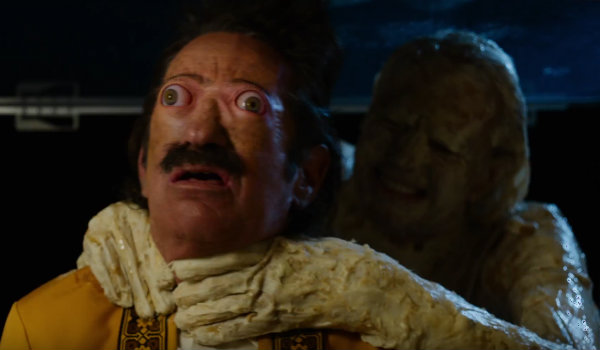
There’s been a lot of buzz about the gross-out spectacular The Greasy Strangler – weirdest movie of the year, blah blah. But the first feature from British writer-director Jim Hosking is really pretty easy to deconstruct – it’s manufactured to become popular at the midnight cult movie shoes, joining the rotation along with Rocky Horror, Eraserhead, The Room, etc. The Greasy Strangler will draw in the midnight crowd with its meals prepared with industrial grease, the prosthetic penises of varying sizes and a heavy dose of sex between naked grotesques. It’s made for audience participation with signature lines for the audience to repeat along with the characters, like “You’re a bullshit artist” and “Hootie tootie disco cutie”.
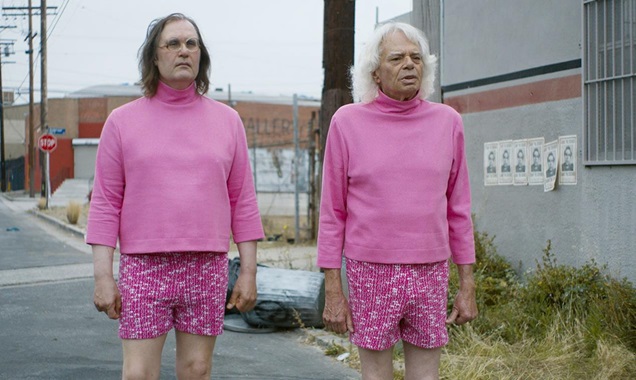
This is not to say there aren’t some clever touches in The Greasy Strangler. Believe me, you’ve never seen a car wash used in this way before. And there’s a priceless male disco outfit with a cutout in exactly the wrong place.
Sky Elobar and Michel St. Michaels in THE GREASY STRANGLER
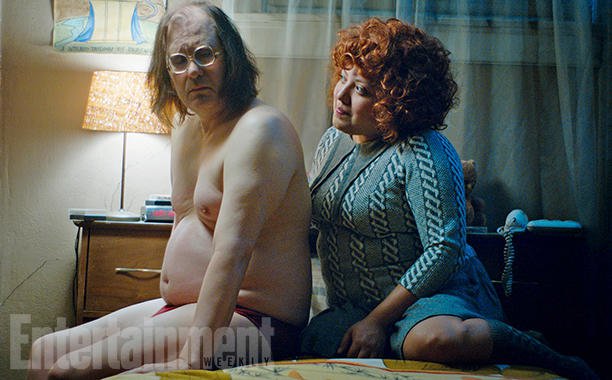
The plot is pretty simple: a virginal nerd boy (Sky Elobar of Don Verdean) is living with his omni-disgusting father (Michael St. Michaels), a cranky cretin who constantly demands copious amounts of grease added on to his food – even movie popcorn butter and street vendor chili dogs. Will the younger man finger his dad as the local serial killer, the Greasy Strangler? And will the father alienate the affections of his son’s new sweetheart (Elizabeth Del Razzo)? Nightly, the Greasy Strangler immerses himself in a 55 gallon drum of grease and then zombie-walks through town in search of victims.
If you are not entertained by the epically disgusting, this movie is not for you – after all, that’s the whole point. The Greasy Strangler can be streamed from Amazon Instant, iTunes, Vudu, YouTube and Google Play. Or you can catch it in the decades of midnight screenings ahead.
Sky Elobar and Elizabeth Del Razzo in THE GREASY STRANGLER
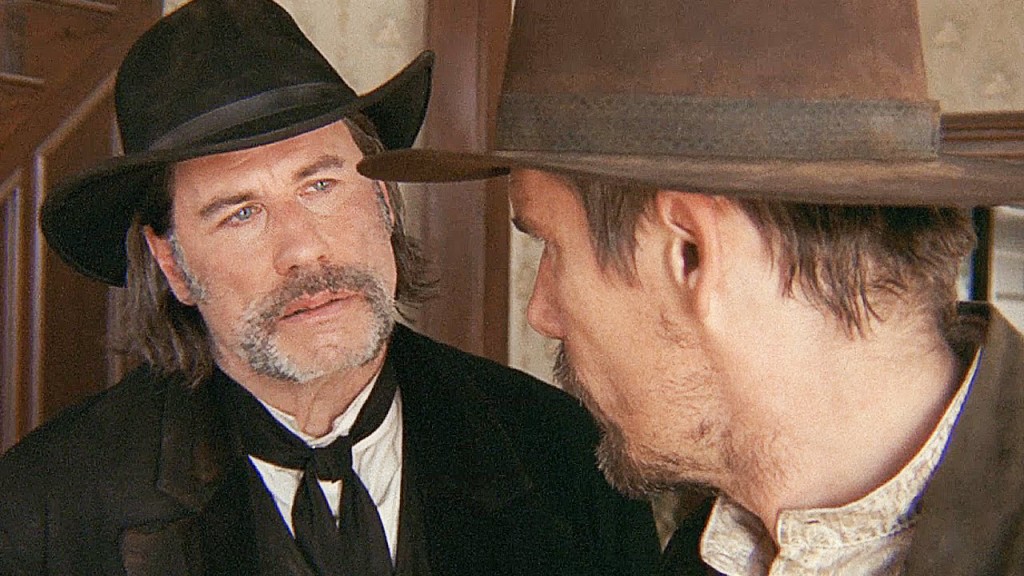
Writer-director Ti West brings some new touches to the spaghetti western in his mostly successful In a Valley of Violence. Ethan Hawke plays Paul the drifter, passing through town with his fly-catching dog Abbie. He runs afoul of the local bully, which unleashes bloody (and, in one instance, gruesome) revenge.
Right away, the music and the opening titles tell us that we’re watching a spaghetti western. The dramatic rock formations and thirsty scrub of New Mexico work, too. But this is a 21st Century take on the genre, with a protagonist suffering from PTSD. Guilt-wracked, he becomes bent on revenge but remains ambivalent about the killing that his vengeance will require. There’s also a bad guy with a conscience (but not enough of one). And the superb final shootout is unlike any that you seen in another dusty street.
John Travolta is exceptional as the town marshal, burdened by wisdom enough to know that he is surrounded by idiots and perhaps to be entangled in their fates. The marshal is well-seasoned and perceptive. He reads every character with pinpoint accuracy. He is one tough, crafty and ruthless hombre, but his actions are motivated by what must be done, not by empty machismo.
As befits a spaghetti western, the end of In a Valley of Violence (including the really violent parts) are filled with dark humor. James Ransome is very funny as the compulsively foolish town bully, springing relentlessly from one bad choice to another. One of the bad guys picks the most nail-biting moment to resist fat-shaming: “Don’t call me Tubby – my name is Lawrence”. The film’s highlight may be the LOL dialogue between Hawke and Travolta as they try to navigate not killing each other, all while stalking each other through the back streets.
Abbie the dog (played by Jumpy) is especially endearing and fun to watch. She even rolls herself up in her blanket by the campfire. In a Valley of Violence’s credits include the Dog Trainer, three Animal Wranglers and a Vulture Handler
In a Valley of Violence isn’t a perfect film. The event that motivates the vengeful onslaught is predictable and upsetting to dog lovers. And, other than Travolta and Hawke, the actors seem like they are modern folks dragged out of a Starbucks and dressed up in cowboy gear.
For what it’s worth, In a Valley of Violence’s climactic gunfight is historically consistent. Contrary to the tradition in movie Westerns, very few of the Old West gunfights were of the “quick draw” variety. The real cowboys, outlaws and lawmen tended to sneak up on each other and fire from cover. When they did approach each other in the street (as here), their guns were usually already drawn.
I’ll watch ANY spaghetti western, but I found In a Valley of Violence to be a particularly successful one. The dark humor and the performances by Hawke, Travolta and Jumpy are plenty reason to see In a Valley of Violence.
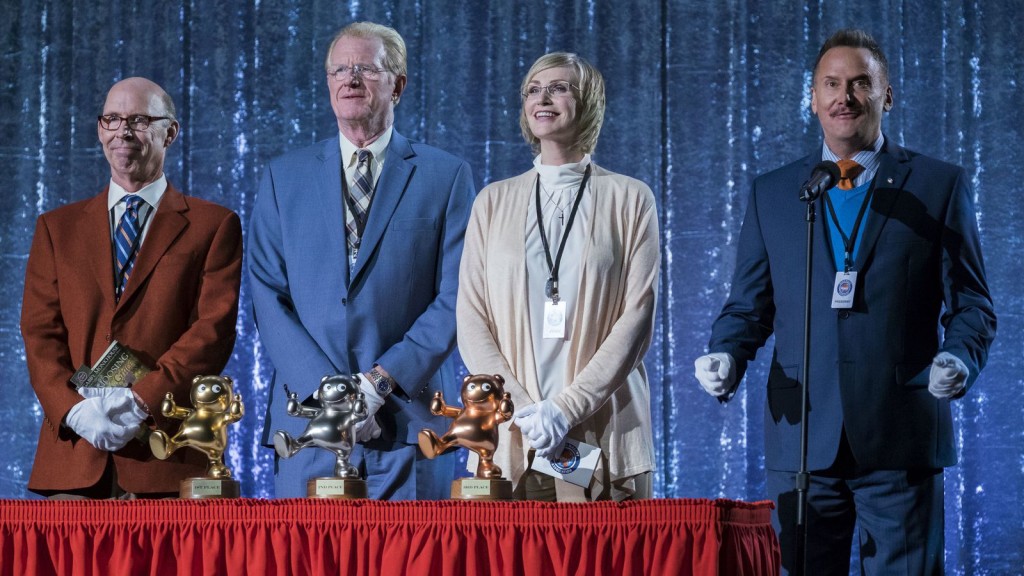
Don Lake, Ed Begley, Jr., Jane Lynch and Michael Hitchcock in MASCOTS
Mascots is the latest from Christopher Guest, the king of the mockumentary. After co-writing This Is Spinal Tap, Guest wrote and directed Waiting for Guffman, Best in Show (his masterpiece), A Mighty Wind, For Your Consideration, and ten years after For Your Consideration, Mascots. Guest has set his stories in the worlds of amateur theater, competitive dog shows, the folk singing moment of the 1960s and indie filmmaking. His comedy is based on people taking their passions way too seriously. This time, in Mascots, he has set the story in a world that NO ONE could take seriously – a fictional championship competition among mascots for sports teams.
Guest doesn’t really make fun of the subject matter as much as the human behavior that is exposed and accentuated by competition, especially Big Fish In Little Pond competition: officiousness, self-importance, striving, insecurity and self-delusion.
Guest brings along his repertory company of master-improvisers: Parker Posey, Ed Begley, Jr., Fred Willard, Jane Lynch, Don Lake, John Michael Higgins, Jim Piddock, Bob Balaban, Jennifer Coolidge, Michael Hitchcock, Harry Shearer and Guest himself. They all play their characters with complete commitment – these folks are earnestly devoting their entire lives to the silliest possible passion.
This time, he’s added the always hilarious Zach Woods (Silicon Valley) and Chris O’Dowd. Another mockumentary newcomer, Susan Yeagley is especially good as the gum-chomping, nymphomaniacal sister of Alvin the Armadillo.
The Jack the Plumber routine must be seen to be believed, there’s a surprise Bollywood number, and a very sly running gag about furries.
Mascots is playing in a few theaters but easier to find streaming on Netflix Instant, where I viewed it.
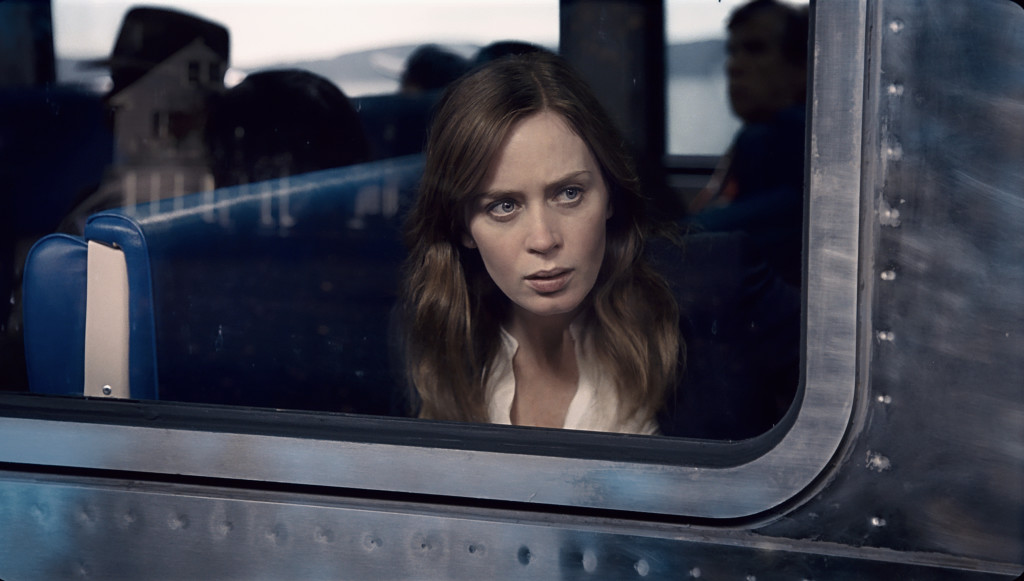
The end of the thriller The Girl on the Train, adapted from the popular novel by Paula Hawkins, is indeed thrilling. It’s about a woman (Emily Blunt) who is a complete mess, a black-out drunk who has clearly gone off the deep end in many ways. We watch her stagger from one dysfunctional moment to the next until she is entangled in a missing person case, serial marital infidelity and a murder. A Big Plot Twist near the end reshuffles the deck, and we find out that we are watching a different story than we had supposed.
The last 30 minutes of The Girl on the Train rocks, but I found the murky first 82 minutes to be confusing and boring. The Wife, however, enjoyed the whole thing. Neither of us had finished the novel and knew to expect the Big Plot Twist.
Blunt is very good as the protagonist. Justin Theroux, Lisa Kudrow and Edgar Ramírez (Carlos) stand out as well. Allison Janney is wonderful as a jaded, Seen It All police detective; at the end, her grin reveals “wait until I tell the guys that this really happened”.
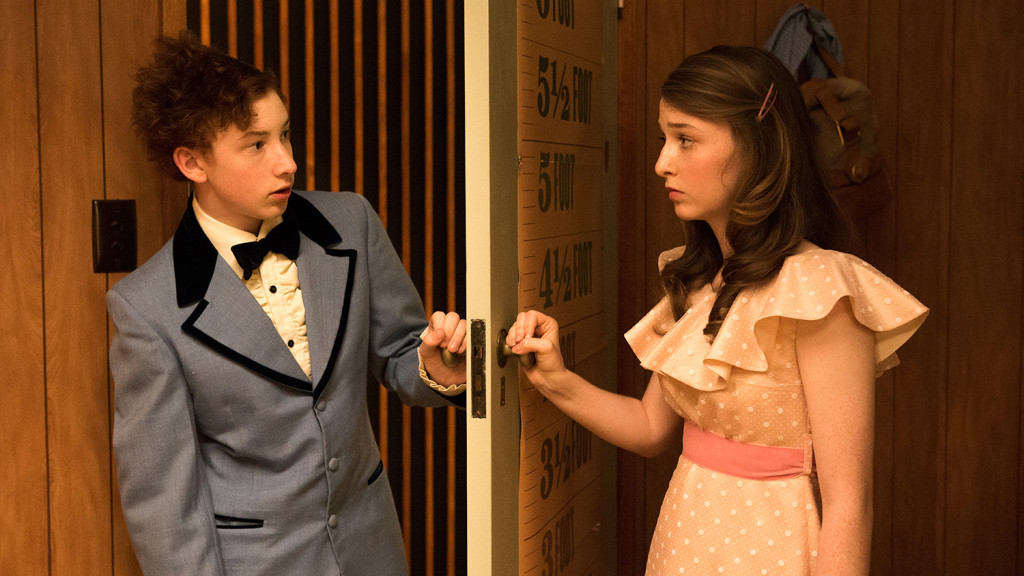
I’ve seen plenty of teen coming of age movies, but none like Girl Asleepfrom Australia and first-time director Rosemary Myers. The arc of the story may be familiar – a new school, an excruciatingly awkward boy and an encounter with Mean Girls. The anxiety for our teen protagonist Greta (Bethany Whitmore) is crowned by her parents doing what must be the most embarrassing thing for a teenager – the parents putting on a party for her and inviting everyone at her new school. As the story is set up, we see some glimpses of magical realism. Then, when the party maximizes Greta’s stress, the story is immersed into a trippy Alice in Wonderland parallel universe. It’s all an allegory for the perils of the adolescent journey.
Greta’s batty parents are played with gleaming resolve by Amber McMahon and screenwriter Mathew Whittet. Harrison Feldmore’s total commitment to his role as Greta’s suitor is admirable; he’s not just geeky but enthusiastically so, plunging headlong into a profound geeky totality. Director Myers also has fun with the 1970s milieu, taking particular glee with the short shorts worn by the male characters.
The movie is pretty funny, and you won’t find a trippier coming of age flick. Girl Asleep opens tomorrow in the Bay Area at Camera 3 in San Jose and at the Roxie in San Francisco. Girl Asleep screens with the short film Pickle, a deadpan comedy.
This year’s Mill Valley Film Festival features Death by Design, an important environmental exposé on the toxic impact of personal electronics. Most of us have heard that some very dangerous materials and some horrific working conditions are used in the manufacturing of our favorite devices. Death by Design is the first film to successfully tie it all together, with historical perspective, global sweep and a possible way out.
Death by Design begins with the dark side of Silicon Valley’s history, related by the sonorous voice of environmental pioneer Ted Smith, founder of the Silicon Valley Toxics Coalition. Smith takes us through the discovery that the supposedly clean semiconductor manufacturing industry had been polluting the drinking water in some Silicon Valley neighborhoods. Groundbreaking occupational lawyer Amanda Hawes shows us the heartbreak caused when humans ingested those toxics.
Pioneering environmental heroes, Smith and Hawes saw this coming before anyone else. Although Smith bemoans the centuries-long impact of toxic pollution and Hawes shows us the very personal cost of occupational exposure, the two played a pivotal role in Silicon Valley history – they saved the geographic Silicon Valley from becoming much more widely and permanently despoiled. Thanks to their efforts, Silicon Valley, ironically, is more attractive than ever for the workers and investors fueling the current tech boom.
However, economic globalization has allowed the electronics industry to simply export the environmental impact from California to developing nations, and Death by Design tours us through a tech chamber of horrors in China.
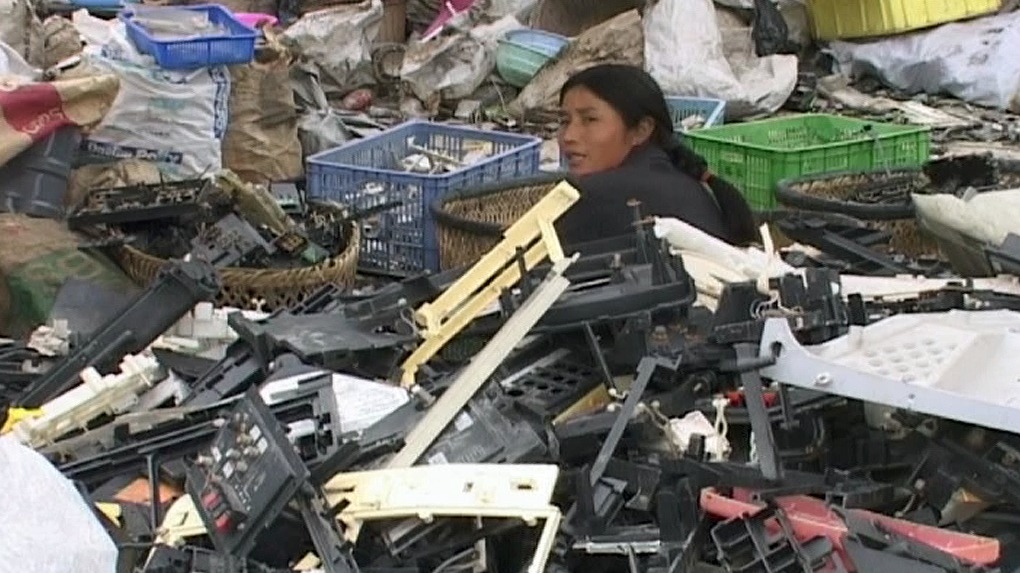
We learn that 20% of China’s arable land and 60% of its groundwater are already contaminated (not ALL the fault of high-tech). We visit the “recycling” of e-waste in Guiyu – an unimaginable industrial catastrophe. We throw stuff away, and Death by Design asks us to consider the question, “Where is away?”.
But not all of the environmental costs have been have been moved away from us. In Death by Design, we also meet scientists who fly through the sky, sampling the chemical composition of clouds and collecting aerosols; they can detect pollution in North America and trace it back to Asia.
Death by Design’s Chinese segments – in factories, homes and bodies of water – is especially impressive. What must be shrewdly obtained footage helps us understand the plight of workers employed by the suppliers to international tech companies, including the major Apple supplier Foxconn, whose workers can suffer through 12-hour days and 7-day weeks. Death by Design pins the labor cost at 1 percent of an iPhone’s price; the movie leaves the math for the viewers: if you triple a 1% labor cost, a $400 phone would sell for $408.
As fitting for a techie movie, Death by Design also brings us some geeks to show us that Apple designs the iPhone for an 18-month life; you can’t extend the life by replacing the battery or other parts because Apple locks the case with proprietary screws so we can’t open it up.
If there’s a particular Bad Guy in this story, it’s Apple. I became ever more conscious that I was watching Death by Design on an iPad with Apple ear buds.
One hopeful glimmer is the introduction to the Chinese environmental entrepreneur Ma Jun, who has compiled a database of environmental impacts as a tool to press for change from within China. Another is an Irish startup that has developed fair trade computers that are updatable and reusable; their cases are built from an unexpected raw material.
Director Sue Williams maintains the topical urgency without creating a screed. She also covers a lot of ground in a crisp 73 minutes. And, most impressively, Williams delivers the Chinese footage necessary to complete the story. Death by Design is one of the most important environmental documentaries – and one of the most watchable. It plays the Mill Valley Film Festival on October 7 and 11.
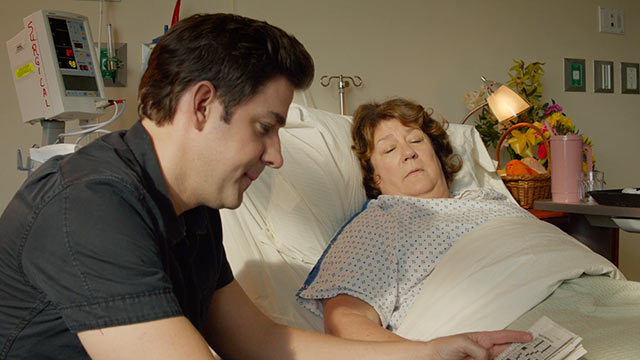
John Krasinski and Margo Martindale in THE HOLLARS
The indie dramedy The Hollars is the year’s most sure-fire crowd pleaser. And it’s yet another showcase for the best screen actress working today, Margo Martindale. Martindale plays the glue that tenuously holds together an otherwise dysfunctional family. Her husband and two adult sons are each facing both career and personal struggles, and when the mother is diagnosed with a brain tumor, each member of the family starts to crumble.
As the characters face commitment anxiety, job struggles, outright failure and even death, there are lots of laughs. I saw The Hollars in a theater and there were many LOLs from the audience, some a little delayed as the audience processed, “did he really say that?”. For example, an oncologist greets the worried family members with a deadpan “Sorry to be late. I was golfing.”
The actor John Krasinky directs. He and screenwriter Jim Strouse are economical story-tellers. The first few vignettes tells us what we need to know about the family members and their relationships to each other.
The Hollars is really about the journeys of the father and the two sons, with the mom serving as the men’s mirror, sounding board and coach. But Margo Martindale is so good as the woman who is very wise but doesn’t have the need to let everyone know. Every second that she’s on the screen, we feel lucky to be watching her. The toughest job in cinema must film editor on a Martindale movie; it’s gotta be painful to leave any Martindale moments off the screen.
We first noticed Martindale in 2004 as Hilary Swank’s venal mother in Million Dollar Baby. In Justified, she made the character of the ruthless and crafty backwoods crime matriarch Mags Bennett unforgettable. Her heartbreaking performance in Paris je t’aime was similarly indelible. Now age 65, she’s still at her peak.
Martindale is paired with the great character actor Richard Jenkins, who has at least two Oscar-worthy scenes as her befuddled, denial-embracing husband. As one of the sons, Krasinksy is as appealing as usual. Anna Kendrick is perfectly cast as the pregnant girlfriend – being nine months pregnant is a vulnerable position from which to watch your partner figure out his life. In small parts, we are blessed with Mary Elizabeth Winstead’s piercing vibe and Mary Kay Place’s non-nonsense charm. Josh Groban, of all people, is effective carrying off the role of the ever-smiling youth pastor who is dating one of the sons’ ex.
With all its humor, The Hollars is a weeper. Its ending is sentimental, but not maudlin or phony. I usually resist movie sentimentality, but a movie can EARN a sentimental ending with authenticity throughout, a stellar example being The Best Years of Our Lives. That’s the case here.
The Hollars is a wonderful movie to see with a companion. It looks like its theatrical run is going to fade out. But I predict that the word of mouth is going make it into a video hit once it appears on PPV and the streaming/DVD rental services. A gem.
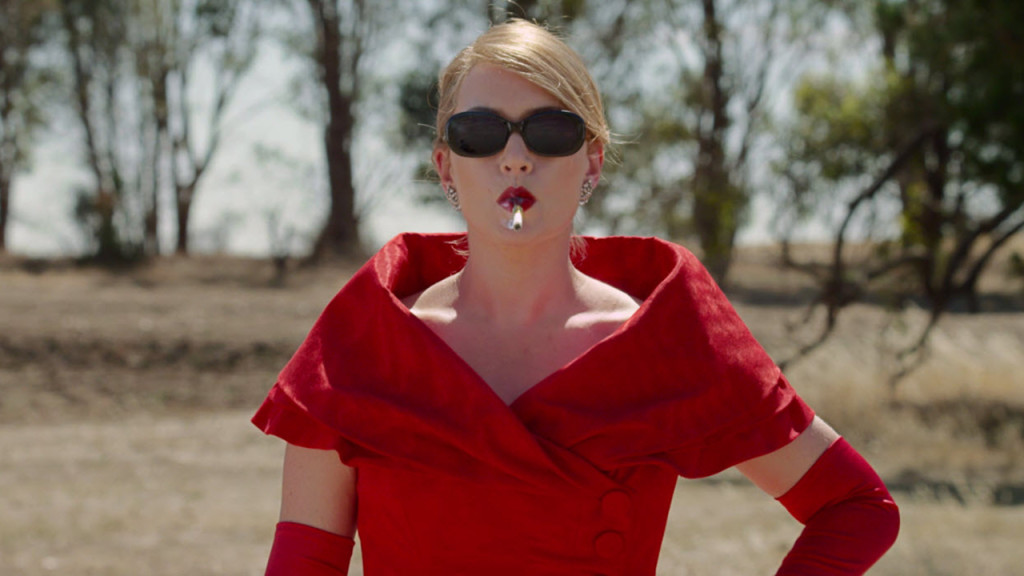
In the comedy The Dressmaker, a woman (Kate Winslet) returns to her remote Australian home village with revenge on her mind. She was run out-of-town as a child for something that she can’t remember, and has become a successful Parisian dress designer. She’s come back to resolve the mystery and, when she finds that the hateful townspeople have left her mother (Judy Davis) to decompensate, she’s ready to unleash vengeance on a Biblical scale. It’s set in the early 1950s.
Be ready for this comedy to darken considerably in its final segment. The first 90 minutes weave together an excellent comedy, an ordinary whodunit and a run-of-the-mill romance. Then a tragic occurrence takes the movie to very serious place and unspools a VERY darkly funny revenge finale, which is both over-the-top and satisfying. But the shift in tone is jarring, and the movie as a whole is very uneven.
The Dressmaker is, however, very well-acted. Winslet is good in a very broad role. Judy Davis, 37 years after becoming an art house favorite in My Brilliant Career, gleams with energy as the vibrant and demented mother. Sarah Snook is particularly notable in one of the great “makeover” roles, transitioning from ugly duckling to local princess while retaining the same nasty personality.
My favorite performance in The Dressmaker is Hugo Weaving’s. I’ve been a fan of Weaving since he so compellingly played a blind man in the 1991 Proof (also our first look at a very young Russell Crowe). Since then, Weaving has earned iconic roles in the Matrix movies and V for Vendetta and is usually the most interesting performer in big budget movies. In The Dressmaker, Weaving plays the town constable, a minor official with a very peculiar secret proclivity. Totally committed to the part, Weaving is flamboyant fun.
All in all, The Dressmaker is generally entertaining, if not cohesive.
This week’s video recommendation is a totally overlooked drama from earlier this year, A Country Called Home. Somehow A Country Called Home missed out on any significant theatrical release even though it’s a very satisfying Finding Yourself drama.
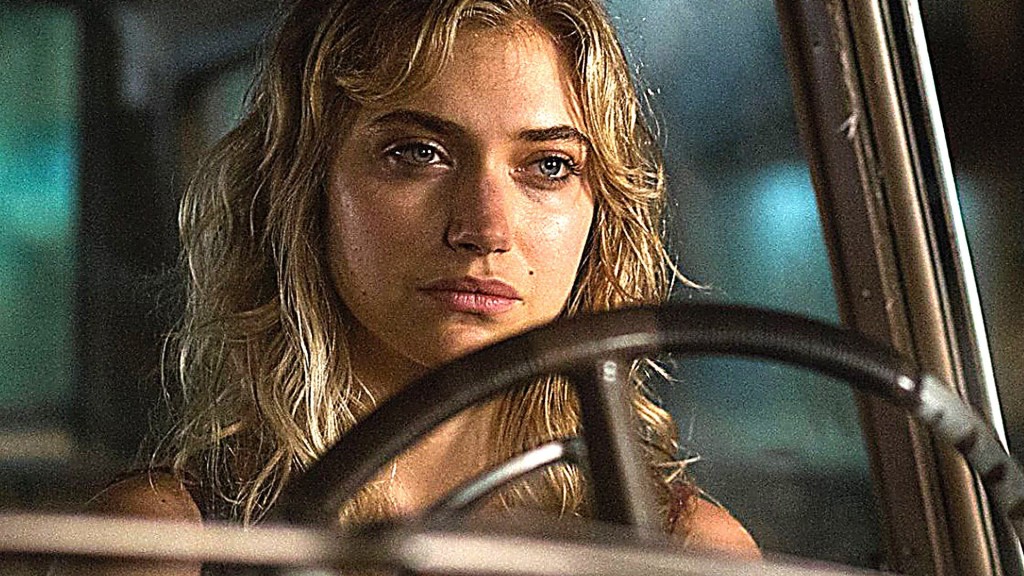
Imogen Poots plays Ellie, a young Los Angeles woman with an underachieving job and a lousy boyfriend who takes her for granted. She hears that her estranged father has become gravely ill, and we learn that she has escaped a Texas childhood with an alcoholic father. Her brother (Shea Whigham) also lives in Los Angeles; he is flourishing and doesn’t care a whit about their father – the brother has moved on from his upbringing. But Ellie is a poster girl for low-self esteem, and she feels obligated to travel to her father’s bedside.
Ryan Bingham in A COUNTRY CALLED HOME
Once in Texas, she finds that her father has just passed, leaving the detritus of his alcoholic life. Everything in her old hometown is trashy, complicated or just plain unsupportive. She meets a misfit wannabe singer-songwriter (Mackenzie Davis unrecognizable from Bad Turn Worse). And there’s a pressured-out single dad played by the sad-eyed Ryan Bingham (the Oscar-winning songwriter for Crazy Heart).
A Country Called Home is the debut feature for director and co-writer Anna Axster, and it’s a successful and engaging study of a woman finally emerging from a childhood with an alcoholic parent. It turns out that, to move on with her life, she needed another look at where she came from.
A Country Called Home can be streamed from Netflix Instant, Amazon Instant, iTunes, Vudu, YouTube and Google Play.