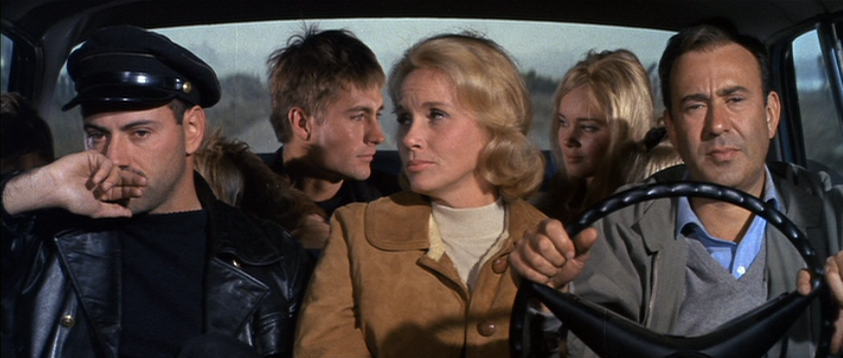
Alan Arkin, Eva Marie Saint and Carl Reiner in THE RUSSIANS ARE COMING! THE RUSSIANS ARE COMING!
One of my favorites comedies is the still timely satire on the Duck and Cover Era, the 1966 The Russians Are Coming! The Russians Are Coming!. At the height of the Cold War, a Soviet nuclear submarine runs aground and is trapped just off a tiny New England coastal village, and the crew sends a party ashore to heist a boat. The landing party encounters a vacationing American family and the two groups must work together to find a solution to help the sub escape without igniting World War III.
The superb cast includes Carl Reiner, Eva Marie Saint, Jonathan Winters and Alan Arkin in his breakthrough performance. Although it primarily satirizes the paranoia of the Cold War, there are plenty of laughs sparked by small town New England, family dynamics, teen love and the recurring joke of the town drunk with his reluctant horse.
I watch The Russians Are Coming! every other year or so, and it still holds up. Besides showing regularly on Turner Classic Movies, The Russians Are Coming! is also available to streaming from Amazon, AppleTV, Vudu and YouTube.
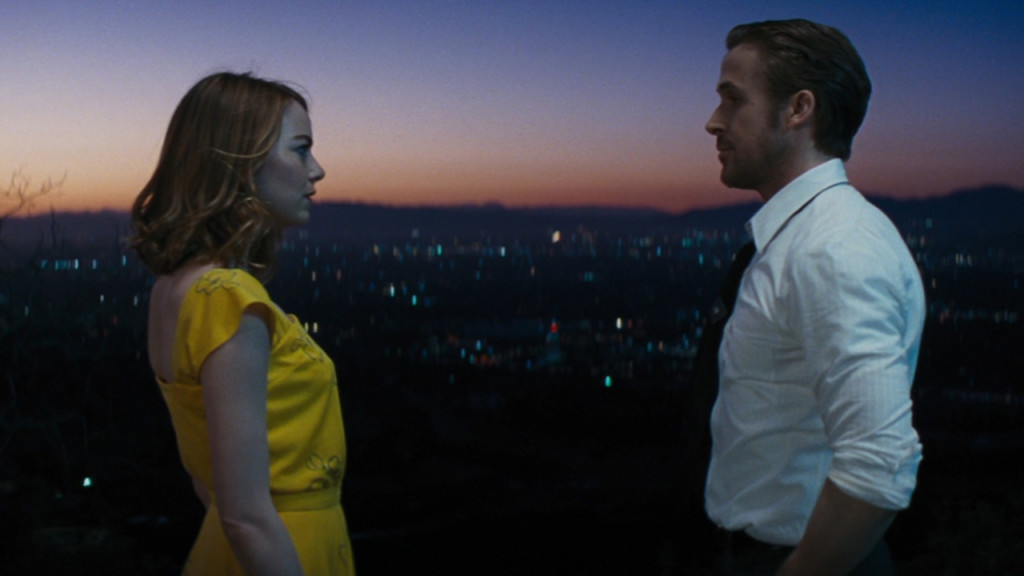
There’s a profound love story at the heart of La La Land, and it’s told with extravagant musical, visual and acting artistry. In dazzling performances, Emma Stone and Ryan Gosling star as struggling artists (actress and jazz pianist) in contemporary Los Angeles who meet and fall in love. Neither the actress or the musician can buy a break in their careers, and the tension between sticking to their passions and compromising for popular success will determine the future of their relationship. They can’t resist each other, and we, the audience, can resist neither them or La la Land.
Emma Stone and Ryan Gosling are Movie Stars in the best sense of the phrase. Each has a special charisma before a camera; we are driven to watch them and to sympathize with them. There’s a scene when Stone’s character is dining with another man, hears background music that reminds her of Gosling’s and runs to join him at the Rialto Theatre; it’s as authentically romantic as any scene in any movie. When Gosling’s character lashes out and says something hurtful, the expression in Stone’s eyes is absolutely heartbreaking.
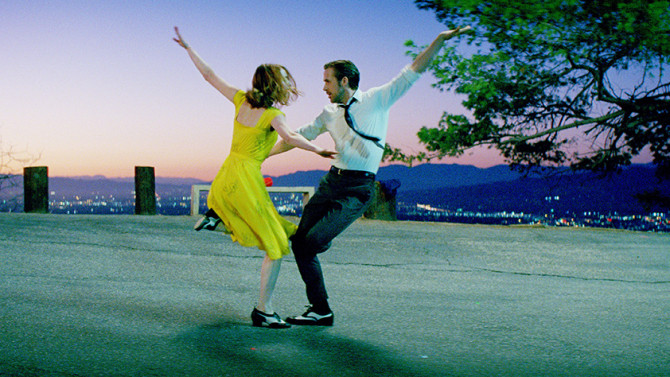
La la Land employs music and dance to tell its story in as immersive an experience as in the great 1964 French drama The Umbrellas of Cherbourg. The original music by Justin Hurwitz (Whiplash) is excellent. John Legend co-stars as the leader of an emerging band. The dancing in La La Land is the real thing – we see the full bodies dancing like we did with Fred Astaire and Gene Kelly – no phony close-ups and quick cuts.
They are no Fred and Ginger, but Gosling and Stone dance well enough; Gosling started out as a Mouseketeer, after all. Gosling’s voice is not strong, but it’s pleasing (think Chet Baker). Stone finally gets to really belt one out near the finale.
Gosling plays the piano – really plays it – magnificently. Liz Kinnon is credited as Gosling’s piano teacher/coach – and she must have done a helluva job.
All of this comes from writer-director Damien Chazelle, a 31-year-old guy from Rhode Island who most recently made Whiplash. Chazelle has served notice that he’s a remarkable talent.
Chazelle’s use of vivid colors is at the core of La La Land’s hyper-stylized look. Right in the opening scene, notice the colors of cars in the opening traffic jam and then the colors of clothes on the motorists that burst into a production number. Carried throughout the movie, Chazelle’s use of the color palette made me think of the films of Pedro Almodovar. The production design is by David Wasco, who has worked on six Quentin Tarantino films and movies ranging from Rampart to Fifty Shades of Grey. It’s one of the best-looking movies in years.
LA LA LAND
As befits its title, La La Land is a love letter to Los Angeles. We see locals doing the tourist thing, which I think is very cool, as the stars take in the Watts Towers and the Angels Flight Railway. In a joint homage to LA and to the movies, our lovers watch Rebel Without a Cause at the Rialto and then sneak in the Griffith Observatory after dark themselves.
La La Land’s epilogue is as wistful and emotionally powerful as the storied snowy one in The Umbrellas of Cherbourg. This fantasy montage is the emotional climax of La La Land and perhaps its cinematic highlight.
It’s worth noting that golden age of movie musicals was when the Greatest Generation enjoyed them as a diversion from the Depression and world war. We’re well past the apex of movie musicals, but, every so often, a musical arrives at a moment when we are ready to embrace one (Grease, Fame, Flash Dance, Chicago). Now – after the election campaign of 2016 and as the new administration prepares to take over the government – is such a moment.
La La Land is a profound love story, exquisitely told with music, dance and superb acting. It’s a landmark in cinema and one of my Best Movies of 2016.
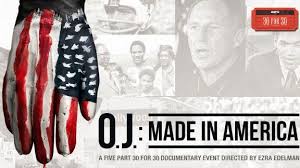
OJ: Made in America has been showing up on lots of critic’s year-end lists. I hadn’t thought of putting it on my Best Movies of 2016 because it’s an eight-hour ESPN documentary series, I hadn’t hadn’t thought of treating it as a movie, but I will now because it’s good enough to merit it.
I remember the OJ saga with distaste because it became a sideshow – the Bronco ride, the Trial of the Century, the bloody glove (“if it doesn’t fit, you must acquit”), Kato Kaelin, Judge Lance Ito and the seemingly unfathomable verdict. The genius of director Ezra Edelman is that OJ: Made in America rights a media wrong by keeping a laser focus on the crime itself and setting out the societal factors that explain how this all went so far off track. The sideshow elements are shown to be what they really were – distractions from the greater truth of a domestic violence murder.
OJ: Made in America is an unflinching look at a marriage that disintegrated because of chronic domestic violence, and then evolved into a terrifying stalker situation. We also see glimpses of crime scene photos, grisly but not exploitative, that reinforce the gravity of the crime.
With more clarity than in any other film treatment of this case, we see OJ Simpson’s abandonment and even rejection of the African-American community and of his own racial identity – “I’m not Black, I’m O.J.”. We see OJ creating a new community for himself of wealthy white men and refusing to perform advocacy, fundraising or even lending his name for African-American causes. And so we are left with the sickening irony of OJ becoming a posterchild for black victimhood and a rallying point for resistance to white oppression.
To set the stage for the trial, Edelman shows us the historic racist oppression by the LAPD and the missteps by prosecution that created an environment that the legal team for a celebrity could exploit. Through file footage and talking head witnesses, Edelman takes us through the trial to explain the critical choices that resulted in the verdict. Finally, we see the surveillance video of the bumbling, thuggish crime that OJ is now imprisoned for.
OJ: Made in America benefits from an impressive group of witnesses, including prosecutor Marcia Clark, detective Mark Fuhrman, defense lawyer Barry Scheck, DA Gil Garcetti, former OJ confidantes Ron Shipp and Mike Gilbert and Nicole Brown Simpson’s sister.
ESPN, with its reliably solid 30 for 30 series, is, along with PBS and HBO, one of the most prolific sources of excellent documentaries. With OJ: Made in Americas, ESPN has produced one of the top three or four documentaries of the year.
The trailer is on the film’s homepage. You can watch the entire movie on ESPNWatch and on some other streaming platforms such as iTunes and Hulu.
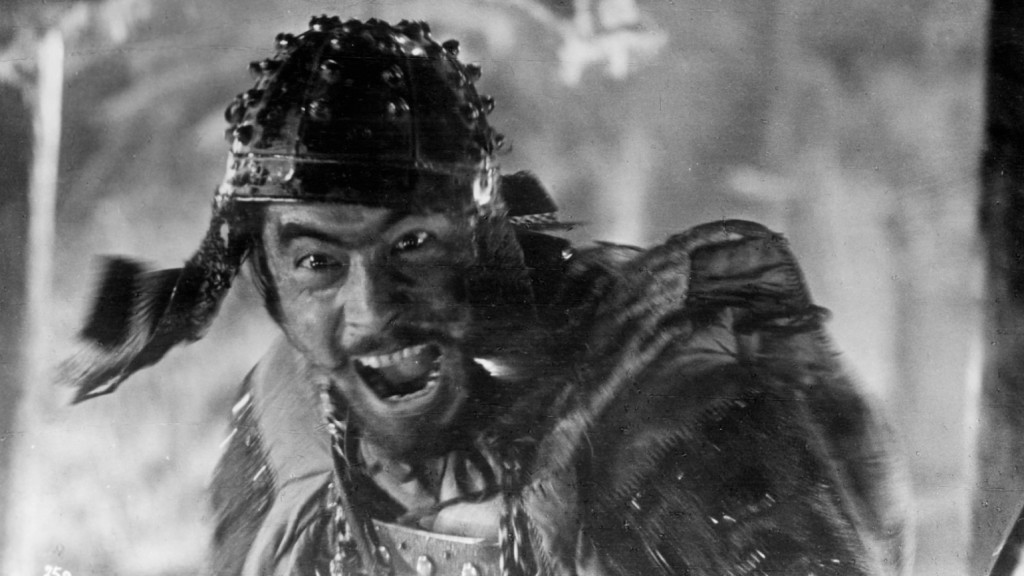
The documentary Mifune: The Last Samurai profiles the iconic Japanese actor Toshiro Mifune. Mifune was director Akira Kurosawa’s essential collaborator and the star of the cinematic masterpieces Rashomon, Seven Samuari and Yojimbo. In those films, along with The Hidden Fortress, Throne of Blood, Sanjuro and Red Beard, Kurosawa and Mifune re-invented and elevated the samurai genre.
The title “Rashomon” has become a noun in every language for the telling and retelling of the same story from different points of view. Seven Samurai was remade as The Magnificent Seven and Yojimbo as A Fist Full of Dollars. (Kurosawa and Mifune also made some brilliant Japanese film noir – The Lower Depths, High and Low, The Bad Sleep Well, Drunken Angel, Stray Dog – that are NOT discussed in Mifune: The Last Samurai.)
What Mifune brought these films was an irreplaceable vitality. One of the great prototypes for “strong and silent” screen actors, his physicality made his characters powerful, even forces of nature.
Director Steven Okazaki wisely makes Mifune: The Last Samurai a “Life and Times” with a survey of Japanese cinema history with importance of period swordfighting movies (called chanbara after the sound of swords). Besides tracing Mifune’s own personal history (he was born and raised in Chine, which I certainly didn’t know), Okazaki explores wartime and postwar Japan society.
Okazaki also brings us witnesses of Mifune’s life, including his son, Kurosawa’s son and many Mifune son and costars. There’s even a sword fight choreographer who played over 100 movie characters killed by Mifune. The talking heads are rounded out with Martin Scorsese and Steven Spielberg.
There are plenty of cool insights like how the dangerous death scene in Throne of Blood (where Mifune is shot by hundreds of arrows) was filmed on the cheap with college student archers – and uninsured!
Despite their long partnership and historic successes, Mifune and Kurosawa never made another movie together after Red Beard in 1965, although the two lived another 32 years. That is addressed, but not answered in Mifune: The Last Samurai; initially, I found that unsatisfying, but now I find it even more interesting that their sons and closest confidantes don’t know the reason.
I recommend Mifune: The Last Samurai for those who are interested in Mifune, Kurosawa or cinema generally.
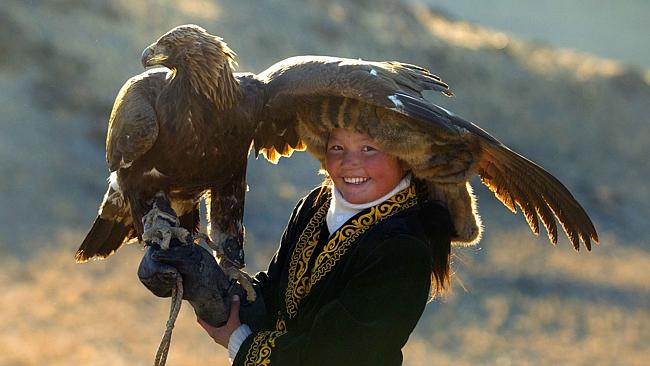
The documentary The Eagle Huntress is a Feel Good movie for the whole family, blending the genres of girl power, sports competition and cultural tourism. A 13-year-old girl in traditional (read “sexist”) Mongolian culture embraces hunting with an eagle. (It’s very funny when bitter old guys make excuses for losing a competition to a girl.) It’s also, at its heart, a heart-warming dad-daughter movie, as the girl’s father supports and encourages her at every moment.
Now, to eagle hunting. Instead of walking off with a rifle over shoulder, one rides off with an EAGLE on your right forearm, heading miles into impossibly barren mountains where the temperature can get to -40 degrees Fahrenheit. When it’s not winter, you can’t see anything growing on the terrain. When it is winter, the horses almost skate on the treacherous ice. When one spots a fox out in the open, one takes the hood off the eagle’s head so the eagle can soar high in the air before diving down to the fox. The eagle and fox, whose bodies are about the same size, fight it out, and the fox, a predator itself, has a chance. Very Discovery Channel.
Eagles are big, although their legs look surprisingly skinny when dangling in flight. I’ve seen Bald Eagles in Alaska, where they will routinely snatch and haul off a 20-pound salmon from the river. And I’ve seen Golden Eagles just south of Silicon Valley. I can’t imagine having one sit on my forearm all day – I haven’t done enough curls in my whole life to hoist that weight.
The Mongolian culture and terrain and the eagle hunting in The Eagle Huntress are all pretty impressive and easy to watch.
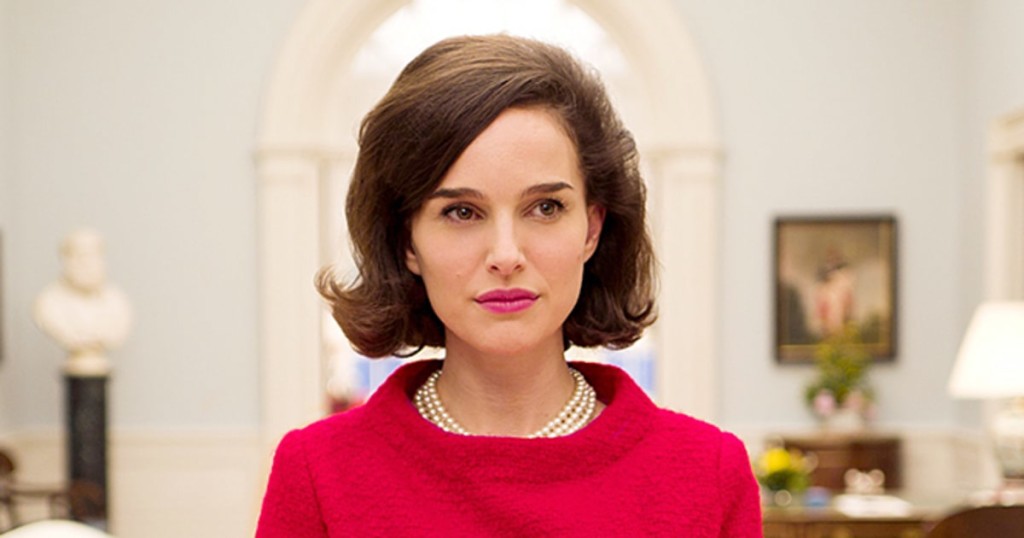
If you put a Chanel suit and pillbox hat on Natalie Portman and direct her to speak breathily, you’ve got Jackie Kennedy, which is noteworthy, but not enough reason to see the dreary Jackie. Portman superbly paints the portrait intended by director Pablo Larrain (No), but that vision is unconvincing and not at all compelling.
Larrain’s thesis is that Jackie moved from shocking grief to a fierce determination to enhance her husband’s legacy in the three days after the assassination, intentionally creating the brand of “Camelot”. He interweaves three stories: the assassination and funeral, Jackie’s later Hyannis Port interview with journalist Theodore H. White and a re-enactment of the First Lady’s televised White House tour.
Despite a remarkable impersonation by Portman, none of this really works. Jackie ranges from dreary to gloomy, and in case we forget, we’re prodded by an intrusive score of sad, really sad discordant music. One can imagine several cellists committing suicide after performing this score.
The real Jackie was bred to be a docent, and her confident White House tour was a television triumph. Yet Jackie’s Jackie acts like she needed one more Xanax to make it through without a breakdown. I didn’t believe Jackie’s bitter cat-and-mouse with the journalist, either.
Portman is exceptional at playing the on-top-of-the-world celebrity First Lady, the stunned and shattered victim and the laser-focused widow. John Hurt is excellent as a consoling priest. Greta Gerwig plays Jackie’s confidante Nancy Tuckerman, and manages to avoid blame for ruining a movie by herself for the first time. This is not the actors’ fault – it’s Larrain’s.
I’ll describe a movie with the word “somnolent” for the first time on this blog because I actually did drift off to sleep twice. It would have been just once, but The Wife prodded me awake both times.
[SPOILER ALERT: Bad history in historical movies enrages me, and there are two examples that appear in the last ten minutes of Jackie. First, as Jackie is preparing to move out of the White House, we see Ladybird Johnson actually fingering the fabric for new curtains, which CERTAINLY did not happen for a variety of reasons, chief among them being that Ladybird was too decent. Second, we see a flashback of JFK spinning Jackie around a White House dance floor like a polka king; of course, JFK’s chronic back condition did not allow him to move like that.]
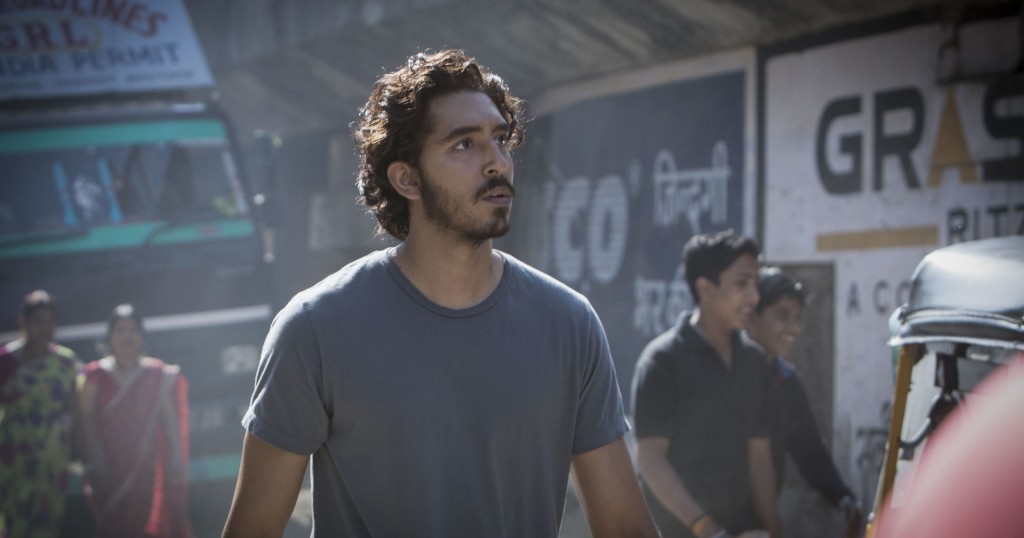
The emotionally affecting drama Lion is one of the top crowd pleasers of the Holiday season and of the year. Here are the bones of the plot:
An Indian boy is accidentally separated from his family and lost, ending up in a hellish orphanage.
He is adopted and raised by a loving Australian couple (Nicole Kidman and David Wenham).
As a man, (Dev Patel of Slumdog Millionaire and The Second Best Exotic Marigold Hotel), he sets out on a quest to find his mother and brother in India – a classic Needle in a Haystack search.
Amazingly, it’s a true story.
Before the screening, I was ready to dismiss Lion as a stereotypical family melodrama, what movies studio called a “women’s picture” in the 1940s. But it’s much more than that. The young man has survivor’s guilt that becomes an obsession, explored through how it affects his relationship with his significant other (Rooney Mara). His adoptive parents have another adopted son – one who is severely emotionally disturbed.
Understandably, the young man is driven by an overwhelming need to give closure to his birth mother. What we don’t expect are the needs of the adoptive mother, and what surprises even our main character is what the adoptive mother does and does not need to be protected from.
Lion is the first feature for director Garth Davis, who has made his name in commercials; as one would expect, he is able in manipulating the audience with images and music, but not in a cheap way. The scene where the main character closes in on his search is exceptional.
Patel is remarkably engaging, and our sympathy with his character drives the movie. The other performances are solid. (Wow – Nicole Kidman is now playing the leading man’s Mom!) The two child actors who play the protagonist and his brother as children, Sunny Pawar and Abhishek Bharate, are exceptional.
When The Wife and I saw Lion, pretty much the entire audience was choked up. Stay all the way through the end credits for even more tears.
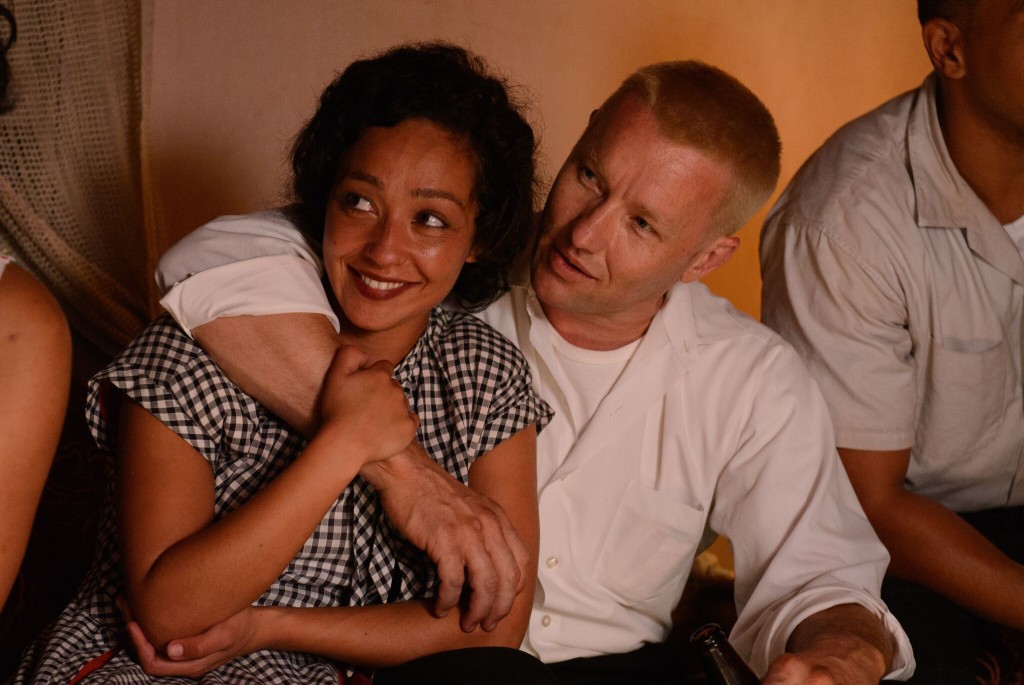
Ruth Negga and Joel Edgerton in LOVING. Credit: Ben Rothstein/Focus Features
The landmark 1967 US Supreme Court case Loving v. Virginia overturned state laws that banned interracial marriage. Loving is the story of the real couple behind that ruling, and it’s a satisfying love story of two modest people who would rather not have been forced to make history.
Ruth Negga and Joel Edgerton convincingly bring the lead characters to life. As the more vibrant character, Negga is especially winning. Edgerton is just as good as he plays the stolid and far less demonstrative husband.
Marton Csokas, with his pitiless, piercing eyes, is remarkably effective as the Virginia sheriff dead set on enforcing Virginia’s racist statute in the most personally intrusive way. Too often, actors seem to be impersonating Rod Steiger in In the Heat of the Night when they play racist Southern sheriffs, but Csokas brings some originality to his performance.
Loving is directed by one of my favorites, Jeff Nichols of Shotgun Stories, Take Shelter and Mud(which he calls his “Arkansas Trilogy”). Nichols specializes in leisurely paced dramas that evoke their settings in the rural South. Nichols’ languid style works well in telling stories that have moments of shock and violence. However, there is no dramatic courtroom face off or thrilling high point as we watch these people live their workaday lives, so Loving drags a bit in places. Nevertheless, Nichols does an excellent job of depicting the ongoing dread of racist terror that these people lived under.
Michael Shannon, who owes his career breakthrough to Nichols’ Shotgun Stories and stars in his Take Shelter and Mud, shows up in a sparkling cameo as a LIFE magazine photographer. If you perform a Google image search for “Richard Mildred Loving”, you’ll find the real LIFE photos, which make it clear that Nichols went to great lengths to make the characters and the settings look very, very much like the Lovings and their environment. I don’t need “lookalikes” in a historical movie, but the makeup and wardrobe on Edgerton and Negga (and especially Richard Loving’s mother) are remarkably close to the real people. And the scenes at the drag race and on the Loving’s sofa are recreated in almost chilling accuracy.
I studied Loving v. Virginia, along with other major civil rights and individual rights cases, in law school in the mid-1970s . Then, the idea that a government could outlaw a marriage between people of different races (and even the word “anti-miscegenation”) already seemed ridiculously obsolete and perversely quaint. But I hadn’t realized that the ruling in Loving v Virginia was only 8 years old at the time I studied it. California had such a law, too, which wasn’t repealed until 1948, and I have a friend whose Filipino and Mexican-American parents were kept from marrying by that statute.
History is made by real people. Loving is both good history and a watchable personal story.
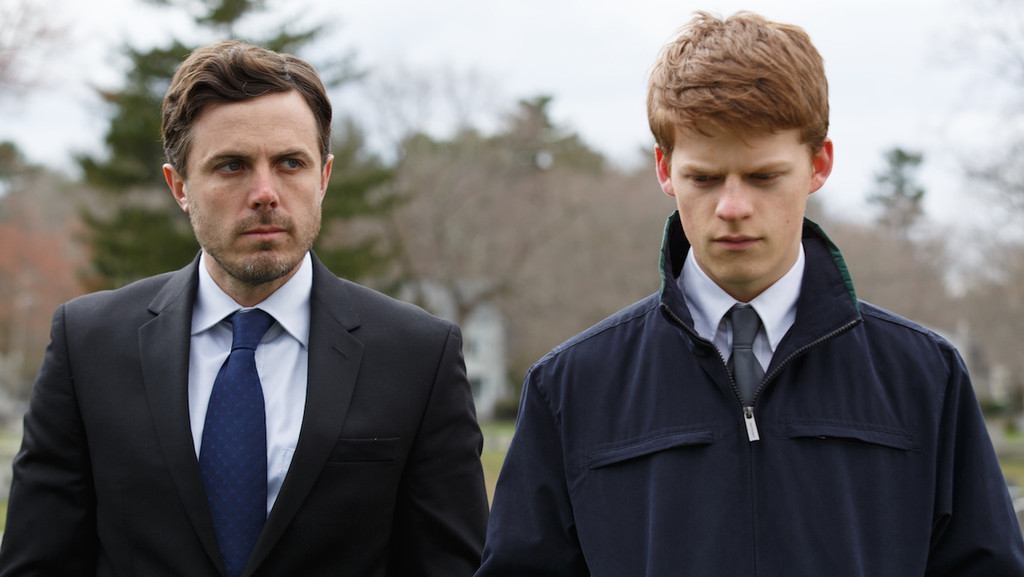
Casey Affleck and Lucas Hedges in MANCHESTER BY THE SEA
The powerfully affecting drama Manchester by the Seacenters on the New England janitor Lee (Casey Affleck), who must take over care of his dead brother’s teenage son Patrick (Lucas Hedges). The searing performance by Affleck and the masterful story-telling by writer-director Kenneth Lonergan combine to make Manchester by the Sea a Must See and one the year’s very best films.
As the movie opens, we see Lee dealing with a series of apartment tenants, and we learn that he is emotionally isolated, and extremely reluctant to become entangled in any human relationships, even with willing females. Underneath, he is a witty guy, but he masks that with a stoic veneer. We also see that he is suppressing a rage that occasionally erupts.
Why is he like this? It’s hinted that there has been a tragedy for which he feels guilty. Mid-movie, that tragedy is depicted, and it’s hard to imagine a worse one. This is a man who, faced with an event that cannot be undone, has been disabled by grief and guilt. It becomes clear why he is so reluctant to take over the role as his nephew’s guardian.
Patrick has all the typical willfulness and teenage thirst for independence – all while expecting Lee to chauffeur him around his rich teen social life. Any teen is disaffected to some extent, but Patrick’s troubled mother has not been in the picture, and now his father has died. Lee is Patrick’s favorite uncle, and he is hurt and confused by Lee’s reaction, and he doesn’t understand why Lee is unwilling to drop everything to parent Patrick.
The friction between the two is remarkably realistic. Both Patrick and Lee have quick, sarcastic tongues, which make their scenes pretty funny, too. In fact, Manchester by the Sea is filled with humorous moments. There’s that awkwardness: how are you supposed to act when there is a death in the family – and yet something funny happens? Lonergan has an eye for the little things that go wrong in life: when the decedent’s last effects are misplaced, when the gurney won’t fold down to fit into the ambulance, when the cell phone buzzes in the funeral. And when the most horrible tragedy is marked by a forlorn plastic bag of junk food and beer.
A family death is naturally dramatic, and Lonergan uses this event to explore intense feelings of grief, guilt, responsibility and resentment. Absolutely every character acts like people do in real life. The result is a remarkable sense of authenticity.
Affleck has produced some of the greatest recent screen acting performances, in The Assassination of Jesse James by the Coward Robert Ford, Gone Baby Gone and Ain’t Those Bodies Saints. This performance is a career topper, a surefire Oscar-winner that will lead his obit. Just note how Affleck’s Lee answers a bad news phone call and the way he wordlessly eyeballs his ex-wife’s new husband.
Young Lucas Hedges steps up to play against Affleck, and Hedges makes his Patrick completely compelling and believable. Hedge’s Patrick is smart, wounded, insecure, needy, prideful and a smart mouth that we like being around.
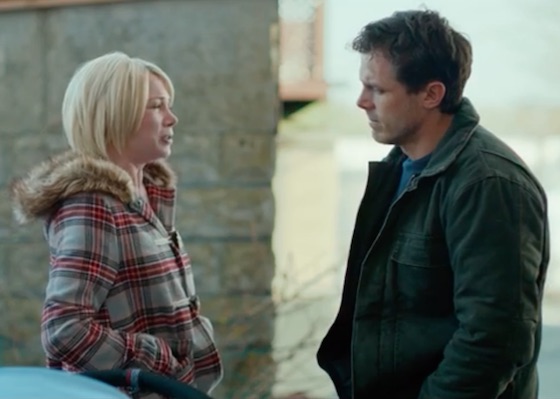
As befits a Lonergan movie, all of the acting in Manchester By the Sea is top rate. The final scene between Michelle Williams and Affleck is utterly heartbreaking. I particularly liked C.J. Wilson as the family’s partner in their fishing boat.
As good as it is, Manchester by the Sea is not for everyone. The Wife and her sister had a meh reaction because they weren’t absorbed by Lee’s lack of apparent affect and didn’t think that the story’s arc paid off.
This is the third movie directed by the major American playwright Kenneth Lornergan. who has directed three movies. The first was another actor’s showcase, the excellent 2000 drama You Can Count on Me with Laura Linney as a well-grounded single mom and Mark Ruffalo as her reliably unreliable brother.
Lonergan made his second film, the near-masterpiece Margaret, in 2007. The studio fought with Lonergan over the film’s editing, cut it over his objection, and issued it to theaters in a blink-and-you’ve-missed-it release in 2011. In 2012, a DVD was released with both the studio’s 150-minutes version and with Lonergan’s preferred 186-minute cut. I own the DVD, and have seen the director’s cut. It’s an amazing film, and there’s an even better (shorter) one in there.
You Can Count on Me addresses responsibility, and Margaret deals with the consequences of an act that can’t be undone. Manchester by the Sea deals with these themes even more successfully and evocatively.
I’m trying to decide if Manchester by the Sea is the second best movie I’ve seen this year or the very best. You can be sure that it will be nominated for the Best Picture Oscar. I also think that it will produce the Oscar favorites for Best Actor (Casey Affleck), Best Supporting Actress (Michelle Williams) and Best Original Screenplay (Kenneth Lonergan).
Michelle Williams and Casey Affleck in MANCHESTER BY THE SEA
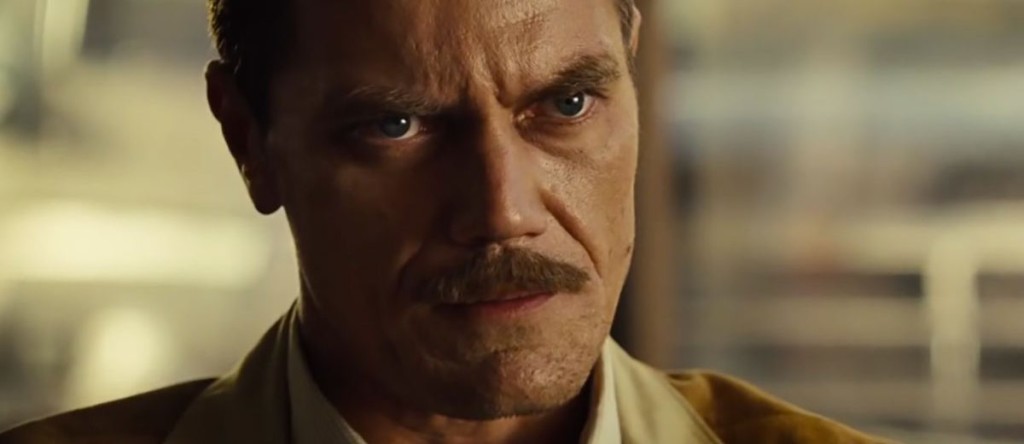
Michael Shannon, the only reason to see NOCTURNAL ANIMALS
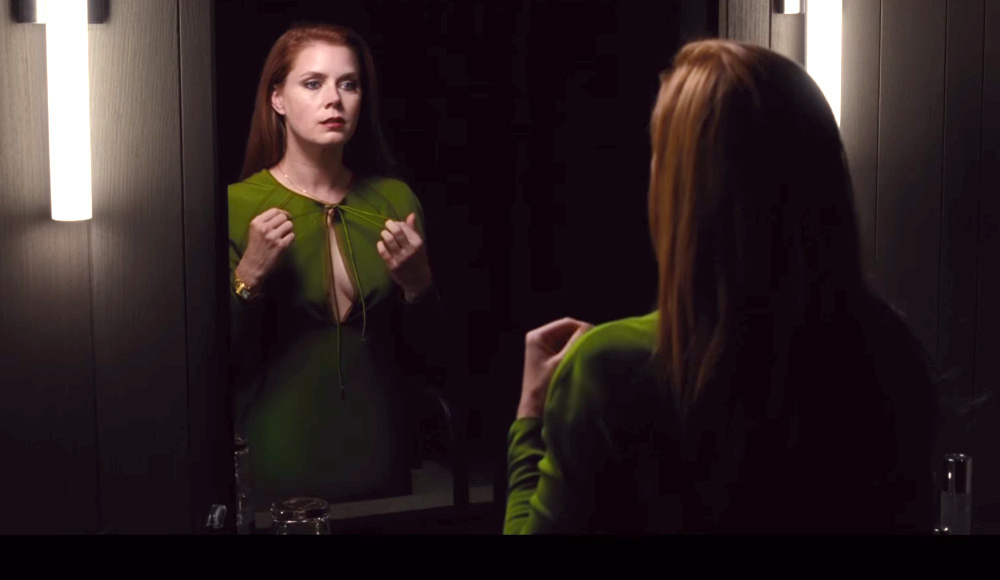
In the would-be-thriller-but-really-squirmer Nocturnal Animals, Amy Adams plays a young woman who becomes infatuated with the romance of being with a starving artist, the sensitive Edward (Jake Gyllenhaal). After the romance wears off, she dumps him for a higher testosterone model, the striving businessman Hutton (Armie Hammer). Twenty years later, she has become a successful art dealer with all the trappings of an affluent life, buy plunges into a midlife crisis. At this moment, Edward finally gets a novel published and sends her an advance copy. Shocked to see that it is dedicated to her, she starts reading it and becomes engrosses, which is exactly what Edward has intended.
Nocturnal Animals is the braiding of three plot threads: the story of the doomed romance between the young Susan and Edward, Susan’s current melodrama with Hutton and a reenactment of the plot of Edward’s novel. The novel’s story takes up most of the screen time. It’s a garden variety, but particularly grim, revenge story, with a man (also played by Gyllenhaal) whose family is high jacked in desolate West Texas by a crew of sadistic lowlifes with the very worst intentions. If you’ve ever seen a crime movie, you know what is going to happen to the guy’s wife and daughter. After an excruciatingly long menace-and-dread segment, Gyllenhaal escapes and stumbles into the potential for revenge, guided by the local detective (Michael Shannon).
If you’ve survived the squirming caused by the unremittingly and gratuitously uncomfortable kidnapping sequence, you’re in for a treat with Michael Shannon’s performance, which is really the only reason to see Nocturnal Animals. Shannon doesn’t make any unnecessary movements, which focuses us his piercing and unblinking eyes, which make clear that he is a particularly dangerous man. And, we learn, even more dangerous because he is a man without anything to lose.
Actually, though, Laura Linney is also superb as Susan’s mom, unrecognizable underneath a formidable Dina Merill bouffant. Linney actually gets the one sure thing LOL laugh line in the movie. Aaron Taylor-Johnson is also devastatingly despicable as the most sadistic and loathsome of the thugs. Adams, Gyllenhaal and Hammer are all fine, too.
This is the second movie from director Tom Ford, the fashion designer; it’s nothing at all like the his A Single Man, with its exploration of loneliness, grief and identity repression. Ford’s background in fashion probably informs some jokiness in Susan’s world of overly precious art dealers and silly avant garde “art”. But other than that, there really isn’t any humor to leaven the unpleasantness of the Gyllenhaal story.
The reason that Susan’s dumping of Edward is supposed to be so scarring is overblown, and I’m finding it has become an all too easy screenwriting device. (We’ve come a long way since Alfie in 1966.)
I should note that I think that I do GET this movie, with its layers of revenge and its comments on art. I just don’t think that the payoff is there. Nocturnal Animals will make for a solid $3.99 video rental so you can fast forward until you see Michael Shannon on the screen.