UNDER THE SUN: a wackadoodle regime subverts its own propaganda

A scene from Vitaly Mansky's UNDER THE SUN, playing at the 59th San Francisco International Film Festival, on April 21 - May 5, 2016.
UNDER THE SUN.  Photo courtesy of San Francisco Film Society.

The subversive documentary Under the Sun is a searing insight into totalitarian North Korean society, all from government-approved filming that tells a different story than the wackadoodle dictatorship intended.

The North Korean regime gave filmmaker Vitaly Mansky permission to film the story of a young girl who is training to take part in one of North Korea’s ritualized propaganda spectacles – when children “join” the Korean Children’s Union on the birthday of the current Supreme Leader’s father.  The script and the filming locations were all assigned by the North Korean regime and all film reviewed by their censors.  But Mansky was able to conceal and preserve the outtakes – and those moments are devastatingly revelatory about life on North Korea.

What we see is a grim society, virtually devoid of vibrancy and joy.  Families are posed briefly mechanically and unsmilingly for ritual family photos in front of flower-bedecked giant portraits of the Leaders.  The streets are drab and empty of vehicle traffic even at rush hour.  Mansky shows us surreptitious glimpses of his minders and even of boys raiding garbage cans.  There’s a lot of regimentation depicted in Under the Sun and lots of people drearily filing to and fro.  Sometimes it gets tiresome – but that’s the point.

Everyone is conscripted to perform and watch phony staged spectacles of the grandest scale.  The rapturous crowds shown on TV contrast with the stoic crowds forced to view the televised events.  North Korea must have the world’s most professional event planners per capita.

Most chillingly, we see a class where 6-year-olds are taught to hate Japanese and Americans.  This appears to be a scene that the North Koreans INTENTIONALLY included in the movie.

The beautiful irony of Under the Sun is that, in trying to tell a story about the best of their society, the North Koreans actually reveal their worst.  I saw Under the Sun earlier this year at the 59th San Francisco International Film Festival.  Under the Sun opens July 29 at the Lee 4-Star in San Francisco.
OUR LITTLE SISTER: remarkably tender

OUR LITTLE SISTER
OUR LITTLE SISTER

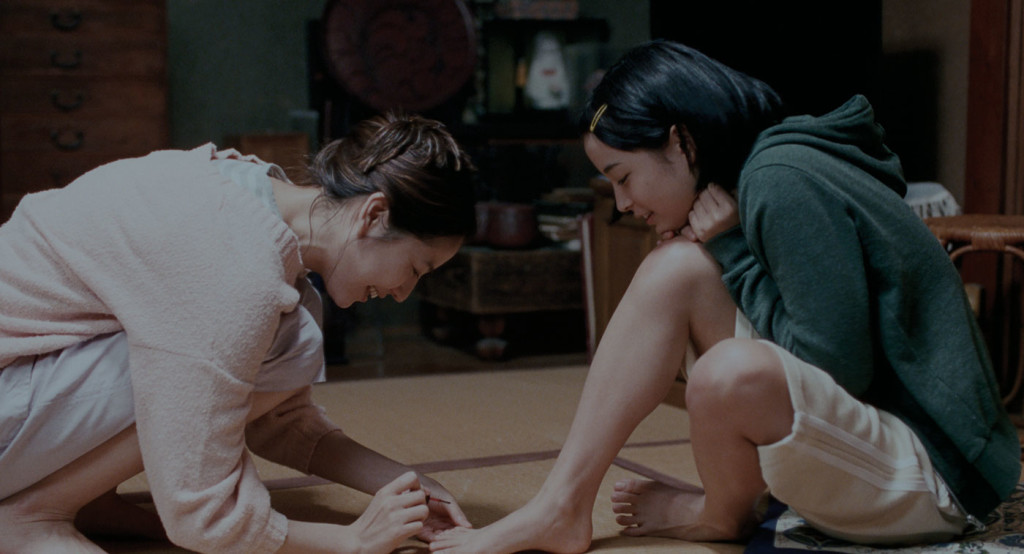
The remarkably uplifting Japanese domestic drama Our Little Sister centers on three 20-something sisters whose father left them over fifteen years ago and whose flighty, selfish mom was never much of a factor in their lives.  The sisters are single and live together when their estranged dad dies and they travel to his funeral.  They meet their 15-year-old half-sister, and rescue her from her step-mom, the father’s third wife.  Now the household contains four siblings, all with different personalities, but all dealing with some sense of parental loss.

The four go about their daily lives, working, going to school, eating at a diner, watching fireworks.  Now here’s the beauty of Our Little Sister, although  there’s essentially no action and very little overt conflict, we learn a lot about these women.  And we begin to care for them.  And we become engaged in their journeys of self-discovery.

Writer-director Hirokazu Kore-eda was introduced to American fans of indie cinema in 1996 with Maborosi, and I listed his Still Walking on my Best Movies of 2009.  It’s a privilege to spend two hours with Kore-eda’s characters in Our Little Sister.  It’s impossible to leave Our Little Sister without being touched by its tenderness (and I’m a pretty cynical and hard-boiled viewer).

WRESTLING JERUSALEM: it’s complicated

WRESTLING JERUSALEM
WRESTLING JERUSALEM

The Israeli-Palestinian conflict has inspired both documentary and narrative movies, but none is more imaginative than Wrestling Jerusalem. This year’s San Francisco Jewish Film Festival (SJFF36) will host Wrestling Jerusalem’s world premiere.

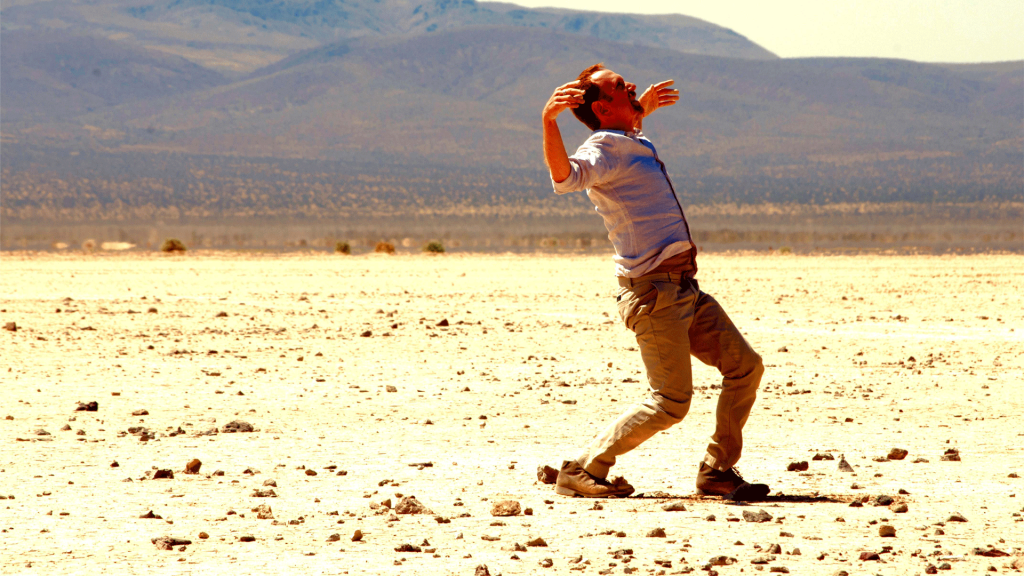
Wrestling Jerusalem is a one-man play written and performed by Aaron Davidman, who creates seventeen different characters, both Jews and Arabs, who each relate their own experiences of the conflict. Davidman portrays his characters without benefit of costume; he varies the accents, but mostly we can tell the characters apart from the content of their stories. Davidman’s performance is vivid and startlingly personal.

Davidman launches Wrestling Jerusalem with a montage of his characters explaining “It’s complicated” – a defining truth that most would accept. Then the characters continue by disagreeing about the conflict’s start (1946, 1947, 1967, 1973, the Hebron massacre – both of the massacres) and who is to blame for its continuation (Abbas, the settlers, the Orthodox, the terror attacks, Bibi, etc.). Then each character unspools his or her own perspective. Over a crisp 90 minutes, it’s absorbing stuff.

Thankfully, with one just guy on-screen for the entire film, the filmmakers keep Wrestling Jerusalem from being too stagey.  They place Davidman in two locations, a solitary theatrical stage and in the desert (looks like Israel/Palestine, but it’s the California Mojave).  It’s an impressive job by director Dylan Kussman, editor Erik C. Andersen and cinematographer Nicole Hirsch Whitaker.

Davidman has a point of view, but was careful not to make Wrestling Jerusalem into a screed. Instead, he’s careful to let his audience connect the dots in our own minds. Near the end, one of his characters says, “You are Israel, for you have struggled with God and with men” from Genesis 32:28, but does not does not finish the quote with “and have prevailed”.

You can experience Wrestling Jerusalem at its world premiere at this year’s San Francisco Jewish Film Festival (SJFF36), where you can see it at San Francisco’s Castro on July 27, at the Berkeley Rep’s Roda Theater on July 30, at CineArts in Palo Alto on July 28 and at the Rafael in San Rafael on August 7

https://vimeo.com/161142093

FALSE FLAG: holy moley, what a page-turner!

FALSE FLAG
FALSE FLAG

False Flag is an absolutely riveting Israeli miniseries that we’ll get to see in the US at some point.  The miniseries has 8 episodes (each a taut 45 minutes).  The first two episodes are playing together as one ninety-minute program at this year’s San Francisco Jewish Film Festival (SJFF36).

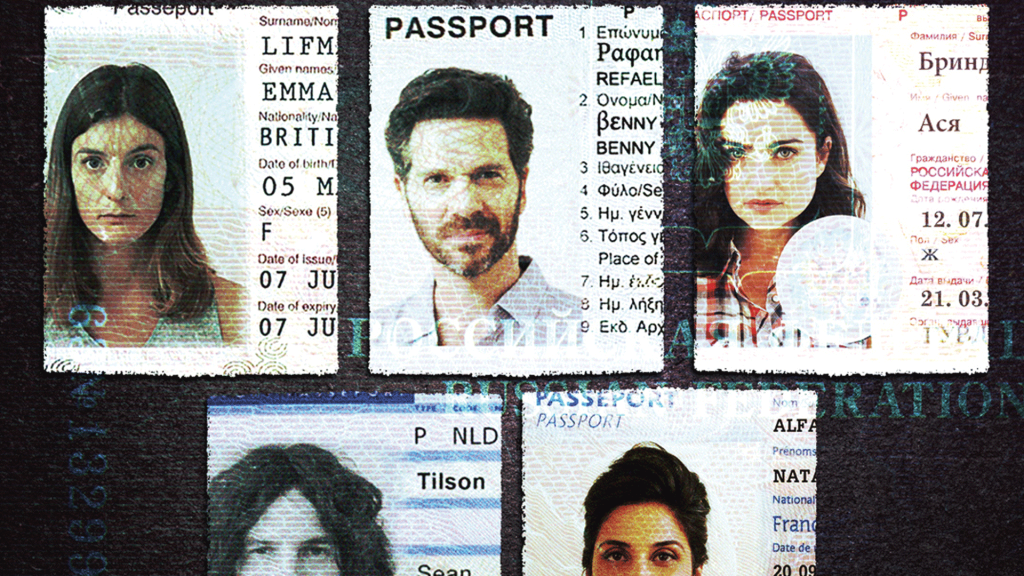
As False Flag opens,  Israeli television news reports that five Israeli citizens were responsible for the kidnapping of an Iranian diplomat out of his Moscow hotel.  We see four of the five – each appearing totally shocked by the revelation and denying any involvement to their families and friends.  They don’t seem to know each other, and  the only connection seems to be that they each have dual citizenship and a second passport.  We first question whether this was a covert operation by Israeli intelligence forces for which they were framed? But we soon learn that the Mossad wasn’t involved either, and Israeli security forces are soon hunting down the five to find out what really happened.

But then we start to learn that some of the five may be connected.  Their alibis have holes.  And some of the five are not what they seem.  Are they involved?  Who commissioned the kidnapping?  Who is going to find out and how?  And what is going to happen to each of the five?  False Flag evolves into a superb thriller that spans, at once, the genres of the whodunit, the paranoid thriller, the perfect crime movie and the espionage procedural.

The five protagonists have very different personalities, which makes False Flag a successful character-driven thriller.  The three women are a tough cookie, a party girl and a low-self esteemed shoulder-slumper.  The two men are a bewildered regular guy and an international man of mystery.  The acting from  Ishai Golan, Magi Azarzar, Orna Salinger, Ania Bukstein, and Angel Bonnani is first-rate.

False Flag (titled Kfulim in Hebrew) was broadcast last fall in Israel, and was the first non-English language series to be acquired by Fox International Channels.  It’s expected sometime in the next year on American TV.  The release of the first two episodes at SFJFF36 will help build buzz for the US release.

The Joke was on The Movie Gourmet.  When I was going through my screeners for the SFJFF36, I neglected to read anything about False Flag except for “thriller”, so I was expecting that the entire story was contained in the 90 minutes. When what is really Episode 2 ended, I was on the edge of my seat braying, “Oh no! What happens next?”.

You can get your own addicting taste of False Flag at the San Francisco Jewish Film Festival, where you can see it at CineArts in Palo Alto on July 23, at San Francisco’s Castro on July 30, at the Berkeley Rep’s Roda Theater on July 31, and the Rafael in San Rafael on August 6.

I, DALIO: the Jewish star of two French masterpieces

I, DALIO, OR THE RULES OF THE GAME
I, DALIO – OR THE RULES OF THE GAME

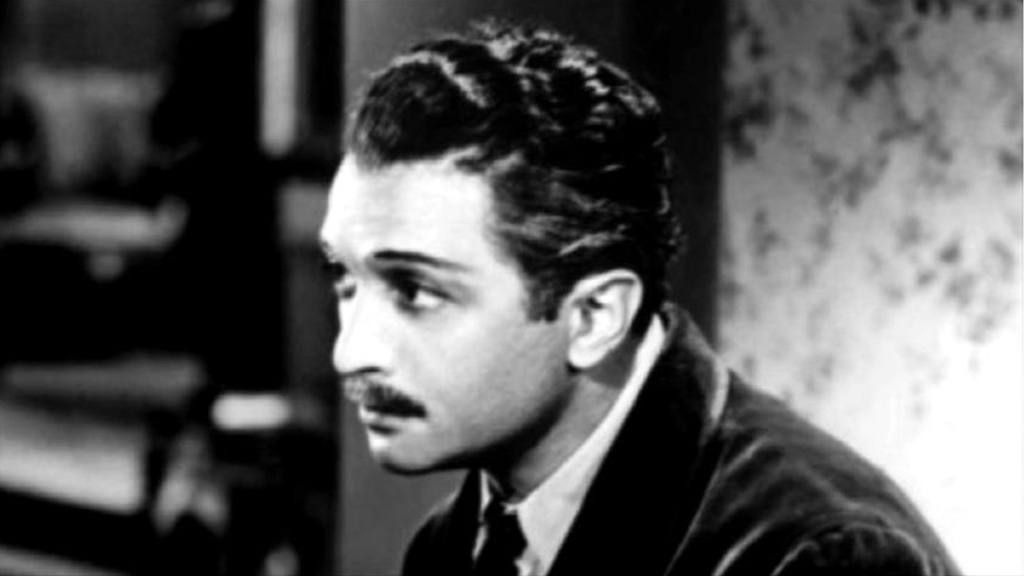
There are two programs of short films (Jews in Shorts) at this year’s San Francisco Jewish Film Festival, and one of them features the documentary short I, Dalio – Or the Rules of the Game.  Covering the career of French Jewish actor Marcel Dalio, I, Dalio reflects on how Dalio’s Jewishness informed his life and film career.  It’s a documentary of special interest to cinephiles because of Dalio’s roles in three of the all-time greatest films.   One of those films is Casablanca, and Dalio  gets one of that film classic’s biggest laughs when his croupier says “Your winnings, sir” to Claude Raines’ Captain Renault.

Born in Paris as Israel Moshe Blauschild and adopting the stage name of Marcel Dalio, he became a prolific character actor in French cinema, specializing in weaselly, conniving and otherwise malevolent roles, often playing the foil to his real-life friend Jean Gabin. I, Dalio notes that the only two Dalio roles that were explicitly Jewish were his starring turns in the Jean Renoir masterpieces La Grande Illusion and The Rules of the Game.

Then, within a year of The Rules of the Game’s Paris premiere, the Nazis invaded Paris, and Dalio took his talent to Hollywood.  After the war, Dalio continued to work, producing over a hundred more screen credits in international cinema and television.

I, Dalio – Or the Rules of the Game will appeal to audiences interested in both cinema history and Jewish identity.  Running for 33 minutes, I Dalio anchors one of the two programs of short films (Jews in Shorts) at this years San Francisco Jewish Film Festival (SJFF36), where you can see it at San Francisco’s Castro on July 27 and at the Piedmont in Oakland on August 6.

FEVER AT DAWN: romance, identity and a moral choice

FEVER AT DAWN
FEVER AT DAWN

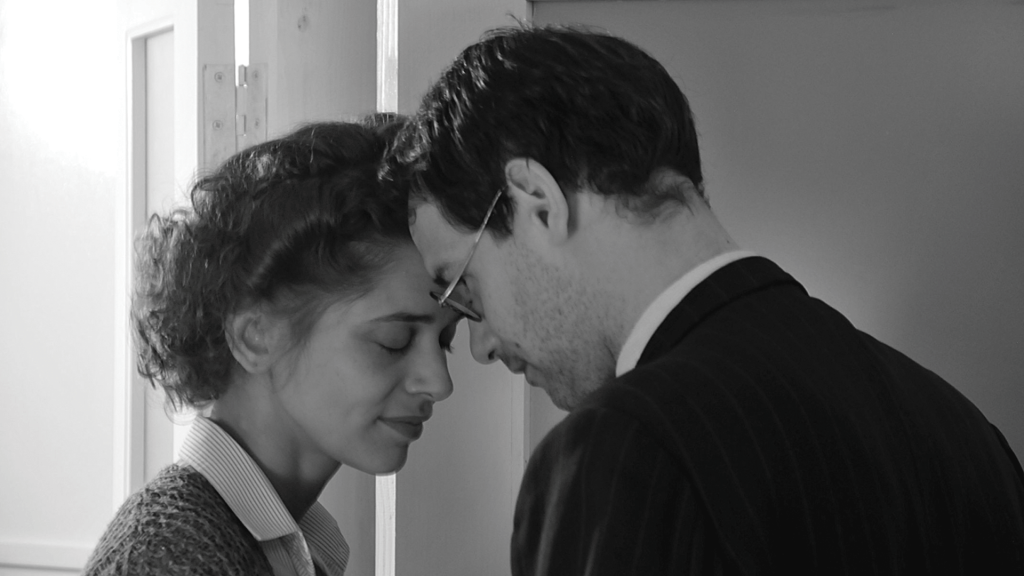
The Hungarian drama Fever at Dawn is a little movie with an epic romance. Set just after the liberation of the Nazi concentration camps, Hungarian invalids who survived the camps have been sent to convalesce in hospital camps in Sweden. A young patient, Miklos, gets a dire diagnosis and determines to find love once more before he dies. A half century before internet dating, he concocts a scheme to get himself in front of every sick Hungarian woman in Sweden. When he meets his potential soulmate Lili, a moral question rises to the surface – should he share his diagnosis with the woman he is courting?

Some Holocaust survivors experienced ambivalence about the very Jewish identity that led to yellow stars on their clothes and, essentially, targets on their backs. This ambivalence becomes a significant thread of Fever at Dawn and is addressed more explicitly than is common for Holocaust (or post-Holocaust) movies.

Don’t read too much about this movie before seeing it. There’s an unexpected nugget at the end.

I saw Fever at Dawn earlier this year at its US premiere at Cinequest.  It’s being featured at this years San Francisco Jewish Film Festival (SJFF36), where you can see it at San Francisco’s Castro on July 26, at the Berkeley Rep’s Roda Theater on July 28, and at CineArts in Palo Alto on July 29.

TAKE ME TO THE RIVER: notes from a San Jose filmmaker Matt Sobel

TAKE ME TO THE RIVER

I attended a pre-release screening of Take Me to the River  at the Camera Cinema Club, followed by a Skype interview by Tim Sika with writer-director Matt Sobel.  Here are some nuggets from that interview.

Like me, Sobel is a San Jose guy who has often visited family in rural Nebraska.  Sobel actually likes Nebraska, and pointed out the cultural differences are more complicated than “we Californians are open minded and right”.  That being said, he acknowledged that Take Me to the River is about that Midwestern resistance to talking about anything unpleasant, which can lead to “a conspiracy of silence”.

Sobel described Take Me to the River as a “movie about suspicion and fear” and pointed out the shame that adults put on kids for innocent behavior that can lead to later tragedy.

As a filmmaker, Sobel is comfortable with the Big Action happening outside the frame so the audience must figure it out most of it and live with some ambiguity.

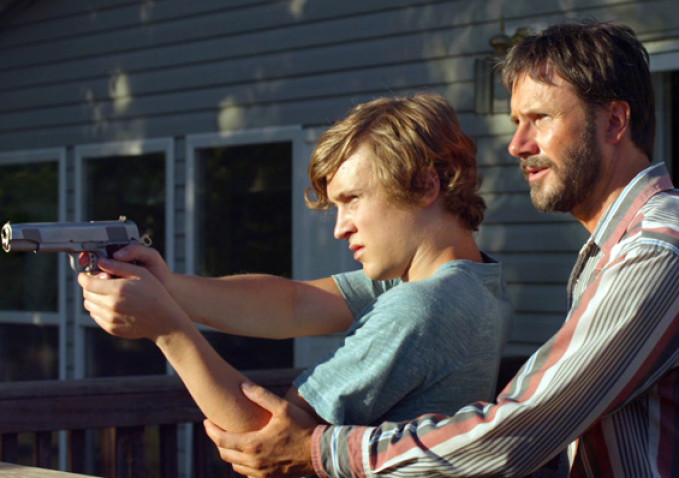
SPOILER ALERT:  Sobel says that, in Take Me to the River , Keith has taught his daughter the “chicken fighting” game that made his own mother think that he was a pervert.

SPOILER ALERT:  Take Me to the River contains some sexual behavior by a child which is very uncomfortable for the audience.  Sobel was careful to work with the child actress Ursula Parker to make her acting experience on the set be a non-sexual game.  This scene is central to the story and, thanks to Sobel, non-exploitative.  Ursula Parker plays the youngest daughter on Louie.

You can stream Take Me to the River on Amazon Instant, iTunes, Vudu, YouTube and Google Play or rent the DVD from Netflix.

NUTS!: the rise and fall of a testicular empire

NUTS!
NUTS!

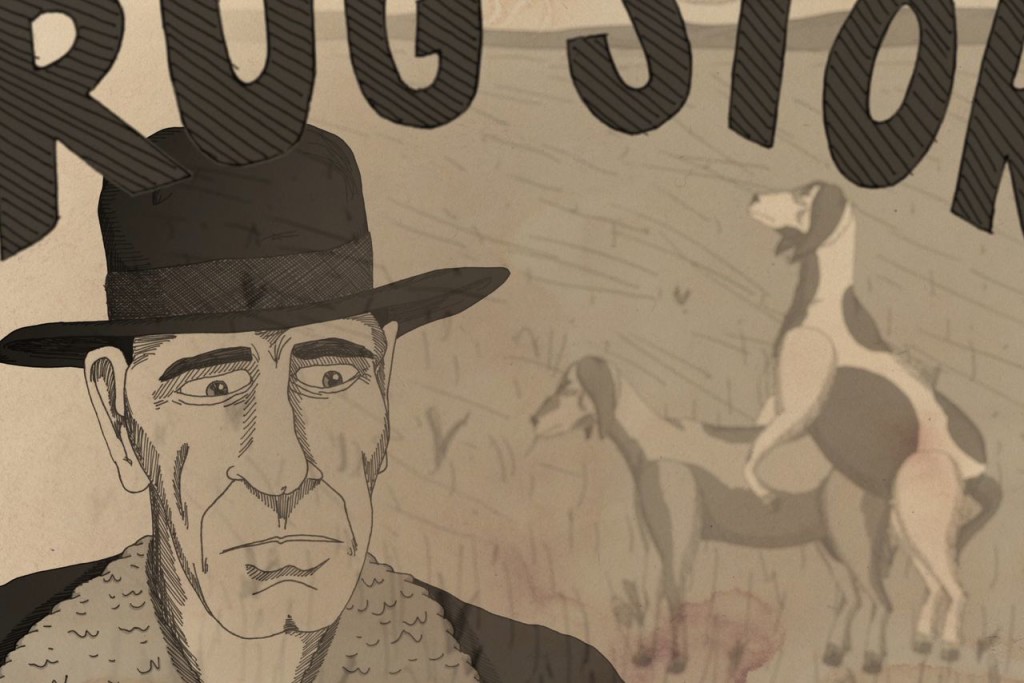
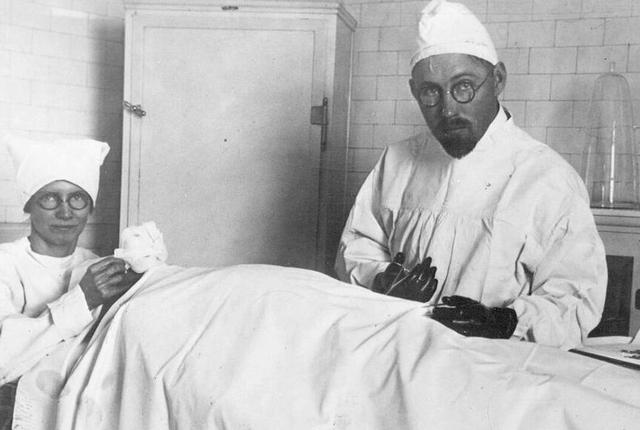
NUTS! is the persistently hilarious (and finally poignant) documentary about the rise and fall of a medical and radio empire – all built on goat testicle “implantation” surgery in gullible humans. Yes, a huckster named J.R. Brinkley really did surgically place goat testicles inside human scrota – and, more astonishingly, this actually became a craze in the 1920s. Now that’s enough of a forehead slapper, but there’s more, much more and that’s what makes NUTS! so fun.

Brinkley’s story is one that leads to celebrity mega wealth and a colossal miscalculation. Improbably, Brinkley’s wild ride touched Huey Long,William Jennings Bryan, Rudolph Valentino, Buster Keaton, June Carter Cash and Wolfman Jack. There’s a radio empire, a Gubernatorial election and a dramatic, climactic trial.

NUTS!
“Dr.” Brinkley at work in NUTS!

Director Penny Lane tells the story with animation (different animators for each chapter, but you can’t tell) seamlessly braided together with historical still photos, movies and a final heartbreaking recording. NUTS! tells a story that is too bizarre to be true – but really happened. It makes for a most entertaining movie.

I saw NUTS! earlier this year at the 59th San Francisco International Film Festival (SFIFF).  It opens in Bay Area theaters today.

ZERO DAYS: cyberwar triumph? maybe not

ZERO DAYS
ZERO DAYS

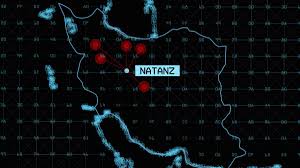
The important and absorbing documentary Zero Days traces the story of an incredibly successful cyber attack by two nation states upon another – and its implications. In Iran’s nuclear weapons development program, the centrifuges used to enrich uranium began destroying themselves in 2010. It turned out that these machines were instructed to self-destruct by a computer worm devised by American and Israeli intelligence.

No doubt – this was an amazing technological triumph.  Zero Days takes us through a thrilling whodunit non-geek audience.  We learn how a network that is completely disconnected from the Internet can still be infected.  And how cybersecurity experts track down viruses. It’s all accessible and fascinating.

But, strategically, was this really a cyberwarfare victory?  We learn just what parts of our lives can be attacked and frozen by computer attacks (Spoiler: pretty much everything).  And we learn that this attack has greenlighted cyberwarfare by other nations – including hostile and potentially hostile ones.  Zero Days makes a persuasive case that we need to have a public debate – as we have had on nuclear, biological and chemical weapons – on the use of this new kind of weaponry.

Director Alex Gibney is one our very, very best documentarians. He won an Oscar for Taxi to the Dark Side, and he made the superb Casino Jack: The United States of Money, Enron: The Smartest Guys in the Room, Client 9: The Rise and Fall of Elliot Spitzer, Mea Maxima Culpa: Silence in the House of God,  Going Clear: The Prison of Belief and Steve Jobs: Man in the Machine.

Gibney’s specialty is getting sources on-camera that have the most intimate knowledge of his topic.  In Zero Days, he pulls out a crew of cybersecurity experts, the top journalist covering cyberwarfare, leaders of both Israeli and American intelligence and even someone who can explain the Iranian perspective.  Most impressively, Gibney has found insiders from the NSA who actually worked on this cyber attack (and prepared others).

Zero Days opens tomorrow in theaters and will also be available to stream on Amazon, iTunes, Vusu, YouTube, Google Play, Xbox and various PPV platforms, including DirecTV.

FREE STATE OF JONES: sound and compelling history, with a sizzling McConaughey

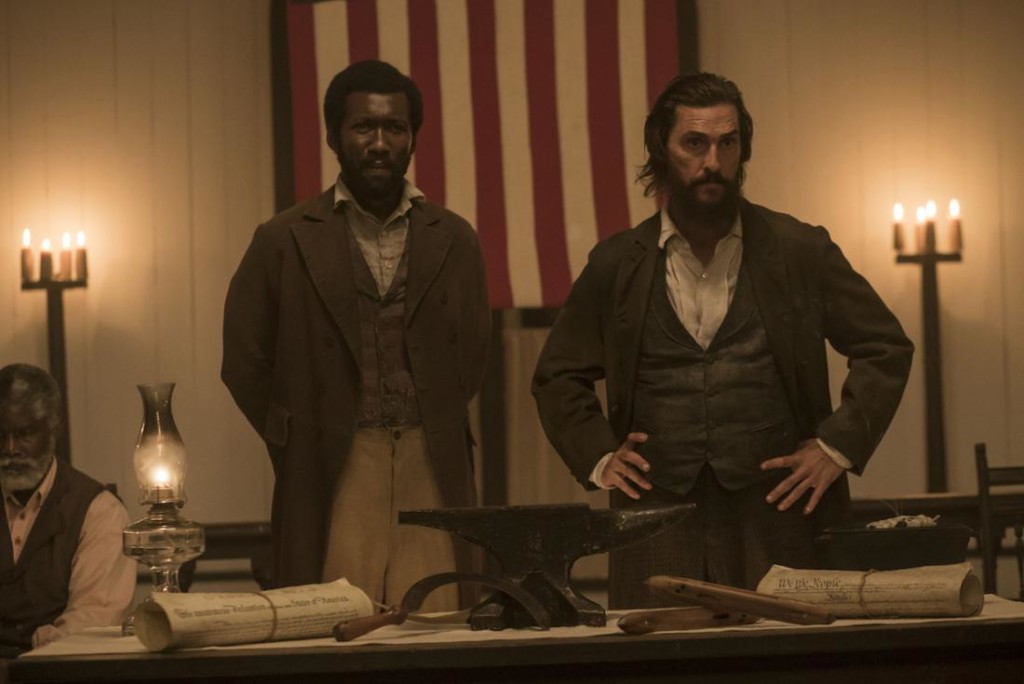
Mahershala Ali and Matthew McConaughey star in FREE STATE OF JONES
Mahershala Ali and Matthew McConaughey in FREE STATE OF JONES

Free State of Jones is the compelling story of resistance to the Confederacy and to white supremacy by Southerners during and after the Civil War.  Matthew McConaughey stars as  Newton Knight, an overlooked but quite singular figure in American history.  It is little-known, but the Confederacy actually lost control of some Mississippi counties to poor white farmers who tired of fighting a war to benefit the rich slave-holders.

I am a pretty serious Civil War history buff, and I was planning to skip Free State of Jones entirely until I found out about writer-director Gary Ross’ commitment to taking the history seriously.  In fact, Ross has posted a very impressive website which outlines the historical events and figures depicted in the movie and even links the primary historical source material.  I’ve never seen such a credible effort by a filmmaker to explain how he got the history right. Here’s a New York Tines article about the movie, Ross and his website.

In the second act of his career, McConaughey has delivered brilliant performances in excellent movies  (Mud, Bernie, The Paperboy, Killer Joe, The Wolf of Wall Street, Dallas Buyers Club, True Detective).  Here, he positively sizzles as the intensely principled and determined Newt Knight.  The rest of the cast is excellent, too, especially Mahershala Ali (House of Cards) as an escaped slave turned Reconstruction political organizer.

Free State of Jones effectively combines the elements of political drama, romance and war movies into an absorbing drama, one which connects the dots between the 19th Century and the 20th and beyond.