FENCES: actors and their monologues

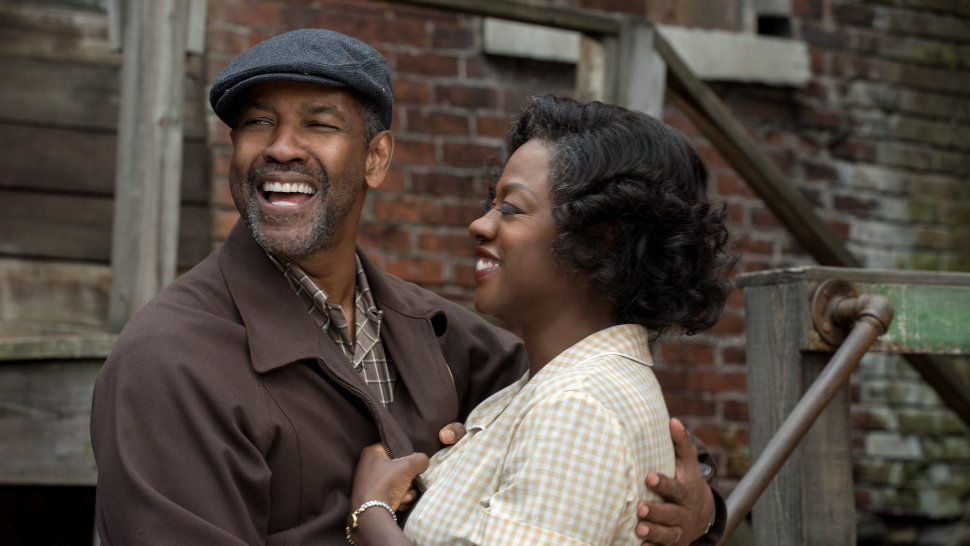
Denzel Washington and Viola Davis in FENCES

Denzel Washington directs and stars in the movie version of the August Wilson play Fences, which manifests as an actor’s showcase.  Set in post-World War II America, Fences is entirely character-driven, and revolves around its two main characters, the fiftyish sanitary worker Troy (Denzel) and his stalwart wife Rose (Viola Davis).

A prototypical alpha male, Troy is an entertaining motormouth, which is fun to watch and also initially masks the exceeding complexity of his character. He’s a proud man – fiercely proud of his paycheck and home ownership, but not above skimming from someone vulnerable to secure it. He is bitter that racism denied him a professional sports career, but when improved race relations give his son more opportunity, Troy’s impulse is to sabotage it. His chief identity is as the head of his family, but he can betray other family members. Living in a racist society has helped mold Troy, but so have his own gifts and flaws.

Rose is utterly steadfast, a woman devoted to making things operate smoothly – despite Troy – in their home and family. Deep waters run silent, and – at first – we don’t see that Rose has a mind and identity and pride of her own.

Viola Davis’s performance is brilliant and powerful.  As an actor, Denzel is at the top of his game.  Mykelti Williamson is especially good as Troy’s brother, a brain-damaged veteran of the Pacific war.  Stephen Henderson also delivers a nomination-worthy turn as Troy’s neighbor and co-worker Bono.

Thoughtful and well-acted as it is, Fences is a filmed play, and it’s very stagey. Every so often, it’s time for a monologue and one really fine actor stands and declaims while the others watch and regard him/her. It’s really not cinematic in any sense.

The Wife was profoundly disappointed that I did not share her admiration for Fences.  She thinks that Viola Davis’ performance and the growth of the character of Rose make this an excellent movie. She even directed me NOT to write about Fences, lest I “desecrate Viola Davis’ performance”.
Cinequest: THE MODERNS

THE MODERNS
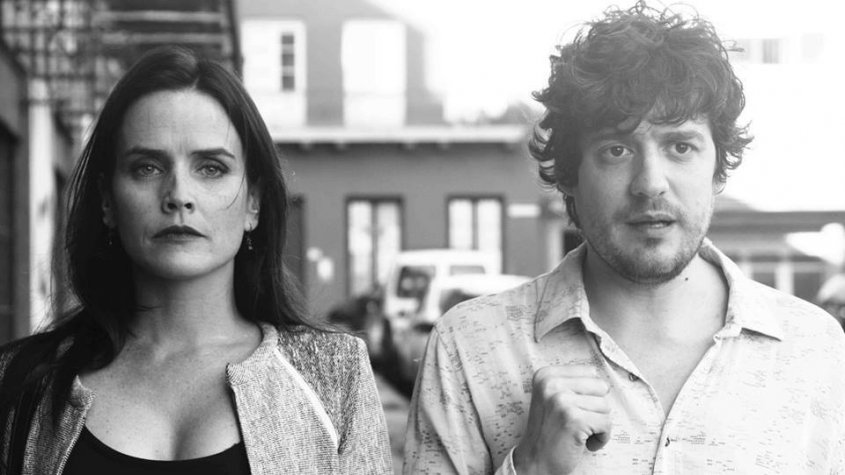
Noelia Campo and Mauro Sarser in THE MODERNS

ES MUY COMPLICADO. In the Uruguayan dramedy The Moderns, Fausto (Mauro Sarser) is a free-lance film editor. Clara (Noelia Campo)  is the producer of Uruguay’s most intellectually pretentious public TV talk show.  They are working together on a documentary project – and dating each other.  Fausto claims that Clara is pressuring him and dumps her.  Fausto spots a New Shiny Thing in the form of the Argentine actress Fernanda (Marie Hélène Wyaux).   Clara starts dating the beautiful lesbian Ana (Stefania Tortorella), which re-fascinates Fausto.  Is Fausto confused, weak-willed or a selfish scoundrel?  Who is going to end up with whom?

The Moderns is plenty funny.  The fantasy scenes are uniformly LOL.  And there’s a humorously unlikely impregnation.  After watching the somewhat misleading trailer, I thought that I’d be starting this post with “Two Uruguayans walk into a studio and make a Woody Allen movie…”  Indeed the white-on-black credits, the 1930s/1940s music in the score, the repertory cast and the black-and-white photography evoke Woody.  But The Moderns is not an homage, but an original, character-based exploration

The Moderns is the first feature for co-writers and co-directors Marcila Matta and Mauro Sarser, and they show a lot of promise.

There’s an unexpectedly satisfying ending, and we are left with “We live our lives – and it’s complicated.”

I AM NOT YOUR NEGRO: searing thoughts in elegant words

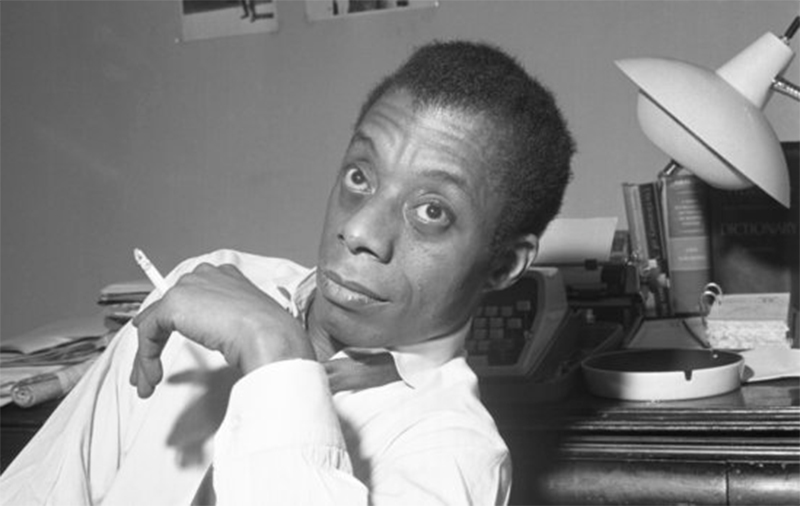
James Baldwin in I AM NOT A NEGRO

The documentary I Am Not Your Negro centers on the American public intellectual James Baldwin.  It’s a searing examination of race in America through Baldwin’s eyes and through his elegant words.

Those words are voiced by Samuel L. Jackson, and there is no third-party “narration”.  The spoken words are Baldwin’s, either voiced by Jackson or spoken by Baldwin himself in file footage.  Baldwin’s associates Malcom X and Martin Luther King Jr. are heard in file footage, but that’s it – the rest is all Baldwin.

The content of those words is about the African-American experience in America and Baldwin’s insistence on understanding and acknowledging the grievance and the moral imperative for remedy.   The very last thing that Baldwin cared about was the comfort of his readers and listeners.

I Am Not Your Negro is an important film because Baldwin’s words today, stripped of their relation to temporal events, are stirring as we hear them again, naked and with urgency.  Lest we fail to connect the dots to our current situation,  snippets of current day events (Obama, Black Lives Matter, etc.) make it clear how relevant Baldwin’s thinking still is today.

The choice to present Baldwin’s thinking through only his own words, unadorned by talking heads is very successful.   Director/co-writer Raoul Peck gets the credit for that, and the film that he has constructed with editor Alexandra Strauss is compelling.

It occurred tome that we really don’t have “public intellectuals” (thought leaders who were authors and columnists) as we did before cable television and Internet.  Today we must make do with Talking (or Yelling) Heads on cable TV and bloggers (hey, I’m one of those); the current focus is more temporal and focused on instant reaction instead of presenting a coherent body of thought.

But, in the Good Old Days, book and newspaper publishers and network television producers were the gatekeepers of public discourse.   Those gatekeepers in Baldwin’s time were older white heterosexual men, and even the well-meaning could not have shared his experiences.  Given that, it’s surprising and fortunate that Baldwin’s words were able to become accessible to a wide audience.

Baldwin was living the life of an ex-pat in Paris until he watched the newscast of Charlotte, North Carolina, school integration with a lone African-American girl walking thru agitated and abusive racist mob.  That’s what motivated him to return to his country and to try to fix it.

THE SALESMAN: an authentic slow burn with very high stakes

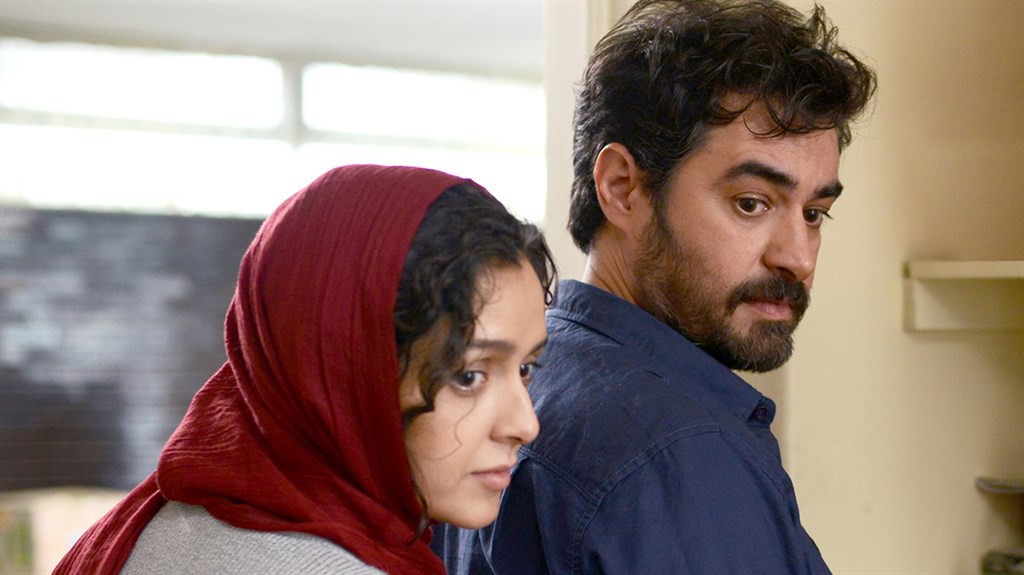
Taraneh Alidoosti and Shahab Hosseini in THE SALESMAN. Photo: Cohen Media Group

The Salesman is another searing and authentic film from Iranian writer-director Asghar Farhadi. Set in contemporary Iran, a young educated, middle class couple (Shahab Hosseini and Taraneh Alidoosti) has to change apartments in a rush. He’s a literature teacher by day, and the two are starring in a production of Death of a Salesman. The new apartment is sketchy, and something traumatic happens to the wife, something that she says she can’t fully remember. He embarks on a whodunit while doing everything he can to support her – but it turns out that he’s not equipped to keep up with her reactions to events. By the end, the two must determine the fate of a third character, and the stakes are very high.

Farhadi is perhaps the world’s leading master of the family psychological drama. The two Farhadi films that have received wide release in the US are the award-winning A Separation and The Past . Those two films are constructed with astonishing brilliance and originality, and the audience shifts allegiance between the characters as Farhadi reveals each new layers of his stories. The story in The Salesman is more linear than in its sister dramas, but it is compelling nonetheless. Both A Separation and The Past can be rented on DVD from Netflix and Redbox and can be streamed from Amazon, iTunes, Vudu, YouTube and Google Play.

Farhadi does not make Feel Good movies; his dramas are challenging. That’s because he makes the audience care so much about his characters that we ache along with them. The payoff is that Farhadi delivers genuine human behavior and authentic human emotion.

Stream of the Week: A COUNTRY CALLED HOME – to move on, she needs another look at her past

Imogen Poots in A COUNTRY CALLED HOME

Since this is Imogen Poots Week at The Movie Gourmet, this week’s video recommendation is a totally overlooked drama from just last year, A Country Called Home. Somehow A Country Called Home missed out on any significant theatrical release even though it’s a very satisfying Finding Yourself drama.

Poots plays Ellie, a young Los Angeles woman with an underachieving job and a lousy boyfriend who takes her for granted. She hears that her estranged father has become gravely ill, and we learn that she has escaped a Texas childhood with an alcoholic father.  Her brother (Shea Whigham) also lives in Los Angeles; he is flourishing and doesn’t care a whit about their father – the brother has moved on from his upbringing.  But Ellie is a poster girl for low-self esteem, and she feels obligated to travel to her father’s bedside.

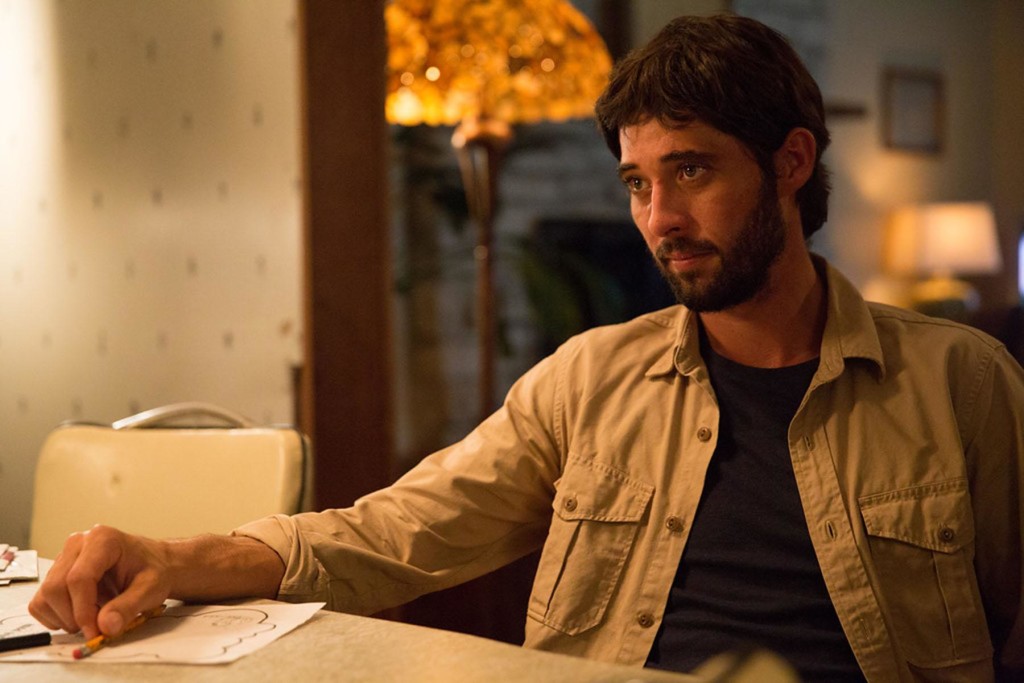
Ryan Bingham in A COUNTRY CALLED HOME

Once in Texas, she finds that her father has just passed, leaving the detritus of his alcoholic life.   Everything in her old hometown is trashy, complicated or just plain unsupportive.  She meets a misfit wannabe singer-songwriter (Mackenzie Davis, unrecognizable from Bad Turn Worse).  And there’s a pressured-out single dad played by the sad-eyed Ryan Bingham (the Oscar-winning songwriter for Crazy Heart).

A Country Called Home is the debut feature for director and co-writer Anna Axster, and it’s a successful and engaging study of a woman finally emerging from a childhood with an alcoholic parent.   It turns out that, to move on with her life, she needed another look at where she came from.

A Country Called Home can be streamed from Netflix Instant, Amazon Instant, iTunes, Vudu, YouTube and Google Play.  And last week’s Stream of the Week, Frank & Lola, is also available from those same streaming services.

THE FOUNDER: moneygrubbing visionary

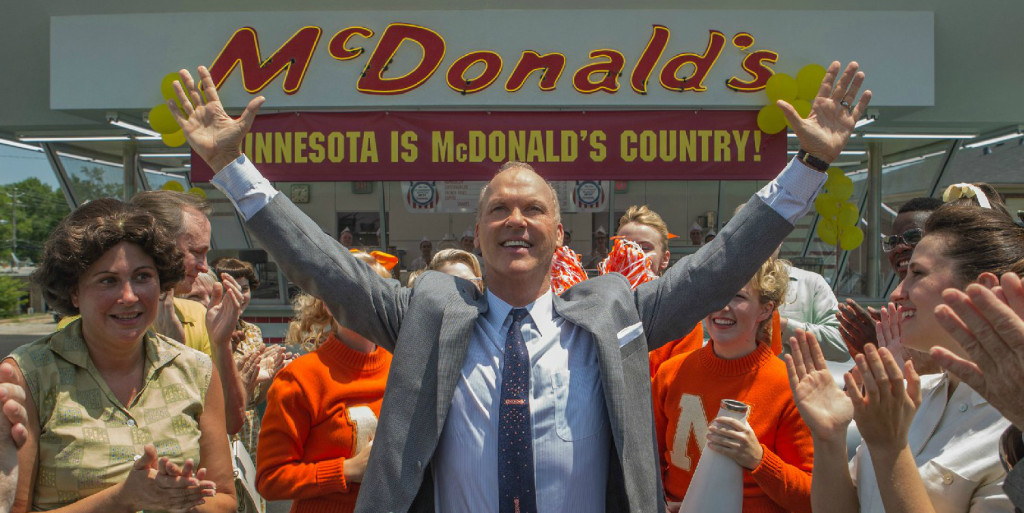
Michael Keaton in THE FOUNDER

In the enjoyably addictive The Founder, Michael Keaton brings alive Ray Kroc, the man who created the global corporate superpower that is McDonald’s.  It’s both a vivid portrait of a particular change-maker and a cold-eyed study of exactly what capitalism really rewards.

Speaking of capitalism, it’s hard to imagine a truer believer than Ray Kroc, not even Willy Loman.  When we meet Kroc, he is grinding through small town America selling milkshake mixers none too successfully.  Each night he retires to yet another dingy motel for heavy doses and Early Times bourbon and a motivational speaker on his portable record player.

Then Kroc stumbles across the McDonald brothers Dick (Nick Offerman) and Mac (John Carroll Lynch).  In their Riverside, California, hamburger stand, the McDonald brothers invented the industrialization of food service, their achievement being “fast food” as we know it today.  One the most fascinating sequences in The Founder is a flashback of the McDonald brothers designing the most efficient fast food kitchen possible with chalk on a tennis court.  The brothers are passionate about their business, equally devoted to their product and their customers.

Kroc falls in love.  Having driven through every town in the country as a traveling salesman, he can appreciate the untapped market.  He persuades the brothers to let him take over franchising McDonald’s restaurants.  It turns out that that the 50ish Kroc is well-equipped for the job because he’s driven, absolutely ruthless and always on the verge of desperation.  He HAS to succeed.  Kroc is hungry, perpetually hungry, and learns to identify potential franchisees who are not complacent investors, but are who are also driven enough to accept his discipline and run each franchise by the numbers.  Egotistical as he is, Kroc is also smart enough to adopt a brilliant idea from someone else – the key to making McDonald’s his.

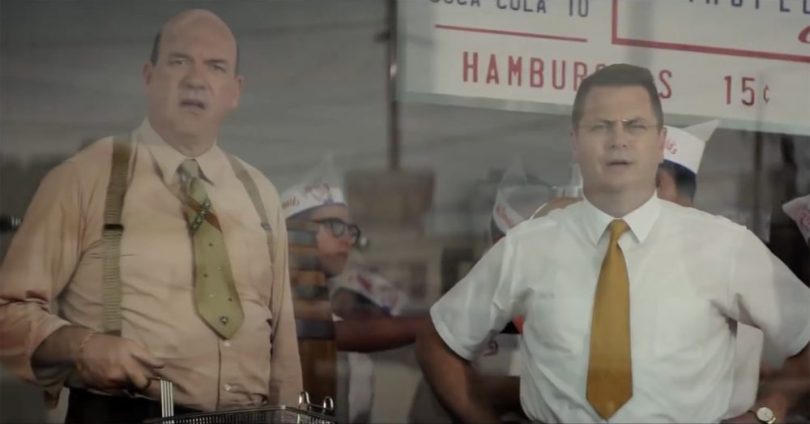
John Carroll Lynch and Nick Offerman in THE FOUNDER

Dick McDonald is a humorless detail freak with brilliant ideas; Mac is the conflict-avoidant, supportive brother, always unruffling Dick’s feathers and keeping their options alive.  Both are proud and true to their values.  The McDonald brothers are authentic American business geniuses, but are they too principled to fight off a double cross by Kroc?

In much of the movie, Dick is on phone with Mac listening to Dick’s side of the conversations.  Both Nick Offerman and John Carroll Lynch are superb, but Lynch’s performance  is Oscar-worthy.  There’s a “handshake” scene where WE know and MAC knows that he is going to get screwed, and Lynch’s eyes in those few seconds are heartbreaking.

As far as I can tell, The Founder is very historically accurate.  Thanks to screenwriter Robert D. Siegel (The Wrestler) and director John Lee Hancock (The Blind Side),  we also meet some other historical characters – Harry Sonneborn, Fred Turner, June Martino and Joan Smith Kroc – and appreciate their contributions to the McDonald’s business.

The Founder’s Ray Kroc is shitty to his wife (Laura Dern), shitty to his partners and, basically, shitty to his core.   But we HAVE to keep watching him.  Do we root for him  because only HE can build this empire?  We Americans have a heritage of empire building.  And the idea of someone building something so big and so successful with only his smarts, persistence and opportunism is irresistible to us.

This is a good movie.  I’ll even watch The Founder again.  And I’ll have fries with that.

TONI ERDMANN: father and daughter, laugh and marvel

TONI ERDMANN
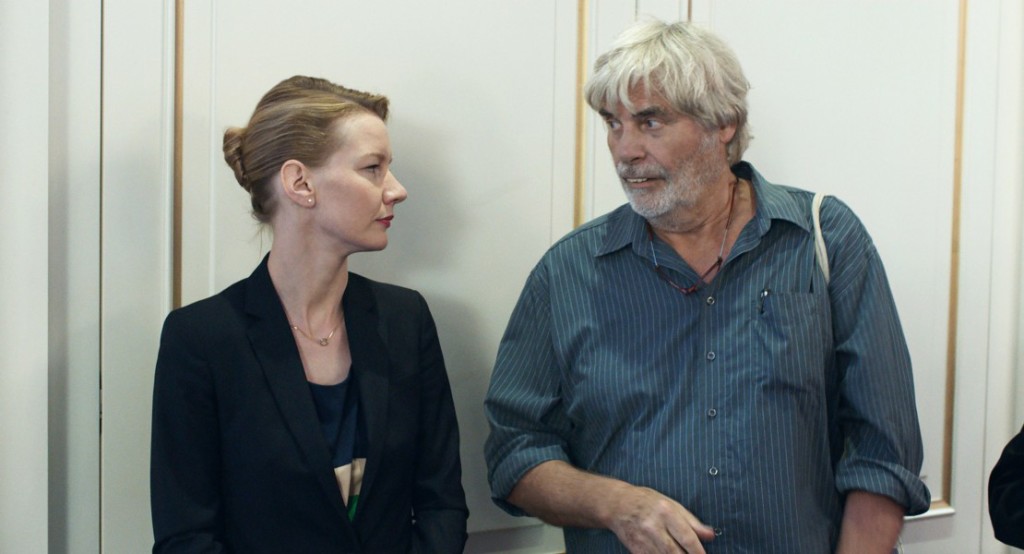
Sandra Hüller and Peter Simonischek in TONI ERDMANN

Toni Erdmann is a MUST SEE. You might not expect an almost three-hour German comedy to break through, but I’ve seen it, and I think that it should win the Oscar for Best Foreign Language Picture.  Writer-director Maren Ade gives us a woman’s perspective of a father-daughter relationship, creating a totally original and unforgettable father who takes prankstering into performance art.

Ines (Sandra Hüller) is a hard charging international management consultant.  She is somewhat estranged from her dad Winfried (Peter Simonischek), an under achieving music teacher.  You get the impression that Winfried wasn’t the most responsible parent. Regretting the state of their relationship and unable to relate to the workaholic that she’s become, he decides to impose himself on her life. He takes an extended vacation and shows up uninvited at her current corporate gig in Romania – and reinvents himself into a corporate alter ego who crashes her business meetings. It’s hilarious.

Winfried is a compulsive jokester of uncommon imagination, relentless and deviousness. The brilliance in Peter Simonischek’s performance is the devilish determination in his eyes (“Yes, I AM really going there”).  He gets the most out of a set of gag false teeth than any single prop in cinema history.

Ines must react to Winfried’s onslaught of ever more elaborate, outrageous and high stakes practical jokes by maintaining a straight face and carrying on without giving away her shock, embarrassment and desperation. She’s on the verge of abject mortification for the entire movie. Sandra Hüller is a master of the take and the slow burn. It’s a remarkable performance.

It’s almost worth watching the whole movie for a deadpan rendition of Whitney Houston’s Greatest Love of All“, all the funnier because it contains the lyric “they can’t take away my dignity”. There’s the funniest nude brunch you’ll ever witness. And the most random Romanian folk monster. Yet Toni Erdmann will still leave you choked up at the end.

Now the daughter is obsessively ambitious, and she has embraced cut throat global capitalism. And, if the father were related to you, you’d often want to kill him. If you hate these people, you’re not going to like the movie. But I think that Ade has made their human needs so universal, that you’ll become invested in them. I sure did.

I saw Toni Erdmann at the Mill Valley Film Festival, and I’ve been waiting months to share it with you. It’s #3 on my Best Movies of 2016. Toni Erdmann opens Friday, January 20 in San Francisco and wider throughout the Bay Area on January 27.

VIOLENT SATURDAY: desert noir in De Luxe color

VIOLENT SATURDAY
VIOLENT SATURDAY

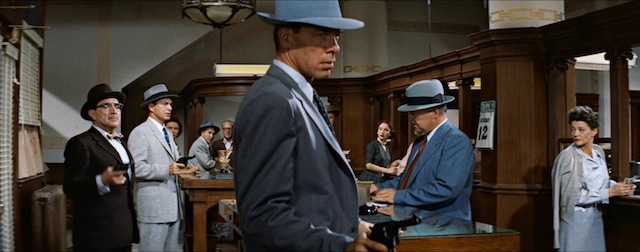
Richard Fleischer is one of my favorite directors, but I was unfamiliar with his Violent Saturday (1955) until the Czar of Noir Eddie Muller programmed it for the 2017 Noir City film festival.  Unusual for 1950s noir, it’s filmed in glorious CinemaScope and De Luxe color on location in the bright desert of Bisbee, Warren and Lowell, Arizona.

Three hoods spend a few days casing a bank in a remote mining town.  The movie doesn’t center as much on the actual heist as on the characters of the robbers and the townspeople.  The smug leader of the gang is Stephen McNally (Dutch Henry Brown in Winchester ’73).  The nasty, edgy guy who hates kids and uses an inhaler is played by Lee Marvin with inhaler.  J. Carroll Naish plays the no-nonsense crime veteran in the crew.

The townspeople are:

  • The sensitive mine manager (Victor Mature);
  • The self loathing alcoholic mining heir (Richard Egan), besotted with his straying wife (Margaret Hayes);
  • The timid bank manager and nighttime peeper (Tommy Noonan);
  • The town hottie (Virginia Leith);
  • The Amish farmer (Ernest Borgnine in full Amish beard!); and
  • The librarian with a practical approach to her money troubles (veteran Sylvia Sidney).

Unfortunately, the dialogue in Violent Saturday is pretty lame and often downright soapy: “I’ve been cheap and rotten but I’ve always loved you” and “please leave me alone for a while – I don’t want you to see me cry”.  And the ending ties everything up a little too neatly – including for the peeping tom.

But the cast did the best they could with the characters, especially McNally.  Virginia Leith is a silky and sensuous presence; her career died just a year after Violent Saturday when she wasn’t renewed by Fox (per IMDb); she’s now best known for playing the disembodied Jan in the Pan in the cult fave The Brain that Wouldn’t Die.

Violent Saturday was Richard Fleischer’s fourth film after his noir masterpiece, The Narrow Margin.  Indeed, the best thing about Violent Saturday is Fleischer’s expert direction. You can tell that this isn’t by-the-numbers directing when we see the shots of the robbers casing the bank, the dancing in the bar, when the hoods approach Amish with guns drawn and, especially, when the peeper edges past the hottie in the drug store.

[Here’s one thing that confused me about the title: the robbery takes place during regular business hours, and in the 1950s, banks were not open on Saturdays.  Maybe the robbery was on Friday and the final shootout is the next day?  Help me here somebody.]

Violent Saturday is available to stream on Amazon Instant Video, iTunes, Vudu, YouTube and Google Play.

THE SICILIAN CLAN: Gabin, Delon and Ventura

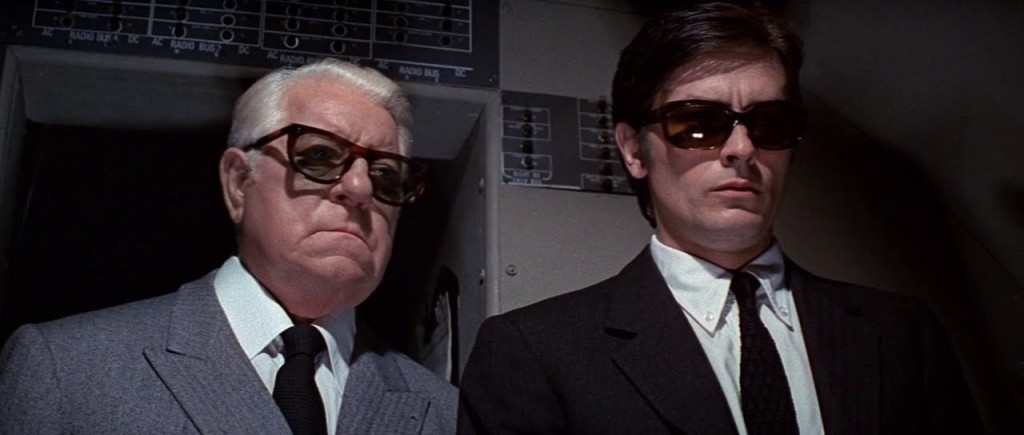
Jean Gabin and Alain Delon in THE SICILIAN CLAN

The 1969 French neo-noir The Sicilian Clan is an exemplar of noir’s Perfect Crime sub-genre – they’re going to get away with the elaborately planned big heist EXCEPT FOR ONE THING.  In this case, the one thing is Sicilian macho pride.

There’s an inventive jail break, an exciting boudoir escape and an impossibly brilliant heist plan. There’s also a great scene with a kid and his toy gun.  The suspense tightens even more when a minor character’s wife unexpectedly shows up and threatens to derail the heist again and again.

Most of all, director Henri Verneuil knew that he had three unbeatable cards to play, and he got the most from them:

  • Alain Delon –  Impossibly handsome and dashing, no one ever removed their sunglasses with more of a flourish than Delon.  Delon was in his early thirties, and at the peak of his string of crime movie vehicles, after Anybody Can Win and Le Samourai and before Le Cercle Rouge and The Gypsy.
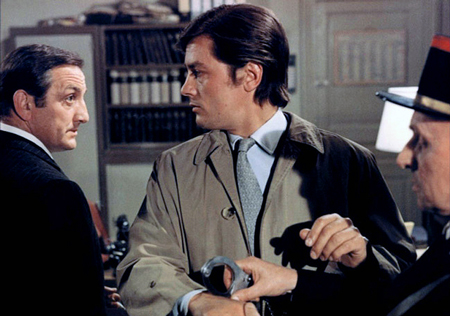
  • Lino Ventura –  One of the most watchable French stars, Ventura’s bloodhound face had been reshaped by his earlier career as a professional wrestler.   Here, he’s the guy you’re drawn to whenever he’s on-screen.
  • Jean Gabin – Probably the greatest male French movie star ever, Gabin had dominated prewar French cinema with Pepe LeMoko, La Grande Illusion, Port of Shadows and Le Bete Humaine.  After the war, he aged into noir (Touchez Pas aux Grisbi) and, in the 1960s, into neo-noir.  Gabin oozed a seasoned cool (like Bogart) and imparted a stately gravitas to his noir and neo-noir characters.

In The Sicilian Clan, Delon plays the reckless hood in over his head.  Gabin plays the crime boss who is exploiting him.  And Ventura plays the cagey detective after them both.

Here’s a nice touch – the highly professional gang brings in an outsider who is a hopeless drunk.  What is his specialty and why do they need him?  When we find out during the final heist, it’s a stunner that no one could see coming.

The whistling and boings in the offbeat score tell us that it’s the work of Ennio Morricone in his Spaghetti Western period; I’m a Morricone fan, but this is not one of his best.

The Sicilian Clan is not a classic.  The dialogue is grossly clichéd.  There is not a single ordinary looking woman in the film.  An obligatory tryst is tiresomely predictable and made worse by the score’s wacky, clanging music.

But the plot, while contrived, is well-contrived.  And the combination of Delon, Ventura and Gabin will make almost anything work.  You can watch The Sicilian Clan at the Castro Theatre during Noir City 2017, or stream it from Amazon Instant Video, iTunes, Vudu, YouTube and Google Play.

[Note: In our post 9/11 world, audiences will feel uneasy when a hijacked airplane flies low over the Manhattan skyscrapers.]

Lino Ventura and Alain Delon in THE SICILIAN CLAN

THE AURA: smart enough to plan the perfect crime, but is that enough?

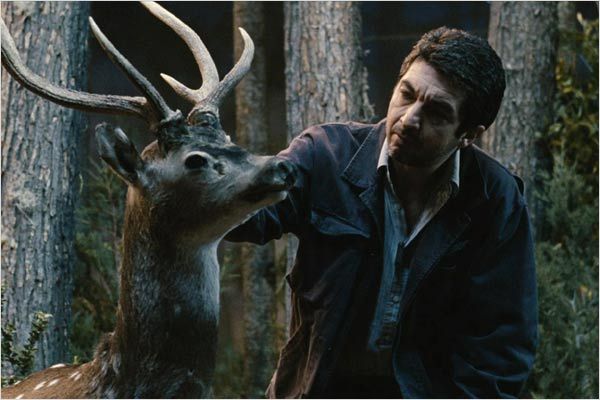
Ricardo Darin in THE AURA

The Aura is a brilliant 2005 neo-noir from Argentina, that I wasn’t familiar with until the Czar of Noir Eddie Muller programmed it into the 2017 Noir City film festival.

The Aura is about a taxidermist who leads a boring life, but fantasizes about the Perfect Crime.   He is perpetually cranky because he is so dissatisfied, but he resists getting out of his life rut.   It’s not easy to be his friend (nor, apparently, his wife).  Unexpectedly, he finally finds himself in position to participate in a major heist.

He is epileptic (the movie’s title is from the sensation just before a seizure);  he and we never know if  and when he will pass out from an episode, a particularly dangerous wild card in a thriller.   He also has a photographic memory, and that can help him if he has the nerve to go through with the crime.

The taxidermist is played by one of my favorite actors, Ricardo Darin (Nine Queens, The Secret in their Eyes, Carancho, Wild Tales) .  I like to think of Darin as the Argentine Joe Mantegna.  Darin can expertly play a slightly twisted Every Man, and he excels at neo-noir.

The rest of the cast is excellent, especially Walter Reyno as The Real Thing criminal, Alejandro Awada as the taxidermist’s long suffering only friend and Dolores Fonzi as the intriguing woman in the woods.

Sadly, writer-director Fabián Bielinsky died at 47 after making only two features – the wonderful con artist film Nine Queens (also starring Darin) and The Aura.  Those two films indicate that he was a special talent.

Darin’s taxidermist is smart enough to plan a Perfect Crime, but professional criminals have that sociopathic lack of empathy needed to carry them out crimes.  Does he?  Does he get the money? Does he get the girl? Does he even escape with his life? It’s a neo-noir, so you’ll have to watch it to find out.

By the way, the dog in this movie is important.  Watch for the dog at the very end.

Dolores Fonzi in THE AURA