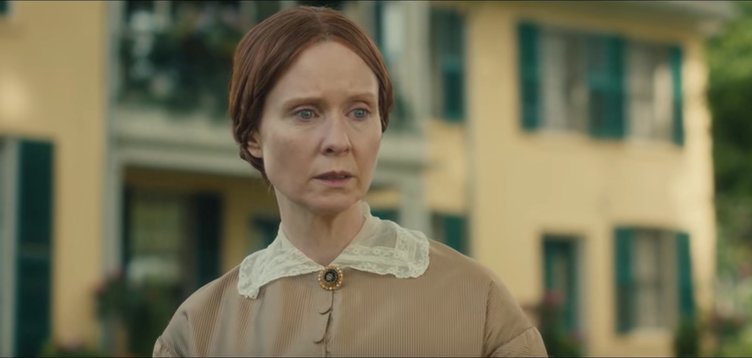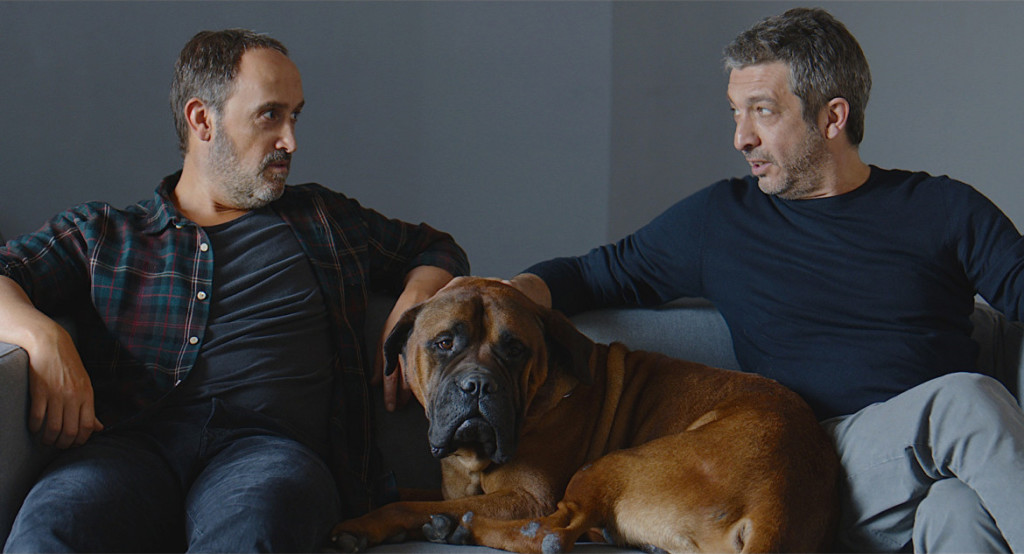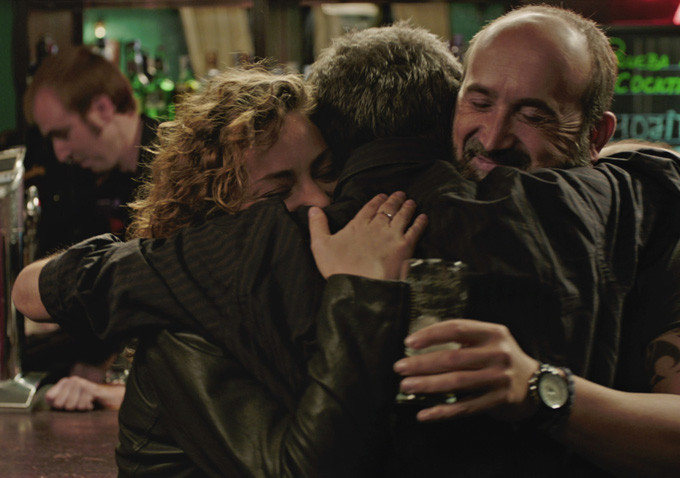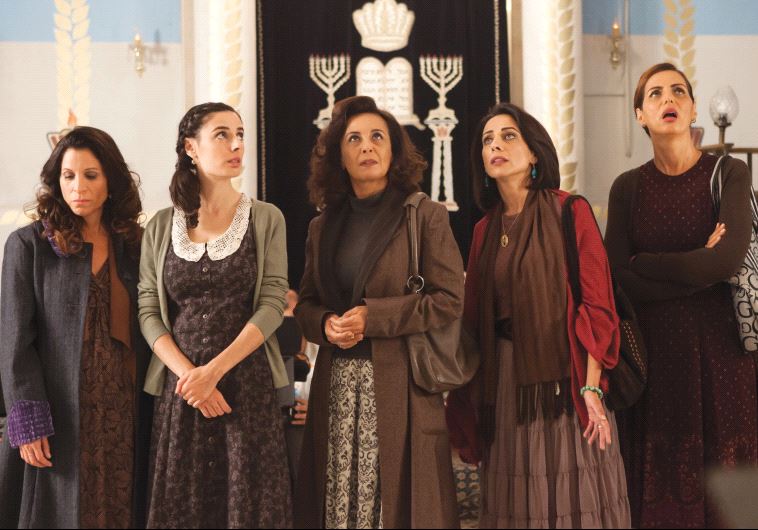
Cinequest: THE OTTOMAN LIEUTENANT

THE OTTOMAN LIEUTENANT

The adventure romance The Ottoman Lieutenant, which had its world premiere at Cinequest and is now playing in theaters, is SO bad, so LAUGHABLY bad, that it’s hard to predict whether it will be quickly forgotten or linger in our memories as a benchmark in badness.

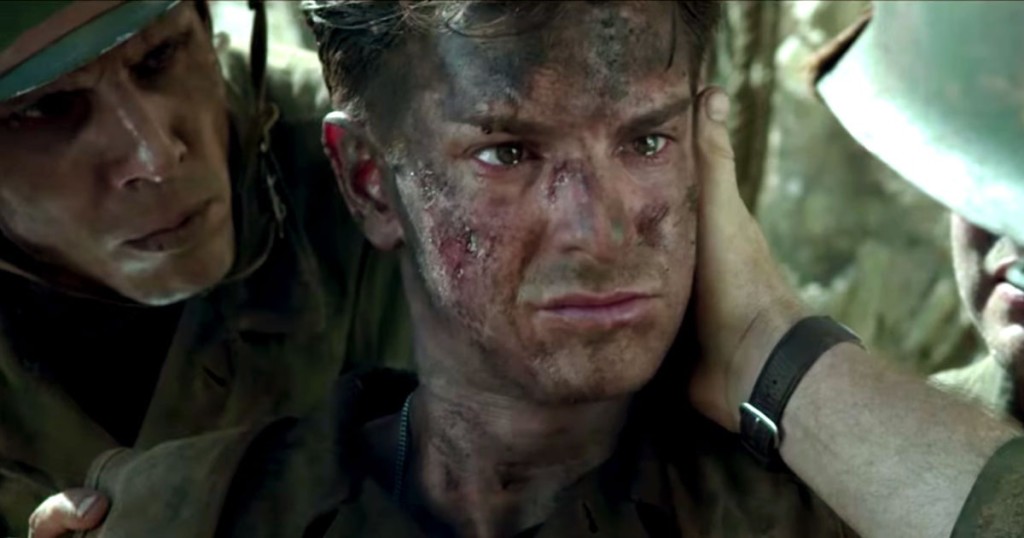
Just before World War I, a willful and affluent young American (Hera Hillmar), runs off to remote Turkey to deliver a truck-full of medical supplies to a dreamy young doc (Josh Hartnett), who is running a Protestant mission in an Armenian area of Anatolia.  She encounters the title character (Michael Huisman) and sparks fly.  The natural political conflict between the two men escalates in a fit of sexual jealousy.  Since the title is “The Ottoman Lieutenant” instead of “The American Missionary Doctor”, we know where things are headed…In fact, anyone who has ever seen a movie knows where EVERYTHING is headed in what must be the year’s most predictable movie

The blame starts with the unimaginative story and leaden dialogue from writer Jeff Stockwell.   Director Joseph Ruben contributes the cliché of horse-riding across a grassy plain, bodies rocking in the saddles and bouncing up and down rhythmically, accompanied by SWELLING music.  Not once.  Not twice.  But three times.  The kisses erupt into industrial-scale heavy breathing after precisely two counts (“one-thousand-one, one-thousand two, now let’s hear heavy breathing!”).  There’s even some bad CGI of a passenger ship – kind of Titanic Lite.

The Ottoman Lieutenant also features a dreadful performance by its lead.  Hera Hilmar, known for 25 episodes of Davinci’s Demons, misreads lines and generally fails to interest us at all.  She’s not even interesting when losing her virginity.  Would a better actress elevate this material?  Perhaps, but not all the way into an even mediocre film.  It doesn’t help when Stockwell has Hillmar utter the most obvious observation, “Jude, you’re angry!”, drawing unintended chuckles from the audience.

But it’s Hartnett who leaves us with the most memorable moment of The Ottoman Lieutenant.  He embraces Hilmar after her character’s deflowering and then shoves her back, bellowing, “I can smell him!”.  At my screening, fully one-third of the audience erupted into hearty laughter – an LOL moment unintended by the filmmakers.  Later, I realized that this line was the only unpredictable moment in the film.

The one appealing aspect of The Ottoman Lieutenant is Michael Huisman’s performance.  Huisman (Treme, Game of Thrones) is a very charismatic actor, and, if this movie could have been saved, he would have been up to it.  The Turkish actor Haluk Bilginer is pretty good as the lieutenant’s commander.  Ben Kingsley gets to emote as an older doctor made irascible by personal loss.

While watching a movie, I scribble notes in the dark; this time, The Wife snatched my notebook and wrote, “This is the worst movie ever”.  Tossing multiple millions of dollars at the budget for this movie was like over-inflating a used condom.

Cinequest: THE VALLEY

THE VALLEY
THE VALLEY

In The Valley, a wealthy Silicon Valley entrepreneur seeks an explanation for the suicide of his college student daughter.  The entrepreneur and his wife were born in India and raised their American-born daughters in the US.   Cinequest hosted The Valley’s world premiere.

The Valley gets much about Silicon Valley essentially right; (one guy shows up to a party wearing a necktie, but that’s quibbling).   The Valley captures the Valley’s diversity especially well.  38% of Silicon Valley residents were born in a foreign country. Significantly under 50% are white, and over 50% speak a language other than English at home.  And it’s impossible to round-up a posse of engineers around here without collecting some Indians and Indo-Americans.

The phenomenon of parents putting extreme and unhealthy academic pressure on kids is common here, and even frequent among immigrant families (and not isolated to Indo-Americans by any means).

Unfortunately, the clunky story is clichéd and predictable.  The soapy dialogue is worse, so there’s really not much opportunity for the actors to look like they are behaving instead of acting.  This hyper-emo screenplay might have worked on a daytime TV serial, but as a movie, it’s an overwrought mess.

https://vimeo.com/176226611

Cinequest: LOOP

LOOP
LOOP

In the trippy Hungarian thriller Loop, Adam, a jumpy small-timer, and his inconveniently pregnant girlfriend Anna seek One Last Big Score by double-crossing a ruthless and merciless bad cop, who is stealing the hormone oxytocin from a hospital and flipping it on the black market. At first, it seems like we are watching a heist-gone-wrong neo-noir. But very soon (and before Adam himself figures it out), we start to notice that time and sequence are jumbled. Different realities are sometimes lagging, sometimes jumping ahead, and sometimes concurrent. For example, Adam fast-forwards a contemporaneous video of himself and sees himself murdered!

It all becomes a malevolent Groundhog Day as Adam’s story keeps replaying itself in a loop. He keeps learning from each replay and seeks to relive the sequence to get better results. How many loops will it take for Adam to survive with Anna?

Adam is personally transformed by the threat of losing Anna, and his character gets more sympathetic as the movie goes on.

We become pretty sure that Adam will figure out the puzzle. Ultimately, Loop is more intellectually interesting than thrilling. But it’s worth it just to appreciate Loop’s brilliant construction by writer-director Isti Madarász.

The final scene is very, very clever. Loop’s North American premiere was hosted by Cinequest.

Cinequest: ALL THE BEAUTY

ALL THE BEAUTY
ALL THE BEAUTY

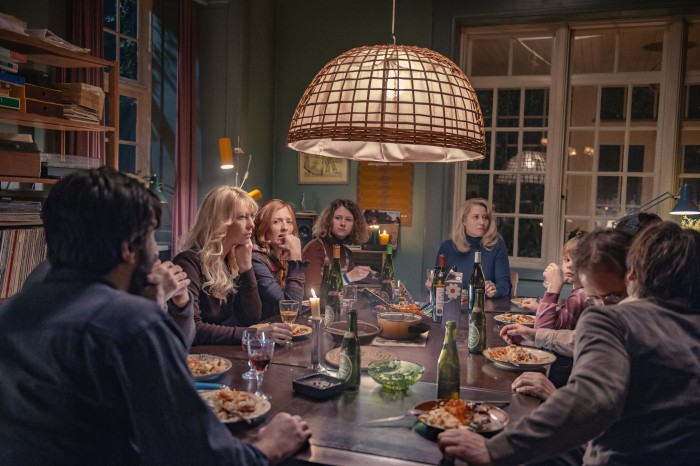
In the Norwegian drama All the Beauty, David, a successful Swedish writer, has invited his old girlfriend, the Danish gynecologist Sarah, to help him finish his new play, which is about their decades-long, off-and-on relationship. Given that David’s biggest bestseller was a tell-all that revealed Sarah’s sex life in every intimate detail, Sarah is understandably wary.

As Sarah reads each act of David’s play, we see the two in vignettes at the ages of 23, 33 and 43. At 23, they meet and jump in bed in the full flush of a new romance – and Sarah sets a pivotal ground rule for their relationship. At 33, there is another defining moment when they have the chance for a reset. At 43, the two face another crossroad. And we are our choices (and the choices of those we love).

ALL THE BEAUTY
ALL THE BEAUTY

Different sets of actors play David and Sarah at the ages of 23, 33, 43 and 53. Cinequest fans will recognize the 43-year-old David – Kristoffer Joner, who starred in The Wave at last year’s festival.

It’s not all Scandinavian darkness. Some very funny jokes about yoga, of all things, get the audience engaged right away. And then there’s the awkwardly naked jogger, too.

All the Beauty is the first feature director and co-writer Aasne Vaa Greibrokk and her co-writer Hilde Susan Jægtnes. The two have crafted an insightful exploration of female sexuality and the power within relationships – all with a very novel story structure. The Wife enjoyed it, too, at Cinequest. Recommended.

Cinequest: REVENGE

REVENGE
Siren Jørgensen in REVENGE

In the Norwegian suspense thriller Revenge, the slightly creepy Rebekka (Siren Jørgensen) appears at a hotel on a remote fjord under the false pretense that she is a travel writer.  The hotel is otherwise empty because it is off-season (think The Shining).  She ingratiates herself with the hotel’s owner Morten, the most economically and socially significant person in town, and his wife (Maria Bock).  It turns out that twenty years before, Morten date-raped Rebekka’s little sister, leading to her suicide.  Now Rebekka wants to exact vengeance.

Revenge becomes a tick-tock suspenser as Rebekka deliberately lays her trap.  We’re able to see some, but not all, of the web that she spins, which will put in jeopardy Morten’s reputation, marriage, business and his very health and survival.  Can she pull it off?  And how lethal will her revenge be?

It’s the first feature for Kjersti Steinsbø, who adapted the screenplay and directed.  She has created a real page-turner here.  In one very effective touch, it turns out that one of the characters knows FAR more than we initially suspect.

REVENGE
Anders Baasmo Christian in REVENGE

Revenge is uniformly well-acted, but Anders Baasmo Christian, as Bimbo the bartender, is exceptionally good.  Just keep your focus on Bimbo.  There’s more there than initially meets the eye.  And Bimbo’s relationships with both Rebekka and Morten are very conflicted and complicated.

The ending is satisfying, and Morten’s ultimate fate is unexpected.  Revenge is one of the world cinema high points at Cinequest.

Cinequest: THE LAST WORD

THE LAST WORD
THE LAST WORD

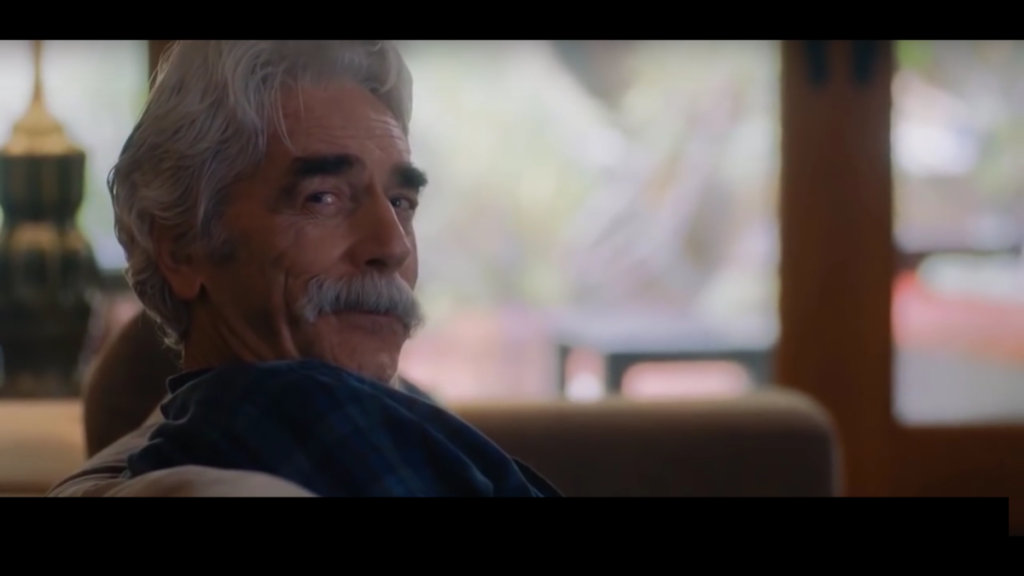
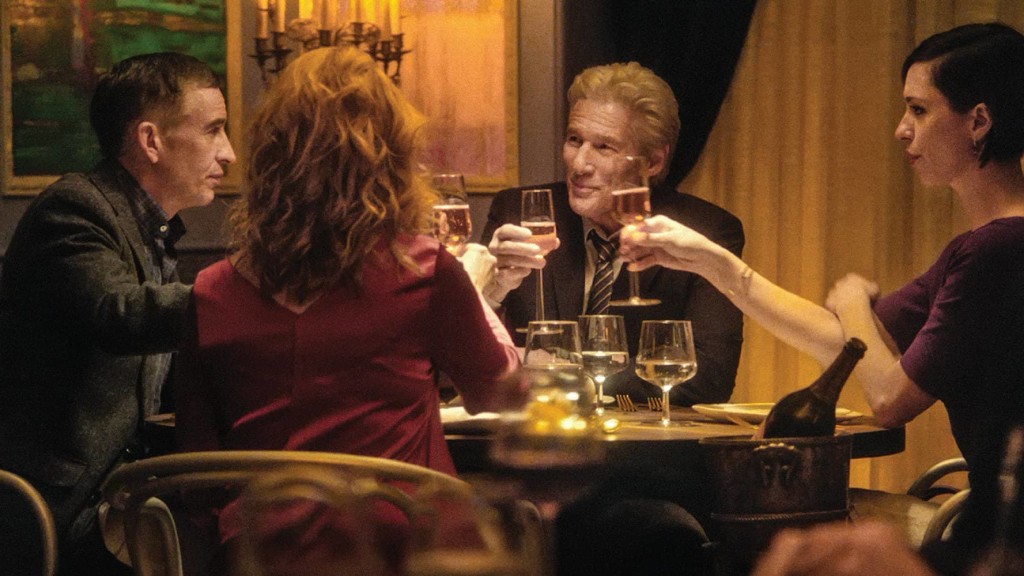
In the comedy The Last Word, Shirley MacLaine plays a control freak of absolutely unstoppable will. This is a person who is obsessed with getting her own way on even the most inconsequential detail. She is living a wealthy retirement, having been forced out of the company she founded when her behavior becomes too unbearable for everyone else. Facing her mortality, she decides to employ an obituary writer (Amanda Seyfried) to favorably pre-write her obit. The challenge, of course, is that no one – family members, former co-workers, anyone – has anything nice to say. This sets up an Odd Couple comedy until it becomes an Odd Trio when Harriet seeks to improve her obit profile by mentoring a disadvantaged nine-year-old (AnnJewel Lee Dixon).

Often contrived, The Last Word isn’t a masterpiece, but it has three things going for it:

  • Shirley MacLaine is in full willful grandeur, and her performance is tour de force.
  • Supporting players: Anne Heche is priceless in a “she is your daughter” scene. AnnJewel Lee Dixon is a force of nature herself, kind of a Shirley Mini-Me. Philip Baker Hall is a wonderful match for Maclaine. Thomas Sodoski is always appealing.
  • The remarkably smart soundtrack, which almost becomes a character of its own.

I did also appreciate the brief homage to Reservoir Dogs, the slo-mo power stride with sunglasses (pictured above).

I saw The Last Word at Cinequest at a screening with director Mark Pellington, who noted that The Last Word took 25 days to film. Crediting his music supervisor for finding obscure and affordable songs, he said, “the music works on an infectious level”. Describing the scene where the three actresses take a moonlit dip in a pond, he said, “I love that their laugh deflates the symbolism of it”. His favorite scene was the obne when Philip Baker Hall tells Shirley MacLaine, “I knew what I was getting when I married you”, which inspired Pellington’s next movie Nostalgia (now in post-production).

Cinequest: THE TWINNING REACTION

THE TWINNING REACTION

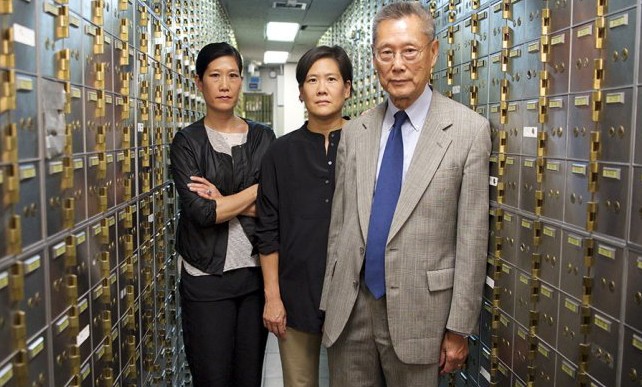
The startling and moving documentary The Twinning Reaction tells the story of a Mad Men-era research project and its profound human impact. To perform a longitudinal study of nurture vs. nature, researchers INTENTIONALLY separated identical twins and placed them with families that the researchers kept in the dark.  The placements occurred AFTER the twin babies had bonded together in the crib for many months.  Legally and ethically sketchy at the time, this is monstrous by today’s standards, and, in fact, caused harm to the adoptees.

Somehow, some of these twins learned the truth as adults and located their birth siblings.
In The Twinning Reaction, we meet three sets of separated identical siblings.  Because we meet the subjects of the study, the effects of separation are clearly apparent and highly personalized.

Writer-director Lori Shinseki has found an amazing story and source material to match.  She weaves it into a coherent and compelling story.  Only 52 gripping minutes long, The Twinning Reaction’s world premiere is at Cinequest.

Cinequest: THAT TRIP WE TOOK WITH DAD

THAT TRIP WE TOOK WITH DAD

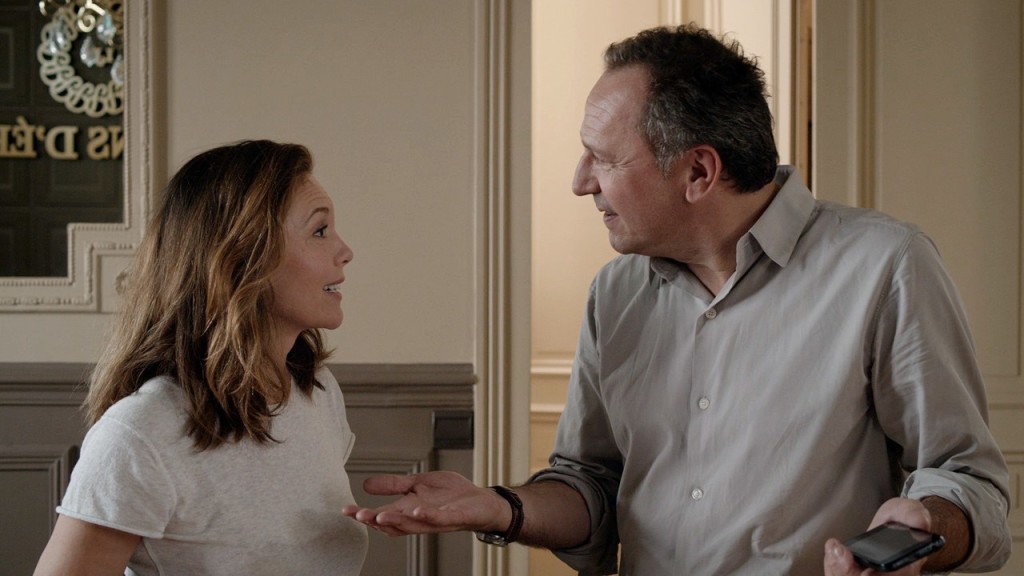
The German dramedy That Trip We Took with Dad reminds the American audience that Iron Curtain-style communism was NOT monolithic.  The story takes place during a significant historical moment, when the Prague Spring was slammed shut by the Soviet invasion in August, 1968.  Two Romanian brothers are taking their dad to a surgical procedure, which necessitates a road trip from Romania through Hungary, Czechoslovakia and into East Germany.

The primary point of view is from one of the brothers, a young doctor.   Feeling responsibility beyond his years, the  doctor is very, very practical.  He will do what it takes to protect his father and brother, even if it means the distasteful task of informing to the secret police.

His younger brother is a naive artist who keeps criticizing OTHER Eastern European commie regimes in the knuckle-headed belief that the Romanian commies will leave him alone.  The father is a once-true believer who now blames communism for the death of his wife.

Since the brother and the father are likely to blurt out the most provocative thing at any moment, each border crossing becomes dreadfully tense for the doctor – and for the audience.  As with any Odd Couple (or Odd Trio) road trip, there is also humor.

That Trip We Took with Dad is a social and political satire of Iron Curtain communist societies.  Our doctor also encounters some West German lefties who naively reject Western capitalism for its exploitation and inequality, ignoring or apologizing or minimizing the lack of free expression behind the Iron Curtain.

The family in the movie is Romanian of German ethnicity, and the story stems from writer-director Anca Miruna Lazarescu’s own family. Her introduction of the film for Cinequest is on this post just below the trailer.

Cinequest: THE TEACHER

THE TEACHER
THE TEACHER

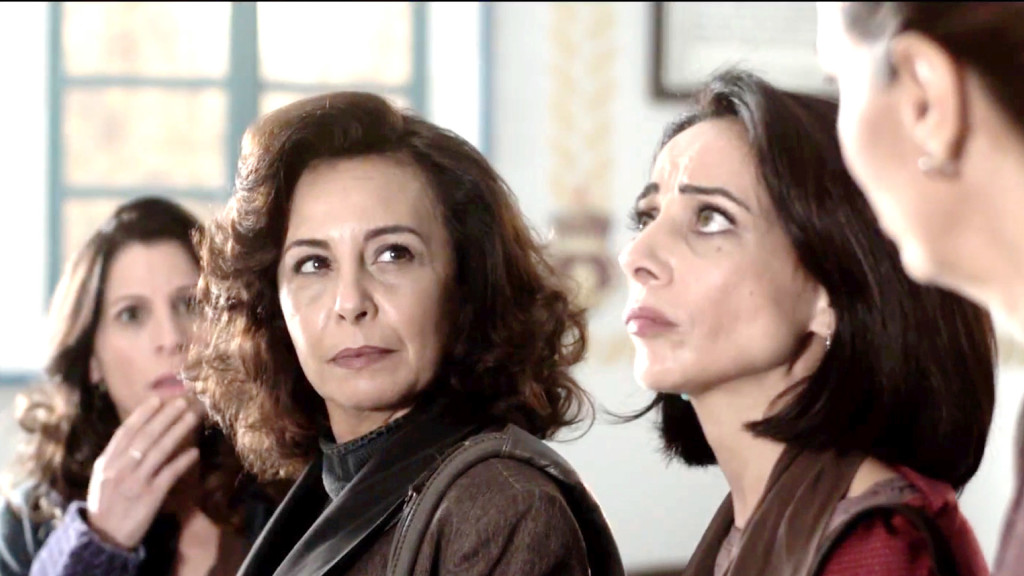
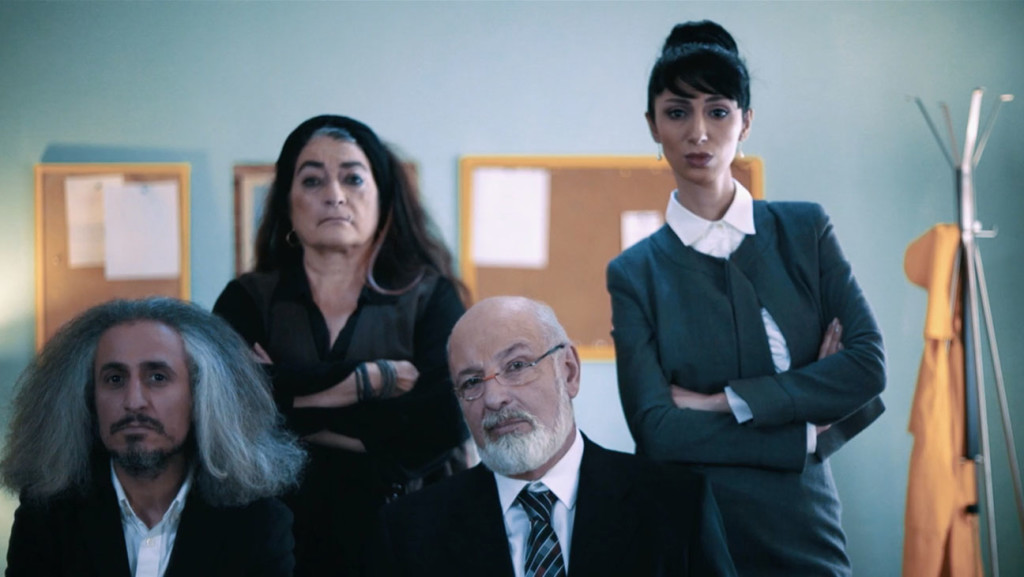
In the superb drama The Teacher, it’s the mid-1980s and the Iron Curtain is still defining Czechoslovakia; (The Teacher is a Czech movie in the Slovak language). The title character’s position as a high school teacher makes her a gatekeeper to the children’s futures, and she’s unaccountable because she’s a minor Communist Party functionary. Wielding blatant academic favoritism and even overt blackmail, she uses the advantage of her political status for her own petty benefit – coercing shopping errands, car rides, pastries and other favors from the parents of her students.  Finally, she causes so much harm to one student that some of the parents rebel and seek her ouster.

Will the other parents support them?  What of the parents who benefit from the regime?  And what of the majority of the parents who must decide whether to risk their own futures?  The risk is real: the regime has already reassigned one parent, a scientist, to a menial job after his wife had defected.

The Teacher benefits from a brilliant, award-winning performance from Zuzana Mauréry in the title role.  What makes this character especially loathsome is that she’s not just heavy-handed, but grossly manipulative. Mauréry is a master at delivering reasonable words with both sweet civility and the unmistakable menace of the unspoken “or else”.

The acting from the entire company is exceptional, especially from Csongor Kassai, Martin Havelka and the Slovak director Peter Bebjak as aggrieved parents. Writer Petr Jarchovský has created textured, authentic characters. Director Jan Hrebejk not only keeps the story alive but adds some clever filmmaking fluorishes as he moves the story between flashbacks and the present.

The Teacher is one of the highlights of Cinequest 2017.

Cinequest: SWEET GIRLS

SWEET GIRLS
SWEET GIRLS

In the dark, dark Swiss comedy Sweet Girls, the two teenage besties are lazy and unmotivated – even by teenage standards.  They will do ANYTHING to avoid an entry-level job that might plunge them into the adult workaday drudgery that they despise.  Left to their own devices with a deadline looming, the two  take unseemly advantage when an elderly woman dies in their apartment building.  Absurdly self-involved, the two start harvesting all the apartment building’s elderly in an absurdly harsh scheme.  Think Arsenic and Old Lace and Sweeney Todd.

Both girls are brats of the first order, but Elodie, the ringleader, also has an experience in her past which has scarred her feelings about the geriatric set.  Neither is a sympathetic character.  The humor here comes from the absurdist plot and from the social satire, which is probably more accessible to a Western European audience.