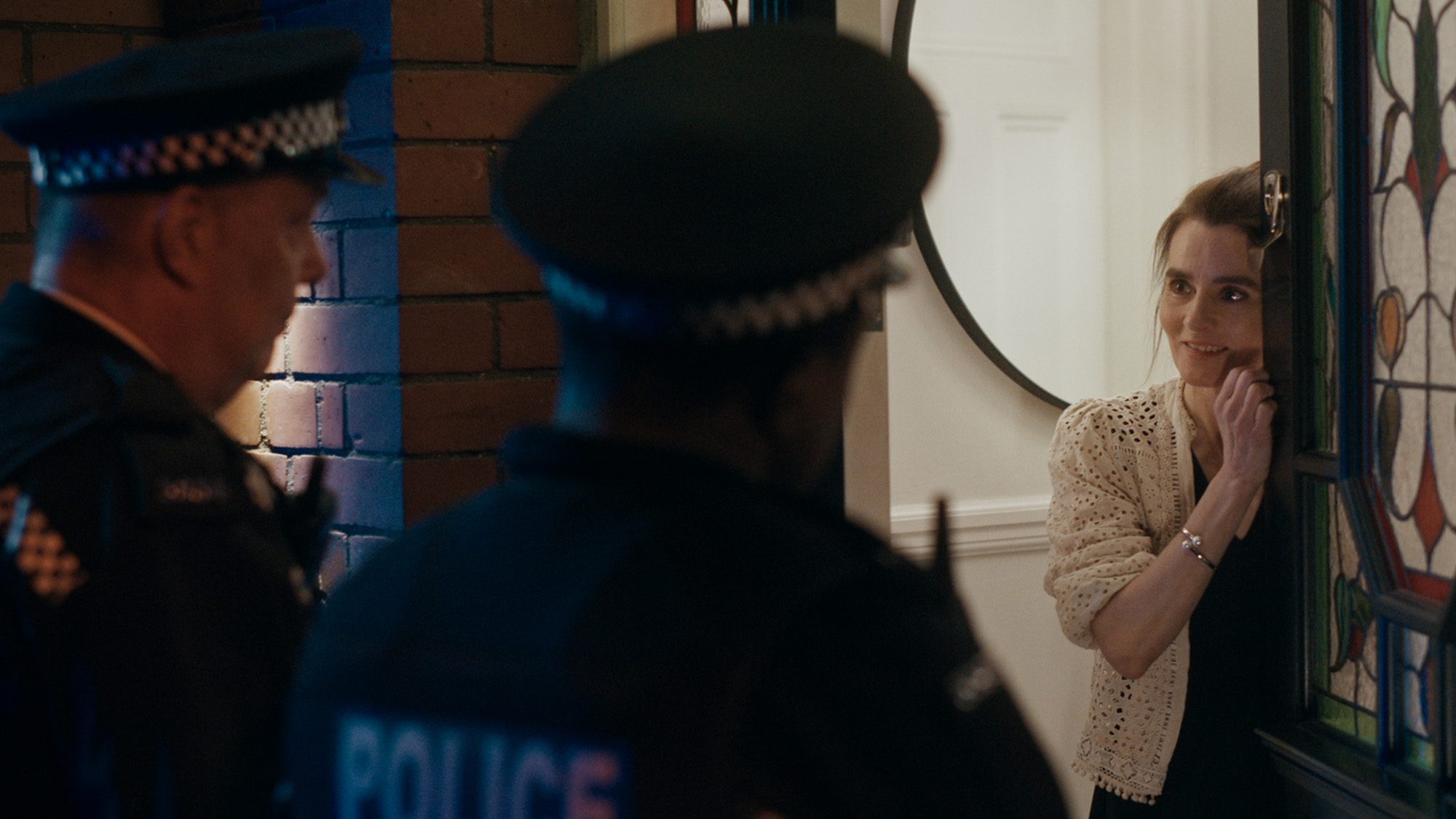
Photo caption: Shirley Henderson in THE TROUBLE WITH JESSICA. Courtesy of Music Box Films.
In the dark British farce The Trouble with Jessica, the most despicable, unwelcome guest at a dinner party dies by suicide in the back yard, and the other four diners must dispose of the inconvenient corpse to prevent financial ruin of the hosts. As one might expect, the foursome must run a gauntlet of nosy neighbors, earnest police and horny drunks.
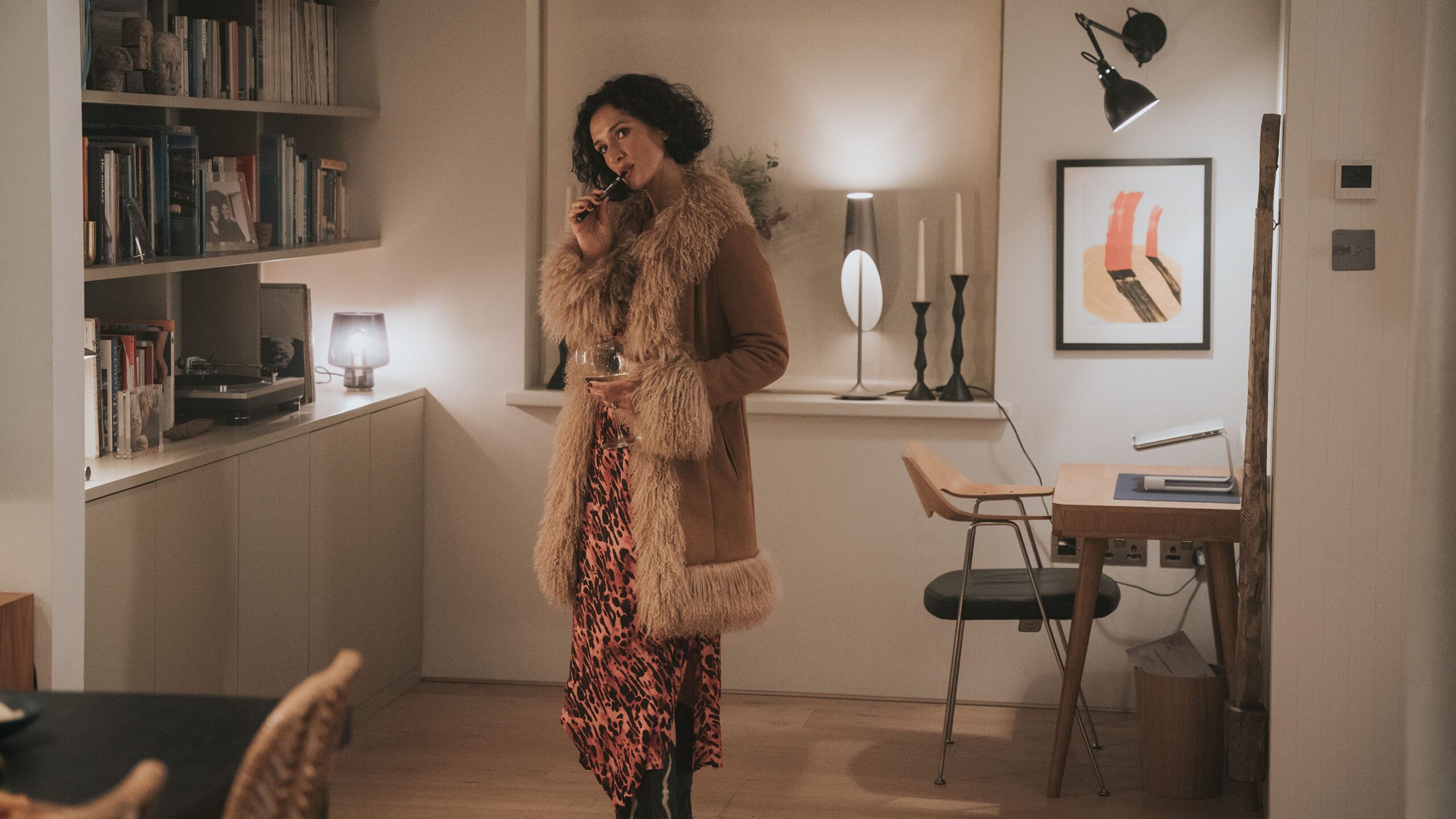
Five very able veteran actors (Shirley Henderson, Alan Tudyk, Olivia Williams, Rupert Sewell and Indira Varma) keep the laughs coming. Henderson, so good in Intermission and the Harry Potter franchise, brilliantly pivots her character from hand-wringing to ruthlessness. Varma does well with the most delicious role, an attractive, talented and successful person who is personally despicable in every way.
Indira Varma in THE TROUBLE WITH JESSICA. Courtesy of Music Box Films.
The story in The Trouble with Jessica follows a familiar premise, and the arc is predictable. But the acting is so vivid that it works as a light diversion.
The Trouble with Jessica was directed by Matt Winn, who co-wrote the screenplay with James Handel.
The Trouble with Jessica is opening this weekend, including at the Laemmle Royal in LA. I screened The Trouble With Jessica for the 2024 Cinequest.
Photo caption: Marina Fois in MAGMA. Courtesy of SFFILM.
This year’s San Francisco International Film Festival (SFFILM) opens on Thursday and runs through April 27. There are plenty of big events, including the opening night Rebuilding starring Josh O’Connor (Challengers, La Chimera,The Crown) and Andre Holland appearing to receive an award and present his latest film Love, Brooklyn. However, don’t overlook the international cinema at SFFILM – here are three gems.
Magma: Marina Fois plays the leader of the scientific team that monitors the active volcano on Guadeloupe. She is seasoned, confident and not prone to panic. The government relies on her to counsel whether and when an upcoming eruption will force evacuation of island residents – and the politicians are not comfortable interpreting her probabilities. While no one wants to endanger lives, everyone remembers an evacuation that went horribly wrong in 1976. So, the stakes are high, and she is the public face of the decision to evacuate or not. When the government overreacts, her job gets much tougher. The clock ticks and the pressure builds in this taut 82-minute thrill ride, as director Cypriot Vial, who co-wrote, unspools the action. The performances by Fois and Theo Christine as her grad student assistant are fantastic. Magma won the SFFILM award for depicting science in a narrative film.
Triumph: Looking for a new role after the fall of communism, Bulgarian army leaders follow a psychic’s advice to burrow into the earth in search of a portal to a space alien’s mothership. If this seems farfetched, look up the historical event called “The Tsarichina Hole” (illustrated in the closing credits). Following the East European filmmaking tradition of exposing the absurdities in communist bureaucracy, directors and co-writers Kristina Grozeva and Petar Valchanov pile on layers of droll hilarity. The psychic gets everyone to adopt pseudo-scientific mumbo jumbo like “deactimation“. The army commander in charge brings his disturbed teen daughter (Maria Bakalova of Borat Subsequent Moviefilm), who has her own awakenings and begins to out-psychic the psychic.
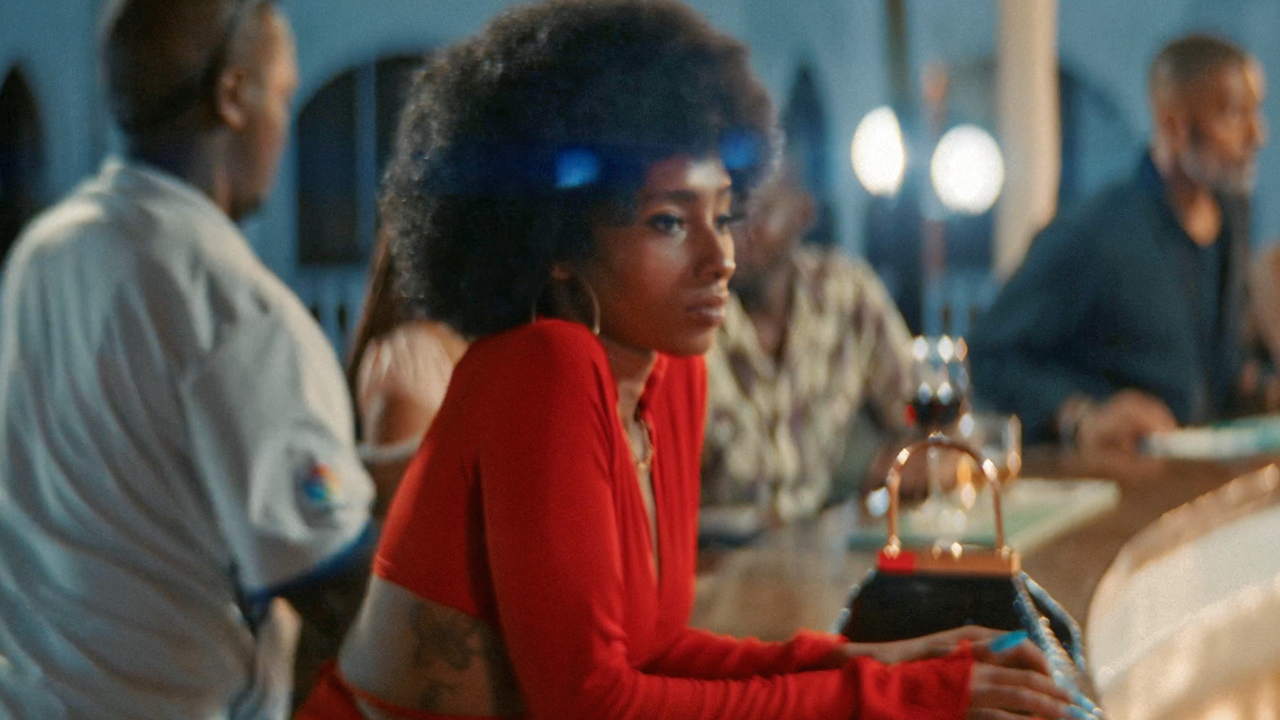
Rains Over Babel: In her stunning debut feature, writer-director Gala del Sol takes us into an imagined world of Cali, Columbia, bars connected to the Underworld (not the just criminal underworld), ruled by a sexy loan shark who is the Grim Reaper. Among the denizens are a sleek and smarmy bartender, a prudish preacher, a gangland enforcer who’s been dead for twenty years, a talking salamander and more drag queens than you can shake a stick at. The story, fraught with desperation and Faustian bargains, flies by. Del Sol says she marries magic realism with gritty realism, and Rains Over Babel is visually orgiastic. The intricate production designs of the interiors could be by a demented Wes Anderson. The sound design is jarring and totally original. As an auteur, Gala del Sol is thinking so far outside of the box that you can’t tell that there’s a box.
Maria Bakalova in TRIUMPH. Courtesy of SFFILM and Bankside Films.
.The menu at SFFILM Festival includes 150 films from more than 50 countries. Peruse the program and buy tickets at SFFILM. Here’s the teaser for Rains Over Babel.
Photo caption: Jean Rochefort and Johnny Hallyday in MAN ON THE TRAIN.
The engrossing 2002 French drama Man on the Train centers on portraits of two very different men, and, ultimately, an unexpected male bonding. There’s a thriller ending because each man has been moving to his separate pivotal, life-or-death moment.
The titular character (Johnny Hallyday), whose name we come to learn is Milan, arrives in a small provincial town, and his accommodations fall through. The local literature teacher Manesquier (Jean Rochefort) insists on putting him up for the night. Milan, a very private man of fewer than few words, accepts the favor only reluctantly. He’s a solitary guy anyway, and he’s keeping a low profile because his local business matter is illegal. Manesquier, who lives a lonely bachelor existence, has a lot to say and no one to say it to. He is delighted to have someone to share company, and he is even more fascinated when he discovers that Milan is a career criminal.
Driven by Manesquier’s curiosity, and against Milan’s initial wishes, the two get to know each other. We know that the clock is ticking for one man, but we don’t appreciate that it my be ticking for both.
Man on the Train works so well because of the casting and the performances.
Jean Rochefort was a chameleonic fixture in French cinema. Man on the Train was Rochefort’s 130th movie at age 72, and he would go on to make 36 more. I recently wrote of Rochefort’s performance forty years before as a particularly amoral character with a reptilian smugness in Symphony for a Massacre.
Johnny Hallyday, in contrast, was not most well-known as a screen actor, but as a pop singer, the French Elvis. Ironically, Hallyday’s first film was as a child in the suspense classic Diabolique, which also was his best film; like Elvis Presley, Hallyday dabbled in an indifferent movie career. Halliday made 78 music videos with Johnny Hallyday in the title. He was known as a hard-living tabloid celebrity. When he made Man on the Train, Hallyday was 59 and had some serious mileage on him. Yet, his magnetism is compelling in Man on the Train.
Man on the Train was directed by Patrice Leconte (Monsieur Hire, The Widow of St. Pierre, The Suicide Shop).
Man on a Train can be streamed from Amazon, AppleTV, Fandango and YouTube.
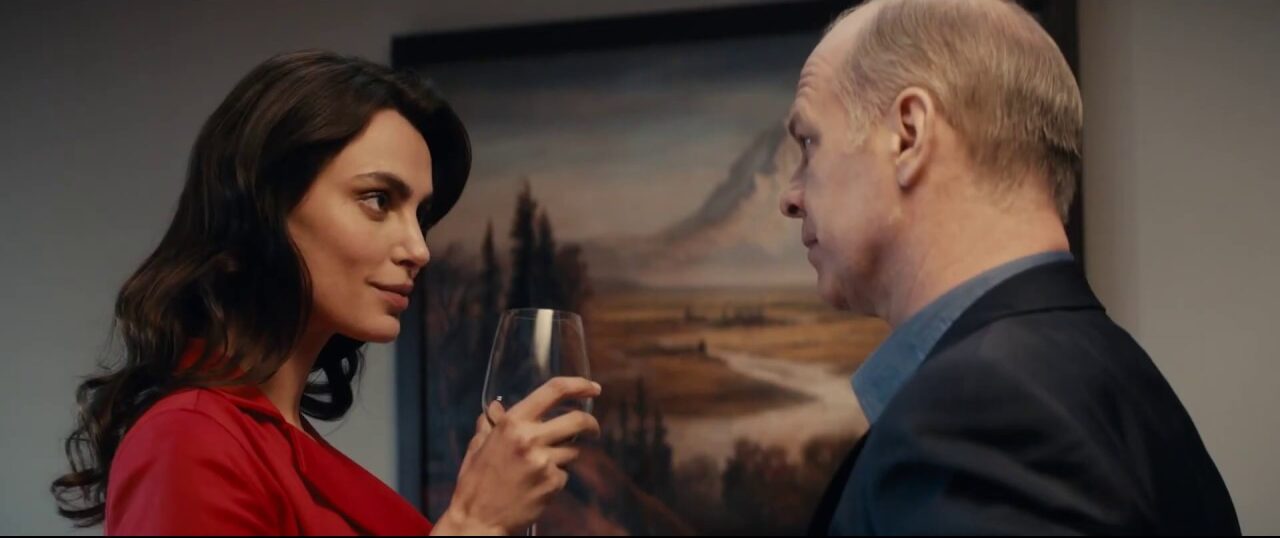
Photo caption: Catrinel Marlon and Vlad Ivanov in THE WHISTLER. Courtesy of Magnolia Pictures.
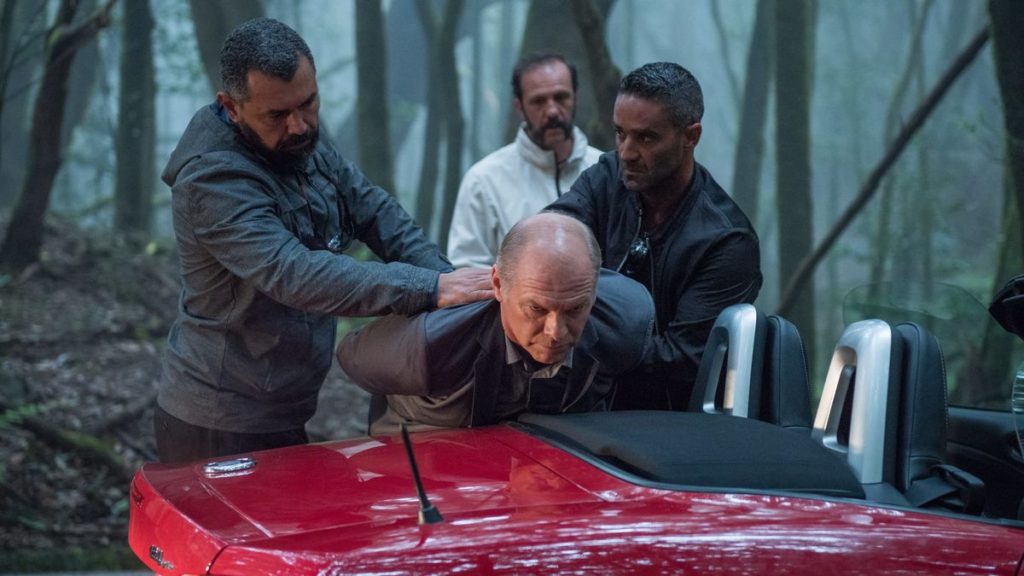
In the absorbing crime thriller The Whistlers, Cristi (Vlad Ivanov) is a shady Romanian cop who is lured into a dangerous plot by the rapturously sexy Gilda (Catrinel Marlon) and the promise of a fortune. A lethal Spanish mafia is planning a Perfect Crime to recover the loot stolen by Gilda and her Romanian partner, Zsolt. Only Zslot knows where the treasure is, and he’s been jailed by Cristi’s colleagues. To beat the omnipresent surveillance of Romanian state security, Cristi is sent to La Gomera, an island in the Spanish Canary Islands to learn a whistling language.
A whistling language? Indeed, residents of La Gomera can communicate by whistling in code. The language is called Silbo Gomera and it was already being used in ancient Roman times. The whistling can be heard for up to two miles, which allows the locals to communicate across the impassable ravines on the mountainous island.
The plan to spring Zsolt depends on Cristi learning Silbo Gomera and then implementing an intricate plan in which nothing can go wrong. Even if the plan goes right, Cristi and Gilda run the very real risk of being killed by the pitiless Spanish mafia or by the corrupt and unaccountable Romanian cops. Cristi and Gilda are walking a tightrope of treachery.
Vlad Ivanov in THE WHISTLERS. Courtesy of Magnolia Pictures.
The Whistlers is written and directed by Corneliu Porumboiu, who is a master of the deadpan. Two of his earlier films became art house hits in the US, 12:08 East of Bucharest and Police, Adjective. Both of those films explored fundamental corruption in Romanian society as a legacy of the communist era..
Cristi is played by Romanian actor Vlad Ivanov. Ivanov is best known for the Romanian masterpiece 4 Days, 3 Weeks and 2 Days, in which he played one of cinema’s most repellent characters – Mr. Bebe, the sexual harassing abortionist. American audiences have also seen Ivanov’s performances in Police, Adjective and Snowpiercer.
Ivanov excels in playing Everyman piñatas, which serves him well in The Whistlers. Ivanov delivered a tour de force in the 2019 Cinequest film Hier, as a man more and more consumed by puzzles, and increasingly perplexed, dogged, battered and exhausted.
For The Whistlers to work, Catrinel Marlon must make Gilda quick-thinking and gutsy, and she pulls it off. She is very good, as is Rodica Lazar as Cristi’s coldly ruthless boss Magda.
This is a Romanian film with dialogue in Romanian, English, Spanish and, of course, whistling. The Whistlers, a top notch crime thriller, can be streamed from Amazon, AppleTV, YouTube and Fandango – and it’s currently included with Max.
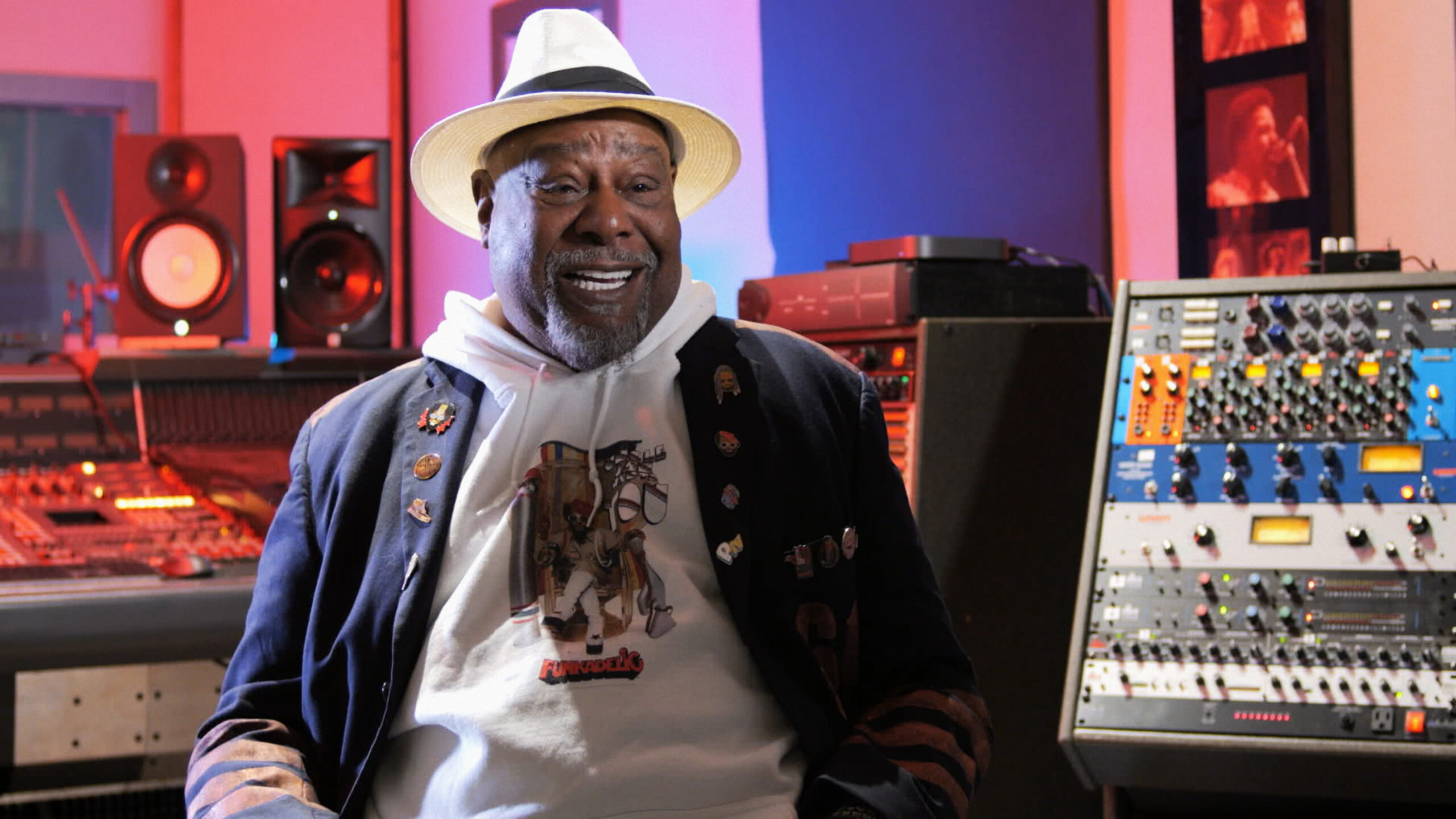
Photo caption: George Clinton in WE WANT THE FUNK. Courtesy of Firelight Films.
The delightful We Want the Funk is as far from an eat-your-broccoli documentary a you can get. Directors/producers Stanley Nelson and Nicole London explain the musical essence, history, and socio-political context of Funk without taking any of the fun out of it. Because the very raison d’être of Funk is to make you want to move your body, this is an especially enjoyable watching experience.
We see the evolution of Funk, beginning with James Brown, Sly and the Family Stone and Parliament/Funkadelic. We Want the Funk traces influence from the Black church and Funk’s legacy impacts on Afrobeat and Hip-hop.
We hear from musicians, like the always playful George Clinton, and scholars, including my favorite musicologist and cultural historian, Questlove. We Want the Funk drills deep to explain James Brown’s weaponization of the one-beat and Sly and the Family Stone bassist Larry Graham’s innovative slap. And how elements of Funk were absorbed by Brits like Elton John, who was stunned when Bennie and the Jets topped the US R&B charts.
We Want the Funk emphasizes the moment when Black music mirrored Black attitudes and sensibilities, as the Civil Rights Era morphed into Black Power. There was a political subtext to Dance to the Music. Motown acts had made sure that their appearance and behavior appealed to mainstream (i.e., White) audiences. Adopting a newly Afro-confident starting point, Funk music didn’t care how Whites reacted (although Whites, being humans, have embraced it, too).
Thank You Falettinme Be Mice Elf Agin. PBS begins airing We Want the Funk April 8 on Independent Lens. It will become available on the PBS app and PBS YouTube beginning April 9th.
In the highly original indie drama Nora, a singer-songwriter (Anna Campbell, who also wrote and directed) leaves the music industry to return to her hometown, along with her precocious six-year-old daughter. Her confidence rocked by her life changes, she is now the new gal in a society run by her former high school classmates. Her feelings are reflected in her songs, dropped in throughout the movie,
The crux of Nora is the portrait of an accomplished woman navigating a world she never expected to inhabit, not to mention again finding herself at the mercy of high school Mean Girls. Campbell’s screenplay genuinely captures the vulnerabilities of solo parenting and career change.
I found two of the minor characters to be unrealistically perfect, but Campbell resists the cliche of having Nora hook up with the sensitive, supportive guy.
The songs, written by Noah Harmon (formerly The Airborne Toxic Event), are outstanding. Campbell shows a knack for directing music videos.
The kid actor, Sophie Mara Baaden (Anna Campbell’s real life daughter) is very good. Lesley Ann Warren has a cameo as Nora’s judgy, stifling mom; Warren has been working steadily in the four decades since Mission: Impossible and Victor/Victoria, amassing 136 IMDb screen credits, and it’s great to see her here, too.
I screened Nora for its world premiere at Cinequest. It opens April 4th at the Living Room Theaters in Portland.
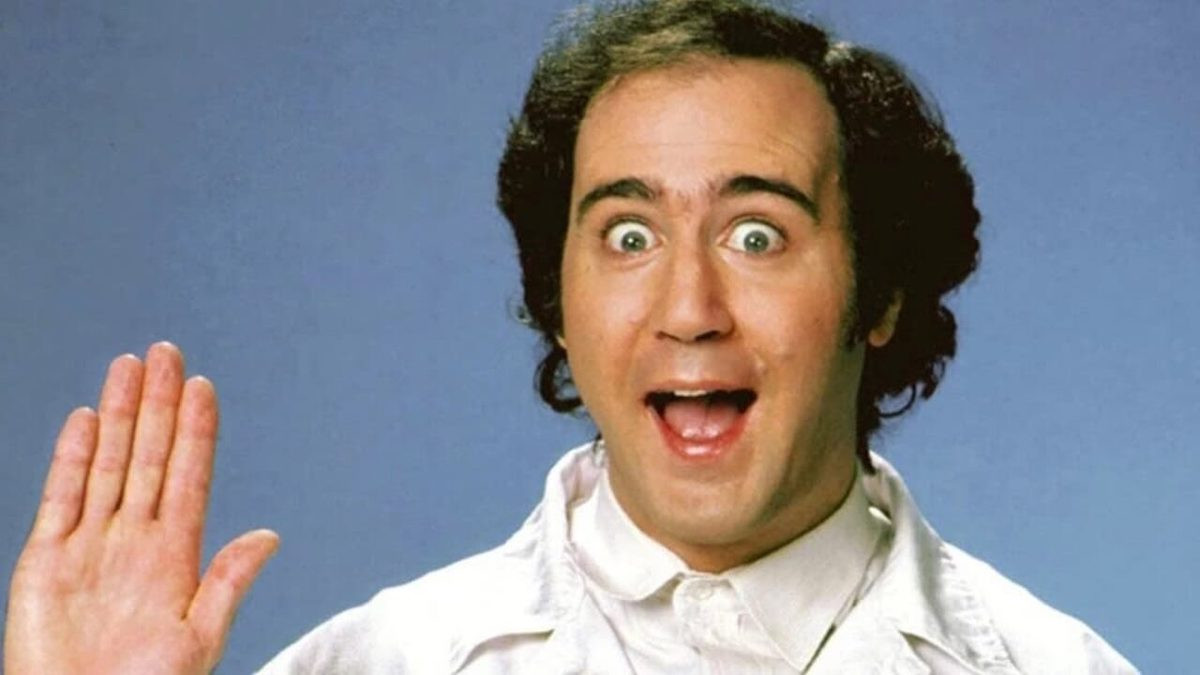
Photo caption: Andy Kaufman in THANK YOU VERY MUCH. Courtesy of Drafthouse Films.
Andy Kaufman was an original, whose art always confounded the expectations of others. The fine biodoc Thank You Very Much both reminds us of Kaufman’s gifts and explains the roots of his offbeat, often bizarre humor..
Director Alex Braverman takes us to Kaufman’s formative childhood and the parental lie that shaped much of his psyche. We hear from Kaufman’s dad, his creative partner Bob Zmuda and Andy’s girlfriend Lynne Margulies. Friends Danny Devito, Marilu Henner and Steve Martin pop in, too.
Kaufman was a prankster and a provocateur, so much so that, when a woman suffered a fatal heart attack on stage, the audience suspected that it might be a part of Kaufman’s act; (it wasn’t).
And what about his notorious wrestling wrestling against women? It’s the most controversial element of Kaufman’s work and the most inexplicable. Thank You Very Much sheds important light on this obnoxious performance art.
And here’s a delightful nugget – we even get to learn the origin of Latka’s accent on Taxi.
Thank You Very Much is in theaters, with filmmaker appearances at several LA theaters this week. You can also stream it on Amazon and AppleTV.
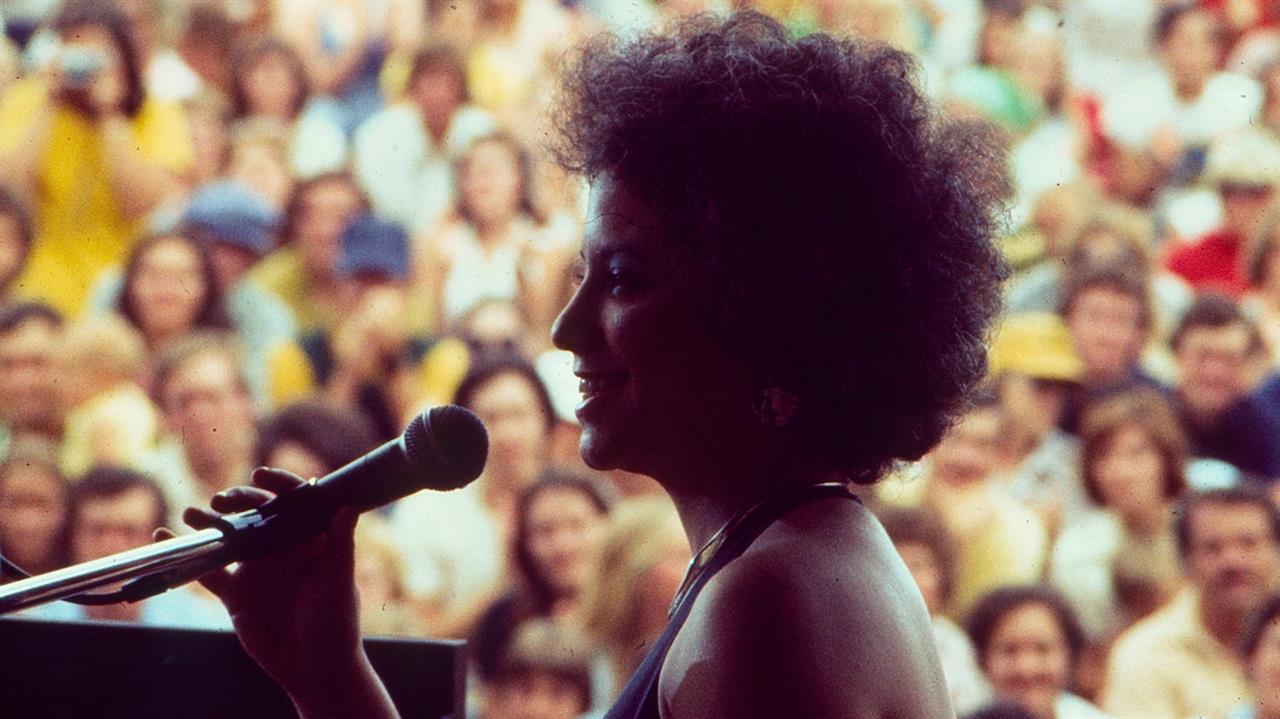
Photo caption: Janis Ian in JANIS IAN: BREAKING SILENCE. Courtesy of Greenwich Entertainment.
In Janis Ian, Breaking Silence, the biodoc of the earnest pop-folk singer-songwriter, a teen prodigy steps onto the roller coaster of the music industry at a tender age and experiences the highest highs and the lowest lows. And, it turns out that there’s more to Janis Ian than Society’s Child and At Seventeen.
The word prodigy is overused, but accurately describes Ian, who was doing professional-level song-writing at age 14. Her dad answers a booking request on the home phone with with, “You know she’s only 15, right?“
We’re not surprised that Ian experiences the shock of instant national stardom, the vicissitudes of record companies, the proverbial crooked business managers, (but not as MANY drugs as in most music biodocs). But it’s insightful to hear from Ian herself about how all this seemed and felt as it happened. Ian recounts her relationships while touring, with both men and women, and the impact of being outed involuntarily.
When Ian is unexpectedly confronted by someone who broke her heart years before, she blurts out the perfect last laugh.
Janis Ian: Breaking Silence was made with Janis Ian’s cooperation, and takes a very sympathetic point of view; that’s okay because Ian herself is clear-eyed, self-deprecating and maintains a solid, often wry, perspective on her experience. Janis Ian herself testifies, along with others close to her (including old pals Arlo Guthrie and Joan Baez).
This is the third feature for director Varda Bar-Kar, who is aided by excellent editing from Ryan Larkin in his first feature.
The theatrical release of Janis Ian: Breaking Silence is rolling out, including California cinemas: Laemmle NoHo, Laemmle Monica, SBIFF Film Center, SBIFF Riviera, Smith Rafael Film Center, Rialto Cinemas Elmwood and Rialto Cinemas Sebastopol.
Alexander Karim in THE DOG. Courtesy of Cinequest.
The electrifying thriller The Dog follows a classic neo-noir premise. MZ (Alexander Karim), a low level hood, is assigned to drive the call girl, Kadzo (Catherine Muthoni), and he falls for her – against the explicit instructions of their employer and advice from Kadzo herself. To stake a new start for them in a faraway land, he reaches for the big score. Desperation results. What’s unusual about The Dog is that it’s exceptionally exciting and that it’s set in Mombasa, Kenya.
In his quest to make a quick fortune, MZ tries to cash in on a tip about a drug deal. When that goes awry, he finds himself owing a huge debt to Saddam (Caroline Midimo), one of Mombasa’s crime matriarchs. He then tries working with Saddam’s rival Ainea (Veronica Mwaura). MZ takes more and more risks as he get more deeply entangled with the two godmothers. All the way, he’s just one double cross away from disappointing the last people he’ll ever disappoint.
There’s a wonderful low-speed tuk tuk chase (on three-wheel taxis) through Mombasa’s open air markets, street performers and herds of goats. And there’s another unforgettable scene that will be particularly uncomfortable for male audience members.
The Dog matches up well to Howard Hawks’ definition of a great movie – three great scenes and no bad ones“. My FOUR nominations for the three great scenes:
a big spender who owes MZ money brings him to his home;
Kadzo has MZ film her latest video ad, and he watches her at her sexiest through her cellphone camera.
Kadzo explains that she is not asking anyone to save her;
MZ faces his reckoning,
The Swedish-born Alexander Karim is superb as MZ. MZ works out to maintain a physicality that intimidates johns and debtors, but he knows his place in the crime hierarchy and grovels before the godmothers; when he screws up, he knows the consequences and moves directly into desperate terror. Alexander Karim has worked in lots of Scandanavian films (so he must be familiar with Nordic Noir) and appeared in Gladiator II.
Catherine Muthoni in THE DOG. Courtesy of Cinequest.
Catherine Muthoni is very good as Kadzo. This may be a neo-noir, but Kadzo isn’t a manipulative femme fatale – it’s only MZ who drives himself to his fate. Midimo and Mwaura are wonderful as the two crime bosses. Watch for how matter-of-factly Midimo dons Saddam’s eyeglasses in the most extreme scene.
The Dog is brilliantly directed, and edited. The director is Alexander’s Ugandan-born brother Baker Karim, who is also based in Sweden. That makes The Dog a Swedish movie, although it has every appearance of a Kenyan film.
Until midnight on March 31, you can stream The Dog from Cinequest’s on-line festival Cinejoy for less than ten bucks: buy ticket to watch The Dog.
Photo caption: Thomas Kinkade in ART FOR EVERYBODY. Courtesy of Tremolo Productions.
Art for Everybody, the absorbing and revelatory biodoc of painter-entrepreneur Thomas Kinkade, begins with an audio recording of a 16-year-old Kinkade, aspiring to become a famous painter when he grew up – but not a poor one. He succeeded beyond his wildest dreams, harvesting great wealth by creating demand where none had existed and filling it with what he, controversially, called art. After trading on his conservative Christianity, his business model became unsustainable, and Kinkade, living apart from his family, drank himself to death.
That’s a hell of a rise-and-fall story arc, but it gets better. After his death, his family finally saw the other 90% of Kinkade’s work, secreted away in a room they had called “the vault”. Those paintings, so shockingly different than his commercial ones, revealed a Kinkade that he had hidden from everyone. I like documentaries that are jaw-droppers, and this is one. In her first feature, director Miranda Yousef, who also edited, unspools Kinkade’s story flawlessly.
Kinkade, an astonishingly fast and prolific painter, built his empire on sentimental and comforting landscapes with exaggerated light features, such as warm light glowing from the windows of a forest cabin at night. That signature became the Kinkade brand, and he even trademarked the self-given moniker, “Painter of Light”. Because they don’t evoke anything but passive contentedness, I wouldn’t even describe these paintings as art, but rather as decoration or collectibles.
Their themes are more fantasy than nostalgia. For example Art for Everybody shows a Kinkade street scene of busy San Francisco, filled only with all-white, heterosexual families; as a lifelong Northern Californian (like me), Kinkade would surely have known that this was a San Francisco that has never existed.
Kinkade’s open religiosity attracted customers and investors. He exploited the culture wars and even advocated the censorship of other artists like Robert Mapplethorpe and Andres Serrano.
Kinkade, busy opening galleries in shopping malls, was already the painter who had sold the most canvases and prints in history before many in the fine art world had ever heard of him. In 2001, when Susan Orlean profiled him in The New Yorker, pointing out that ten million people owned Kinkade products, the traditional art critics seemed to howl in unison, “how DARE he?“
Art for Everybody is impeccably sourced with testimony from Kinkade’s wife and kids, his siblings, the co-founder of his company, along with Orlean and a bevy of experts in the fine arts world. I can’t remember a documentary where the subject’s family was more clear-eyed about their deceased loved one. They clearly love the guy, but pull no punches about his quirks and flaws.
In one revelatory moment, Yousef shows us a home movie of Kinkade taking his family back to see the modest house where his single mom raised Thomas and his siblings. As a kid, Kinkade was deeply ashamed of this home, and vowed to live more comfortably as an adult. As Kinkade shows his wife and kids around, it’s clear that he saw it as hell hole. Placerville, however, is not a bougie place, and Kinkade doesn’t report that he was spurned or teased because of his home, nor do his siblings seemed to be scarred by it. Clearly, the shame he felt was internally driven. Kinkade’s brother spells out what appealed to Kinkade about painting cozy cottages.
This was a a very complicated man – fun-loving dad and workaholic, a talented fine artist who aimed for the lowest common denominator. Once we’ve seen him as a proudly philistine huckster, it’s breathtaking to discover what he painted for himself and hid away. Might Kinkade have destroyed himself by not working out his demons through his art?
After premiering at the 2023 SXSW and a strong festival run, Art for Everybody is rolling out in theaters.