2017 at the Movies: farewell to the actors

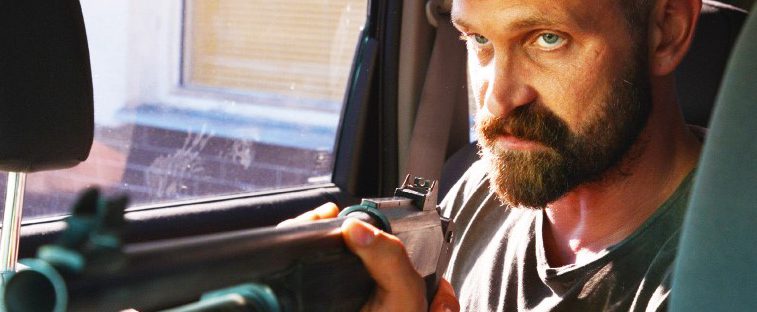
Bill Paxton in ONE FALSE MOVE

I first noticed the actor Bill Paxton as small town police chief Dale “Hurricane” Dixon in the 1992 indie neo-noir One False Move (a very underrated indie). In two more indelible and more widely remembered performances, he played the lead role of polygamist Bill Henrickson for the five seasons of HBO’s Big Love and astronaut Fred Haise in Apollo 13.


Mary Tyler Moore with Donald Sutherland in ORDINARY PEOPLE

Mary Tyler Moore, of course, is a giant of television history because of The Dick Van Dyke Show, The Mary Tyler Moore Show and all the fine shows produced by her MTM Enterprises. And her Mary Richards instantly became a societal icon. If ever anyone doubts the genius of her comic timing, they can just watch the 4-minute Chuckles the Clown funeral from the Mary Tyler Moore Show (it’s on YouTube).

She made very few movies, but they are worth remembering. She was Oscar-nominated for her still, emotionally distant parent in Ordinary People – a performance that she later said that she had modeled on her own father. She was hilarious as Ben Stiller’s mom in Flirting With Disaster. And she was also Elvis Presley’s last movie leading lady in the unintentionally funny Change of Habit, in which she played a social worker nun (!) who had to choose between her religious order and the ghetto doctor (Elvis!).


Powers Boothe in GUYANA TRAGEDY: THE STORY OF JIM JONES

I first noticed – and was captivated by – the actor Powers Boothe as the mad cult leader Jim Jones in Guyana Tragedy: The Story of Jim Jones; this is one of the best (and scariest) movie portrayals of a historical figure. That Emmy-winning performance launched his screen career and led to another delicious role – Cy Tolliver, the cold-eyed and evil rival to Ian McShane’s cold-eyed and evil Al Swearingen in Deadwood.


Martin Landau in NORTH BY NORTHWEST

Martin Landau had an acting career that spanned seven decades and resulted in 177 screen credits. His two finest performances came at age 61 and age 66 – the killer of an inconvenient mistress in Woody Allen’s Crimes and Misdemeanors and his Oscar winning turn as Bela Lugosi in Ed Wood. Landau’s most famous role came when he was only 31, as he chased Cary Grant across the faces of Mount Rushmore in Alfred Hitchcock’s North by Northwest.

The actress Dina Merrill made a career of playing high society matrons (as she was in real life). She was never better in one of my favorite films, Robert Altman’s The Wedding.

The actor Stephen Furst had 88 screen credits, but none more iconic than the role in his second feature film: Kent “Flounder” Dorfman in Animal House. “Fat, drunk and stupid is no way to go through life, son.”

I remember the versatile actress Glenne Headly for giving Steve Martin and Michael Caine more than they can handle in the hilarious con artist movie Dirty Rotten Scoundrels. Here’s her NYT obit. Dirty Rotten Scoundrels is available on DVD from Netflix and to stream from Amazon, iTunes and Vudu.

Michael Nyqvist co-starred with Noomi Rapace in the Swedish Girl with the Dragon Tattoo movies. He was also really good in last year’s overlooked indie neo-noir Frank & Lola.

Sam Shephard was America’s greatest living playwright for decades, and also made a mark as an actor with 68 screen credits. His most memorable role was as test pilot Chuck Yeager in The Right Stuff.

Danielle Darrieux, who at age 36 played the privileged and shallow countess in Max Ophuls’ The Earrings of Madame de…, died at age 100.

Emmanuelle Riva’s 89 screen credits are spread over the past SEVEN decades. She was a fixture of the French New Wave, beginning with Alain Resnais’ Hiroshima Mon Amour in 1959. We remember her Oscar-nominated performance in 2012’s heartbreaking Alzheimer’s drama Amour.

Emmanuelle Riva in ARMOUR
Emmanuelle Riva in AMOUR


The actor Frank Vincent gloried in mobster roles, playing characters like Johnny Big , Joey Big Ears, Tommy Tomatoes and Tommy ‘The Bull’ Vitagli. He is best known as Phil Leotardo in The Sopranos. His most memorable (and ill-fated) line was directed to Joe Pesci in Goodfellas: Go home and get your shine box….

Haruo Nakajima was the first actor to play Godzilla (before computers did that). Nakajima, who had been playing the minor bad guys dispatched by the hero in samurai movies, sweated profusely inside the rubber monster suit for twelve Godzilla films.

John Hurt (center) in THE HIT

John Hurt’s magnificent career started in the 1960s, but I first noticed him in 1976 when he leaped out of the screen as the lethally mad Caligula when PBS broadcast the BBC miniseries I, Claudius. Hurt is probably most recognized (by my generation) for his Oscar-nominated performance as the title character in 1980’s The Elephant Man or as the first victim of the alien in Alien. But Hurt was always able to stay current with performances in popular films like V for Vendetta and Hellboy and he played Ollivander in the Harry Potter movies. He also recently made Tinker, Tailor, Soldier, Spy (2011) and Snowpiercer (2013), and was the best thing (as The Priest) in the awful film Jackie (2016). My own favorite John Hurt performance was as the more disciplined hit man in the 1984 British neo-noir The Hit.

John Hurt (left) with Derek Jacobi in I, CLAUDIUS
John Hurt with Natalie Portman in JACKIE

2017 at the Movies: farewell to the filmmakers

Jonathan Demme
Jonathan Demme

If he had made no other films, Jonathan Demme would be forever remembered for his horror masterpiece The Silence of the Lambs (1991), one of only three movies to win Oscars in all four major categories: Best Picture, Director (Demme), Leading Actor (Anthony Hopkins) and Leading Actress (Jodie Foster). It also won the Screenwriting Oscar (Ted Tally).

Jonathan Demme, however, was a director who could master many genres. He started out with genre exploitation movies, and I first admired his work in the little indie Melvin and Howard (1980), with its delightful performances by Jason Robards and Paul Le Mat. Then he made one of the two or three best ever rock concert films, Stop Making Sense (1984) with The Talking Heads.  And then he directed the topical drama Philadelphia (1993) and the wonderfully engaging addiction dramedy Rachel Getting Married (2008).

His body of work screams versatility, and his masterpiece…Well, his masterpiece just screams.

John Avildsen won the Best Director Oscar for Rocky (which also won Oscars for Best Picture and Film Editing). We still employ many cultural references to Rocky today, and remember it for launching the career of Sylvester Stallone and a spate of mostly mediocre sequels. But don’t discount Rocky. Remember that someone had to choose how to shoot Rocky Balboa pounding beef carcasses, running up the steps of the Philadelphia Museum of Art and courting Adrian by introducing his turtles Cuff and Link. Movies don’t achieve iconic status by accident. Avildsen made a brilliant film that was both poignant and thrilling.

In his film Night of the Living Dead, George Romero re-invented the fictional zombie as a shambling, semi-decomposed brain-eater, and that is the zombie that we all envision today. Night of the Living Dead also changed movie standards (for better or for worse) to accept gratuitous gore for the sake of entertainment. And, because its rejection by major movie studios forced Romero to go indie, Night of the Living Dead became one of the first hugely successful independent films.

Bruce Brown directed The Endless Summer in 1966, thus inventing the surf documentary.

Jerry Lewis: Not My Cup of Tea. Maybe now we’ll finally get to see his notorious and long-suppressed The Day the Clown Died, the 1973 movie Lewis wrote, directed and starred in – about a clown imprisoned with children in a Nazi death camp.

Movies to See Right Now

COCO
Courtesy of ©2017 Disney•Pixar. All Rights Reserved.

Many of the best movies of the year are in theaters right now, and here are the very best:

  • Pixar’s Coco is a moving and authentic dive into Mexican culture, and it’s visually spectacular.
  • The Shape of Water, Guillermo del Toro’s imaginative, operatic inter-species romance may become the most-remembered film of 2017.
  • Lady Bird , an entirely fresh coming of age comedy that explores the mother-daughter relationship – an impressive debut for Greta Gerwig as a writer and director.
  • Three Billboards Outside Ebbing, Missouri a powerful combination of raw emotion and dark hilarity with an acting tour de force from Frances McDormand and a slew of great actors.
  • Darkest Hour, Gary Oldman brings alive Winston Churchill in an overlooked historical moment – when it looked like Hitler was going to win WW II.
THE SHAPE OF WATER

Here’s the rest of my Best Movies of 2017 – So Far. Most of the ones from earlier this year are available on video.

Other current choices:

  • The Disaster Artist, James Franco’s hilarious docucomedy about the making of one of the most unintentionally funny movies of all time.
  • The ambitious satire The Square.
  • LBJ, an effective and engrossing Cliff Notes history lesson, with another fine performance by Woody Harrelson.
  • Murder on the Orient Express is a moderately entertaining lark.
  • Novitiate, the tediously grim story of a seeker looking for spiritual love and sacrifice, with a sadistic abbess delivering too much of the latter.

My Streams of the Week are the seven best movies of the year that are already available on video: Truman, The Big Sick, Wind River, Dunkirk, Norman: The Moderate Rise and the Tragic Fall of a New York Fixer, The Founder and The Sense of an Ending.

Turner Classic Movies is giving us a wonderful New Year’s Eve present – an all day Thin Man marathon. William Powell and Myrna Loy are cinema’s favorite movie couple for a reason – just settle in and watch Nick and Nora Charles in The Thin Man and its sequels do what they do best – banter, canoodle, solve crimes and, of course, tipple.

Myrna Loy and William Powell as Nora and Nick Charles during the Holidays

DVD/Streams of the Week: the best movies of the year

Elizabeth Olsen and Jeremy Renner in WIND RIVER

About half of the year’s best movies are already out on video. I’ve been shilling The Big Sick and Truman over the past month. Here are the rest:

Wind River: another masterpiece from Taylor Sheridan. Smart, layered and intelligent, Wind River is another success from one of America’s fastest-rising filmmakers. Wind River can be streamed from Amazon, iTunes, Vudu, YouTube and Google Play.

Dunkirk: personal, spectacular and thrilling: White knuckle intensity in this filmmaking marvel. It can be streamed from Amazon, iTunes, Vudu, YouTube and Google Play.

The Founder: money grubbing visionary. Michael Keaton stars in this biopic of fast food magnate Ray Kroc. You can watch it on DVD from Netflix and Redbox or stream it from Amazon, iTunes, Vudu, YouTube and Google Play.

Norman: The Moderate Rise and Tragic Fall of a New York Fixer: big deals are not for little men. This superb character study is probably Richard Gere’s best career performance. Norman: The Moderate Rise and Tragic Fall of a New York Fixer is available on DVD from Netflix and to stream from Amazon, iTunes, Vudu, YouTube and Google Play.

The Sense of an Ending: you can’t revisit the past and guarantee closure. This British indie drama is a showcase for its star, Jim Broadbent. It’s available to stream from Amazon, iTunes, Vudu, YouTube and Google Play.

Fionn Whitehead in DUNKIRK

Movies to See Right Now

Sally Hawkins in THE SHAPE OF WATER

Many of the best movies of the year are in theaters right now, and here are the very best:

  • Pixar’s Coco is a moving and authentic dive into Mexican culture, and it’s visually spectacular.
  • The Shape of Water, Guillermo del Toro’s imaginative, operatic inter-species romance may become the most-remembered film of 2017.
  • Lady Bird , an entirely fresh coming of age comedy that explores the mother-daughter relationship – an impressive debut for Greta Gerwig as a writer and director.
  • Three Billboards Outside Ebbing, Missouri a powerful combination of raw emotion and dark hilarity with an acting tour de force from Frances McDormand and a slew of great actors.
  • Darkest Hour, Gary Oldman brings alive Winston Churchill in an overlooked historical moment – when it looked like Hitler was going to win WW II.
COCO

Here’s the rest of my Best Movies of 2017 – So Far.  Most of the ones from earlier this year are available on video.

Other current choices:

  • The Disaster Artist, James Franco’s hilarious docucomedy about the making of one of the most unintentionally funny movies of all time.
  • The ambitious satire The Square.
  • LBJ, an effective and engrossing Cliff Notes history lesson, with another fine performance by Woody Harrelson.
  • Murder on the Orient Express is a moderately entertaining lark.
  • Novitiate, the tediously grim story of a seeker looking for spiritual love and sacrifice, with a sadistic abbess delivering too much of the latter.

My Stream of the Week is your chance to see what may be the year’s best movie – and see it at home. It’s the deeply emotionally affecting and humane Spanish film Truman. which had a very brief US theatrical run early this year. Truman is now streaming on Amazon, iTunes, Vudu, YouTube and Google Play.

On December 27, Turner Classic Movies presents my choice for the funniest movie all time – Mel Brooks’ 1967 masterpiece The Producers. Zero Mostel plays a human tornado of a crooked Broadway producer, who drags along his bewildered and terrified accountant (Gene Wilder). The brilliant Wilder has never been funnier, and The Producers also features career-best performances by funnymen Dick Shawn and Kenneth Mars. And, of course, there’s the unforgettable musical show stopper Springtime for Hitler. (See this INSTEAD of the 2005 remake.)

TRUMAN

Stream of the Week: TRUMAN – how people say goodbye

Javier and Ricardo Darin in TRUMAN
Javier Cámara and Ricardo Darin in TRUMAN

For the second week in a row, I’m suggesting that you take this opportunity to watch what may be the best movie of this year – in your own home. In the deeply emotionally affecting and humane Spanish film Truman, Tomás (Javier Cámara) leaves Montreal to pay a surprise four-day visit to his longtime friend Julián (Ricardo Darin) in Madrid. Julián has been battling cancer and has just received a very grim prognosis. Julián has chosen to forgo further treatment, and his cousin and caregiver Paula (Dolores Fonzi) is hoping that Tomás can talk Julián out of his decision.

Julián is a roguish bon vivant, although now hobbled by illness. Tomás is a responsible family man. As the four day visit unfolds, Tomás tags along as Julián cavalierly settles his affairs. Because of the circumstances, even the most routine activity is heavily charged with emotion. Julián, who has always been a wild card, is now a tinderbox always on the verge of erupting into some socially inappropriate gesture. Julián is particularly focused on arranging for adoption of his beloved and ponderous dog Truman.

Julián is a wiseacre, but his reaction to a moment of kindness from an very unexpected source is heartbreaking. Julián goes to say goodbye to his son, and then the learn a fact afterward that make this encounter exponentially more poignant. Truman has an especially sly ending – the granting of one last favor, however inconvenient.

TRUMAN
TRUMAN

The Argentine actor Darin is one of my favorite screen actors: Nine Queens, The Secret in their Eyes, Carancho, The Aura. As a man living under a death sentence, Julián has adopted a bemused fatalism, but is ready to burst into rage or despair at any moment, and Darin captures that perfectly.

I was blown away by Javier Cámara’s unforgettable performance, at once creepy and heartbreaking, in the Pedro Almodovar drama Talk to Her. Cámara is a master of the reaction, and his Tomás stoically serves as the loyal wing man to a friend with hair trigger unpredictability, often in a state of cringe.

The Argentine actress Dolores Fonzi (The Aura) is excellent as Paula, whose caregiver fatigue finally explodes.

Packed with bittersweet emotions, Truman is never maudlin. The Spanish director Cesc Gay, who co-wrote Truman, has created a gentle and insightful exploration into how people can say goodbye. There’s not a single misstep or hint of inauthenticity. Again, Truman is one of the best films of the year.

Truman had a brief US theatrical run. It’s now streaming on Amazon, iTunes, Vudu, YouTube and Google Play.

(Note: The crappy trailer below fails to capture all the humor and deep emotion in this film.)

THE SHAPE OF WATER: an operatic romance (and it’s inter-species)

Sally Hawkins in THE SHAPE OF WATER

The Shape of Water is an epic romance from that most imaginative of filmmakers,  writer-director Guillermo del Toro.  The Shape of Water may become the most-remembered film of 2017.

The story is set in 1962 Baltimore. Elisa (Sally Hawkins) is a mute woman who lives in a dark apartment above an aging downtown movie palace.  She and her friend Zelda (Octavia Spencer) work as a janitors on the graveyard shift at a government research laboratory.  The Cold War adventurer Strickland (Michael Shannon), a tower of menace, has captured an amphibian creature from the Amazon and has brought him in chains to a tank at the laboratory.  The male creature, in the approximate form of a human, has dual breathing systems, so he can survive both under water and on the surface; it develops that he also has intelligence, feelings and even healing powers.

The scientist Hoffstetler (Michael Stuhlbarg) wants to study Amphibian Man to discover how his species could benefit humanity.  Strickland, on the other hand, wants to rush into killing and dissecting the creature.  Strickland is a sadist, who enjoys brutalizing Amphibian Man with his cattle prod.

Elisa is repulsed by Strickland’s torture, and she feel compassion for Amphibian Man.  She starts showing Amphibian Man some kindness.  As Amphibian Man becomes more trusting of Elisa, he feels gratitude for her kindness.  She cares about him, too, first with pity and then with the fondness of a pet owner.  As Amphibian Man’s intelligence and feelings become more apparent, the two become more equal, and their mutual fondness blossoms into passion.

But Strickland’s nefarious plans force Elisa and her supporters into a race against the clock to save Amphibian Man.  And so we’re off on a thriller, with a heist-like rescue and a chase, culminating in an ending of operatic scale.

Now this is a romance that transcends species.  I totally bought into this.  If you can’t, the movie is less moving and much, much more odd.  Romance is often consummated sexually, and this one is, too.

Sally Hawkins is not conventionally pretty, yet del Toro didn’t make Elisa a stereotypical spinsterish ugly ducking.  Elisa is vital, with a rich inner life, a wicked sense of humor and cultural interests, and who expresses herself sexually.  She may only be a night janitor with a disability, but that doesn’t define her.  Elisa’s defiant gaze at Strickland is one of the movie’s highlights.

Hawkins’ performance is a tour de force.  Shannon makes for a formidable villain, especially when he clenches his own gangrenous fingers.  Michael Stuhlbarg, Octavia Spencer and Nick Searcy (Art Mullen in Justified) are all excellent.

Richard Jenkins’s performance as Elisa’s neighbor Giles is very special.  This is a very vulnerable man, with his sexuality trapped in a closet, his growing sensitivity to his own aging and his career as a commercial artist becoming obsolete.  With his episodes of resolute denial spotted with instances of inner strength, both the character and the performance are very textured.  And Giles’ eccentric reactions to the story are very, very funny.

I highly recommend Guillermo del Toro’s interview on NPR’s Fresh Air , in which he discusses many of his choices in developing the story of The Shape of Water, including shaping the character of Elisa and the inspirations from The Creature from the Black Lagoon.  In the interview, del Toro explains that, if this movie were made in 1962, Strickland would have been the hero, the Cold Warrior protecting humans from the alien creature.  Instead of course, the heroes of The Shape of Water are a woman with a disability, a woman of color, a gay man and a commie spy and, of course, a monster.

None of the characters have any reason to envision that white male supremacy, oppression of gays or the Cold War would end, or even be tempered, in their lifetimes.  It’s a graphic time capsule, with the grand movie palace empty, pushing out a sword and sandal epic to compete in futility with the small screen offerings of Dobie Gillis, Mr. Ed and Bonanza.  It’s a world in which the coolest thing imaginable is a teal 1962 Cadillac De Ville.

Here’s where Guillermo del Toro’s imagination triumphs. This story could not be told as well in a novel, on stage or in any other artistic medium. It has to be a movie.

This is filmmaking at its most essential and most glorious. Del Toro, along with production designer Paul B, Austerberry and art director Nigel Churcher, create a set of vivid and discrete worlds, each with its own palette. There are Elisa’s and Giles’ dark apartments, the brooding institutional green of the laboratory and the bright mid-century modern domain of Strickland’s family.

This is a beautiful movie.  Between del Toro’s filmmaking genius and Hawkins’ performance, The Shape of Water is a Must See, one of the best movies of the year.

THE DISASTER ARTIST: deluded incompetence makes for successful comedy

Dave Franco and James Franco in THE DISASTER ARTIST


Really bad movies can be so unintentionally funny that they are fun to watch and mock. Such is the case with The Room, which has risen to number 2 in my Bad Movie FestivalThe Room was a vanity project that was written and directed by its star, Tommy Wiseau, with his ravaged face, stringy hair and undeterminable accent. To fully appreciate Tommy Wiseau’s performance, search YouTube for “you’re tearing me apart Lisa!” – or watch The Disaster Artist, James Franco’s hilarious docucomedy about the making of The Room.

The primary element in The Disaster Artist (and the primary appeal of The Room) is that Wiseau is absolutely confident in his own talent, despite no validation from any one else.

Wiseau himself is a mystery. No one knows where he was born, how old he is or how he amassed enough of a fortune to blow six million dollars on making The Room.  He is so psychologically non-functional, he couldn’t have made millions on his own.  His accent betrays an origin someplace between Belgrade and St. Petersburg, even though he ridiculously claims the accent is from New Orleans.

Anyone who has watched The Room will marvel at James Franco’s brilliance in capturing all of Wiseu’s awkward and offbeat mannerisms.  It’s a remarkable, All In comedic performance and the core of the film.

The Disaster Artist is based on the book by Greg Sestero, Wiseu’s friend/muse/roommate, on the making of the movie.  Sistero is played by Dave Franco (and Sistero’s girlfriend Amber is played by Dave Franco’s real-life wife, Alison Brie).  The entire cast, which includes Seth Rogen and Jacki Weaver is excellent.

This is a very successful comedy.  The Disaster Artist is one of the funniest movies of the year.

Note:  The end of The Disaster Artist features a split screen for the very worst scenes of The Room side-by-side with the re-enactments by the cast of The Disaster Artist.  And make sure you wait through ALL the end credits for an encounter between the real Tommy Wiseau and James Franco in character as Wiseau.

Note #2:  Yes, I have turned to The Wife and bellowed, “you’re tearing me apart, Lisa!”

COCO: the splendor of authenticity

COCO

Pixar movies are known for their exquisite animation.  Pixar movies soar when they have excellent stories (the Toy Story trilogy).  Coco, Pixar’s moving and authentic dive into Mexican culture, soars.

Set in Mexico during Dia de los Muertos, the boy Miguel longs to become a musician, an avocation his family forbids because a musician ancestor once abandoned the family.  He tries to follow his passion, but becomes trapped in the world of the dead.  He must get the blessing of a dead family member to return to the living.  Just when we think we know the score, there is an unexpected plot twist.

The colors of the Mexican town in daytime perfectly capture the look and feel of Mexico.  But the scenes in nighttime and in the world of the dead, explode on the screen, and it’s hard to decide which is the most spectacular.  There’s an overhead shot of the town cemetery on the night of Dia de los Muertos, with the glow of candles from every grave.  The worlds of the living and of the dead are separated by a bridge of flowers made out of marigold petals.  And then there’s Pepita, a giant winged panther in the world of the dead.

The exploration into Mexican culture is authentic because it is so firmly anchored to the Mexican sense of family.   There are no stereotypes here, and all of the characters look far more Mexican than do many faces on Spanish-language television.  There are many inside chuckles, such as the character of Ernesto de la Cruz perfectly capturing the Mexican singing movie star of black and white films.  There is, of course, the focus on the Mexican version of Dia de los Muertos with its ofrendas and criaturas. 

COCO
Courtesy of ©2017 Disney•Pixar. All Rights Reserved.

The three main adult characters are superbly voiced by Gael Garcia Bernal, Benjamin Bratt and Alanna Ubach.  We also hear the voices of Edward James Olmos, Cheech Marin and Luis Valdez.  The only decidedly non-Latino voice talent is John Ratzenberger, who has still voiced a character in every Pixar film.

Emotionally moving, culturally authentic and visually stunning, Coco is splendid in every way.  Coco is the best Pixar film in years and one of the best movies of the year.

DARKEST HOUR: certainty in a moment of uncertainty

Gary Oldman in DARKEST HOUR

A less-remembered moment in human history makes for a great story in Joe Wright’s Darkest Hour, which takes place entirely in May 1940, the period after the German blitzkrieg through the Low Countries on the way to Paris and just before the Dunkirk evacuation.

It’s not always easy today to remember that there was a time when it appeared that Hitler would win WW II. In May 1940, the Nazi empire had swallowed essentially all of Central and Western Europe except for France, which was teetering on the verge of imminent surrender. The entire British Army was trapped, surrounded on a French beach across the Channel.

The UK was both damaged and entirely isolated. Stalin had split Poland with Hitler, and it was over a year before Hitler’s invasion of the USSR. It was also 19 months before Pearl Harbor brought the US into the war.  With no hope of external help, Winston Churchill even publicly contemplated the war being carried on by the Commonwealth nations after the German conquest and occupation of the island of Britain.

in Darkest Hours, Winston Churchill (Gary Oldman in a superb, Oscar-worthy performance) has just become Prime Minister. At the time, Churchill was a 66-year-old who had peaked at forty.  He had been a superstar daredevil in his twenties who squandered his celebrity in a career dotted by Bad Gambles, where he had repeatedly gone All In and lost all of his chips. By 1940 he was well-known for engineering a horrific military disaster at Gallipoli in WW I and for a series of political party changes. Not the confidence-inspiring figure we think of today.

So in this situation, what to do? One option was to embark on what one could rationally conclude would be a suicidal course of waging aggressive war and risking obliteration. Another option would be to negotiate the most favorable surrender with Nazi Germany.  No good choices here.

If Churchill begins trash talking the Germans just before their invasion, is that delusional or intellectually dishonest? Or a moment of inspired leadership?

Churchill’s selection as Prime Minister was forced on the former Prime Minister Neville Chamberlain and his top foreign affairs expert Lord Halifax, and the two were understandably concerned that Churchill might be leading the nation to its (literal) ruin. They lay a trap, but great politicians like Lincoln and Churchill do not let themselves be trapped.

The core of Darkest Hour is Churchill probing for a solution while under the most oppressive stress and pressure. In Darkest Hour, his outsized personality and eccentricities sprinkle the story with humor. Churchill, well-known for consuming a bottle of champagne with both lunch and dinner and working, slugging down brandy and whisky,  late into the night, is shown having breakfast eggs with champagne and whisky. When the King, at lunch, asks him, “How do you manage drinking during the day?”, Winston replies, “Practice”.

Oldman is as good as any of the fine actors who have played Churchill.  Kristin Scott-Thomas is especially excellent (no surprise here) as Churchill’s wife of then 32 years, Clementine.  Lily James (Lady Rose in Downton Abbey) is appealing as the fictional secretary through whose eyes the audience sees the private Churchill. Ben Mendelsohn is very good as King George VI, who has watched Churchill’s career to date askance. Stephen Dillane is particularly good as Lord Halifax,

There is one especially touching, but wholly phony scene with a “poll” in the Underground, but, other than that, Darkest Hour is very solid history.

Joe Wright is a fine director, and, here, has selected a moment in history that has sparked an exceptionally good movie. I saw Darkest Hours with a multiplex audience, which erupted into a smattering of applause at the end.