Stream of the Week: HARD EIGHT – the indie neo-noir that launched careers

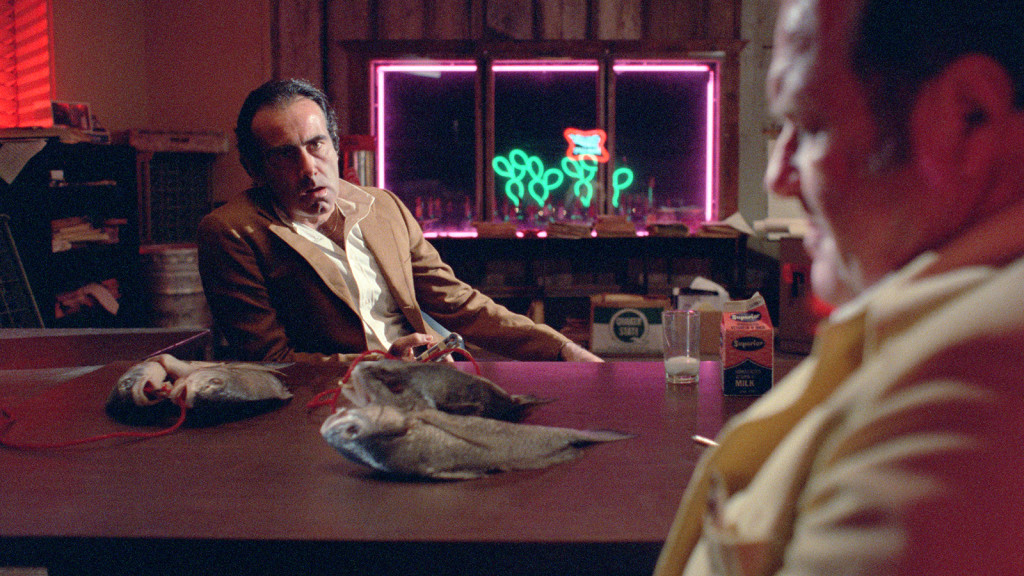
John C. Reilly and Philip Baker Hall in HARD EIGHT

Paul Thomas Anderson’s Phantom Thread is topping a good many critics’ top ten lists. So it’s a good time to revisit Anderson’s first feature, Hard Eight, a neo-noir from 1996.

In Hard Eight, the down-on-his-luck simpleton John (John C. Reilly) encounters an older loner, Sydney (Philip Baker Hall) in a diner.  The 60ish Sydney, who Has Seen It All, takes pity on the 20-something John and offers to help him get some money.  Sydney takes John to Las Vegas and downloads Sydney’s casino expertise.  John becomes Sydney’s mentee, and eventually gains confidence, some financial security and the hope of a non-trashy future.

But, alas, this is a neo-noir and John can’t leave well enough alone.  He starts making some stupid decisions.   He falls for the cocktail waitress (and trick-turner) Clementine (Gwyneth Paltrow). He starts hanging out with security guy Jimmy (Samuel L. Jackson), who turns out to have a scary side.  Soon these folks get themselves into a dangerous situation WAY over their heads.  Perhaps Sydney knows a way out…

John C. Reilly in HARD EIGHT

Hard Eight works largely because of the characters of John and Sydney and the  performances of John C. Reilly and Philip Baker Hall.  Reilly is especially gifted at playing a goofy naif.

Hall is brilliant as Sydney, the wise loner.  We imagine that Sydney has operated in cynicism for decades, but something, perhaps some fundamental, accumulated loneliness, causes him to reach out and adopt John as his protege.  It’s as if Sydney suddenly feels the need to father  someone.  Why does he pick John as his son-figure when it’s clear that John has a limited ceiling?  Is it that John is just available when Sydney gets the urge?

Philip Baker Hall in HARD EIGHT

Paul Thomas Anderson’s career exploded with his next movie Boogie Nights, also with Reilly, Hoffman and Hall.  Then Anderson went on to make Magnolia, Punch-Drunk Love, There Will Be Blood, The Master and, now, Phantom Thread.  That’s a body work remarkably filled with originality.

Boogie Nights was also the breakthrough movie for both Reilly and Philip Seymour Hoffman.  Hoffman, of course, was later nominated for an Oscar in Anderson’s The Master after winning one for Capote.

Just before Hard Eight, a 23-year-old Paltrow had a part in Se7en.  But in the two years after Hard Eight, she was cast in Emma, Great Expectations, A Perfect Murder and her Oscar-winning role in Shakespeare in Love.

Jackson had already broken through with his performance as Gator the crackhead in Jungle Fever and defined his career as the iconic hit man Jules in Pulp Fiction.  But Jackie Brown, Star Wars, Shaft, The Hateful Eight and 70 more feature films were still ahead.

By Hard Eight, Hall had been working steadily for 26 years – almost all on TV.  He was best know for his Richard Nixon in Robert Altman’s 1984 Secret Honor.  AfterHard Eight, he went on to roles in Magnolia, The Talented Mr. Ripley, Rules of Engagement, The Matador and Zodiac.  And, in his 80s, he became instantly recognizable as Walt Kleezak in Modern Family.

Hard Eight is available to stream from Amazon, iTunes, Vudu, YouTube and Google Play.

Gwyneth Paltrow and Philip Seymour Hoffman in HARD EIGHT

PHANTOM THREAD: rapturous and witty

PHANTOM THREAD

Phantom Thread, starring Daniel Day-Lewis, is Paul Thomas Anderson’s rapturously beautiful and unexpectedly witty story of a strong-willed man and two equally strong-willed women.

Reynolds (Day-Lewis) is a dressmaker to the rich and famous in 1950s London.  His unmarried sister Cyril (Lesley Manvilla) runs their home and takes care of business affairs.  On a foray to a provincial resort cafe, Reynolds is taken by the breakfast waitress Alma (Vivky Krieps), and brings her back to London with him.  Barely tolerated at first by Cyril, Alma becomes Reynold’s muse – until she isn’t.

In the movie’s first two minutes, Anderson establishes Alma as vibrant, Reynolds as fastidious and Cyril as commanding.  Phantom Thread is about the three characters’ relative power in the interpersonal relationships.  Alma starts at the very bottom, but changes the power balance in a quite novel way.

Daniel Day-Lewis creates a wonderfully watchable character in Reynolds.  He uses his creativity as an excuse for license to get his way in every regard.  Cyril indulges Reynolds and keeps him in a cocoon.  He says that a distraction at breakfast can ruin his productivity for an entire day.  Anderson heightens the volume of breakfast noises to show how grating the sound of buttering toast is to Reynolds.  It’s very funny.

Reynolds is so obsessive that, when he brings a date back to his place, he DRESSES her instead of undressing her.

The formidable Cyril is as chilly as February in the Yukon.  She is a woman of very few words, but her cutting observations and acid reactions are very, very funny.  The great actress Lesley Manville gets the most out of very brief lines – and, often, a mere silent look.  Manville’s performance is reason enough to see Phantom Thread.

The Luxembourgian actress Krieps (never thought I would write the adjective Luxembourgian) has received much critical buzz.  She is adequate as Alma, but I wouldn’t cross the street to see her next movie.

Reynolds adorns women in impressive dresses throughout Phantom Thread – the costume design is stellar. Anderson’s frequent collaborator, Johnny Greenwood of Radiohead, supplies a beautiful score.  The total effect of visual imagery and music is opulent, so opulent as to remind me of Max Ophuls’ The Earrings of Madame de… and Luchino Visconti’s The Leopard.

I saw Phantom Thread at a special SFFILM screening (70mm print!) with Paul Thomas Anderson in attendance.  Anderson said that he set out to make a gothic romance like Hitchcock’s Rebecca.   The kernel of the story was a strong-willed man who becomes nicer when laid low by illness – and his wife prefers him that way.  Anderson said that he was further inspired by the period British films The Passionate Friends and I Know Where I’m Going.

In a very nice touch, Anderson dedicated Phantom Thread to his late friend, the director Jonathan Demme.

Phantom Thread is a beautiful and witty film – one of the best of 2018

THE POST: riveting thriller and revelatory personal portrait

Tom Hanks and Meryl Streep in THE POST

The Post may be a docudrama, but it plays as a thriller and an astonishingly insightful portrait of Katharine Graham by Meryl Streep. It’s one of the best movies of the year – and one of the most important.

Essentially, this movie is about a corporate decision, but master storyteller Steven Spielberg sets it up as a tick-tock, high stakes thriller.  Washington Post publisher Katharine Graham (Streep) must decide whether to publish the Pentagon Papers at a moment when her company is most vulnerable to market forces and government intimidation.  Nothing less than the American principle of freedom of the press hangs in the balance.

The Post also delivers the personal and feminist transformation of Katharine Graham, learning to move beyond her Mad Men Era roles as wife/mother/socialite andto , for the first time, assume real, not titular, command of a business empire.  And she goes All In on the ballsiest gamble any CEO could make.  To say that Streep brings Graham to life is inadequate.  Streep IS Graham. It sometimes seems like Streep can get an Oscar nomination without even making a movie, but this performance is one of Streep’s very best.

Spielberg surrounds Streep with a dazzling cast.  Tom Hanks lowers the pitch of his voice and becomes the swashbuckling editor Ben Bradlee.  Tracy Letts gives us another fine performance, this time as Graham’s financial guru Fritz Beebe.  As Bradlee’s second wife Tony, Sarah Paulson ignites a monologue with her piercing eyes.

Bruce Greenwood is quite brilliant as Robert McNamara, Graham’s old friend and the architect (and unwilling sta) of the Pentagon Papers. Greenwood is such an overlooked actor, and he’s so reliably good (he was even good in Wild Orchid, for Chrissakes).

The Pentagon Papers was the 7,000-page secret official history of the American involvement in the Vietnam War. Commissioned by then Defense Secretary Robert McNamara, the Pentagon Papers chronicled the years of bad decisions by the Truman, Eisenhower, Kennedy and Johnson administrations and, especially, the deceitfulness of JFK’s and LBJ’s public optimism about the War.  The truth was that the US government knew that the war was unwinnable and that it was only prolonged because nobody knew how to get out while saving face.  The US President in 1971, Richard Nixon, was following the same course, unnecessarily wasting the lives of another 20,000 Americans during his term of office; the ruthless Nixon and his henchman Henry Kissinger were desperate to keep the Pentagon Papers secret.  A private sector defense expert, Daniel Ellsberg, had access to the Pentagon Papers and sought to have them published, and The Post tells this story, which takes the audience from a jungle firefight into the courtroom of the US Supreme Court.

Baby Boomers will appreciate being transported back to quaint 1971 technology: typewriters, one-page-at-a-time Xerox machines, rotary pay phones, real typeset and ink presses.  (And cigarette smoking in restaurants and cigars in the workplace.)

I’ve also written an essay on some of the historical figures and events depicted in The Post: historical musings on THE POST.

The Post is worth seeing for Streep’s performance, for the history (incredibly important at this moment in the nation’s history) and for the sheer entertainment value.  One of the year’s best.


historical musings on THE POST

Meryl Streep, Tracy Letts and Tom Hanks in THE POST

Watching The Post kindled some thoughts on the historical figures depicted in the movie.

Fritz Beebe, played by Tracy Letts in the movie, was a valued business advisor to Katharine Graham. Decades later Katharine Graham told Terry Gross on NPR’s Fresh Air that Beebe made a half-hearted argument against publishing the Pentagon Papers; his intentional lack of forcefulness gave her the space to make the decision to publish. This dynamic is captured perfectly in The Post.  In the same interview, Katharine Graham gives her own version of the Pentagon Papers publication by the Washington Post; the movie hews closely to this account.

Watching Bruce Greenwood’s fine performance as former Defense Secretary Robert McNamara reminded me of the Errol Morris documentary: The Fog of War: Eleven Lessons from the Life of Robert S. McNamara. In 2003, Morris got McNamara to sit in front of a camera and spill the “lessons learned” from his Vietnam War mistakes. It was an exercise in confession for McNamara. But when listening to McNamara’s “if we had only known then…”, I kept remembering, enraged, that we DID know then. And the Pentagon Papers showed that McNamara, especially, knew most of this stuff then. I have never been so infuriated leaving a theater.

Now Tom Hanks in The Post and Jason Robards in All the President’s Men are wonderful as the swashbuckling editor Ben Bradlee. If you want a dose of the real Ben Bradlee, search YouTube for “Ben Bradlee Charlie Rose” – you’ll find a 53-minute 1996 interview with Bradlee, including his first-hand account of the Pentagon Papers episode.

If you perform a Google Image search for “ben bradlee antoinette pinchot”, you’ll find the real photo of Ben Bradlee and Antoinette “Tony” Pinchot Bradlee with Jack and Jackie Kennedy.  In the movie, Tom Hanks and Sarah Paulson are Photo-shopped into the picture in the Bradlee’s Georgetown townhouse.

Daniel Ellsberg (portrayed in The Post by Matthew Rhys) is still around and has written a new book. Last month, Ellsberg agave his own Fresh Air wide-ranging interview, in which he detailed the painstaking process of Xeroxing the 7,000 pages of the Pentagon Papers one page at a time and cutting the “Top Secret” off each page with scissors.

And to nitpick, here’s the one historical inaccuracy that I could find in the movie – some New York City hippie protester in 1971 gives Mario Savio’s famous “bodies on the gears” speech, which Savio actually delivered seven years earlier in Berkeley .

I, TONYA: we can laugh, but must not judge

Margot Robbie in I, TONYA

The riotously funny docucomedy I, Tonya relives the tawdry story of figure skating star Tonya Harding, brought to disgrace when her supporters injured her competitor Nancy Kerrigan.  Margot Robbie (significantly glammed down) is exceptional as Tonya Harding.

Harding, of course, came from scruffy working class roots in Portland.  With disadvantages of class and poor education,  Tonya was unequipped to navigate a world dominated by middle and upper classes.  In I, Tonya, she refers to herself as a redneck and acts like trailer trash – really unapologetic trailer trash.

But I, Tonya adds another level to Tonya’s story.   In I, Tonya, Tonya’s mother LaVona (Allison Janney) is more than a driven, severe stage mother – she’s unrelentingly abusive, both emotionally and physically.  To make matters worse, Tonya escapes LaVona’s perpetual nastiness by running away into the arms of Jeff (Sebastian Stan) and his chronic domestic violence.  At one point, Tonya reflects, “All I knew was violence“.

The beauty and effectiveness of Steven Rogers’ screenplay is that we can laugh at misadventures of these folks while deeply sympathizing with Tonya – scarred and shaped by abusive experiences.  The characters all break the fourth wall and speak directly to the audience – very effective here.  Rogers and director Craig Gillespie maintain a perfect balance between the laughs and the abuse – sometimes at the same time.  This is the Aussie Gillespie’s best work.

Alison Janney in I, TONYA

LaVona’s spiteful bile is so extreme that it’s darkly funny.  Allison Janney, who is superb as this poisonous woman,  is probably America’s least vain actor. And nobody has ever had a better sense of comic timing.  She made me laugh out loud the first time I saw her, in 1998’s Primary Colors, and she keeps the audience guffawing in I, Tonya.

Jeff’s friend Shawn (a brilliant Paul Walter Hauser), who “masterminds” the attack on Kerrigan,  is so catastrophically stupid that he is unable to comprehend the profundity of his own stupidity.  In the closing credits, we get to glimpse the real LaVona and the real Shawn.

Julianne Nicholson is excellent as Tonya’s hyper-polite coach.  In a very brief role, Ricky Russert brilliantly brings out the glorious combination of panic and idiocy of “hit” man Shane Stant.

Once Tonya has been hounded by the media and suffered complete public humiliation, she faces the camera and says to the audience, “you have been my abusers“.  It’s not preachy or overdone, and this brief moment is crisp and unforgettable.  We have been laughing at her, but who are we to judge this survivor of family violence?

I, Tonya is captivating combination of sympathy and hilarity – and one of the year;s best films.

CALL ME BY YOUR NAME: first love in a luscious Italian summer

Timothée Chalamet and Armie Hammer in CALL ME BY YOUR NAME

Call Me by Your Name is an extraordinarily beautiful story of sexual awakening set in a luscious Italian summer.  The film is gorgeous and magnificently well-acted, but flawed.

Each year, the family of 16-year-old Elio (Timothée Chalamet) spends the summer in a villa in Northern Italy.  Elio’s father is an American professor of ancient Greek and Roman culture, and each summer he invites a different grad student to live in their villa and work on scholarly pursuits.  In this summer of 1981, that lucky grad student is the 26-year-old Oliver (Armie Hammer).  Elio is attracted to Oliver, who is a closeted gay man. Oliver is attracted to Elio, but initially resists Elio’s overtures.  What follows between the two of them is an enthralling and authentic exploration of first love.

Timothée Chalamet is really perfect as Elio, a musical prodigy who is beating off the girls with a stick.  Even really handsome and talented 17-year-olds have some awkwardness, especially while they’re trying too hard to be cool.  Chamalet captures that perfectly, along with the obsessive longing of a first romance.  (Chalamet is also in Lady Bird, where he plays the dreamy kid who plays in a band, the object of Lady Bird’s desire.)  Armie Hammer is also superb as the more worldly Oliver, whose external confidence masks inner conflicts.

Timothée Chalamet in CALL ME BY YOUR NAME

The story of the two main characters would have made a perfect film, but famed screenwriter James Ivory adds some distracting implausibility with the other characters.  First, there are Elio’s impossibly cool and understanding parents (Michael Stuhlbarg and Amira Casar) who practically push their teen son into the arms of an older man; nobody has parents like that, especially TWO of them.  (And, yes, I did understand the dad’s motivation, made almost explicit in his final monologue).  Second, Elio hurts the feelings of a girl (in a way that almost every male has hurt some girl).  Later, she forgives him and it’s all made to be okay.  This is just too convenient for Elio, and I didn’t buy it.

And then there’s one of my own movie pet peeves.  I generally despise musical interludes in movies, when the dialogue is suspended and a song is played over a montage of imagery.  This usually indicates a lack of imagination in the story-telling.  A movie gets negative bonus points from me when the music is an insipid pop ballad.  In Call Me by Your Name, there are two such Euro-pop interludes.

On the other hand, the depiction of the Italian countryside, with its rustling breezes, orchards heavy with fruit, ancient buildings and  is pure travel porn.  I think that The Wife would have walked out of Call Me by Your Name – not because she wouldn’t have liked it – but to make reservations for a return to Tuscany.  Director Luca Guadagnino (A Bigger Splash, I Am Love) has a gift for making his native Italy unbearably attractive on the screen.  Between the work of Guadagnino and Paolo Sorrentino (The Great Beauty), Italy has been well-celebrated in recent films.

Call Me By Your Name is a very good movie, and the core story of Elio and Oliver is great cinema.

Movies to See Right Now

Margot Robbie in I, TONYA

Many of the best movies of the year are in theaters right now, and here are the very best.  The links for Phantom Thread, Call Me By Your Name, The Florida Project and I, Tonya will go live throughout this weekend:

        • Pixar’s Coco is a moving and authentic dive into Mexican culture, and it’s visually spectacular.
        • The Shape of Water, Guillermo del Toro’s imaginative, operatic inter-species romance may become the most-remembered film of 2017.
        • Lady Bird , an entirely fresh coming of age comedy that explores the mother-daughter relationship – an impressive debut for Greta Gerwig as a writer and director.
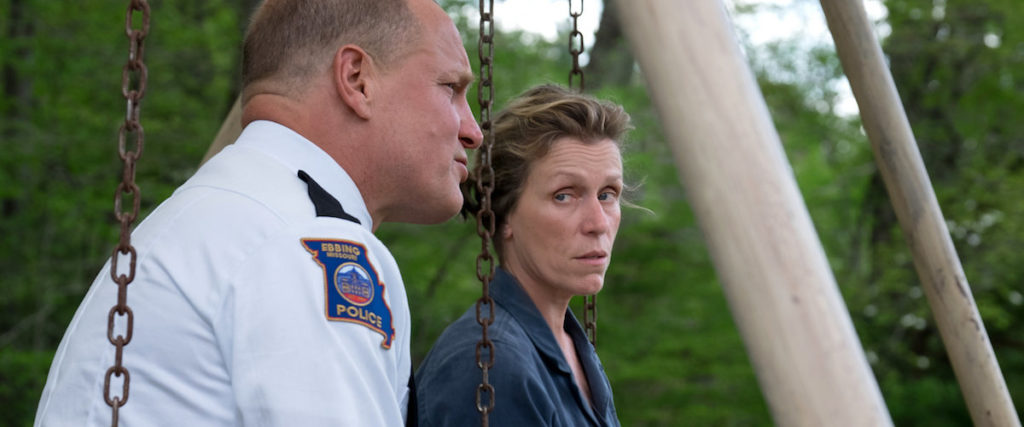
        • Three Billboards Outside Ebbing, Missouri a powerful combination of raw emotion and dark hilarity with an acting tour de force from Frances McDormand and a slew of great actors.
        • I, Tonya is a marvelously entertaining movie, filled with wicked wit and sympathetic social comment.
        • Phantom Thread, starring Daniel Day-Lewis, is Paul Thomas Anderson’s rapturously beautiful story of a strong-willed man and two equally strong-willed women; unexpectedly witty.
        • The Florida Project is Sean Baker’s remarkably authentic and evocative glimpse into the lives of children in poverty, full of the exuberance of childhood.
        • Darkest Hour, Gary Oldman brings alive Winston Churchill in an overlooked historical moment – when it looked like Hitler was going to win WW II.

        Here’s the rest of my Best Movies of 2017 – So Far. Most of the ones from earlier this year are available on video.

        Daniel Day-Lewis and Vicky Krieps in PHANTOM THREAD

        Other current choices:

        • The Disaster Artist, James Franco’s hilarious docucomedy about the making of one of the most unintentionally funny movies of all time.
        • The ambitious satire The Square.
        • Call Me By Your Name is an extraordinarily beautiful story of sexual awakening set in a luscious Italian summer, but I didn’t buy the impossibly cool parents or the two pop ballad musical interludes.
        • Murder on the Orient Express is a moderately entertaining lark.
        • Novitiate, the tediously grim story of a seeker looking for spiritual love and sacrifice, with a sadistic abbess delivering too much of the latter.

        Here’s something for those who have seen Darkest Hour. On January 10, Turner Classic Movies presents Richard Attenborough’s Young Winston (1972), with Simon Ward as the young Winston Churchill. As a young man, Churchill was already risking life and limb to gain celebrity and build a public reputation. Young Churchill depicts his brief career in the military as an insubordinate daredevil in India, Sudan and the Boer War. It’s a good story, and, as a bonus, Simon Ward bears a remarkable physical resemblance to the young Churchill.

        Simon Ward in YOUNG WINSTON

2017 at the Movies: farewell to the icons

Turner Classic Movies host Robert Osborne

As important as are filmmakers, so are the great film popularizers. All movie fans owe a debt of gratitude to Robert Osborne, the longtime host of Turner Classic Movies. Osborne got his start in Hollywood as an actor, developed many personal friendships with icons of classic cinema and became one of the first popular movie historians. Here’s his NYT obit. Virtually all of his obits describe him as “a gentleman”, a throw-back to a less course culture. He didn’t shy way from referring to Hollywood scandals (Gloria Grahame, Mary Astor and the like) but did not take glee in them.


Jeanne Moreau in ELEVATOR TO THE GALLOWS

At the beginning of her career, Jeanne Moreau capped the best of French film noir as the gangster’s unreliable squeeze in Touchez pas au grisbi and sparked neo-noir with Elevator to the Gallows.  Then we Americans saw her as the face of the European art film with Malle’s Elevator and The Lovers, Antonioni’s La Notte, Truffaut’s Jules and Jim and Bunuel’s Diary of a Chambermaid – all between 1958 and 1964.  Her wide-ranging body of work included Orson Welles’ best Shakespeare movie Chimes at Midnight.  And, for a Guilty Pleasure, there’s the silly 1965 Mexican Revolution action comedy Viva Maria!


Harry Dean Stanton in PARIS, TEXAS

With exactly 200 screen credits on IMDb, Harry Dean Stanton was a prolific character actor who improbably became a leading man at age 58 with his masterpiece Paris, Texas.   Harry Dean often seemed like that uncle/neighbor/mentor who had Lived A Life but would let you inside and let you learn from his journey.  He was ever accessible and always piqued the audience’s curiosity about his characters.  Roger Ebert and Gene Siskel once posited that a movie could not be entirely bad if Harry Dean Stanton were in it.

The best movies of 2017

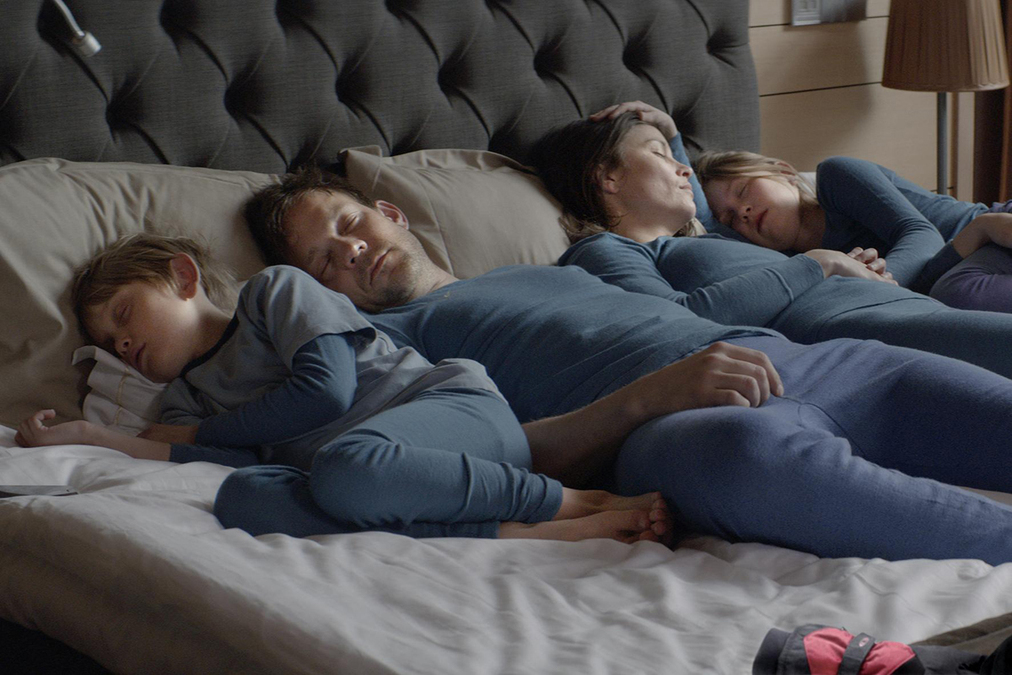
Javier and Ricardo Darin in TRUMAN
Javier Cámara and Ricardo Darin in TRUMAN

Every year, I keep a running list of the best movies I’ve seen this year. I usually end up with a Top Ten and another 5-15 mentions. Here’s last year’s list.

To get on my year-end list, a movie has to be one that thrills me while I’m watching it and one that I’m still thinking about a couple of days later.

I’m still looking forward to seeing films that are candidates for my final list, including Call Me By Your Name, Thelma, Phantom Thread, The Post and Film Stars Don’t Die in Liverpool.  You can see the current list complete with video availability at my Best Movies of 2017.  Here’s the year-end list:

  1. Truman
  2. The Big Sick
  3. The Shape of Water
  4. Wind River
  5. Dunkirk
  6. Coco
  7. Three Billboards Outside Ebbing, Missouri
  8. Lady Bird
  9. The Founder
  10. Norman: The Moderate Rise and Tragic Fall of a New York Fixer

And the rest: Lucky and The Sense of an Ending

Sally Hawkins in THE SHAPE OF WATER

I try not to tease you with movies that you can’t find, but I need to acknowledge two sure-fire crowd-pleasers from this year’s Cinequest: Quality Problems and For Grace. Both films are emotionally authentic, intelligent and funny, but neither has distribution so far. I will feature them if and when they become available on video.

And here’s a special mention. It’s not on my list, but The Lost City of Z deserves credit for reviving the genre of the historical adventure epic, with all the spectacle of a swashbuckler, while braiding in modern sensitivities and a psychological portrait.

Brooke Purdy in QUALITY PROBLEMS

Happy Anniversary to The Wife!

The Wife and The Movie Gourmet celebrating our anniversary

Happy Anniversary to The Wife, also known as Lisa The Love of My Life!

Once again, she tolerated my spending huge chunks of time at Cinequest, the San Francisco International Film Festival, Noir City, the SF Jewish Film Festival and the Mill Valley Film Festival.

We shared some of my favorite movie experiences this year.

  • We discovered the obscure Norwegian gem All the Beauty at Cinequest, which was one of EIGHT Cinequest screenings that she made it to.
  • She accompanied me to see the premiere of my favorite Cinequest film, Quality Problems, and go out for drinks with the filmmakers afterward.
  • Together, we power-binged through seasons of Happy Valley, Broadchurch, Transparent, Victoria and The Crown.
  • She overcame decades of resistance to watching The Deer Hunter, and we revisited Lantana, a movie that we enjoyed for the first time early in our marriage.
  • She didn’t like (or finish) Toni Erdmann, which I loved, and she argued that I was selling Fences way short.  She sure liked Elle, though!
  • I’m always hoping, hoping, hoping that she’ll enjoy MY choice for us to watch, so I was completely gratified by her LOLs during The Disaster Artist – and now I get to bellow, “You’re tearing me apart, Lisa!“.

And, as always, she still teases me for “the Romanian abortion movie”, “the Icelandic penis movie” and “the Ukrainian deaf movie”.

She’s the biggest fan and supporter of this blog, and I appreciate her and love her. Happy Anniversary, Honey!