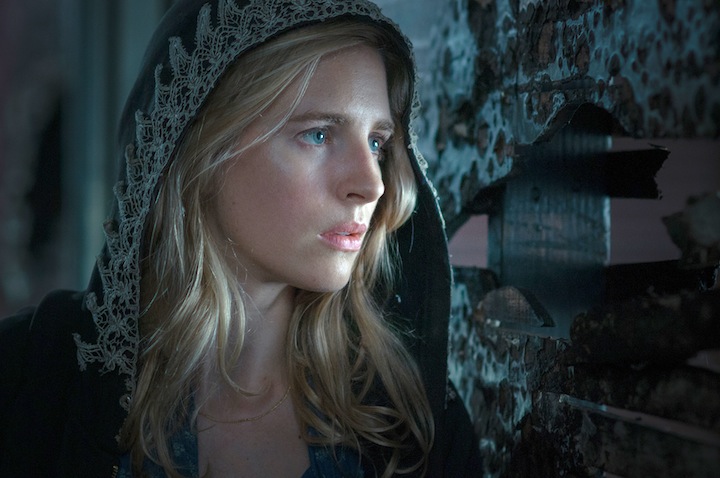
The East is a smart and gripping thriller that explores both our response to corporate criminality and the unfamiliar world of anarchist collectives. Brit Marling plays a brilliant up-and-comer in an industrial security firm who goes undercover to hunt down and infiltrate a band of eco-terrorists named The East.
The East seeks to brings deadly personal accountability to corporate leaders who injure people and the environment. These aren’t Hollywoodized corporate villains – all of the corporate crimes depicted in the movie have occurred in real life. Lesser filmmakers would have made The East into a revenge fantasy with a Robin Hood-like merry band of earnest kids – or a conventional espionage procedural, hunting down a gang of wild-eyed terrorists.
The East is so good because it explores our helplessness in the face of corporate malfeasance. The corporate targets deserve to be held accountable, and their crimes cry out for punishment. Yet the vigilante violence of The East is clearly unacceptable. No self-selected group of avengers – no matter how legitimate their grievance – should be able to inflict extra-legal violence. (If you don’t think so, just substitute white supremacist militia, fundamentalist Mormons or Chechen immigrants for the hippies in this movie.)
We view this dilemma through the perspective of Marling’s protagonist, whose own views evolve through the course of the story. Marling co-wrote the screenplay with director Zal Batmanglij. Marling and Batmanglij spent over three months in an anarchist collective, living a cash-free life off the grid; that experience has paid off with an unusual authenticity in the depiction of the anarchist lifestyle.
Marling and Batmanglij also co-wrote the indie The Sound of My Voice, and Marling wrote and starred in last year’s sci-fi hit Another Earth. Here, they have created a set of original characters and invented some really ingenious plot points, especially a very powerful initiation dinner and an astounding bit of tradecraft involving dental floss.
Besides Marling, Ellen Page is especially good as one of the eco-terrorists. Julia Ormond is brilliant in a tiny part as a business executive. There are other fine performances by Patricia Clarkson as Marling’s nasty boss and by Alexander Skarsgaard and Toby Kebell as anarchists.
There may be some holes in the plot, but The East is such a tautly crafted thriller that we don’t have time to notice. There is one unfortunately corny scene between Ellen Page’s character and Jamey Sheridan’s (he’s become the Go To Guy to play entitled white male scumbags). But those are quibbles – The East is a very strong film.
The East is available on DVD from both Netflix and Redbox and streaming from Amazon, Vudu, iTunes, GooglePlay and other VOD outlets.
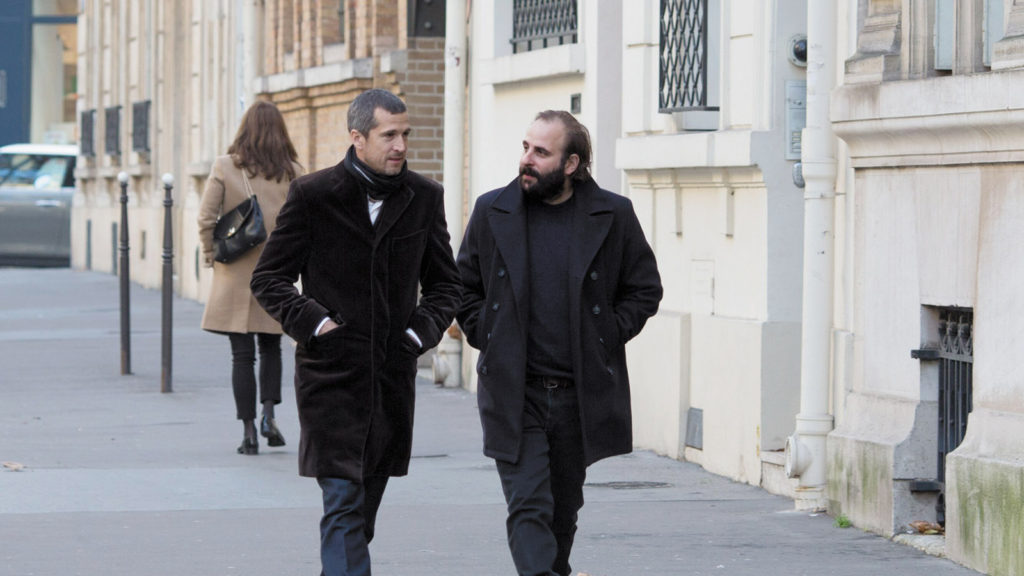
Guillaume Canet (left) and Vincent Macaigne in NON-FICTION
I finally got around to watching writer-director Olivier Assayas’ Non-Fiction. I had been eager to see it because I generally find the French actor Vincent Macaigne hilarious, and I will pretty much watch Juliette Binoche in anything. My conclusion: Olivier Assayas has wasted too many hours of my life, and I am over his films.
Non-Fiction is a comedy of manners that revolves around the once-successful novelist Leonard, whose books are very lightly disguised re-tellings of his own sordid romantic life, and Leonard’s publisher Alain (Guillaume Canet). Alain is married to Selena (Juliette Binoche), an actress in TV cop shows. Everybody sleeps with somebody else’s partner, and everyone wrings their hands over e-books, audio books, blogs and the impending death of the book industry. That’s about it. None of it is engaging.
In 2006, Assayas, a veteran screenwriter, wrote and directed an okay segment (the one with Maggie Gyllenhaal as an actress pining for her drug dealer) in the delightful anthology Paris, je t’aime. He followed it in 2008 with the fine family drama Summer Hours. And then, in 2011, he did the excellent true crime mini-series Carlos. This was a promising start, and he developed a fan base of admiring critics.
But since then, Assayas has wasted brilliant performances by Binoche and Kristen Stewart in the Clouds of Sils Maria and Personal Shopper – two muddled messes that masquerade as cinema. And now, the off-putting Non-Fiction. I am over this guy.
SPOILER: There is one funny moment in Non-Fiction, which I shall now spoil for you, so you won’t need to watch the movie. In the last quarter of the film, the characters decide to publish an audio book read by a celebrity, and they aspire to get Juliette Binoche (who is, of course, in this scene playing her character). I’ll concede that this is a genuinely witty moment, if self-referential.
Non-Fiction is now streaming on Amazon and other platforms.
The family dramedy The Farewell is an audience-pleaser.
The Last Black Man in San Francisco is an absorbing exploration of inner lives reacting to a changing city – and it’s one of the best films of the year.
ON VIDEO
My Stream of the Week is Werner Herzog’s documentary Little Dieter Needs to Fly,a portrait of Dieter Dengler’s unimaginable life journey, highlighted by one of history’s most amazing feats of human endurance. The brisk 80 minutes of Little Dieter Needs to Fly can be streamed on Criterion, the Amazon Fandor channel, iTunes, Vudu and Google Play.
ON TV
On August 25, Turner Classic Movies is presenting the best of Dustin Hoffman: The Graduate and Tootsie, of course, and also Papillon, the riveting Marathon Man and the underappreciated Straight Time. Check out the 1985 version of Death of a Salesman with Hoffman as Willy Loman, supported by John Malkovich, Stephen Lang and Kate Reid. Attention must be paid.
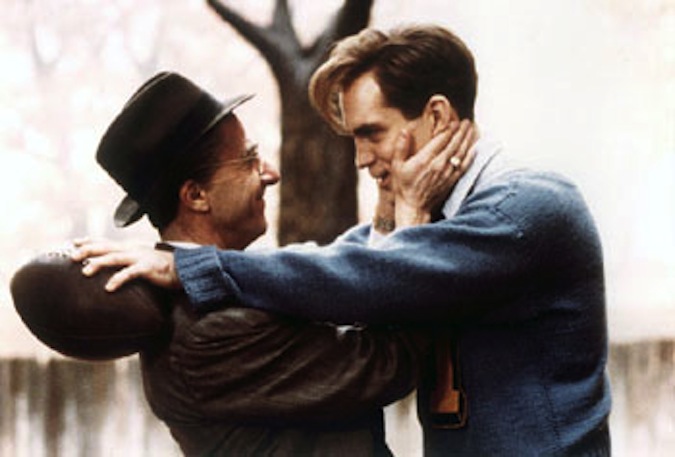
Dustin Hoffman and John Malkovich in THE DEATH OF A SALESMAN
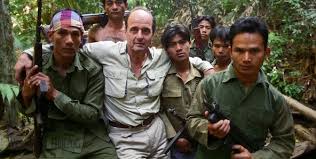
Werner Herzog’s documentary Little Dieter Needs to Fly is a portrait of Dieter Dengler’s unimaginable life journey, highlighted by one of history’s most amazing feats of human endurance. With a childhood (as Herzog’s) in WWII Germany, Dengler survived US bombing raids that reduced his hometown to rubble; a glimpse of an American pilot spurred Dengler’s obsession with aviation. His drive to fly led him to emigration and a career as a US Navy aviator. Shot down in the Vietnam War, Dieter was captured and tortured. He made a daring escape, and, after the war, pursued civilian aviation; we finally see Dieter in his Marin County home with its odd survivalist features . Unsurprisingly, given the traumas he endured, Dieter has his quirks.
But the core of Little Dieter Needs to Fly is the amazing jungle escape. It was a 23-day ordeal with a manhunt hot on his heels. His 167-pound frame was whittled to 98 pounds. Herzog takes Dieter back to Southeast Asia and pays the locals to re-enact the capture and chase.
Werner Herzog, known for his German New Cinema art house hits of the 70s and 80s (Aguirre:The Wrath of God, Strozek Nosferatu the Vampyre, Fitzcarraldo), switched gears in 1997 with Little Dieter Needs to Fly and followed it with the masterpiece Grizzly Man. Since, Herzog has become a prolific and masterful documentarian.
Note: It’s not in Little Dieter, but, four years after the 1997 release of the film, Dieter was diagnosed with ALS and died from a self-inflicted gunshot.
The brisk 80 minutes of Little Dieter Needs to Fly can be streamed on Criterion, the Amazon Fandor channel, iTunes, Vudu and Google Play.
Peter Fonda has died at age 79. Fonda, well-known as a son and brother of film mega-stars, had a prolific career (116 screen credits) dotted with some spectacular successes.
Fonda’s most eternal legacy will be Easy Rider, a film he wrote and starred in, which was the seminal film of the Counter-culture. Most importantly, Easy Rider propelled the staggering movie studios into empowering a new generation of auteur filmmakers.
Before Easy Rider, Fonda had moved from traditional Hollywood male ingenue roles into a couple of Roger Corman exploitation films, The Trip and Wild Angels. In a rich third act, Fonda was deservedly Oscar-nominated for his starring role in the 1997 indie Ulee’s Gold. He also delivered fine supporting performances in The Limey (1999) and 3:10 to Yuma (2007).
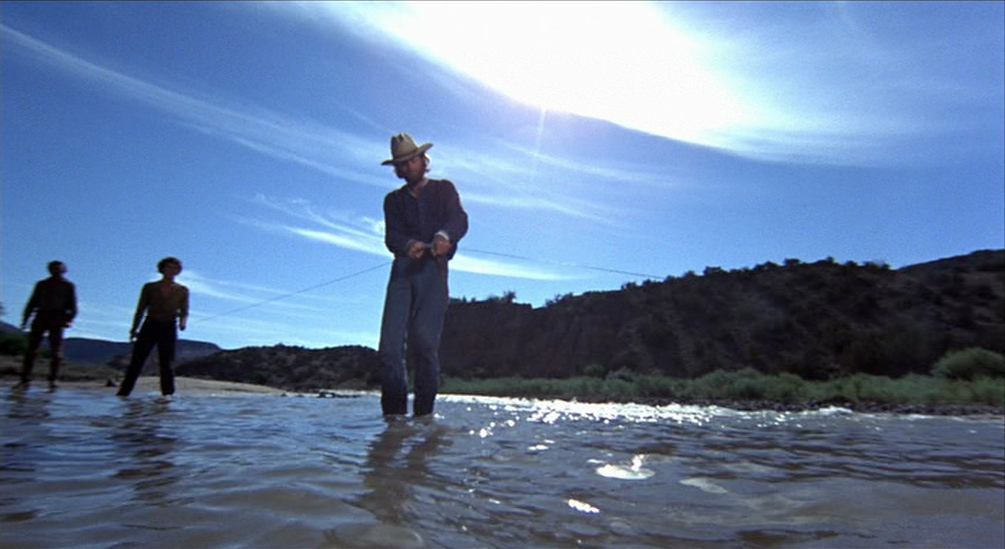
Fonda also directed three films, including his grievously underrated Western The Hired Hand (1971). Verna Bloom, who also died this year, plays a woman abandoned on her hardscrabble ranch by her roaming husband (Fonda). When he returns with his trail buddy (Warren Oates), she will only allow him back as a hired hand. It’s a moody and captivating film, beautifully shot by Vilmos Zsigmond. The Hired Hand is available on DVD from Netflix; the DVD is also available for purchase.
The family dramedy The Farewell is an audience-pleaser.
The Last Black Man in San Francisco is an absorbing exploration of inner lives reacting to a changing city – and it’s one of the best films of the year.
ON VIDEO
My Stream of the Week is the Danish director Susanne Bier’s 2006 After the Wedding (Efter brylluppet) with the charismatic Mads Mikkelsen. There’s also a remake – a big Hollywood remake to be released this Friday also called After the Wedding. See this Danish original. After the Wedding was nominated for Best Foreign Language Oscar. After the Wedding, which I had listed as the second-best movie of 2007, can be streamed from Criterion and Amazon.
ON TV
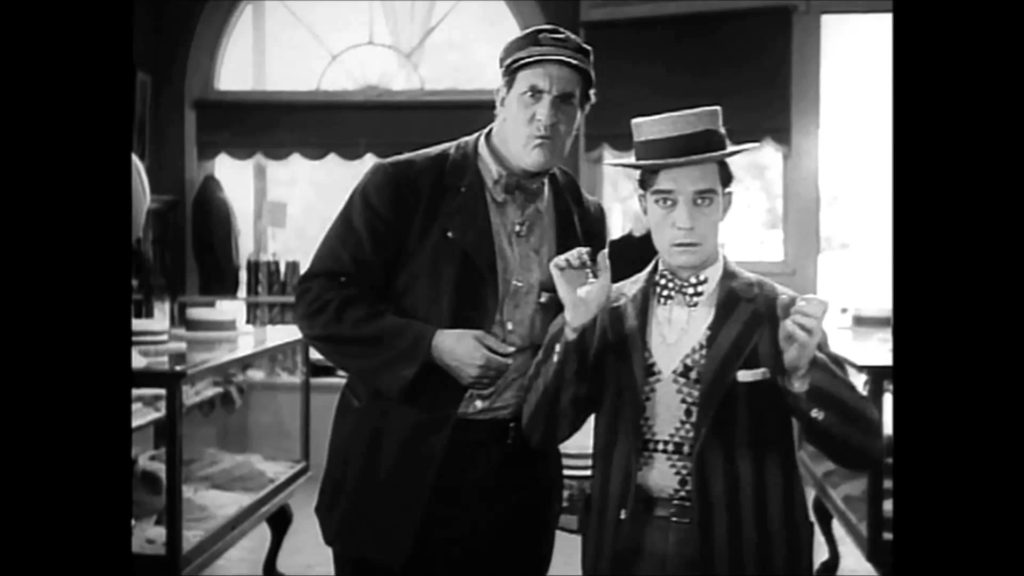
On August 19, Turner Classic Movies presents an evening of Buster Keaton that is one of the best programs that TCM has ever curated. First, there’s Peter Bogdanovich’s fine 2018 biodoc of Keaton, The Great Buster: A Celebration. I had thought that I had a good handle on Keaton’s body of work, but The Great Buster is essential to understanding it.
TCM follows with five movies from Keaton’s masterpiece period: Sherlock, Jr. (1924), The Navigator (1924), Seven Chances (1925), The General (1926) andSteamboat Bill, Jr. (1928). After 1928, Keaton’s new studio took away his creative control, and his career (and personal life) crashed.
This is a chance to appreciate Keaton’s greatest work. I just wrote about Steamboat Bill, Jr. for this year’s Cinequest. I’ve also recommended Seven Chances for its phenomenal chase scene, one that still rates with the very best in cinema history.
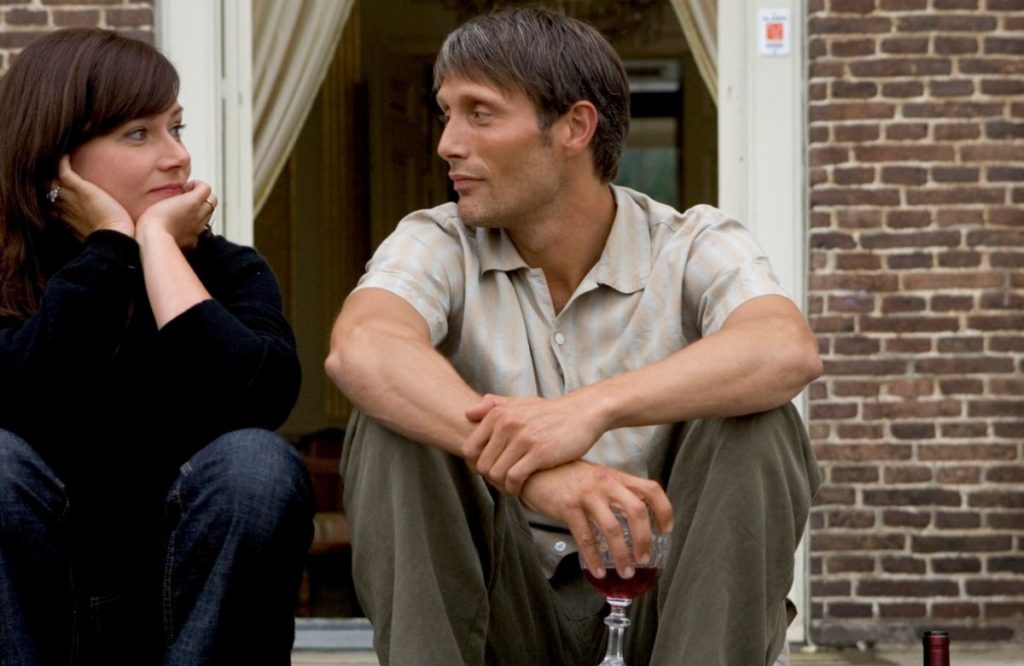
Sidse Babett Knudson and Mads Mikkelsen in Susanne Bier’s AFTER THE WEDDING
The Danish director Susanne Bier’s 2006 After the Wedding (Efter brylluppet) is a successful melodrama in the very best sense. There’s also a remake – a big Hollywood movie to be released this Friday also called After the Wedding, and I can’t say if it’s any good (early reviews are favorable for the stars but not the film overall). But I can tell you that I love, love, love Bier’s 2006 film.
The Danish expat Jacob (Mads Mikkelsen) runs an orphanage in Calcutta, and his non-profit badly needs an infusion of cash. He gets the offer of a huge contribution, but it’s conditioned on his travel to Denmark. There, he meets the prospective philanthropist, the industrialist Jorgen (Rolf Lassgård). Jacob just wants to finalize the money and return to India, but the forceful and wily Jorgen is a difficult guy to close. While apparently stalling, Jorgen sets up Jacob with a driver and a luxury hotel room; this makes the anti-poverty crusader Jacob, a true believer, ever more uncomfortable. Finally, Jorgen invites Jacob to attend the wedding of Jorgen’s daughter. Jacob gets a big surprise when he meets Jorgen’s wife Helene (Sidse Babett Knudsen). A second shocker is unveiled at the wedding by the bride. And then, after the wedding, Jorgen delivers yet another jaw-dropper.
Bier, who co-wrote the film, paces the reveals just perfectly. The plot twists could easily have been preposterous and the ending could have been phony – but Bier skillfully avoids every misstep and delivers a gripping, genuine drama.
Mads Mikkelsen is an especially charismatic actor, and After the Wedding, along with The Hunt, is among his very best work.
After the Wedding was nominated for Best Foreign Language Oscar (and would have won most years, but it had to compete with The Lives of Others). After the Wedding, which I had listed as the second-best movie of 2007, can be streamed from Criterion and Amazon.
Sword of Trust is a wickedly funny comedy with an emotionally powerful personal story embedded. Great performances by Marc Maron and Lynn Shelton. The family dramedy
The Last Black Man in San Francisco is an absorbing exploration of inner lives reacting to a changing city – and it’s one of the best films of the year.
The wildly successful comedy Booksmart is an entirely fresh take on the coming of age film, and a high school graduation party romp like you’ve never seen. Directed and written by women, BTW.
Mindy Kaling’s very smart, privilege-skewering comedy Late Night stars Emma Thompson (and contains a performance gem by John Lithgow).
ON VIDEO
My Stream of the Week is the engaging documentary Satan & Adam, much more than an odd couple story. You can stream it from Netflix and iTunes.
ON TV
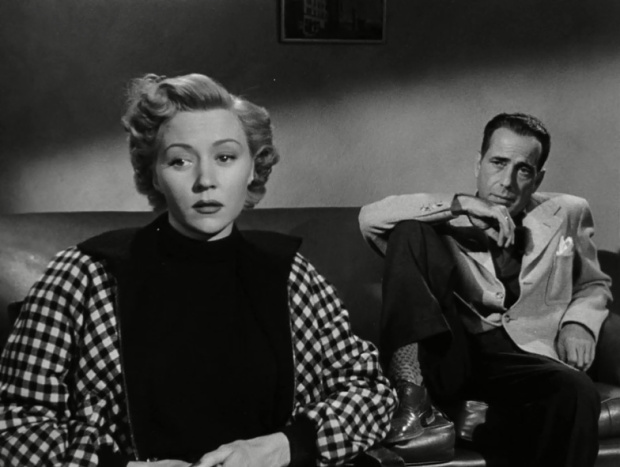
Tonight, Turner Classic Movies airs In a Lonely Place(1950). The most unsettlingly sexy film noiress Gloria Grahame falls for the troubled screenwriter Humphrey Bogart, a guy with a MAJOR anger management issue; once she’s hooked, she realizes that he might be a murderer after all…Nicholas Ray directs. In a Lonely Place justifiably made the BBC’s list of the 100 Greatest American Films. The Czar of Noir Eddie Muller has named it as his #1 noir.
Gloria Grahame and Humphrey Bogart in IN A LONELY PLACE
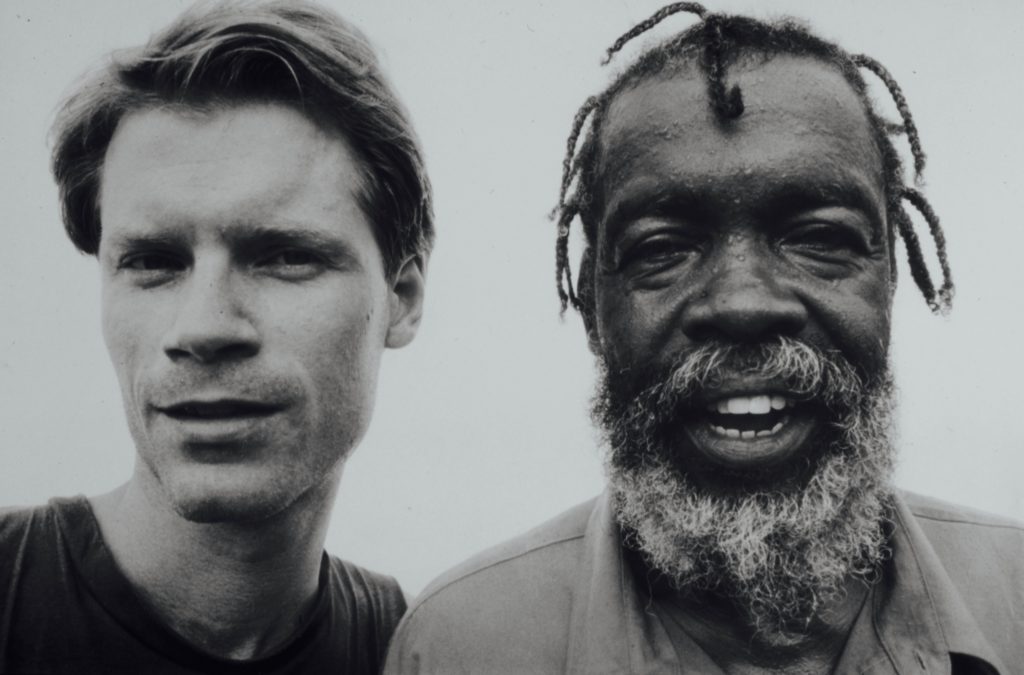
From L:R – Subjects Adam Gussow and Sterling “Mr. Satan” Magee in a still from SATAN & ADAM. Photo courtesy JFI
In the engaging documentary Satan & Adam, Adam, a young white Ivy Leaguer, takes a stroll through Harlem and encounters an older African-American street guitarist, who calls himself Mr. Satan. Adam, a talented amateur blues harmonica player sits in, and soon the odd couple are a busking team, a popular attraction at their regular sidewalk venue in Harlem.
“Mr. Satan” is an alias for an artist of note. Mr. Satan’s talent and the odd couple novelty allows the act to soar to totally unexpected heights. But Satan has emotional and medical issues, and Adam might be a better fit for a career in academia, so this is a story with plenty of unexpected twists and turns. Let’s just say that, over the past 23 years, there have been some significant detours on this journey.
The core of the film is about this unusual relationship and the peculiarities of these two guys, but it also traces the evolving race relations in NYC.
Satan & Adam is told primarily from Adam’s point of view, which is understandable because of Mr. Satan’s periodic unavailability and, when we see him unfiltered, his oft puzzling inscrutability.
I saw Satan & Adam at the San Francisco Jewish Film Festival (SFJFF), a fest noted or its especially rich documentaries. It cn now be streamed from Netflix and iTunes.
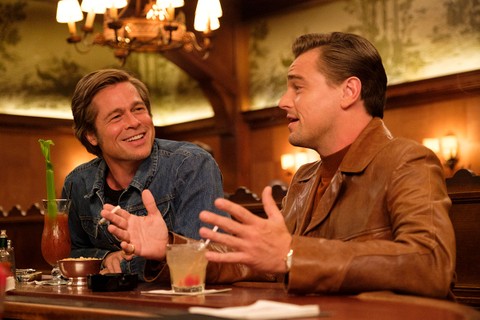
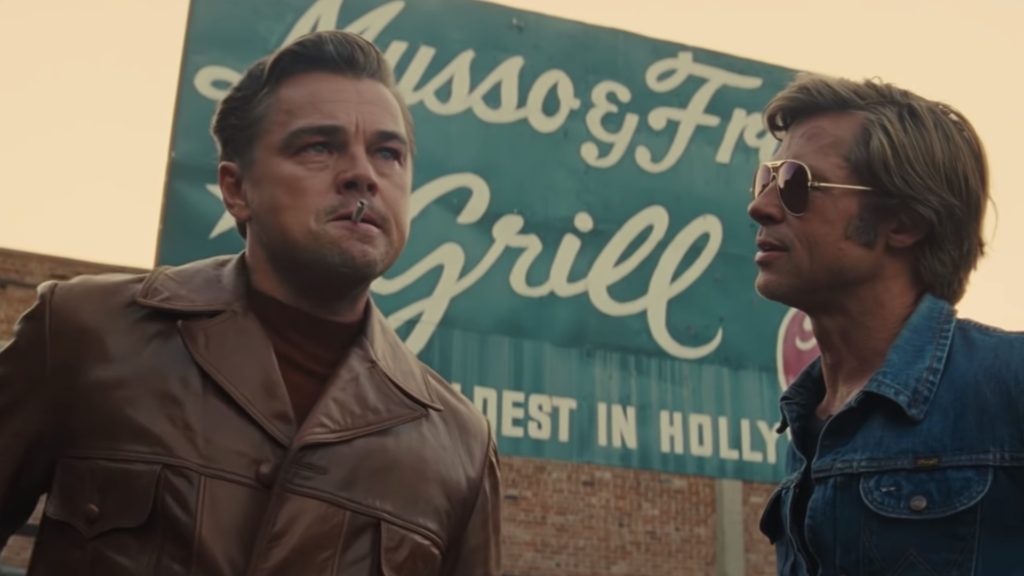
Brad Pitt and Leonardo DiCaprio in ONCE UPON A TIME…IN HOLLYWOOD
In Quentin Tarantino’s spectacularly successful Once Upon a Time…in Hollywood, two fictional characters, Rick Dalton (Leonardo DiCaprio) and Cliff Booth (Brad Pitt) and the actress Sharon Tate (Margot Robbie) navigate a changing Hollywood in 1969. The next evolution of Hollywood is filled only with promise for Sharon, but presents an unseen threat to Rick and Cliff.
Rick is an actor, a former star of TV Westerns who has aged into guest appearances on the shows of a new crop of TV stars. Cliff is Rick’s longtime stuntman, who now works as Rick’s driver, gofer and drinking buddy. Cliff lives in a San Fernando Valley trailer; Rick lives on exclusive Cielo Drive, next door to Sharon and her husband Roman Polanski, but he’s slipped too far down the showbiz ladder to know them.
Once Upon a Time…in Hollywood is about a lot of things, expertly braided together. It’s about a specific time and place. It’s about a woman, filled with innocence and zest, who is justifiably hopeful. It’s about two guys – one tortured and the other decidedly not – facing age and irrelevance. It’s about the guys’ relationship, at once interdependent and asymmetric. And it’s a love letter to vintage Hollywood, the Hollywood that six-year-old Quentin Tarantino lived near to, but was not a part of.
The story follows the three characters through a series of vignettes, right up to the most startling ending in recent cinema. This is a Quentin Tarantino masterpiece, right up there with his best, Jackie Brown and Pulp Fiction.
The movie’s title begins with “Once Upon a Time…“, so you are on notice that this isn’t actual history.
Leonardo DiCaprio and Brad Pitt in ONCE UPON A TIME…IN HOLLYWOOD
Once Upon a Time…in Hollywood is set in the locations most evocative of the 1969 Hollywood: movie studio sets, legendary showbiz hangout Musso & Frank, the Playboy Mansion, the ill-fated Cielo Drive and Spahn Ranch – famous for both its use as a movie set and as the home base of the Manson Family.
There’s a dazzling montage of neon signs being lit up at sunset. Not many contemporary directors still know how to film galloping horse riders, but Tarantino brings us some great shots from Spahn Ranch, where so many Westerns were shot.
Of course, Tarantino’s soundtrack takes us right into 1969 with superbly curated period radio hits like the Deep Purple version of Hush and the Jose Feliciano cover of California Dreamin’. A February scene is perfectly set to Neil Diamond’s Brother Love’s Traveling Salvation Show, with its hot August nights lyrics presaging the Manson murders to come in LA’s stifling August 1969. (Brother Love’s Traveling Salvation Show got me wondering how Tarantino restrained himself from using it in some – or all – of his previous films; it’s every bit as Tarantinoesque as Misirlou or Stuck in the Middle with You.) A snippet of a full-bearded Robert Goulet singing MacArthur Park even turns up on somebody’s TV.
In 1969, American culture and the nation itself were in turbulence. Hollywood showbiz was also being rocked – major movie studios were slipping both financially and creatively, floundering to react to the primacy of television and the public’s changing taste (and growing disinterest in Westerns). The studios were about to reach out in desperation to auteur directors like Polanski. Rick and Cliff are behind the curve – but they haven’t noticed that their world is dying.
As hedonists, Rick and Cliff have embraced the drugs and free sex of the counterculture. But they still drive gas guzzlers – a luxury sedan for Rick and a muscle car for Cliff – and refer to “dirty hippies”.
How does the Manson Family play into all this? There was a time when people actually believed that drug-infused peace and love would cure all that ailed us as a society. By 1969, the Summer of Love had already turned dark in San Francisco; but the Manson killings made the unmistakable point that the counterculture, for all its promise, didn’t have an answer to murderous psychopaths any more than did the mainstream.
We very briefly glimpse Manson himself (in an encounter that is pretty close to historically accurate). Tarantino knows that the best way to depict Manson’s evil is to reflect it in the cult he created.
DiCaprio’s Rick Dalton, drinking way, way too much, is still treated like a star around town, and he’s grown complacent – until the truth about his career staleness finally hits home. DiCaprio shines in the scene where Rick, cast as a one-dimensional villain in a disposable TV Western, shows his acting chops with an explosive performance; Rick, having internalized that his career may be over, lets it all go in the scene. The character of Rick has the movie’s greatest arc, but he’s less interesting overall than Cliff or Sharon.
Margot Robbie in ONCE UPON TIME…IN HOLLYWOOD,
Sharon Tate is the soul of Once Upon a Time…in Hollywood. Robbie is absolutely transcendent,. She doesn’t need a lot of lines to make her character unforgettable. Sharon gets a ticket to watch herself in a Dean Martin movie, and it’s impossible to imagine a moment with more goofy innocence.
Cliff Booth is one of Tarantino’s greatest characters. Cliff is secure in his abilities, without any need for recognition or self-promotion. Unambitious, he is absolutely content to be Rick’s second banana. That being said, he’s not going to take any shit from anyone.
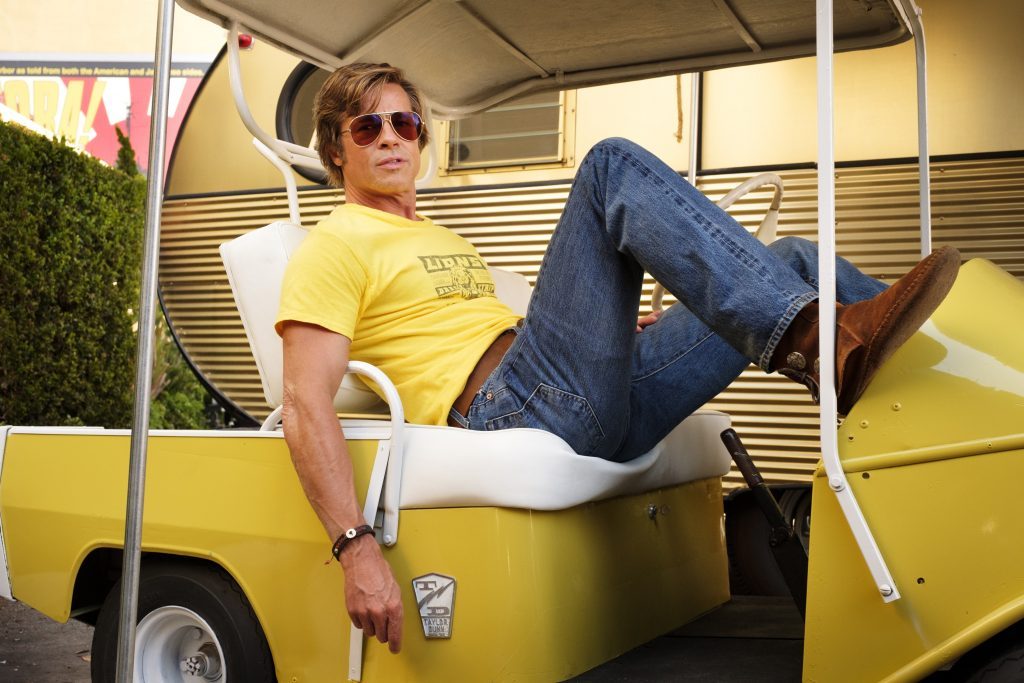
Brad Pitt in ONCE UPON A TIME…IN HOLLYWOOD
In Once Upon a Time…in Hollywood, Brad Pitt shows us what a movie star is and why he is one. I haven’t been a Pitt enthusiast, although I’ve liked him in Fight Club, The Assassination of Jesse James, Moneyball and Inglorious Basterds. Pitts’ Cliff Booth is off the charts, and it’s tough to imagine any other actor in the role. Other male stars can match the physicality, but not the unique combination of confidence and humility.
Right up there with Pitt and Robbie is Margaret Qualley, who plays a fictional Manson girl named Pussycat. She is kooky in the cute way and kooky in the scary way. Qualley fills her with manic energy, brimming with wit and sensuality.
Julia Butters plays a precocious child actor in the pilot Rick is shooting; she’s the best possible counterpoint to Rick’s flabby professional complacency. Michael Moh is very funny in a send-up of Bruce Lee. Damien Lewis has a priceless moment as Steve McQueen.
For his supporting players, Tarantino pulls out an abundant cornucopia of acting talent and Tarantino sentimental favorites: Al Pacino, Dakota Fanning, Kurt Russell, Emile Hirsch, Brenda Vaccaro, Clu Gulager, Bruce Dern, Michael Madsen, Luke Perry, Timothy Olyphant, Zoë Bell, Clifton Collins Jr. (Perry Smith in Capote), Lena Durham and Scoot McNairy.
Tarantino’s exquisite filmmaking skills blend together the verisimilitude of time and place, the vivid performances and a rock ’em, sock ’em story to make Once Upon a Time…in Hollywood an instant classic.
Note: Deep into the closing credits, there’s an Easter egg.