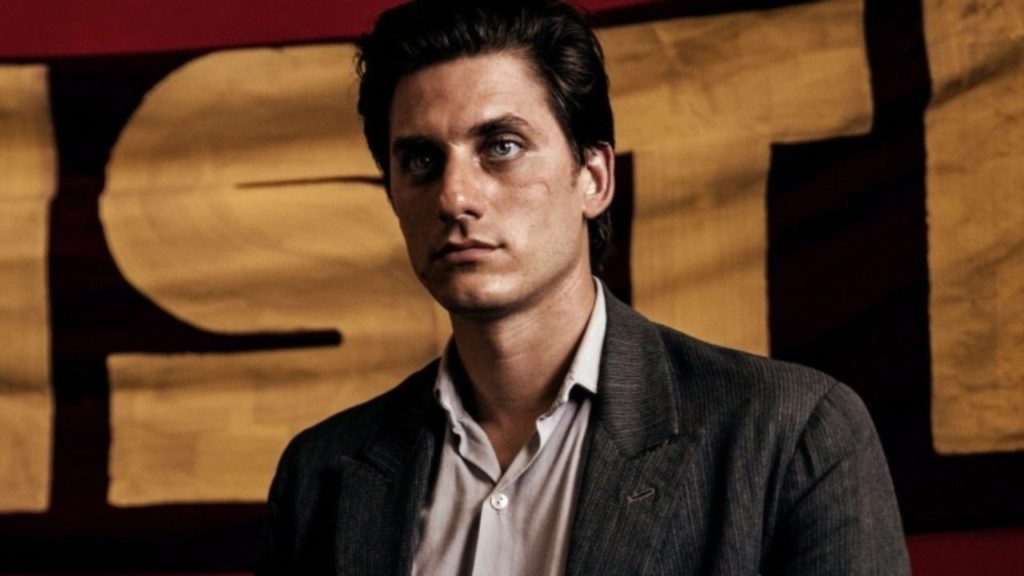
DICIANNOVE: coming of age – his way

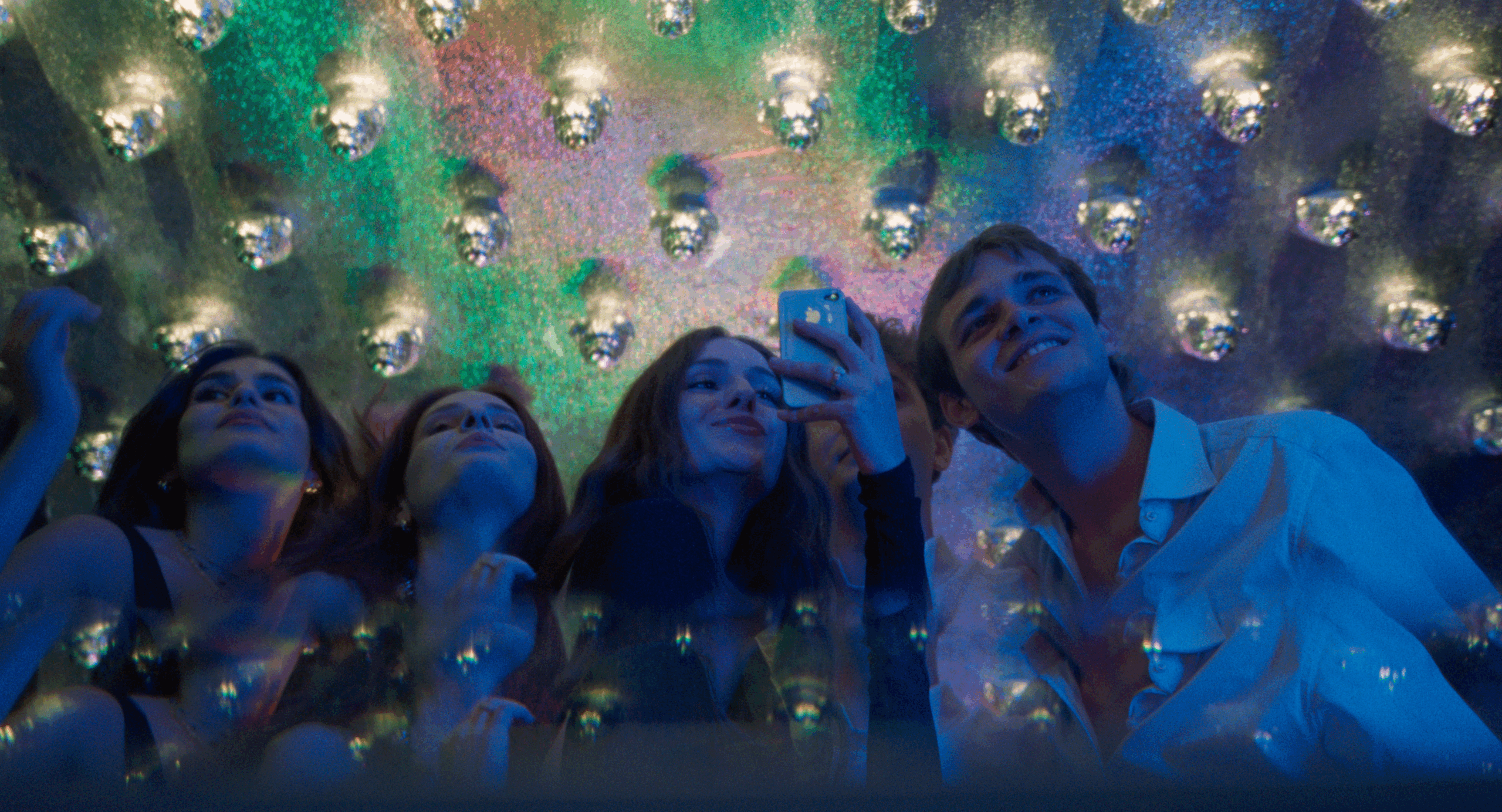
Manfredi Marini (right) in Giovanni Tortorici’s DICIANNOVE. Courtesy of Oscilloscope Laboratories and Frameline.

The title of the coming-of-age film Diciannove is Italian for nIneteen, the age of Leonardo (Manfredi Marini), who is leaving his Palermo home for the first time to begin college in London. Ever restless, he is eager to embark on his life journey, but doesn’t know where to head, and, being nineteen, he won’t listen to anyone else. In mere days, Leonardo pivots from business courses in London to the study of Italian literature at a university in Siena. He discovers a passion for old Italian writers – just not the ones his professor assigns.

Nineteen is an age that most of us sample experiences, but Leonardo is an introvert, sometimes bratty, who refuses to socialize, and we wonder if he will ever forge relationships or act on his sexual urges. Diciannove is that highly original coming-of-age film in which what even Leonardo chooses NOT to do is interesting, and we can’t predict what could make his spirit soar at the end.

Diciannove is the debut feature for writer-director Giovanni Tortorici, a protege of Luca Guadagnino, who produced the film. Tortorici and cinematographer Massimiliano Kuveiller (who has also worked with Guadagnino) maintain visual interest by throwing everything at the screen – disco scenes with an operatic score, slow motion, animated dreams and every kind of fancy cut. Nighttime scenes in a cold and hard London give way to lovingly beautiful shots of tranquil Siena.

Diciannove is the singular and imaginative calling card of a new auteur; Tortorici may be a visual show-off, but he has an uncommon gift for creating a realistic, but compelling and unpredictable character.

I screened Diciannove in June for Frameline. It’s now releasing into US arthouse theaters, including Laemmle’s Monica Film Center and the Glendale.
THE COMPLEX FORMS: what did he bargain for?

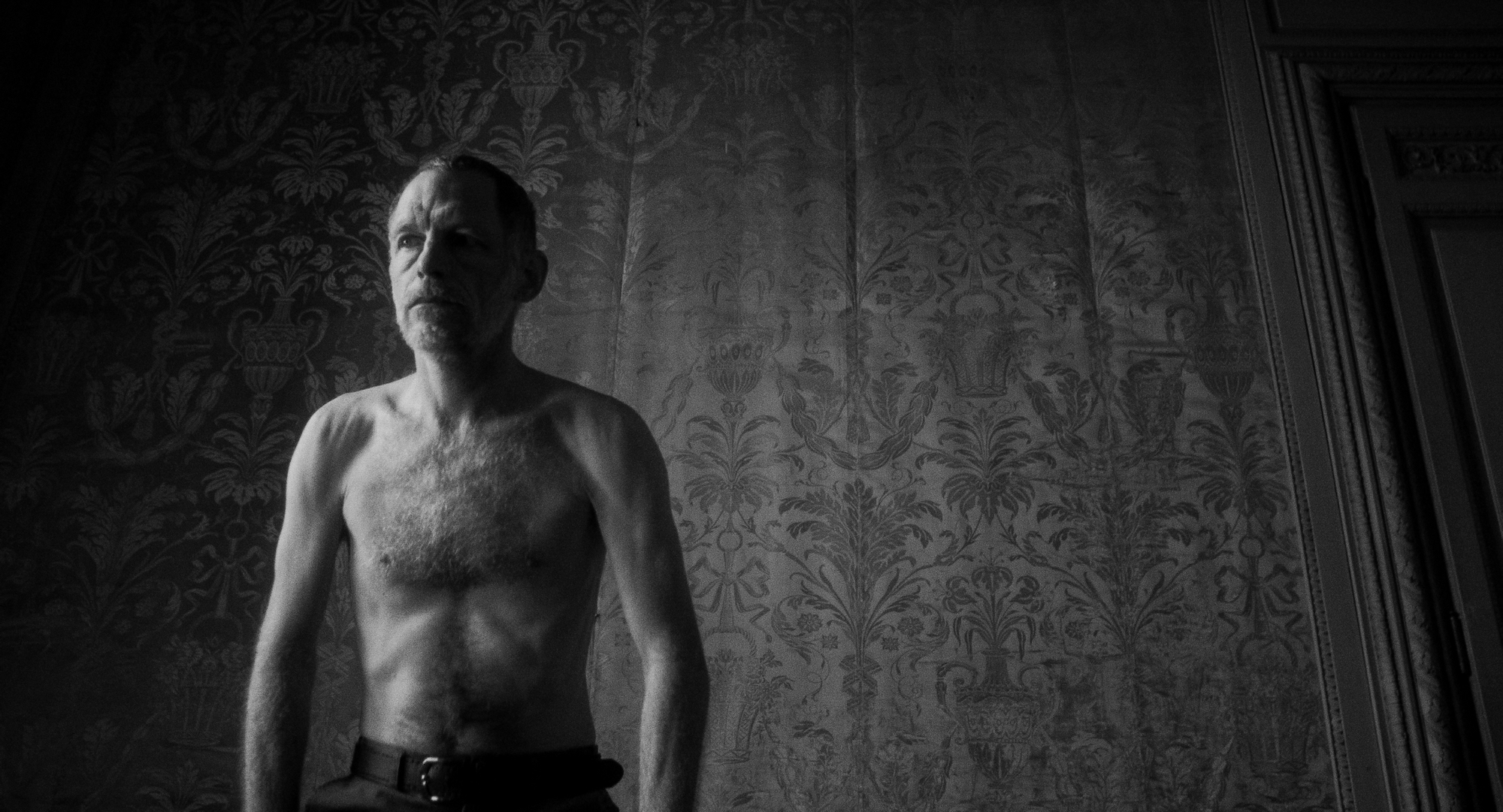
David Allen White in Fabio D’Orta’s THE COMPLEX FORMS. Courtesy of Slamdance.

The visually striking atmospheric The Complex Forms is set in a centuries-old Italian villa, where Christian (David Allen White) and other down-on-their-luck middle-aged men sell their bodies for a period of days to be “possessed”. Possessed how? By who or by what? As the dread builds, Christian resolves to pry the answers from the secretive masters of the villa.

Director Fabio D’Orta unspools the story with remarkably crisp black-and-white cinematography, a brooding soundtrack and impeccable editing. In his astonishingly impressive filmmaking debut, D’Orta wrote, directed, shot and edited The Complex Form.

David Allen White is excellent as Christian, who begins resigned to endure whatever process that he has committed to, but becomes increasingly uneasy as his probing questions are deflected. So are Michael Venni as Christian’s talkative roommate Luh and Cesare Bonomelli as the impassive roommate simply called The Giant.

Like his countrymen Fellini and Leona, D’Orta has a gift for using faces to heighten interest and tell the story. He makes especially effective use of Bonomelli’s Mt. Rushmore-like countenance.

I screened The Complex Forms for its United States premiere at SlamdanceThe Complex Forms was my favorite Slamdance film and won the festival’s Honorable Mention for Narrative Feature.  The Complex Forms is playing Cinequest on March 12 and 13.

THE COMPLEX FORMS: what did he bargain for?

David Allen White in Fabio D’Orta’s THE COMPLEX FORMS. Courtesy of Slamdance.

The visually striking atmospheric The Complex Forms is set in a centuries-old Italian villa, where Christian (David Allen White) and other down-on-their-luck middle-aged men sell their bodies for a period of days to be “possessed”. Possessed how? By who or by what? As the dread builds, Christian resolves to pry the answers from the secretive masters of the villa.

Director Fabio D’Orta unspools the story with remarkably crisp black-and-white cinematography, a brooding soundtrack and impeccable editing. In his astonishingly impressive filmmaking debut, D’Orta wrote, directed, shot and edited The Complex Form.

David Allen White is excellent as Christian, who begins resigned to endure whatever process that he has committed to, but becomes increasingly uneasy as his probing questions are deflected. So are Michael Venni as Christian’s talkative roommate Luh and Cesare Bonomelli as the impassive roommate simply called The Giant.

Like his countrymen Fellini and Leona, D’Orta has a gift for using faces to heighten interest and tell the story. He makes especially effective use of Bonomelli’s Mt. Rushmore-like countenance.

Slamdance is hosting the United States premiere of The Complex Forms. The Complex Forms is the my favorite among the dozen or so films I screened in covering this year’s Slamdance. The Complex Forms won Slamdance’s Honorable Mention for Narrative Feature.

THE ACCIDENT: she’s too nice, until…

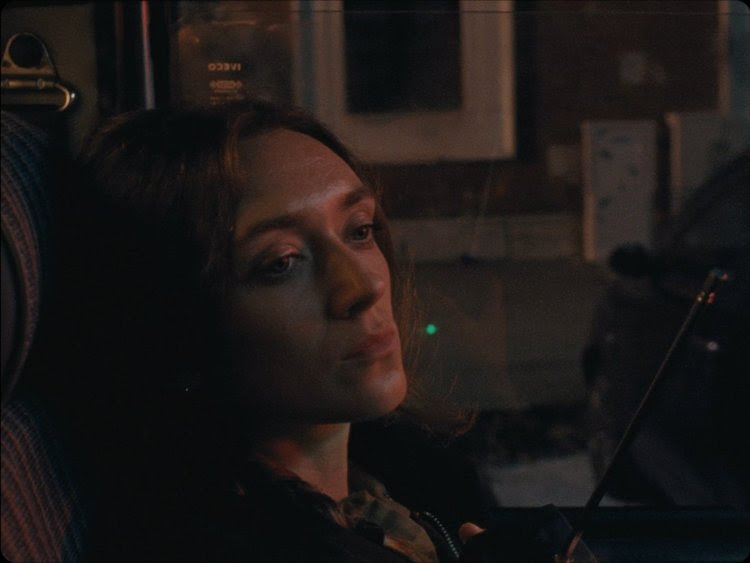
Giulia Mazzarino in THE ACCIDENT. Courtesy of Slamdnce.

In The Accident (L’Incidente), Marcella (Giulia Mazzarino) is a meek, good-hearted young woman who in quick succession, loses her partner, custody of their daughter, her car and her job. Desperate for financial survival , she buys a tow truck, but she is utterly unsuited for the cutthroat Italian towing industry, where no good deed goes unpunished. Marcella is trapped into a downward spiral of an increasingly disadvantageous situations, until she happens on a logical, but outrageously amoral, solution.

Marcella is empathetic and kind, which are qualities we all should aspire to have. But she’s the type of person destined to always be pushed around, exploited and bullied by those more venal and ruthless. The Accident is acid social commentary on how society rewards selfishness, an allegory which could have been titled The Parable of Marcella.

The Accident is the first full-length narrative feature for documentarian Giuseppe Garau, who describes it as an “experimental film” because virtually the entire movie is shot from a camera in the front passenger seat of Marcella’s vehicle. That may be an experiment, but it’s not a gimmick because it drives our attention to Marcella’s incentives and disincentives.

Giulia Mazzarino is very good as Marcella. Anna Coppola is hilarious as Anna, the deliciously shameless owner of the towing company.

Slamdance hosted the North American premiere of The Accident where it won the Narrative Feature Grand Jury Prize.

THE EIGHT MOUNTAINS: two men, each finding himself

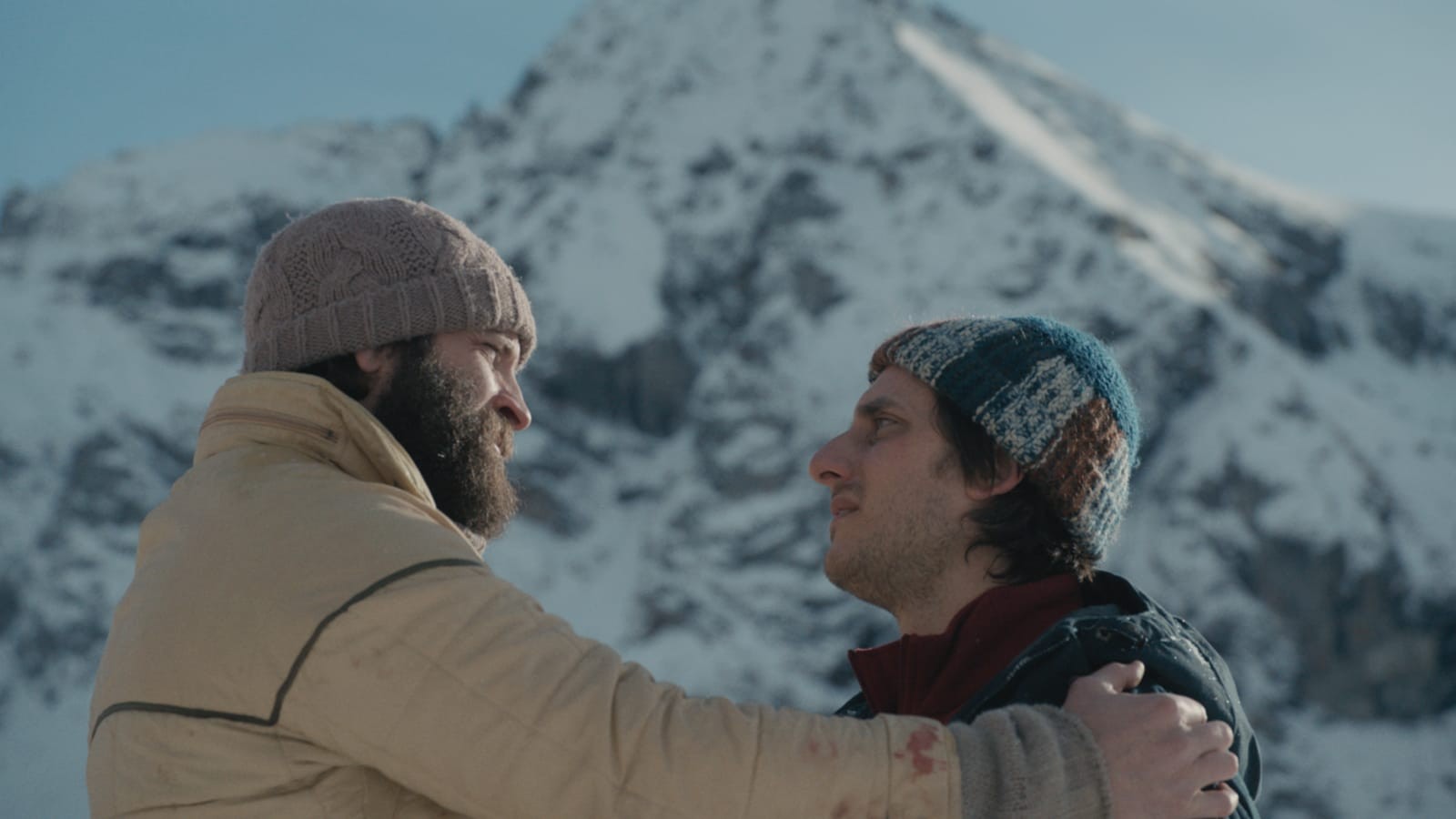
Photo caption: Cristiano Sassella and Lupo Barbiero in THE EIGHT MOUNTAINS. Courtesy of Janus Films.

The sweeping Italian drama The Eight Mountains is a mesmerizing exploration of of male friendship and self-discovery. Pietro is the 11-year-old son of a successful engineer in bustling, industrial Turin. When his parents rent a summer apartment in a tiny village high in the Italian Alps, he meets the only local child, Bruno, also an 11-year-boy. The two become inseparable and forge the profound, lifelong bond that can only come from a friendship you are lucky enough to make in childhood.

Each summer, the two cavort together in the mountains. Pietro’s father (Filippo Timi), a force nature, revels in climbing the local mountains and brings the boys along, not afraid to challenge them with a treacherous cliff or a bottomless abyss.

In contrast to Pietro’s, Bruno ‘s family shows him neither warmth nor affection, and values him only for his manual labor. Pietro’s parents generously offer to take in the teenage Bruno so he can realize his potential, but Bruno’s ignorant and selfish father nixes the arrangement.

There’s a pause in their relationship as each man grows as a man. A family event draws Pietro (Lupo Barbiero) and Bruno (Cristiano Sassella) back together as adults. Bruno is committed to living in his mountains. Pietro has been drifting, an undisciplined wannabe writer, but he, too, is drawn to the mountains where he spent the best days of his youth with Bruno. As Neil Young sang, “All my changes were there”. Both men are sons of Pietro’s father, one literally, and both chase the father’s dream in their individualistic ways.

The Eight Mountains is a remarkably genuine portrait of a masculine friendship, between boys and then between men. It captures the way such a friendship can resume instantly after a years-long pause. And it authentically depicts how male friends can communicate without verbalizing.

This story of two men’s individual growth and common friendship over 30 years, an intimate and tightly focused human story, is juxtaposed against an epic setting. The scenes of mountaineering in the Italian Alps are stunning enough, and then part of the story moves to the Nepali Himalayas.

Directors Felix van Groeningen and Charlotte Vandermeersch adapted the screenplay from a novel by Paolo Cognetti. I am getting very grumpy about movies that are too long, and I was skeptical of The Eight Mountains’ 2 1/2 hour duration (even vowing beforehand to walk out if it became a slog).  But the story really does take that long to unwind, and I’m glad that van Groeningen and Vandermeersch didn’t rush it.

The Eight Mountains is playing in select arthouse theaters. I’ll let you know when it becomes more widely accessible.

THE TALE OF KING CRAB: storytelling at its best

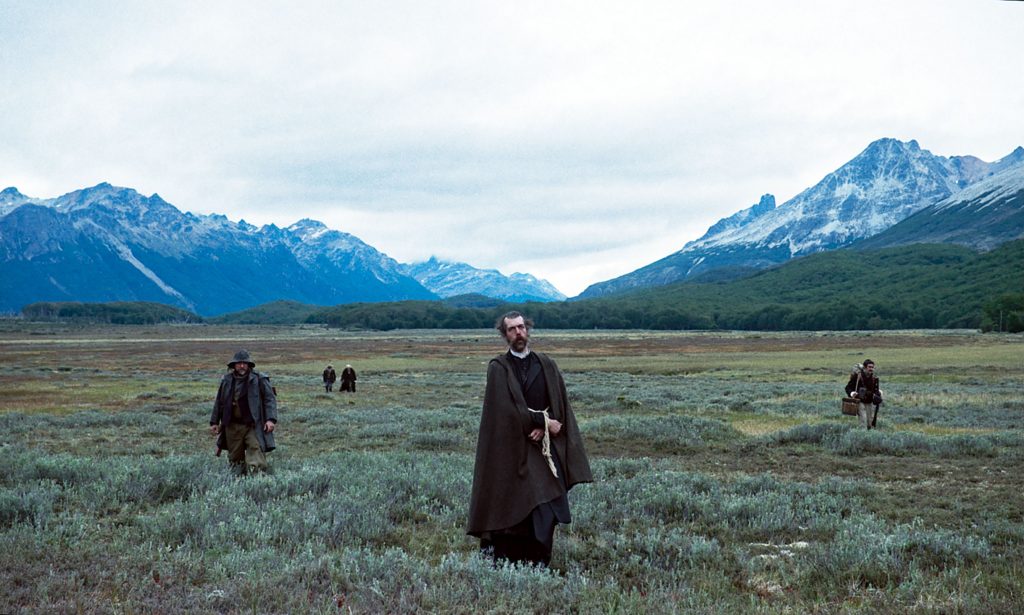
TALE OF KING CRAB. Courtesy of Oscilloscope Films.

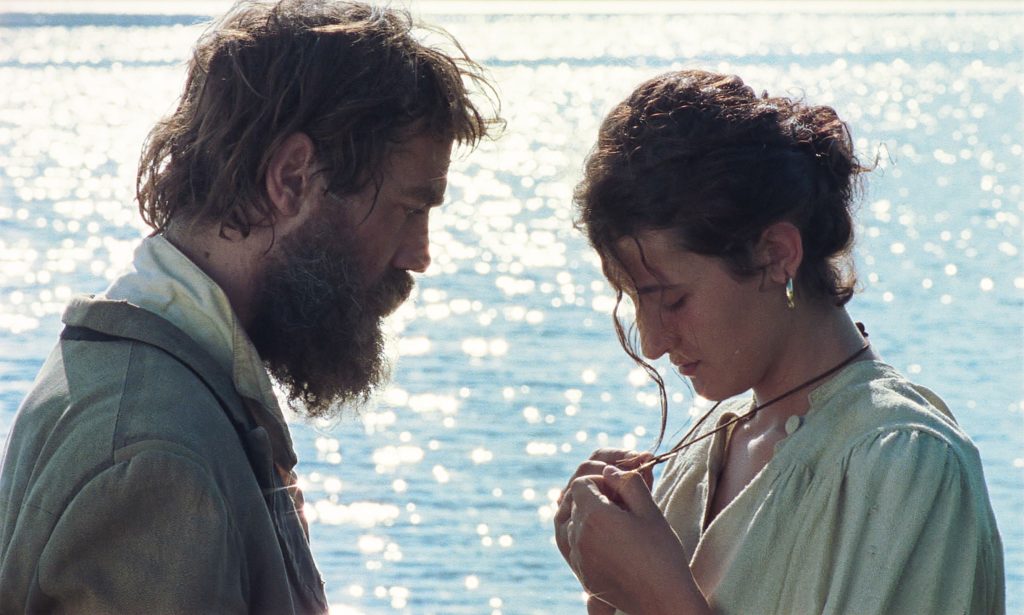
The Tale of King Crab, a story-telling masterpiece from Italy, begins with old Italian guys rehashing a local legend, and correcting each other on the details. That story concerns Luciano (Gabriele Silli), the town’s smartest and most interesting man – and also the local drunk. Luciano fixates on a grievance – the closing of a shortcut for shepherds. In spite of his own anti-social bent (and matted beard), Luciano falls into a romance. The grievance, the romance and his alcoholism combine to precipitate an accidental tragedy. We next see a sober and guilt-ridden Luciano searching for buried treasure at the barren tip of South America, an apparent priest among pirates.

TALE OF KING CRAB. Courtesy of Oscilloscope Films.

The Tale of King Crab is the first narrative feature for writer-directors Alessio Rigo de Righi and Matteo Zoppis and for cinematographer Simone D’Arcangelo. D’Arcangelo’s work, in vibrant Lazio and desolate Tierra del Fuego, is stunning. The Italian segments were filmed in northern Lazio near Lago di vico.

Dotted with mystical elements and filled with stories within stories, this is an operatic fable, exquisitely told. I screened The Tale of the King Crab for the Nashville Film Festival. It has opened theatrically, including this week only at Laemmle’s Monica Film Center and NoHo 7.

THE GRAND BOLERO: passion unlocked

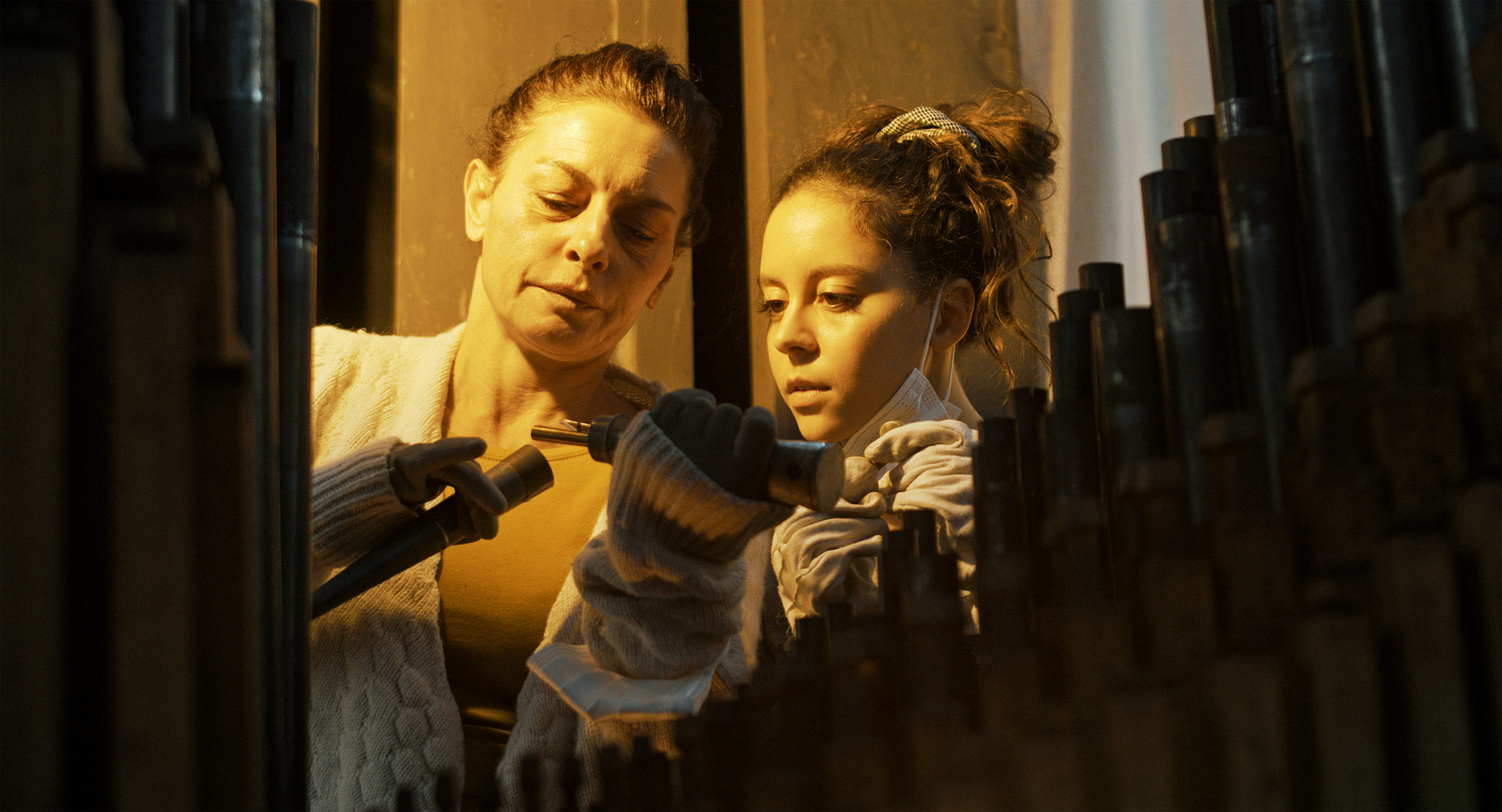
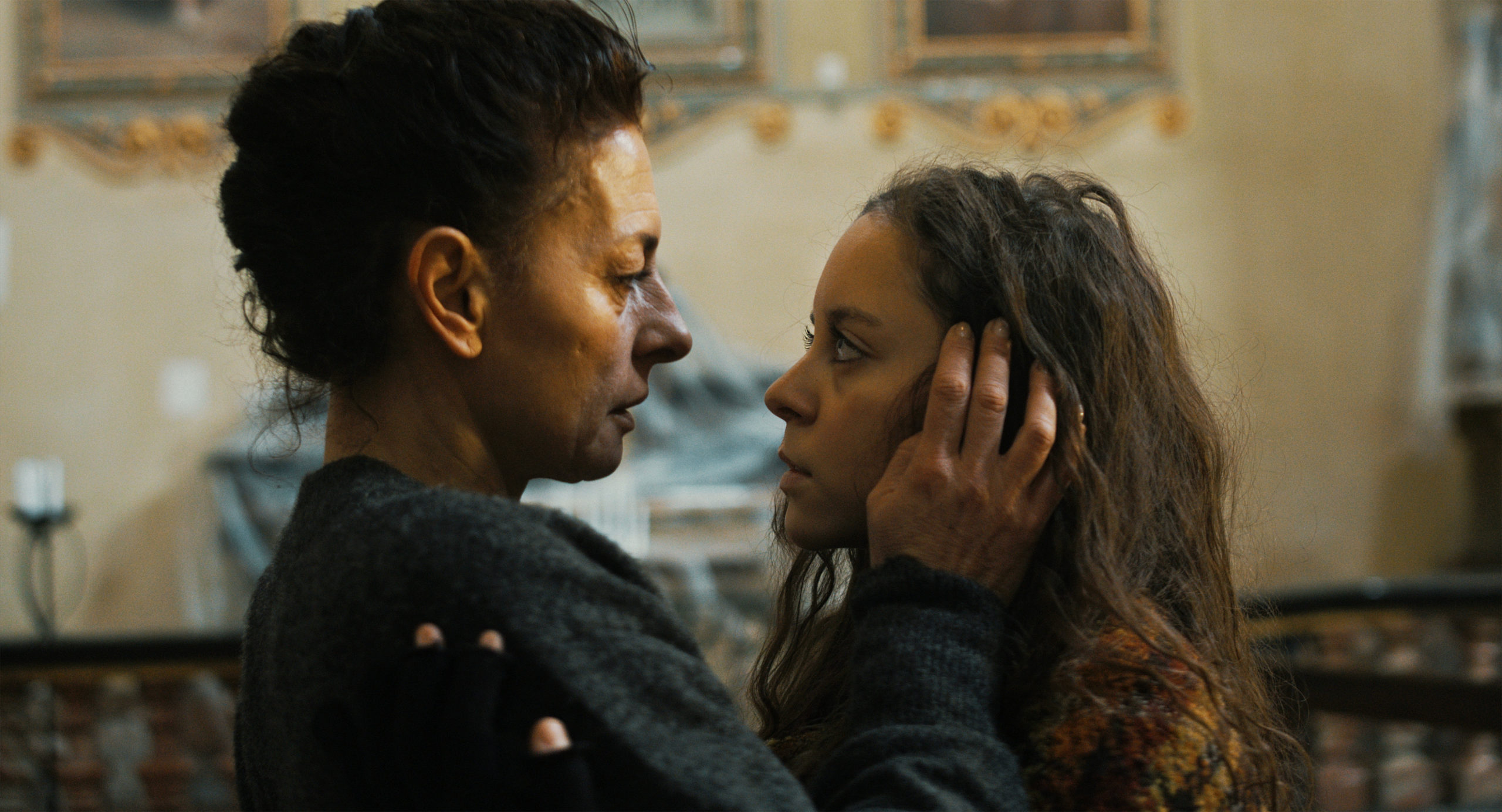
Photo caption: Lidia Vitale and Ludovica Mancini in Gabriele Fabbro’s THE GRAND BOLERO at Cinequest. Courtesy of Cinequest.

The Grand Bolero is set in winter 2020, early in COVID’s devastating assault on Northern Italy. Roxanne (Lidia Vitale), a middle-aged organ restorer, is locked down in a centuries-old church, along with her client Paolo (Marcelli Mariani). Lucia (Ludovica Mancini), a runaway young mute woman with no place else to shelter, arrives at the church. In an act of kindness, Paolo brings her into the church as an assistant to Roxanne. A salty curmudgeon, Roxanne cruelly resists, even when Palolo chides her, “you know what it’s like to be scared and alone.”

Indeed, Roxanne is a solitary person in a solitary profession, moving from church to church to repair the ancient organs.

But Lucia’s unexpected musical gift unlocks appreciation and then passion in the older woman. Passion evolves into obsession, propelling the story to an operatic finale.

Lidia Vitale and Ludovica Mancini in Gabriele Fabbro’s THE GRAND BOLERO at Cinequest. Courtesy of Cinequest.

The Grand Bolero is the most visually beautiful film that I’ve seen in some time. The interior scenes evoke the warmth of candlelight. The characters find relief from the lockdown in stroll through natural beauty characters find comfort in exteriors in the bright crispness of the northern Italian winter. It’s a remarkable first feature for director, co-writer and editor Gabriele Fabbro and his cinematographer Jessica La Malfa.

The all-absorbing power of organ music naturally complements a story of passion. Roxanne becomes transfixed as she watches Lucia’s bare shoulders heaving at the organ. The story climaxes as the dialogue is drowned out by an organ performance of Ravel’s Bolero.

The Grand Bolero is in competition for Best Narrative Feature at Cinequest and may be streamed through April 17 at Cinejoy.

THE HAND OF GOD: coming of age, shaped by events

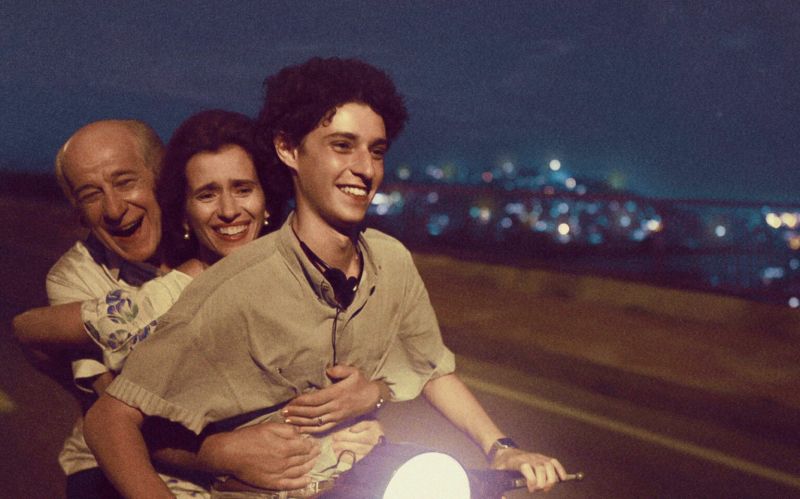
Photo caption: Toni Servillo, Teresa Saponangelo and Filippo Scotti) in THE HAND OF GOD. Courtesy of Netflix.

The Hand of God is filmmaker Paolo Sorrentino’s own coming of age story – and a time capsule of 1986 Naples. The kinda-fictional stand-in for Sorrentino is the directionless 16-year-old Fabietto (Filippo Scotti), who enjoys family life with his boisterous, ever-joking parents (Toni Servillo and Teresa Saponangelo). Events occur, one profoundly tragic, which pivot Fabietto into a future career in cinema.

The young Fabietto is very passive, a bobber floating on the surface of his tumultuous family and his rowdy hometown. Besides being rocked by the tragedy, he is deluged by the energy of a sexy, funny and mentally ill aunt, a formidable dowager baroness, a crazily impulsive smuggler and a bombastically narcissistic film director. He is a sensitive kid, one who is triggered into a panic attack when his mother, usually his rock, has her own meltdown.

The title of movie, as even casual sports fans may recognize, is a reference to soccer star Diego Maradona, whom the Naples soccer club broke the bank to acquire for seven seasons. As the film opens, Fabietto, with the rest of Naples, is transfixed by the possibility, then just a rumor, of getting Maradona. When Maradona leads Napoli to a league championship, Fabietto has been numbed by grief and is juxtaposed against the rest of his city in ecstatic celebration.

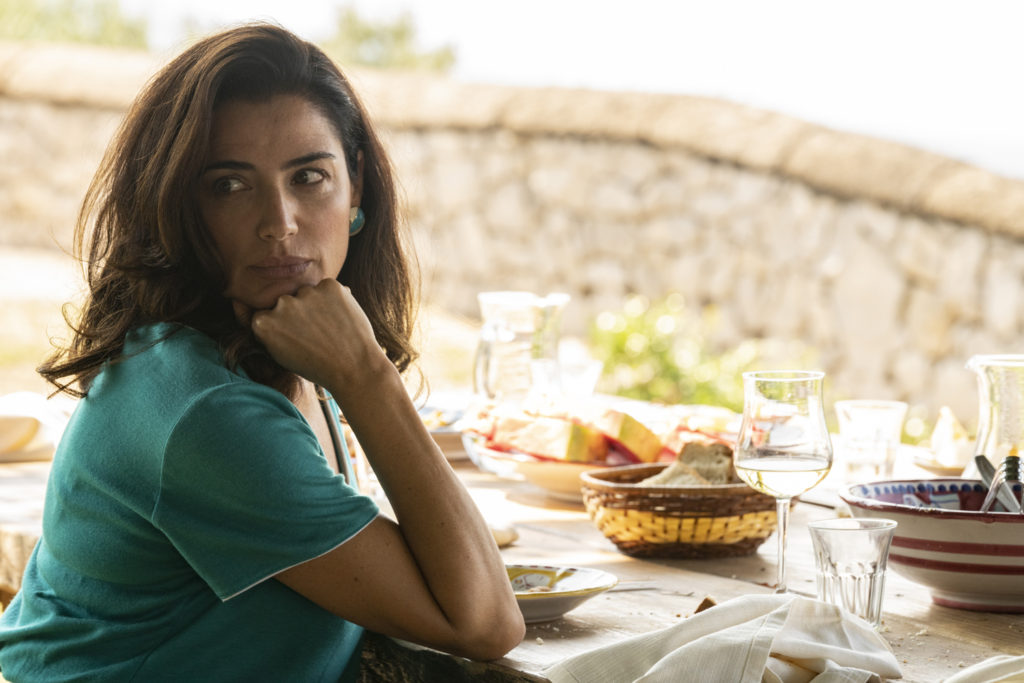
Luisa Ranieri in THE HAND OF GOD. Courtesy of Netflix.

The cast is very effective, but the standouts portray the key female parts – Fabietto’s mom (Teresa Saponangelo), his aunt Patrizia (Luisa Ranieri), and the Baroness (Betty Pedrazzi).

Nothing is more personal than one’s own coming of age, and Sorrentino, describing The Hand of God, says, “Almost everything is true”.

I think that, of all current filmmakers, Sorrentino (Il Divo, The Great Beauty, Youth) makes the most visually and striking beautiful movies. The Great Beauty won the Best Foreign Language Oscar. In that film, Sorrentino follows his protagonist (played by Servillo) through a series of strikingly beautiful Roman settings (including lots of gorgeously still Roman dawns.) If you’ve been to Rome, you know that it is a generally chaotic city with unexpected islands of solitude. Here in The Hand of God, Sorrentino gives this treatment to his own hometown, the grittier and more humble Naples.

The Hand of God opens with a remarkable 2 1/2-minute drone/helicopter shot that takes us from the ocean to Naples and back to the ocean; as the camera nears the city, the soundtrack gradually picks up the sounds of urban bustle.

In one very brief but inspired scene, Sorrentino shows us the casting call for extras in a Fellini film. (You can only imagine.)

How audience-friendly is The Hand of God? In real life, which this film seeks to reflect, events happen randomly. In contrast, a narrative screenplay would ideally organize the plot artificially in a way to make the story compelling. So, some viewers may find The Hand of God too disjointed to be satisfying. For sure, it’s not as good a film as The Great Beauty or Youth.

The Hand of God is now streaming on Netflix. I also recommend the 6-minute Netflix featurette with director Sorrentino discussing the film.

BAD TALES: perhaps too dark

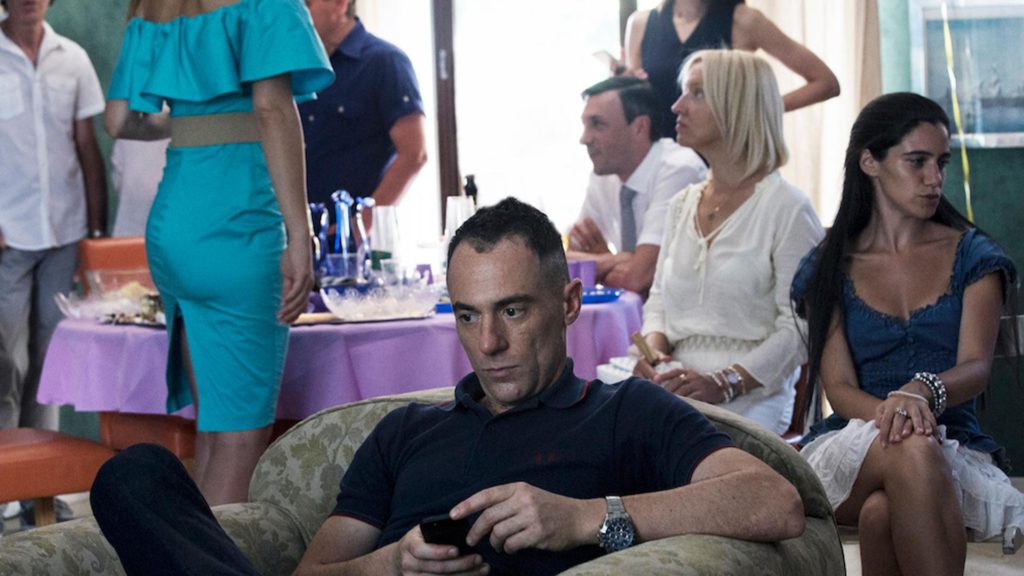
Photo caption: Elio Germano in BAD TALES. Photo courtesy of Strand Releasing.

In the Italian coming of age film Bad Tales, middle schoolers must navigate adolescence. It’s droll, dark and captivating – and, finally, perhaps too dark.

The kids head into summer vacation while their suburban families languish someplace between ennui and malaise. The fathers radiate toxic masculinity.

Co-directors and co-directors Damiano and Fabio D’Innocenzo won for best screenplay at the Berlinale; it’s just their second feature film.

The kids in Bad Tales are much more sympathetic than are real life middle schoolers in my experience. They’re at that awkward and confusing age where there’s nothing to be confident about. It’s the age where the boys call each other spazz and the last day of school transitions into summer vacation with a glorious water balloon fight.

The kid actors are exceptionally good. The D’Innocenzos must be both extremely adept at casting and lucky; the boys are all perfect for the ages of the characters – and just one unpredictable growth spurt or a voice-deepening from aging out of their parts.

As we observe human foibles, Bad Tales‘ overall tone is caustically amusing. But things get deeply tragic at the end, including the most cowardly behavior I’ve ever seen from a movie father – and then there’s the most insidious act by a movie teacher.

Bad Tales is streaming on on Virtual Cinema; I watched it at Laemmle.

MARTIN EDEN: Jack London in an Italian art film

Luca Marinelli in MARTIN EDEN

A hunky and charming seaman, devoid of education, aspires to become a writer. Sound like Jack London? Indeed London authored the novel Martin Eden, in part modeled after himself. The lush art film Martin Eden is Pietro Marcello’s adaptation, which he set in Italy.

Luca Marinelli plays the eponymous protagonist with charisma and physicality. His Martin Eden is a zealous autodidact.

Martin ingratiates himself with a wealthy family and seeks the approval and affection of the daughter, whom he begins to idolize.  She sees him as a noble savage, a primitive ready to be cut and polished into a gemstone, and she encourages his education. She is attracted to him physically, but also appreciates his drive and intelligence. But she hopes he would harness his talents for something more commercial and more practical than writing.

Martin, however, attains fame as an author and public intellectual. Unlike Jack London himself, he rejects socialism and goes to the other Ayn Rand-like extreme. He becomes more confident in his philosophy. His political stridency leads to his rudeness at the girlfriend’s family table. She scolds, “you are unbearable“, and, indeed, he is.

Martin Eden has a very rich look and feel. Director Pietro Marcello’s work here has been compared to that of Visconti. There are some odd pop musical interludes, but the visual collages are much more interesting.

Martin Eden is a well-crafted and well-acted film, but its appeal is limited by the protagonist as he strives himself right into obnoxiousness. I watched Martin Eden on Virtual Cinema at Laemmle.