Manfredi Marini (right) in Giovanni Tortorici’s DICIANNOVE. Courtesy of Oscilloscope Laboratories and Frameline.
The title of the coming-of-age film Diciannove is Italian for nIneteen, the age of Leonardo (Manfredi Marini), who is leaving his Palermo home for the first time to begin college in London. Ever restless, he is eager to embark on his life journey, but doesn’t know where to head, and, being nineteen, he won’t listen to anyone else. In mere days, Leonardo pivots from business courses in London to the study of Italian literature at a university in Siena. He discovers a passion for old Italian writers – just not the ones his professor assigns.
Nineteen is an age that most of us sample experiences, but Leonardo is an introvert, sometimes bratty, who refuses to socialize, and we wonder if he will ever forge relationships or act on his sexual urges. Diciannove is that highly original coming-of-age film in which what even Leonardo chooses NOT to do is interesting, and we can’t predict what could make his spirit soar at the end.
Diciannove is the debut feature for writer-director Giovanni Tortorici, a protege of Luca Guadagnino, who produced the film. Tortorici and cinematographer Massimiliano Kuveiller (who has also worked with Guadagnino) maintain visual interest by throwing everything at the screen – disco scenes with an operatic score, slow motion, animated dreams and every kind of fancy cut. Nighttime scenes in a cold and hard London give way to lovingly beautiful shots of tranquil Siena.
Diciannove is the singular and imaginative calling card of a new auteur; Tortorici may be a visual show-off, but he has an uncommon gift for creating a realistic, but compelling and unpredictable character.
I screened Diciannove in June for Frameline. It’s now releasing into US arthouse theaters, including Laemmle’s Monica Film Center and the Glendale.
Photo caption: Marion Barbeau in DRONE. Courtesy of Frameline and StudioCanal.
Frameline, the oldest and longest-running LGBTQ+ film festival in the world, opens tomorrow, June 18 and runs through June 28. The program includes 150 films from 40 countries, including 42 world, North American and US premieres. As always, it’s a very rich slate of films.
I’ve selected five international films to highlight. Let’s begin with two Must See directorial debuts from France and Italy.
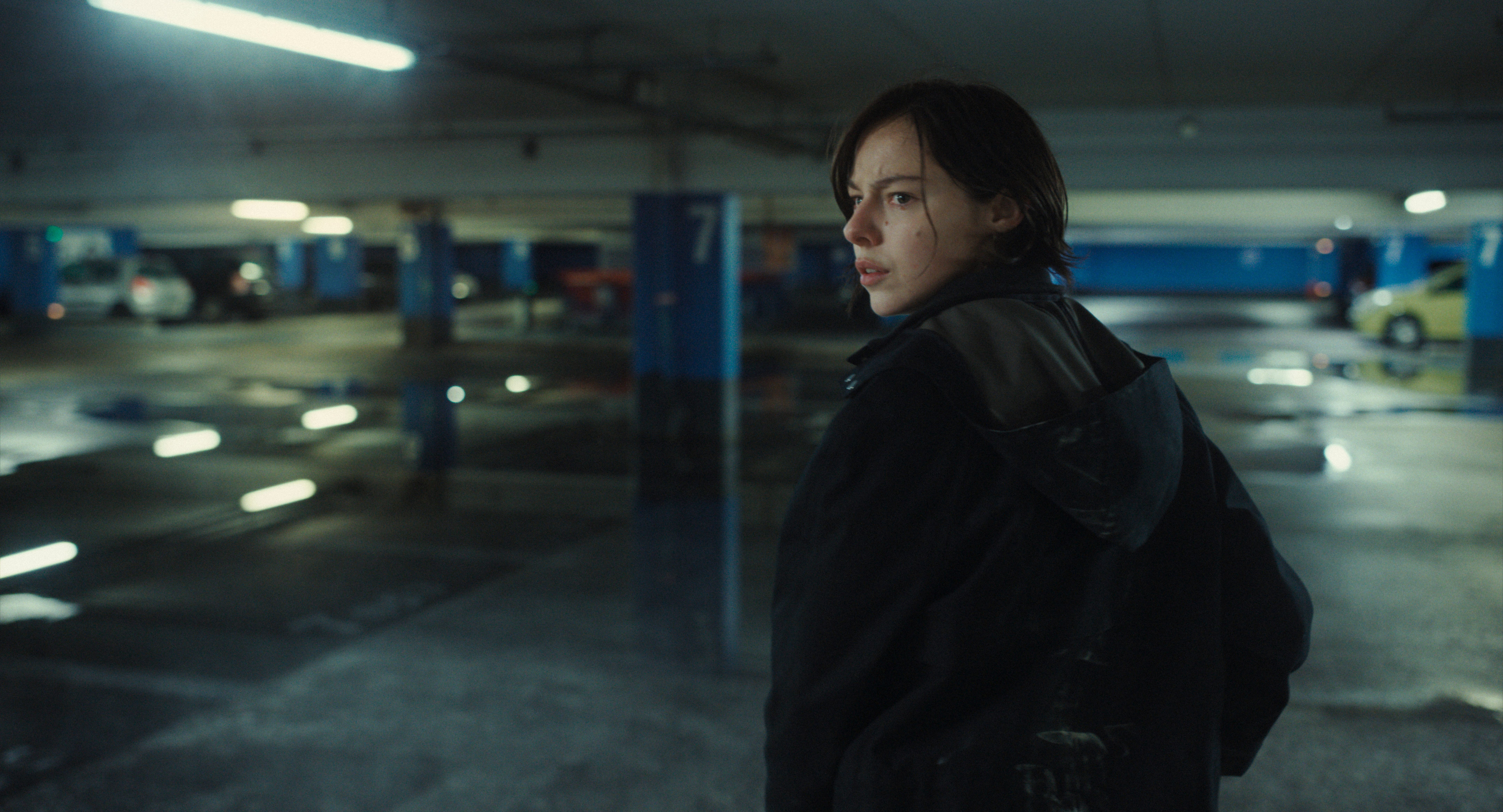
Drone: Émilie (Marion Barbeau) is stalked through Paris by a mysterious drone, in a thriller that explores issues of privacy and the male gaze. A magnificent 4-minute opening sequence, introduces us to the vulnerability caused by the voyeur drone. Émilie is funding her architecture studies by working as a cam girl, a situation where she is physically detached from and in control of her male customers. But there is no detachment or control whenever the paranoia-inducing drone suddenly appears. There are exhilarating set pieces in a parking garage, a motorcycle chase and an abandoned factory, as writer-director Simon Bouisson and cinematographer Ludovic Zulli keep their drone camera in pursuit of the story’s stalker drone. In his first theatrical feature, Bouisson keeps the tension pounding, all the way to the ingenious ending. Must See.
Manfredi Marini (right) in Giovanni Tortorici’s DICIANNOVE. Courtesy of Oscilloscope Laboratories and Frameline.
Diciannove: The title is Italian for nIneteen, the age of Leonardo (Manfredi Marini), who is leaving his Palermo home for the first time to begin college in London. Ever restless, he is eager to embark on his life journey, but doesn’t know where to head, and, being nineteen, he won’t listen to anyone else. In mere days, Leonardo pivots from business courses in London to the study of Italian literature at a university in Siena. Nineteen is an age that most of us sample experiences, but Leonardo is an introvert, sometimes bratty, who refuses to socialize, and we wonder if he will ever forge relationships or act on his sexual urges. Diciannove is that highly original coming-of-age film in which even what Leonardo chooses NOT to do is interesting, and we can’t predict what could make his spirit soar at the end. Diciannove is the debut feature for writer-director Giovanni Tortorici, a protege of Luca Guadagnino, who produced the film. Tortorici and cinematographer Massimiliano Kuveiller (who has also worked with Guadagnino) maintain visual interest by throwing everything at the screen – disco scenes with an operatic score, slow motion, animated dreams and every kind of fancy cut. Diciannove is the singular and imaginative calling card of a new auteur; see it at Frameline before its US arthouse release later this year. Must See.
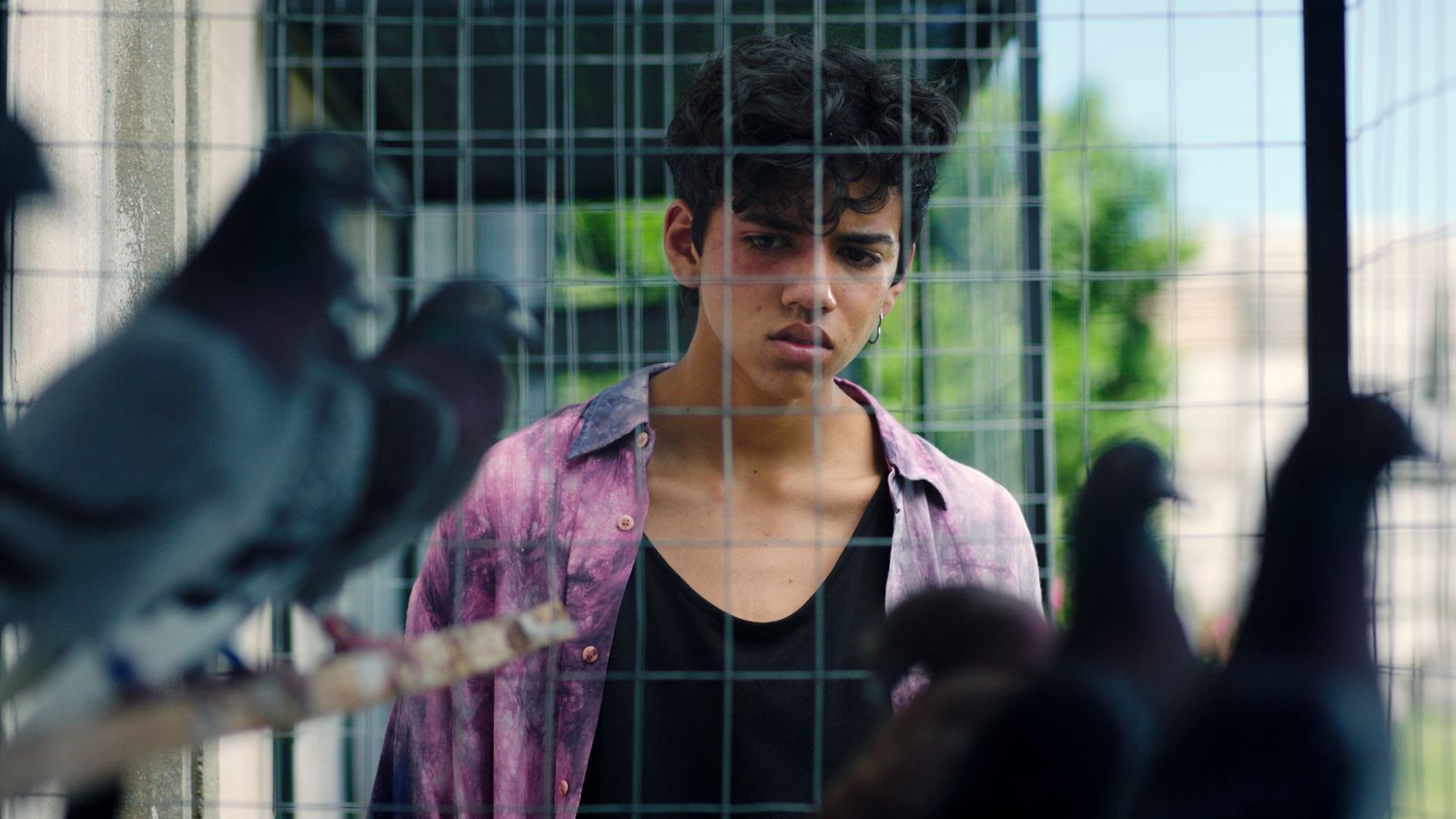
Bruce Pintos in KEEP COMING BACK. Courtesy of Frameline.
And here are three more highlights from Frameline’s menu of international cinema – from Uruguay, Croatia and Taiwan:
Keep Coming Back: In his first feature, director Sergio de León sends up the conventions of the underdog drama with deadpan drollery. In rural Uruguay, 18-year-old Emilio’s mother dies, leaving with a pile of debts and a collection of pigeons. The only way he can keep the family house is to win the great pigeon race. Staggered by grief, confounded by financial stress and with his hormones raging toward a sexual awakening, Emilio (Bruce Pintos) plunges ahead earnestly. Absurd hilarity ensues, including a very funny I’m sorry about your mom and the robust retelling of the story of Winkie, the historical hero pigeon. US Premiere.
Beautiful Evening, Beautiful Day: Croatia’s official submission for the 2025 Academy Award for Best International Feature, this is an aspirational film with an epic sweep, passionate sex and profound tragedy, all the way to unexpected redemption. This searing critique of the Tito regime pits a man of principle and ideas against the repression of the small-minded. The heroic bravery that helps overthrow Nazi puppets is revealed to be no match for the homophobia and mindless adherence to the party line of post-war apparatchiks. Frameline hosts the International Premiere.
Silent Sparks: In this Taiwanese neo-noir, small time hood Pua is released from prison and checks in with the swaggering, exuberant local crime lord. The boss assigns him to a lieutenant, Mi-Ji, who happens to be Pua’s former cell-mate. But when Pua and Mi-Ji meet again, the encounter is a study in social awkwardness. Pua just wants to start earning money and working his way up in the syndicate, but Mi-Ji is surprisingly unhelpful. What explains Mi-Ji’s behavior toward Pua? As Silent Sparks smolders on, the risks escalate. Promising first feature for writer-director Ping Chu.
You can buy tickets for these films and peruse the entire program at Frameline. Here’s the trailer for Drone.