The Aura is a brilliant 2005 neo-noir from Argentina that I wasn’t familiar with until the Czar of Noir Eddie Muller programmed into the 2017 Noir City film festival.
The Aura is about a taxidermist who leads a boring life, but fantasizes about the Perfect Crime. He is perpetually cranky because he is so dissatisfied, but he resists getting out of his life rut. It’s not easy to be his friend (nor, apparently, his wife). Unexpectedly, he finally finds himself in position to participate in a major heist.
He is epileptic (the movie’s title is from the sensation just before a seizure); he and we never know if and when he will pass out from an episode, a particularly dangerous wild card in a thriller. He also has a photographic memory, and that can help him if he has the nerve to go through with the crime.
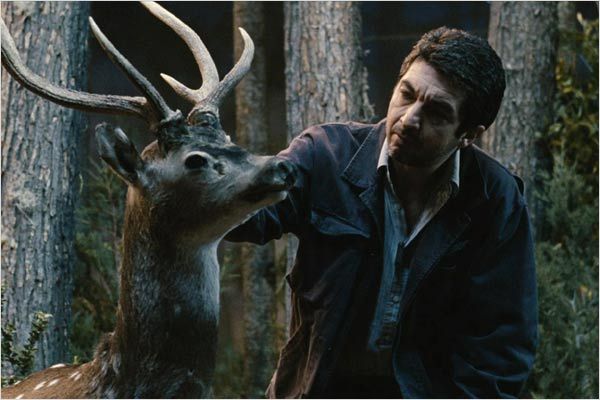
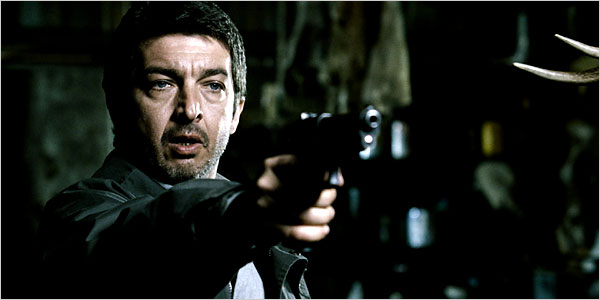
The taxidermist is played by one of my favorite actors, Ricardo Darin (Nine Queens, The Secret in their Eyes, Carancho, Wild Tales) . I like to think of Darin as the Argentine Joe Mantegna. Darin can expertly play a slightly twisted Every Man, and he excels at neo-noir.
The rest of the cast is excellent, especially Walter Reyno as The Real Thing criminal, Alejandro Awada as the taxidermist’s long suffering only friend and Dolores Fonzi as the intriguing woman in the woods.
Ricardo Darin THE AURA
Sadly, writer-director Fabián Bielinsky died at 47 after making only two features – the wonderful con artist film Nine Queens (also starring Darin) and The Aura. Those two films indicate that he was a special talent.
Darin’s taxidermist is smart enough to plan a Perfect Crime, but professional criminals have that sociopathic lack of empathy needed to carry out crimes. Does he? Does he get the money? Does he get the girl? Does he even escape with his life? It’s a neo-noir, so you’ll have to watch it to find out.
By the way, the dog in this movie is important. Watch for the dog at the very end.
The Aura is available to rent on DVD from Netflix and to stream on Amazon Instant.
The Aura is a brilliant 2005 neo-noir from Argentina, that I wasn’t familiar with until the Czar of Noir Eddie Muller programmed it into the 2017 Noir City film festival.
The Aura is about a taxidermist who leads a boring life, but fantasizes about the Perfect Crime. He is perpetually cranky because he is so dissatisfied, but he resists getting out of his life rut. It’s not easy to be his friend (nor, apparently, his wife). Unexpectedly, he finally finds himself in position to participate in a major heist.
He is epileptic (the movie’s title is from the sensation just before a seizure); he and we never know if and when he will pass out from an episode, a particularly dangerous wild card in a thriller. He also has a photographic memory, and that can help him if he has the nerve to go through with the crime.
The taxidermist is played by one of my favorite actors, Ricardo Darin (Nine Queens, The Secret in their Eyes, Carancho, Wild Tales) . I like to think of Darin as the Argentine Joe Mantegna. Darin can expertly play a slightly twisted Every Man, and he excels at neo-noir.
The rest of the cast is excellent, especially Walter Reyno as The Real Thing criminal, Alejandro Awada as the taxidermist’s long suffering only friend and Dolores Fonzi as the intriguing woman in the woods.
Sadly, writer-director Fabián Bielinsky died at 47 after making only two features – the wonderful con artist film Nine Queens (also starring Darin) and The Aura. Those two films indicate that he was a special talent.
Darin’s taxidermist is smart enough to plan a Perfect Crime, but professional criminals have that sociopathic lack of empathy needed to carry them out crimes. Does he? Does he get the money? Does he get the girl? Does he even escape with his life? It’s a neo-noir, so you’ll have to watch it to find out.
By the way, the dog in this movie is important. Watch for the dog at the very end.
For the second straight week, my DVD/Stream recommendation is the superb Hell or High Water.
Toby: “You’re talkin’ like you don’t think we’re going to get away with it.”
Tanner: “I never met anyone who got away with anything.”
The character-driven crime drama Hell or High Water is remarkably atmospheric and gripping, and I have it at the very top of my Best Movies of 2016 – So Far. As it begins, we think we’re watching a very well-made film about white trash losers on a crime spree, but eventually, as we understand how original the characters are and how intricate the plot is, we understand that we’re watching a triumph of the perfect crime genre – and with an embedded political point of view. Screenwriter Taylor Sheridan, an actor who wrote last year’s Sicario, has proven that he is an artist of uncommon depth.
Director David Mackenzie imbues Hell or High Water with an astonishing sense of time (the present) and place (rural West Texas). The story is set in the dusty flatlands between Lubbock and Wichita Falls (shot just over the border in eastern New Mexico). Mackenzie employs Giles Nuttgens’ cinematography and the music, some composed by Nick Cave, to evoke an environment that is rich in horizons but, except in the bursts of occasional oil booms, dirt poor in every way. He begins Hell or High Water with a 360 degree shot of a bank branch parking lot with a teller sneaking the last cigarette before her shift; the starkness and anonymity of the dying downtown immerses us right where Mackenzie wants us.
It’s a place where people know the difference between Dr. Pepper and Mr. Pibb – and it’s important. It’s also a place where many civilians are gun-totin’, which adds a whole new element to the average bank robbery.
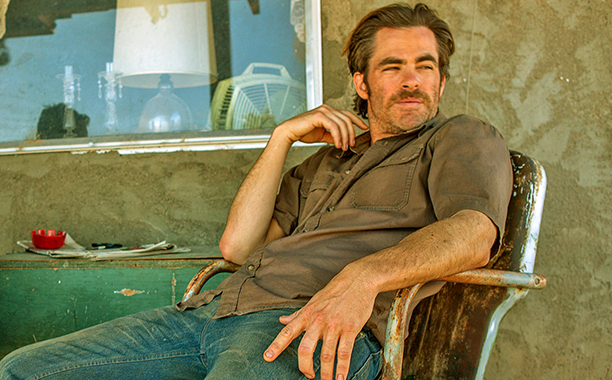
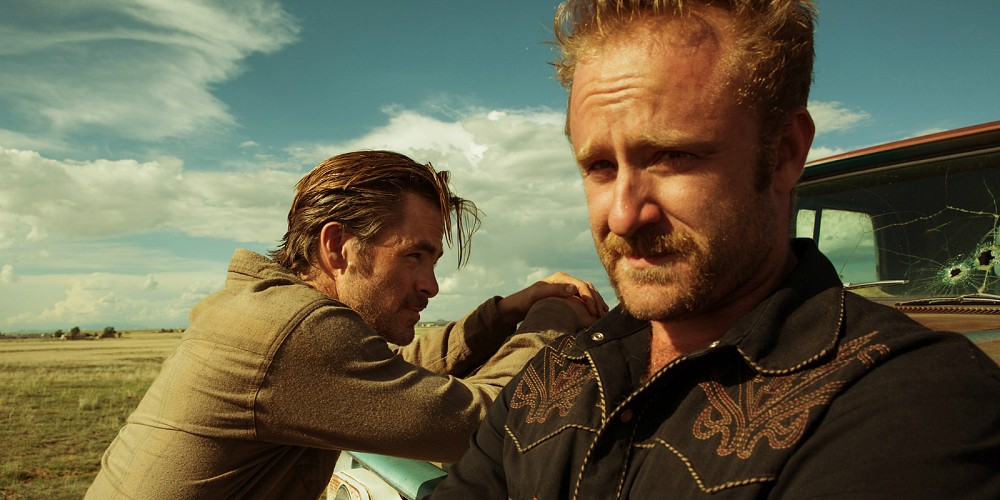
Toby (Chris Pine) and Tanner (Ben Foster) are brothers. Toby is the more complex – both poorly educated and wise. While Toby takes personal responsibility for the bad choices of his youth that have ruined a marriage and left him unable to contribute to the future of his two sons, he appreciates that generational poverty and the economic system have stacked the odds against him. Toby cared for his dying mother and is now committed to making things right for his sons and ex-wife; he is highly moral but he’s not about to follow rules that he sees as unjust. He looks like another unemployed oilfield roughneck, but he’s surprisingly cagey and strategic.
Tanner is the classic lowlife psychopath, whose impulses have always led him into trouble with the law. Asked “How have you stayed out of jail for a year?”, Tanner replies, “It’s been difficult.” He’s also a little smarter and lot more charming than he looks, but it’s clear that he is destined for a bad end.
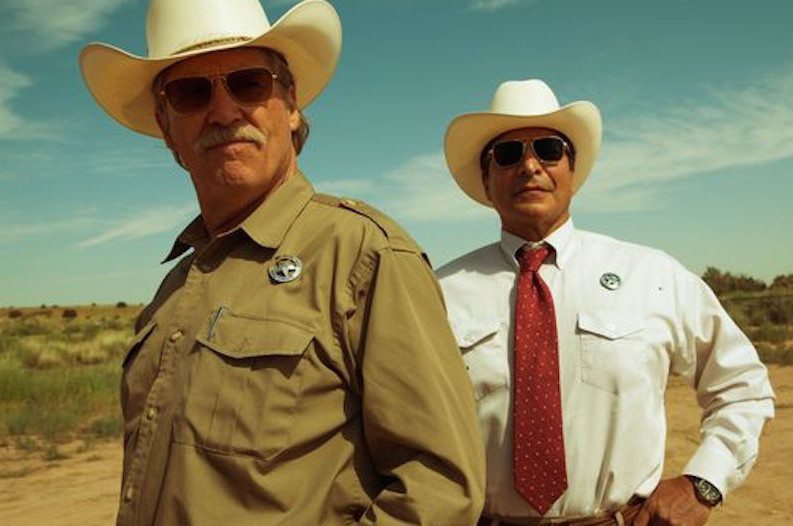
Marcus Hamilton (Jeff Bridges), an aged Texas ranger who is three weeks from retirement, is on the brothers’ trail. Marcus is an astute and unsentimental student of human behavior. Marcus relishes a good whodunit, and the wheels in his mind are always turning. His partner Alberto (Gil Birmingham) offers that, for a happy retirement “you’ll need someone to outsmart”. Indeed, it’s from Marcus, not the brothers themselves, that we learn that the bank robbers are likely raising money for some cause, against some deadline
In Hell or High Water, the banks are the real robbers. Marcus spots a bank manager with “Now this looks like a man who could foreclose on a house”. In the world of Bonnie and Clyde, victims of the Depression lost farms to foreclosure, but many banks failed, too; that movie’s anti-heroes were misfits like Tanner. In the world of Hell or High Water, the game is fixed so that the banks can’t fail, and so banking is just legalized criminality.
Jeff Bridges and Gil Birmingham in HELL OR HIGH WATER
Hell or High Water is exceptionally well-acted. This is the best work so far by Chris Pine (Kirk in Star Trek). Ben Foster, unsurprisingly, nails the Born To Lose character of Tanner. Gil Birmingham (Billy Black in the Twilight movies) is stellar as Marcus’ reflective and long-suffering partner Alberto. Jeff Bridges has matured into a master actor who delivers absolute perfection and makes it look effortless.
And the high quality performances just keep coming throughout Hell or High Water. The film opens with nice turns by Dale Dickey (unforgettable in Winter’s Bone) and veteran Buck Taylor. Marin Ireland is excellent as Toby’s ex-wife, and Margaret Bowman sparks a diner scene as the world’s most authoritarian waitress. Katy Mixon is Oscar-worthy in a role as a waitress who may long for companionship, but really, really needs to keep her tip; I just hope enough people see this movie and experience Mixon’s eyes narrowing and gleaming with resolve.
While Jeff Bridges is reason enough to see Hell or High Water, all of its elements add up to a masterpiece. Not that Chris Pine needs a star-making breakthrough performance, but Hell or High Water certainly proves that he can carry a better movie than Hollywood franchises allow. I’m going to see Hell or High Water again; then I’m going to line up to see Taylor Sheridan’s next film, whatever and whenever that will be.
Hell or High Water is now available to rent on DVD from Netflix and to stream from Amazon Instant, iTunes, Vudu, YouTube and Google Play.
Toby: “You’re talkin’ like you don’t think we’re going to get away with it.”
Tanner: “I never met anyone who got away with anything.”
The character-driven crime drama Hell or High Water is remarkably atmospheric and gripping, and I have it at the very top of my Best Movies of 2016 – So Far. As it begins, we think we’re watching a very well-made film about white trash losers on a crime spree, but eventually, as we understand how original the characters are and how intricate the plot is, we understand that we’re watching a triumph of the perfect crime genre – and with an embedded political point of view. Screenwriter Taylor Sheridan, an actor who wrote last year’s Sicario, has proven that he is an artist of uncommon depth.
Director David Mackenzie imbues Hell or High Water with an astonishing sense of time (the present) and place (rural West Texas). The story is set in the dusty flatlands between Lubbock and Wichita Falls (shot just over the border in eastern New Mexico). Mackenzie employs Giles Nuttgens’ cinematography and the music, some composed by Nick Cave, to evoke an environment that is rich in horizons but, except in the bursts of occasional oil booms, dirt poor in every way. He begins Hell or High Water with a 360 degree shot of a bank branch parking lot with a teller sneaking the last cigarette before her shift; the starkness and anonymity of the dying downtown immerses us right where Mackenzie wants us.
It’s a place where people know the difference between Dr. Pepper and Mr. Pibb – and it’s important. It’s also a place where many civilians are gun-totin’, which adds a whole new element to the average bank robbery.
Toby (Chris Pine) and Tanner (Ben Foster) are brothers. Toby is the more complex – both poorly educated and wise. While Toby takes personal responsibility for the bad choices of his youth that have ruined a marriage and left him unable to contribute to the future of his two sons, he appreciates that generational poverty and the economic system have stacked the odds against him. Toby cared for his dying mother and is now committed to making things right for his sons and ex-wife; he is highly moral but he’s not about to follow rules that he sees as unjust. He looks like another unemployed oilfield roughneck, but he’s surprisingly cagey and strategic.
Tanner is the classic lowlife psychopath, whose impulses have always led him into trouble with the law. Asked “How have you stayed out of jail for a year?”, Tanner replies, “It’s been difficult.” He’s also a little smarter and lot more charming than he looks, but it’s clear that he is destined for a bad end.
Marcus Hamilton (Jeff Bridges), an aged Texas ranger who is three weeks from retirement, is on the brothers’ trail. Marcus is an astute and unsentimental student of human behavior. Marcus relishes a good whodunit, and the wheels in his mind are always turning. His partner Alberto (Gil Birmingham) offers that, for a happy retirement “you’ll need someone to outsmart”. Indeed, it’s from Marcus, not the brothers themselves, that we learn that the bank robbers are likely raising money for some cause, against some deadline
In Hell or High Water, the banks are the real robbers. Marcus spots a bank manager with “Now this looks like a man who could foreclose on a house”. In the world of Bonnie and Clyde, victims of the Depression lost farms to foreclosure, but many banks failed, too; that movie’s anti-heroes were misfits like Tanner. In the world of Hell or High Water, the game is fixed so that the banks can’t fail, and so banking is just legalized criminality.
Jeff Bridges and Gil Birmingham in HELL OR HIGH WATER
Hell or High Water is exceptionally well-acted. This is the best work so far by Chris Pine (Kirk in Star Trek). Ben Foster, unsurprisingly, nails the Born To Lose character of Tanner. Gil Birmingham (Billy Black in the Twilight movies) is stellar as Marcus’ reflective and long-suffering partner Alberto. Jeff Bridges has matured into a master actor who delivers absolute perfection and makes it look effortless.
And the high quality performances just keep coming throughout Hell or High Water. The film opens with nice turns by Dale Dickey (unforgettable in Winter’s Bone) and veteran Buck Taylor. Marin Ireland is excellent as Toby’s ex-wife, and Margaret Bowman sparks a diner scene as the world’s most authoritarian waitress. Katy Mixon is Oscar-worthy in a role as a waitress who may long for companionship, but really, really needs to keep her tip; I just hope enough people see this movie and experience Mixon’s eyes narrowing and gleaming with resolve.
While Jeff Bridges is reason enough to see Hell or High Water, all of its elements add up to a masterpiece. Not that Chris Pine needs a star-making breakthrough performance, but Hell or High Water certainly proves that he can carry a better movie than Hollywood franchises allow. I’m going to see Hell or High Water again; then I’m going to line up to see Taylor Sheridan’s next film, whatever and whenever that will be.
Hell or High Water is now available to rent on DVD from Netflix and to stream from Amazon Instant, iTunes, Vudu, YouTube and Google Play.
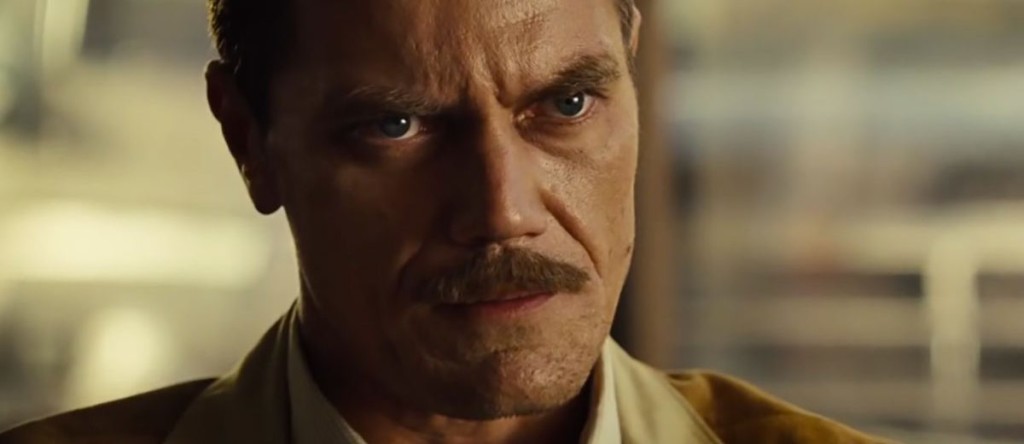
Michael Shannon, the only reason to see NOCTURNAL ANIMALS
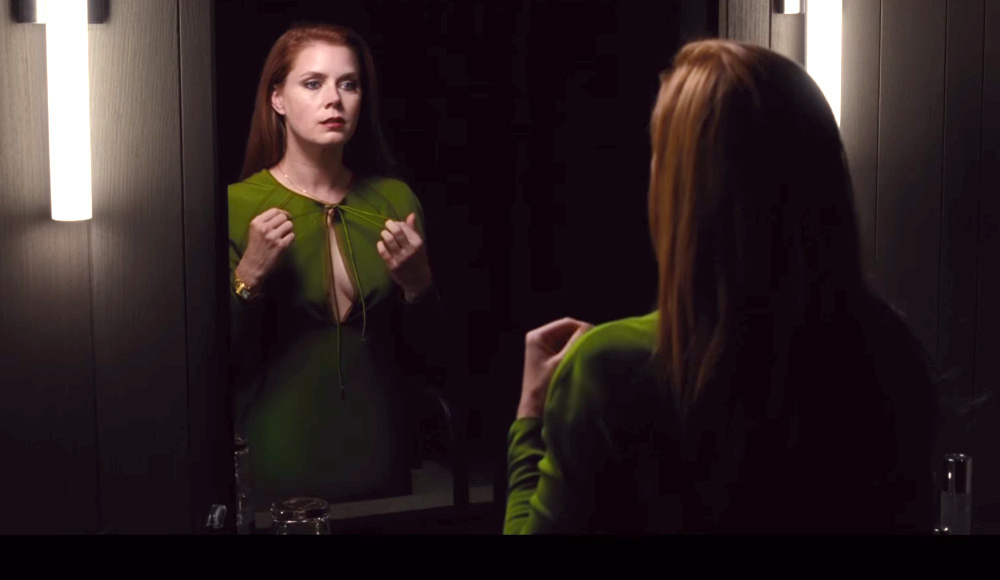
In the would-be-thriller-but-really-squirmer Nocturnal Animals, Amy Adams plays a young woman who becomes infatuated with the romance of being with a starving artist, the sensitive Edward (Jake Gyllenhaal). After the romance wears off, she dumps him for a higher testosterone model, the striving businessman Hutton (Armie Hammer). Twenty years later, she has become a successful art dealer with all the trappings of an affluent life, buy plunges into a midlife crisis. At this moment, Edward finally gets a novel published and sends her an advance copy. Shocked to see that it is dedicated to her, she starts reading it and becomes engrosses, which is exactly what Edward has intended.
Nocturnal Animals is the braiding of three plot threads: the story of the doomed romance between the young Susan and Edward, Susan’s current melodrama with Hutton and a reenactment of the plot of Edward’s novel. The novel’s story takes up most of the screen time. It’s a garden variety, but particularly grim, revenge story, with a man (also played by Gyllenhaal) whose family is high jacked in desolate West Texas by a crew of sadistic lowlifes with the very worst intentions. If you’ve ever seen a crime movie, you know what is going to happen to the guy’s wife and daughter. After an excruciatingly long menace-and-dread segment, Gyllenhaal escapes and stumbles into the potential for revenge, guided by the local detective (Michael Shannon).
If you’ve survived the squirming caused by the unremittingly and gratuitously uncomfortable kidnapping sequence, you’re in for a treat with Michael Shannon’s performance, which is really the only reason to see Nocturnal Animals. Shannon doesn’t make any unnecessary movements, which focuses us his piercing and unblinking eyes, which make clear that he is a particularly dangerous man. And, we learn, even more dangerous because he is a man without anything to lose.
Actually, though, Laura Linney is also superb as Susan’s mom, unrecognizable underneath a formidable Dina Merill bouffant. Linney actually gets the one sure thing LOL laugh line in the movie. Aaron Taylor-Johnson is also devastatingly despicable as the most sadistic and loathsome of the thugs. Adams, Gyllenhaal and Hammer are all fine, too.
This is the second movie from director Tom Ford, the fashion designer; it’s nothing at all like the his A Single Man, with its exploration of loneliness, grief and identity repression. Ford’s background in fashion probably informs some jokiness in Susan’s world of overly precious art dealers and silly avant garde “art”. But other than that, there really isn’t any humor to leaven the unpleasantness of the Gyllenhaal story.
The reason that Susan’s dumping of Edward is supposed to be so scarring is overblown, and I’m finding it has become an all too easy screenwriting device. (We’ve come a long way since Alfie in 1966.)
I should note that I think that I do GET this movie, with its layers of revenge and its comments on art. I just don’t think that the payoff is there. Nocturnal Animals will make for a solid $3.99 video rental so you can fast forward until you see Michael Shannon on the screen.
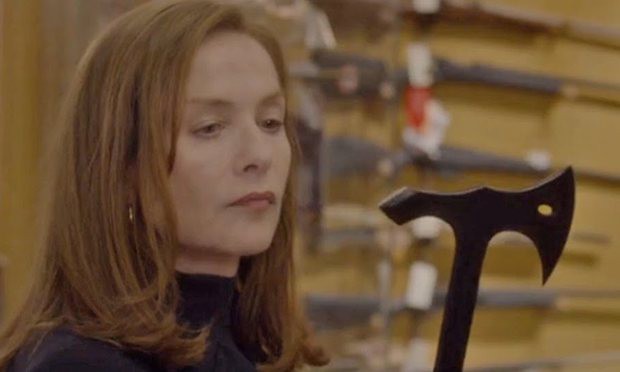
The extraordinary performance of French actress Isabelle Huppert makes the already subversive Elle into a Must See. Huppert plays the middle-aged businesswoman Michèle, who is raped in her home in the first seconds of this movie. Elle is likely to be controversial; Michèle’s reaction to the rape will not meet anyone’s expectations. At first, Elle seems like it will be a looks like a whodunit (who is the attacker?), then it shifts into a revenge fantasy, all the while remaining, at its core, an amazing study of Michèle, a character that we haven’t seen before. This is a woman who refuses to accept – and may not be capable of – victimhood.
The screenplay, which turns upside down any expectations we may have, is written by David Birke from a Philippe Djian novel. The hunted becomes the hunter, we never know what to expect from Michèle and shockers abound. Who better than Paul Verhoeven (Basic Instinct) to direct? Especially since the willful Michèle has a lusty sexual appetite, with adventuresome tastes.
Michèle needs to be in control, and she’s generally tough enough to stay in charge. The way to understand her actions is that she will do anything to regain that control and to avenge any moment that someone else has wrested it from her. One would expect the rape to be shattering enough, but Michèle starts getting messages from her attacker that would send ANYONE into a puddle of paralyzing terror; instead she’s only momentarily unnerved.
With the exception of two monsters, all the men in Elle are weak (despite any internal sense of bravado), and she handles them all easily. (Those two monsters better watch out, too.)
One way of watching Elle is to keep score, as in: Michèle 6, Men 0. But Elle is not a man-bashing film – Michèle’s ridiculously self-centered mom and her son’s abusive nightmare of a girlfriend are just as unsympathetic as all but two of the men.
There’s plenty of dark humor in Elle. For example, immediately after the opening rape scene, we watch Michèle at work as the founding CEO of a video game company. She’s watching a clip from her company’s newest video game in development. The clip is so hyper-violent and misogynistic that it would trigger massive PTSD for any rape victim, but Michèle’s complaint is that it’s NOT VIOLENT ENOUGH.
Isabelle Huppert may be the best screen actress working today, she’s certainly the most fearless. She’s so fearless, you gotta wonder if there any scripts that she rejects for being TOO weird, challenging or transgressive. She is comfortable with roles that range from the kinky (The Piano Teacher) to the most twisted (Ma Mere).
Huppert is especially gifted at playing impenetrable. She is at her best when she simply REGARDS other characters, assessing and judging them. With almost no lines,and very little screen time, her sphinx-like character dominated the recent Louder Than Bombs.
I also have to note that her character in Elle is in her early 50s – a sexy early 50s – while Huppert herself is 63. She seems to have somehow stopped the aging process about 15 years ago.
Elle ends in a moment of friendship, with the final line an homage to my favorite movie of all time. There’s a difference between perverse and perverted, and Elle keeps just inside that fine line. The shockers, the very dark humor and Huppert’s singular and compelling performance make Elle one of the year’s most absorbing films. Two weeks after screening it, I’m still thinking about it.
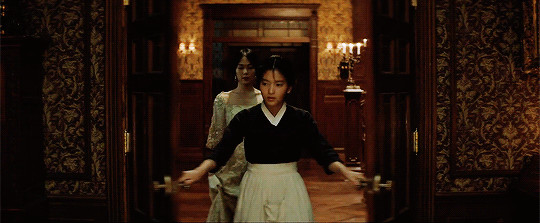
After a few minutes of The Handmaiden, we learn that it’s a con artist movie. After 100 minutes, we think we’ve watched an excellent con artist movie, but then we’re surprised by a huge PLOT TWIST, and we’re in for two more episodes and lots of surprises in a gripping and absorbing final hour. It’s also one of the most visually beautiful and highly erotic films of the year.
Director and co-writer Chan-wook Park sets the story in 1930s Korea during Japanese occupation (Japanese dialogue is subtitled in yellow and Korean dialogue in white). A young heiress has been secluded from childhood by her guardian uncle, who intends to marry her himself for her fortune. A con man embarks on a campaign to seduce and marry the wealthy young woman to harvest her inheritance himself. The con man enlists a pickpocket to become handmaiden to the heiress – and his mole. I’m not going to tell you more about the plot, but the audience is in for a wild ride.
The Handmaiden takes its time revealing its secrets. Who is conning who? Who is attracted to whom? How naive is the heiress? How loyal is the handmaiden? Who is really Japanese and who is really Korean? What’s in those antique books? What’s in the basement? Is the uncle perverted or REALLY perverted? And what legendary sex toy will show up in the final scene?
THE HANDMAIDEN
Chan-wook Park’s 2003 US art house hit Oldboy is highly sexualized, trippy and disturbing. The Handmaiden is much more mainstream and accessible than Oldboy, but its sexuality packs a punch.
Gorgeous and erotic, The Handmaiden is one of the most gloriously entertaining films of the year.
The end of the thriller The Girl on the Train, adapted from the popular novel by Paula Hawkins, is indeed thrilling. It’s about a woman (Emily Blunt) who is a complete mess, a black-out drunk who has clearly gone off the deep end in many ways. We watch her stagger from one dysfunctional moment to the next until she is entangled in a missing person case, serial marital infidelity and a murder. A Big Plot Twist near the end reshuffles the deck, and we find out that we are watching a different story than we had supposed.
The last 30 minutes of The Girl on the Train rocks, but I found the murky first 82 minutes to be confusing and boring. The Wife, however, enjoyed the whole thing. Neither of us had finished the novel and knew to expect the Big Plot Twist.
Blunt is very good as the protagonist. Justin Theroux, Lisa Kudrow and Edgar Ramírez (Carlos) stand out as well. Allison Janney is wonderful as a jaded, Seen It All police detective; at the end, her grin reveals “wait until I tell the guys that this really happened”.
Toby: “You’re talkin’ like you don’t think we’re going to get away with it.”
Tanner: “I never met anyone who got away with anything.”
The character-driven crime drama Hell or High Water is remarkably atmospheric and gripping, and I’ll be putting it at the very top of my Best Movies of 2016 – So Far. As it begins, we think we’re watching a very well-made film about white trash losers on a crime spree, but eventually, as we understand how original the characters are and how intricate the plot is, we understand that we’re watching a triumph of the perfect crime genre – and with an embedded political point of view. Screenwriter Taylor Sheridan, an actor who wrote last year’s Sicario, has proven that he is an artist of uncommon depth.
Director David Mackenzie imbues Hell or High Water with an astonishing sense of time (the present) and place (rural West Texas). The story is set in the dusty flatlands between Lubbock and Wichita Falls (shot just over the border in eastern New Mexico). Mackenzie employs Giles Nuttgens’ cinematography and the music, some composed by Nick Cave, to evoke an environment that is rich in horizons but, except in the bursts of occasional oil booms, dirt poor in every way. He begins Hell or High Water with a 360 degree shot of a bank branch parking lot with a teller sneaking the last cigarette before her shift; the starkness and anonymity of the dying downtown immerses us right where Mackenzie wants us.
It’s a place where people know the difference between Dr. Pepper and Mr. Pibb – and it’s important. It’s also a place where many civilians are gun-totin’, which adds a whole new element to the average bank robbery.
Toby (Chris Pine) and Tanner (Ben Foster) are brothers. Toby is the more complex – both poorly educated and wise. While Toby takes personal responsibility for the bad choices of his youth that have ruined a marriage and left him unable to contribute to the future of his two sons, he appreciates that generational poverty and the economic system have stacked the odds against him. Toby cared for his dying mother and is now committed to making things right for his sons and ex-wife; he is highly moral but he’s not about to follow rules that he sees as unjust. He looks like another unemployed oilfield roughneck, but he’s surprisingly cagey and strategic.
Tanner is the classic lowlife psychopath, whose impulses have always led him into trouble with the law. Asked “How have you stayed out of jail for a year?”, Tanner replies, “It’s been difficult.” He’s also a little smarter and lot more charming than he looks, but it’s clear that he is destined for a bad end.
Marcus Hamilton (Jeff Bridges), an aged Texas ranger who is three weeks from retirement, is on the brothers’ trail. Marcus is an astute and unsentimental student of human behavior. Marcus relishes a good whodunit, and the wheels in his mind are always turning. His partner Alberto (Gil Birmingham) offers that, for a happy retirement “you’ll need someone to outsmart”. Indeed, it’s from Marcus, not the brothers themselves, that we learn that the bank robbers are likely raising money for some cause, against some deadline
In Hell or High Water, the banks are the real robbers. Marcus spots a bank manager with “Now this looks like a man who could foreclose on a house”. In the world of Bonnie and Clyde, victims of the Depression lost farms to foreclosure, but many banks failed, too; that movie’s anti-heroes were misfits like Tanner. In the world of Hell or High Water, the game is fixed so that the banks can’t fail, and so banking is just legalized criminality.
Jeff Bridges and Gil Birmingham in HELL OR HIGH WATER
Hell or High Water is exceptionally well-acted. This is the best work so far by Chris Pine (Kirk in Star Trek). Ben Foster, unsurprisingly, nails the Born To Lose character of Tanner. Gil Birmingham (Billy Black in the Twilight movies) is stellar as Marcus’ reflective and long-suffering partner Alberto. Jeff Bridges has matured into a master actor who delivers absolute perfection and makes it look effortless.
And the high quality performances just keep coming throughout Hell or High Water. The film opens with nice turns by Dale Dickey (unforgettable in Winter’s Bone) and veteran Buck Taylor. Marin Ireland is excellent as Toby’s ex-wife, and Margaret Bowman sparks a diner scene as the world’s most authoritarian waitress. Katy Mixon is Oscar-worthy in a role as a waitress who may long for companionship, but really, really needs to keep her tip; I just hope enough people see this movie and experience Mixon’s eyes narrowing and gleaming with resolve.
While Jeff Bridges is reason enough to see Hell or High Water, all of its elements add up to a masterpiece. Not that Chris Pine needs a star-making breakthrough performance, but Hell or High Water certainly proves that he can carry a better movie than Hollywood franchises allow. I’m going to see Hell or High Water again; then I’m going to line up to see Taylor Sheridan’s next film, whatever and whenever that will be.
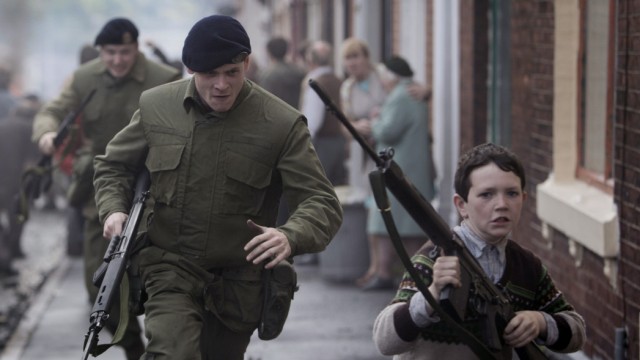
The title of the harrowing thriller ’71refers to the tumultuous year 1971 in Northern Ireland’s Troubles. An ill-prepared unit of British soldiers gets their first taste of action in Belfast, and the rookie Private Gary Hook (Jack O’Connell) gets inadvertently left behind in hostile territory. Private Hook races around an unfamiliar and dangerous city at night. He is being hunted by his own regular troops, a shadowy and sketchy military intelligence unit, the regular IRA, the hotheaded Provisional IRA and Ulster paramilitaries – all with their own conflicting agendas. Any civilian who helps him will be at direct and lethal risk from the partisans.
In their feature debuts, director Jann Demange and cinematographer Tat Ratcliffe take us on a Wild Ride, with just a couple of chances for the audience to catch its collective breath. Importantly, the way Private Hook gets left behind amid the escalating chaos is very believable. Then there’s an exhilarating footrace through the alleys and over brick walls. Every encounter with another person is fraught with tension. Finally, there’s a long and thrilling climactic set piece in a Belfast apartment block.
O’Connell is in 90% of the shots and carries it off very well. All of the acting in ’71 is excellent. Corey McKinley is special as the toughest and most confident ten-year-old you’ll ever meet. Barry Keoghan takes the impassive stone face to a new level. And I always enjoy David Wilmot (so hilarious in The Guard).
I thank the casting and the direction for making it easy for us to tell all of these pale, ginger characters apart. To the credit of writer Gregory Burke, the beginning of the film economically sets up Private Hook as having the fitness and stamina to survive what befalls him throughout the night.
With all the different sides playing each other, the action (and the action is compelling) is set in an especially treacherous version of three-dimensional chess. Some of the double- and triple-crossing at the end is breathtaking. But what ’71 does best is putting the thrill in a thriller – keeping the audience on the edge of our seats for all 99 minutes.
’71, which I saw at Cinequest, made my list of the Best Movies of 2015. It’s now available on DVD from Netflix and Redbox and streaming on Amazon Instant Video, iTunes, Vudu, YouTube, Google Play and Xbox Video.