PEPI, LUCI, BOM AND OTHER GIRLS LIKE MOM: early, ragged Almodóvar

A very young Pedro Almodóvar’s 1980 Pepi, Luci, Bom and Other Girls Like Mom. This is early Almodovar – zany and ribald, even transgressive. The filmmaking craft is very rough (and very low budget), but Almodóvar’s signature energy and vibrant colors are already there. Fun rock music sets the tone from the get go in the title credits.

The humor is outrageous, embracing that of the very first American gross-out comedies (The Groove Tube and The Kentucky Fried Movie) and taking a step (or a few) farther:

  • A penis-measuring contest as a party game;
  • The question of whether a cop’s wife can become a punk band’s groupie;
  • Panties that turn farts into perfume;
  • Cops baited into a narc raid on a plastic marijuana plant;
  • Perhaps the dirtiest pop pseudopunk song ever: I love you because you’re dirty; Filthy slutty and servile.

The protagonist starts out as the party girl Pepi, but the story evolves to center around Luci, the wife of a brutish cop. As Luci is debased by more and more characters, becoming a human piñata, it is revealed that she is a masochist who actually is attracted to and pleasured by the meanest behavior. [SPOILER: There’s even a Golden Shower early in this story thread.]

Viewing through today’s lens, the movie violence against women no longer works as comedy, even though the character who is debased is a masochist and the rape that spurs the revenge theme is clearly intended to be broadly comic.

This is Almodóvar having fun being naughty. His most profound work was still two decades in the future: Talk to Her, Bad Education, Broken Embraces.

I watched Pepi, Luci, Bom and Other Girls Like Mom on TCM, and you can stream it from Amazon, AppleTV, Vudu and YouTube.

499: the legacy of Mexico’s Original Sin

499. Photo courtesy of Cinema Guild.

In director and co-writer Rodrigo Reyes’ highly original docu-fable 499, one of Hernán Cortés’ soldiers (Eduardo San Juan Breñais) is transported centuries into the future and plunged into contemporary Mexico. The movie’s title reflects a moment 499 years after Cortés’ conquest of the Aztecs in 1520; the conquistador and the audience discover that the dehumanization inherent in colonialism has persisted to plague modern Mexico.

I’m calling Reyes’ medium a “docu-fable” because it is all as real as real can be (the documentary), except for the fictional, 500-year-old conquistador (the fable).

Cast upon a Veracruz beach after a shipwreck (but 500 years later), he conquistador is terribly disoriented, and retraces Cortés’ march from Veracruz to Tenochtitlan/Mexico City. Seeing everything with a 500 year old lens, he is initially disgusted that the Indians that he conquered are now running things.

Soon he finds a Mexico reeling from narco terror. He meets Mexicans who have been victimized by the cruel outrages of the drug cartels, those risking their lives to hop a northbound train, and those in prison. In the emotional apex of 499, one mother’s account of a monstrous atrocity, clinical detail by clinical detail, is intentionally unbearable.

Reyes wants the audience to connect the dots from Mexico’s Original Sin – a colonialism that was premised on devaluing an entire people and their culture. Will the conquistador find his way to contrition?

499, with its camera sometimes static, sometimes slowly panning, is contemplative. Cinematographer: Alejandro Mejía’s work won Best Cinematography at the 2020 Tribeca Film Festival.

499 releases into theaters on August 20, and will play San Francisco’s Roxie in early September, before its national rollout.

coming up on TV – THE BITTER STEMS, a lost masterpiece, rediscovered

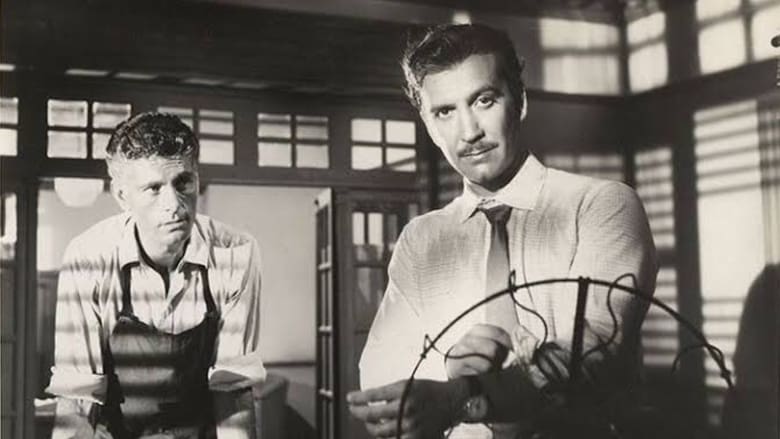
Photo caption: Vassili Lambrinos and Carlos Cores in BITTER STEMS

Turner Classic Movies brings us a rare treat this Saturday and Sunday, July 17-18, the recently recovered Argentine masterpiece of film noirThe Bitter Stems (Los tallos amargos). TCM will air it on Eddie Muller’s Noir Alley.

The Bitter Stems was listed as one of the “50 Best Photographed Films of All-Time” by American Cinematographer. It won the Silver Condor (the Argentine Oscar) for both Best Picture and Best Director (Fernando Ayala).

The Bitter Stems was thought to be lost until a print was discovered in a private collection in 2014 and restored with the support of Muller’s Film Noir Foundation. I saw it – and was enthralled – at the 2016 Noir City film festival in San Francisco. That was probably The Bitter Stem’s US premiere and probably the first time that it was projected for any theater audience in over fifty years.

There is often an Icarus theme in film noir, with protagonists who over-reach and risk a lethal fall. Here, Gaspar (Carlos Cores), a grasping Argentine journalist, conspires with Hungarian immigrant Liudas (Vassili Lambrinos) to concoct a fraud that will make them a quick and easy fortune. Unfortunately, the scheme requires a hamster-in-the-wheel effort to stay ahead of collapse – and everything must go just right…

Lambrinos’ performance is particularly sui generis.

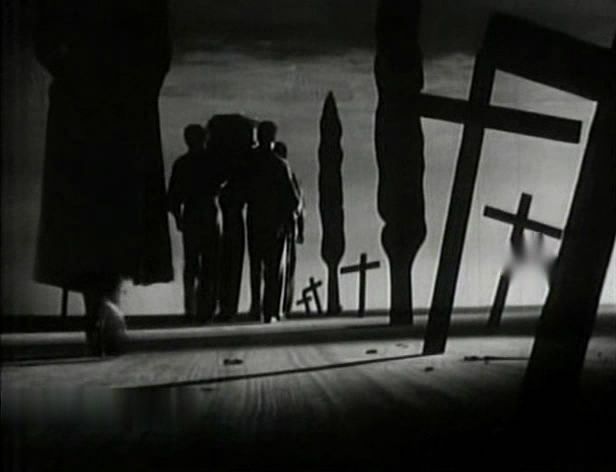
This was a very early film for director Fernando Ayala, who went on to establish himself as one of Argentina’s major directors. Cinematographer Ricardo Younis had studied under Greg Toland, who originated the groundbreaking techniques in Citizen Kane. Ayala and Younis combined to create the film’s storied dream sequence – one of the most surreal in cinema (see images below).

The Bitter Stems (Los tallos amargos) is a masterpiece, but almost nobody has seen it in over fifty years. Don’t miss it this time – set your DVR.

NUDO MIXTECO: three women, three dramas

A scene from Angeles Cruz’s NUDO MEXTECO. Photo courtesy of SFFILM

In Nudo Mixteco, we visit an indigenous Mixtec village in Southern Mexico and get three dramas for the price of one. It’s the annual festival, and three long-absent locals return home. One is there for her mom’s funeral. another to intervene in her daughter’s welfare and the third has just decided that’s time to come back home.

Nudo is Spanish for “knot”, and the three stories form a loose braid. As in Kieślowski’s Blue/Red/White, the characters in each plot thread can be spotted in the others.

In each story, the women face constraints of patriarchy and traditional culture. An out lesbian has built a life in the city, but her father in the village cannot accept her sexuality, and even blames it for her mother’s death. Another woman also works in the city, and has left her daughter to be cared for by her sister in the village; reports of the daughter’s behavior trigger concern stemming from the mom’s own childhood sexual abuse.

In the third story, a village man has been working in the US. He had promised his wife that he would be gone six months, but it’s been three years. He expects that he can resume their lives as before, but his wife has moved on. Each feels betrayed by the other, and the village is convened to reach a community decision on a just outcome.

Nudo Mixteco is the debut feature for writer-director Angeles Cruz, who has won Ariels (Mexico’s Oscars) for her short films. Cruz is an accomplished actress, who was nominated for a best actress Ariel in 2018.

I screened Nudo Mixteco at SFFILM, where it won a jury award.

A scene from Angeles Cruz’s NUDO MEXTECO. Photo courtesy of SFFILM

CARVER: will he be undone by a woman? or by his own obsession?

Victor Rivas (center) in CARVER. World premiere t Cinequest. Photo courtesy of Select Films.

In the neo-noirish Spanish thriller Carver, a guy named Ernesto takes on the alter ego of Carver in the wee hours. Carver strides through Ernesto’s gritty urban neighborhood in dressed in a ridiculous, homemade superhero costume. He has no super powers, but is driven to make things right, vigilante-style. A sexy, stoned woman of uncertain reliability engages his interest. Will she bring him down?

Ernesto (Victor Rivas) seems otherwise a normal, salt-of-the-earth guy . He lives a quotidian existence, monitoring a supermarket’s security cameras by day and presiding over his family’s evening meals. But when his wife and kids are ready for bed (and this is Spain, so it is LATE), he heads out on the streets, to his wife’s increasing displeasure.

Why? He’s not a wannabe hanging judge; he’s pretty merciful to the shoplifters that he catches at his day job. But he has this need to personally patrol the streets to keep kids and single women safe. It’s odd behavior, and he does so with an almost child-like naivete; we wonder what emotional trauma might have damaged him.

At first, as he fails to spot her manipultiveness Victor is no match for the femme fatale Alicia (Mar Del Corral) , who is channelling Brigid O’Shaughnessy. Then he begins to appreciate just how unhunged she may be.

This is the first feature for writer-director Evgeny Yablokov, and this character-driven thriller is an impressive calling card.

There are many film actors named Victor Rivas. The star of Carver is not one of the more famous one, but a mournful-faced stage actor in Madrid, who has played Kierkegaard.

Not everybody will be satisfied with the ending of Carver, but I thought it was perfect.

I screened Carver for its world premiere at Cinequest, and it made my Best of Cinequest 2021. You can stream it during the festival for only $3.99 at Cinequest’s online Cinejoy.

AGUA ROSA: what are they to each other?

Lizzy Auna and Axel Arenas in AGUA ROSA. Photo courtesy of Cinequest.

The Mexican drama Agua Rosa begins with a young couple heading to stay a few days at an isolated property. We first see them mostly in long shot, often from the back, with very little dialogue, and we need to connect our own dots. Who are they? Why are they here? What are they to each other? That last question is what Agua Rosa is all about.

Mauricio (Axel Arenas) has inherited the place from his father and he’s settling the estate with his significant other Ana (Lizzy Auna). Mauricio is angry at his dad for abandoning his mom, so he’s unhappy and not fun to be around. His anger is leaking on Ana, and I kept hoping “don’t blow it with her by being such a jerk”. But maybe he’s also unhappy with something in their relationship…

Agua Rosa is co-written and co-directed by Miguel López Valdivia and Ca Silva (together credited as Antónimo). It’s their first feature film. They are able to make a languid pace work because Agua Rosa is only 71 minutes long.

The filmmakers use long shots and shots of long duration to emphasize the couple’s isolated setting and the potential isolation from each other. This makes the tight closeups at the climax all the more powerful.

I screened Agua Rosa for its world premiere at Cinequest; you can stream it during the festival for only $3.99 at Cinequest’s online Cinejoy.

THE AUGUST VIRGIN: in search of reinvention

Itsaso Arana in THE AUGUST VIRGIN. Photo courtesy of Outsider Pictures.

In the lovely and genuine The August Virgin, 33 year-old Eva (Itsaso Arana) is between relationships, not defined by any career success, and her biological clock is ticking. She knows it’s time for a reset. In August, Eva borrows an acquaintance’s apartment in another Madrid neighborhood and sets off on a series of strolls, in search of possibilities as yet unknown.

Many madrileños escape the city’s oppressive heat for the month of August. But Madrid is still filled with street festivals and tourists. Eva meanders around town, encountering old friends and making new ones. As Eva notes, in Madrid’s August, expectations are relaxed.

Eva is purposeful about shaking things up, but she has no plan other than to be open to the possibilities. That openness, with its fluidity and randomness, leads her to her moment of reinvention.

Eva is played by the film’s co-writer, Itsaso Arana. What’s so singular about Arana’s performance is that her Eva, as dissatisfied as she is with her current situation, is always comfortable in her own skin. She’s never desperate or needy (except when trying to negotiate a reluctant door lock) and always confident enough to engage with a stranger. At one point, the Spanish pop star Soleá sings, “I’ve still got time. I’m still here.”

THE AUGUST VIRGIN. Photo courtesy of Outsider Pictures.

The August Virgin’s other co-writer is director Jonás Trueba, and this is his sixth feature. I recently watched his next most recent film The Reconquest (La Reconquista) on Netflix, and it’s another intensely personal and genuine story, about two 30-year-olds reconnecting 15 years after a teen crush. Jonás Trueba is the son of Oscar-winning director Fernando Trueba (Belle Epoque, Chico & Rita).

Several critics have seen Trueba’s work as an homage to French New Wave filmmaker Éric Rohmer, but I found The August Virgin, with Eva’s serial conversations (real, probing conversations), reminded me of the more accessible work of Richard Linklater.

Madrid itself is on display here, with its searing daytime sun, and the liveliness of the streets, tapas bars and after-hours clubs when the sun goes down.

Trueba and Arana allow Eva her process, and she samples one experience after another, seemingly with the faith that one of them will lead her to where she wants to be. This is not a film for the impatient, but I found its two hours enchanting.

The August Virgin is on my list of Best Movies of 2020 – So Far and will be available to stream beginning Friday, August 21 on Virtual Cinemas, like San Rafael’s Rafael or Laemmle’s in LA.

MUCHO MUCHO AMOR: THE LEGEND OF WALTER MERCADO – gentleness and flamboyance

Walter Mercado in MUCHO MUCHO AMOR: THE LEGEND OF WALTER MERCADO

Just about every Spanish speaker knows who Walter Mercado is – and almost no non-Spanish speaker has heard of him. To describe him as a TV astrologer is profoundly inadequate.

Decades ago, I was flipping through TV channels and happened upon Walter’s astrology show and found him mesmerizing. He was so UNUSUAL, that, late at night, I just couldn’t change the station. The documentary Mucho Mucho Amor: The Legend of Walter Mercado will explain the phenomenon better than I can describe it.

For one thing, 99% of the show’s production value must have been in costume cost. Walter just stood in front of the camera and recited horoscopes, but he was always clad in capes that Liberace and Elvis would have considered WAY over the top. And Walter, for all the machismo in traditional Latino culture, was what we call today non-binary; Walter emanated a singular combination of androgyny and asexuality.

In Mucho Mucho Amor: The Legend of Walter Mercado, we get to meet the elderly Mercado, and find out about his life before and after his 25-year reign as the Spanish language TV ratings king. And why he suddenly disappeared from television.

While often jaw-droppingly flamboyant, Walter possessed a serene gentleness and warm-hearted demeanor that makes this documentary a Feel Good experience. Mucho Mucho Amor: The Legend of Walter Mercado is streaming on Netflix.

From SFFILM: ROJO – bobbing in a sea of moral relativism

Benjamin Naishtat’s ROJO. Courtesy of SFFILM.

The San Francisco International Film Festival (SFFILM) was set to open tomorrow before it was cancelled for the COVID-19 emergency, so in tribute, here’s a film from SFFILM’s 2019 program.

Rojo is Argentine writer-director Benjamín Naishtat’s slow burn drama.  Rojo is set just before the 1970s coup that some characters expect – but no one is anticipating how long and bloody the coup will be.  Several vignettes are woven together into a tapestry of pre-coup moral malaise.

A prominent provincial lawyer Claudio (Darío Grandinetti) is invited to participate in a scam. There’s a scary encounter of lethal restaurant rage. It looks like Claudio, bobbing on a sea of moral relativism, may well remained unscathed, but the arrival of crack detective becomes a grave threat.

As Claudio weaves through his life, his society shows signs of crumbling. There’s a failed teen seduction, an emotional breakdown at a formal reception and a natural metaphor – a solar eclipse.

It’s funny when the audience finally connects the dots and understands who the character nicknamed “the Hippie” is. And Naishtat and Grandinetti get the most out of the scene where Claudio finally dons a toupee.

We know something that the characters don’t know – or at least fully grasp – how bloody the coup will be. Watch for the several references to desaparecido, a foreboding of the coup. Argentina’s coup was known for the desaparecidos – the disappeared – thousands of the regime’s political opponents went missing without a trace, having been executed by death squads. In Rojo, a very inconvenient madman dies and his body is hidden, there’s a disappearing act in a magic show, and a would-be boyfriend vanishes.

This is a moody, atmospheric film that works as a slow-burn thriller. I saw Rojo earlier a year agoat the San Francisco International Film Festival (SFFILM). Rojo made my list of 10 Overlooked Movies of 2019. Stream from Amazon, iTunes and Vudu.

ANA’S DESIRE: a transgressive slow burn

ANA’S DESIRE. Photo courtesy of Cinequest.

In the Mexican sexual psychodrama Ana’s Desire, Ana (Laura Agorreca) is a conscientious working single mom. She is unsettled by the sudden appearance of her shady younger brother Juan (David Calderón León), who has been out of contact for years. With his motorcycle and his subversion of Ana’s bedtime and dietary routines, Juan becomes that Way Cool, fascinating uncle to Ana’s son Mateo (Ian Garcia Monterrubio).

It turns out that Ana and Juan had a tough childhood, having been raised by a less-than-ideal widowed father. They became very close then, and Ana’s visit back to their hometown rekindles old memories and deep-rooted feelings.

What is going on here between Ana and Juan? Writer-director Emilio Santoyo lets the audience connect the dots in a slow burn compressed into only 80 minutes. The ending pays off.

Cinequest hosts the US Premiere of Ana’s Desire.