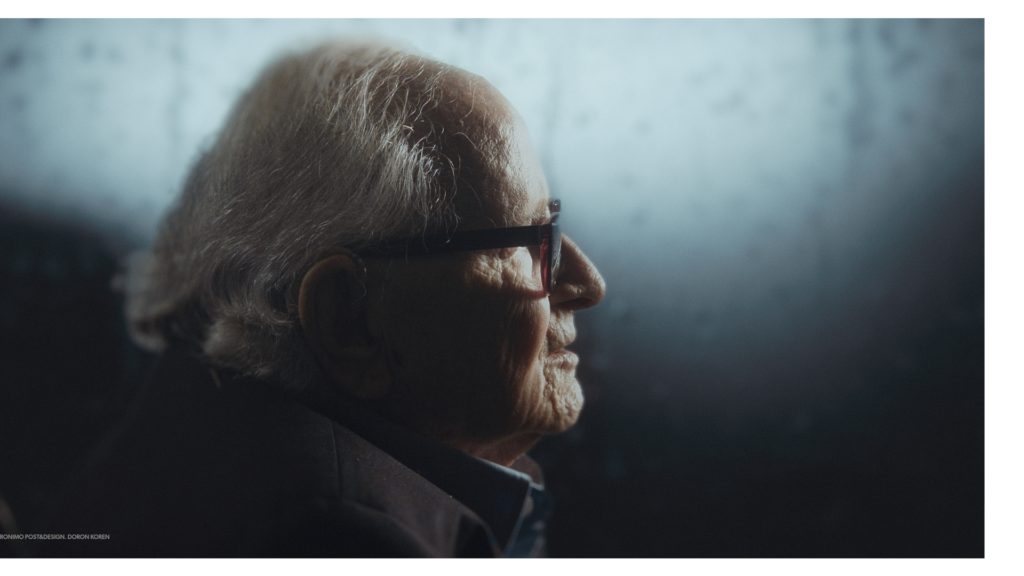
Subject Peter Malkin in a still from THE MOSSAD. Photo courtesy JFI
Anyone with an interest in historical cloak-and-dagger will appreciate the documentary The Mossad, about Israel’s legendary foreign intelligence service. We meet some current and recent Mossad officers, who are extremely tight-lipped. But decades of intervening history have freed their older colleagues to spin first-hand tales of the Mossad’s most legendary operations:
The kidnapping of Nazi death camp czar Adolph Eichmann (and we hear from the guy who physically grabbed Eichmann in Buenos Aires).
The cultivation of a longtime mole at the highest level of the Egyptian government. The mole is identified. We hear how the Israeli military reacted to the advance warning of Egypt’s 1973 invasion – you may be surprised.
The methodical hunting down of the Palestinian terrorists who kidnapped and murdered Israeli athletes at the Munich Olympics.
The Mossad is a natural bookend to the The Gatekeepers, about another Israeli intelligence agency. The Gatekeepers is centered around interviews with all six surviving former chiefs of Shin Bet, Israel’s super-secret internal security force. We get their inside take on the past thirty years of Israeli-Palestinian history. What is revelatory, however, is their assessment of Israel’s war on terror. These are hard ass guys who went to the office every morning to kill terrorists. But upon reflection, they conclude that winning tactics make for a losing strategy. The Gatekeepers is available to rent on DVD from Netflix and for streaming on Amazon Instant, iTunes, Vudu, YouTube, Google Play and Flixster.
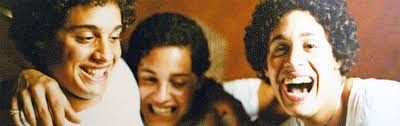
From L:R – Subjects Doug Rausch and Howard Burack in a still from THE TWINNING REACTION. Photo courtesy JFI.
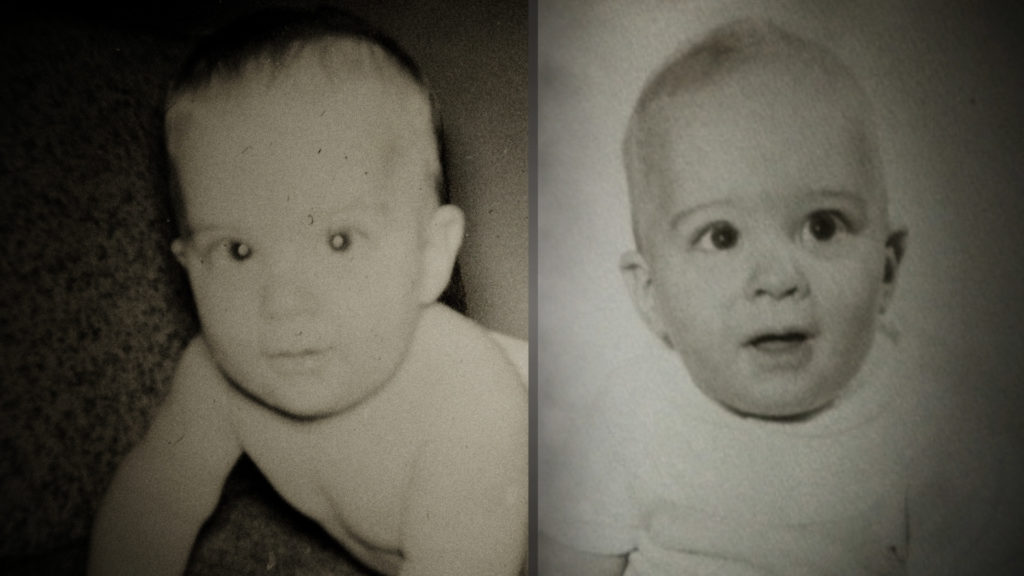
The startling and moving documentary The Twinning Reaction tells the story of a Mad Men-era research project and its profound human impact. To perform a longitudinal study of nurture vs. nature, researchers INTENTIONALLY separated identical twins and placed them with families that the researchers kept in the dark. The placements occurred AFTER the twin babies had bonded together in the crib for many months. Legally and ethically sketchy at the time, this is monstrous by today’s standards, and, in fact, caused harm to the adoptees.
Somehow, some of these twins learned the truth as adults and located their birth siblings. In The Twinning Reaction, we meet three sets of separated identical siblings. Because we meet the subjects of the study, the effects of separation are clearly apparent and highly personalized.
Writer-director Lori Shinseki has found an amazing story and source material to match. In a gripping 52 minutes, she weaves it into a coherent and compelling story.
THE TWINNING REACTION
The most astonishing set of sibs are triplets which are the subject of a film in current theatrical release, Three Identical Strangers. The Twinning Reaction focuses on the study; we meet several sets of twins, and the triplets are the jaw-dropping final act. Three Identical Strangers focuses on the triplets and then takes a more current dive into the study.
The Twinning Reaction’s world premiere was at Cinequest two years ago. The Twinning Reaction is not yet available to stream, so your only chance to see it will be at the San Francisco Jewish Film Festival this July and August.
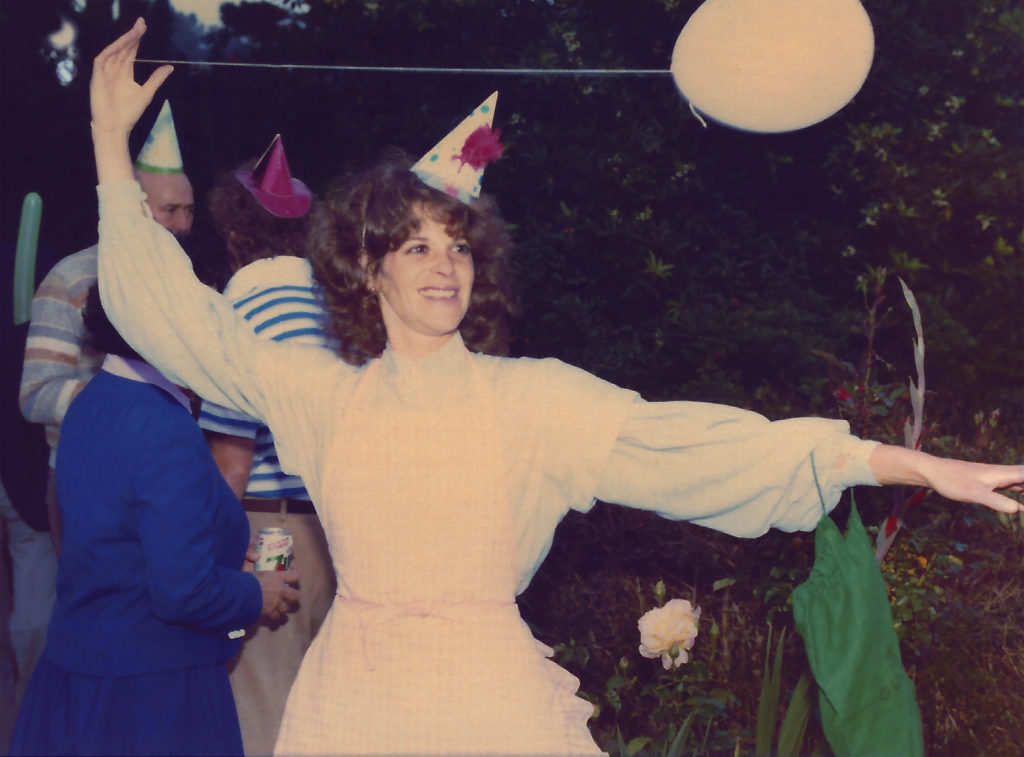
Subject Gilda Radner in a still from LOVE, GILDA. Photo courtesy JFI.
It’s time to get ready for one of the Bay Area’s top cinema events: the 38th annual San Francisco Jewish Film Festival (SFJFF38), which opens July 19, and runs through August 5 at five locations throughout the Bay Area. The SFJFF is the world’s oldest Jewish film festival, and, with a 2017 attendance figure of 40,000, still the largest.
Here’s an early peek at the fest highlights:
Opening night’s Bay Area premiere of the Gilda Radner biodoc Love, Gilda, featuring segments of Radner’s diaries. Director Lisa D’Apolito and original SNL cast member Laraine Newman will attend.
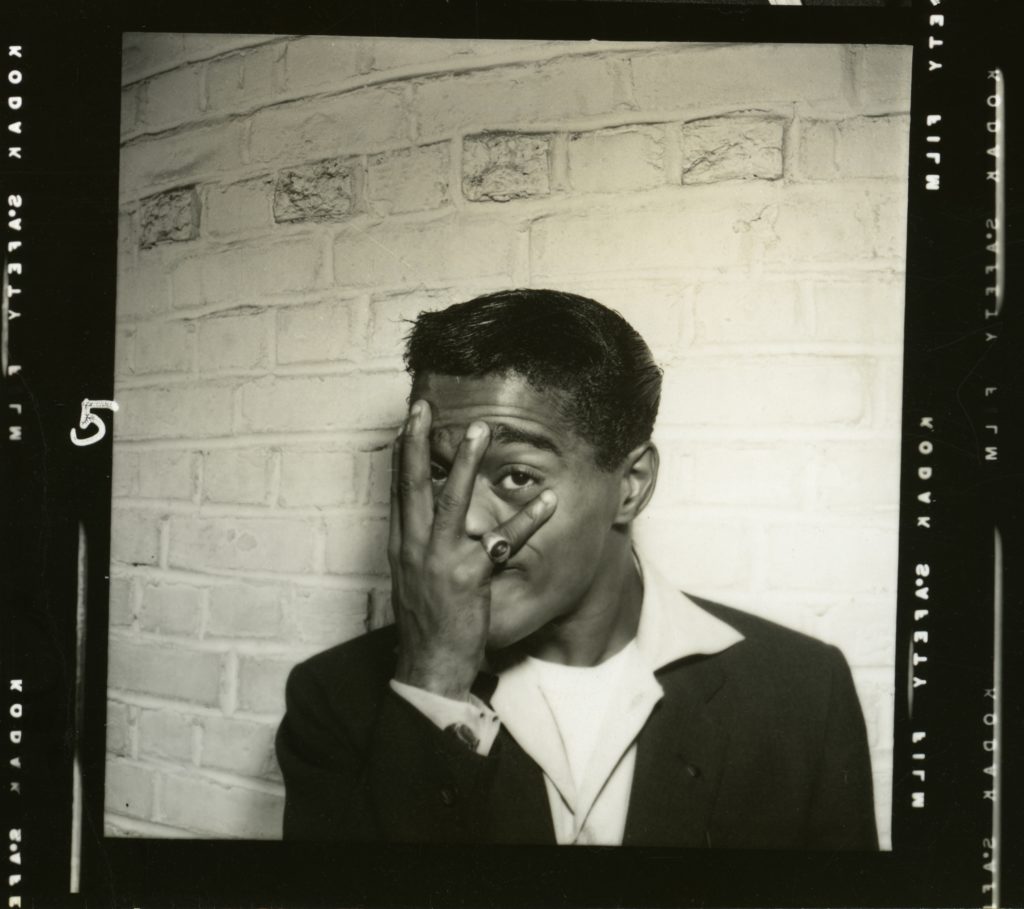
Closing night’s presentation of another showbiz biodoc, Sammy Davis Jr.: I’ve Gotta Me, with director Sam Pollard in attendance. I’ve seen it, and it’s top rate.
The especially strong slate of documentaries, always a rich trademark of the SFJFF. I’ll be recommending a slate of Must See docs.
A first-time partnership with the Film Noir Foundation, with the Hungarian neo-noir Budapest Noir presented by its director Éva Gárdos and the Czar of Noir himself, San Francisco’s Eddie Muller.
The 1924 silent film The City Without Jews, recently discovered in a Paris flea market and now digitally restored and presented with a commissioned live score. It’s a rare Silent Era look at the resurgence of antisemitism in Europe.
And the always popular program of short films, Jews in Shorts. The SFJFF is newly an Academy Award qualifying festival in the Short Documentary Subject category.
One of the most appealing features of the SFJFF is that, wherever you live in the Bay Area, the fest comes to you. SFJFF will present film events at the Castro Theatre in San Francisco, the Landmark Albany Twin in Albany, the CinéArts Theatre in Palo Alto, the Christopher B. Smith Rafael Film Center in San Rafael, and the Piedmont Theater in Oakland.
Friday, May 18, you can see Bombshell: The Hedy Lamarr Story on PBS’ American Masters. This is the riveting biopic of a glamorous movie star who invented and patented the precursor to wireless technology; that’s amazing enough, but Bombshell delves deeply into how Lamarr’s stunning face, her Jewish heritage, and mid-century gender roles shaped her career, marriages and parenting. Top notch.
In the last few years, one totally unexpected aspect of Lamarr’s life has become more well-known. She was a tinkerer/inventor who co-invented a radio guidance system for submarine torpedos, which she donated to the US military. The US Navy used this technology in WW II. Modern blue tooth technology stems directly from her innovation. Today her patent would be worth billions.
Bombshell adds layer upon layer to this tale of beauty and brains, as it traces Lamarr’s remarkable life. Hedy Lamarr had no control over being born a woman, being born to Jewish parents and being born to be a beauty. These three accidents of birth set the parameters of her journey – granting her access to some professional opportunities and stunting others, even threatening her life.
She burst into celebrity – and notoriety – at age 19, as the star of the film Ecstasy. Not only was Hedy the first actress filmed in full frontal nudity, she was the first screen actress to portray female orgasms. She was soon the young trophy wife of an Austrian industrialist, a formidable and fearsome supplier of munitions to Hitler. Hedy’s life seemed headed along the Bimbo Track, but she realized that her husband was powerful enough to keep her trapped in the marriage, but not powerful enough to protect her from the Nazis. At this point, she orchestrated an international escape that is the stuff of thrillers.
At age 24, often nominated as the most beautiful woman in the world, she launched a Hollywood career. Professional ups and downs, marriages and affairs and children followed, along with her work in technology.
Her beauty was often a blessing and sometimes a curse, but always affected her trajectory. Someone that beautiful is just different – the rest of us can’t help our reactions to her. But how many times can you be a trophy wife?
She was a person who survived troubling times, which left scars on her. How Hedy handled her Jewishness, how she raised her kids and how she was treated by the military are unsettling. Documentarian Alexandra Dean, Bombshell’s writer-director brings us witnesses, including Hedy’s children, to deliver an inside peek at a real life that would not be believable as a work of fiction.
I saw Bombshell: The Hedy Lamarr Story last summer at the 2017 San Francisco Jewish Film Festival (SJFF). It’s playing tomorrow night on PBS’ American Masters series.
Bombshell: The Hedy Lamarr Storyis the riveting biopic of a glamorous movie star who invented and patented the precursor to wireless technology; that’s amazing enough, but Bombshell delves deeply into how Lamarr’s stunning face, her Jewish heritage, and mid-century gender roles shaped her career, marriages and parenting. Top notch.
In the last few years, one totally unexpected aspect of Lamarr’s life has become more well-known. She was a tinkerer/inventor who co-invented a radio guidance system for submarine torpedos, which she donated to the US military. The US Navy used this technology in WW II. Modern blue tooth technology stems directly from her innovation. Today her patent would be worth billions.
Bombshell adds layer upon layer to this tale of beauty and brains, as it traces Lamarr’s remarkable life. Hedy Lamarr had no control over being born a woman, being born to Jewish parents and being born to be a beauty. These three accidents of birth set the parameters of her journey – granting her access to some professional opportunities and stunting others, even threatening her life.
She burst into celebrity – and notoriety – at age 19, as the star of the film Ecstasy. Not only was Hedy the first actress filmed in full frontal nudity, she was the first screen actress to portray female orgasms. She was soon the young trophy wife of an Austrian industrialist, a formidable and fearsome supplier of munitions to Hitler. Hedy’s life seemed headed along the Bimbo Track, but she realized that her husband was powerful enough to keep her trapped in the marriage, but not powerful enough to protect her from the Nazis. At this point, she orchestrated an international escape that is the stuff of thrillers.
At age 24, often nominated as the most beautiful woman in the world, she launched a Hollywood career. Professional ups and downs, marriages and affairs and children followed, along with her work in technology.
Her beauty was often a blessing and sometimes a curse, but always affected her trajectory. Someone that beautiful is just different – the rest of us can’t help our reactions to her. But how many times can you be a trophy wife?
She was a person who survived troubling times, which left scars on her. How Hedy handled her Jewishness, how she raised her kids and how she was treated by the military are unsettling. Documentarian Alexandra Dean, Bombshell’s writer-director brings us witnesses, including Hedy’s children, to deliver an inside peek at a real life that would not be believable as a work of fiction.
I saw Bombshell: The Hedy Lamarr Story this summer at the 2017 San Francisco Jewish Film Festival (SJFF). It’s coming to Bay Area theaters this weekend.
Bombshell: The Hedy Lamarr Storyis the riveting biopic of a glamorous movie star who invented and patented the precursor to wireless technology; that’s amazing enough, but Bombshell delves deeply into how Lamarr’s stunning face, her Jewish heritage, and mid-century gender roles shaped her career, marriages and parenting. Top notch.
In the last few years, one totally unexpected aspect of Lamarr’s life has become more well-known. She was a tinkerer/inventor who co-invented a radio guidance system for submarine torpedos, which she donated to the US military. The US Navy used this technology in WW II. Modern blue tooth technology stems directly from her innovation. Today her patent would be worth billions.
Bombshell adds layer upon layer to this tale of beauty and brains, as it traces Lamarr’s remarkable life. Hedy Lamarr had no control over being born a woman, being born to Jewish parents and being born to be a beauty. These three accidents of birth set the parameters of her journey – granting her access to some professional opportunities and stunting others, even threatening her life.
She burst into celebrity – and notoriety – at age 19, as the star of the film Ecstasy. Not only was Hedy the first actress filmed in full frontal nudity, she was the first screen actress to portray female orgasms. She was soon the young trophy wife of an Austrian industrialist, a formidable and fearsome supplier of munitions to Hitler. Hedy’s life seemed headed along the Bimbo Track, but she realized that her husband was powerful enough to keep her trapped in the marriage, but not powerful enough to protect her from the Nazis. At this point, she orchestrated an international escape that is the stuff of thrillers.
At age 24, often nominated as the most beautiful woman in the world, she launched a Hollywood career. Professional ups and downs, marriages and affairs and children followed, along with her work in technology.
Her beauty was often a blessing and sometimes a curse, but always affected her trajectory. Someone that beautiful is just different – the rest of us can’t help our reactions to her. But how many times can you be a trophy wife?
She was a person who survived troubling times, which left scars on her. How Hedy handled her Jewishness, how she raised her kids and how she was treated by the military are unsettling. Documentarian Alexandra Dean, Bombshell’s writer-director brings us witnesses, including Hedy’s children, to deliver an inside peek at a real life that would not be believable as a work of fiction.
I saw Bombshell: The Hedy Lamarr Story this summer at the San Francisco Jewish Film Festival (SJFF). It’s coming to theaters this week.
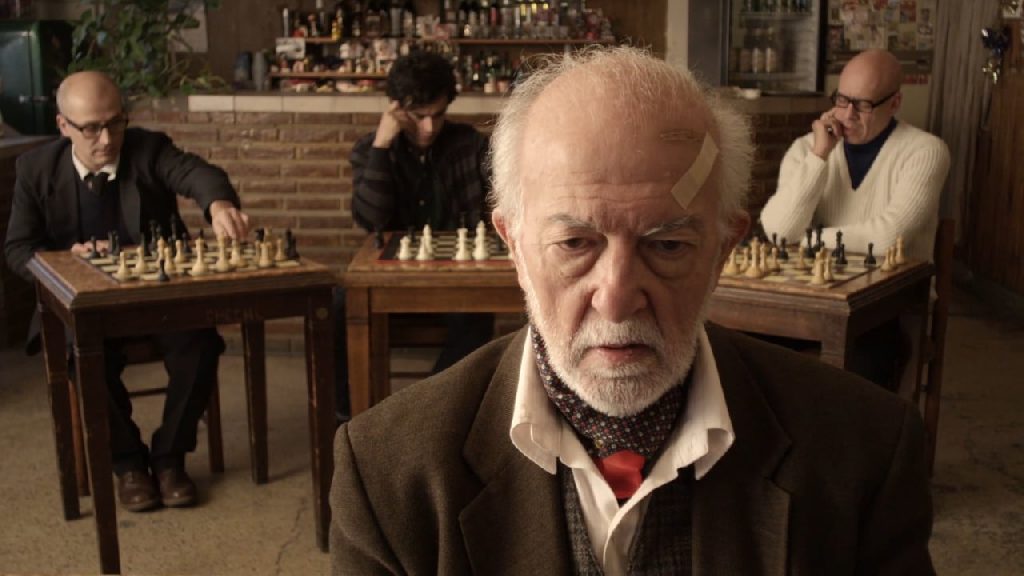
Here’s a wonderful movie (with an off-putting title) that you can ONLY see Sunday in Palo Alto or Wednesday in San Francisco. Subte-Polska is an Argentine gem about a nonagenarian chess master addressing his own memory, vitality and the need to find closure with his past. A promising first feature for writer-director Alejandro Magnone, Subte-Polska is the sleeper Must See at this year’s San Francisco Jewish Film Festival.
Tadeusz (Hector Bidonde) is a working class nonagenarian chess master. He’s still able to win several simultaneous chess matches, but his age is catching up to him and he has periods of confusion and memory loss. His doc has prescribed meds that counteract the memory loss, but he refuses to take them because they…wait for it…diminish his sexual performance.
His adult adopted son (Marcelo Xicarte) is understandably frustrated because he has to keep tracking down an unnecessarily (from his perspective) addled old man. And the son is in a touchy period in his own marriage.
Tadeusz is a Communist Jew who left Poland, his family and his girlfriend to fight fascism in the Spanish Civil War. He found another lover in Spain, but he left her,too, when they were defeated by Franco. Tadeusz’ family didn’t survive Hitler. That’s a lot of loss, and Tadeusz dealt with it by emigrating to Argentina and LITERALLY going underground. To avoid triggering painful memories, he gets a job constructing and then working in the Buenos Aires subway system. He sets up his son as a subway driver, and his best buddies also work in the subway, including the guy who runs the underground newsstand (Manuel Callau).
As Subte-Polska unfolds, Magnone explores our sense of memory, and how we consciously and subconsciously handle both the cherished memories and the devastating ones. As he takes and abstains from taking his meds, Tadeusz’s short-term memory ebbs and flows. This is a guy who has framed his entire life to suppress the memories of his youth, but he begins to remember his youth more and more vividly. As he remembers, he feels a need to find closure.
Tadeusz is a strong-willed person, and Subte-Polska is pretty funny as he causes consternation in his son, doctor and friends – in everybody except his well-serviced girlfriend and his ball-busting old friend from their first days underground. Marcelo Xicarte and Manuel Callau both prove to be excellent comic actors.
Speaking of acting, Hector Bidonde delivers a magnificent lead performance. Bidonde plays someone who has always been determined to do what he wants, stubborn to his core, still confident in his beliefs, mental acuity and sexual prowess, but occasionally shaken by moments of confusion.
You have three chances to catch Subte-Polska at the San Francisco Jewish Film Festival:
Cinearts (Palo Alto), Sunday, July 23 4:25 PM
Castro (San Francisco), Wednesday, July 26 4:05 PM
Albany Twin (Twin), Tuesday, August 1 6:30 PM.
The SFJFF runs from July 20 through August 6 at theaters in San Francisco, Palo Alto, Albany, San Rafael and Oakland. You can peruse the entire program and buy tickets and passes at San Francisco Jewish Film Festival.
Subte-Polska is funny, insightful and moving. I’m still mulling it over. This film deserves a US distributor – and a US distributor who changes the title. After all, it’s a subtitled movie about a 90-year-old; ya gotta help the audience want to see this. It’s the under-the-radar Must See at this year’s SFJFF.
the 37th annual San Francisco Jewish Film Festival(SFJFF37), opens this Thursday. The SFJFF is the world’s oldest Jewish film festival, and, with a 2016 attendance figure of 40,000, still the largest. It’s one of the Bay Area’s top cinema events and here are my top picks:
Bombshell: The Hedy Lamarr Story, the riveting biopic of a glamorous movie star who invented and patented the precursor to wireless technology; that’s amazing enough, but Bombshell delves deeply into how Lamarr’s stunning face, her Jewish heritage, and mid-century gender roles shaped her career, marriages and parenting. Top notch. Bombshell plays Wednesday July 26 in Palo Alto, Sunday July 30 in San Francisco and Saturday August 5 in Albany.
A Classy Broad: This delightful bio-doc chronicles the amazingly resilient life of Marcia Nasatir, the first woman production vice-president at a major Hollywood studio. We all owe a debt to Nasatir for Butch Cassidy and the Sundance Kid, Chinatown, One Flew Over the Cuckoo’s Nest, Rocky, Carrie and Apocalypse Now.
Subte Polska: An Argentine gem about a nonagenarian chess master addressing his own memory, vitality and the need to find closure with his past. A promising first feature for writer-director Alejandro Magnone, Subte Polska is the sleeper Must See at this year’s SFJFF.
Levinsky Park: Israel was created as a home for refugees. What happens when African refugees overwhelm a neglected Tel Aviv neighborhood is the subject of this topical documentary.
Fritz Lang: What better protagonist for a crime drama than the creator of the masterpiece M and pioneering master of film noir, the director Fritz Lang? Fritz Lang imagines Fritz Lang gathering research for M by tracking and interviewing a real serial killer, all while under police suspicion for his own past.
Ben-Gurion, Epilogue: Footage from a recently discovered video interview allows us to hear from Israel’s founding leader in his own words.
A pre-release screening of the environmental documentary An Inconvenient Sequel: Truth to Power with an appearance by former Vice-President Al Gore. It plays the SFJFF on Monday evening, July 24 at the Castro in San Francisco, but the the screening is currently at rush.
The SFJFF runs from July 20 through August 6 at theaters in San Francisco, Palo Alto, Albany, San Rafael and Oakland. You can peruse the entire program and buy tickets and passes at San Francisco Jewish Film Festival. Here’s the trailer for Bombshell: The Hedy Lamarr Story.
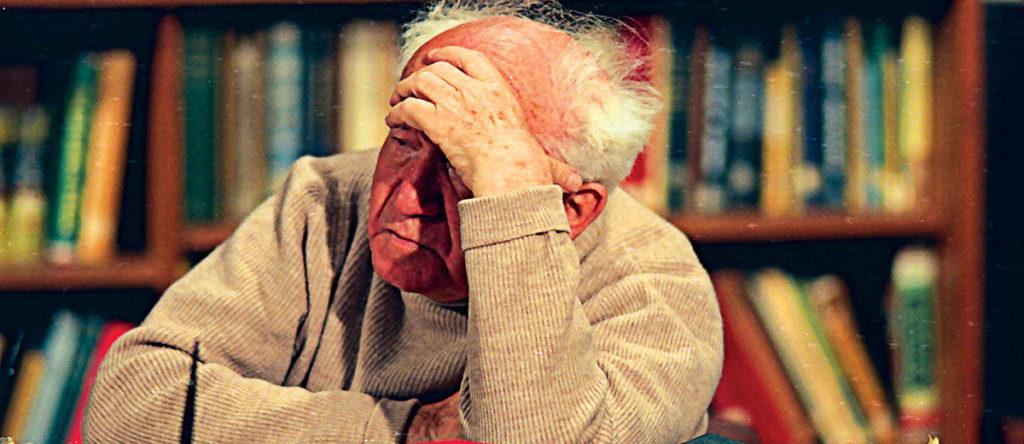
In Ben-Gurion, Epilogue, footage from a recently discovered video interview allows us to hear from Israel’s founding leader in his own words. In 1968, David Ben-Gurion was 82 years old and had been retired from public office for five years. Living on a remote kibbutz in the Negev Desert, he still had a lot to say.
Ben-Gurion was interviewed for seven hours over several days, but the video was lost until recently. First the images were found, which triggered a search for the sound. The result is Ben-Gurion, Epilogue, with the seven hours distilled down to one hour. Director Yariv Moser gets out of the way and lets Ben-Gurion speak for himself. The result is an important document of 20th Century history.
Not a guy who naturally “holds forth”, Ben-Gurion is prodded into revealing his inside view of his controversial acceptance of German reparations. We also get his take on the Zionist movement (not exactly what you’d expect) and, of course the Big Question: land for peace. There are also telling insights into his marriage.
The SFJFF runs from July 20 through August 6 at theaters in San Francisco, Palo Alto, Albany, San Rafael and Oakland. You can peruse the entire program and buy tickets and passes at San Francisco Jewish Film Festival.
Israel was created as a home for refugees. What happens when African refugees overwhelm a neglected Tel Aviv neighborhood is the subject of the topical documentary Levinsky Park.
Director Beth Toni Kruvant takes us to Tel Aviv’s hardscrabble Hatikva neighborhood, now burdened with an influx of African refugees from sub-Saharan Africa. The refugees aren’t Jewish, they don’t speak Hebrew and they sure aren’t white. Discouraged from working legally, the refugees encamp on the streets and do what they need to survive. The Israeli government senses a lose-lose media profile on the issue and tries to duck it entirely.
So how do the local Israelis react? There is a wide spectrum. Some welcome and try to help people fleeing for their lives. Others tag the newcomers with the loaded pejorative “infiltrators” and try to kick them out. We see some ugly, overt racism in Levinsky Park, but nothing unlike what we’ve seen in the US in the Trump Era.
It’s the same question that confronts all countries in the West about political asylum-seekers – who will actually invite them in? What’s different about Levinsky Park, of course, is that this is Israel – the one nation created by and for refugees.
A leader emerges from the refugees, the charismatic and articulate Mutasim Ali. He frames their plight as a movement, and they strive to regain some control over their own futures. Levinsky Park is a compelling real-life story and screens at the SFJFF:
Castro (San Francisco), Thursday, July 27 11:15 AM
Albany Twin (Albany), Friday, August 4 4:05 PM.
The SFJFF runs from July 20 through August 6 at theaters in San Francisco, Palo Alto, Albany, San Rafael and Oakland. You can peruse the entire program and buy tickets and passes at San Francisco Jewish Film Festival.